Download Now
Home Blog Page 15

Madrid System for International Trademark Registration

0

This article is written by Shreya Patel. This article will give you a comprehensive understanding of international trademark registration. We are going to discuss some of the key topics such as the filing of the Madrid application, its fee structure, the pros and cons of the procedure, role of WIPO, and comparative analysis with various other international systems.

This article has been published by Shashwat Kaushik.

Table of Contents

Setting the scene

Suppose you are a juice company, and recently became very popular. Seeing the positive response, you decided to expand the business globally in 4 other countries. Now to protect the brand value, it is crucial to register the trademark. In the current globalised economy, with blurred borders, it is very vital to register the trademark. Won’t the procedure to register a trademark in all countries be too tiresome and lengthy? 

No, it won’t be. Do you know why? 

This is because of the Madrid System for international trademark registration. Under the Madrid System, business owners will just have to file a single application and they can protect their trademark in multiple jurisdictions. It’s like killing two birds with one stone. 

We get trademark protection in more than one country and we have less work to do. As the trademark will be registered at one time, trademark owners can save time and money, and establish their brand without fearing any infringement. 

The purpose of this article is to enlighten our readers about international trademark registration. With this article, legal professionals, professionals working in related fields, and students will get a comprehensive knowledge of the entire international trademark registration process. 

Let’s dive right into the article without wasting any time!

How is the Madrid System legally backed

Let’s begin by understanding what the international trademark registration process is all about. 

The two key frameworks that oversee trademark registration in multiple jurisdictions are:

  1. Protocol Relating to the Madrid Agreement Concerning the International Registration of Marks also known as Madrid Protocol. 
  2. Madrid Agreement Concerning the International Registration of Marks also known as Madrid Agreement. 

You have to make sure that you do not get confused between these two. Despite having the same name, the Madrid Protocol is a separate treaty. It is not a protocol of the Madrid Agreement.  The protocol and agreement together are known as the Madrid System

Madrid System = Madrid Protocol + Madrid Agreement

The international system which is used for filing the trademark application is known as the Madrid System. 

Easy right? Now let’s understand both individually to know how they are different. 

Madrid Agreement

Let’s know about the Madrid Agreement in detail.

When was it established

Do you know when the Madrid Agreement Concerning the International Registration of Marks, also known as the Madrid Agreement, was established? You will be surprised. It was established in 1891. 

Why was the agreement introduced

Why was this agreement even introduced? The main aim of introducing this mechanism was for a cost-effective and single registration process provided to the trademark owner. 

Why register under the agreement

Now, you may ask why register under this agreement. Is it any different from normal trademark registration? The trademark registration under the Madrid Agreement is equivalent to trademark registration in all countries which are member countries. 

Is the registration done only one time

Is the trademark registration a one-time thing under the Madrid Agreement? Can I renew my registration again? The registration is a one-time thing. While you can renew the registration again and again. 

Can the registration be renewed

A renewal system was introduced along with the registration process under this agreement. The entire renewal procedure was simplified. It was done to make it easy for the owners who did business globally. We will learn more about trade renewal in the later part of this article. 

Revision of the agreement over the years

The Madrid Agreement has been revised various times till now. We all know how important it is to be updated with changing times. The best example of this is in front of our eyes. Yes, you have guessed it right – the Madrid Protocol. Madrid Protocol is nothing but a modernised version of the Madrid Agreement. Due to the increased flexibility of the agreement, the Madrid Protocol was introduced.

The agreement was revised 7 times till 1980. Isn’t that surprising how laws keep on updating at such a fast pace? It was revised in Brussels in 1900, Washington in 1911, Hague in 1925, London in 1934, Nice in 1957 and Stockholm in 1967, and was also amended in 1979. 

Let’s take a detailed look at what amendments were made each time. 

Revision Reason for Revision
Brussels (1900)More clear rules were established with the introduction of more strict rules for member countries. It was also made more accessible for all. The changes related to entitlement to get international registration. The changes were also made to registration fees. 
Washington (1911), Hague (1925)  and London (1934)The following are the reasons for which the revisions took place:Due to less number of countries being a part of the agreement.Conflicts among the national laws.Lack of awareness in the member countries.To make it more cost-effective and user-friendly. 
Nice Act (1957)In this revision, the Nice Classification system was added. This system will categorise the goods and services into different classes. The same was made compulsory to follow by all the member countries. This revision was done to streamline the identification of goods and services. 
Stockholm (1967)The revision which took place at Stockholm was meant to update and simplify the application process for international trademark registration. The main goal was to simplify it more. 

Now we shall move to the Madrid Protocol. After understanding the Madrid Agreement it will now be easier for us to understand what the Madrid Protocol is all about. 

Madrid Protocol

  • If we already had the Madrid Agreement then why was there a need for the Madrid Protocol? The main role was to overcome the deficiencies of the Madrid Agreement. Deficiencies like very limited geographic reach, delays in the national registration process, more dependence on aspects of national examination etc were seen. Previously many countries did not also recognise the WIPO registration as valid. 
  • The protocol was concluded in 1989, 8 years after the Madrid Agreement. Over the 8 years, it was observed that the agreement had some deficiencies. The agreement was not able to attract more memberships. The countries were very few as the agreement had very rigid rules. Due to growing international markets, it was observed that we need a more comprehensive system to develop international filing. 
  • The main idea behind the introduction of the Madrid Agreement was still preserved in the Protocol.

Now that we have seen both the protocol and agreement, did you find anything different in them? Or was it the same to you? 

You will find the answer to this in our next heading. 

Comparison between the Madrid Protocol and the Madrid Agreement

Let’s compare both the protocol and the agreement. Are there some minor similarities or are they different from each other? 

BasisMadrid AgreementMadrid Protocol
Objective The main objective of the agreement was to establish flexibility in the international trademark registration process to enhance the protection on a global level. On the other hand, the main objective of the protocol was to make the Madrid Agreement more flexible and overcome its deficiencies. 
CoversOnly individual states Both the individual states and the intergovernmental organisations can be a part of the Madrid Protocol. 
Application basisUnder the agreement, the trademark owner first has to have an application filed in their home country.For instance, if you live in India and want to apply for an international trademark. Then you will first have to register in India and then proceed with international protection. While under the protocol, trademark applications are allowed on applications made in the home country. The application made in any one member country is also allowed. If you live in India and want to register the trademark in let’s say Australia and Bhutan. Then you can simply make an application in India. The same is explained later on in the article. 
FeesThe fees are fixed for all the members as per the different processes. We will study this later in the article. Here the fees are fixed as well but they might be different for the national applications.  
Language usedIn agreement, only French is used as the official language. The protocol follows a trilingual system. English, Spanish and French all are used. 
Refusal period for trademarkThe trademark refusal period under the agreement is one year. The period for refusing the trademark application under the protocol is eighteen months. An extension is provided if the authority deems fit to do the same. 
Trademark validity time periodThe trademark validity time period is twenty years. The validity of the trademark is ten years. 

Are you well-versed in French? I would suggest that you learn it. It would be so easy for you to handle the entire process if you are well-versed in French. 

Are all countries part of the Madrid System? Don’t know? Let’s find out. 

What all countries are part of the Madrid System

The Madrid System is not a mandatory requirement. So it is not compulsory for all the countries to join this agreement/protocol. India is also a part of the Madrid System for international trademark registration. As of 2024 currently, there are 115 members across 131 countries. 

Other than India, the following table consists of all the other member countries that have ratified either the Madrid Protocol or both. 

Member Countries Madrid ProtocolMadrid Agreement
AfghanistanJune 26, 2018
African Intellectual Property Organization (OAPI) March 5, 2015
Albania July 30, 2003October 4, 1995
AlgeriaOctober 31, 2015July 5, 1972
Antigua and Barbuda March 17, 2000
Armenia October 19, 2000December 25, 1991
Australia July 11, 2001
Austria April 13, 1999January 1, 1909
AzerbaijanApril 15, 2007December 25, 1995
Bahrain December 15, 2005
BelarusJanuary 18, 2002December 25, 1991
Belgium April 1, 1998July 15, 1892
BelizeFebruary 24, 2023
Bhutan August 4, 2000August 4, 2000
Bosnia and Herzegovina January 27, 2009March 1, 1992
Botswana December 5, 2006
Brazil October 2, 2019
Brunei Darussalam January 6, 2017
Bulgaria October 2, 2001August 1, 1985
Cabo VerdeJuly 6, 2022
CambodiaJune 5, 2015
CanadaJune 17, 2019
Chile July 4, 2022
China December 1, 1995October 4, 1989
Colombia August 29, 2012
Croatia January 23, 2004October 8, 1991
CubaDecember 26, 1995December 6, 1989
Cyprus November 4, 2003November 4, 2003
Czech RepublicSeptember 25, 1996January 1, 1993
Democratic People’s Republic of Korea October 3, 1996June 10, 1980
Denmark February 13, 1996
Egypt September 3, 2009July 1, 1952
EstoniaNovember 18, 1998
Eswatini December 14, 1998December 14, 1998
European UnionOctober 1, 2004
FinlandApril 1, 1996
France November 7, 1997July 15, 1892
Gambia December 18, 2015
Georgia August 20, 1998
Germany March 20, 1996December 1, 1922
GhanaSeptember 16, 2008
GreeceAugust 10, 2000
Hungary October 3, 1997January 1, 1909
Iceland April 15, 1997
IndiaJuly 8, 2013
IndonesiaJanuary 2, 2018
Iran (Islamic Republic of)December 25, 2003December 25, 2003
IrelandOctober 19, 2001
Israel September 1, 2010
ItalyApril 17, 2000October 15, 1894
Jamaica March 27, 2022
JapanMarch 14, 2000
Kazakhstan December 8, 2010December 25, 1991
KenyaJune 26, 1998June 26, 1998
KyrgyzstanJune 17, 2004December 25, 1991
Lao People’s Democratic RepublicMarch 7, 2016
LatviaJanuary 5, 2000January 1, 1995
Lesotho February 12, 1999February 12, 1999
Liberia December 11, 2009December 25, 1995
LiechtensteinMarch 17, 1998July 14, 1933
LithuaniaNovember 15, 1997
Luxembourg April 1, 1998September 1, 1924
MadagascarApril 28, 2008
MalawiDecember 25, 2018
Malaysia December 27, 2019
MauritiusMay 6, 2023
MexicoFebruary 19, 2013
MonacoSeptember 27, 1996April 29, 1956
MongoliaJune 16, 2001April 21, 1985
MontenegroJune 3, 2006June 3, 2006
MoroccoOctober 8, 1999July 30, 1917
Mozambique October 7, 1998October 7, 1998
Namibia June 30, 2004June 30, 2004
Netherlands (Kingdom of the) April 1, 1998March 1, 1893
New ZealandDecember 10, 2012
North Macedonia August 30, 2002September 8, 1991
Norway March 29, 1996
Oman October 16, 2007
Pakistan May 24, 2021
Philippines July 25, 2012
PolandMarch 4, 1997March 18, 1991
Portugal March 20, 1997October 31, 1893
Republic of KoreaApril 10, 2003
Republic of Moldova December 1, 1997December 25, 1991
RomaniaJuly 28, 1998October 6, 1920
Russian Federation June 10, 1997July 1, 1976
RwandaAugust 17, 2013
Samoa March 4, 2019
San Marino September 12, 2007September 25, 1960
Sao Tome and PrincipeDecember 8, 2008
SerbiaFebruary 17, 1998April 27, 1992
Sierra LeoneDecember 28, 1999June 17, 1997
SingaporeOctober 31, 2000
Slovakia September 13, 1997January 1, 1993
Slovenia March 12, 1998June 25, 1991
SpainDecember 1, 1995July 15, 1892
SudanFebruary 16, 2010May 16, 1984
Sweden December 1, 1995
SwitzerlandMay 1, 1997July 15, 1892
Syrian Arab Republic August 5, 2004
Tajikistan June 30, 2011December 25, 1991
ThailandNovember 7, 2017
Trinidad and TobagoJanuary 12, 2021
TunisiaOctober 16, 2013
Türkiye January 1, 1999
TurkmenistanSeptember 28, 1999
Ukraine December 29, 2000December 25, 1991
United Arab Emirates December 28, 2021
United Kingdom December 1, 1995
United States of AmericaNovember 2, 2003
Uzbekistan December 27, 2006
Vietnam July 11, 2006March 8, 1949
ZambiaNovember 15, 2001
ZimbabweMarch 11, 2015

Are there any specific requirements that the trademark must have if we want to register under the Madrid System? Are there criteria for eligibility?

How will you know whether business comes under the eligibility criteria or not? 

In our next heading, we are going to understand the requirements and eligibility for the Madrid System.  

Who is eligible to register under the Madrid System

There are some conditions that must be followed when applying under the Madrid System. Let’s check out what all these conditions are!

Who can file under the Madrid System

In order to file a trademark application to get international trademark protection under the Madrid System, you have to:

  1. Be a national of the member country or, 
  2. Have a business or be a domicile in any of the member countries where you want to register. 
  3. You must have the trademark registered in the home country first if you want to file the same for international trademark registration.

This simply means that you can file for an application if you live in a country that ratified the protocol. Let’s take an example to get a better understanding. 

Shilpa owns a business called ‘Kalikala’ in India. It is a fast fashion store. She wants to register her trademark under the Madrid System as she is planning to open new branches. She has decided to open a branch in Dubai and Brazil. 

Here in this case Shilpa is eligible to file the application as India is a member country. 

But what if Shilpa lived in Dubai? And let’s say Dubai is not a member country. Then what? In that case, she is not eligible. However, if Shilpa lives in Dubai and is a citizen there, and if she has a registered office in India, then she can file her application.  

Did you see how easy it is for a business owner to get it done with just one application? 

Now you may have a question: what difference can one see in national and international application filing? No worries, your questions are getting answered in our next heading. 

Similarities and differences between national and international application filing

Let us understand the comparison in a tabular format for better understanding rather than long paragraphs! Are you ready to file for trademark registration?

BasisNational Trademark Application FilingInternational Trademark Application Filing
Process of filing application For the national application filing, you have to file a separate application for different countries. However, when it comes to international application filing, filing under one roof does the work. You can protect the trademark with just one application in multiple countries. 
Langues and fees hurdleWith separate application filing for separate countries also comes the language barrier. All countries have different languages used as their official languages. Similarly, the fee structures are also changed and so does the currency. For instance, Rs. 1000 for application forms in India will be only 10 Swiss Francs. If a currency is weak in one country, it will be more expensive for them to register in a country with a strong currency. Only 3 languages (English, French and Spanish) are used under the Madrid System and it has a streamlined fee structure as well. 
Application examinationAll the countries have their own examination processes. In national application filing it might take more time and would be too confusing to keep up. Under the international trademark filing, WIPO is the only body that takes the trademark examination and then moves forward with the country-specific examination. 
Management If you get your trademark registered separately, then you will have to remember lots of important things like their renewals and time-to-time updates. When it comes to international trademark application filing, a centralised system is used to manage all these details. So it makes it easy. One- click and you can see all the important information. 
CostThe cost will be higher when we are filing applications separately from country to country. The cost will be comparatively low as we file for one time only. 

Can we register any trademark in any country? Are there some standards that we have to follow in order to be eligible for registering the trademark with Madrid System?

Yes, we do. There are some general rules which all the applicants have to follow to get accepted under the Madrid system for registration. 

What trademarks are accepted under the Madrid System for registration

A trademark is accepted to be registered under the Madrid System for registration if it is in compliance with the definition given by the WIPO. The trademark should also be in compliance with the standards followed in the member country in which it is being registered. The definition given by WIPO says that any mark which can help in distinguishing one product or service of one enterprise from another can be considered as a trademark. 

Shellco was a toy company that applied for trademark registration. Their mark was S and C written in uppercase with a circle around it. The mark was registered successfully. Why you may ask? 

Firstly no other mark similar to this was present in the market. Second, this mark did not explicitly promote the company and its product. And most importantly, it was graphically represented as well.  

What trademarks are generally not accepted then?

A trademark will not be registered if the work/phrase is too common. You cannot trademark rubber if you sell rubber sandals. That’s not how it works. The mark also has to be something novel. If Shellco already is registered by a company, you will not register for the same.

Generic terms, descriptive marks, marks which are similar to already registered ones, or marks which tend to be offensive in the country the application is being filed. These types of trademarks are often considered non-acceptable for registration. 

Generic terms are words which we use very commonly like apple, glue, fan etc. A similar trademark includes, for instance, a shoe brand called Sike. We already have a shoe brand, Nike. Both these terms only have the first alphabet different. This might cause confusion.

Now that we know who can and what type of marks are accepted to get registered under the Madrid System, let us move to the heart of the process. Which is? 

Yes, you guessed it right – the application process. We have to know beforehand what all the steps are. 

Nuts and bolts of filing under the Madrid System

An application process consists of various different stages. It’s like climbing the stairs. You keep on climbing until you reach the top – which is getting trademark registration in our case. We have to ensure that we do not miss a stair and tumble down.

You move to the next stage only when you have cleared the prior one. Let’s jump into the journey of the Madrid System.

Conducting a prior search for a similar trademark

Before we file an international trademark application, we have to ensure that we have done a thorough check of the market. You have to see that no similar mark as yours is already available and registered in the market. Why do we do this? We do this to avoid the possibility of cancellation of our international trademark application. 

For instance, I wanted to apply for a trademark which is a lotus and a girl standing beside that huge lotus flower. I applied for the same without doing a preliminary search in the market. During the examination process, WIPO found a similar mark with a lotus and a girl standing beside it. The only difference was that the girl in both the marks stood on the opposite side. 

The other mark was already registered and in use for 7 years, hence my mark was refused. 

So, in order to avoid such instances it is advised that we conduct a search before the trademark application is filed.  

Filing the application for trademark registration

The first step in the process is to file the international trademark registration application in the home office. 

Application made from the home office

  • The application is to be first filed in the home country i.e. the office of origin. 
  • The applicant has to file the trademark application in the regional intellectual office, in our case it’s the Trade Mark Registry
  • This application that is made in the home country is also known as a basic mark. 
  • After the international trademark application has been made in the home office, the trademark registry inspects and certifies it.
  • If there are no problems, the application for international trademark registration is moved forward to WIPO. 

Did you know that we can directly file the international trademark application by visiting the WIPO’s official website?

Yes, you have read it right! We can. Let’s see what steps we have to follow if we want to directly file with WIPO. 

Filing application directly with WIPO

You have to follow the following steps to directly file with WIPO:

  1. Visit the WIPO’s official website. You can simply click here also – https://www.wipo.int/en/web/emadrid.

What’s the next step then?

  1. Then you have to enter the WIPO account details to log in. 
  2. Select the new application option on the screen. Simple right?
  3. Now upload all the details which are required and fill out the application
  4. Pay the necessary fees, because that’s the most important part. 
  5. Submit the application after thoroughly checking it. 

You can directly apply under the Madrid System using their online services or you can also apply in your home country’s IP office. We will discuss the same later in the article. 

After knowing the application process, the next important thing you must be aware of is the total cost that you will incur in the entire process. 

Fees for filing an application under the Madrid System

Let’s be serious, the cost of filing an application is one of the vital points to consider as well, especially for businesses which are just starting. 

The below table mentions the fees for filing the application under the Madrid System. 

ParticularsSwiss FrancsRupees
The basic feeThe mark is in colourThe mark is black and white
903 CHF653 CHF

Rs. 86422.86Rs. 62568.58
If we want to file for any additional class of goods or service100 CHFRs. 9581.71
Designation fees Complimentary feesIndividual fee
100 CHFThe same will be fixed by the contracting parties. 

Rs. 9581.71
When irregularities are found in the classification of goods or services.When the classification is incorrect.When the goods and services are ungrouped. 
77 CHF + 4 CHF per term (beyond 20)20 CHF + 4 CHF

Rs. 7377.92 + Rs. 383.27Rs. 1916.34 + Rs. 383.27
Subsequent designation feesBasic feesIndividual fee per contracting partyComplementary fees
300 CHF100 CHFFixed by contracting parties

Rs. 28745.14Rs. 9581.71
Fees for renewal (10 years) Basic feesComplementary feesSupplementary feesGrace period surcharge 
653 CHF100 CHF100 CHFFifty per cent of the basic fee

Rs. 62568.58Rs. 9581.71Rs. 9581.71

There are various other different types of costs which are incurred at various stages in international trademark registration. You can visit this link for further details – https://www.wipo.int/web/madrid-system/fees/sched

After the application is filed, the next major step is the examination of the application. This is the most important step. 

Examination and registration under the Madrid System

This step makes and breaks the entire registration of the trademark. After the home office gives clearance on the application filed by the applicant, the same is forwarded to the WIPO. 

International examination process under the Madrid System 

WIPO then carries out a formal examination of the application filed. If all goes well, then the application is registered in the International Register. The application is further also published in the WIPO Gazette of International marks (same as we do in India by publishing the mark in a trademark journal). After the publication, WIPO will send the international certificate for application to the Intellectual Property (IP) offices where the applicant wants to register. 

From here onwards the application will now be examined by the IP offices where the registration is to be done. Let’s see the national examination process first!

National examination process under the Madrid System

The regional or national IP offices conduct a thorough substantive examination of the application after WIPO. The home country checks whether the trademark which is filed by the applicant is in compliance with their legislation or not. 

For example, as per our Indian trademark laws, a mark can be registered if it has distinguishing features, is not identical or similar to an existing registered trademark, does not hurt religious sentiments and is not against public morality. So when a mark is being examined all these points will be considered. 

If the home office accepts the application, then the same is informed to WIPO. WIPO further informs the applicant about the same. However what if the national IP office refuses the registration for some reason?

SituationParticulars
Possibility of rejectionIt might be possible that the international trademark application is either fully or partially rejected by the home office. If the national IP office feels that the applied mark is identical or similar to an already existing trademark then it may be rejected fully. It can also happen that the mark has some characteristics which are against the rule of the national IP officer, then they can partially reject the trademark. The IP office can put some conditions forth to be followed if the mark is registered. My dad recently applied for the trademark for our family business. The trademark was similar to an existing one but in a different trademark class. So the Registrar put forward one condition (a slogan below the mark) which was only in our trademark to be compulsory use. 
Contest the refusal If the trademark application is refused during the national examination process by country then in that case the applicant can contest the refusal. Earlier all the countries had their own time period to respond to a provisional refusal. This could range from 15 days to 15 months.As per the new changes applicant can appeal within sixty calendar days or 2 months. This new change was introduced in order to have a harmonised time limit. This minimum time limit is set to be effective from 1st February 2025. The rules and regulations of the country which has refused the application are to be followed.For example, one company has filed for a trademark in GrowGreen in Ireland. The IP office of Ireland refused the application. The IP office stated that the mark was very descriptive and such marks are not allowed for registration. So in this case the applicant contests the refusal by stating how the mark is not descriptive and provides evidence for the same. 

What happens then? Is there any step which can be carried out by the applicant? Yes, there is! What happens in case of opposition to the registration from a third party? It can be possible that a third party in the member country opposes the registration. They might feel that the applied mark infringes their already registered trademark. 

Let’s see what steps we can take in these kinds of situations. 

Opposition process under the Madrid System

If any party doing business, or residing in the country where the trademark is to be registered feels that:

  1. The said mark will infringe their registered mark, or,
  2. Cause any kind of monetary or non-monetary damage to their business.

If a mark is very similar or identical in nature to an already registered trademark then it will infringe the registered trademark. If a mark ‘LOTUS FOUNTAIN’ is already registered then you cannot register a ‘LOTUSS FOUNTAIN’.

All the consumers of ‘LOTUS FOUNTAIN’ will misinterpret ‘LOTUSS FOUNTAIN’ as the original brand and buy from there. This will cause monetary damages to the ‘LOTUS FOUNTAIN’ company. If ‘LOTUSS FOUNTAIN’ uses bad quality materials the reputation of ‘LOTUS FOUNTAIN’ will get tainted. 

Then in such cases, the third party can file for opposition to the registration. The opposition has to file within three months from the date of publication in the WIPO Gazette of International Marks. 

Let’s understand the same using a hypothetical situation. 

Illustration

Mr. A has applied for trademark registration in Iceland and Hungary. A business (Excel Enterprise) from Hungary feels that Mr. A’s mark and their registered mark are very similar. Both the marks, if put beside each other may cause confusion. This can damage their business in Hungary. So they file for an opposition. 

Now, it is very important to file the opposition in the correct and acceptable timeline. Mr A’s mark was published in the WIPO Gazette of International Marks on 3rd March 2024. So, Excel Enterprise has to file their opposition within three months from 3rd March 2024 i.e. 3rd June 2024. 

WIPO then informs the applicant i.e. Mr. A about the opposition and is given a chance to be heard. WIPO is responsible for making a decision after the reply from the applicant. WIPO will examine the opposition, the reply, and the evidence submitted from both sides and will decide whether the opposition can be dismissed or upheld. 

If WIPO also agrees that the said mark is infringing an already registered trademark, then the mark will not be registered in the designated country. If it gets dismissed, then the procedure moves forward. What happens if the applicant is not satisfied with the decision of the WIPO? Can he appeal it? Yes, he can file an appeal. 

At this point in our article, we are now aware of the nitty gritty of the international trademark registration point. However, one very common question still remains unanswered. The majority of the people looking to register their trademark either nationally or internationally have the same question.

How much time will it take to complete the entire process and get our trademark registration?

I mean, I agree with it as well. Knowing the time frame for the registration helps give us an idea of how to plan things further. 

So, let’s move to our next heading to find the answer to this question. 

Registration time frame under the Madrid System

The entire international trademark registration process consists of various steps. The entire process usually takes twelve to eighteen months. As the entire process is quite complex and consists of numerous stages, the exact time of the international trademark registration process cannot be predicted. 

The time frame usually depends from case to case. Let me explain the same with an example. 

Illustration

Raman has filed for an international trademark in Brazil, Canada and China. His mark is quite unique in nature. Hence it got approval for registration from the home office, WIPO and all three countries in the first instance. So in this case the entire international trademark registration might end in 12-18 months. The member countries are required to refuse or grant the trademark registration in 12-18 months max. 

What will happen if the trademark application is opposed by any third party in any of the countries where the mark is applied for registration? It will result in opposition to the registration. This will also result in taking more time to get the registration. 

Monitoring a trademark after the registration is so important. Please never forget that! Let’s learn about monitoring trademarks in our next heading.

Monitoring the unauthorised use of trademark

My friend has a shoe company. She makes shoes with a specific type of heel which protects from shoe bites for a long period of time. She registered a trademark for her company. In a few months suddenly her sales started to decline. She came to know that a similar trademark has been registered for a shoe brand and the consumers purchased from that brand as they have a similar trademark. Why did this happen? My friend has registered her trademark. What she missed was trademark monitoring.

It does not end with merely registering the trademark. We have to regularly check and monitor the trademark throughout the registration process and even after registration. You can use WIPO Madrid Monitor to keep all your international registrations in the loop. 

Do you know why it is advised to monitor the trademark even after registration? It is done to ensure that after your international trademark registration is done, no one tries to infringe the same. If we find someone trying to copy us then we can simply oppose their trademark application. 

There are so many things to take care of! Let us also see other important aspects that we need to know after the registration is done. 

Effective management of international trademark registration by the Madrid System

Is registering with the Madrid System enough? There are so many post-registration things which are to be understood as well. This is what we will do under this heading. 

Now that we have registered the trademark, it will be registered forever, right? No, it won’t be. The registered trademark owner will have to renew the registration from time to time. Along with the renewal of the trademark, the owner can assign and license it as well. 

Too much information? Don’t worry, let’s take each point individually and learn about it. 

Trademark renewal and extension

The international trademark registration is valid only for a certain period of time given by the Madrid System. If the international trademark registration is not renewed within the given time period, it may lose its registration status.  

The validity of the international trademark registration under the Madrid System is for 10 years. After 10 years the registration is to be renewed again. For example, Shika registered her trademark under the Madrid System on 13th August 2000. Then she will have to renew the registration on or before 13th August 2010. 

There is no fixed number of times when one can renew their trademark registration. The trademark renewal can be done as many times as the applicant wants it. Isn’t that great? It’s only one time that you have to ensure that the mark gets registered properly then it’s yours for the lifetime!

The trademark renewal can be done both online and offline. People currently prefer online renewal only. You simply have to visit the website and apply for the renewal. Takes less time and can be done from anywhere. 

A request for renewing the trademark registration is to be done three months from the date when the registration is going to end. Too confusing? No, worries let me put it in a hypothetical situation with dates then you will get it in one strike. 

Ankit got his international trademark registration approved on 24th March 2000. So he will have to request for renewal around 24th January 2010. The renewal can also be requested within six months after the date of expiry i.e. 24th September 2010. This is known as the grace period. Your renewal time period has ended, however you are provided an extra 6 months to do the same. However, the extension is only given if there is a valid reason for not filing the renewal request at the given timeline. 

If I have used my trademark for a few years and now I want to give it to someone else. Can I pass the registered trademark along with the registration to someone else?

Of course, why not? This is nothing but a trademark assignment. 

In our next heading will learn about trademark assignments in quite a detailed way so all your questions are answered. 

International trademark assignment under the Madrid System

Before knowing how to assign an internationally registered trademark, let me first give you a simple and sweet explanation of what exactly trademark assignment means?

Trademark assignment basically means when the trademark owner passes his rights to someone else. All the interests, titles, benefits, and rights are transferred. Trademark assignment can be for various different reasons:

  1. Mergers
  2. Acquisitions 
  3. Changes in business structure
  4. Changes in business owner etc. 

You can change the ownership of the goods or services in all of some of the member countries by visiting this link

Following are the steps for changing the ownership of the trademark registered with Madrid System. 

  1. Visit the option of Change Ownership on the eMadrid page. 
  2. Log in using your WIPO details. 
  3. Select the trademark for which you want the change in ownership.
  4. Complete the entire form. 
  5. Make the payments
  6. Submit the form.

The cost of changing the ownership after the trademark assignment is 177 Swiss francs.

Now we know that trademark assignment transfers the complete ownership of the trademark. But what if I do not want to completely transfer all my rights? And relinquish some control?

That’s where trademark licensing comes into play. 

International trademark licensing under the Madrid System

International trademark licensing means when the trademark owner lets a third party use his registered trademark in exchange for consideration of some type or of money. In trademark licensing, the ownership of the trademark remains with the owner. While some of the rights are given to the licensee to use the trademark. For example, Mcdonalds. We all know that the original owner of McDonalds does not work in every shop. He has given certain rights to use the McDonalds trademark to different people. 

It is not compulsory to register a trademark license with an international register under the Madrid System. You can file Madrid System Form MM13. The cost of recording the trademark license is similar to trademark assignment which is 177 Swiss francs (Rs. 16954.06). 

Why register your trademark under the Madrid System

Till now, we read how to register with Madrid System, who can register and what can be the approximate cost for it. But the main question is why should we register our trademark under the Madrid System?

How will it be beneficial to me? 

Below are some of the key benefits. 

No one can copy your brand

The first and foremost benefit of registering the trademark with Madrid System is that one can protect their trademark on the international level. When you have registered your trademark no one can copy it. With international trademark registration, brand owners can sit without worrying. 

If a competitor of your company tries to copy your trademark, for example, your trademark consists of a yellow circle with a tulsi plant in it and the competitor’s mark is a red circle with a tulsi in it. This is an infringement of the trademark. You can legally ask him to stop using the mark. 

You know what? It can also save us a lot of money. Thinking about it? In our next advantage, we will see how cost-effective the Madrid System can be. 

Saves your hard-earned money 

The next advantage of registering a trademark with Madrid System is that it requires a single application. When it comes to national filing, if you have to register a trademark in 5 countries you will have to register it separately all five times. Just imagine how much time and money it will cost you. With the Madrid System for international trademark registration, you have to do the entire process only once. All the paperwork will be submitted only once.

For example, if you want to register your trademark in 5 countries. Let’s suppose each country has Rs. 5000 as its application fees. Then you will have to pay Rs. 25000 just for the application form. Too expensive. With the Madrid System, you will have to pay the application only once and not five times. 

Can the Madrid system help in management and make things streamlined for applicants? Let’s move to our next benefit to know more in detail. 

Handling the registration process becomes streamlined

Madrid System works as the one-stop solution for international trademark registration. With WIPO and Madrid System you not only register for the trademark. It also provides a great platform where all the multiple registrations can be handled and overseen by the owner. For instance the Madrid Monitor. All the registration-related processes are done on one website, which makes it easy to handle. The entire international registration process becomes streamlined. 

You only tell me what will be easy?

  1. Having to manage 5 different national IP websites or,
  2. One combined website for all

Of Course the B option. With the Madrid System, you can see all your applications and their status in one place, all together. No need to keep visiting different websites. 

Legal protection is available

Are you aware that you can sue someone if they use your trademark without asking you? Yes, you can. If you find that a third party is using your trademark without your permission you can file a case against them in court. If your trademark is registered with Madrid System, your trademark is legally protected on a global level

For instance, if your office is located in India. You have different branches in the other 4 countries. You have registered your trademark with Madrid System. What if one day, you find a business infringing your trademark?  It is happening in one of the 4 countries where you have registered the mark. In such cases, you can legally sue them for infringing your mark and take legal steps against them. 

There’s no rose without a thorn. Let’s take a look at some of the downsides of the Madrid System. 

Flip side of the Madrid System

Like a coin has two sides, there are some challenges and loopholes found when the Madrid System was implemented. Let’s see some of the loopholes and challenges which the trademark applicant faces.

Challenges due to different jurisdictions

All the countries have their own set of rules and regulations for trademark protection. They follow their own criteria for registration. With different jurisdictions, there might be challenges due to different languages too. When a trademark is registered in multiple jurisdictions, it might happen that all applications will not move at the same speed. 

Registering a trademark in one country can take 9 months while the other can take 13 months. It might also be possible if you get your trademark registered in one country while the other does not give registration. It is also advised to us to conduct a preliminary trademark search so that we can avoid any conflicts beforehand only. So we can minimise opposition in multiple jurisdictions. 

The same can be done by searching the trademark in the list of registered trademarks published by the country. Like in India, you can visit the public search of trademark websites by clicking on this link – https://tmrsearch.ipindia.gov.in/tmrpublicsearch/. After that, you type your word there along with the trademark class in which you want to register. All the trademarks which are currently applied in India along with their registration status. 

To understand it more clearly let me explain using a simple example. 

Illustration

We all know that there are different laws in different countries, right? The same is applicable for intellectual property laws as well. The IP laws will be different in India as compared to that in Australia. So during the national examination process, it might be difficult for us people to oversee all applications at once. 

It can be that the application in the Indian IP office is at the last stage while the one in Australia has not moved forward at all. Hence, despite making a single application for the registration challenges may arise due to different jurisdictions in the examination process. 

Chances of refusal increases 

With multiple jurisdictions, the chances of refusal might also increase. As we have already discussed, all countries have different sets of laws, it might be possible that your trademark violates the rules of one country while getting registered with another. It is also very hard to do a pre-filing trademark search on such a global level to check whether a similar trademark is present or not. This can also increase the chances of refusal. 

Illustration 

A company named NatureCo has applied for international trademarks in Brazil, India, France and Austria. Let’s say the trademark is distinctive in Brazil, Austria, and France. However in India, the same is objected to and then rejected as a company named NatrueC is there. 

Dependence on national laws and processes

The trademark application done with the Madrid System is subject to the scrutiny of national processes and laws. There are many other hurdles like renewal period differences, inconsistent scope of protection, and costs other than filing costs.  

Illustration 

We already know that all countries have their own set of rules. Even if the trademark application is made using WIPO, all countries use their own laws for the examination of the said trademark. If Germany and Japan register the trademark in 6 months it might be possible that Brazil will take 12 months. It all depends on the country. Even if the application is made at the same time the registration time can vary. 

Are there other international trademark filing systems similar to the Madrid System? Let’s find out!

In our next heading, we are going to see how the Madrid System is different from other similar trademark systems found globally. 

How is the Madrid System different from other International trademark systems

We already know that if we want to protect trademarks in multiple countries, the Madrid System is the best option. What if my business and goods are exported more in Europe than in other countries? Can I register the trademark just in Europe? 

European Union Trade Marks (EUTM) vs Madrid System

The EUTM is also a trademark registration platform similar to the Madrid System. The only key difference between them is that EUTM is exclusively for applicants who want to register their trademark only in the European region. Any person in the world can apply for registration with EUTM. Like the Madrid System, only one application is to be made to get registered in all countries under the European Union.

It is very cost-effective to register with EUTM rather than registering with 27 different countries with their own national registration. The European Union Intellectual Property Office (EUIPO) administers the registration and is located in Spain. 

How did Brexit affect international trademark application 

In 2020, the United Kingdom left the European Union. The transition period was decided to end on 31st December 2020. All the trademarks which were registered under that period will not be affected. Seems like a good decision right? It will help in reducing the confusion. All the international applications made to protect the trademark will be under the EU’s protection only. 

After 2020, from 1st January 2021, if you register an international trademark in the EU, it will not be protected and be considered valid in the United Kingdom. But don’t worry. There is a withdrawal agreement which says that all the prior registered trademarks will keep on being considered valid. 

Choosing the right trademark registration system for the clients is very crucial. Let’s see what are the repercussions if not done carefully. 

Importance of selecting the right trademark registration system

When one is deciding to register their trademark they should consider their client base. For instance, if your clients are based only in your home country then simply registering with the National IP office will be enough. 

However, if your goods and services are exported to different countries and sold there, then you can also think about registering the trademark with the Madrid System. We already know how easy the Madrid System has made it to register the trademark with a single application in multiple jurisdictions. However, if your goods and services are exclusively sold in Europe, then you can register your trademark with European Union Trade Marks (EUTM). 

Who can help us out? An attorney? Being a trademark attorney is a big responsibility. A trademark attorney is the only person who is fully aware of the entire trademark process in detail. Trademark applicants put a lot of faith and trust in the trademark attorney. 

In our next heading let’s read what tips and guidance should be taken from the trademark attorney so that future trademark attorneys and legal students planning to specialise in IP can learn from them. 

Essential tips and guidance by trademark attorneys

When it comes to international trademark registration, the following are some of the tips and guidance for trademark attorneys to ensure that their clients get their international trademark registration. 

  • Will my trademark attorney advise me on where to register my trademark? Yes, a trademark attorney will advise you on where to register your trademark and will also guide you in expanding your business on a global level and how to protect your brand name.
  • Is it the duty of the trademark lawyer to check the application before submission? Absolutely! The lawyer should always be fully aware of all minor and intricate application details.
  • Will hiring a local lawyer give you an upper hand? They can utilise their knowledge of local laws and ensure that the clients have smooth trademark registration in their respective national IP offices. 
  • The cherry on the cake is that these trademark attorneys are fully aware of the Madrid System application process. This helps them in explaining all the details to their clients to maintain clarity and transparency. 

Does it end here? No, not at all. 

  • The attorneys will also guide us when we are choosing the mark to ensure that it is legal and original. This will reduce such a big tension for the clients. 
  • A trademark lawyer not only advises on the mark but also advises us on when to start with the application so that we do not get late and lose the mark. Isn’t that great?
  • Not only this they also advise on which trademark class to choose and what all countries should be registered in. Legal professionals further can also guide businesses who are looking to expand their business. They can ensure that all their IP rights are protected beforehand only. This increases the number of registrations of the Madrid System. 

A glimpse into the future

We all know how important it is to stay updated with the changing times. Our parents did not have mobiles in their childhood but in the current time, mobile is one of the most basic necessities. As our parents learnt its operation or use with time, the same logic applies to laws, systems, and policies as well. They need to be amended from time to time. We see how fast we are moving in the world today! We need to keep up! It is crucial to have our laws updated as per the latest time, only then it will make sense to have laws to protect people. 

The Madrid System has been also amended over the years to ensure that it coincides with emerging trends and changing dynamics. 

One of the recent amendments in the Madrid Protocol took place on 1st November 2023. Let’s take a look at the changes which were introduced with the 2023 amendment. 

More clear deadlines and provisional refusals

All the national trademark offices are now required to state all of their deadlines related to responding to the reviews, refusals, and appeals. If any member country fails to do so, WIPO can cancel their refusal of the trademark protection. This action will be taken to reduce the confusion and increase the clarity amongst the trademark applicants. 

Do you know why we need clear deadlines and provisions for refusals?

With a more clear deadline, applicants like us can respond to the trademark objections more effectively. We can also plan our legal strategy in advance with much clarity. If the deadlines are clear we can also ensure that we do not miss any important dates. 

Refusals will now be based on prior rights

With this amendment, the National Trademark offices will now have to mention the information about the person who had the prior rights to the trademark in case of oppositions and refusals. As the refusals are now based on the prior rights a more robust and solid trademark protection can be achieved. The entire trademark registration process will be more fair and will have a much faster dispute resolution. 

Will it impact the trademark owner? Let me answer that. With more clear guidelines and deadlines, the working of the WIPO and the home IP offices will be much smoother now. The trademark owners will have transparency and can address the issues with more confidence because now they know exactly what is going on. 

Are there any changes which are planned for the future? Yes, there is one. It was planned to introduce a change in application viewing. The Madrid System will now give priority to older applications which coincide with the application. Applications by nationals will be a priority. These types of national applications will get priority if they include a broader class of goods and services. 

Now you may think what is a broader class of goods? A broader class of goods means when the trademark is protected in more than one trademark class. It may happen that my product falls in one trademark class while the raw material that I make falls into another.  For instance, if you manufacture precast fencing walls, then the product will come under a different trademark class. In order to make the precast fencing wall you will need cement, sand and other raw material which will come under other trademark classes. 

Let’s move on to our next heading where we will see how the Madrid System has been effectively helping businesses in international trademark application. 

How Madrid System helps in protecting trademark

Now let us see how over the years Madrid System has helped various companies in protecting their trademark on the global level. 

Case study of a successful international trademark registration

When someone asks me which famous company protected its trademark using Marid System? The first company that comes to mind is the Alpha Group. Does it ring any bells? How about when I say Chenghai Auldey Toy Industrial Company? Yes, I am talking about China’s top toy company. The Alpha Group is one of the most successful brands in the entire Asia. The company started with just making toys. Later they ventured into virtual reality, theme parks, films, cartoons etc. 

Since 2000, the company has been relying on the Madrid System to protect all its trademarks on the global level. The company currently has 52 international registration under the 107 member countries. With the Madrid System, the company was able to register the trademark very easily. How can we stay updated about our applications? The answer is with WIPO and Madrid Monitor. Both help us effectively stay updated about our registration. 

And oh yes, I forgot the most important thing! It helps with trademark renewal as well. And we know how we have to get our registration renewed. One of the biggest challenges that the company faced was trademark infringement on a global level. It is so hectic and time-consuming to see and keep a check. 

I mean let’s be practical. We all know that the company cannot know who uses their brand name in the entire world. With the Madrid System, the company was able to face hurdles like trademark infringement on a global level, trademark squatting etc. 

As we come to the end of the article, let’s have a quick recap and see what we have learned from the article. 

Lessons learned

At its core, the introduction of international trademark registration has been one of the best revolutionary steps. In this article, we went through the journey of learning who can register under the Madrid System, what types of marks are accepted to be registered and  how to file an application for the same. We did not stop there! We also understood and explored the examination and opposition process under the Madrid System. 

We saw that by registering under the Madrid System we can protect our trademark by making a single application. Similar to our national rules this registration also needs to be renewed every 10 years. If there is any dispute between the applicant and a national office? We also saw that. In this case, WIPO will play the role of mediator and try to resolve the same. With emerging trends like fully online applications, online management databases for efficient Madrid System are not holding back either. 

We know how important the Madrid system is! If there was no such platform to register a trademark on a global level business, people would have seen stars in the daylight! It would consume so much of their time and money. The Madrid System helps these businesses create a global identity and also helps in protecting it. 

Have you ever thought about what challenges the companies, you, and I would have faced if the Madrid System did not exist? 

Frequently Asked Questions (FAQs)

Why should we register our trademark with the Madrid System?

The primary advantage of registering with the Madrid System for international trademark registration is filing a single application for trademark registration in multiple countries. 

Is there any difference between national filing and international trademark filing?

The key difference between international trademark filing under the Madrid System and separate national trademark applications is that you can file a single application. Only a single application is to be filed and you can apply for registration in more than one country at once. 

On the other hand, in separate national filing, you have to follow the entire registration process again and again for all countries. 

Can an applicant make changes related to the addition or removal of member countries in the application?

Yes, we can remove or add member countries to the trademark application. We can expand the scope of protection if needed.  

What can cause the refusal of an international trademark application made under the Madrid System?

Some of the common reasons for refuting a trademark application under the Madrid System are:

  1. Lack of distinctiveness in the mark
  2. Conflicting trademark
  3. Violation of local laws and regulations, etc. 

How is the dispute resolution done under the Madrid System?

The WIPO handles all the trademark disputes which occur at the time of Madrid System registration. The centralised process handles all the disputes. All the communication is done by keeping WIPO in the loop. 

How much does it cost to apply for the international trademark under the Madrid System?

The basic fee for registering a mark in black and white colour is 653 Swiss francs (Rs. 62,049). While for a colour mark, it is 903 Swiss francs (Rs. 85,805). 

How did Brexit affect the international trademark registration under the Madrid System?

From 1st January 2021,  all the trademarks of the EU were not covered in the United Kingdom as with Brexit both EU and UK got separated. However, the trademarks which were registered prior to 1st January 2021 will still be considered. 

Is email address a key requirement when I am applying under the Madrid System after COVID-19?

Yes, as of 2021, the applicants including the new owners and the representative all have to give their email addresses when they are submitting the application for an international trademark agreement. 

Can I check the status of my application? Where can I see the status?

Yes, we can check the status of our application. We can check the status online by visiting the E-Monitor registration option on the eMadrid website.

References

Download Now

Admission and enrolment of advocates

9
AIBE: Constitutional law
Image Source - https://bit.ly/1VRwXdl

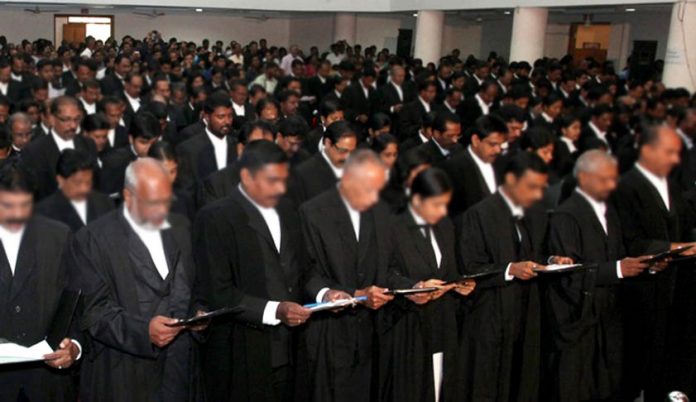
This article is written by Goutam Bishuprasad Sahu and has been further updated by Easy Panda. This article discusses in detail the process of the entire admission and enrolment process of advocates along with who is actually considered as an advocate. Additionally, it includes the process of becoming an advocate and the skills required for the same.

This article has been published by Shashwat Kaushik.

Table of Contents

Introduction

One of the most prestigious careers in society is practicing law. Being a lawyer is a never ending career as it does not need you to resign from the position. The legal profession is one of the important pillars in the Indian administration system and being an advocate can be an esteemed career choice. Not each and every individual is qualified or eligible to work as an advocate because it requires certain qualifications. 

Advocacy plays a crucial role in providing justice and contributing to society. The advocates and lawyers are the important members of the legal system. In case of any problems, the advocates help the common people to find the best decision of the courts. Also, they even assist the judges in the courtrooms to deliver a proper judgment.

The concept of admission and enrolment in the legal field plays an important role because it makes sure that only qualified individuals are eligible for practising law, which helps in maintaining the integrity of the legal profession. The admission and enrolment of the advocates are clearly discussed under Sections 16 to Section 28 of the Advocates  Act, 1961

Importance of admission & enrolment

The admission and enrollment process is important so that only those law graduates who are well-versed with the law and are knowledgeable could appear before the court to represent their clients and ensure that justice is served by due process of law. 

Now that we have an idea about the concepts of admission and enrolment, let us further look into who is an advocate under the Advocates Act, 1961.

Who is an advocate

The definition of ‘advocate’ mentioned under Section 2(a) states that an advocate is any individual whose name is on the State roll which the State Bar Council prepares under Section 17 of the Advocates Act, 1961. The individual should register himself in the State Bar Association or State Advocate Association. 

Advocates are the persons who support or oppose any issue or cause publicly. They represent their client in the court of law. An advocate has a major role to play in the legal system of the country. He is the only one who after analyzing the facts and circumstances of his clients chooses to represent him and get him to justice. The Hon’ble Court then passes its judgment by hearing the arguments of the advocate. 

They are so skilful in their art of advocacy that they can even turn a case in their favour against all odds. They are also known as court officers because without them courts can not function as they are the roots of every judicial proceeding. 

The advocates prepare the outline of the case only after meeting the client and knowing the actual facts of the case. The final documentation is prepared only after going through the details of the facts and analysing the legal provisions that could be related to the facts. It is the duty of the advocates to put the things in the right place so that they can form a strong case which will favour the client. Before discussing any further concepts let us know which act deals with advocates and their roles and responsibilities. 

Eligibility criteria for admission

The admission and enrollment of advocates is a very difficult process that every law graduate has to undergo to become an advocate. The process is governed by the Advocates Act, 1961 and the rules are set by the Bar Council of India and other respective State Bar Councils.

Eligibility criteria for enrolment as an Advocate (as per Section 24 of the Advocates Act, 1961) are as follows:

A person shall be qualified to be enrolled as an advocate if he fulfils the following conditions:

  1. He is a citizen of India, provided that a national of any other country can also practise only if Indians are allowed to practise in that other country;
  2. He has attained the age of 21 years;
  3. He has completed his bachelor’s degree in law (LL.B.);
  4. He has paid the required stamp duty, which is chargeable under the Indian Stamp Act, 1899 and an enrolment fee payable to the State Bar Council. The individual has to pay a fixed amount to the State Bar Council along with an amount of one hundred and fifty rupees to the Bar Council of India. If such a person is a Schedule Caste or Schedule Tribe then he has to pay an amount of one hundred rupees to the State Bar Council and twenty-five rupees to the Bar Council of India. Now we will be looking into the role of the Bar Council for a better understanding.

Understanding the role of the Bar Council of India

The Bar Council of India (BCI) is a statutory and independent body. It plays a major role in establishing guidelines for legal professionals and conducting the AIBE. There are two bodies constituted one at the central level, i.e., Bar Council of India and the other at the State level, i.e., State Bar Council. So let’s understand what exactly a Bar Council is.

What is the Bar Council

The Bar Council is a statutory and independent body which was created by Parliament under the Advocates Act, 1961. The reason behind the formation of this council was the regulation and representation of the Indian bar. There are a total of 18 members in the Bar Council of India. The first two members are the Attorney General and Solicitor General who are the ex-officio members of the council. The other 16 members represent the 16 state bars of the country. The tenure of each member of the bar is 5 years.

Apart from the enrolment of Advocates, the Bar Council’s function includes laying standards of professional behaviour and etiquette for advocates. Promoting law reforms and legal education by giving recognition to universities and management and investment of funds of the Bar Council. The establishment of the State Baar Council is mentioned under the provision of Section 3 of the Advocates Act 1961 which states that this body will act as a regulatory authority for legal professionals at the state level. 

As we know there is an ex-officio member in the Bar Council of India, and similar is the case with the State Bar Association. The Advocate General of the State will hold that position. The other members are decided on the basis of the number of electorates. If the electorate is less than 5000, the total number of members in the state council will be 15. If the electorates are within the range of 5000 to 10000, the total number of members in the State Bar will be 20. If the number of electorates is more than 10,000, then the total number of members in the State Bar Council will be 25. 

Let us further discuss the functions of the Bar Council in the enrolment process of an advocate.

Functions of the Bar Council in the enrolment process

The functions of the Bar Council with respect to the enrolment of advocates are mentioned under Sections 16 to 28 of the Advocates Act 1961. They are as follows:

  • Senior and other advocates – Section 16 mentions the two types of advocates. The first category is senior advocates and the second category is other advocates. The designation of a senior advocate is granted by either the Supreme Court or the High Court after they believe that these advocates have gained sufficient recognition and have a unique set of knowledge.
  • State Bar Councils to maintain a roll of advocates – Section 17 of the Advocates Act mandates every State Bar council to maintain a roll of advocates which could be further divided into two sections i.e., Senior Advocates and Other Advocates.
  • Transfer of names in the state roll – Section 18 talks about the transfer of names from one state roll to another state roll while Section 19 mandates every state council to send a copy of the roll of advocates to the Bar Council of India.
  • Certificate of enrolment – Section 22 states that the certificate of enrolment should be issued to every person whose name is entered in the roll of advocates which the state bar council maintains under this act. For a better comprehension let us look into the difference between the All India Bar Council and the State Bar Council.

Difference between the All India Bar Council and a State Bar Council

The main differences between the All India Bar Council and a State Bar Council are as follows:

  • All India Bar Council – The All India Bar Council is a body which operates at the national level. It is a Supreme body that controls and fixes the rules and regulations regarding legal education and the conduct of Advocates. A lawyer who wants to register with the All India Bar Association has to pass AIBE.
  • State Bar Council – The State Bar Council is a body which operates at the state level. The State Bar Council of each state is affiliated with the Bar Council of India and handles local matters such as disciplinary actions. No exam to register with the State Bar Council. 

For better understanding let us further look into the differences in a tabular form. 

CategoryAll India Bar CouncilState Bar Council
Jurisdiction Operates at the National level.Operates at the State level.
DefinitionA Supreme body that controls and fixes the rules and regulations regarding legal education and the conduct of AdvocatesThe State Bar Council of each state is affiliated to the Bar Council of India and handles local matters such as disciplinary actions.
CriteriaA lawyer who wants to register with the All India Bar Association has to pass AIBE.No exam to register with the State Bar Council. 

Steps to enrol as an advocate

Enrolling as an advocate in India is basically regulated by the Bar Council of India. To become an advocate one needs to get enrolled. The enrolment process is very important for someone to become an advocate. There are certain steps that need to be followed to enrol as an advocate.  

  • Step 1: The first step in becoming an advocate is to complete the Bachelor’s degree in LLB from a recognised university or institution. 
  • Step 2: The next step is to register yourself with the State Bar Council. The admission and enrolment of advocates is mentioned under Chapter III of the Advocates Act, 1961.
  • Step 3: The next step after registering with the Bar is to obtain an enrolment application from the State Bar Council website.
  • Step 4: After the filling of enrolment application is done, major documents such as an address proof, law degree, and proof of nationality are submitted along with payment of fees as mandated by the State Bar.
  • Step 5: After the submission of a certificate along with the required documents, the credentials are sent for verification by an authority. After approval from the authority, a provisional enrolment certificate is issued.
  • Step 6: The next step to enrol as an advocate is to appear in the All India Bar Examination which is conducted by the Bar Council of India. 
  • Step 7: Once the applicant passes the AIBE, a certificate is issued from the State Bar Council that permits you to practise as an advocate in India. 

Now let us look into the required documents which are needed at the time of the enrolment process.

Required documents

  1. Academic degrees- LLB degree or Provisional certificate, LLB mark sheet, Graduation degree and mark sheets, Senior secondary certificate, Class 10th certificate and mark sheet.
  2. Identification and personal documents- Residence proof, Photographs, Caste certificate.
  3. Professional and other relevant documents- Original attendance certificate, Service related documents, Affidavit of criminal cases.

Let us also look into how the training and apprenticeship of the enrolment process in the below-mentioned heading.

Training and apprenticeship

A law apprenticeship or training is a type of internship program that fresh law graduates undergo under Senior Advocates to learn the skills and tactics of advocacy. The skills include handling legal matters, client consultation, drafting applications and petitions, legal research and other related skills.

Prior to the enactment of the Advocates Act 1961, law graduates had to compulsorily train under a Senior Advocate for a year and then appear in the Bar examination. However, after the enactment of the Advocates Act 1961, Rule 25 of Part IV of the Act clearly states that a law student who is enrolled in a 3-year course from a recognised university has to complete 12 weeks of internship whereas the student who is enrolled in a 5-year course has to complete 20 weeks of internship. The rule further suggests that the internship should not be in continuous periods for more than 4 weeks and the students should have done an internship under the guidance of Trial or Appellate Court Advocates. 

Now let us focus on the All India Bar Examination (AIBE) and how it is conducted so that it can give us a better idea regarding the examination.

All India Bar Examination (AIBE)

The All India Bar Examination is conducted every year by the Bar Council of India for law graduates who are keen on starting their careers as a practising advocate. After passing the examinations, the law graduates are awarded a certificate which allows them to practise all over the country. Many people question the importance of this exam. However, they forget that it is not just an exam but a way through which the law graduates who are entering this noble profession are made sure that they have a basic level of understanding and competence.

Usually, this exam is conducted twice a year, however, it was conducted only once in 2024. The AIBE is conducted in offline mode and covers the following subjects.

Subjects

  1. Constitutional law
  2. Indian Penal Code / Bhartiya Nyaya Sanhita (BNS)
  3. Family laws
  4. Code of Criminal Procedure (CrPC) / Bhartiya Nagrik Suraksha Sanhita (BNSS)
  5. Indian Evidence Act / Bhartiya Sakshya Adhiniyam (BSA)
  6. Code of Civil Procedure (CPC)
  7. Alternative Dispute Redressal including Arbitration Act
  8. Public interest litigation
  9. Administration law
  10. Company law
  11. Environmental law
  12. Cyber law
  13. Labour and Industrial Law
  14. Law of Tort including the Motor Vehicle Act and Consumer Protection Law
  15. Laws related to taxation
  16. Law of Contract
  17. Specific Relief Act
  18. Property laws
  19. Negotiable instrument Act
  20. Land acquisition Act
  21. Intellectual Property laws and Professional Ethics including cases of Professional Misconduct under BCI rules.

The AIBE is an open-book examination which means the candidates will be allowed to take the respective bare acts along with them in the examination. The exam conducted is of 100 marks and contains 100 multiple choice questions. Each correct answer rewards you with 1 mark while there is no negative marking for wrong answers. Let us properly discuss the registration process for the All India Bar Examination. 

Registration process for AIBE

The registration process starts after the All India Bar Council releases a notification for conducting the All India Bar Examination on its official website. The following steps need to be followed to complete the registration process – 

  • Step 1: The following documents such as the Advocate ID card of the State Bar Council, enrolment certificate, scanned photo and signature should be kept handy because they can be used at any stage.
  • Step 2: Filling the registration form which contains the name of the applicant, father’s name or husband’s name, date of birth, address, email, phone number, etc. Along with these details, the applicant also has to fill 3 preferred exam centres. 
  • Step 3: A passport-size photo (10 to 50 KB) in jpg or jpeg format along with a scanned signature (10 to 50 KB) has to be uploaded.
  • Step 4: A unique registration number and password will be sent to the above-mentioned email id.
  • Step 5: The applicant has to go to the website and enter the credentials on the login page.
  • Step 6: The applicant then has to click on the “print challan” button to generate a challan and then visit an SBI bank to pay the application fee. Also it can be paid online as well on the website. 
  • Step 7: After the prescribed fee is paid, the applicant will get a last chance to make the necessary changes in the application form to rectify his mistake. After the form is submitted, the applicant will be able to check the status of his application online. 

Now we will be understanding the tips and tricks on how one can prepare for the examination for a better clearance. 

Tips for conquering the AIBE

The students who are going to take the AIBE 2024 should focus and study in an organised way if they want to excel in this exam. Some of the useful tips could be as follows –

  1. The subjects for the AIBE should be noted and a brief of all the subjects should be made.
  2. The study plan should divide the syllabus into short topics and short topics should be covered at first.
  3. Focus should be made on collecting quality study materials both from online and offline resources.
  4. Special focus should be made on solving the previous year’s papers so that the aspirants are familiar with the question paper pattern.
  5. Important topics should be highlighted along with landmark cases of each subject and should be thoroughly studied. 

After you pass the AIBE, the candidates have multiple opportunities such as:

  1. Enhancement of career as an advocate because passing the exam confirms that you have a sound knowledge of the field which attracts law firms and clients.
  2. After passing the AIBE, the applicant is granted a practice certificate which allows them to represent their clients from across the country.
  3. Also after the AIBE is cleared, one can further aim to be part of the teaching community by possessing additional qualifications.
  4. Employment opportunities increase in the public sector and corporations after one gets a certificate after passing AIBE. 

As we now know candidates have multiple options after passing the exams, let us see how many attempts one gets for appearing in the AIBE.

Number of attempts of the All India Bar Examination

The All India Bar Examination does not provide any limit for candidates to appear. They can appear as many times as they want. If an advocate does not pass the examination at once then he can reappear for the exam and get the certificate of practice once he/she passes the examination. As we saw there are no limits for candidates to appear in the examination, let us now discuss whether advocates can practise in all the states. 

Advocates can practice in all states

Advocates registered in the role of one state can practise anywhere in the country. According to Section 30 of the Advocates Act, 1961, an advocate is eligible to practise in all the territories covered in this act (the whole of India), he can practise in all courts including the Supreme Court of India, and he can practise before any tribunal, authority and any person who is authorised to take evidence of the case.

But to practise in a state other than the registered state the advocate needs to register himself in the respective Bar Council of the state where he wants to practise. It is compulsory for the advocate to register him with the State Bar Council. He needs to complete the registration process and pay the registration fees. An advocate can be a member of multiple State Bar Councils but he has to pay the annual fees of all the State Bar Councils to continue his membership in those councils. Now we will be discussing the All India Bar Examination Rules.

All India Bar Examination Rules, 2010

On 10th April 2010, the Bar Council of India adopted a resolution that it would conduct an All India Bar Examination. The guidelines clearly stated that the advocates compulsorily need a practice certificate under Chapter IV of the Advocates Act, 1961 to represent their client. 

The Bar Council further clarified that,

  1. The advocates who come under the ambit of Section 24 of the Advocates Act, 1961 have to pass this examination to continue their practice in India.
  2. All the law students who are graduating in the academic year 2009-10 and later have to appear for the Bar Examination.

Need for change in the enrolment process

After a law student completes his education, the first task he faces is to enrol himself as an advocate and this process is governed by the Advocates Act, 1961. This process has been in use for such a long time that it has become outdated. The major change that should take place to make it relevant in recent times is to increase the usage of technology. The application process for enrollment is using the same old method of pen and paper. 

Overly this needs to be changed because it is slow and is subject to corruption. The process should be fully digitalised and show all the steps from submission of the application to publication of the result. Another change that should take place is the uniformity in the process. Different State Bar Councils have different procedures for the enrolment of the advocates which create confusion between the applicants. A common procedure will make sure that no such confusion takes place.

Importance of rigorous admission process

The procedure of admission of advocates is very tough. This is done for the following points:

  1. To make sure that only advocates who meet the eligibility criteria are given the licence to practise law so that a high standard of justice is maintained in the country. 
  2. Another reason to lay down such strict guidelines is to uphold the ethical standards of professionalism in the country.
  3. To make sure that Law schools not only provide theoretical education but also practical education that could raise the standard of legal education in India. 

Certificates of enrolment

The concept of a Certificate of Enrolment is mentioned in Chapter III of the Advocates Act, 1961 under Section 22 which states that after a law graduate has registered himself with the State Bar Council, he will be issued a certificate that grants him the power to practice law in the State. The certificate mainly has the details of the Advocates, his enrolment number and a statement that affirms that he is now a member of the State Bar Association. 

Let us look into the challenges that are faced by the advocates during the enrolment process. 

Challenges faced during enrolment of advocates

Enrolment as an advocate is one of the key moments in the life of a law graduate. Many issues are still unresolved even though the Bar Council has established a number of regulations to streamline the procedure. Some of the challenges that are faced during the process of enrolment are as follows:

  1. The most common challenge which is faced by law graduates before their enrolment is that they are not aware of the rules and regulations of their respective state bars. Since each state has its own separate bar association, the applicants mostly get confused between their rules.
  2. Eligibility criteria are another challenge in getting enrolled. To check that the applicant has a valid law degree and is within the prescribed age limit with a clean criminal record requires extensive document checks.
  3. Administrative challenges such as filling out the application process, submission of documents, etc require time that could potentially delay the enrolment process.
  4. The chance of biases during the process of evaluation of documents by the members of the bar association is also one of the major challenges.
  5. High enrolment charges by the Bar Association of different states is another problem which the applicant faces.

To solve these problems, the following steps can be taken:

  1. All the State Bar should conduct workshops on explaining their respective rules and regulations as that could ease the process for applicants
  2. A time limit should be fixed to complete the application process so that the enrolment process can be completed in the given time frame.
  3. The administrative challenges like filling of the application process and document submission should be made online to reduce the burden on the administration.
  4. The Bar Council of India should fix the enrolment charges for every state and that should be such that even a financially weak person in society is able to afford that. This point was raised in the recent writ petition filed against the Union government, BCI and SBCs in the case of Gaurav Kumar vs Union Of India (2024), where the Supreme Court had held that the SBCs can not charge unreasonable enrolment fees and the fees should be fixed at Rs 750 for general category and Rs 125 for backward community.

Let’s further discuss the rights and privileges of advocates, so that we can get a clear idea about what  the rights and privileges an advocate gets to render its service.

Rights and privileges of an advocate

After a law graduate becomes an advocate, he enjoys certain rights and privileges. Some of them are listed below:

  1. Right to practice: The most important right that a law graduate gets after being enrolled as an advocate is the right to appear before the court of law to represent his client. It is an exclusive right given to them by the Bar Council of India. Also, as per  Article 19(1)(g) of the Constitution which grants the citizens of the country to practise any profession, this right helps them to practice in court.
  2. Right to enter the court: The advocate has the right to enter any courtroom and observe the proceedings in the court under Section 30 of the Advocates Act, 1961. Also, the advocates can use the resource to access the database of previous judgements and cases.
  3. Right of meeting with the accused: The advocate has the right to meet with the accused even if the accused is in jail. This helps the advocate to gain insights into the case and prepare his case accordingly. 
  4. Right to privacy: The advocate has the right to secure his conversation with the client and no one can force him to reveal that information. This information is mentioned under Section 134 of the Bharatiya Sakshya Adhiniyam, 2023

Now let us look into the most important aspect that is the code of conduct and professional ethics in advocacy. 

Code of conduct and professional ethics

The rules or principles that guide an individual in any kind of profession in their conduct or decision-making with others are known as “Professional Ethics”. “Advocacy” is also one such concept which helps in guiding individuals in any profession in their conduct. While professional ethics provides a framework for moral behaviour within a particular profession, advocacy involves actively supporting and advancing the goals of individuals or groups.

Considering the consequences on the profession and the general public; the connection of these concepts implies an effective advocacy that is both ethical and responsible. Professional ethics are crucial in Indian courtrooms to make sure that justice has been provided and to protect the integrity of the country’s legal system.

All lawyers, judges and advocates must adhere to ethical principles such as honesty, integrity, competence, etc. Any advocate practising advocacy in India must follow all the professional ethical principles that are led down by the BCI (Bar Council of India) in the form of Rules. 

They should follow the 7 lamps of advocacy like honesty, courage, industry, wit, eloquence, judgement, and fellowship which are very essential for them to succeed in their professions. These professional ethics standards help them to act in the right way as they are called as the Pillars of Justice. It is very important for the advocates to adhere to all the professional ethics rules and duties that are provided to them under the Advocates Act, 1961, because negligence can lead to certain punishments for professional misconduct. 

Now let us understand that if any kind of professional misconduct is occurring then what are the punishments that are provided to the advocates? 

Punishment to advocates for Professional misconduct

  1. Upon receiving a complaint against an advocate if the State Bar Council has sufficient reasons to believe that the advocate on roll is guilty of such misconduct then the case shall be referred to the disposal of the disciplinary committee.
  2. If the State Bar Council has sufficient reasons to suspect that an advocate on the roll has engaged in any sort of misconduct after receiving a complaint against the advocate, the matter will be forwarded to the disciplinary committee for resolving the same;
  3. Along with setting a hearing date, the State Bar Council’s disciplinary committee will notify the advocate and the Advocate General; following the hearing of the case the disciplinary committee may:
  • Dismiss the proceedings or order the State Bar Council to file them.
  • Punish the advocate.
  • Suspend the advocate for a particular period.
  • Write down the advocate’s name off of the state’s list of advocates.
  1. When an advocate is suspended for a particular period, he is debarred from practising in any court or before any person.

Let us now understand the re-enrolment process with the transfer of advocates between the Bar Councils. 

Re-enrolment and transfer between Bar Councils

After completion of a definite period of time, there is a need for re-enrolment for the advocates. Also, transfer of advocates done between the Bar Council of India and the State Bar Council are needed. So let us understand the process of re-enrolment and the transfer of advocates between the Bar Councils. 

Process of re-enrolment after a lapse or suspension

The concept of re-enrolment in the Bar Council means that an advocate is registering again with his/her State Bar Association after a certain period. The re-enrolment arose because the advocate was suspended due to any disciplinary issues. To re-register, there are certain steps that need to be followed:

  • Step 1: A prescribed fee of each Bar Council is delivered in favour of the secretary by way of cash or demand draft.
  • Step 2: A definite amount should be in the secretary’s favour of the Bar Council of India.
  • Step 3: A self-application should be filled to the chairman of the enrolment committee of that particular State Bar.
  • Step 4: An affidavit has to be filed by the advocate to make sure that he does not hold any disqualification under the Advocates Act, 1961.
  • Step 5: The original enrolment certificate will be required to be placed before the enrolment committee for endorsement. A new application for resumption of practice will be placed before the enrolment committee for the order of resumption of practice. 

Once the verification process is done, the Bar Council may grant a certificate of re-enrolment to the advocates. Now we will be looking into the guidelines that are provided for transferring the registration of an advocate from one State Bar Council to another State Bar Council.

Guidelines for transferring registration to another State Bar Council

The concept of transfer of registration from one state bar to another state bar is mentioned under the provision of Section 18 of Chapter III of the Advocates Act 1961. This particular section of the act states that an advocate has the right to move his registration from one State Bar to another State Bar. The following steps need to be taken:

  1. The application for transfer should be filed through “Form C” which should be accompanied by a certified copy of the entry in the State Roll relating to the applicant. Another certificate which states that his enrolment certificate has not been recalled and no disciplinary action is going against him should be attached along with the application. 
  2. After the application is received, the secretary from the state council will enquire with the other concerned State Council for any kind of objection to the transfer.
  3. If there is no objection to the transfer from concerned State Councils, the application will be further submitted to a particular committee that is specifically designed for these purposes. 
  4. After getting approval from the committee, the Bar Council of India will order the name of the advocate to be taken off from the first State Bar and added to the new State Bar. 
  5. The advocate will hold back his senior position in the new State Bar which he used to hold in the previous State Bar.

There are certain special circumstances or exemptions on the admission and enrolment process of advocates, let us discuss the same further. 

Special cases or exemptions on admission and enrolment of advocates in India

We will here under this particular head talk about the special provisions or exemptions on admission and enrolment of advocates in India and we will also be looking into the exceptions provided for individuals with special qualifications.  

Exceptions

Apart from prescribing guidelines, the Advocates Act, 1961 mentions some exceptions for individuals who possess specific categories, qualifications or experiences. 

  1. Vakils and pleaders: Any person from a law background who is practising as Vakils, pleaders or Mukhtars for a minimum period of three years can become an advocate.
  2. Public servants: Any person from a law background who was in public service can be eligible to become an advocate.
  3. Experience: If the Bar Council of India specifies then a person with requisite experience can be designated as an advocate.
  4. Judges: Any judge from the High Court after retirement can practise advocacy in India.
  5. Disabled Applicants: Relaxation in the age limit is given to disabled applicants with a fee concession and accessibility support.

Now, further, we will be looking into the recognition of a law degree by foreign universities.

Recognition of a degree in law from a foreign university

A person obtaining a law degree from a foreign University or a person of Indian Origin having double citizenship, who has attained 21 years of age can be enrolled as an advocate if the following conditions are fulfilled.

i) The degree has been obtained from a regular course which may be for 3 years after graduation or may be for 5 years after passing 10+2 i.e. higher secondary education.

ii) The university from where the degree is done is recognized by the Bar Council of India and the candidate has passed the All India Bar Examination.

For the purpose of recognizing the degree, any foreign university can apply to the Bar Council of India. The application shall contain the following details mentioned below:

  1. History and details of the university,
  2. Handbook, prospectus, brochure, and courses of study of the university,
  3. University’s standing on the accreditation list made officially or by any recognized private body,
  4. Any other kind of information or documents that the Bar Council of India may ask for, and an inspection of the university by the Bar Council of India.

Now let us discuss the rules that are provided by the Bar Council of India regarding the registration and regulation of foreign lawyers.

Bar Council of India Rules for registration and regulation of foreign lawyers

  1. Foreign Lawyers and law firms can practise Non-Indian law and set up their office in India. For this, they have to get registered with the Bar Council of India.
  2. The registration will be valid for a term of 5 years.
  3. Foreign practitioners will not be allowed to appear before the Indian courts and tribunals
  4. Foreign lawyers will only be allowed to participate in international arbitration held in India.
  5. Foreign lawyers can go in partnership with Indian lawyers.
  6. Registration of foreign lawyers will be done on the basis of reciprocity (equal opportunity for Indian lawyers in a foreign country).
  7. Foreign lawyers need to deposit a prescribed security guarantee which is refundable.
  8. Permission needs to be taken by the Foreign lawyers from the Home Ministry of India and from their native Bar Council.
  9. The governance of the foreign lawyers will be the same as that of the Indian Lawyers.

Let us now look into the eligibility criteria for senior advocates and understand the same.

Eligibility for senior advocates and legal advisors

The concept of enrolment and admission of senior advocates is mentioned under Chapter III of the Advocates Act, 1961. Under this particular act Section 16 talks about eligibility criteria of senior advocates. The provision says that any advocate with his consent can be designated as a senior advocate if the High Court or Supreme Court feels that the advocate has exceptional knowledge in the field and will be an asset to society. The eligibility criteria are mentioned below:

  1. The advocate should be registered with the Bar Council of the state where he wants to be designated as a Senior Advocate. 
  2. An advocate to be designated as a senior should have a minimum of 10 years of practice as an advocate.
  3. The minimum age to apply for being a senior advocate is 45 years.  

Apart from the above mentioned points, the advocates who have several publications of legal articles under their name are given an upper hand on the other advocates. 

Understanding the future of the legal enrolment of the advocates will be very helpful and we will be focusing on the trends and reforms, so let us discuss the same below. 

Future of legal enrolment: trends and reforms

Recent changes in enrolment rules

There are some kind of changes that are made in the enrolment rules of the advocate which are discussed below: 

  1. The Supreme Court in the recent writ petition with respect to “enrolment fees” of advocates has stated that the enrolment fees cannot exceed an amount of Rs.750. 
  2. The Supreme Court has allowed final year law students to appear in the All India Bar Examination (AIBE) who are without any backlogs and who have passed out from BCI- recognised universities but have not received a degree, or students who have obtained a degree but have not enrolled with any State Bar Council. 
  3. BCI also issued a list of rules and guidelines which talk about the permission granted for the entry of foreign law firms to operate in India under certain conditions.

Technology plays an important part in today’s lives. It plays a major role in the lives of human beings. Starting from the children to the oldest people, all are using technology as it has made all things very simple and easier nowadays. Starting from the education sector to the corporate sector, each and every sector is majorly dependent upon technology these days and is using the same as it can provide various support and benefits. 

Importance of technology for various sectors

Technology also has a crucial role in the legal industry. Corporate law firms are using technology frequently as it has made their work process much easier than before. Technology also helps out lawyers and advocates in different areas of their work and many of the litigation lawyers also have started using technology on a daily basis. Although lawyers are trying their best to use technology in the present situation, subordinate courts lack basic IT facilities. 

The scenario which is going on in the present time is sufficient enough to understand that lawyers and law firms should be familiar with the technology and its facilities. Nowadays co-existence with the unseen situation has become very important. To avoid such a problem in the future, lawyers and advocates can learn the basic use of technology and its facilities and they should also provide proper training to their juniors and staff so that they can also be easily using IT facilities. There are some suggestions mentioned below that can be used by the lawyers to avoid the present problems in the future:-

  1. Technology can be used to improve and update. 
  2. Integrating technology into their everyday job routine.
  3. Investigating and learning more about artificial intelligence and other technological elements. 
  4. Promotion of using virtual meetings in their work culture.
  5. Not limiting the usage of a particular program or any particular software.

The legal profession may grow in the coming years by adopting advanced technologies and creating innovative business ideas, which could result in the legal system’s success. Now let us look into how technology can impact the legal enrolment of advocates.

Impact of technology on legal enrolment

The sudden growth of technology in the legal sector has also transformed the process of legal enrolment. From the filling of applications to publication of results, technology has played a major role in the legal field. Few impacts impact of technology on legal enrolment are as follows:

  1. The application process of filing for registration in the State Bar Council or for writing the AIBE has been made online through various recognised portals.
  2. The legal education and study materials related to the AIBE are made available online which helps students from remote areas to access.
  3. In case of any doubt regarding the subjects and the content inside, online doubt-solving classes are arranged that could further help students in enhancing their careers.
  4. The emergence of automated chatbots and emails helps deliver the applicant’s right information at the right time. 

Technology has emerged as a powerful force in improving the overall experience of this process of legal enrolment. With a prosperous career in advocacy, there are certain alternative career options that are available to law graduates. 

Alternative career paths for law graduates

When we think of a graduating from a law school, the first profession to pop inside everyone’s mind is that of an advocate. However, apart from advocacy, there are few alternative paths that a law graduate can pursue.

  1. Legal Journalism – a law graduate can dive into the field of legal journalism and excel by reporting and writing about legal aspects of day to day news and publishing them through his blog or on some similar websites. 
  2. Academia – a law graduate after completing LLM and passing the NET exam can opt for teaching in law colleges.
  3. Teaching – a law graduate can put his feet into the world of entrepreneurship by opening various coaching institutes that prepare young students to appear for various competitive exams.
  4. Civil Services –  this is a dream for every Indian student. A student after getting a law degree can appear in UPSC and after qualifying the exam can be posted as a civil servant. 
  5. Paralegal – after you attain a law degree, you can work as a paralegal and assist the advocates in their work. The only difference is that you will not be allowed to appear before the court of law. 

Now further we will be discussing the continuance of legal education and its importance.

Continuing legal education

CLE or Continuing Legal Education is a type of professional development and education plan that helps advocates to stay up to date with the latest developments and trends in the field of advocacy. The legal field is very diverse with changes coming every day. The CLE programs include workshops, seminars, and certificate courses on various topics such as client counselling, research activities, etc. 

With the help of CLE, the advocates can have the following advantages:

  1. The advocates can be aware of the recent developments in the field of law.
  2. The advocates can learn about new skills, legal theories and the latest practices that can help their clients in seeking justice.
  3. Being up to date with the latest trends allows an advocate to be financially more stable by improving their practice. 
  4. A main benefit of the CLE can be that advocates from diverse backgrounds come together to share the knowledge that helps in building connections

In recent times, CLE has been an important part of the career of an advocate. It helps them to be aware of the recent changes and also provide best service to their clients. 

Now moving forward, we will compare the admission and enrolment process of various countries. 

Comparative analysis of admission and enrolment in other jurisdictions

Till now, we have seen the procedure of how a law graduate can become an advocate in India. Now we will make a comparative analysis of how one can become a Barrister in England or a lawyer in Canada.

To become a lawyer in Canada, there are a few basic steps that a student needs to follow. They are as follows:

  1. The student needs to complete at least three years of undergraduate degree after which he is eligible to write the Law School Admission Test (LSAT). 
  2. After qualifying for the exam, the student can choose the law school of his choice and obtain a law degree. 
  3. The student is required to either articulate with a law firm or complete the law practice program. 
  4. After the student has fulfilled all the conditions, he is required to write the Bar examination of the area where he plans to practice. 

However, to become a barrister in England, the following requisites are to be fulfilled:

  1. The student should have an LLB degree or the student from non-law background should have a Graduate Diploma in Law. 
  2. After the law or equivalent degree, the student is supposed to join any one of the four Inns of the court and complete the Bar Training Course (BTC).
  3.  After the academic qualifications are met, a work-based practical training is necessary under the guidance of an experienced barrister. 
  4. This is called Pupillage and after the successful completion of the same, the student can finally become a barrister. 

Let us look into the same in a tabular form, which will help us understand the same in a better way.

CriteriaIndiaCanadaEngland
Educational requirements 3-year or 5-year LLB degree from a recognised university.3-year undergrad degree and then a Licentiate Law degree.LLB degree.
ExamsAll India Bar Examination (AIBE) Bar examination of respective StatesBar Course Aptitude Test and Bar Training Course.
Apprenticeship of training 12 or 20 weeks of internship as per the law programArticling for 8 to 10 monthsPupilage for 12 months

Conclusion

In the present scenario, there are numerous options for a law graduate. An advocate can practise privately and independently from the very first day of his career. He can also specialise in various fields like criminal law, civil law, corporate law, income tax lawyer etc. The beginners can also join the chamber of senior lawyers to gain practical knowledge and experience. As an advocate, one can also serve in the government sector. One can join the judicial career by clearing the state judicial services examination. This can help him to become a Civil judge or a Judicial Magistrate.

There are options in the private sector also. One can get into a legal firm as a legal adviser and get good remuneration for the same. These days banks are also appointing advocates to deal with their cases. The overall job of the advocates is quite interesting and encouraging. Advocates in India definitely have a bright future but for the same, they need to make a commitment to their profession to achieve excellence.

Frequently Asked Questions (FAQs)

What is the difference between a lawyer, advocate and legal practitioner?

Any person having an LL.B. (Legum Baccalaureus) or Bachelor’s degree in law, is known as a lawyer. A lawyer is anybody who has a LL.B. or legal degree. On the contrary, advocates are the persons who have graduated with a legal degree and also registered with the Bar Council of India (BCI).

To be considered as an advocate, a person should have a legal degree as well as should be registered with the BCI. However, a legal practitioner is a broad term which includes all the advocates, attorneys, attorneys at law, barristers, counsels, counsellors, Juris Doctors, lawyers, legal professionals, members of the bar, practitioners, professionals, solicitors etc.

What qualifications are required to enrol as an advocate?

The basic qualifications that are needed to enrol as an advocate apart from being an Indian citizen are that the applicant should hold a Bachelor’s degree in Law (LLB) from a recognised university or institution. The minimum age to enrol as an advocate is 21 years.

Can foreign law graduates practice in India?

Foreign lawyers are allowed to practise in India after fulfilling the eligibility criteria laid down by the Bar Council of India. The BCI through Rules and Registration and Regulation of  Foreign Lawyers and Foreign Law Firms in India, 2022 allowed them to practise in India if they are able to practise law in their own country. However, they need to be registered with the BCI or else they can practise only non-litigious matters.

How do I transfer my enrolment from one state bar council to another?

The Advocate who wishes to transfer his enrolment from one state bar to another state bar has to fill out Form C which can be downloaded from the BCI website. After filing the application and submitting the required documents. The concerned committee will check for any pending disciplinary action and if no objection is found, the application for transfer will be passed.   

What is the All India Bar Examination, and who needs to take it?

The All India Bar Examination is an examination which is conducted by the Bar Council of India for graduates from a law background who are eager to start their career as an Advocate. The AIBE is an open-book examination conducted twice a year in offline mode.

What documents are required for admission as an advocate?

The necessary documents that are required for admission as an advocate are as follows:

  1. LLB degree and mark sheets
  2. Character certificate from a recognised university
  3. Address proof e.g., Aadhar card, driving licence, etc.
  4. Proof of Nationality
  5. enrolment fees
  6. Passport-size photographs

What happens if I fail to adhere to the professional code of conduct?

Every profession requires its employees to be in good behaviour. Similar is the condition with the advocates. When an advocate is charged with professional misconduct, the State Bar Council’s disciplinary committee handles the case. The following actions can be taken such as withdrawal of name from state roll, suspension of advocate for a certain period, reprimanding the advocate etc. 

What are the skills required to be a good advocate?

There are certain skills that are required for an advocate to be considered as a good advocate like having a command over the language, oratory skills, having the 3 A’s (Attitude, Aptitude and Analytic), reading habits, emotional intelligence, teamwork, financial literacy, time management, etc. 

References

Download Now

No consideration, no contract

0

This article is written by Shreya Patel. This article comprehensively explains the rule of no consideration, no contract and the meaning of consideration & contract. It also discusses the exceptions and alternatives present to the rule of no consideration, no contract with case laws and illustrations. 

Table of Contents

Introduction

Ever wondered if the car dealership company can sue you for not buying the car after you have taken a test drive? Here is why it can’t. When you agree to test drive a car, there is no consideration exchanged between the parties which shows that they will buy the car after the test drive. A test drive acts as a complimentary service when you go to buy a car. Hence no consideration, no contract. Contracts are a part of everyone’s daily routine.

For instance, when you go to buy groceries you are entering into a contract with the shop owner to sell the groceries to you, and in return, you will pay for them. The goods form consideration on behalf of the shopkeeper for you and the price you pay is the consideration on your behalf to the shopkeeper. This is where the rule of no consideration no contract becomes relevant. 

Let’s first understand what consideration and contract mean. 

Consideration is the cornerstone of contractual agreements

One of my juniors in college asked me what a consideration is after he had his lecture on contract law. I told him consideration is a type of benefit/something of value that both parties exchange between them. At the start of the article itself, we know that consideration is and has always been an important concept in contract law. For any contract to be valid we definitely need consideration in it. We can count consideration as an incentive. This incentive is received by both parties after they are done carrying out a certain act. 

When someone asks me they cannot understand what consideration is. I would simply say that consideration is a type of price that parties get when a promise is made. Consideration can be of different types. It can be a:

  • Type of service,
  • Money.
  • Promise to do a certain act,
  • Goods,
  • A promise to not carry out a specific act,
  • Performance of some work etc.

Still confused? No worries, let me explain the same in a hypothetical situation. 

One of my friends Panthi had agreed to pay me ₹50,000 for an iPhone. She agreed to do this as I let her live in my flat for 45 days. Both the iPhone and letting to live in the flat are considerations which are exchanged between us. 

You can visit this link to understand what consideration means in more detail. 

Let us look at the legal definition of the same. Section 2(d) of the Indian Contract Act, 1872 (hereinafter mentioned as the ‘Act’) defines consideration as –

‘When a specific act to do something or to not do something is asked by the promisor to the promisee. This act is to be done in the present time or in the future. Here, when the promisee agrees to the same it is known as consideration. The act or promise made here is the consideration.’

The contract should be in writing then only it will be considered valid. Mutual consent is a must! It does not matter how many parties are in the contract. All of them must have mutual consent. Another important thing is to exchange something. Both of these must be there. If it is found that any party violates anything then it won’t be counted. Simple right?

Based on the above definitions, what we understand is that agreement consists of the exchange of promises. When such an agreement is enforced by law it becomes a contract. Contracts are governed by the Indian Contract Act, 1872 primarily in India. The definition of a contract under the Act is mentioned in Section 2(h). The Section says that any agreement which is enforceable by law is a contract. 

After understanding what contract and consideration mean our boat will sail more steadily. However, there are some conditions for a valid contract that we must take a look at before diving into the rule. 

Conditions for a valid contract

Understanding these conditions is important so that we can ensure none of our contracts become invalid. We have to ensure that:

  • An offer is made and the same offer is accepted as well. Because just making an offer doesn’t count. Both the offer and its acceptance must be present together.
  • No parties can enter into a contract without any reason. Correct right? Like, why would you enter into a contract if there is no objective? The parties should have an objective when they enter into a contract. Something for which they need to enter into the contract. 
  • Wait a minute, we also have to ensure that the objective which is there is legal. You cannot just make an offer to steal something with your friend, and his acceptance of it will not be counted. 
  • The next vital condition to enter into a contract also includes being eligible for it. You won’t get admission to the 5th standard if you are in the 4th standard, right? Similarly, the parties to the contract must be eligible to enter into a contract. 
  • Something of value should be exchanged between the parties. The parties must have given mutual consent.
  • The intention must be there to enter into a contract.

In this article we have only discussed these conditions briefly, however, by clicking on this link you can understand the conditions with cases and relevant examples. 

Having understood the meaning of consideration and contract, let’s dive into our core topic for today, which is the rule of no consideration, no contract. 

Rule of no consideration no contract 

Consideration, offer and acceptance are the three main pillars of a contract. If even one pillar is missing then it will not stand straight. In simple words, consideration is when goods or services are exchanged, and in return something of value is given to the seller. 

Let’s say you and your mom went to buy raw materials for your business. You have a deal with a wholesaler for the same. You pay the wholesaler a specific amount every month in exchange for the raw materials, right? This raw material acts as a consideration by the wholesaler and the payment that you make is the consideration from your side. 

Here two things of value are exchanged between two parties. And as we have already discussed above, consideration can be of various types. Here the consideration is in the type of money. 

Without consideration, there is no promise. It is a crucial step for a promise. If there is no consideration, then the other party will have no obligation to fulfil what they have promised. So, if there is no consideration there won’t be any contract as well. We already know that for a contract to be valid, we need consideration. Since for a promise to be enforceable in nature, we need consideration. All these concepts are intertwined. 

Do you know the Latin term ‘quid pro quo’? No? No worries, I will tell you. ‘Quid pro quo’ basically means to give something in return. We have to give something in exchange for the promise to the promisor. This price is given when the act which was promised is carried out. I made a promise to my brother that I would pay his tuition fee if he got 95 marks on a math test. Here I am the promisor and my brother is the promisee. 

When we say ‘no consideration, no contract’ it straight out means that a contract will not be valid if there is no consideration. There has to be an exchange of something that is of value, only then the contract will be valid and enforced by law. There is no hard and fast rule that consideration between the parties has to be equal. 

Let’s take a look at a few examples to understand what we are talking about. 

Illustrations on the rule of no consideration no contract

Now, we shall understand the rule with the help of some simple examples. These examples are of different situations, so you can understand how the rule works in different circumstances. 

Suman tells Anita that she will pay ₹ 5000 as she got a bonus today. Here, in this case, Anita is not giving anything to Suman in return, hence this cannot be a contract as it is hardly a promise. If Suman later denies to give the money, Anita cannot legally enforce the same as the promise was made without any consideration. Any such promises are not enforceable by law. 

Priti had agreed to sell her car to Roshan for ₹ 5 lakh, to which there was no consideration given from Roshan’s side nor was there any acceptance of the same. Here, if in the future Priti decides to not sell her car to Roshan, he cannot enforce the same against Priti as there was no exchange of something of value/promise. And, without consideration from Roshan’s side, this cannot be considered an enforceable contract. 

Goodwill company agrees to buy cotton from a local mill as the company desires and no minimum quantity was specified by them. Here in this case there is no definite consideration from the company’s side. They may or may not buy cotton from the local mill. No obligation is set by the Goodwill company. There was no definite consideration amongst the parties and hence such promise will not be considered a contract and is not enforceable. 

Sanjana promises to buy a new pet for Aniska for her birthday to which Aniska agrees. In this case, there was no promise made from Aniska’s side. So the promise made by Sanjana is not legally enforceable, as the parties did not exchange any consideration. This was merely a gift which does not create a legally enforceable contract. 

Now, we will move towards the exceptions to the rule. We just now discussed how consideration is necessary but is it required for all types of contracts? Let us take a look. 

Exceptions to the rule of no consideration no contract 

We have already discussed how important it is to have consideration from both sides to legally enforce a promise. We however must note that there are some exceptions to the rule of no consideration, no contract. Under Section 25 of the Indian Contract Act of 1872, some exceptions are mentioned where an agreement despite having no consideration is still considered valid. 

So now we will study that there are certain alternatives provided where even if there is no consideration, the contract is considered valid and enforceable by law. Some of these alternatives are:

  • If the promise made is in writing and is also registered under the law then it will not be considered void even if there is no consideration. 
  • If a consumer service is being given then in that case it will be considered as an alternative. In this case, the service is provided to the promisor where the promise had taken place in the past to carry out a certain act. 
  • If any type of legitimate document mentions a certain time for the fulfilment of the promise. 

We shall now take a look at each clause of Section 25 individually to understand it more easily. 

Diving in Section 25 of the Indian Contract Act 1872

As per Section 25, the agreements are considered void when there is no consideration. There are a few exceptions to the same. If the agreement is:

  1. In writing,
  2. Is registered,
  3. A promise for compensating a past act is there, and
  4. A promise for the payment of a time-barred debt is there.

Then in above mentioned cases the agreement despite lacking consideration will be considered a valid agreement. Let us read further to get an even better grasp of the concept.

Clause-wise explanation of Section 25 of the Indian Contract Act 1872

If someone asks me how to understand a Section properly, I would say there is no better way than breaking it into clause-wise understanding. 

Section 25(1) of the  Indian Contract Act 1872 

As per Section 25(1) an agreement if found in writing and when registered will be considered a valid agreement even if there is no consideration. When an agreement is based on natural love and affection between the parties they are considered valid without the presence of consideration. 

Confused? Let’s see the same with an illustration. 

When my father had promised me that he would buy me a scooter when I got into college as a gift. His buying me the Scooter was out of his affection and love for me. So that I can travel to my college easily. We got the same thing in writing and got it registered as well, that when I get into college he will buy me a Scooter. This type of agreement will be considered valid even if I am not exchanging something of value in return with my father.  

If any contract is entered on the basis of love and affection then even in the absence of consideration it is valid. If any agreement is made between a son and his father, or a married couple, or a brother or sister. All these will be counted as a valid contract even if no consideration is given by the parties involved.  

Let’s understand this legal provision in more detail for better understanding.

The agreement has to be in written form and should also be registered as per the law. Only when these two conditions are fulfilled the absence of consideration is counted as an exception. 

Section 25(1) of the Act states that when two parties have affection and love between them and enter into a contract on that basis even with the absence of the consideration it will be considered valid. However, the contract should be in writing. The parties should share a close relationship. 

Understanding with examples always makes it easy. 

Arjun promises to his son ₹ 3000, which the son puts into writing and also registers the same. In this case, this promise will be considered as enforceable by law and the contract will be valid. 

A contract can also be between two siblings. Let us say Susan and Niit are two sisters. It was promised by Susan that she would give 10% of her income every month to her sister. The promise was written and registered. After the agreement is written and registered it becomes legally enforceable in the eyes of law. So now Susan is legally bound to pay 10% of her salary to her sister. If she fails to do so, Niti can file a case against her. 

Let this article take you through some case laws to give a clearer picture regarding the same. 

Relevant case laws on love and affection exception

In Rajlakhi Debi vs. Bhootnath Mukerjee (1900) 4 Cal WN 488, there was an agreement related to maintenance between the couple. The husband and wife had reached an agreement and decided on a fixed amount as maintenance. This was officially written, registered and signed by both of them. Later the husband refused to pay the maintenance. Aggrieved by this the wife moved to the court. 

The High Court of Calcutta ruled that this type of contract was not applicable as it lacked affection and love from the husband. The husband was tired of the constant fights and agreed for the maintenance to have some peace. 

When there is love and affection present behind making the promise, then promises are accepted under the law. This part is clearly missing here. The payment of maintenance was agreed upon by the husband due to many fights that were happening. He did not voluntarily act. He came under his wife’s pressure to do so. The court stated that marriage does mean sharing a close relationship all the time.

Now let’s move towards the second clause of the Section which states about the contract which is based on the voluntary services carried out by a party. 

Section 25(2) of Indian Contract Act, 1872

As per this Section 25(2) an agreement is not void even without consideration. It is only if the promise is made for partly or wholly compensating a person. The compensation is to a person who has acted voluntarily by doing something for the promisor which the promisor was compellable (legally) to do.

Illustration for better understanding

Dipal found a bag that belonged to Shashi. She returned it to her. On getting her bag back, Shashi in happiness promised to reward Dipal with one thousand rupees. Such a promise will also be considered valid. Despite no consideration being there, it will be a valid contract. 

One day on this way to his office Shivam meets his neighbour. The neighbouring was accompanying his family to visit the railway station. Shivam was going the same way. So he offered them a ride in his car. The neighbour was getting late so Shivam’s offer was a blessing to him. He agreed and sat in the car. In exchange, the neighbour promised that he would pay for the petrol for this trip. 

Such a promise by the neighbour is fully considered valid and is 100% legally enforceable.

When an act is carried out voluntarily without asking for something in return such promises are considered valid without consideration. The same is mentioned under Section 25 (2) of the Indian Contracts Act. The contract is valid even if the consideration is not present consideration. When the voluntary acts take place the promisor has to be present. The promisor should also have the willingness to compensate for the act done voluntarily. 

Let’s see how this exception is seen from the case law point of view. 

Relevant case law for voluntary service exception

The court in the case of Karam Chand vs. Basant Kaur [1911] 31 P.R. 1911 stated that when a minor makes a promise it is usually not counted as valid. However, if the minor states that he will carry out an act or promises something after he has attained the age of majority then that type of promise is valid. 

Let’s move towards the third clause of the Section. 

Section 25(3) of Indian Contract Act, 1872

If a person had made a promise in the written form to pay back a certain debt, the non-payment of which would incur any legal non-compliance. The payment could have been avoided if it had become time-barred. Such agreements will also not be considered void as per Section 25(3)

For instance, I had taken Rs. 50,000 from my friend Sakhi. I took this loan 7 years back. The limitation period for the same would end in 3 years. However, I had given her in writing that I would pay her the money back even after it became a timed-barred debt. 

When one party borrows money from another party and does not repay on time it is known as time-barred debt. When the time period in which the money was to be returned had ended the money could no longer be collected legally. 

Under this exception, a promise is made in writing by the borrower that he will pay the amount even if the period for the same has ended. Then it will be considered valid without consideration. Such a promise must be signed by the borrower or their agent. 

Now let us read a case law to understand this in an even better way. 

Relevant case laws under time-barred debt exception 

In the Daulat Ram vs. Som Nath And Ors (1980) case, the landlord had to ask for rent from the tenant. On asking the tenant replied that he could pay the rent by using cash, in draft or by cheque. When the rent was not paid the landlord moved to the court stating the tenant had broken his promise. The Delhi High Court held that this type of reply from the tenant does not show any sign of a promise made by him. This will not be considered as a time-barred debt. Hence will not attract Section 25 of the Act. 

The Supreme Court in Khan Bahadur Shapoor Fredoom Mazda vs. Durga Prosad Chamaria And Others (1961), held that under Section 25(3) there is no mention that the promise has to be exclusively an express promise. The promise can be implied or expressed. The word express is not mentioned anywhere in the Section. When the word promise is being understood we have to understand and read both Section 2(b) and Section 9 of the Contracts Act.

Comparison between Section 18 of the Limitation Act 1963 and Section 25 of the Indian Contract Act 1872

Do you know about the Limitation Act, 1963? Check this link to learn about the Act in detail. Under this heading, we are going to compare Section 18 of the Limitation Act, 1963 with Clause 3 of Section 25 of the Indian Contract Act, 1872. 

Both of these Sections talk about the acknowledgement which is in writing from the debtors. 

What does Section 18 of the Limitation Act of 1963 say?

It says that whenever an acknowledgement is made by the debtor during the limitation period to the creditor, a fresh limitation period is counted from the exact day. So, if the acknowledgement is made on 4th November, the limitation period will start from the 4th November itself. 

When the time limit for paying a certain debt is finished, we cannot claim it anymore. However, if the debtor himself says that despite the debt being timer bared he will pay. Then it will be valid. 

Another important thing mentioned in Section 25 is that if there is a written agreement that is also registered and is with no consideration. Then also it will be counted as a valid contract. It will obviously also be legally enforceable. So if a debtor makes a promise in writing that he will pay the creditor it is considered a valid contract. 

Both provisions are concerned with a written acknowledgement from the debtors. A mere acknowledgement works when it comes to Section 18. Section 25(3) of the Act states that a promise for payment after the expiry of the limitation period has to be made in writing. 

In the case of Kasturchand Jiwaji vs. Manekchand Devchand (1943), the Bombay High Court mentioned the conditions that should be present to amount to a promise as per Section 25(3). The conditions are:

  • Written promise,
  • Signs of both parties,
  • Part or full promise.

The Supreme Court in Hiralal And Others vs. Badkulal And Others (1953), mentioned that under Section 25(3) a fresh contract will be made which will revive the previous liability with a new interest rate and time limit.

Now just understanding the subsections is not enough. We also have to understand the 2 explanations that are added at the end of the Section. 

Explanations under Section 25 of the Indian Contract Act, 1872

Explanation 1 states that this section will not affect the validity of a gift made in any sense. If the gift is accepted by the other party it is considered to be a completed contract of offer and acceptance, hence validity of the gift does not come under this section. 

Illustration 

Amit gifts his friend a property. Ram, his friend accepts the gift and here the agreement ends. If in the future Amit changes his mind the gift will be considered valid nonetheless. The agreement’s validity can’t be questioned. The gift once accepted cannot be taken back. Even if there is no contract, the gift will not be returned. The property will now be considered as a gift only. 

In the second explanation it is stated that when there is free consent from the promisor, the consideration will not be void even if it is inadequate. The consideration’s adequacy is considered only then the courts have to find out whether the consent was free or not. 

You can visit this link to learn more about Section 25 of the Indian Contract Act, 1872. 

Now let’s see some of the other exceptions under the rule of ‘no consideration, no contract.’ 

Other exceptions

Other than the exceptions that we discussed above, there are some other exceptions to the rule of ‘no consideration, no contract.’ There are some circumstances wherein despite not having any form of consideration from both or either side the contract is valid. You might think that this is exactly opposite to what we have just read above in the article. There are some conditions that have to be present along with these exceptions to become a valid contract. All professionals and legal students should be aware of these exceptions to the rule

Charity

Under this exception when a person is making a donation to some charity, the other party is responsible for handling all the responsibilities regarding the same. Then promises made related to these responsibilities are valid without consideration. When a party assumes the responsibility or liability to carry out an act on behalf of the other person, then a contract without consideration is also valid. The consideration does not need to be a present consideration in this case. 

Illustration

Sima is working as a trustee in a Jeevandeep NGO in Mumbai. In order to raise funds for an event Sima appeals to the public to make some contributions. 5 contractors agreed to donate some funds. At the time of paying two of them refused to make the donations who had promised to do so. The NGO filed a case against the two contractors. 

The promise that was made between the contracts and Sima will be considered valid by the court. On the confirmation by the contractors, Sima had informed the NGO about the contributions and taken the liability for the same. Sima had assumed both the responsibility and the liability for the donations on the promise made by the contractors. 

Another exception to the rule is gifts. When a gift is made to a party, if there is no consideration even then it is allowed and counted as valid. 

Gift

When a property is being transferred as a gift there won’t be any exchange of something in value which is consideration. We do not gift someone to get something in return. A gift is a transaction that is made voluntarily. In this type of transaction despite the absence of promise, it will be considered valid. 

There are four conditions which must be present. 

Conditions to gift
  1. The gift must be given voluntarily. 
  2. No use of coercion or any kind of undue influence should be there when the gift is made.
  3. The donor must have the intention to gift something to the donee. 
  4. The gift has to be accepted. 

Let’s us understand the same with an illustration, as illustrations make it easy….

Example

Rahul gifts his sister a car and a flat at her wedding. Here the only Rahul is the one who is giving gifts. His sister will not be giving something back to him. These gifts are his form of showing love to his sister for her wedding. Hence despite the consideration not being present, it will be considered valid. 

As per the Transfer of Property Act, 1882 a gift is considered a transfer of property. However, when it comes to contract law it is not the same. As per the contract act a gift is not considered a valid contract. Once a gift has been accepted it cannot be taken back. When the gift is accepted it becomes a valid contract. 

To know more about the gift and its conditions under the Transfer of Property Act, 1882 you can simply click on this link

Our second last exception to the rule is agency creation. Never heard of it? No worries our next subheading discusses the same in detail. 

Agency creation 

An agency cannot be made if there is no consideration. The same is mentioned in the Contracts Act under Section 185. Now a question may arise: what is an agency? When one party gives someone else the authority to act on their behalf, that person is the agent. The person who gives the authority is known as the principal. 

Mr Kapoor has appointed Rajiv as his agent. He has given the authority to Rajiv to sell this Mumbai flat. When the flat is being sold Rajiv does not have to give any consideration despite him selling the property as he is acting as an agent of Mr. Kapoor. 

Our last exception for the rule of no consideration, and no contract is bailment. 

Bailment

If goods are delivered from one person to another for a reason then it is considered as bailment as per Section 148 of the Indian Contract Act,1872. The parties have entered into the contract that as soon as the purpose is accomplished, the goods will be disposed of, returned or as per other direction given by the person. 

There is no requirement for consideration in bailment. When it comes to non-gratuitous bailments, there is a requirement of consideration to some extent between the bailee and bailor. For example, when you borrow a book from the library, then, in that case, there is consideration present in the form of library fees, as it is non-gratuitous bailment.

Now, that we know what contract and consideration mean, we have also seen the exceptions in a detailed manner along with examples, we shall now discuss the key judgements on the same line. These cases will help us understand consideration. 

Case laws

Let us now take a look at a few case laws to understand the concept of consideration and contract.

Karnataka Power Transmission Corporation Limited vs. JSW Energy Limited (2004)

Facts of the case

In this case, Karnataka Power Transmission Corporation Limited had filed an appeal against the High Court of Karnataka’s order. 

Issues raised

The main issue was whether there was an existing binding contract between Karnataka Power Transmission Corporation Limited and the appellants. Also, whether it was related to tariffs before the Karnataka Electricity Reform Act, 1999 was commenced.

Judgement of the case

When the High Court decided against the Karnataka Power Transmission Corporation Limited they approached the Apex Court of India. The court stated that a contract will only be considered concluded when all parties are Ad Idem on all the essential terms. Ad Idem means that all the parties have agreed to the same thing. For a contract to be concluded there must be a proposal made which has to be accepted. 

There must be a consideration present for the promise that is made. The court mentioned that it is a must to have a consideration. The court then decided to allow a few parts of the appeal made by the Karnataka Power Transmission Corporation Limited. The court set aside the impugned order. The Apex Court also decided to send the case back to the High Court to get a second look at it again. 

Ramachandra Reddy (Dead) Thr. Lrs. & Ors. vs. Ramulu Ammal (Dead) Thr. Lrs. (2024)

Facts of the case

In this case, a deed was executed between two uncles and their niece (Govindammal). As per the deed, ⅔ party of the property was transferred to the niece. It was a way of appreciating her efforts in looking after them. Both the uncles wanted their niece to continue taking their care and their charity work. The property included agricultural land as well. It was included in the deed that the niece would take care of the transferor and their charitable work.

Issues raised

The main issue in this case was whether this transfer of property would be counted as a transfer made out of love and affection or it is a settlement deed.

Judgement of the case

In this case, the Apex Court of India stated that it is not compulsory for the consideration to always be in money. As we have previously also discussed above in the article consideration can be of any type. The Supreme Court observed that in the present case, the property was transferred in favour of Govindammal. The same has taken place because she was the one who was taking care of the transferors. And moving forward she would also be the person to continue doing the charitable work. 

With this case, we can see the versatile nature of consideration. As per Section 2(d) of the Contract Act, it is simply mentioned that consideration can be any valuable benefit. The Supreme Court overturned the decision made by the Madras High Court. It also interpreted consideration which further provided clarity in family settlements and transfer of property disputes. 

The court stressed that consideration can very much be beyond the monetary aspect as well. So if there is a consideration and then a contract it does not matter whether the consideration is in monetary terms or not. The court declared that this transfer was due to love and affection for the niece in return for taking care of her uncles. 

Does this rule apply in 2024 too? We know how fast technology is developing in all fields. What is the position of consideration and the rule of no consideration no contract in 2024?

Let’s see the answer to these questions in the next heading. 

Presence of consideration in the digital age

Consideration is important in both contracts as well as digital contracts. The objective of consideration has always been to make sure that contracts are accepted by all parties invalid. Consideration is also seen in E-commerce. When a payment is made using a digital platform the consumers give consideration that is their information in exchange for availing the services of the online platform. 

We can also see many types of clickwrap contracts and browsewrap contracts when they ask you to click on the ‘I accept’ button. This is nothing but us giving the consideration in exchange for the information available on the platform. 

Did you know that the Information Technology Act, 2000 (IT Act) recognises e-contracts? Yes, you read it right. The e-contracts are considered legally binding as per the IT Act, 2000 if all the essentials which are laid down in the Indian Contract Act, 1872 are fulfilled. After reading this article we are now already aware of how important consideration is for contracts to be considered valid. Similarly for e-contracts also consideration is considered as one of the significant aspects.

Lawmakers and the courts have to ensure and enforce new rules and regulations to address the challenges which might be faced due to considerations in today’s digital age. 

Is India the only country that uses this rule? Let’s find out!

Concept of consideration in the international aspect

We have discussed the rule of no consideration no contract in quite detail in the article above. This discussion mainly focused on the Indian perspective of the rule. Let us now dip our toes into the international aspect of this rule.

A this point in the article we know how important consideration is. The same is followed outside India as well. In all the countries that practice the common law, consideration is and has been since decades considered a vital aspect. Biggies like the United States of America, Australia, Canada and the United Kingdom adhere to the rule of no consideration, no contract. 

Let’s take an example. In the UK consideration is an important requirement when it comes to contracts. However the same is not required in cases of deeds. 

The common forms of consideration present globally are:

  • Monetary consideration,
  • Consideration through any type of goods or services,
  • Forbearance, 
  • Consideration in the form of promises.

In the international aspect as well consideration should be something of value. It is always advisable to consult your legal team before you enter into any contract with any party in a different country. 

Now as we reach towards the end of our articles let’s have a quick recap. 

Key takeaways 

The no consideration, no contract principle is one of the key principles in contract law in India. This rule helps each party to the contract to reap benefits or bear losses when a promise is made and such exchange of promise is voluntary in nature. The contract is considered valid when there is a consideration from both ends. 

The presence of consideration is very significant. However there are certain exceptions laid down in the Indian Contract Act of 1872 such as love and affection, charity, gift, promise to pay for past voluntary service done gratuitously, promise to pay a time-barred debt, or remission.

Frequently Asked Questions (FAQs)

What are the features of consideration?

The features that I am going to tell you now are very important. The consideration should always be real and legal. There can be chances where the consideration is inadequate but that works. The promisor must also have the desire to give consideration. If someone gives consideration to a thing which is their duty then it won’t be counted. Consideration can be in future, past or present. 

What are the different types of considerations in India?

There are three types of consideration that are accepted in India which are present consideration, past consideration and future consideration. 

The first type of consideration is called present consideration or executed consideration. We can know by the name itself what it means. This type of consideration is present when the promise is being made. 

Our next consideration is past consideration. Here the consideration is given before the promise is completed. For example, A has helped B with his car. B will pay for the same after 3 months. Now if there is a past and present, you might think there is a future consideration too right? You are not wrong. 

When there is a consideration that the promise will be fulfilled on a future date. 

What are the exceptions to the rule of no consideration, no contract?

The rule of no consideration, no contract has some exception where in spite of the absence of consideration the contract is considered valid. The exceptions are when an agreement is based on love and affection, gift, remission, promise to pay for past voluntary service done gratuitously, charity, or promise to pay a time-barred debt. 

Is it important to have consideration when creating an agency?

When an agency is created no consideration is required as per Section 185 of the Indian Contract, 1872.

Is past consideration considered under the Indian Contract Act1872?

Past consideration is considered valid in India. Section 2(d) of the Indian Contracts Act mentioned that consideration can be in the present, past and future. A past consideration is fully acceptable in India. 

Should consideration also be adequate?

In India, the contract is considered void if there is inadequate consideration. When the consideration is inadequate the courts look into the matter and find out if the consent was given freely or not. 

For example, my father had bought a car for 25 lakhs. After 2 years he agrees to sell the car only for 5 lakhs to his office assistant. Here as compared to the buying price the selling price is too low. If my father reaches the court and states that there was force used in making this contract. The court will look into it and find out whether there was free consent or not. 

Can consideration be implied?

Yes, consideration can be implied. The Indian Contract Act, 1872 considers implied consideration as valid consideration. For instance, Abhay and Shivang are two friends. Abhay has a food place, which Shivang visits regularly. Shivang is a plumber. Every time he visits in exchange for food he provides the plumbing service. 

Here there is no express contract signed. However, there has been an implied understanding that Abhay will give food and Shivang will in exchange look after the plumbing. This is beneficial for both and is an implied consideration. 

References

Download Now

AI for optimising financial operations: an overview of tools

0

This article has been written by Soma Roy pursuing a Training program on Using AI for Business Growth from Skill Arbitrage.

This article has been edited and published by Shashwat Kaushik.

Introduction

Artificial intelligence (AI) is changing the way we live, work, travel and do business. AI is here to simplify our lives by saving time, eliminating tasks we dislike, reducing errors, or enhancing our creative abilities. AI tools are just software applications that use artificial intelligence to assist humans solve problems and perform certain tasks. AI works by using machine learning algorithms to analyse data and make decisions based on recognised patterns and current trends. This leads to outcomes that are either similar to or better than human performance.

One area in particular that has been able to greatly benefit from the use of AI tools is finance. A finance professionals job involves collecting and analysing massive amounts of financial data and information to make budgets, forecast business decisions, manage book-keeping, evaluate risks and also consult with internal and external clients. AI tools can quickly and accurately organise large amounts of data and information; hence, financial organisations are now incorporating AI tools to help not only with day-to-day financial operations, but also bring about more effective insights for key decision-makers to assist in the financial operations of organisations right from accounting, streamlining workflows, compliance and auditing, scenario modelling, financial planning and analysis, reporting, forecasting, making credit decisions, quantitative trading, financial risk management and banking.

At present, the AI landscape is as crowded as it is innovative, making the scouting for tools that genuinely offer value for money a challenging quest. The rapid pace at which new AI tools are being released also makes it challenging to come up with a comprehensive list. Nonetheless, here are a few popularly used AI tools available in the market used by organisations in various broad financial functions:

  • Financial planning and analysis
  • Compliance and auditing
  • Bookkeeping and accounting
  • Financial reporting, budgeting & forecasting
  • Risk assessment 
  • Trading, investing and data analysis

Tools for financial planning and analysis

FP&A supports business and financial decision-making and provides management with insights into the organisation’s strategic plans and investments. FP&A is about optimising financial management, aiding executives in making informed decisions, and establishing strategies based on reliable and objective data. As AI extends beyond generative language models and includes predictive analytics, it can enhance forecasting and data analysis in finance and accounting.

Datarails FP&A Genius

Datarails FP&A Genius is a ChatGPT-style chatbot that automates data consolidation, reporting and planning using Excel spreadsheets and existing financial models, eliminating the need for comprehensive system changes and eliminating manual processes involved in data collection so finance teams can spend more time analysing data.

Datarails is one of the best tools to connect to data in real-time by connecting all of a company’s financial integrations and data sources into a single source making reporting and analysis accurate and up-to-date. It’s easy to use dashboards and visuals can be used to create custom dashboards for visualisations, perform calculations, and create formulas.

Key features:

  • Uses Excel on the front end
  • Compiles the organisations data in a single source and displays on a single dashboard
  • Provides a robust and secure platform, minimising the chance of errors
  • Provides data from secure & trusted sources
  • Dashboards and visuals for reporting 

Best for: innovation-forward FP&A teams of small and medium-sized businesses with 50-100 employees. 

Pricing: Based on customisation.

Domo

Domo is another popular AI tool used by finance professionals. It has a single dashboard, its ease of use allows any finance professional to pull out real-time data from Excel, Salesforce, Workday, and over a thousand other apps and finance tools. Domo automates business insights through low-code and pre-code apps using intuitive dashboards for business intelligence and analytics. It can even integrate real-time data. Domo is limited on what it can do with deeper analytics.

Key features:

  • Data synchronisation.
  • Financial reporting and performance matrix.
  • Real-time analytics.
  • AI model management.

Best for: Enterprise-level businesses. 

Pricing: Customised pricing based on depending on amount of data, number of users, and any additional layers of security and number of users.

Vena insights

This AI tool has the ability to handle most financial functions in an organisation. Vena Insights helps finance teams use data to make informed decisions when it comes to budgeting & forecasting, cash flow planning, workforce planning, financial close and consolidation, incentive compensation management, tax provisioning, scenario planning and more. The platform operates within Excel, allowing users who are familiar with Excel to use Vena without the need to learn a new software system. Provides a great overall experience with its simple and easy to use interface backed by a great customer support team.

Key features:

  • Easy-to-use dashboards
  • predictive analytics
  • anomaly detection, 
  • data analysis expressions.

Best for: Enterprise-level businesses.

Pricing varies for professionals and non-profits. Exact pricing depends on the plan. There are additional fees on top of the quoted price that you will receive.

Planful predict

Planful Predict is another FP&A tool based on cloud software that integrates AI and machine learning to help make accurate and fast financial decisions. Planful aims to streamline diverse business processes such as planning, budgeting, consolidations, reporting, and analytics with the ultimate goal to accelerate process cycles, boost productivity, and enhance overall accuracy. Provides good customer support and the platform does not require extensive coding knowledge, though integrating ERP data into Planful remains challenging in comparison to other FP&A software.

Key features:

  • AI-driven anomaly detection to identify suspect differences and unusual data
  • Uses historical data to provide an accurate starting point for planning and budgeting
  • Seamless integration with ERPs and other platforms

Best for: Enterprise-level businesses.

Pricing: There is no designated price stated for Planful Predict on the Planful website. Individuals who want to use Planful Predict must receive a customised AI tool quote from the company.

Tools for compliance & auditing

Compliance and auditing AI tools are helping businesses ensure adherence to rules, regulations, and standards while scrutinising financial and operational processes. In an environment where regulatory requirements are increasingly complex and evolving, AI-driven tools offer a proactive and transformative approach to risk management and regulatory compliance. Below are some compliance and auditing tools for businesses.

Trulliion

Trullion is an AI-powered accounting and auditing software built on a SaaS platform for compliance. It connects structured and unstructured data together to reduce workflow times considerably, minimises cost inefficiencies, keeps compliance up-to-date, and saves time. The audit function compares financial documents and transactions to supporting documents anywhere, anytime. It can extract data from lease contracts of any format and quickly convert it to audit reports. Trullion can boost revenue collection and reporting by collecting and managing a person’s customer relationship management, billing, and contract data while simultaneously automating workflow and handling revenue recognition. 

Key features:

  • Audit function.
  • Data extraction from lease contracts of any format and quickly and easily make them into audit reports. 
  • Revenue collection and reporting.

Best for Enterprises and accounting firms.

Pricing: Trillion offers a free trial version, the full product starts from $3000 per year.

Caribou

Caribou Is an AI automation tool for international tax compliance that generates documents and facilitates intercompany activities (like cash transfers) across different entities, thus eliminating the need for lawyers and accountants for every transaction. It compiles and organises large amounts of data into clean packages. Eases the financial complications for companies expanding abroad
Key features: 

  • 24/7 tax-expert support.
  • Centralised dashboard for files and documents.
  • Live activity feed.
  • Automatic document parsing.

Best for: Global businesses.

Pricing: Packages start at ~$166 a month.

Ascent

The ascent RLM platform is the first of its kind integrated, global regulatory lifecycle management platform for financial services. provides the financial sector with an AI-powered platform automate the compliance processes for regulations their clients need. It analyses regulatory data, customises compliance workflows, constantly monitors for rules changes and sends quick alerts through the proper channels. The company aims for financial firms to have increased accuracy and efficiency. Ascent RLM delivers actionable insights with unparalleled efficiency across the spectrum of regulatory activities. From identifying early signs of regulatory developments, to shifts in regulatory approach evidenced by new guidance or enforcement activity, right through rule adoptions and ongoing rule amendments.

Key features:

  • Global Horizon Scanning to monitor regulatory developments worldwide
  • Automates regulatory mapping lists tailored inventory of regulatory obligations.
  • Change management automation empowers legal, risk and compliance teams to take prompt action.

Best for: businesses across the finance industry create new guidelines and manage risks.

Pricing: available on request.

Tools for accounting and bookkeeping

AI-powered accounting tools help accountants, chartered analysts and auditors extract insights from large volumes of datasets in real-time and make data-driven decisions instantaneously. They also facilitate repetitive accounting processes and lead to better cash flow management and financial planning, and elimination of errors. AI can definitely boost efficiency and turnaround time in invoice management where automated systems process invoices faster, reduce errors and flag potential issues or discrepancies for human review.

FloQast

FloQast positions itself as an accounting automation platform created by accountants for accountants. It is reviewed as a category leader in close management software. A cloud-based platform equipped with AI tools designed for financial controllers, internal auditors, accountants, CFO’s and CAO’s. FloQast, enables organisations to automate a variety of accounting operations, enabling efficient close management, automated reconciliation workflows, unified compliance management and collaborative accounting operations. With FloQast, teams can utilise the latest advancements in AI technology to manage aspects of the close, reduce their compliance burden, stay audit-ready, and improve accuracy, visibility, and collaboration overall. FloQast is consistently rated #1 across all user review sites as the easiest to use with the highest rate of user adoption. Trusted by more than 2,800 global accounting teams, including Twilio, Los Angeles Lakers, Zoom, and Snowflake. 

Key features:

  • Out-of-the-box integrations across the systems and tools accounting.
  • Simple and intuitive user experience.
  • Cloud architecture allows quick feature updates.

Best for: businesses across the finance industry create new guidelines and manage risks.

Pricing: available on request.

Booke.ai

This AI tool automates bookkeeping tasks for small and medium businesses, improving accuracy in accounting, improving client communication, data collection & organisation, and streamlining the month-end closing process.  Booke automates the bookkeeping aspect of the month-end close, finds and fixes bookkeeping errors, and connects to important bookkeeping software like Xero, QuickBooks, and Xoho Books. Streamlines collaboration with clients to get faster responses. Booke.ai has been improving its AI 13driven categorization over time, and has been able to improve its transaction categorisation by over 80%.

Key features:

  • Combines OCR AI and client interaction in the same user-friendly platform.
  • Regularly reviews new bank transactions.
  • AI-driven categorisation of transactions.
  • Continuously self improves with human support.
  • Advanced error detection technology.
  • Better client communication.

Best for: Small and medium businesses

Pricing: Two pricing plans- The Data Entry Automation Hub plan costs $20.00 a month, and the Robotics AI Bookkeeper plan costs $50.00 a month.

Nanonets flow

This AI tool makes completing finance tasks simple. Nanonets Flow automates complex processes by extracting and organising important financial data from unstructured data sources like documents, emails, invoices, purchase orders, ID cards, receipts, bills of lading, and passports to bank statements. The Nanonets Flow AI for accounting tool also automates workflows and integrates existing financial systems with accounting software. Nanonets provides solutions for banking and insurance, healthcare, logistics, insurance and commercial real estate sectors. Overall, a very user-friendly and easy-to-use interface. According to their website, Nanonets “processes invoices 10 times faster” and has “no fees for Automated Clearing House (ACH) or card payments.”

Key features:

  1. Data extraction
  2. Workflow management.
  3. Seamlessly integrates with existing financial systems and accounting software.

Best for: Small and medium businesses

Pricing: The pay as you go starter plan is free for the first 500 pages, then $0.3/page. The Nanonets Flow Pro and Enterprise plans pricing are available on request.

Stampli

The Stampli financial automation platform is regarded as one of the key forms of AI for finance for several reasons: it streamlines invoice processing and accounts payable processes, extracts and organises data from digital invoices, and improves a company’s collaboration and transparency. Stampli even provides audits in real time, improving oversight and accuracy. Stampli’s automation platform helps finance professionals optimise invoice management along with advanced tools for vendor management. Stampli also provides in-built ERP integration with Microsoft, SAP, Oracle, QuickBooks and a few more. Stampli is quick and easy to deploy and has good customer reviews.

Key features:

  • Extracts & organises data from digital invoices.
  • Conducts real-time audits.
  • Invoice management.

Best for CFOs looking to automate AP & invoicing.

Price available only on request.

VIC.ai

An AI-driven solution vic.ai uses machine learning algorithms for invoice processing resulting in high accuracy rates. Vic.ai extracts important insights from documents, identifies duplicates, and seamlessly initiates an automated approval workflow. Manages the accounts payable workflow approval process by intelligently assigning each step to the relevant team member, ensuring a streamlined workflow and eliminating the need for endless, repetitive tasks. Vic.ai compiles all invoice data from PDFs and image files using proprietary computer vision, and the data is then analysed and coded by AI with no templates involved.
Key features: 

  • ERP integrations.
  • Real-time insights.
  • Autonomous invoice processing.
  • PO management.

Best for: Midsize to enterprise-level businesses.

Pricing: Price available on request.

Tools for financial reporting

AI tools for financial reporting pull together financial data and information from across teams, geographies and integrate real-time data for collaborative reporting, along with existing ERP systems and more. 

Workiva

This is a cloud-based AI collaborative reporting platform with solutions for banking, energy & utility, higher education, insurance & investment sectors in the areas of finance & accounting, corporate reporting, ESG, audit risk & compliance, sustainability and legal. Workiva supports financial reporting from a centralised platform with real-time reporting using generative AI for collaborative reporting. This makes the analysis and sharing of insights much faster.  The Workiva platform is secure and audit-ready and saves time for internal teams in switching between numerous applications, reducing the risk of errors. Workiva is used by thousands of organisations worldwide, including over 70 percent of the Fortune 500®

Key features: 

  • ESG reporting.
  • Internal audit management.
  • SEC reporting.
  • SOX compliance.

Best for: ESG, audit and risk.

Pricing: Price available on request.

Rephop 

This AI-based platform makes ‘group reporting simple’ with “Up to 52% shorter reporting cycle and 68% of time saved!” Rephop focuses on streamlining the financial consolidation process by storing the organisations’ financial information in a single database. Whether your finance teams span various accounting systems or entire continents, Rephop helps simplify consolidations and ensures that you maintain compliance. The planning module helps manage and view the entire planning process, create multiple budgets and forecasts, import Excel models, calculate minority interests and compare intergroup transactions. Makes the financial closing process smooth by consolidating all financial information from multiple geographies.

Key features:

  • Audit trail.
  • Customisable reports.
  • Forecasting.
  • Data import/export.

Best for: Internal accounting departments of companies of all sizes and industries of outsourced finance and accounting firms.
Pricing: Free trial available; package plans start at $299 a month for 3 entities.

Tools for investing, trading & data analysis

AI can provide valuable insights by analysing huge volumes of diverse data for investment and trading decisions. For example, AI algorithms can analyse market trends, economic indicators and company-specific data to forecast future performance with high accuracy.

Macroaxis

Macroaxis Wealth Optimization Platform is one of the top AI Tools for Financial Analysts that combines artificial intelligence with portfolio theory to help investors discover sustainable opportunities in different markets and asset classes for financial growth in different investment environments. It is simple and efficient to use due to its smart UI. It is a practical AI-powered tool that allocates assets according to your investment objectives and reduces risk in investment.  This AI tool leverages machine learning, statistical analysis, and predictive modelling; the system optimises for both risk-adjusted returns and diversification. This enables Macroaxis to offer tailored investment strategies that adhere to the principles of modern portfolio theory, a framework for assembling a portfolio of assets such that the expected return is maximised for a given level of risk. Its drawback being that it does not offer any features for account aggregation

Key features:

  • Generates personalised optimal portfolios with the help of AI.
  • Offers features like economic indicators.
  • Finds good investment opportunities through AI investment finder.
  • Has a correlation function, unlike its competitors.

Best for use by small corporations.

Pricing: Macroaxis offers a free trial. Two plans, silver and gold, are available at $39.40 and $79.95 a month

Telescope AI

Telescope AI is a plug-and-play integration for stock broking apps. Users can create curated stock portfolios and increase trading volumes with the help of cutting-edge AI technology. Telescope AI provides an API that developers can use for programmatic access, which makes it easy to integrate with other broker apps, finance platforms, publishers, and startups, enabling rich and entertaining user experiences. Telescope AI also enhances project management and automates data analysis and productivity. Automates and simplifies stock portfolio organisation. The API is user-friendly and quick. Concerns related to data privacy have arisen. 

 Key features:

  • Creates portfolios based on themes, future events, radar.
  • Has customisable options for more productivity.
  • Collects, compiles and analyses data effectively.

Best for: use by stock traders, investors and financial analysts.

Pricing: Telescope AI has a free version available. The pro version costs $200 a month, and the price for the enterprise version depends on the level of customisation needed.

Derivative path

Derivative Path’s cloud-based AI platform, Derivative Edge, helps financial organisations manage their derivative portfolios for interest rate derivatives, commodities, and foreign exchange to hedge accounting. Features automated tasks and processes, customisable workflows and sales opportunity management. Streamline front-, middle-, and back-office functionality, complete with connectivity to DTCC for swap data reporting and to Market for cleared trade affirmation. DerivativeEDGE is integrated with real-time market data, allowing users to price a wide range of interest-rate derivative products seamlessly and accurately. Users have the ability to generate and analyse various reports, and the back-office functionality reduces the time spent on operational activities by up to 90%. Founded by a team of industry veterans from the banking, trading, private equity and real estate sectors, the company is now democratising access to the capital and liquidity of Wall Street firms.

Key features:

  • Provides last mile services and specialised guidance for trade structuring, execution & post-trade servicing.
  • Automated their pre- and post-trade requirements.
  • Organisations can use the platform for loan management.
  • All-in-one risk management tool.

Best used: By financial institutions, buy-side, and commercial end users in executing and managing their over-the-counter interest rate derivative transactions.

Pricing: Price available on request.

Challenges and ethical implications

  • Despite AI’s numerous advanced capabilities, it is also possible for AI-driven tools to make mistakes. Human supervision and intervention will always be required to review errors as well as check output quality to determine if they fit specific use cases.
  • The quality of AI reports and analysis depends on the quality of data used. AI tools can acquire unintended biases through the data that is used, leading to discriminatory or faulty responses.
  • AI tools use complex algorithms and machine learning models, hence, tracking and determining how decisions are made can be challenging for humans over time.
  • Most AI systems collect user data and use it for further processing and evaluation to improve through predictive learning. This raises concerns about data privacy and security about accessing personal data or misuse of sensitive information.

Conclusion

AI is indeed revolutionising the financial sector in remarkable ways. AI finance tools bring unique strengths to various aspects of finance, reshaping existing workflows and setting new standards for what finance teams can accomplish. By leveraging AI-driven tools, finance professionals can go beyond traditional constraints, embracing a future where automation and AI-driven insights drive unprecedented growth and innovation. The breadth of applications ranging from algorithmic trading, financial planning and analysis, invoice management, and SEC filing analysis are recent examples of how AI is touching nearly every aspect of financial operations.  

These advancements are not just incremental but are fundamentally reshaping how finance teams work. AI tools will play a pivotal role in enabling companies to stay competitive, manage complexities, and capitalise on opportunities in an increasingly data-driven world. It will be interesting to consider how this will evolve over time to see which areas of finance might see the most dramatic AI-driven changes in the near future.

Here are some upcoming AI trends and innovations likely to reshape the way organisations work with finance:

  • Integrating emotions into machines, often referred to as affective computing or emotional AI, is an emerging field that aims to enhance human-machine interactions by enabling machines to recognise, interpret, and respond to human emotions and is still in a nascent stage.
  • Integration of blockchain technology into AI tools will help improve the security and transparency of verifying financial transactions for auditing purposes.
  • Organisations will be able to generate more personalised and comprehensive custom content, including financial statements and reports.
  • Artificial intelligence will increasingly play an active role in decision-making with improved decision support systems, helping stakeholders make more logical data-driven choices.

References

Download Now

Offer and Acceptance under Indian Contract Act, 1872 

0

This article is written by Avni Kaushik and further updated by Adv. Devshree Dangi. This article discusses in detail the concept of valid offer and acceptance under the Indian Contract Act, 1872. It also discusses the revocation and different modes of revocation of offer and acceptance under the said Act with the help of landmark cases.

Table of Contents

Introduction

Suppose you are on the verge of engaging yourself in an agreement, maybe a business transaction, employment contract or even a sales contract. At the heart of any agreement are two key steps, offer and acceptance. These are the cornerstones of a contract turning an agreement between the parties into an enforceable obligation. 

An offer is the first component that leads to the formation of a contract. It also shows the willingness of the offeror to be in a legal tie with the proposed term which binds the offeree when he/she accepts it. It thus provides continuity and clarity of communication in offers and acceptance under Indian law and offers a party’s intent and willingness. It also forms the basis of consent, which is one of the conditions for the formation of enforceable contracts. 

But then again what happens in the scenario where one of the parties decides that they do not want to go on with the agreement anymore before everything has been signed and sealed? Well, that is where the notion of revocation comes to mind as a solution to the problem.

So let’s see the concept of offer and acceptance under the Indian Contract Act, 1872  (hereinafter referred to as ‘the Act’). 

Offer 

What is an offer 

The Act provides a way of guiding our daily dealings or business transactions with the other parties.

Quite plainly, an offer is best described as one party saying to the other, “I will do this if you do that.” An acceptance by the other party in showing acceptance and an offer would then become a promise during the process. However, either party may terminate their offer/acceptance within certain conditions, comprising added flexibility and security of forming an agreement.

According to Section 2(a) of the Act, an offer can be defined as when one person holds out an offer to another indicating that through his action or inaction, he intends to do something or to refrain from doing something which the other also agrees to have done or avoided.

Simply, it says that an offer, also known as a proposal, is the communication made by one of the parties of his willingness to do or to abstain from doing something as the other party to contract assent. Thus, the term ‘offer’ is the foundation of any agreement. When one person signifies to another his willingness: 

  • To do or to abstain from doing anything;
  • To get the assent of the other party to such an act or abstinence, he is said to make a proposal.

It is very common to have confusion regarding how the parties involved in an offer are identified. Let’s see how they are recognised under the Act.

Who is a promisor and promisee

The word ‘offer’ is used as synonymous with the word ‘proposal’. According to Section 2(c) of the Act, the person who makes the proposal is called the ‘promisor’ or ‘offeror’ and the person to whom it is made is generally known as the ‘promisee’, ‘acceptor’ or ‘offeree’. 

Consideration of an offer

Section 2(d) of the Act provides the legal meaning of the word ‘consideration‘, which holds more significance in the formation of a contract.

When the promisee does or performs an act or submits to a course of conduct or a relation, or promises to do or to abstain from doing an act, in the event of which the contract basically relies, at the request of the other party (the promisor), this act, course of conduct or relation, or promise is called ‘consideration’ for the promise.

That is to say, consideration is a valuable asset or something that the parties of the contract offer to get an equally valuable asset in return. This could be an action done, a service rendered, money spent or even a promise not to do something that the promisor knows the promisee does not want to be done provided it is done on account of fulfilling the promisor’s request. 

Basic requisites of a valid offer under the Indian Contract Act, 1872

A legally enforceable contract requires a valid offer and the following conditions to constitute an offer under the provision of the Act must be satisfied. These are highly important aspects that make an offer legally enforceable. 

All these aspects are explained below with the illustrations for better understanding:

Parties to an offer

For an offer to be valid and effective, it has to involve two distinct parties, the offeror and the offeree.

The offeror is a person who proposes to enter into the contract with the other party offering the conditions under which he/she is willing to do so.

On the other hand, the offeree is the recipient of the offer, a legal entity empowered to accept or refuse the offer. These two parties are essential for the formation of a contract that is legally binding. 

For example, if A offers B that he would sell his car at rupees 10 lakhs then A is called offeror, while B is called offeree. B could accept the offer and form a contract that is legal and could be enforced while he could refuse the offer and in such case he would not be under any legal relation or duty. But if A thinks of selling his car only and does not intend to make the offer to any particular buyer, then there can be no offer.

Willingness to contract

For an offer to be complete and valid, it must contain the intention of the offeror or the person making the offer to enter into a contract or to supply the product as the case may be. This, therefore, means that for a message to be conveyed by the offeror, it has to be a message intended to be accepted by the offeree for a legal relationship to be created. It should not be mere negotiations or an expression of a casual intention.

Act or forbearance

An offer can be one action done (action performed) or the failure or refusal to do something (action omitted). For example, if the statement is ‘I will sell you my car for Rupees 5 lakhs’, then ‘selling the car’ is an act. Similarly, forbearance can be equity where an offeror declares that he will bring an act, which he is legally entitled to but will not do it for example “I will not sue you if you pay Rupees 50,000”. 

Obtain the assent

Each offer should be made with the purpose of securing the acceptance by the other party known as the offeree. There has to be an assent from the offeree toward the terms of the offer by the offeror. The moment the offer gets accepted, then it transforms into a legally binding offer. 

Intention to create legal relations

Another legal element of the offer which is necessary for its legal validity is the intention to conclude legal relations. In other words, the offeror must intend to make an offer with a view to the formation of a legally valid contract.

If this is not the case, the offer cannot lead to the formation of a contract.

Such as social, domestic or moral for example, a dinner invitation can in no way be legally contracted for as these do not amount to legal offers to enter into a contract in the first place.

Therefore, no genuine intention of entering into a legal commitment is present.

For example, if A makes a promise to B that he will take B out for lunch, this is not a legal offer. On the other hand, in commercial transactions, the principle of law is that the parties do not intend to have a legal relationship unless the contract in question indicates otherwise. The essence of establishing a legal relationship gives the necessary assurance to both parties that they are to act solely within the confines of the legal norm under formation at the present time. 

For instance, A says to B that I am selling my car for Rupees 5 lakh, and if he says I am willing to accept a legally binding agreement, they are under the intention to form legal relations. But if, on one day during a conversation, A jokingly says that they are selling the car for Rupee 1 it is not a legal offer because it lacks the intention required.

Communication of an offer

An offer cannot be legally enforceable or acceptable by the offeree or offeror or a contract can come into formation between the two parties unless the offer has been communicated to the offeree. The communication aspect from one party to the other also helps in harmonising the perceptions and the existence of the offer. 

When the communication of offer details to the offeree is done in such a manner that he cannot deny having knowledge of the proposal in existence, he cannot refuse to assent to a particular thing that he never agreed to in the first instance.

The case of Lalman Shukla vs. Gauri Dutt (1913) is an example of the above said principle. It explains how communication of an offer is crucial. In this particular case, the nephew of the defendant was missing, so, the defendant sent his servant, Lalman Shukla, to find his nephew.

The defendant put up a newspaper advertisement which stated that anyone who brought her nephew to her house and returned him would receive money. Lalman did not see the advertisement but left and searched for the boy and found him.

Some time passed, and when Lalman got information about the reward, he presented his claim, but the defendant never paid him that amount. The court ruled that the plaintiff was unaware of the reward that had been offered to bring in the missing nephew and, thus, was not liable to receive a reward for bringing him in. This is a strong proof that you must relate an offer to the offeree before they move to the stage of acceptance. 

Hence, an offer has to get to the offeree, and he must comprehend the terms of the offer and respond to it in some way or the other to form a contractual relationship. 

Another example, if A writes a letter to B stating his willingness to sell his house and doesn’t post this letter, it is very unlikely that B can accept the offer because it is impossible that the offeree can accept the offer as he never received it. Thus, it was considered that the formation of a contract is conditional on proper communication. 

Offer must be certain and definite 

The terms of the offer ought to be definite and unmistakable in creating a valid contract; they cannot be ambiguous. The offer shall contain terms that cannot be accepted by non-rejection of the offer or acceptance by default. That means the offeree should afford an unmistakable and clear response to the offeror.

Silence does not always mean acceptance and the offer cannot be claimed to have been accepted merely because he/she has done nothing.

This is so because the offer is one that is made by the offeror but the offeree has the right to either accept or reject the offer, and to do this, he or she has to do some act to make his response. If they do nothing it means they have rejected the offer.

For example, if A offers this to B, “If I don’t hear otherwise, I will take it that you agreed to buy my car for Rupees 2 lakh”. This is not a valid offer. This is a case of silence on the part of the offeror, just as he can be relieved to make no positive acceptance of the contract, this is against the law and is required within the law: a positive acceptance by the offeree. 

Yet, if, for example, a consumer receives a free gift attached to a letter stating that if the consumer does not return the gift within 30 days the company assumes acceptance from the consumer such a situation is not offered where goods are given gratis and the law doesn’t countenance negative acceptance. 

Specificity in relation to the offer

An offer is valid if there’s utmost certainty of terms and narrative, specificity in terms of the offer. Many contracts are to be performed at later unspecified times and the lack of specificity of the terms used nonspecific, causes uncertainty and makes the offer invalid.

Therefore, it means that for it to qualify as a valid offer, it has to include the particulars of the contract insofar as price, quantity, and description of the object or subject of the contract respectively. Sometimes, the contract may be void due to uncertainties that exist in the terms offered in the contract.

For instance, an offer to sell rice for some amount at some price or something is not legally an offer to sell on that amount for that price. In Scammell and Nephew Ltd. vs. Ouston (1941), the House of Lords dealt with the problem of uncertainty of terms in a contract. In this case, Ouston had ordered a van from Scammell in lieu of part payment and to clear the balance “on hire-purchase terms over two years”. But no specific terms of hire-purchase were mentioned. In case of dispute, it became necessary for the court to decide whether there was a valid legal contract or not.

In this regard, the House of Lords held that the above agreement was uncertain because the terms of hire purchase were not well articulated. No precise and clear terminologies were defined; therefore, there was no lawful contract that could be legally imposed and implemented. This case explains the importance of certainty in an agreement to gain legal enforceability.

The proposition is specific and unambiguous if A says she’s willing to supply B, 100 kilograms of rice for Rupees 5000. But a sale where A will sell X amount of rice to B at Y price, which is then crossed out and replaced by a sentence that A will sell rice to B at an unspecified price and similarly for the quantity of rice to exchange the offer itself.void due to vagueness.

Types of offers 

As mentioned in Section 9, offers or promises can be classified into two types: express and implied. However, in the branch of contract law, there are several other kinds of offers depending upon the nature of the communication and intention. There are different types of offers which are elaborated on below:

Express offer

An express offer is that in which the offeror clearly makes the terms of the offer by using words in the offer directly whether oral or in writing. Simply, an express offer may be referred to as an indication of willingness to make the contract by uttering some words either verbally or in written form. In such conditions, terms should be put in a simple and plain language such that there can be no confusion at all regarding what is offered. 

The basic point in identifying an express offer is that it should not be ambiguous at all. It is crystal clear as to what the offeror wants and, more particularly, what the offeree is supposed to do.

Thus for example, if A orally intends to sell his car to B for Rupees 5 lakhs or in a written document, it comes within an express offer. Express offers are generally used for business interactions and bargaining apart from forming a part of contractual standardization.

An Offer that is made through exchanging communications whereby one of the parties orally makes a business offer is also an expressed offer.

Implied offer

An offer that has to be drawn from the conduct of parties irrespective of any prior communication by the parties whether in writing or orally. This is a situation in which an offer has neither been given verbally nor in writing, yet there still must be an offer drawn out of their actions and the circumstances. In both scenarios, however, parties so wish to contract and may deem no communication necessary or desirable.

Such offers arise according to the facts of the case. Implied offers are readily recognized in normal commercial trades and well established in the law relating to contracts. 

For example, when a person travels in a local bus, and then he pays the fare and the service of transport is being extended in that matter. In this case, it is quite easy to identify an offer even though the parties are not communicating with each other. Boarding a bus presumes that you will pay for transportation on that bus. In the absence of a bilateral contract through oral or written communication, one’s action or behavior can amount to an offer. 

Implied offers are very useful in daily business activities where contract formation is made frequently without express statements. Similarly, if a person gets a taxi and orders the cabby to take him/her to some place, the cabby as well as his conduct towards the passenger are issuing an offer to grant the services of transportation. The steps taken by the passenger constitute acceptance of the latter.

General offer

It is an offer made to an unknown or unidentified person, but not to an identified one. The offer can be accepted by any person who satisfies the conditions of the offer. A general offer is given to the public and every individual who satisfies the conditions stated in the offer. This type of offer can be seen when there is an announcement of any advertisement or notices.

For instance, a general offer would be that a man loses his dog and puts a notice saying he will pay Rupees 10,000 to whoever brings him his dog back. This would be a general offer because it is open to anyone who spots the dog, returns it and gets the reward.

Another example of the general offer’s legitimacy can be understood in the case of Har Bhajan Lal vs. Har Charan Lal And Anr. (1925). Here, in this case, the respondent published in the media regarding his son missing and declared that any person who finds him would be rewarded. The applicant, later on, succeeded in finding the boy, brought him back and claimed a reward. Here, the court held that this was a case of an advertisement open to the general public, and therefore searching for the boy the plaintiff accepted an existing offer. 

The court ruled that the defendant had no option but to pay the reward because there existed a legal offer and acceptance that compelled such action.

This case set a precedent that a general offer can be accepted by anyone who fulfills the requisite. 

The second case is Carlill vs. Carbolic Smoke Ball Co.(1893), and it is another landmark case of a general offer. In this case, the company declared that if the smoke ball was used as indicated and influenza would occur anyway, then the company would pay £100.

This was open to the general public, and anybody who met the condition – that is, using the smoke ball in the specified way – was then given the reward. To prove their valid intention, they deposited £1,000 in a bank for the claim. After the offer, Mrs. Carlill took the medicine but still developed influenza. She claimed to claim the prize, but the company maintained that the prize was not offered to her and since there is no offer that was accepted then there can be no issue of acceptance. 

The court decreed in favour of Mrs. Carlill and held that the advertisement made by the defendant constituted an offer to the general public, and since the plaintiff utilised it as was contemplated by the defendant, she accepted the offer. The offer of money further demonstrates the intention of parties to be legally bound hence their agreement is a contract. 

An offer to the public is held and accepted when at least one member of the public accepts the offer, though the offeror had no knowledge of the latter.

Specific offer

It is directed to one person or a group of people as the case may be. Such offers can only be accepted by the particular person or company to whom the offer was made. A specific offer is made to a specific person and is binding to the person receiving the offer.

For example, if person A agrees to sell his house to B for Rupees 40 lakh, it is B who can accept it and not C or D. This makes the offer exclusive and relevant in a way that is limited to the receiver of the offer only. They are typical for private deals and agreements where terms can refer to a particular person.

Cross offer

A cross offer is where two parties make the same offer to each other but do not know what the other party’s offer is. Since neither offer is accepted by the party it is being made to, there is no meeting of the minds and therefore no agreement or contract. 

Suppose A offers to B to sell a car for Rupees 5,00,000 mentioning the same in the written communication. On the same note, B writes to A stating his intention to buy the car from A at Rupees 5,00,000.

These offers are accepted and made independent of each other and at the same time get to the hand of the other party. Still, since one party never agreed to the offer by the other, then no contract is entered into. Offers simply ‘cross’ each other.

As stated above, mutual offer and acceptance must be made in different ceremonies, so cross offers do not qualify for creating a contract.

In such a situation, a contract is not created unless one party affirms the fact of the offer made by the other party or such an offer.

Counter offer

The moment that the offeree responds to the original offer through an offer different from, or refusal to accept the previous one makes it a counter-offer. Thus, in reality, it is a reply rejecting the previous offer and replacing it with a new one towards the originator of the former.

For instance, if A agreed to purchase a car from B for Rupees 5 lakhs. To this B replied that he would sell the car to A for Rupees 4.5 lakhs, B’s reply amounts to counter offer. When a counter offer is made it rejects the original offer and a new contract can be signed only if accepted by the original offeror. 

Standing offer

A standing offer is one that is made which is available for acceptance on a consistent basis for some time. It is usually applied where the level of performance is expected to be sustained for some time and for a given period.

For instance, the government can invite a standing offer from suppliers to provide a certain good for a year. Each time the government issues an order for goods or services and the supplier accepts, there is the formation of a contract. The case of standing offers is applicable where the buyer has the leaning of sourcing several orders in the future without bargaining on the various supply agreements over and over. 

Conditional offer

This is an offer where the response needed to bring about the contractual relations is contingent and productive on the occurrence of certain events. An offeror comes with certain conditions which the offeree has to meet, in order to respond to the offer. 

An offer is contractual, if it has some conditions, and such conditions have to be complied with to be an offer.

An offer to contract, also more commonly known as conditional contract, is an offer that is subject to certain conditions and if/when those conditions are not met, the contract cannot be enforced by either party.

However, in case such conditions are conveyed to the offeree at the time of offer then the offer will be rendered void or unenforceable if such conditions are not met.

For instance, A offered to sell land to B for Rupees 10 Lakhs on a condition that B has to make the payment on a certain date. Here if B fails to do so in a given time period then the offer can be declined and rendered void.

Similarly, if an employer offers an employee a job, but with a string that the employee has to be certified healthy by a doctor, that job offer is lawful only if the employee successfully completes the precipitated medical tests. But, if the condition isn’t expressed in the offer, your company cannot later enforce it. 

Offer must be distinguished from an invitation to offer

This difference between an offer with an invitation to offer can be considered as the most prominent character of the contract law. The invitation to an offer is somehow like the solicitation of tenders and has not really come in the list of offers. 

Invitation to make an offer

An invitation to offer is a message communicated by one person/organisation to another to let him/her know that it is tender-ready. This is not on the contractual basis type of communication agreement. On the contrary, it usually occurs before bargaining where the parties may formally state an interest to bargain a contract. The main usage of an offer to negotiate is to accept from other parties without tendering an offer until one is acceptable to the party concerned.

It refers to a situation whereby one party invites other parties to tender their proposals that shall be considered and either accepted or rejected. Forums and invitations to treat include; adverts, a catalogue list of products and prices, and posters or notices placed in shops.

For example, where a shop price-labels its products it is not deciding to sell the product at the price marked on the label. In fact, what the shop is doing at present is to instruct customers to make an offer for the products involved, and only under the assumption that the shopkeeper will either accept or decline the offer. 

This was held in the case of The Pharmaceutical Society of Great Britain vs. Boots Cash Chemists (Southern) Ltd.(1953) which observed that goods exposed for sale are an invitation to treat, and acceptance occurs when the sale is made. It was held by the Court of Appeal that something offered at a self-service shop is an ‘invitation to treat’ and not an ‘offer’. Here, the customers picked the medicated products they wanted, from those on the shelves, and then proceeded to the cashier column to make payments.

The Pharmaceutical Society argued that this was illegal since some drugs sold required the services of a pharmacist. However, the court said the display of goods merely invites the customers to make an offer and the sale cannot happen until the cashier accepts that final acceptance that a pharmacist could supervise.

This would leave clear where acceptance occurs and end at the point of sale that would give the retailer control in the process of sale.

Another example is that a local car selling company advertises in the newspaper to sell a car for Rupees 10 lakh. This information is a call for an offer and hence cannot be regarded as a legal offer. When a customer wants to purchase a car, this is an offer and the dealer can either accept or reject the offer.

Characteristics of an invitation to make an offer
Non-binding nature

Merely extending an invitation to make an offer does not create legal rights and responsibilities. It does not mean the inviter will accept all those offers that may result from such willingness on the part of the inviter. For instance, an advertisement for jobs like; “We are hiring a software engineer to work with us in our team” does not obligate the company to hire the applicant.

Facilitates negotiations

At most times, invitations are regarded as an avenue through which people can negotiate the terms of a potential meeting or event. They set the tone of what might in some way be bargained in the possible deals but only at the time when such deals are being offered and taken. For instance, an aspiring real estate agent puts up a house at a specific price and invites people to offer competitively. The result is expected to be a bidding price.

Response generates offers

Making of offers starts with the process of receiving responses from the invitee rather than acceptance or rejection of the offer.

An acceptance of this proposal by the invitee results in sending a response to the offer that in turn can either be accepted or rejected. For instance, a menu for the restaurant could also be defined as a call to invite the guest to make an offer. When any customer orders a meal, it shows that the customer is willing to give up and accept to pay that amount of money as it is without diminution for the meal. 

According to contract law, an invitation to make an offer is a fundamental factor as regards the establishment of the possibility of negotiations and potential conditions of contracts. To a party, the line between an offer and an invitation to treat could definitely be such by offering brighter negotiation in which one can appreciate the rights as well as responsibilities.

The Indian Contract Act, 1872 and the cases discussed above can further expound on these concepts with the help of relevant sections of the said Act certain case laws; and a clear cut matrix of different parties who may undertake any contract. For certainty in business and law in case of contractual relationships are useful to avoid confusion and hence, conflicts.

Difference between offer and invitation to offer

Here are some key differences between an offer and an invitation to offer:

S.No.AspectOffer Invitation to offer
Definition It is a statement which has been made by one party to the other by which the offeror intends that the other should agree and become bound by the terms of the statement as a contract.The invitation to offer is altogether different from the above-mentioned notions as it involves a willingness to negotiate or invite others to offer.
Legal consequenceOnce accepted, it becomes a valid agreement.An invitation to treat therefore is not acceptance and, consequently, will not cause the creation of a contract unless at the point that the offer is made and accepted. 
IntentAn offer confirms that the party who issues it intends to be bound to the contract if his offer is accepted. An invitation to offer refers to the situation when one party is soliciting tenders, hence that party is not yet bound unless they formulate or offer for one.
Response requiredAn offer requires a reply in either affirmative which is acceptance or negative, which is rejection. Invitation to an offer does not require a formal response but waits for a response from the other end.
Formation of contractEvery time an offer is made, there results in the creation of a contract upon acceptance by the offeree.An invitation to tender does not constitute an offer to contract. For a contract, there has to be an offer and an acceptance.
Role of the partiesA person who makes the offer is referred to as the offeror, and the one receiving the offer is known as the offeree. In an invitation to offer, a person calling for offers is making only an invitation and the offering parties become the offeror.
CommunicationOne needs to tender an offer to the other party, and the offer should be communicated along with the terms that exist.An invitation to offer does not strictly speak a condition of communication but only opens the door to new negotiations.
Freedom to rejectAn offeror will not avoid acceptance once they have placed the offer for acceptance as it forms a contract.On the other hand, a person issuing an invitation to offer can decide to either decline or ignore any offer tendered to him by other people. 
Negotiation processAn offer ends the negotiation process, and by accepting it, the deal is completed.Invitation to a treat is the first stage of the process of bargaining but is not considered an actual offer until discussion and acceptance are made.
ExamplesAn offer includes: An offer to sell A car to B for 5 lakhs rupees.An invitation to offer consists of an advertisement, catalogue or an auction where the seller invites others to put forward their offer for purchasing but hasn’t made up his mind to sell.

Important case laws

Lalman Shukla vs. Gauri Dutt (1913)

Facts of the Case

In this case, Lalman Shukla was sent by his master Gauri Dutt to search for his nephew who had gone missing. Later, Lalman was posted at Haridwar for which travelling cost were arranged by Gauri Dutt.

Later in the day when Lalman was gone, Gauri Dutt declared that whoever brings the boy back, he would get five hundred and one Rupees. Lalman had no idea of this reward. The boy was traced by Lalman and was brought back to Kanpur.

However, on knowing the reward later, Lalman tried to claim his reward but Gauri Dutt refused to accept saying that Lalman was earning his rewards by being a servant. Lalman filed the suit claiming his rewards as rewards.

Issues of the Case
  • Was Lalman Shukla entitled to the reward money on the finding of the boy?
  • Was there really a valid contract entered between Lalman Shukla and Gauri Dutt?
Judgment

The Allahabad High Court held that there was no contract between Lalman Shukla and Gauri Dutt, and the reason for the ignorance of Lalman Shukla about the award money in consideration for the act was that there was no contract.

The court also observed that for there to be a valid contract, the offeree must be aware of the offer, and the acceptance can be expressed or implied. Since Lalman was not even aware that there was any reward and since his action was part of being a servant, his argument was turned down.

While determining the case, the court held that an offer cannot be accepted where the offeree does not know of the offer beforehand. Performance of an act with only knowledge that the other party intended to do an act of a different nature which if done would be accepted, under the Indian Contract Act, 1872. 

Har Bhajan Lal vs. Har Charan Lal And Anr. (1925)

Facts of the Case

In this case,  on June 9th, 1924, a boy, Ram Kishen, who was either 13 or 14 years of age, ran away from his father’s house in Baheri. To look for his son, the father issued an advertisement and offered Rupees 500 to whoever could locate the boy and bring him home.

This handbill must have fallen on the eyes of the plaintiff who for one identified Ram Kishen at the Bareilly Junction railway station on 19th July.

As soon as the plaintiff witnessed the boy and on an interchange, he wired for the Railway Police and the father a telegram instantaneously. At the time of the plaintiff for collecting his reward, defendant flatly refused to pay out, which further led into an argument between them whether or not the plaintiff was able to grasp terms of the offer.

Issues of the Case
  • Was the plaintiff entitled to the Rupees 500 reward which was promised for finding the boy?
  • Were the terms that the offer required the plaintiff to meet carried out to a great extent?
Judgment

The Allahabad High Court judged in favor of the plaintiff, arguing that all the terms and conditions of the reward were substantially satisfied.

This handbill becomes an open invitation to the world, and anyone who meets the laid-down criteria can accept it. It was held that the actions of the plaintiff of identifying the boy, reporting him to the police and informing the father of the report was enough fulfillment of the conditions of the offer even though the boy was not personally handed over to the father.

The court also added that to the person who acted through the agent, the offer was accepted. They called the Small Cause Court decision an artificial decision.

Therefore, the revision application was permitted to accept the file of the previous judgement displaced and the decree for Rupees 500 with costs given in favour of the plaintiff. This judgment aligned itself with the preconceived belief that, under contracts, an offer’s tender of actual performance of what the offer says may legally constitute acceptance.

Carlill vs. Carbolic Smoke Ball Co.(1893)

Facts of the Case

In this case, the Carbolic Smoke Ball Company produced and marketed something known as the “smoke ball,” which they promised would absolutely protect a person from influenza and other diseases.

They claimed they would pay £100 to any person who would catch influenza after using the smoke ball as directed to win people’s minds that the smoke ball would protect against influenza. The company assured them of their integrity in maintaining £1000 deposited in a bank for such cases.

Mrs. Louisa Carlill did exactly as the manufacturer of the product instructed her but still contracted influenza. After claiming for the £100 as they promised, the company refused to pay.  

Issues of the Case
  • Was there any intention on the part of Mrs. Carlill to form a contract with the Carbolic Smoke Ball Company?
  • Was there any need on the part of Mrs. Carlill to notify the company that she accepted the offer?
Judgment

The court supported Mrs. Carlill on the basis that the advertisement put up by the Carbolic Smoke Ball Company was an offer for an enforcement of a contract. In order to introduce the advertisement, it was held that it was a unilateral offer made to the public which did not require prior communication of acceptance and to which acceptance could only be effected through the performance of the stated conditions.

The court further argued that a deposit of £1,000 in the bank is a very serious step which the company could make to establish the promise good, and it, therefore, manifests an intention to create a legal relationship. Using the smoke ball as the manufacturers advised, Carlill satisfied the terms of the offer, and hence the promise on which she relied was considered.

The appeal by the company was dismissed and the company was ordered to pay £100 to Mrs. Carlill whereby the rules of unilateral contracts were established.

The Pharmaceutical Society of Great Britain vs. Boots Cash Chemists (Southern) Ltd.(1953) 

Facts of the case

In this case, the company was Boots Cash Chemists Ltd, that came with the system of self-service in the drugstore, with clients picking the drugs from the shelves and taking to the cashier. Before then, goods were sold to the client by the pharmacist in the behind counter.

A new form of sale resulted in some kind of disagreement by the Pharmaceutical Society of Great Britain as this is said to contravene Section 18(1) of the Pharmacy and Poisons Act, 1933 which provides that sales of medicines are only made under the supervision of a pharmacist.

The Society contended that display of drugs on shelves would constitute an offer to the buyers and when the buyer is about to touch the goods, they are accepting the offer of sale. The trial court granted the prayer of Boots and the Society appealed.

Issues of the case
  • Is the act of signifying in the form of picking up an article in a self-service store, an acceptance of an offer?
  • Is it safe for future business to assume that a customer who places an item in the shopping basket is committed to buying it?
  • Is there an infringement of the Pharmacy and Poisons Act, 1933 in choosing medicine without a pharmacist present?
Judgment

The Court of Appeal dismissed the appeal in favor of Boots Cash Chemists. They said that goods displayed at the store were not an offer but only an invitation to treatment. The invitation to make an offer when the buyer puts the offered goods in a cashier. The component of the contract of sale comes into existence at the time the cashier hired by the shopkeeper agrees to receive the payment.

Furthermore, it was urged that at the cashier at the time of transaction, there was a registered pharmacist behind the cashier; hence, no breach of Section 18(1) of the Pharmacy and Poisons Act, 1933 was made. Therefore, the court ruled on the self-service system and held that self-service offended no regulation.

Acceptance

What is an acceptance

The definition of acceptance appears under Section 2 (b) of Indian Contract Act, 1872 to mean “when the person to whom the proposal is made signifies his assent thereto, the offer is said to be accepted. Thus the proposal when accepted becomes a promise.” Even an offeror may withdraw its proposal any time prior to its assent. 

As mentioned in the definition, if the offer is accepted unconditionally by the offeree to whom the request is made, it will amount to acceptance. When the offer is accepted it becomes a promise. For example, A offers to buy B’s house for Rupees 40 lakhs and B accepts such an offer. Now, it has become a promise. When an offer is accepted and it becomes a promise it also becomes irrevocable. No legal obligation is created by an offer. 

Thus, from the definition, the term ‘acceptance’ can be understood as:  

  • When the person receiving a proposal agrees to it, this agreement is called ‘acceptance’;
  • Once a proposal is accepted, it transforms into a ‘promise,’ creating a commitment between the parties.

The offer may be accepted by words or by conduct, and this means the final and unqualified assent to the terms of the offer which make the offeree prepared to be bound by it. In the relationship of the parties, it plays an essential role as a basis for the formation of any contract.

According to the Act, a valid offer has been given then the receipt of acceptance by the other party of the offered terms creates a legally binding contract between two parties. It is acceptance which forms the foundation of a contract stating that no contract can exist without acceptance.

According to the law, acceptance is treated as the point at which there is a meeting of minds in a contract. 

Essentials for a valid acceptance under the Indian Contract Act, 1872

This is well established under Sections 7 and 8 of the Act which attempt to define what should constitute legally acceptable terms of contract acceptance. Acceptance therefore constitutes a very central part of any business contract and anyone who intends to undertake a contractual relationship must be fully aware of this.

Altogether these provisions provide clear acceptance and stipulate that no further interpretation is necessary when all of the conditions have been fulfilled, to solve an issue and create an enforceable contract. The essentials of a valid acceptance are as follows:

Acceptance must be absolute and unqualified

According to Section 7 of the Act, an acceptance must be absolute, unqualified and must not be an acceptance of the offer with an addition of more terms.

This implies that in the cases where there is an acceptance offer, then the terms upon acceptance cannot be changed or added to by any other terms. Every time an offeree includes any new term in the process, it indicates that the whole offer is a counter offer and not an acceptance.

According to Section 7, whenever there is communication of any sort, if the form of acceptance by which it shall be accepted is specified by the offeror, such an offer is to be accepted in the same specified manner unless an agreement to this effect has been reached. 

This rule holds a lot of importance as the problem does not arise between the parties who agreed over the same cause.

If the offeree attempts to alter the offer in any way, then this means that he has counter offered and therefore the original offer gets cancelled. The principle is well endorsed and common in Hyde vs. Wrench (1840) to the effect that an acceptance qualified transforms into a counter offer therefore cancelling the original offer. 

Similarly, Felthouse vs. Bindley (1862), pointed out that the communication of acceptance has to be made; withdrawal or inactivity cannot be deemed as acceptance unless the two parties concerned had made it a rule that withdrawal would be treated as acceptance. 

The offeree’s acceptance cannot be subject to a condition. To illustrate, suppose ‘A’ wishes to sell her car to ‘B’ for Rupees 2 lakhs, ‘B’ cannot turn round and say she accepts the offer but will purchase the same at Rupees 1 lakh.

Acceptance has to be communicated

Another important criterion to form a contractual relationship is that there is communication of acceptance of the offer by the offeree. If the acceptor just accepts the offer in his head and does not mention the same to the offeror, it can not be called an acceptance, whether in an express manner or an implied manner.

The acceptance must be communicated to the offeror, an acceptance that is not communicated does not take effect by law. This rule is important since it avoids cases where one of the parties is not aware that the contract has been accepted, eliminating legal cases.

In Brogden vs. Metropolitan Railway (1877), the problem of constructive acceptance was considered, and the Court stated that written or verbal conduct may indeed indicate acceptance but it must be communicated to the offeror. The Court also observed that even though acceptance may be communicated by words or by conduct it should be communicated in a clear manner to the offeror in order to constitute the formation of a contract.

In the case of Bhagwandas Goverdhandas Kedia vs. Girdharilal Parshottamdas and Co. and Anothers (1965), the Supreme Court of India held that for a contract to be valid, acceptance has to be communicated to the offeror. If the contract pertains to messages which are characterised by instantaneous modes of communication, for instance, a telephone call or telegrams, the contract is made at the place of acceptance. 

This case helped in realising the fact that communication is key to acceptance, particularly in a commercial business more so as it has legal implications where there is a delay.

In the case of Entores Ltd. vs. Miles Far East Corporation (1955), the English case addresses the issue of when and where acceptance takes place with contracts made by instantaneous communications such as telex, email and text messages. However, the court ruled that acceptance takes place where it is received by the offeror and not where it was posted. 

This principle is of great importance where jurisdiction and time of the formation of the contract are a concern in today‘s digital communication. 

The case of Haji Mohammed Ishaq Md. Sk. Mohammed & 3 others vs. Mohamed Iqbal & Mohamed Ali & Ors. (1978), raised an issue of the clarification of the communication of acceptance. The court stressed specific importance to the question of the clear and precise terms which might be invoked for acceptance in contract law. 

The judgement was useful in substantiating the fact that acceptance has to not only be made effectively but also be communicated if the latter was to be equally effective, just as efficient communication is necessary for the success of contractual relations.

Acceptance must be made in a prescribed manner 

Section 7(2) of the Act states that If the offeror has communicated that the acceptance must be done in a particular manner then only, the acceptance is valid if it is as prescribed by the offeror. If the offeree employs a different method to respond to the offer, then the offeror either accepts the new method or rejects it. However, if no such mode is specified, acceptance may be communicated in any reasonable and usual manner. 

The case of Eliason vs. Henshaw (1819) is a good example of this principle that where the offeree has not complied strictly with the methods provided for acceptance, he or she is deemed to have committed an actionable wrong and the acceptance is not valid since the offeror has not accepted it.

If the offeror has specified how he/she wants the acceptance then the offeree should conform to it so that the acceptance is valid. If the prescribed mode is not followed then the acceptance is assessed as invalid unless the offeror has excluded the condition.

Acceptance must be made within a reasonable time

One of the important factors that can be utilised in understanding the features of contracts is time.  Where the act of acceptance has not been tied to any time limit, the acceptance has to be done within a reasonable time bearing in mind the circumstances surrounding a particular offer. 

When a person delays to accept an offer, he/she might find the offer is no longer available for acceptance. 

As can be seen in the case of Ramsgate Victoria Hotel vs. Montefiore (1866), the Court of Common Pleas laid down that an offer reverts if it is not accepted within a reasonable time, which in this case depends on the circumstances surrounding the offer.

Acceptance of an offer has to be immediate where the offer was made on condition that it was temporary, expiring or made on goods that have a short shelf-life.

Acceptance must follow a proposed offer

Acceptance of an offer is the final stage in the formation of a contract provided that an offer exists. The principle which states that acceptance cannot occur before an offer goes to the very basics of the contract law. This means that any action done before an offer cannot be referred to as acceptance since there was no offer made in the first instance. 

Types of acceptance

Express acceptance

If the acceptance is written or oral, it becomes an ‘express acceptance’. Simply, an express acceptance is reached when the offeree verbally or in writing states to accept the offer. It is the most initial type of acceptance and normally does not generate much question on the parties’ expectations. For example, an individual might answer an offer of employment with a statement like, “I take the job as per your offer.” 

In express acceptance, it is rather easy to identify and uphold terms since each party accepts the propositions offered by the other.  

Sometimes the express acceptance and an implied acceptance operate together for example in auctions. 

Let’s take an example where the Arts Museum holds an auction to sell a historical book to collect charity funds. In the media, they advertise the same. This is a mere invitation to an offer as per Indian Contract Act, 1872. The invitees offer the same. Offer is expressed orally, so the offer to buy is an express offer, but by striking the hammer thrice the final call made by the auctioneer will be ‘implied acceptance’. 

Implied acceptance or acceptance by conduct

Section 8 of the Act states that it is not necessary that with acceptance an express communication has to be made; it can be implied by the conduct of the offeree. This kind of acceptance takes place when the offeree has done what the offeror wanted him/her to do or has received the benefit or consideration as stated in the offer. 

There is an implied acceptance, which is deduced from the conduct of the offeree or the transaction, and circumstances leading to the agreement. Here, the conduct of the offeree would indicate his/her acceptance of the terms of the offer despite the fact that he/she may not state so in words. 

For instance, if a person boards a bus and drops the fare this is considered acceptance of the transport service. Implied acceptance is categorised as holding actions that give optimum evidence, and typically, it will be relied upon in normal business and other trading transactions where express acceptance cannot be legally made.

Similarly, consider an offer to supply goods on receipt of payments and if the offeree pays without expressing his assent, then such act constitutes an implied acceptance. The same is also true if an individual begins to engage in the use of a service or product extended to him or her; this means acceptance by conduct, among other things.

In both cases, the conduct of the offerees communicates acceptance of the utterance proffered by the offeror, which then creates a legally enforceable contract without utterances of acceptance.

Conditional acceptance

A conditional acceptance also referred to as an eligible acceptance, occurs when a person to whom an offer has been made tells the offeror that he or she is willing to accept the offer provided that certain changes are made to the condition of the offer. This form of acceptance operates as a counter-offer. The original offeror must consider a counter offer before a contract can be established between the parties.

Conditional acceptance occurs when the offeree accepts the entire offer but on some other additional terms. But this is not acceptance; this is a counteroffer. The new terms can only be binding if the original offeror agrees to them in order to form the contract. A good example is “when a buyer takes goods but on condition that they will be delivered at a certain time only”. 

In Jordan vs. Norton (1838), it has been held that conditional acceptance becomes not actual acceptance where conditions offered are not satisfied.

Acceptance by performance

Section 8 of the Act offers acceptance by performance as a contract. Acceptance in this case happens in formal unilateral contracts where the offeree is called upon to perform an act by the offeror for the consideration. When the offeree does the act requested by the offeror then it is accepted. For example, if one puts up a reward for lost property then acceptance takes place when somebody brings back the lost property.

Acceptance is one of those factors that go into the making of a contract. It is crucial that every agreement that is to be legally binding must meet this factor. The rule of law that any contract cannot be performed without proper acceptance was too laid down.

Sections 7 and 8 of the Act define that the parties have the knowledge of their obligations and they do not force into the contract. If acceptance is express, implied or even conditional the form of acceptance has legal repercussions which must be averted. 

Interpreting elements of valid acceptance such as communication, the mode, and the times when acceptance has to be given for contracts makes contracts real and capable of protecting the parties’ rights. 

The principles outlined above in the key case laws also reveal small details about acceptance which make the idea far from unimportant to those engaged in contractual processes.

Important case laws

Hyde vs. Wrench (1840)

Facts of the case

It was a case that involved an issue of the sale of a farm. Wrench, (the defendant) at the outset, proposed to sell his farm to Hyde, (the plaintiff) for £1200. Hyde rejected this offer. Then Wrench countered offering to sell the farm for £1000 but with added words ‘this is our final offer’. 

Wrench rejected the offer and Hyde later countered by increasing his bid to £950 for the farm. Hyde then attempted to agree to Wrench’s initial offer of £1000 some weeks later but Wrench declined. 

The case was called for trial, as to whether a contractual relationship had been lawfully established.

Issues of the case
  • Is a counter offer a rejection of the offer?
  • Is it possible to accept the original offer once the reversing offer, or counter-offer has been rejected by the offeror?
  • Was there any contract between Hyde and Wrench contemplating the sale of the farm?
Judgment

The court said the case was in favour of Wrench because there was no valid consideration formed in a contract. The majority which included Lord Langdale made it clear that a counter offer works as a rejection of the initial offer. Hyde made an offer of £950 which was a counter offer and once it had been made the original offer of £1000 could not be implemented. 

Hyde could not later bring back the initial offer in an effort to accept it after his counter offer had been rejected. Therefore, there was no formation of the contract since the original offer became void. So it means that even if Hyde tried to accept the initial offer after putting forward a counter offer, he was legally wrong.

This case is remarkable in contract law because it confirms the principles that a counter offer brings to an end the initial offer, and prevents the offeror from accepting it at a later date.

FeltHouse vs. Bindley (1862)

Facts

In this case, the discussion was between Paul Felthouse (the plaintiff) and his nephew John Felthouse (the defendant), and the issue of contention arose when he sold a horse. While arguing, Paul mentioned to his nephew that he was interested in buying the horse and told him, “If I do not hear from you, I shall take the horse and will assume that I own it”. 

John was preoccupied with other matters, such as attending auctions, and did not respond to the letter his uncle had sent him. 

Mr. Bindley was the respondent who conducted the auction, and because of his ignorance he sold the horse contrary to the instruction that had been given, and thus it was sold to another owner. Paul later sued Bindley for conversion of the horse, because he kept insisting that the horse belonged to him.

Issues of the case
  • Is there acceptance where an offer has been accepted by silence or by failing to respond to the offer negatively?
  • Is one party entitled to enforce against the other a contract without having received a clear indication of acceptance of the offer?
Judgment

Mr. Bindley won the case, and the claim was dismissed. This also operated on the basis that non-communication cannot be regarded as acceptance of an offer. Communication of acceptance to form a contract must be mutual and intention should be clear and ascertainable. 

In this case, although the nephew intended to sell the horse, his non-response to his uncle’s offer amounted to no acceptance of the offer.

The court also emphasized that silence cannot be translated as acceptance, and actions have to reveal acceptance. Therefore, there could be no contract between Paul Felthouse and his nephew for the sale of the horse, and thus no action of conversion can be sought.

Still, this case became important as it relates to the fact that nonaction or failure to respond does not amount to acceptance of the offer in contract law.

Brogden vs. Metropolitan Railway (1877)

Facts of the case

In the case, Mr. Brogden, the defendant had an oral contract with the Metropolitan Railway Company, the complainant in delivering coal all the time. There was however no written contract between them. Earlier on, at one point, the two parties decided to write the observance of the agreement.

The agents of Metropolitan drew up a typical form of contract which Mr. Brogden completed and then signed as “approved.” Later, despite that the document was returned to Metropolitan’s agents who filed it but caused no further action to be taken thereon.

Both parties continued their business as usual even though no signed contract existed. The Metropolitan Railway Company received from Brogden coal which they couched in terms of payment, and they did not raise any qualms with regard to the terms in the draft agreement made.

The cooperation existed for several years until an issue arose and then Brogden attempted to appeal on the fact that there was no signed agreement.

Issues of the case

Was a contract formed if there was no signed document?

Is it possible to regard the contract concluded with the help of certain activities carried out by the parties and signed in writing or at least one of them stating that there was no signed contract and ceased to be valid?

Is an affirmation of the terms that are revealed through conduct enough to make contractual terms binding?  

Judgment

The House of Lords ruled that the contract must have been formed and thus upheld the contract in favor of the Metropolitan Railway Company. The court observed that the parties had acted in a manner showing agreement to the terms of the draft agreement. 

Even though no actual signature was made, through his actions, Brogden had accepted the terms of the draft agreement. He kept delivering the coal, and the Metropolitan Railway Company paid him as agreed; no one ever complained.

The court of law has pronounced that even though Brogden did not sign the agreement, and all he did was receive payments and provide coal, still, he had accepted the terms of the agreement. It is noted that according to the House of Lords, for many years, the defendant had been carrying out obligations under the contract in conformity with the terms of the draft agreement.

This is a classic case of ‘accepted by conduct, within the body of the laws of contract’ to mean that despite the fact the parties did not sign on, they are still within the ambit of the contract validity since they were behaving in such a manner considered acceptable according to the provisions of the draught.

Bhagwandas Goverdhandas Kedia vs. Girdharilal Parshottamdas and Co. and Anothers (1965)

Facts of the case

In this case, Messrs Girdharilal Parshottamdas & Co., the plaintiffs, filed the suit against the defendants Kedia Ginning Factory Oil Mills for Rupees 31,150 for the specific performance of an oral contract concluded over the phone for the supply of cotton seed cake as per a bargained for exchange.

It is further submitted that the present action is instituted before the Court at Ahmedabad, since the offer was made at Ahmedabad, and the performance of the contract is connected with Ahmedabad. In this context, it has been contended by the defendants that the place of performance of the contract was at Khamgaon.

Issues of the case
  • Whether this present suit could be entertained by the Ahmedabad Civil Court, holding in view the fact where the contract is entered?
  • Whether the telephone conversation lead to establishing the place where the contract has been entered?
Judgement

It is correct that the contract was made at Khamgaon where the offer was accepted, and the court has also considered the rule that where acceptance by telephone made the contract, it makes the contract place where the acceptance was made. On appeal, it was dismissed with costs, where the court clarified jurisdictional issues in the case of a telephone-based contract on whether the acceptance was received by the offeror.

Haji Mohammed Ishaq Md. Sk. Mohammed & 3 others vs. Mohamed Iqbal & Mohamed Ali & Ors. (1978)

Facts of the case

In this case, the plaintiff, being a registered partnership firm, sold 630 bags of tobacco to the defendants for a total consideration of Rupees 1,21,154.12,9. The defendant parties made some partial payments but remained due to the plaintiff an amount of Rupees 75,477.12 including charges in respect of interest. The plaintiff attempted to bring an action for the recovery of the balance.

The defendants however on their part dismissed the allegations of offering direct payments to the plaintiff and forcefully argued that payments were made to another person referred to as Abdul Rahim Nabisaheb Bagwan.

Issues in the case
  • Whether the defendants knew or ought to have known of the plaintiff’s reliance on the representations complained about and therefore was there an implied contract between the plaintiff and the defendants contrary to their account that they never dealt directly with the plaintiff.
  • Whether, after the trial has begun, the defendants by amendment of their written statement adduced new matters.
  • Whether the defendants are bound by an agreement entered into with the plaintiff or with the intermediary.
Judgement

Regarding the issue of an implied contract between the plaintiff and the defendants, the Karnataka High Court has made its statement. In this tort of deceit, it held as follows: By accepting the goods and making part payment, they entered an implied contract with the plaintiff. This was a ground by which the issue of lack of privity of contract defended by the defendants became dismissed since the products were taken and partly compensated for.

The court had shifted their application to leave to file additional written statements and tendered new evidence; they claimed the amendment to have been incongruous with testimony and, thereby rejected the application.

The appellate court affirmed the judgment of the trial court and directed the defendants to pay the balance amount of Rupees 75,477.12.9 with interest charges, as per the terms of the contract.

Errington vs. Errington and Woods (1952) 

Facts of the case

In the case, facts involved a promise made by a father to his son and a daughter-in-law. Mr. Errington was willing to hand over a house to his son and his son’s wife if they would continue making the mortgage payments. Later, the father died and took his house with him; on his death, he had bequeathed his house to his son.

On the death of his husband, the wife wanted the house for herself. Both the son and the daughter-in-law demanded to be given the house as it was explicitly promised by the father and they accepted the mortgage ever since.

Issues of the case
  • Whether the words spoken by the father when he promised his son and daughter–in–law financial support, amounts to a consideration and therefore may be classified as a contract or if it was a mere family promise which being a family promise has no legal tender.
  • The extent to which the carrying out of the actions, for instance making payments for the mortgage, could transform an offer into a contract.
Judgement

The court favoured the son and daughter-in-law and held the promise of the father effective in favour of the son and daughter-in-law. The court had favoured the son and daughter-in-law.

The court also considered the mortgage payment as the part performance by the son and daughter-in-law indicated their intention to form the contract. It was considered enforceable because the respondents, the son and daughter-in-law, honoured this promise by paying a certain amount and their actions were in terms of the promise. 

Part performance was highlighted in the contract law as a consideration where the actions by a party in a contract could make an agreement enforceable even though there was no writing of the deal. Therefore, it agreed with the decision that this property would transfer to the son and the daughter-in-law as settled by the words of the father.

Communication of an offer, acceptance and revocation 

Communication of an offer, acceptance and revocation holds a great significance in contract law. 

Section 3 of the Act reflects the way in which offer, acceptance, and revocation of a contract can be communicated. 

The making of an offer, the acceptance or the revoking (cancelling) of a proposal or an acceptance, is deemed to be done by any action or even inaction on the part of the person making the proposal or the person accepting it or the person revoking it. This means that communication may be made either expressly or thereby implied. 

Communication is deliberate when the person wishes to convey the proposal, acceptance or even rejection through an action such as writing a letter, or verbally or through a letter electronically written and dispatched or otherwise. It arises where the circumstances are such that a particular act or omission would constitute the making of a proposal, acceptance or rejection of the same.

Therefore, communication can be either expressed in the sense of actual words or tangible expressions or where the intention of the party can be inferred from the conduct of the party or an omission.

Communication when complete

Section 4 gives an exact point of time in the opinion of which communication is made for the purpose of an offer, acceptance, or revocation. The notion of completion differs depending on whose point of view it is: whether it is of the offeror or acceptor. Communication of an offer is complete when it reaches the knowledge of the person to whom it is made.

A proposal can be withdrawn at any time before the communication of its acceptance is complete as against the offeror but not thereafter.

Communication of an offer

The communication of a proposal is said to be effective when the offeree gets knowledge of the above-mentioned offer. Suppose A proposes to sell his car to B by sending him a letter of the proposal; then, communication of the proposal is said to be complete when B knows about it. The mere posting of the letter is not sufficient; it has to be received and known by legal person B.

Communication of an acceptance

The law distinguishes between the point of time, where acceptance is considered to be completed for both the offeror and the acceptor.

To the offeror, the communication of the acceptance is complete when the offeree (acceptor) has transmitted the acceptance: the acceptance cannot be recalled. For example, if B accepts A’s offer by posting a letter, then for A the communication of acceptance is complete once B puts the letter in the post even if A has not yet received the letter. The acceptance becomes effective as soon as B posts it.

From the acceptor, communication of acceptance is complete when the offeror gets informed of the offer. That is to say, that acceptance is complete for the acceptor only when the offeror has received it. For example, if B accepts A’s offer by a letter, then acceptance is complete for B when A receives and knows of the acceptance. While the strategic difference between the two is that the offeror becomes committed as soon as the acceptance is transmitted to the acceptor, the acceptor becomes committed only when the message is received by the offeror.

Communication of a revocation of an offer and acceptance

Section 4  shows when a revocation (cancellation of an offer or acceptance) is effective. The revocation can be made by the offeror or acceptor, depending on the circumstances. The communication of revocation is complete when the person revoking has put it into post, in other words, sent it so that it cannot be recalled. 

For example, if A accepts B’s offer and resolves to revoke the same whereby he writes a letter to B indicating his withdrawal of the said offer, then the withdrawal is completely made by A from the very moment of the post of the letter.

Time of revocation of an offer

  • Revocation of the offer

Section 4 states that a proposal can be revoked at any time before the communication of its acceptance is complete as against the offeror but not afterwards.

  • Revocation of the offer by the offeror

He may withdraw his offer even prior to its acceptance “The bidder may withdraw (revoke) his offer at an auction sale before being accepted by any auctioneer using any of the customary methods. For example, ‘A’ agreed to sell the property to ‘B’ by a written document that said “This offer is to be left over until Friday 9 AM”. 

On Thursday ‘A’ made a contract to sell the property to ‘C’. ‘B’ heard of this from ‘X’ and on Friday at 7 AM he delivered to ‘A’ acceptance of his offer. Held ‘B’ could not accept A’s offer after he knew it had been revoked by the sale of the property to C.

For a person to whom the revocation is made, communication of revocation becomes effective when the person to whom it is made becomes aware of it.

For example, if there is a revocation letter from A to B then the revocation is complete when B receives and is aware of the revocation. The main distinction is that for the person who cancels (revokes), the revocation is done the moment such a notice is sent. While for the person who receives a revocation notice, the process is complete only when such a person becomes aware of the revocation.

Section 4 determines when communication is considered complete. In a proposal, it is complete where the offeree is aware of it. Acceptance is completed against the offeror when the acceptance is posted and for the acceptor when it is received by the offeror. Revocation is effective as against the person revoking it upon the making of the revocation, and as against the person to whom the revocation is tendered whenever he receives actual notice of it.

These clauses protect both parties interested in a particular contract, regarding the time when the offer or acceptance becomes definitive and when it is possible to revoke it.

Revocation of an offer and acceptance under the Indian Contract Act, 1872

Section 5 of the Act provides for the revocation of proposals and acceptance. 

Revocation of offer

An offer may be withdrawn at any moment before the acceptance of the offer by the offeree.

In other words, an offer once made can be withdrawn so long as the offeror has not received the acceptance from the offeree. Where an acceptance has been transmitted and has been accepted, the offer cannot be withdrawn again. 

In the same way, acceptance of an offer can be withdrawn by both the offeror and offeree as and when warranted by circumstances even before acceptance reaches the hands of an offeror. Therefore acceptance becomes operative, and the acceptor would not be allowed to revoke it. 

As in the case of Byrne & Co. vs. Van Tienhoven (1880) the defendants, in their case, dispatched written acceptances of the request made by plaintiffs for selling the goods. One week after the letter, the defendants wrote to the plaintiffs a retraction of their offer; however, the offer was already accepted by the plaintiffs.

The Court held that the offer is revoked only when the revocation reaches the offeree and not when it is being sent. This is because the succeeding decision establishes that an offer revoked by notice shall be operative only before the offeree accepts the offer.

Revocation of acceptance 

An acceptance can be withdrawn before the proposer learns about it but not after that. For instance, Rahul wants to sell the bike to Priya for a price of Rupees 50,000. In a letter that Priya writes to Rahul, she accepts the offer but later, Priya backs off and decides not to send the letter to Rahul. So till date, Priya can withdraw Rahul’s offer by calling/ texting Rahul to communicate his refusal of the said offer. But when the letter reaches Rahul the acceptance offered by Priya cannot be revoked. 

This rule leads towards more definition in communication but not for the ground that there is absolutely no scope of the said process getting complete! 

The Act however provided for cases where an offer could be revoked at certain stages prior to acceptance.

Modes of revocation of an offer 

Section 6 of the Act provides the ways of revocation of an offer. Understanding these modes is essential in order to determine whether or not the contractual relations were fully formed or whether commitments were actually entered into.  

Revocation by notice  

An offeror can withdraw his offer by giving notice to the offeree before the offeree can accept the offer. For example, if organization A was willing to supply its car to organization B, the law may require that to withdraw the offer A has to inform B that A is no longer willing to supply in the same manner B had agreed to receive it.

The communication may be in the form of a letter written to B, an email sent to B, or in the form of verbal communication to B. Thus the communication gets to B before B accepts the offer. This is where timing comes into the picture. But if B accepted the offer before notice of withdrawal of an offer by A and even before realizing that the time taken has been beyond the stipulated time stated in the offer and has complied with conditions laid down in the offer, then the offer cannot be withdrawn by A at a later date. 

Such a type of revocation also protects them from unfavourable change and appears to recognise what has been done in the faith of the contract.   

In the case of Henthorn vs. Fraser (1892), Fraser had agreed to sell his house to Henthorn, but within a certain time period for acceptance. After some time, however, Fraser wrote a letter of revocation of the offer to Henthorn. On the other hand, Henthorn, who was not aware of the revocation, sent his acceptance in writing through the post before the letter of revocation got to him. The Court held that the revocation of an offer is not effective when the offeree has not received the notice of revocation.

This is to say that once the offeree receives the notice of revocation then the contract is terminated. This case establishes that the offers revoked by the notice have legal back provided that the revocation must reach the offeree before he accepts the offer.  

Revocation by lapse of time

Equally important to state here is the point that the passage of time can sometimes prove to be a critical factor, in reading into the validity of an offer. There is legal justification behind making an offer only for a limited time so that, in case no acceptance is made within such a given time, it renders the offer itself invalid automatically. 

For example, if A proposes to sell his bicycle to B, but then adds the condition that such an offer shall exist for only ten days unless accepted by B within the ten days, the offer shall be null and void. In such cases, A is relieved of no liability to respond to the offer and can, therefore, formulate an alternative agreement, owing to the offeree’s failure to prove interest within the stipulated period. This principle is useful to obtain the necessary action and input regarding the issues of contracts and other correspondences. 

In Ramsgate Victoria Hotel Co. vs. Montefiore, (1866), facts involved the fact that Montefiore had made an offer in June to buy certain shares in the Ramsgate Victoria Hotel. The hotel accepted the offer, yet it never gave a response before November. By the time they accepted, Montefiore no longer wanted to carry through with the purchase of the shares. 

The court therefore came to the conclusion that owing to the delay in the acceptance by the hotel, Montefiore’s offer had run out. It further gave the opinion that the acceptance of the offer would come within a reasonable time frame. Since the delay in the case was deemed to be excessive, it found the offer to be revoked. 

Revocation before expiration of time and notification of revocation by third party

In Dickinson vs. Dodds (1876) Dodds agreed to sell his house to Dickinson and stated that the offer would remain valid for a certain period of time. However, before the date when the offer would be valid, Dickinson comes to know that Dodds had already sold that house to someone else. The court held that the acceptance took place as soon as Dickinson knew that Dodds did not wish to sell his house to him. 

The court laid down the rule that the offer can be withdrawn before the expiry of time, under facts where the offeree is made aware of its revocation before the acceptance. 

Termination for breach of a condition precedent

There are cases where, for the offer to be accepted, there are conditions that must be met before the acceptance can be made. Such conditions are termed as condition precedent. There are still, however, some rules laid down with which if the offeree fails to compile the offer is automatically withdrawn. 

For instance, A agrees to sell his apartment to B on the basis that B will obtain a mortgage loan in one year, and if B fails to obtain the loan, the offer is revoked.

Where the terms of the offer are not fulfilled, failure is more symptomatic of an inability to enter into a contract. The mode of revocation by choice would require clearly worded contractual terms allowing parties to know what is expected of them before they accept.

In the case of Satyabrata Ghose vs. Mugneeram Bangur & Co., And Another. (1954) the defendant agreed to sell his land to the plaintiff on such terms that depended upon the completion of some development work on the land undertaken by the defendant. Thereafter, when the said development work was not undertaken the plaintiff brought the present action to recover the money paid under this contract. 

This was taken to the Supreme Court. The Supreme Court decided that the contract could not be acted upon because it was subject to a condition precedent and since the condition had not been met, it could not be acted upon.

Revocation by death or insanity of the party offering 

The mental capacity and life of an offeror form part and parcel of the offeror’s power of granting a contract. In case of an offeror’s death or loss of his mental faculties before the acceptance of the offer, it automatically results in a revocation. 

For instance, A is offering to sell his car to B and before he accepts, he dies; his offer now ends. This revocation will occur precisely when the offeree becomes aware of the death or insanity of the offeror. 

This was provided to further the interest of both parties so that only capable persons are contracted because they can perform their obligations. The law also recognizes that a contract where such a person entered into the contract cannot be legally enforced.

But there is a principle that the revocation of the offer in case of death or insanity of the offeror comes with certain limitations if the performance by the offeree has begun.

In Errington vs. Errington and Woods (1952), a man communicated his decision of passing the house’s title deed to his son and his son’s wife saying he would offer the house on certain conditions that they clear the monthly mortgage payment of his house. The man died while the wife had taken back his word. The court ruled that since the couple has accepted the first amount, revocation is not possible; hence, the couple must proceed to pay the mortgage as agreed in the contract. 

This case dealt with the unilateral offer, that is, an offer upon which an offeror has no option of withdrawing when calls have been made on the offer. 

Other modes of revocation of an offer in diverse situations

Revocation of offer in unilateral contracts

There should be a justification for how the offer can be withdrawn in unilateral contracts. Traditionally, the right of the offeree to withdraw at any given time before accepting such an offer was recognized. However, with unilateral contracts, he can withdraw at any given time before the offeree commences doing the desired performance.

This principle can be understood by the case of Daulia Ltd vs. Four Millbank Nominees Ltd (1978), in which the defendant offered to the plaintiff the property sale, implying that the plaintiff had to do some acts that would have sought to be performed before the defendant agreed on the transfer of the property. Before the above steps were achieved, the defendant tried to withdraw the offer. 

The court held that once the plaintiff had started to perform the acts that were required under the offer, the defendant could not back out of it. In all cases, a unilateral offer cannot be revoked once the offeree begins the performance of the contract, relating to the terms offered.

Revocation by counter offer

When the offeree responds to an offer with a counter offer an original offer is considered revoked.

A counter offer is when the offeree resubmits terms or conditions that are unlike those which were first offered to it. A typical illustration of a counter offer arises if A offers to sell his laptop to B for Rupees 30,000 and B counters that by offering to buy the laptop from A for Rupees 25,000. But once this new offer is presented, A’s original offer no longer stands on the table because what it tells B is that B hasn’t agreed to take on A’s terms as stipulated.

Hyde vs. Wrench (1840) is still one of the leading cases in contract law regarding offer and acceptance. In this case, Wrench was the defendant and Hyde was the plaintiff. He accepted an offer made by Hyde to sell him his farm for £1000. This offer Hyde accepted, but then tried to negotiate a condition of adjustment by offering to buy the farm for £950. Wrench refused this counter offer and sold the farm to another party. 

When Hyde tried to actualize the original offer, the court declared that his counter offer to the original offer cancelled the acceptance of the offer and thus rejected the offer. 

This case explained the term that a counter offer rejects the offer because the contract requires that there be an unconditional acceptance of the proposition as offered by the offeror which has not been fulfilled in this case as the offeree responded with a counter-offer.

This case is actually referred to in contract law because of the relative importance of analyzing terminations of offers and general requirements of certainty in the formation of contracts.

This principle is very important in assessing negotiations since it gives the understanding that offers are not stagnant and may change with time. In negotiating, these parties have to be very conscious that any alteration may make the standing offer meaningless.

Revocation by death or insanity of the offeree

For specific offers, the scenario is reversed, the death or insanity of the offeror revokes the offer and the same is applicable to the offeree.

Where the offeree has died or become insane, then the offer lapses even before acceptance of the offer made by the offeror. The relevance of revocation in this regard comes up because it acknowledges the point that for contract creation there must be both parties sane and living. Consider a situation where A proposes to sell a rare coin to B and before B can accept, B experiences a mental breakdown then the offer lapses. The law thus keeps fair contractual dealings as regards imposing contractual obligations upon only those who are capable of performing them for it is then contractual dealings that must be fair. 

Revocation by destruction of other subject matter

If the subject matter itself is destroyed before its acceptance is communicated, then the offer is revoked automatically.

In the case where the specific item or service that the offer is concerning does not exist regardless of what the reason is, such a situation is present as an example. This can be understood as, if A decides to sell a painting to B, and while on his way to B, the painting is lost in fire before B accepts, the offer has become void. 

The basic principle underlying it is that an agreement must have a tangible subject matter that exists at the time of acceptance. Where the subject matter ceases or becomes impossible to perform, the offer fails against performance – it is void.  

Revocation by the change in law

An offer can be withdrawn if, due to a change of law which renders the acceptance illegal or impossible before the offeror accepts.

It is the case because this respects legal integrity of the contract so that contracting parties must not be compelled to comply with a contract that does not suit newly enacted legislations.

For instance, suppose A offers to buy a commodity type that is later outlawed by the law but before B can accept the offer, it becomes void due to legal prohibition. This reminds parties that they need to be aware of what the applicable laws and regulations are, and if there is actual change, then there is actual consequence to the validity of their contracts.

Revocation by non-acceptance in the prescribed mode

Last but not least, an offer that reserves a specific method through which acceptance may be manifested and the offeree has not accepted, can still be revoked if the terms in the offer are otherwise unambiguous and clear.

The conditions for acceptance should allow an individual to choose how an offer should be acknowledged. Let’s take an example. Suppose A agrees to sell his smartphone to B on the condition that B accepts him in writing. So, if he accepts by telephonic means, then definitely no way he wants to uphold the offer. 

The requirement here is that such acceptance should respect the interest of the offeror along with the acceptance of an offer in a manner that the offeror intended. This factor is better known to the offerers, as without their acceptance it could not be treated as valid and binding.

The Indian Contract Act, 1872 lays down the basic modes of revocation of an offer and that of fundamental importance to the formation and execution of contracts. The knowledge of these provisions enables parties to draft more intelligibly when doing contractual negotiations. There are different revocation modes each intended for different purposes so that offers can stay valid only in the right setting thus bonding fairness and integrity for lawful agreements. 

This knowledge is what enables people to educate themselves on their rights and obligations in contractual relations.

Withdrawal or revocation of an offer in auctions

Perhaps the most significant role of offer and acceptance in tenders is to determine the rights and obligations of the parties concerned.

In contract law, a tenderer is allowed to withdraw his offer at any time before the auctioneer accepts his offer. This acceptance is often coupled with the knocking of the hammer by the auctioneer thus bringing the sale to a close. Till date, the principle governing the situation that the bidder can withdraw his bid without any responsibility for it in law has been very well recognized by a number of important cases of both English and Indian jurisprudence. 

One of the most renowned cases is  Payne vs. Cave (1789). Here, the last and highest price was offered by the defendant, Cave, but he backed out and refused to buy at the auctioneer’s knock of the hammer.

The Court has given a verdict on Cave’s side saying that any proposal can be retracted any moment before its acceptance.

Acceptance takes place just like in the case of an auction, where the hammer falls when the auctioneer clinches the deal. Cave was justified to withdraw his offer before it could be accepted. This case laid down the rule that an offer is open until accepted, this is more specific in sales by auction since acceptance is more defined. The court noted that when an offer is revoked, it cannot be accepted. 

Therefore, the principle that remains consistent is that an offer is open until such a time the offer is either accepted or declined. It focuses on the legal relationship with respect to the fact that an auctioneer can withdraw the offer at any time prior to acceptance. 

Acceptance occurs in an auction when the hammer is hammered in by the auctioneer. So far, the tenderer has maintained an open right to withdraw the offer; therefore, it highlights the requirement of suitable acceptance in the law of contracts.

Scenarios that regard silence as if it is acceptance of an offer

A key fact that needs to be clarified here is that acceptance does not equate to silence.

In general, no reply either the offeree keeps mum or fails to say a word about an offer constitutes no acceptance. The acceptance of the terms of an offer must be a clear and willing assent to the offer. This has the legal justification that a party cannot be made to enter a contractual agreement when they did not give their consent for the kind of deal.

In Felthouse vs. Bindley (1862), Felthouse offered to purchase a horse from his nephew and expressed his intention by letter which mentioned that, in case no acceptance or rejection was received by his nephew within such a time then, the horse would be considered to be sold to him. His nephew neither accepted the proposal nor asked Bindley, an auctioneer, not to sell him the horse, but he sold it to some third person.

The court commented that there can be no acceptance out of silence. There is no agreement as the nephew had not replied to the offer. 

This case created a precedent for the rule of law wherein in a contract, acceptance needs to be communicated; where the law extends even to include silence or inactivity, they are still not enough. This case demonstrates how an offer and acceptance have to be suitably communicated emphasising the formation of a contract cannot solely rely on intention to create one. 

But there are a few exceptions to this rule which state that non-response can be construed as consent. They are listed below: 

Receiving benefits from the goods or services as a tester in order to be accepted 

Generally, one needs to get some benefits from the goods or services as a tester to gain acceptance.

Such silence on the part of the offeror may have enjoyed or used in having any reasonable opportunity to reject goods and services once offered. It may be attributed to the inability to reject where the offeror has had the opportunity. The delivery of goods and services under circumstances without express agreement may be held under such a course.

For example, if an organization is willing to sell some particular software to its potential customer. If the customer does not refuse or notify his organization about his unwillingness to use the software for the trial period and keeps on using the software beyond that time, then he can be called accepting the above said offer to buy a subscription although the trial period is over.

It is that the silence of the customer gives a connotation of implied consent to software license conditions since he is benefitting from the exploitation of the software.

Previous conduct by way of silence that manifests acquiescence

Another example where silence may be considered as acceptance is where it occurs in continuation of previous dealings between the parties. Silence must be presumed as acceptance if the offeror had dealings prior with the offeree in a manner to reasonably create an impression that such silence is acceptance.

For example, if there is a long-term agreement between a supplier and a retailer, which arises when the repeated receipt by the retailer of the earlier deliveries. Even though the supplier hasn’t sent a written confirmation, it is accepted by the latter. The supplier then should infer that the failure of the retailer to respond to another shipment a little further into the life of that agreement shows that they accept the shipment of the goods.

In this context, the supplier is justified to think that a failure to reject would constitute an acceptance on the basis of past conduct of the retailer.

Statutory provisions on offer and acceptance via post

On these facts, the supplier has a right to believe that rejection on the part of the supplier would be an acceptance on account of past conduct of the retailer.

Section 4 of the Act states that communication of an offer is complete as regards the offeree when the offer reaches the knowledge of the offeree. The knowledge of the offeree is made compulsory to have an effective offeree.

Section 4 deals with the position at which a proposal is communicated. It concerns knowledge of information regarding the offeree if the communication of the proposal is compulsory.

This Section is basic in the formation of the sequence of the offer and acceptance. It is concerned with the word of consciousness in the contract-making process.

The offeree cannot either accept or refuse the offer unless and until the offeree receives notice of the same. Therefore, reasonable communication forms the core basis of acquiring any contract. For example, where a letter of offer is mailed to the offeree and for postal related reasons, the same never reaches the offeree then an offer does not bind the offeree.

Communication of acceptance when complete

The communication of acceptance works otherwise in the case of the offeror and the offeree.

Communication of acceptance as against the offeror

According to this, when an offeree puts his letter of acceptance in the course of transmission to the offeror, then his communication of acceptance is complete. An offeree cannot withdraw its acceptance and the acceptor is liable for its offer to perform.

For example, it means that, if the letter of acceptance were posted by an offeree on a Monday but posted, posting the letter of acceptance is deemed complete. Subsequent to this has been made the offeror shall not refuse to accept on grounds the acceptance was not delivered.

In Dunlop vs. Higgins (1848), Higgins accepted the offer by post but the letter of acceptance was received after the time prescribed in the offer in effect because of postal delay.

Dunlop argued that there was no contract as it was an acceptance that had been done in time but late. The case was held on postal rule principles where the court declared that the acceptance is effected at the moment when it is posted and not at the moment when it is received.

It is the offeror who takes the risk of postal delay and the contract is formed at the time when acceptance is posted. 

The case  Byrne & Co. vs. Van Tienhoven & Co. (1880) discusses the revocation by post. In this case, the defendants were Van Tienhoven & Co. The defendants wrote to the plaintiffs in Byrne & Co. and said they would quote the plaintiffs’ goods. A week later, they sent a letter of withdrawal to the plaintiffs; however, the offer had already been accepted by the plaintiffs. It would mean that for revocation to be effective, it has to reach the offeree. Since revocation was not received before acceptance, legal relations were formed based on the terms of the offer. 

Similarly, in Henthorn vs. Fraser (1892), it considered postal rule regarding acceptance of offer. The Defendant, Fraser proposed the sale of property and Plaintiff Henthorn accepted the offer by the post. Still, before plaintiff’s letter of acceptance reaches the defendant, Fraser retracts his offer of selling the said property. On such a question, the Court ruled that the acceptance took place on the date when it was posted. 

In that case, the offer could never have been withdrawn since the letter of withdrawal would have reached him after posting his letter of acceptance. This means that, so far as the postal rule goes, what is accepted is held to have been done when it has been posted. The above cases explain how the postal rule applies to acceptance or revocation of the offers.

It is understood that acceptance of an offer through communication becomes effective once posted. In that case, an obligation to perform the contract is placed on the offeror. 

Acceptance of communication as against the offeree 

It would be enough to the offeree if there was knowledge on the part of the offeror concerning the acceptance in communication. The offeree thus stands not under the obligation of acceptance before knowledge concerning the acceptance has arrived at the offeror. 

Thus, for example, A proposed a trip into space to B for $20,000. B writes a letter of acceptance on Tuesday. Then, the acceptance letter must reach B so that in any case of the date his letter was posted, then only the acceptance can be confirmed. On Wednesday, in case B learns that offer has been accepted and extended up to Thursday, it would mean only that contract became legal on Wednesday when A got acquainted with the fact of its acceptance.

In the case of Tenax Steamship Co. Ltd. vs. Owners of the Motor Vessel Brimnes (1975), on business days the defendants had sent a withdrawal notice of a vessel by telex, however, the plaintiffs did not notice that until the following day. The court also agreed that the revocation was effective from the time of dispatch and not from the point of reception. 

Where notice is given by telex or email then this has to be treated as sufficiently served when it was received by the recipient though the recipient has not read the message.

The requirements concerning the completion of communication of offers and acceptances and those special circumstances where failure to respond to an offer would amount to acceptance are fundamental to anything in the law of contract.

These principles make the contracts leave no doubt in the minds of the parties as to their rights and their duties. Extending norms of communication already reduces crises and enables parties to exercise contract terms properly.

Communication in employment offers 

In employment law, a contract is formed through offer and acceptance. Communication plays an important part in that. In case there is an offer and acceptance for the employment contract, there ought to be a valid offer presented by an authority. The offer presented by any unauthorized person isn’t considered lawfully valid. 

Proper communication about the offer has to be conducted by an offeror to an offeree. In return, the offeree should also appropriately accept the employment offer from the offeror.

This principle is very well established in the case of Powell vs. Lee (1908). This principle suggests that a proposal and its acceptance can only be treated as enforceable if it was made through an authorized agent. Powell had gone for an interview for the headmaster. He personally received news from one of the members of the committee that he got selected for the headmaster’s position, but the whole committee ultimately opted for another man.

The court held there was no meeting of the minds to form a contract since the communication was informal and unauthorised therefore the contract was void.

The conditions pertaining to proper adequate methods of communication before entering an agreement, the employment agreement as well come before such an entry are brought forth. A communication may be formal or informal but may not be taken as a real offer if that is not a business offer letter itself. 

This is indeed one of the better examples, whereby it explains what is important that proper communication by an authority through proper and authorized channels can serve as an aid in job offer processes.

Important provisions of the Indian Contract Act, 1872

S.No.ProvisionsSection Details 
Definition of offer  Section 2(a) Defines what is a valid offer
Definition of promisor and promiseeSection 2(c) Defines the terms promisor and promisee 
Consideration of an offerSection 2(d) Consideration is a valuable asset or something that the parties of the contract offer to receive an equally valuable asset in return.
Communication of an offer, acceptance and revocationSection 3It provides the manner in which proposals, acceptances and revocations of contracts are communicated.
Communication of offer and acceptance  when completeSection 4It identifies the exact points in time at which communication is deemed to have occurred for the purpose of offer, acceptance, or revocation.
Revocation of an offer and acceptanceSection 5It provides for the revocation of proposals and acceptance. 
Modes of revocation of an offer Section 6It provides for the modes of revocation of an offer
What should constitute legal acceptance Sections 7It says, an acceptance must be absolute, unqualified and must not be an acceptance of the offer with an addition of more terms.
Prescribed manner of acceptanceSection 7(2)It states that If the offeror has communicated that the acceptance must be done in a particular manner then only, the acceptance is valid if it is as prescribed by the offeror.
Acceptance by performing conditions, or receiving considerationSection 8It states that it is not necessary that with acceptance an express communication has to be made; it can be implied by the conduct of the offeree.
Express and implied offerSection 9 It says offers can be of two types: express or implied

Conclusion

In conclusion, it may be asserted that offer and acceptance are regarded as the foundations of the formation of legally binding contracts according to the Act. A legally acceptable offer with an equally clear and unequivocal acceptance forms the elementary basis of a contract. Such elements help to clarify rights and limitations allowing the absence of misunderstanding between the parties and the possible conflict.

Legal awareness of the provisions of offer and acceptance helps people to get into contracts with less danger by knowing that the law backs them up. Finally, this clarity enhances the good legal order of contracts and thereby improves the fairness and effectiveness of business transactions.

Thus, offer, acceptance, and revocation must also be clearly understood either in a business deal or simple exchange of goods and services. These principles are not bound by a changing commercial environment because these have been in existence forever; the role of clarity in communicating and agreeing on any contract relationship is certainly crucial.

Frequently Asked Questions (FAQs)

A proposes to B to sell him his bike at Rupees 50,000. B agrees but this is on the condition that A brings the bike in the first place. Is this a valid acceptance?

No, this is not a valid acceptance. An acceptance must have to be unconditional and absolute. As the condition is set by B that A has to deliver bikes first, does not mean that the offer has been accepted. While this may seem like acceptance of the offer it is, in fact, a counter offer which means rejection of the original offer. This means that a contract will only form if, in answer to B’s new terms, A agrees.

Is it possible to withdraw an offer after the latter has been accepted though before the acceptance is relayed back to the offeror?

An offer cannot be withdrawn once the acceptance has been effected and communicated to the offeror. In respect of the Indian Contract Act, 1872, it is supplemented that the acceptance of an offer brings about the conclusion of a contract as soon as it is communicated by the offer. But where the acceptance has not been communicated, the offeror can still revoke the offer. 

However, if the acceptance has already been communicated to the offeree the offer becomes irrevocable.

What if the offer is accepted but the circumstances of the acceptance are stated somewhat differently than what was offered?

If the proposed change has occurred with the acceptance of the terms, it is not considered an acceptance but a counter-offer. As per the Indian Contract Act, 1872, acceptance should not be qualified and must be unconditional. Difference in any terms of an offer is treated as rejection of the original offer and presentation of a new and different offer which the original offeror can accept or reject. 

Is an offer still valid for acceptance even when the offeror has died before the offer’s acceptance?  

Yes, an offer can remain valid even after the death of the offeror but not if the offeree becomes aware of the fact that the offeror has died. There are situations where the offeree may not know that the offeror has died and accept the offer in such circumstances it shall lead to the formation of a contract. However, if the offeree is aware of the fact that the offeror has died, then the offer is considered to have been revoked and cannot be accepted. 

Can an offer be accepted by a third party on behalf of the offeree?

Acceptance by a third party for an offer is only valid if the third party has been given authorization by the offeree to do so. According to the provisions of the Indian Contract Act, 1872, the person to whom the offer is made has to accept the offer or where such acceptance cannot be made by him, he has to authorise a third party to accept the offer on his behalf. 

If it is done by a third party without the consent of the offeree, then such acceptance is unlawful and no contract materialises. 

When an offeree sends an acceptance and subsequently sends a rejection, is the acceptance or the rejection valid?

If the acceptance reaches the offeror before the rejection,  the acceptance is deemed valid and there is formation of a contract. If the rejection is conveyed to the offeror before the acceptance reaches the offeror, then the offer is deemed rejected and the subsequent acceptance amounts to nothing. 

There is only one important rule in this regard, and that is whoever communicates an acceptance or rejection to the other first,  gets to determine the communication.

What if the offeree in the course of sending an acceptance, makes the mistake of sending the acceptance to the wrong person?

In the event that the offeree erroneously conveys the acceptance to the offeror then the acceptance was never proper. If the acceptance is to lead to a contract, it has to be communicated effectively and get to the offeror. The acceptance to the wrong party does not form a valid communication; hence no contractual relations are reached until the offeror receives the communication. 

References

Download Now

10 biggest Indian political scams

0

This article is written by Shreeji Saraf. This article aims to provide an in-depth view of 10 political scams that have taken place in India over the years, cases where government officials are seen to be involved in the scams.

This article has been published by Shashwat Kaushik.

Introduction

As individuals, we might have witnessed or heard about some form of scam that takes place in our lives. The problem is that it has been persistent for many years despite the enacted acts and it further goes on to take place even today. 

Before moving further I want to ask you one question. Do you know what scam means? Let us consider this question. A scam can be defined as a type of fraud where the person involved in it gains some kind of unlawful advantage for them. In this, the person has the knowledge and knows about the consequences of the act and it is an intentional act. 

Several initiatives have been taken by the government to curb these scams and some of them are the passing of The Right to Information Act, 2005 creation of the anti-corruption police and courts, and more. Not only this, but these scams have impacted the society and functioning of the government in different ways. One common lesson that these scams provide us with is that it results in a situation or a position where citizens lose their trust in the government, the scams impact society through financial aspects. 

The main objective of this article is to highlight the 10 biggest political scams that have taken place in India like the 2G spectrum case, Fodder scam house, Adarsh Housing Society scam, DLF land grab case, Kerala Gold Smuggling case, etc. 

Now let’s delve into the main topic of our article, which is the 10 political scams that have taken place in India. 

10 biggest Indian political scams

We all know that corruption in some or the other way has been a part of our society. These scams or corruption have had a huge impact on society. There are many scams that have taken place in India over the centuries. We are going to cover some of the most important political scams in detail below:

Subramanian Swamy vs. A. Raja (2G Spectrum case) (2007)

Background

You might be aware that this scam, it took place in the year 2007 during the rule of the Congress government. As per the facts of the case, A. Raja was the Cabinet Minister for Communication and Information Technology. You must know that he had allocated around and about 122 licenses for 2G spectrum which turned out to benefit some of the telecommunication companies. It is likely to have been noticed that he had reduced the date of the application of the 2G spectrum. 

Initially, it was 1st October 2007 and the reduced date was 5th September 2007. This action that he had taken provided only some time limit for the companies to apply. It turned out many companies didn’t apply for the same. Companies from which A. Raja benefited were all set to apply with the cheques in their hand. Later on, it was noticed that he had not taken any consideration or advice from the Law and Finance Ministry.

After looking into the background now let’s cover how this was caught.

How was the scam caught

As we have looked into the facts of this scam, we can move forward to cover the charges laid against him. There were several charges that were laid against A. Raja and they can be constituted as follows:

  • Raja had not paid any heed to the advice of the Telecom Regulatory Authority of India (TRAI), Finance Ministry, and Law Ministry. TRAI regulates the telecommunications sector in India and it is a government body. It helps in laying out policies, ensures welfare, and protects the interests of the customers.  
  • Raja had sold the 2G Spectrum at the price of 2001 in the year 2008. This led to an increase in the entry fee straight up to US$350 million in 2008 from US$4 million in 2001.
  • There are two ways according to which the Indian government can deal with the spectrum, the first one is an auction and the other one is a fixed price. He conducted the sale of the spectrum at fixed prices but the Telecom Regulatory Authority of India had put forward that the sale of the same should be conducted as the auctioning at the market prices.
  • On the other hand, he had brought down the application date by 25 days and he had even altered the rules of the same according to his wish.
  • Not only Raja but there were several others who were even held accountable for this offence. The chargesheet is said to have been filed against 12 accused persons. Among these Raja, R.K. Chandolia who was his personal secretary, the then telecom secretary Siddharth Behura, and the then MD of Swam Telecom Shahid Usman Balwa are a few. 
  • The three corporate companies that are considered to be the true beneficiaries were Reliance Telecom, Swan Telecom, and Unitech Wireless. The charges that were laid down against Raja constitute fraud, forgery, and conspiracy. 
  • It was also noticed that they have been said to have used their authority in a position to their advantage. Later on, the CBI mentioned how Raja and his accomplices had caused a loss of such a huge amount and the amount that was mentioned by the CBI was Rs. 30,984 crore. 
  • Further CBI even highlighted that not soon after Raja took the position in the telecom server, he appointed Chandolia and Behura in the same division as his with an intention to cause criminal connivance. His main intention or motive was to issue (Unified Access Services) UAS licenses to Swan and several other organizations. UAS licenses are a type of service that allows the transfer of voice and nonvoice messages. 
  • There was a report that was submitted by the Comptroller and Auditor General of India (CAG), this was further taken into consideration by the President under the provision stated under Article 151 of the Constitution of India. The Article states that the reports by the Comptroller and Auditor General of India need to be submitted before the President as was done in the above case. 
  • The Department of Telecommunication did not abide by the process of application and this led to the issue of licenses to those companies that were not even eligible. The process that was followed in the issuance of UAS licenses lacked fairness and transparency. 
  • The Supreme Court in its verdict mentioned that the allegations did not have much evidence that could back up the charges mentioned. This does not imply or disprove the fact that the licenses that were issued during the 2G spectrum were illegal. 
  • All the accused who were part of the largest political scam were set free or released by the Special Court. The Special Court highlighted that the prosecution was unable to prove any of the charges against the defendants. 

Covering all the facts, and charges, mentioning the people who were behind this scam we further look into the legal provisions that were mentioned in this scam. 

Laws that were referred by the court in the respective case

To know more about this case, click here.

As we have covered our first scam we will next look into the Fodder scam case. 

Fodder scam case(1990)

Background 

As we have seen above, even this scam even included the involvement of government officials. First, we need to look into the facts, like, it all began when the government officials had filed inaccurate and faulty expenditure reports. Not only this, the politicians and businessmen even contributed to being a part of this scam. Jagannath Mishra who served as the former Chief Minister of Bihar was the accused of knowing the whereabouts of the scam. 

For the first time in the year 1977, some sort of scam was being predicted in the areas of Southern Bihar. There were some illegal and unlawful withdrawals of money from government funds in the year 1990. Not only this, along with it money was being traded and interchanged between the suppliers and animal husbandry department personnel. All these events didn’t come to notice. 

After looking into the background now let’s cover how this was caught.

How was the scam caught

Further, we will cover in detail the other aspects of the case:

  • These all events came to the light and notice of the government when Lalu Prasad Yadav became the Chief Minister of Bihar in 1990.
  • At first, when the scam was initiated Lalu Prasad Yadav didn’t have any involvement in the scam. Later on when the scam came to the notice of the Bihar Government instead of stopping or taking action against such a thing, they allowed the scam to continue and in return asked that he should be paid a share of the same thing. Rs. 950 crore is said to have been withdrawn during the tenureship of Yadav’s tenure. 
  • There was a delay in the submissions of the monthly accounts by the Bihar state and this was when the then Comptroller and Auditor General of India took into account the delay in February 1985. On many occasions, warnings were given to different CMs during their tenure. The Principal Accountant General and CAG even conducted examinations. However, their efforts became futile when ignored by the CM.
  • The police officer had filed a report to G Narayan. Both of them belonged to the same state’s anti-corruption vigilance unit. The report highlighted the involvement of the Chief Minister in the fodder scam. 
  • Two commissions were asked to be established which would further investigate the matter. One commission was administered by Phoolchand Singh who was the State Development Commissioner. Later on, his involvement in the scam came to light and as an outcome or result of the commission had to be called off. 
  • CBI started the investigation after the order passed by the Patna High Court. Not only this, it was even mentioned that they needed to carefully investigate and examine the cases. The cases must be of money withdrawal in the Department of Animal Husbandry in the state of Bihar from the years 1977-1978 to 1995-96. 
  • CBI was ordered to file cases in respect where it found the withdrawal was deceptive and misleading. The timeline provided by the court to file cases was probably 4 months. Famous political leaders and Chief Ministers like Lalu Prasad Yadav and Jagannath Mishra were even interrogated by the CBI during the period of investigation. 
  • A total of 64 events of fodder scams were investigated by the CBI. The first FIR was filed by the CBI in relation to the fodder scam in the Chaibasa Treasury case and this was in 1996. 
  • A charge sheet was filed by the CBI in 1997 which contained the name of Lalu Yadav and other 55 accused. They were all charged under Sections 420 and 120(B) of the Indian Penal Code along with Section 13(b) of the Prevention of Corruption Act. 
  • When Yadav’s name appeared on the charges, it resulted in a political outbreak. As a member of the Janata Dal party, the party was completely against the idea of him holding the office as Chief Minister.
  • As a consequence of this, it led to the formation of RJD by Yadav. He himself resigned from the post of Chief Minister. In his absence, his wife took his position and also gained the vote of confidence. After the formation of Jharkhand in 2001, all the cases in the respective matter were shifted to it. 
  • The fines that were imposed by the court ranged from Rs 20,000 to Rs 1.2 crores and many people had been convicted by the court in the case of fodder scams including some political leaders like Lalu Prasad Yadav and Jagannath Mishra. 
  • In this case, we had seen that Yadav being a government official was involved in this and the court has rightly imposed penalties on it.

As we have all the facts and important points of this scam, we further look forward to covering the legal provisions or laws that were covered by the court. 

Laws that were referred by the court in the respective case

The following sections of the IPC were dealt with in this case:

  • Section 120(A) of the IPC (Section 61(1) BNS) deals with criminal conspiracy and the section that carries the punishment for this offence is 120B.
  • Section 409 covers the purview of the law when any public servant has committed a breach of trust.
  • Section 467 (Section 338 BNS) covers the provision of forgery with regard to valuable security.
  • This scam even highlights the use of The Prevention of Corruption Act, of 1988. 

To know more about this case, click here

Further, we will delve into our next scam, the Kerala gold smuggling scam.

Kerala gold smuggling case (2020)

Background

Did you all know that during the 1970s a number of cases related to smuggling of gold was reported in Kerala? The gold was being smuggled through transportation of the sea. After a certain period of time, it was highlighted that a certain amount of gold has been seized at the Kerala airport. After looking into the background now let’s cover how the scam was caught.

How was the scam caught

Let’s look into the aspects of this case, and what series of events took place to constitute this as a scam. You might have read that gold weighing around 30 kg which was priced at rupees 14.8 crores was caught at the International Airport of the Thiruvananthapuram by the customs officers on 5th of July, 2020. The gold was seized at the diplomatic baggage counter of the airport and the same was being conveyed to the UAE Consulate. 

The prime accused in this smuggling case was Swapna Suresh, who had been an employee of the UAE Consulate. Space Park had undertaken a project and her role in that project was of a business development manager. Further, she was charged or fined Rs. 6 crores as a penalty in respect to the gold smuggling. Further, we will cover in detail the other aspects of the case:

  • Even M. Sivasankar who was the former Principal Secretary along with Pinarayi Vijayan who was the former Kerala Chief Minister were imposed with Rs. 50 lakh as a penalty by the Customs Department. In addition to this, a 6 crore penalty was even imposed on Jamal Husein Alzaabi and Rashed Khamis. 
  • An amount summing up to Rs. 66.6 crore had been charged on all the 44 accused among which it even included 2 former UAE diplomats in Thiruvananthapuram. The charges were implied on the accused under the provisions of The Customs Act, of 1962. The fines were pressed under Section 112 of the Customs Act, 1962 by the Commissioner of Customs, Kochi on the account of unsuitable and immoral importation of goods.
  • After all this when the main accused mentioned that Mr. Sivasankar was even involved in the abetment of this offence, he was even arrested by the customs officials on the account that he might be aware of the details of the happening of the event.
  • The main mastermind behind this smuggling was K. T. Rameez. It was highlighted by the customs department that between 15th July 2019 and 27th June 2020, the smuggling racket had trafficked around 136.8 kg of gold through the Thiruvananthapuram air cargo complex.

Now we have read about the facts, the prime accused and the decision taken by the court. Further, we will cover the laws that were of importance in the particular scam.

Laws that were referred by the Special Court in the respective case

This section deals with the power that has been provided to the Central Government or the state governments which should not be below the rank of Joint Secretary to that government to hold up any person who is associated with or involved in the smuggling, abetment, or concealment of the smuggled goods. 

  • The Customs Act, 1962: Section 123 of the Customs Act, 1962 specifically states that the burden of proof will be on that person from whose care or custody the smuggled goods have been obtained. That individual has to prove that the goods so obtained are not smuggled goods. This section shall be relevant to gold, watches, or any other goods that have been specified by the Central Government in the official gazette.  

Now, we can look forward to our next scam which is the Adarsh Housing Society scam.

Adarsh Housing Society scam(2010)

Background

Not only in the above scams but even in these scams the government officials are seen to benefit themselves, using their political status. Let’s cover the series of events that took place in this scam. First, we need to look at what exactly was Adarsh Housing Society. The Adarsh Housing Society is a 31 storied building which is situated in Colaba, South Mumbai. This was initially built to serve as a shelter for the war heroes and widows of the Kargil War in 1999. 

Further, it was revealed that people who were living in that building were relatives of the bureaucrats and politicians. In the year 2010, it came to the headlines that the officials of the politicians and military all together decided to disobey the rules and regulations concerning land ownership.

After looking into the background now let’s cover how this was caught.

How was the scam caught

Further, we will cover in detail the facts and other aspects of the case:

  • Initially, the building was supposed to consist of only six stories, and the cost of each apartment was approximately Rs. 8 crores which was sold at one-tenth of the price to the relatives of the bureaucrats and politicians. The apartments were registered in the name of the proxy owners only. 
  • This scam has been examined and administered by various agencies such as the Central Bureau of Investigation (hereinafter referred to as CBI), a team that had been put together by the Maharashtrian Government and the Enforcement Directorate (ED). In 2010 the investigation of this scam was moved under the CBI and in 2011, CBI filed the First Information Report (FIR). 
  • In this particular scam, the then Maharashtra Chief Minister Ashok Chavan along with 13 others was held accountable for this scam and the charges that were put against them involved criminal conspiracy under Section 120(B) of the IPC along with several other provisions from the Prevention of Corruption Act. 
  • After the charges were laid down against the then Chief Minister, the Congress Government ruling at that time ensured that Chavan resigned from his post. After this, the Maharashtra Government had set up a two-member Judicial Committee which was headed by J A Patil in the year 2011. The committee disclosed that there were 25 unlawful and illegitimate documents which involved 22 purchases that were made through proxy. 
  • During the investigation, it came to the notice that the society didn’t have any environmental clearance. The Bombay High Court had passed an order to tear down the building under the expertise of the Union Ministry of Environment and Forest and this was to be carried out at the expense of the Adarsh Society. It even ordered that criminal proceedings should be started against the politicians and the bureaucrats as they had misused and taken advantage of their power and position. 
  • After all these incidents the then Maharashtra Governor had declined to furnish or produce any authority to prosecute Chavan but later on Governor Vidyasagar Rao gave the needed authority to CBI to prosecute Chavan. The charge sheet that was submitted by the CBI involved the names of the many high bureaucrats some of which were Jairaj Phatak, Ramanand Tiwari, and many more who were arrested. 
  • Initially, the court had passed the judgment that the building needed to be demolished on the grounds that it was built unlawfully, but later on, when the group approached the Supreme Court, the court put a stay on the order. 

With this, we have to end the discussion about the Adarsh Housing Society scam. We will now move forward with the DLF land grab case. 

DLF land grab case(2013)

Background

Did you know that Robert Vadra had already made the news headlines with regard to the land-grabbing cases? He had bought many properties using an unsecured loan from DLF. He was considered as one of the beneficiary builders. Vadra had been accused by Arvind Kejriwal who was the then Chief Minister of Delhi. He was accused in relation to agreeing to accept an amount of Rs. 65 crores interest-free loan from the corporation DLF Limited in exchange for some political benefit or gain. 

In its reply, the Corporation specified that it entered into a private business with Vadra where the loan was given for the payment of land that was purchased by Vadra. The Corporation clearly specified that the land was not sold at a lesser price. 

After looking into the background now let’s cover how this was caught.

How was the scam caught

Further, we will cover in detail the facts and other aspects of the case:

  • Robert Vadra, Bhupendra Singh Hooda, and DLF were already added as suspects to the CBI. They were already a target for CBI in relation to the violations of land deals. It came to the knowledge that Vadra had already obtained approximately Rs. 50 crores for the current land deal which was an unlawful and illegal gain. CBI had already investigated Hooda and it came to the notice that there were several petitions that were against him in the matter of land deals. 
  • Builders used to force farmers to sell their land using the tactic that their land is perfect for public purposes. Once the land was obtained by the builders the government used to grant them the licence to build residential buildings on the farmland. This not only used to benefit the builders but also the government because it would lead to an increase in land prices.  
  • Vadra had purchased the land of 3 acres for Rs. 7 crores and ended up selling the same land to DLF Limited Corporation for Rs. 58 crores which resulted in a profit of Rs. 50 crores for Vadra and the profit so obtained by him was immoral and unlawful. This case directly went to the CBI. Hooda and several other accused like the DLF company, Vadra, and others were charged with a penalty of Rs. 1500 crores for the violation of land deals done by them.
  • As we have seen the persons involved in this scam have been rightly penalised according to their acts.

Further, we will delve into our next scam, the Narada Scam case.

Narada scam case (2014)

Background

You might have heard that during the years 2014 and 2016, the founder and creator of the Narada fiasco, Mathew Samuel conducted a sting operation named Narada sting operation. It was an undercover investigation conducted in West Bengal for approximately two years. This operation was directed towards disclosing and letting out the corruption that was ongoing within the Trinamool Congress (TMC).

Mathew had formed a fake company named Impex Consultancy Solution for the ongoing operation. The operation is seen to have been directed towards 12 TMC leaders and IPS officers and it clearly represents that they were trading cash in exchange for some business favors for Impex Consultancy Solutions.

After looking into the background now let’s cover how this was caught.

How was the scam caught

Further, we will cover in detail the facts and other aspects of the case:

  • The sting operation was administered in 2014 and it was printed in the Tehelka news magazine. Before the 2016 West Bengal assembly elections, this was published on the private news website. 
  • Many eminent individuals of the TMC leaders were taken into arrest for interchanging money or acknowledging the proposals that were made by Samuel. A 52-hour long footage was recorded by Samuel and his partner Angel Abraham which showcased or clearly indicated that TMCS MPs Mukul Roy and Prasun Banerjee were seen receiving bribes in the form of huge amounts of cash. 
  • Many other persons who worked at the state level like the IPS officer and the TMC leader were even caught red-handed for trading money in the same case. It was contended by Samuel that a TMC Rajya Sabha MP named K D Singh had all the knowledge of the ongoing operation and not only but he even funded the operation. 
  • Samuel was charged under various sections of IPC like Section 469 IPC (Section 336(4) BNS), Section 500 IPC (Section 356(2) BNS), Section 120(B) IPC and others. The Calcutta High Court had passed an order which clearly indicated that the state could not continue an investigation when the investigation by the court was taking place and put a stay on the same. 
  • The court passed various orders administering the CBI to supervise a preliminary investigation and file an FIR against those involved in the respective case. After the CBI had filed the FIR, its next step was to take into custody all the alleged leaders who were a part of this. They were all charged under Section 120(B) of the Indian Penal Code, 1860, and Sections 7, 13(2), 13(1D) of the Prevention of Corruption Act.
  • On the other hand, a parallel investigation was directed by the ED. Not only this, as members of parliament are seen to have been involved in this offence a separate Lok Sabha ethics committee was formed to look into the individuals who had taken advantage of their powers and position. 
  • The West Bengal Governor had directed the prosecution of ministers Subrata Mukherjee, Firhad Hakim, Madan Mitra, and Sovan Chatterjee. 

Covering all the facts, and charges, and mentioning the people who were behind this scam we further move on to the next scam which is the cash-for-vote scam.

Cash for vote scam (2015)

Background

Do you all know that this scam was initiated when the leaders of the Telugu Desam Party (TDP), were caught red-handed on a camera trading bribe to Elvis Stephenson who was a nominated MLA? Leaders of TDP bribed Elvis for bartering his vote in the elections of the Telangana Legislative Council. Not only this Revanth Reddy was brought in by the Telangana Police as he was caught giving Rs. 50 lakhs to Stephenson. 

Reddy on being caught was presented before the court and the court ordered the sentence of imprisonment. All this was not enough, simultaneously a telephonic conversation was showcased on the news channel and the conversation was taking place between N. Chandrababu Naidu who was the Chief Minister of Andhra Pradesh at that time, and Stephenson. 

After looking into the background now let’s cover how this was caught.

How was the scam caught

Further, we will cover in detail the facts and other aspects of the case:

  • The TDP alleged that all these events were pulled out by the Telangana State Government. The Hyderabad High Court had to permit the bail of Reddy and the other two who were accused with him on the grounds of insufficient evidence that was present.
  • As the telephonic conversation was showcased, the outcome of this was not good. It had resulted in the damage to the reputation of the TDP. As a result of which the party started initiating actions or steps that would help them retain their image and reputation. As a first step for this Chandrababu went to Delhi to have a meeting with the cadre leaders but it turned out to be of no use because they clearly indicated that they didn’t want to be involved in this. 
  • TDP requested for the implementation of Section 144 of the Code of Criminal Procedure, 1973 (Section 163(1) BNSS) (Code of Criminal Procedure has been replaced by Bharatiya Nagarik Suraksha Sanhita, 2023 (BNSS))as they had concluded that the people of Andhra Pradesh were not safe in Hyderabad. 
  • It highlights that the main creator of the cash-for-vote scam was Chandrababu Naidu who was the President of the TDP. This came into the highlights after the arrest of Reddy.  

Now let’s delve into the Kerala solar panel scam. 

Kerala solar panel scam (2013)

Background

After covering a few of the important scams, now we would like to deal with the Kerala solar panel scam. We all might be aware that this scam involves two individuals named Saritha Nair and Biju Radhakrishnan, who were partners of a firm that used to sell solar energy solutions. They were taken into custody after Sajad, who was a businessman, had filed a complaint against them. 

The complaint indicated that the couple had defrauded the businessman by taking Rs. 40 lakhs from him which was a consultation fee and the money was being traded on the account of him becoming a partner in the solar projects. 

After looking into the background now let’s cover how this was caught.

How was the scam caught

Further, we will cover in detail the facts and other aspects of the case:

  • The couple used a strategy to lure businessmen and Non-Resident Indians (NRIs) to ask them for investing in their solar projects and the couple would offer them the position of a partner. They attracted the customers by showcasing that they had direct political connections with the then chief minister C M Chandy. 
  • The then Chief Minister Oommen Chandy was suspected to have been involved in abetting the couple in the solar scam. This turned into a political scam when a report was presented by Pinarayi Vijayan in which Chandy and Tenny Hoppen, Jikkumon Jacob who were his subordinates, and the shooter Salim Raj were charged with helping and aiding the main suspects, Saritha and Biju. 
  • Not only this the then Home Minister T Radhakrishnan had tried his best to protect Chandy from the charge of criminal culpability.
  • The call records of Saritha Nair clearly showcased that several calls were made to the then chief ministers. There was a letter by Sarita that accused Chandy and other politicians who requested sexual favors from her with regard to the solar scam.
  • Firstly the couple was convicted by the Judicial Magistrate Court for 3 years of imprisonment and fined Rs. 10,000 each. After this Saritha was convicted by the First Class Judicial Magistrate for imprisonment of 6 years and also with a fine of Rs. 40,000. She was even found guilty of breach of trust, cheating, fabricating documents, and other crimes by the Court.

With this, we come to the end of our discussion about the Kerala solar panel scam and look forward to our next scam which is the VVIP Chopper scam.

VVIP chopper scam(2012)

Background

Did you know that a contract had been entered into by the UPA government in order to buy 12 Augusta Westland helicopters to carry the President and Prime Minister for the Indian Air Force? The total amount for which the helicopters were purchased amounted to Rs. 3,600 crores and the contract was signed in the year 2010.

After looking into the background now let’s cover how this was caught.

How was the scam caught

It was in 2012 when a scam came into the spotlight where it was seen that several bureaucrats had accepted bribes to make alterations in the deals and this was first noticed in Italy. In 2013 the CEO and chairman of AugustaWestland were arrested which was followed by putting the contract on hold by the government. Further, we will cover in detail the facts and other aspects of the case:

  • They were charged with bribing the middlemen who were involved in the deal. The UPA government led by Congress had revoked the contract in the year 2014 and the grounds for such revocation was a violation of the integrity pact. The government had easily 45 % of the money (Rs. 1620 crores) that was paid for the helicopters.  
  • Antony, who was India’s former Defense Minister, stated that corruption had been exercised in the Chopper deal. 
  • Several other points were highlighted in the case like the final deal price was considered to be 6 times more than the initial price of the contract. When the CBI started the investigation in the year 2013, they stated that various high-level government officials were involved in this dealing like Air Chief Marshal S P Tyagi and his cousins and there was an involvement of 4 companies on the same hand. 
  • In this case, a person named Michel was one of the middlemen in the alleged scam. He had first filed the bail petition in the trial court and Delhi High Court but the courts had eventually rejected it. Then he approached the Supreme Court for the same and the same was passed by the court. The court mentioned that the offence was of a serious nature. 

To know more about this case, click here.

Moving forward to our last and recent political scam that is the Delhi liquor scam.

Delhi liquor scam(2022)

Background

We all have read and seen in the news about this scam. As we all know in this scam, CBI had provided a list of 15 individuals who seemed to have been a part of Delhi Excise Policy, 2021-22. Manish Sisodia had topped the list which had been provided by the CBI. FIR contained the information that some license holders of the retail were indicating wrong and incorrect entries in order to transfer the funds and keep their records clean. They used to gain an advantage from it. 

Delhi had a liquor policy in which some changes had been brought by the group of ministers. The new changes that were introduced included heavy discounts that could be offered by the licensed owners of liquor, all the liquor shops could remain open till 3 am, and at the last the facility of home delivery of liquor was made available. 

This is what happened next before the implementation of the policy was examined by the Chief Secretary. It came to his notice that the policy contained certain irregularities and illegality and suggested that the same should be investigated. 

After looking into the background now let’s cover how this was caught.

How was the scam caught

Further, we will cover in detail the facts and other aspects of the case:

  • CBI had arrested several people in connection with the alleged matter, Sisodia was even interrogated by them for continuous 8 hours. The first summon was issued to Arvind Kejriwal who is the Chief Minister of Delhi by the Enforcement Directorate (ED) in February 2021. During the time period of October 2023 and March 2024, ED had served Kejriwal 9 summons, and at the last court denied the protection for him and he was arrested by CBI.
  • At first, an interim bail was granted to Arvind by the Supreme Court to conduct campaigns for Lok Sabha elections. On the 2nd of June, he himself surrendered to the Tihar Jail. A regular bail had been granted to him for which the CBI moved to the Delhi High Court for challenging the same. Arvind was again arrested by CBI.  
  • The Supreme Court granted bail to Arvind on 13th September 2024 along with Sisodia and others.  

With this, we have covered the 10 most political scams that have occurred in India. Further, we would like to highlight the point of what impact these scams had.

Impact and ethical lessons learnt from these political scams 

Looking in detail at what were the 10 biggest Indian political scams we would now like to cover how it impacted society. The above-mentioned political scams that have taken place in some way or the other have impacted the society or public in general. It doesn’t only impact the public in general but the democratic nature of India also. 

This weakens the government system or structure from within when the public servants or officials themselves are part of these scams. After the happening of these scams, the public is not able to place that much trust in the government. This hampers the transparency model of the government. Not only this but it also impacts the economy of the country. It acts as a hindrance to the growth of the country be it socially, politically, or economically.

Further, we will delve into public accountability. 

Public accountability

This is one of the important features of any government that is running the country. We all are aware that the government needs to be answerable to the public in general about their activities and conduct. Not only this but the internal activities of the government should also be examined. This would act as a system of checks and balances which would ensure that one organ of the government is not misusing its power and not functioning outside its jurisdiction.

Now let’s cover equality before the law.

Equality before law

This point is the foremost which needs to be taken into consideration. When any scam takes place, in several cases, the powerful and influential are not prosecuted because of their connections with high political officials. This mainly happens when any investigation is taking place. Everyone should be considered equal before the law be it the general public or political officials. 

To know more about this topic, click here.

Now let’s cover the erosion of trust.

Erosion of trust

The general public places a huge amount of trust in the government while electing their representatives. If the political scams continue to take place it will lead to erosion of trust on the part of the citizens in the government. The government should operate in a fair and transparent manner.

After covering all the important aspects of the case we would like to move forward towards the conclusion. 

Conclusion 

In this article above we have covered what scam means, and the main political scams that have occurred in Indian history. Not only this but how these scams have influenced or impacted society. After covering all the major points, we would like to come to the conclusion of this article. 

One of the biggest issues that is still prevalent in today’s society is the matter of corruption, and the greedy nature of the politicians, and government officials who are part of the government. This even hampers the development of the country. India as a country should incorporate mechanisms to deal with corruption and scams. 

The governance should be such that the people are not able to conduct such acts of corruption. Awareness should be spread in this matter, and what shall be consequences if any person is caught doing these acts. By studying the above scams we can understand one thing. In the end, these political scams hamper the trust of the citizens in the government. By implementing and enacting laws it’s not enough one should even focus on these being properly enforced. There should be certain enforcement mechanisms.

After covering everything we would like to move forward towards the Frequently Asked Questions. 

Frequently Asked Questions (FAQs)

Who was behind the biggest scam in India?

The biggest scam till date is considered to be the Satyam Scam which amounted to Rs. 14,000 crores. Some of the people who were part of this scam were Ramalinga Raju, Vadlamani Srinivas, and Pricewaterhouse Coopers (PwC).

Which body is responsible to look into the matter of corruption in India?

The Central Vigilance Commission is the apex body which looks into the matters of corruption. The concerned body derives its power from The Central Vigilance Commission Act, 2003.

What is the reason behind that has led to an increase in scams?

The main reason that can be thought of is that with the advancement of technology and every information is accessible to scammers, they find it easy to trick customers. They use channels or modes like emails, messages, calls, etc.

What is an example of a government scam?

The 2G Spectrum Scam that took place in the year 2007 can be considered an example of a government scam. 

What is considered a political scam?

Political scams or scandals can be regarded or defined as an occurrence or incident which is morally and legally wrong and this often leads to public outbursts. Any politician, government official or any person working in politics can be accused of the above. 

What is the difference between crime and corruption?

Crime and corruption both can be regarded as terms that are related to each other. Crime is considered the commission of an act that occurs in violation of law. Whereas corruption refers to an act that intends to impair the integrity and moral principle.  

References 

Download Now

Data analytics for business decision-making: AI tools and techniques

0

This article has been written by Mahadevi Jinnur pursuing a Training program on Using AI for Business Growth from Skill Arbitrage.

This article has been edited and published by Shashwat Kaushik.

Introduction

Data analytics, in a primitive sense, means making use of raw data to produce actionable insights. Data analytics in the current world plays a vital role in forecasting, analysing behaviours, improving efficiency and many more, which will be explored further in this article. We will be touching on the subject of what it means to leverage data analytics for making business decisions. We will also explore the different AI tools and techniques that help us take advantage of data analytics. You might be looking at the word ‘data’ quite a number of times in this article because it acts as an anchor for this whole article to make sense.

What is data analytics

Loads of data are collected all the time but in its raw form, this data doesn’t mean anything. Deriving insights from this raw data to make sense of the data is the task of a data analyst, through which the company can make informed business decisions. It is all about finding patterns in data which can tell us something useful or relevant for business operations. Data analytics is used to make faster and better business decisions to reduce overall business costs and to develop new and innovative products and services. A few applications of data analytics in the real world are to predict future sales or purchasing behaviours, for security purposes to help and protect against fraud, to analyse the effectiveness of marketing campaigns, to boost customer acquisition and retention, and to increase supply chain efficiency.

What does a data analyst do

A data analyst has a range of activities to perform based on the business challenge and collaborating with other teams if necessary. As a data analyst, while trying to find patterns from the data, asking a lot of questions on data is a required skill. The right questions and finding the key answers to those questions along the way is usually the first step towards analysis- ‘data analysis’. Understanding the need to conduct the analysis, defining a problem statement and making a hypothesis and knowing where to get the data from are the next steps in analysing the data. Cleaning and transforming the data would be next on the list. The original data might include duplicates, anomalies or missing data, which could distort how the data is interpreted.  This is painstaking and sometimes a manual task but a crucial one to get the right business insights. Analysing the data includes some of the techniques such as regression analysis, cluster analysis and time series analysis to name a few. After collecting, cleaning, transforming, and analysing, the final step would be to interpret and share the results. This is the step where data is turned into valuable business insights. Depending on the analysis conducted, the results are presented in a way others can understand it in the form of charts and graphs via a report, dashboard or app. This is the stage where you find answers to all the questions framed initially to address and solve the business problem.

How does data analytics drive business decision-making

From startups to multinational corporations, the adoption of data analytics is no longer a luxury but a necessity. All the steps that a data analyst and the team perform to bring out business solutions to solve a problem and move towards decision-making are how data continues its journey.

Let us try to understand the process of taking business decisions with data analysis in a real-time scenario. For instance, an insurance client outsourcing an IT consulting firm to analyse their data from all streams to address bottlenecks and to define business logics and strategies to increase their overall operational efficiency. The insurance client may be facing challenges such as retaining customers, performance of different claims and policies across different regions, trend of sales over time, agent performance, policy renewal rate, etc. The client might have data collected from all kinds of different sources but it does not make sense until it is analysed. Cleaning, transforming and analysing this huge data by dividing into categories and subcategories for different business scenarios and requirements will align the data towards meaningfulness. The representation of data in the final step, which addresses the challenges such as trends to identify causes for customer retention rate, customer satisfaction analysis, and risk assessment, can help the senior level in a company to implement solutions by taking appropriate decisions to these problems.

Streaming platforms such as Netflix, Hotstar, and Prime-Video use data analytics to understand viewer preferences, helping in the selection and production of shows that resonate with their audience1. Telecom and edtech companies and social media platforms all make use of data and data analysis to make informed business decisions to increase their revenue and to engage with the customer.

What is AI

Artificial intelligence (AI) is a way for computers to think and work like us. AI refers to a device’s ability to function similarly to human intelligence and perform tasks. The more we train it, the more it learns and re-learns to perform things better. There are many types of AI. Supervised, unsupervised training of data using AI tools and techniques to train and model the data to optimise business needs. Natural Language Processing (NLP) is a method of changing unstructured data into structured data that a machine can understand, interpret, and generate human language in a way that is meaningful and useful. Applications of NLP are used in machine translation, virtual assistants, chatbots, sentiment analysis, spam detection and many more. Machine learning (ML), Deep learning, and NLP along with coding languages such as Python and R are required for solving problems. Big Data, algorithms, Graphical Processing Units (GPU) and Application Programming Interfaces (APIs)-all of these are supporting resources to train it.

AI tools and techniques used for data analysis and making business decisions

By leveraging data in an effective manner, companies can improve their current operations and innovate and adapt to future challenges and failures. In this ever-evolving world encapsulated by data, harnessing data and bringing the best results in all kinds of business and operations is backed up by AI tools. Application of AI can range from meme creation, search engine optimisation (SEO), creating jobs, teaching and learning new languages, healthcare, art, government activities, space research, and education up to self-driving cars, auto-correcting space crafts and leading to an endless listing.

AI tools used in business decision-making increase efficiency by automating repetitive tasks. It reduces the overall human error and enhances accuracy. Manual and tedious tasks of analysing are done by the AI tools, which in turn help in in-depth analysis, analysing large and complex sets of data in the minimum amount of time and deriving meaningful insights. AI tools help budding entrepreneurs and startups to focus on bringing clients low cost and increased scalability. Companies that do not adapt to working and fusing the advantages of AI tools and techniques into their business operations will fall back in the competition.

AI tools and techniques go hand in hand. Business intelligence (BI) tools such as Tableau, Power BI, and Looker play a pivotal role in extracting the essence of data and presenting it in a way that drives success. All of the BI tools integrated with programming languages help analysts generate and automatically distribute reports on key business metrics. A company based on its needs chooses these AI tools and trains their employees to use these tools in the right manner to produce results. Robotic Process Automation (RPA) is another such technique employed by companies to automate invoice processing, smooth HR operations and onboarding processes, improving customer service.

The applications of AI in business are innumerable. In healthcare, agriculture, finance, education, navigation, e-commerce, inventory management, procurement, travel and tourism, logistics and supply management–all the fields. Any sector taken into consideration today is backed by data-driven AI. Decisions in any of the fields are made easily with more efficiency than before because of the application of AI techniques.

Conclusion

AI has become an inevitable part of human life. The competition in the market and in our daily lives makes it a necessity for us to become familiar and well-versed with employing AI for our benefit. AI systems, tools, and the different techniques used in industries make the best use of data as a primary source to derive and drive business growth. Since the beginning of the development and application of AI, there has always been a spectrum of fear lining all our AI-based decisions. It is now true that AI will not replace humans entirely but only the ones who do not embrace and employ it for their improvement. Although the current trend in the application of AI is slow, it is increasing rapidly and in the near future, AI-based solutions, decisions, and optimisations will grow and deliver results beyond our expectations.

Download Now

Drafting a legal entity management policy: an insight

0

This article has been written by Laxmi Prasanna Biswas pursuing a Training Program to Crack the Independent Directors’ Exam from Skill Arbitrage.

This article has been edited and published by Shashwat Kaushik.

Introduction

Due to globalisation many companies are facing the toughest challenges due to the constant and complex volatile environment it created and the increase in demand to satisfy obligations across many jurisdictions. Hence, effective legal entity management policies and procedures are required to maintain company records, bringing better business outcomes. Legal entity management provides certain tools and procedures for the people who are handling the legal entities of a corporation effectively. It will speed up the process and increase the financial value. Many small, middle, and even large companies overlook the importance of legal entity management and don’t have proper policies and procedures. Some companies, even though they have, are not being followed, resulting in failing in appropriate documentation and creating the risks for the business failure. Legal entity management creates a profound effect on a company’s growth and success. Companies need to understand the importance of it and start implementing it by realising the current shortcomings of the system and its mitigation measures. There are many pain points in legal entity management that most companies are facing, be it hiring resources both tangible and intangible, outdated processes, and technology. If all are aligned properly, it will reduce documentation time and will enhance the company’s growth and collaboration. This article emphasises the importance of legal entity management, its pain points, and the mitigation measures.

Pain points 

Jennifer Cox states, “Failures in legal entity management can lead to delays, timeline pressures, and unnecessary and often unbudgeted costs.” Hence, it is essential to understand the pain points that are causing failures in legal entity management so that we can have a better vision to mitigate these.

Staffing

The most important pain point in every company is staffing. Most companies do not have enough human resources to manage the legal entities and corporate records piling up challenges, creating complexities and increases in cost resulting in business failures. Some of the companies do not even have a legal management team and some companies, even though they have, the resources are not trained enough to understand the procedures and policies of legal entity management and the innovative technologies.

Technology

Outdated technologies and processes have been followed by some of the companies. Still, few companies use Excel trackers and they don’t have annual compliance calendars. Management is not aware of innovative technologies and these need to be adapted to the corporate for the better handling of company records.

Quality audits

Most of the companies do not have internal quality audits. They do not have any protocol or procedures for internal testing. Not having proper quality audits will severely impact legal entity management in many ways. Quality audits will make sure that all the operations and processes comply with the organisational standards and regulations. They will give a clear picture of any gaps in compliance that lead to violations of any regulatory requirements. Not having these protocols will result in legal issues and penalties and will increase the cost and become a burden on the organisation.

Centralised management

Some of the companies use external resources for LEM activities with no centralised management, which will create coordination and cost challenges. Different units operate according to their policies and laws. These variations will create a more challenging atmosphere within corporations to meet all the legal obligations consistent across the company. These units operate at their finances, leading to variations in financial policies and procedures across the companies and much more complicated to manage and lead to inconsistencies.

Compliance of regulatory changes

The world is volatile, and the systems and policies are volatile, and the regulatory environment is constantly changing. Due to these fast-paced changes in the policies and regulations, it has become very difficult for the organisations to adapt to these changes and maintain revising the compliance manuals and implementing new procedures, resulting in complexity in entity management, which will have significant cost risks, penalties, and fines, legal disputed and also reputational damage.

Data privacy 

Data privacy has become a significant factor in legal entity management due to many issues. When the data is getting transferred across borders, one needs to understand the requirements of those countries, which may complicate legal compliance. Frequent updates in data privacy regulations will add to the administrative burden and will lead to administrative costs. Data breaches will cause a lot of financial risks and penalties and also cause damage to the company’s reputation.

Mitigation measures

Companies should understand the importance of legal entity management and how maintaining it effectively boosts the company’s overall growth. 

Staffing

A proper team should be created to maintain these legal entities and they should be trained enough with the policies and procedures and innovative software. They should be made aware of how to track and comply with the regulatory changes. Skilled staff will identify and resolve the issues prior before it is too late as they identify the problems earlier and provide quick decision-making, which will have a positive impact on costs. Experienced and competent staff will foresee the problems as they have a good understanding of the laws, regulations, and policies and will do reporting that will better align with corporate goals and requirements.

Talent development

Talent development helps to create talent and combat talent shortages. Companies should invest in providing proper training to the human resources to fill the positions immediately if anyone quits the company and also training them with the new software will make them perform better to maintain legal entity management.  

Even the top leadership team, which includes directors, CXOs, etc., needs to be trained well enough about the changes in the regulations and policies.

Entity management is a shared responsibility between legal, finance, and tax departments. Proper coordination and collaboration are to be created among these different teams for effective management.

Technology

Using modern cloud-based technology with AI tools will resolve most of the issues and make the processes much smoother and faster but the company needs to keep in mind the data security and various protection measures to be introduced. There are many innovative software on the market that can be incorporated into corporations for a seamless process.

Centralising

Centralising the outside service providers will make the process cost-effective and also provide data quality and effective coordination. It helps to align all the policies and regulations to be uniform and consistent, which will improve overall efficiency. It provides more control, ensuring all the entities are adhering to similar corporate governance standards and practices and thus improving the speed and consistency of strategic decisions. Though centralising will slow down the process as it creates bureaucracy, clear communication emphasising the importance and how it will benefit the organisation and the balanced approach by retaining some local needs will mitigate these issues. Overall, centralising helps in terms of consistency, efficiency, and control, which will have a positive impact on costs and coordination.

Data transparency

Be transparent in collecting, maintaining, and sharing the data. It not only matters how the rapport has been built with the stakeholders but also matters how transparent the data is.

Quality audits are to be implemented to check the health record of policies and constantly amend the processes if required for their effective implementation. It will bring out the adverse effects of those policies, constantly warning the organisations that will pose a negative impact on the growth and encouraging them to amend for the better version, which will foster a better system.

Planning

Due to many business issues and various changes in regulations, there will be a chance to miss the deadlines. To move forward consistently, it’s better to make a plan with the important dates so that not even a single deadline will be missed and the compliance calendar to be maintained and tracked efficiently.

Conclusion 

According to Stephen Hawking, “Intelligence is the ability to adapt to changes.” One has to understand that changes are inevitable. One has to embrace the changes and adapt to them, be it legal changes or any software change, to compete with a fast-paced environment. Tracking regulatory changes complying with them, consistently learning new software and leveraging them for implementing the policies and procedures will minimise the risks and effectively manage legal entity management around the globe. These systems should be seen in a wider horizon which solves global compliance risks and provides real-time governance reporting. The legal entity management system is complex, as many laws and policies to be followed are issued by the government, but by implementing proper technologies, understanding the policies, adapting to the changes, and having a competent team, one can manage effectively and provide cost-effective options and foster the company’s growth and success. Most of the companies are giving importance to the environment, society, and governance. Following the best practices and policies will help the corporations have better management of legal entities. Failing those will pave the way for unethical practices like bribery and corruption and it will go unnoticed until it is too late. Hence, effective LEM practices are very important to reduce risks and cost issues and add value to the organisation.

Download Now

Listing obligations and disclosure requirements (LODR): an overview

0

This article has been written by Gowthaman Asokan pursuing an Executive Certificate Course in Corporate Governance for Directors and CXOs from Skill Arbitrage.

This article has been edited and published by Shashwat Kaushik.

Introduction

The question that needs to be answered is: what are the Listing Obligations and Disclosure Requirements (LODR), and what is it needed for? How does it help and who will benefit from it, and what would be the disadvantages of such a requirement?

The LODR is an extensive document and it would be quite tiresome to provide a summary. The salient features of the LODR have been brought out in this overview.

Security Contract (Regulation) Act (1956) 

For a company to trade on the stock exchange, an agreement named the listing agreement is to be made between the company (wanting to be listed) and the stock exchange. The Listing Agreement was initially inserted into the Securities Contract Act (1956) under Section 21, which states that “where the securities are listed on the application of any person in any recognised stock exchange, such person shall comply with the conditions of the listing agreement with that stock exchange.”

The Act implies that the securities mentioned below shall follow and abide by the regulations applied to them, failing which penalties may be imposed on them or delisting from the stock exchange.

  1. Specified securities listed on the main board or SME Exchange or institutional trading platform.
  2. Non-convertible debt securities, non-convertible redeemable preference shares, perpetual debt instruments, perpetual non-cumulative preference shares.
  3. Indian depository receipts.
  4. Securitised debt instruments.
  5. Units issued by mutual funds.
  6. Any other securities as may be specified by the Board. 

Listing obligations and disclosure requirements (LODR)

The LODR are a set of requirements introduced in 2015 by SEBI (Securities and Exchange Board of India, a statutory board by the Indian Government that regulates the Indian securities market by ensuring transparency and protecting investor’s interests) aimed at enhancing corporate governance practices and increasing transparency in the stock market. 

SEBI has periodically updated the LODR to keep up with the existing market conditions and regulatory developments. The requirements are designed and modified to ensure that the investors have timely access to details on listed companies, hold companies accountable for their actions and financial disclosures and safeguard investor interest through disclosure norms and governance practices, thereby promoting investor confidence.

The LODR is fundamentally designed to:

  1. Ensure transparency and accountability in financial markets
  2. Protect investors and maintain market integrity
  3. Prevent fraud, mismanagement, and market manipulation to create a fair market
  4. Foster a healthy investment environment that supports investor confidence
    Support overall economic development and growth through a reliable and stable financial system.

The LODR is divided into 12 chapters and 1 annexure, as shown below:

  1. Introduction
  2. Principles governing disclosures and obligations
  3. Provisions of Companies Act, 2013 governing debt securities
  4. Listing of non-convertible debentures and non-convertible redeemable preference shares or both.
  5. Common obligations.
  6. Intimations and disclosures.
  7. Compliances under different regulations
  8. Listing of specified securities and debt securities
  9. Listing of securitised debt instruments
  10. Compliance calendar
  11. Compliance for listed companies under Companies Act, 2013
  12. Penalties and contravention

Annexure: Website requirements-checklist

The chapter on introduction introduces the framework, its history and how it works. It also covers the salient features of the listing regulations, the uniform listing agreement, the date of applicability of the regulations, the applicability of the regulations, the meaning of the listed entity and the obligations of listed entities.

The following chapters describe the principles governing disclosures, provisions of the Companies Act, 2013 for governing debt securities, common obligations and disclosures of listed securities.

The regulations are divided into 2 parts, 

  • The substantive provisions incorporated by the main body of the regulations and 
  • The procedural requirements are in the form of schedules and regulations.

Substantive provisions incorporated by the main body of the regulations

Some of the substantive provisions included in the main body include the core requirements companies need to follow, including (but not limited to)

Corporate governance

This regulation indicates the composition of the board, including independent directors. It also includes the formation of committees such as the audit committee, remuneration and nomination committee.

Disclosure requirements

This section indicates the details that are to be disclosed by the company to the investors. These details may include financial reports, quarterly results, annual reports, shareholding structure, changes, and significant shareholders, as well as other disclosures that could affect the company’s financial position or operations.

Corporate actions

This section deals with requirements for disclosing and handling mergers, demergers and acquisitions.

Compliance calendar 

Another component of the LODR is the compliance calendar, which provides dates and a timeline before which the respective submissions of the forms and schedules are to be done to SEBI.

Website requirements-checklist

A comprehensive checklist indicating the requirements and details that should be furnished on their website has been provided to the listed companies.

Recent changes in the LODR

The LODR undergoes changes based on market demand. The last significant change would be the amendment regarding addressing rumours in mainstream media.

Addressing rumours in mainstream media

The top 100 listed entities from February 01, 2024, onwards and the top 250 listed entities from August 01, 2024 onwards are required to either confirm, deny or clarify any reported event/information circulating in the “mainstream media” regarding impending specific material events/information within 24 hours. Previously, there was no regulatory obligation mandating listed entities to address such rumours. If the listed entity confirms such a rumour, it must provide details on the current stage of such an event/information.

Challenges

Some of the challenges in abiding by the LODR would be compliance costs, complexity, administrative burden, and potential for over-regulation. However, this is offset by opportunities such as building market reputation, leveraging technology, aligning with global standards, and integrating sustainability reporting. Regarding threats such as regulatory changes, penalties, competitive disadvantages, and cybersecurity risks.

From the above contextualisation, we can conclude that the policing of the companies by the SEBI via LODR and its tools, such as schedules, regulations and statutory requirements, enable investors to have confidence in the systems & processes that encourage them to invest in the securities of the stock exchange.

Conclusion

The recent updates indicate that SEBI is constantly on the lookout for ways to improve stakeholder confidence by updating the LODR in line with market situations.

In a VUCA (volatility, uncertainty, complexity and ambiguity) world, it is imperative that such regulations be made, modified and audited. In a world where uncertainty is at its peak, we should brace ourselves and feel obliged that SEBI is imposing strict and quick amendments to cater to the needs of the investors. Protecting the rights and addressing the grievances of the investors aim at getting more investors from both inside and outside the country. The LODR is the prime reason for investors to have faith in the system.

Download Now

Should companies be held liable for the environmental damage they cause: an analysis

0

This article has been written by Sahiti Somanchi pursuing a Diploma in Advanced Contract Drafting, Negotiation and Dispute Resolution course from LawSikho

This article has been edited and published by Shashwat Kaushik.

Introduction

With the increase in corporate entities, there has also been an increase in economic growth and development, increased employment and improved livelihoods for a number of people. But this growth and development also has a negative outcome, which is environmental degradation.

Like many instances, there are two sides to a coin. 

On one hand, companies have created lakhs of jobs, stimulated the economy and increased the living standards of the people.

However, on the other side, it has led to companies adopting practices that harm the environment and contribute towards global warming, climate change and the depletion of natural resources. This has also affected people’s dependence on natural resources for their daily living. And as the size and business of the companies increase, it increases the consumption of the natural resources.

Corporation`s influence on consumer behaviour

Companies have the power to change the shopping habits of its customers with their campaigns. Celebrities often create an impact on their audiences and companies have the power and resources to collaborate with them. People often listen to celebrities because, at times, they think of them as role models. However, despite their potential to drive positive change and increase environmental awareness, many companies are reluctant to take responsibility for the environmental impact they cause. They may prioritise short-term profits over long-term sustainability, fearing that implementing eco-friendly practices could compromise their financial performance. Additionally, some companies may lack the necessary knowledge and expertise to effectively address environmental issues.

To overcome this reluctance, governments can play a crucial role by implementing regulations and policies that encourage companies to adopt sustainable practices. These regulations could include carbon pricing mechanisms, mandatory reporting of environmental performance, and tax incentives for renewable energy investments.

Why are companies continuing with their environmentally degrading practices

The reasons include:

Profit driven model

The goal of most of the companies is to maximise profits and this often leads companies to follow practices that might be harmful for the environment and adopt cheaper ways.

Making change is expensive

Implementing practices that are environmentally friendly often requires businesses to change their overall procedures and machinery, which is not easy to do and may cost a large amount of money so sometimes companies avoid implementing them.

Lack of financial incentives

It becomes difficult for companies to explain to their shareholders about implementing sustainable practices because implementing them requires a number of changes in the companies and does not reap any financial benefits either.

Weak enforcement

With the absence of proper environmental laws and weak enforcement companies often escape the fines and responsibilities.

What is the legal framework for environmental liability in India

According to Section 166(2) of the Companies Act, 2013:

“ A director of a company shall act in good faith in order to promote the objects of the company for the benefit of its members as a whole and in the best interests of the company, its employees, the shareholders, the community and for the protection of the environment.”

Section 166(7) of the Companies Act, 2013 states that:

If a director of the company contravenes the provisions of Section 166(2) of the Companies Act, 2013 then such director shall be punishable with a fine which shall not be less than one lakh rupees but which may extend to five lakh rupees.

Other laws relating to the environment in India are:

  1. The Environmental Protection Act, 1986
  2. The Water (Prevention and Control of Pollution) Act, 1974
  3. The Air  (Prevention and Control of Pollution) Act, 1981
  4. The Forest Conservation Act, 1980
  5. The Biological Diversity Act, 1980
  6. The Wildlife Protection Act, 2002

The National Green Tribunal is the specialised bench that deals with environmental matters.

Case laws relating to the environment and companies

Tata Consultancy Services Ltd. vs. Cyrus Investments (P) Ltd. [(2021) 9 SCC 449] (“Tata Mistry Case”). 

The Court observed that “the history of evolution of the corporate world shows that it has moved from the (i) familial to (ii) contractual and managerial to (iii) a regime of social accountability and responsibility. This is why Section 166(2) also talks about the duty of a Director to protect environment, in addition to his duties to: (i) promote the objects of the company for the benefit of its members as a whole; and (ii) act in the best interests of the company, its employees, the shareholders and the community.”

M.C Mehta vs. Union of India (1986)

Famously known as the Oleum Gas leak case, in this case the Supreme Court implemented the “deep pockets theory,” which asserts that the compensation amount should be determined by the size and financial strength of the company. Consequently, companies with greater financial capacity have to pay higher compensation.

Corporate social responsibility

Section 135 of the Companies Act, 2013 states that the companies with a net worth of 500 crore or more, a turnover of 1000 crore or more, or a net profit of 5 crore or more during any financial year must spend at least 2% of their average net profit of the past 3 years on CSR activities.

CSR includes many activities, such as environmental sustainability initiatives and community engagement and philanthropy. 

Many companies have used the CSR funds of their companies for environmental initiatives.

For eg- Tata Group has an initiative called Amrutdhara, which focuses on water conservation and access.

ITC also has CSR policies focusing on deforestation, biodiversity conservation, sustainable supply chain and responsible sourcing.

These initiatives not only benefit the environment but also increase the company’s reputation, as more Indians are becoming environment conscious nowadays and are likely to support those that focus on sustainability.

How does corporate governance impact the companies in adopting environmentally friendly practices

Corporate governance refers to the manner and system of rules through which a company operates.  The Board of Directors of a company should include environmental considerations as part of its corporate governance. The Securities and Exchange Board of India [SEBI] has mandated the top 1000 listed entities to submit a Business Responsibility and Sustainability Report [BRSR] from FY 2023-2024. It factors a company’s environmental, Social and governance [ESG] practices. It aims to increase transparency about the sustainable practices of the companies and make them accountable for sustainable development. 

Need for stronger accountability in India

Despite having strict laws, their is a growing demand that corporations should be held accountable.

  • Enforcing environmental legislation is still a challenge in India. Companies in India do not want to comply with the regulations; rather, they are happy to pay the fines because the fines that are imposed are not very severe.
  • Current regulations only have short-term environmental compliances rather than measures for long-term environmental sustainability.
  • Regulations must be made to make the companies fully transparent about the procedures they follow and the impact they have on the environment. Currently, the operations and impact are not fully transparent, making it difficult for the legal bodies to hold them accountable.

Suggestions

The government can play a crucial role by offering incentives to those companies which adopt environmentally friendly practices. It can offer incentives such as:

  1. Tax breaks
  2. Grants and subsidies
  3. Preferential treatment in government contracts

This will encourage more companies to change their environmental practices and become more sustainable.

What can we do as consumers

As consumers, we should strive our best to use sustainable products so that the companies will have the incentive to produce such products. As consumers, we have significant power to influence corporate behaviour and promote environmental sustainability.

Our choices can drive the market demand for eco-friendly products and practices. Encouraging companies to adopt more sustainable approaches.

Conclusion

These companies have contributed towards the growth of the economy and improved the living standards of the people; there is no doubt in that, but the damage they caused to the environment cannot be ignored. India has a number of laws and regulations for environment protection, but they are not enforced properly because of corruption and a number of other reasons. To tackle this, the approach must be twofold: on one side, the companies should be given incentives for sustainable practices and on the other side, strict enforcement strategies should be made. Consumers can also help protect the climate by choosing the goods that have been produced sustainably by companies that follow sustainable practices.

Download Now
logo
FREE & ONLINE 3-Day Bootcamp (LIVE only) on

How Can Experienced Professionals Become Independent Directors

calender
28th, 29th Mar, 2026, 2 - 5pm (IST) &
30th Mar, 2026, 7 - 10pm (IST).
Bootcamp starting in
Days
HRS
MIN
SEC
Abhyuday AgarwalCOO & CO-Founder, LawSikho

Register now

Abhyuday AgarwalCOO & CO-Founder, LawSikho