Download Now
Home Blog Page 1733

Indian Judiciary and Fake Encounter Cases : Guidelines for Investigation

0

In this blog post, Abhiraj Thakur, a 1st-year student of NALSAR University of Law, writes about how the Indian judiciary has dealt with the cases of fake encounters in the country. The post also talks about the initiatives taken by the state to curb the menace of power abuse by state officials.

Abhiraj


Ever since man started his struggle for survival on this planet, he has resorted to numerous ways both to defend himself and his loved ones. He has appointed armies to defend his land and his people. All most every nation today holds its army and other security forces to fend off internal and external threats to its land and people. The state of India has suffered from both internal and external threats to its security for a long time, and so maintains a vast army, Navy, and Air Force along with other secondary security forces to counter these threats. These forces resort to various means to eliminate a threat; one such mean is ‘encounter’. A simplistic definition of an encounter, relevant in this case would be “a sudden confrontation between anti-national and anti-social elements and security forces of a nation.”

In the last two to three decades, numerous incidents have taken place in our country which were described by the police authorities as “encounters”. These “encounters” were done without proper justification and evidence to prove so and was done without following the due process of law. Some of the well-known cases are of Ishrat Jahan and Sohrabuddin Sheikh. The problem isn’t that there are certain members of society who have been given the responsibility to guard and protect everyone else and given firearms to do so, the problem is the development of that responsibility into an entitlement of being able to take steps not legitimized by the government or the law in the name of protection of the society regardless of whether it amounts to taking someone innocents’ life or not.


Judicial Approach on ‘Fake Encounters.’

1600-fake-encounter-cases-during-3-terms-of-cong-rule-in-manipur_1447513335-bThe Indian Judiciary has had ample opportunities to deal cases of fake encounters in past. About thirty years ago, due to lack of awareness of rights among the citizens the cases registered of fake encounters were negligible, however with the gradual awareness of rights among the common people India has seen an upsurge in the registration of cases of fake encounters. The general notion that ‘police is for the betterment of the people and can resort to violent acts means whenever it thinks fit as it is their duty[1] has been dismantled by Indian judiciary that has above all upheld the ‘rule of law in the country.’

The Supreme Court in the case of Prakash Kadam and Ors. V. Ramprasad Vishwanath Gupta and Anr.[2] held that the policemen cannot be excused for committing murder in the name of “encounter” solely on the pretext that they were following orders. The court had also observed that the “encounter” philosophy is a criminal philosophy and as the police officers and staff were engaged by some private persons to kill their opponents they had effectively acted as contract killers and encounter cannot justify their actions.


Investigation of Fake Encounters

For a nation having multiple of ethnic identities and a recent rise in the right wing politics, Anti-social activities have grown at an alarming rate over the last two decades and as a result has increased the cases of encounters. Though encounters were becoming rampant in the country, Indian law was devoid of any specific procedure to investigate the cases of encounters and further there was never felt any need to investigate encounters as the steps taken by security forces was considered to be right. In this regard, the role of the Indian judiciary has been commendable.


Why Should There be an Investigation of Encounters?

fingerprint-small1The landmark case in this regard is Satyavir Singh Rathi, Assistant Commissioner of Police and Ors. V. State through Central Bureau of Investigation[3] where the police had surrounded a car and fired indiscriminately at it till two of the occupants inside were dead, and the third was grievously hurt. In the case, the court had held the police personnel punishable under Section 302/34 of the IPC and rejected their defence as they had found it not to be in good faith or in due discharge of their duty.  The court reprimanded the state government for not initiating any investigation of the case.

Further in the case of D.K. Basu v. State of West Bengal[4]  Court acknowledged the question of why to check abuse of police power. It had held that transparency of action and accountability were two safeguards that the court has to insist upon. It is also important to develop work culture, training and orientation of the police force consistent with human values. Efforts were thus needed to change the law with regard to the investigation of encounter cases, and active attempt needs to be made to change the attitude of the people with regard to encounter cases, there is a need to have an investigation.[5]

No civilised nation of the world today can have unchecked and un-monitored police action in the country. In a case, Supreme court further remarked ‘Fake encounters look like state sponsored terrorism for the fact that there is no lawful justification for the extra judicial steps taken by the police departments and “because police can never kill a person just because he is a dreaded criminal[6].


Reaching a Landmark: Peoples’ Union for Civil Liberties v the State of Maharashtra

Taking note of the increasing abuse of state power in the form of Fake encounter incidents, PUCL a non-political organisation filed a PIL in the Bombay high court for determining procedures to investigate encounter cases in the country. Not satisfied with High Court verdict the case went to Apex Court on a special leave petition (SLP).

The main contention of the petitioners was that it is possible that some of the persons who were shot dead were criminals, but there are also some who were innocent and to prove the same they highlighted the case of Aby Sayma alias Javed who was a victim of the encounter stage managed by the police as alleged by them. PUCL submitted that in every encounter in which the criminal sought to be arrested died and all that the police said was that the criminal killed had tried to assault the police officer and was thus shot down and declared dead at the hospital. Also was submitted that the encounters violate the right to life guaranteed under Article 21 of the Constitution and thus it is necessary to direct an independent inquiry into these incidents.

The Supreme Court inter alia dealt with the determination of procedure to investigate encounter cases and held that the need to conduct independent investigations into encounters and to have proper guidelines advising the same is extremely important. The court also recognized the fact that the Police in India has a difficult and delicate task upon themselves to perform because of the strong presence of crime in the country.


Guidelines Laid Down for Investigation

Today there are several guidelines that need to be followed before committing an encounter and during the investigation of the encounter. Some of the noteworthy guidelines are:

  1. Cautions before an encounter: It is now mandatory that whenever police or any other security agency receives any tip off or intelligence regarding movement of criminals pertaining to the commission of an offence of grave nature, the information has to be reduced into either electronic of written form.
  2. Post-encounter measures: Once an encounter is done, Independent Investigation into the matter has to be taken up by the CID or a police team of another police station under the supervision of a senior officer. The following documents need to be gathered in course of investigation:
  • For identification of the victim, a coloured photograph
  • blood stained earth, hair fibres, and such other evidentiary material have to be recovered and preserved
  • There has to be an identification of the scene witnesses (including statements of the personnel involved)
  • After the encounter has finished, the personnel concerned need to surrender the weapons used for ballistic analysis. The procedure needs to be cautiously followed with regard to Article 20(3) of the Indian Constitution that gives the right against self-incrimination (Being witness against oneself) to every citizen.
  1. Judicial relief: A Magisterial inquiry under Section 176 is now mandatory in all cases of death occurring in Police Firing and subsequently a report needs to be sent to the Judicial Magistrate having jurisdiction under Section 190.
  2. Human Rights Approach: A report containing all the relevant Information of incident needs to be sent to NHRC (National Human Rights Commission) or SHRC (State Human Rights Commission) immediately, though their involvement is conditional unless there are some serious discrepancies in the investigation.
  3. Humanitarian Assistance: Medical Aid must be provided to injured Criminal/Victim and his/her statement must be recorded by Magistrate or Medical Officer, accompanied by a certificate of fitness.
  4. Relief for victim’s family: The most remarkable relief provided by the guidelines for the families of the victims were that If the family of the victim reasonably believes that these guidelines have not been adhered to, they can lodge a complaint to sessions judge having jurisdiction over the area of the incident.


An efficient judiciary always works on the principle of checks and balances, where every organ of the state keeps a check on the other at the same time being checked by others. With reference to encounter cases, we see the judiciary has ensured ample safeguards to curb the misuse of force by the state. Today when countries like USA and UK have specific legislations to deal with the investigation of encounters, there is no legislation in India should concern all of us. Also, though there may be cases of abuse of power but we must always be indebted to our security personnel, they are there for us.


[divider]

Footnotes

[1] Mandeep Tiwana, National Human Rights Commission Guidelines on Encounter Deaths March 29,1997, and Revised Guidelines December 2, 2003, Human Rights and Policing: Landmark Supreme Court Directives & NHRC Guidelines, 36, (2005).

[2] (2011) 6 SCC 189

[3] (2011) 6 SCC 1

[4] (1997) 1 SCC 416

[5] Para 29, page 433, D.K. Basu v. State of West Bengal, (1997) 1 SCC 416

[6] Om Prakash v. State of Jharkhand, (2012) 12 SCC 72

Download Now

Is Ad Blocking on the Internet Legal?

0

In this blog post, Abhiraj Thakur, a 1st-year student of NALSAR University of Law writes about the legality of ad blocking software. This software is widely used by internet users all over the world today as they find it convenient to block the ads which hamper the speed of the network. At the same time, the websites that are blocked claim it to be the infringement of their copyright. The legality of these ad blocking software has been subject to much debate since the internet boom.

Abhiraj

When we open a web page, we sometimes come across color snippets of different sizes appearing or to say popping up on the screen. These snippets invariably show us something to buy or subscribe or for that matter they are advertisements. However, sometimes we also find some pages suddenly opening up by them containing ads, which in turn slows down the loading of the page we want and so we are annoyed, and we block these ads using ad blocking software available. This routine process of blocking or staying away from promotions by viewers is not another new thing; it is in pervasiveness since TV reached homes of people. This process of people voluntarily opting to avoid television advertisements is popularly termed as “Commercial Skipping”.


Legality of Commercial Skipping

While India has still not seen any cases similarly as Commercial Skipping is concerned, the courts in the United States have had various chances to manage such cases including promoters and individuals required in the matter of creating advances which give the viewers the choice, or the power to avoid advertisements.

US courts for the first time tussled with the issue of business hindering on account of Sony versus Universal Studios Inc.[1] The VCR(Video Cassette Recorder) created by Sony gave an alternative to the clients to record the TV program and avoid the promotions amid playback. TV and film studios attempted to battle that Sony must be held contributory at risk for copyright encroachment for assembling video tape recorders, which, by the goodness of empowering clients to make video tape recordings of TV projects, would likewise empower them to skirt the plugs amid playback. These contentions were however dismisses by The Government Court, which held that Sony couldn’t be held contributory at risk for an element of the VCR that was assistant to its honest to goodness target that is the capacity to participate in time moving and record a TV program with the end goal of watching it at a later date.

constitutional-lawAnother case is of Replay TV.[2] Replay TV had arrangements to incorporate into its DVR, a component called Commercial Advance, which would permit viewers to naturally skip advertisements. It was this element that was the premise of a claim against Replay TV, conveyed by media organizations trying to challenge the lawfulness of Commercial Skipping. It should be seen that the unmistakable component of Replay TV’s Commercial Advance development was that it conveyed on the DVR to delete advertisements consequently while recording, so that amid playback, a viewer would not see any advancements at all amid a business break.

The Court in Sony surrendered that clients may quick forward through advertisements amid playback and that settling on such a decision was not unlawful in that it didn’t adjust or abuse the copyright of the project as it was being telecasted. The premise of the contention against ReplayTV depended on a presumption made by the Sony Court: that methodically quick advance through ads was ‘excessively dull a movement, making it impossible to genuinely represent a risk.’Here, the offended parties contended that the Commercial Advance element made Commercial Skipping exponentially simpler and along these lines ought to be viewed as an encroaching action. They encourage contended that Replay TV’s elements assault the major financial underpinnings of free TV and essential non-show administrations. Promoters won’t pay to have their commercials put inside TV programming conveyed to viewers when the notices will be undetectable to those viewers.

An examination of these cases makes one thing clear; promoters don’t have an issue when viewers of their volition skip advertisements, and regardless of that fact every one of us does it at our homes constantly. A large number of us intentionally arrange our exercises, when our most loved show is on air, to do them amid the promotion breaks. So where precisely does the issue lie for the publicists? The issue for the promoters lies in the accessibility of such an innovation at the transfer of the viewers which empower them to totally remove the notices from their review experience.


Copyright Encroachment of a Site

AD Block

With the web now turning into the significant wellspring of amusement and data for the general population everywhere, sponsors will undoubtedly run to the web to publicize their item and administrations. The issue on the internet begins with the accessibility of innovation which totally disposes of ads from their web searching background. The accessibility of promotion blocking programming which gives the web clients the fundamental apparatus to maintain a strategic distance from notices in-all is frequently seen as an encroachment of the copyright of the website admin.

This was the premise for cases which as of late happened in Germany against Eyeo GmBh (The organization that has made the most renowned advertisement blocking programming Ad Block Plus), alongside having some case under the German Competition Law also. As a major aspect of the decision, the Hamburg region court rejected the daily paper’s contention that Ad Block Plus was meddling in an agreement peruses were going into with the daily paper that included tolerating advertisements and held Ad hindering in-all to be legitimate. The German case conveys light to the issue the significance of Commercial Skipping in the web age, and this makes for an intriguing civil argument in the matter of how might Commercial Skipping would be dealt with under the Indian Copyright Act, 1957.

In any case, before diving into the Indian framework let us first observe how the Commercial Skipping is taken a stand at in the copyright administration of US.


U.S. Position

The present contention against Commercial Skipping in the US depends on a hypothesis of copyright encroachment.

If there should be an occurrence of WGN Continental Broadcasting Co. v. Joined Video, Inc.,[3] the court gave the premise to Commercial Skipping as an infringement of copyright:

“A copyright licensee who ‘makes an unapproved utilization of the basic work by distributed it in a truncated form’ is an infringer-any ‘unapproved altering of the fundamental work, if demonstrated, would constitute an encroachment of the copyright in that work like whatever other utilization of a work that surpassed the permit allowed by the proprietor of the copyright.”

lawHere, the sites influenced by Ad Block Plus would claim the individual client is making an unapproved subsidiary when he utilizes a promotion blocking programming to expel notices from the format of the site. To demonstrate contributory copyright encroachment, an offended party would need to encourage demonstrate the respondent’s (Ad Block Plus’) conduct fulfills the accompanying three components:

  • support in the encroachment,
  • goal to actuate to encroach,
  • and a creation of the method for encroachment.

Fulfilling these components would not be troublesome; fulfilling the main component would just require the offended parties to recognize a direct infringer who utilized Ad Block Plus to thwart advertisements from showing up on the Web web page. Finding a person who got to the Web website being referred to while using Ad Block Plus ought not to be excessively hard, given the quantity of individuals who have apparently downloaded and introduced Ad Block Plus. Next, the offended party must demonstrate that the makers of Ad Block Plus had learned that its item was being utilized to encroach upon another’s copyright. If Ad Block Plus had a critical non-encroaching utilize, an offended party would need to demonstrate that not just did Ad Block Plus have helpful information that its clients were using the item for an encroaching reason, yet that it incited people to use its item to encroach. Nonetheless, because the sole motivation behind Ad Block Plus is to piece ads from sites, consequently making an unapproved subsidiary, the Court in Grokster10 insinuated that an appearing of actuation may not be vital, and verification of valuable learning would be adequate. Given the notoriety of Ad block, Plus-it was incorporated into PC World’s 100 Best Products of 2007 Show; it is exceedingly improbable that the maker is ignorant that there are individuals who are utilizing the project to piece promotions.


Indian Position

22736556_mlIn India, the position is somewhat diverse. The sites when all is said in done are not conceded any assurance but rather once the creativity basis is fulfilled it is allowed insurance as an “artistic work.” Sites are conceded security as indicated by the substance which they have on their site, henceforth, for each of the substance they need to record separate copyright application.

It can further be said that the promotions make a part of the site and are introduced in the structure chosen by the Registrant of the site to the client. Any change, deduction or adjustment in the site by hindering the notices might be considered as an encroachment of the result of the site proprietor/registrant rights over its site.

In this manner, Commercial Skipping may be equivalent to encroachment in India. The Plaintiff will need to build up the commitment of Ad Block Plus in the encroachment as the essential infringer might be the client who energetically utilized the components of the Ad Block Plus as under different purviews.


However there being a lack of judicial precedents in India about commercial skipping it would be wrong to make a premature assumption about the interpretation by Indian judiciary of the provisions of laws. Ad blocking is on a constant rise in India as well. The latest estimates stating the number of users to be between 2-4 million,[4] thus it becomes pertinent to look forward how the Indian judiciary will deal with the issue of the legality of Ad blocking.


[divider]

Footnotes

[1] 464 U.S. 417 (1984)

[2] https://freeexpression.in/2016/03/legality-of-ad-block-software-in-websites/

[3] 693 F.2d 622 (1982)

[4] http://www.livemint.com/Consumer/5bcehCufiNvivo5PZpdRHP/The-rise-of-ad-blocking-software-in-India.html

Download Now

Euthanasia – present scenario in India

0

This article is written by Soumya Deshawar, from UPES, Dehradun, and Namita Oberoi.

“Marte hain arzoomeinmarneki,Mautaatihai par nahinaati” – Mirza Ghalib 

“I’m not afraid of being dead. I’m just afraid of what you might have to go through to get there.” – Pamela Bone

“To save a man’s life against his will is the same as killing him.”  – Horace

Introduction

When a person terminates his life by his own act, it is referred to as “suicide”. To end the life of a person by a request of others or on the request of the deceased is known as “euthanasia” or in a simpler form, “mercy killing.”

Euthanasia has five different classifications, and also there are numerous ways of its application. The Supreme Court, in the case of Aruna Shanbaug, has already given its verdict on this point but still some doubts arise, which need to be analyzed with due care.

When the patient explicitly requests for euthanasia, it is referred to as voluntary euthanasia. Governments of many countries have rendered this form as legal, and if not legal, they have decriminalized it. It is considered as homicide by few countries, but if the doctor fulfills some legal requirements, it is not regarded as a criminal homicide, and such a person won’t be prosecuted.

When a person is incapable of giving consent as to the procedure of euthanasia, in such cases where he/she is unconscious, legally incompetent, or comatose, then in such a case, it is referred to as non-voluntary euthanasia. Non-voluntary euthanasia can even be in the cases where previously a patient has declared his will t die but, presently he/she is unable to do so. Euthanasia is internationally illegal in the case of children, as they are not competent to contracts. It might be accepted in certain exceptional circumstances.

The confusion of non-voluntary euthanasia being similar to involuntary euthanasia persists at times. In the case of non-voluntary euthanasia, the patient’s consent cannot be drawn, whereas, in the case of involuntary euthanasia, the act is carried out against the will of the patient.

Talking regarding procedural distinctions, euthanasia can be divided into two broad categories: Active Euthanasia and Passive Euthanasia. The act of forcefully killing a person who is in a vegetative state, and his/her condition can’t be made any better is known as active euthanasia. In this type, lethal substances, etc., are used for the killing of such a patient. Whereas, in Passive Euthanasia, the source on which the person is dependent for life is removed so that he/she may die eventually.

Euthanasia is primarily associated with the people who have some terminal illness, or who are disabled and don’t wish to continue suffering through rest of their life. A person who is severely handicapped or is terminally ill should be given the right to choose whether he wants to live or not.

Types of euthanasia

1. Voluntary euthanasia

It occurs at the request of the person who dies. The person must give his full consent and demonstrate that he fully understands the consequences.

2. Non-voluntary euthanasia

It occurs where the person is unable to give his informed consent. It involves someone else (usually a close family member) to take decisions in their own hands. It is done in the circumstance where the patient goes into Persistent Vegetative State (PVS) or is a baby who is unable to communicate and take decisions on its behalf.

3. Involuntary euthanasia

It is performed on a person against their will. It equates to murder as it occurs without the consent of the person.

4. Active euthanasia

It is also known as ‘positive euthanasia’ or ‘aggressive euthanasia’. It is causing death of a person by direct intervention. It can be done by giving lethal dose of a drug or lethal injection. This kind of euthanasia is illegal in India.

5. Passive euthanasia

It is also known as ‘negative euthanasia’ or ‘non-aggressive euthanasia’. It is intentionally causing death by not providing essential, necessary and ordinary care, or food and water. It is done by withdrawing treatment (i.e. by removing artificial life support systems) or by withholding treatment (i.e. not giving necessary drugs, medicines or performing surgery). This kind of euthanasia is legal in India.

Difference between passive euthanasia and physician assisted suicide

Generally, both these concepts look the same. But, when seen precisely, there is a difference in the proportion of involvement and behavior.

Physician Assisted Suicide (PAS) is a form of active voluntary euthanasia. PAS refers to prescription of lethal medication to be voluntarily self-administered by the patient. While, passive euthanasia refers to omission of ordinary care and treatment given to a patient.

PAS is illegal and declared crime in India. Passive euthanasia is allowed only in restricted conditions followed under the procedures provided by the Apex Court.

Legal aspects of euthansia in India

India has amalgamated its constitution by referring to the recommend of various other countries, and the courts have been from time to time referring to numerous foreign decisions.

In India, euthanasia is undeniably illegal. In most of the instances of euthanasia or mercy killing, there is always an intention on the part of the doctor to kill the patient. Thus, such cases would plainly fall under Section 300, clause one of the Indian Penal Code, 1860. Conversely, as in such cases, if there is the lawful consent of the departed, then, Exception 5 to the stated Section would be engrossed. The doctor or any mercy killer would be liable to punishment under Section 304 of the Indian Penal Code, 1860, for the culpable homicide, not amounting to murder. But this exception is applicable only in cases of voluntary euthanasia (where the patient consents to death). The cases of involuntary and non-voluntary euthanasia would be canceled out by the first proviso to Section 92 of the IPC, which talks about “Medical Negligence” and thus is considered illegal.

The advisability of permitting euthanasia is one of the passionately debated issues in many countries including India. Euthanasia can be active or passive. The former involves doing something to hasten the death of a person. Unless expressly permitted by law, it is clearly a crime and is treated as a crime in most of the countries. Passive euthanasia, on another hand, involves refusing to do something to (or “intending to”) keep the person alive. This is understood that in Gian Kaur v. State of Punjab, the Supreme Court, while holding that right to life did not include the right to die, did not categorically rule out the permissibility of passive euthanasia. Either variety of euthanasia is sought to be justified in the case of a person who is terminally ill since a long period of time, and all hopes of his recovery are ruled out. In most cases, the patients are found to have lost their consciousness and their life is prolonged quite often by artificial means. It is argued, that it is better to let such a person die so that he gets relieved of misery and pain in a dignified way.

In the immediate case, Aruna Ramchandra was found to be living in a permanent vegetative state though her brain was found to be functioning a little. She had no relations and was being taken care of by the KEM hospital staff in Mumbai where she had been working as anurse earlier. The hospital staff was emotionally attached to her and did not want her to be left to die. The care taken by the staff was found to be marvelous. A social activist had moved the Court, but it was held that she did not have a locus standing in the matter. However, the case led a two-judge bench of the Supreme Court consisting of Markandey Katju and Gyan Sudha Mishra, JJ. to give deep consideration to the whole issue of permitting euthanasia.

The bench ruled out active euthanasia but held that passive euthanasia may be allowed in suitable cases subject to certain precautions. If the patient is conscious his/her own wishes have to be taken into account. On the other hand, if the patient is in coma, the wishes of near relatives (spouse, parents, children andothers) have to be taken into account. In case no near relation is available or is forthcoming the next friend, as in the present case the KEM hospital staff can take the initiative. Then the matter has to go to the High Court, and a bench of at least two judges have to make the decision. The bench is to constitute a team of three competent doctors to examine the patient. In addition, the bench should also ascertain the views of the State and the near relations of the patient. The Supreme Court ruled that this procedure should be followed until Parliament had legislated on the matter.

Justice P.B. Sawant: “If the purpose of the prescribed punishment is to prevent prospective suicides by deterrence, it ‘s hard to understand how the same can be achieved by punishing those who have made the attempts. Those who make the suicide attempt on account of mental disorder requires psychiatric treatment and not confinement in the prison cells where their condition is bound to worsen leading to further mental derangement. Those on the other hand, who make a suicide attempt on account of actual physical ailments, incurable disease, torture (broken down by illness), and deceit physical state induced by old age or disablement, need nursing home and not prison to prevent them from making the attempts again. No deterrence is going to hold back those who want to die for a special or political cause or to leave the world either because of the loss of interest in life or for self- deliverance. Thus in no case does the punishment serve the purpose and in some cases it is bound to prove self-defeating and counter-productive.[1]

The Union Government of India has given a decision to decriminalize suicide. It is to be noted that all the cases under Section 309, which denotes suicide as a crime, are disorganized, often screening the crime of abetment to murder.

Aruna’s case– a new dimension in the Indian legal context

In a recent judgment, the Supreme Court in the case of Aruna Ramchandra Shanbaug v. Union of India, unlocked the gateway for validation of passive euthanasia.

The  Court dismissed the petition filed on   behalf of Aruna Shanbaug  and observed that passive euthanasia was permissible under the supervision of law in an extraordinary circumstance but active euthanasia was still not permitted under the law. The Court also suggested decriminalizing the attempt to suicide by repealing the punishment provided in Section 309 of the Indian Penal Code.

[The Court in this connection has laid down the guidelines which will continue to be the law until Parliament makes a law on this point.

  1. A decision has to be taken to discontinue life support either by the parents or the spouse or other close relatives, or in the absence of any of them, such a decision can be taken even by a person or a body of persons acting as a next friend. It can also be made by the doctors attending the patient. However, the decision should be made bona fide in the best interest of the patient.
  2. Even if a decision is taken by the near relatives or doctors or next friend to withdraw life support, such a decision requires approval from the High Court concerned.
  3. When such an application is filled, the Chief Justice of the High Court should forthwith constitute a Bench of at least two Judges who should decide to grant approval or not. A committee of three reputed doctors to be nominated by the Bench, who will give a report regarding the condition of the patient. Before giving the verdict, a notice regarding the report should be given to the close relatives and the State. After hearing the parties, the High Court can give its verdict.[2]

Right to die with dignity: a fundamental right

The issue of euthanasia has always been debatable topic since past in India. The question whether the scope of right to life under Article 21 of Indian Constitution includes the right to die has been discussed in several cases.

It has a long history since 1987 in Maruti Shripati Dubal case, in which the Bombay High Court has attempted to make a distinction between suicide and euthanasia. As, suicide is the act of self-killing or ending own life without any assistance of other person. Whereas, in euthanasia, intervention of other person is needed to end own life. The court also stated that the right to life under Article 21 of Indian Constitution could also be interpreted as the right not to live a forced life.

In case of P. Rathiram vs. Union of India, the Supreme Court held that criminal penalties for attempt to suicide under Section 309 of IPC should be decriminalized, as it was a cruel and irrational provision.

But in the case of Gian Kaur vs. State of Punjab, where the case was of abetment of commission of suicide under Section 306 of IPC, the Supreme Court overruled the P. Rathiram’s case decision and held that ‘right to life’ is inherently inconsistent with ‘right to die’ as is ‘death’ with ‘life’. The right to life under Article 21 of the Constitution doesn’t include the right to die. The Court held that both euthanasia and suicide is unlawful in India.

In 2009, a plea was filed by journalist Pinki Virani on behalf of Aruna Shanbaug, a nurse who was sexually assaulted and fell into a Persistent Vegetative State (PVS) and remained there for 37 years. It was required before the court that the hospital doctors be directed to stop feeding her and let her die peacefully.

For the first time in this case of Aruna Ramchandra Shanbaug vs. Union of India, the Supreme Court laid down the guidelines for euthanasia and suggested that the High Courts could be a competent authority to take decision in this regard. The court also stated that euthanasia could be made lawful by the legislation.

Finally a long battle came to an end in March 2018, when the Supreme Court in its landmark judgment delivered by the five judges’ constitutional bench comprising the Chief Justice of India, Justice Dipak Misra, Justice A.K. Sikri, Justice A.M. Khanwilkar, Justice D.Y. Chandrachud, and Justice Ashok Bhushan, in the case of Common Cause (A Regd. Society) vs. Union of India, held that an individual has a right to die with dignity as a part of his right to life and liberty under Article 21 of the Constitution. The verdict opened doors for passive euthanasia and laid down strict provisions for the execution of ‘living wills’.

Living will

Living will, also known as an ‘advance directive’, is a legal document that specifies the person’s wish if they are terminally ill, and incapable of making informed decisions of how medical treatment should proceed.

It mainly specifies that in the state of their incapacitation, they would or wouldn’t like their life to be sustained on life support systems or to be subjected to different types of treatments for a terminal illness.

Who can make a living will

  1. Any person of age above 21 years, who is of sound mind and is capable of communicating his decision clearly.
  2. Execution of living will must be done voluntarily, i.e., without any coercion or inducement or compulsion.

What a living will contains

  1. A living will must be in a written format and the content must clearly declare that the treatment may be withdrawn.
  2. The name of the guardian or relative authorized must also be clearly mentioned to decide on behalf of the patient in adverse situations.
  3. In case of revocation of living will, it must also be mentioned clearly.
  4. If there is more than one living will, then the most recently signed living will shall be implemented.
  5. The living will must be signed by the person making it in the presence of two witnesses, countersigned by a Judicial Magistrate of First Class (JMFC).
  6. JMFC will preserve a copy of the living will and forward one copy of the living will to the registry of district court.
  7. JMFC will immediately inform family members of the patient about the living will.
  8. JMFC will hand over a copy of living will to the family physician.

Execution of living will

  1. The hospital where the patient has been admitted for medical treatment has to constitute a medical board consisting of the head of the treating department and at least three experts from different fields of medical science and having at least twenty years of experience. This medical board after visiting a patient in the presence of his/her guardian or close relative will form any opinion to certify or not to, the instructions of living will.
  2. If the medical board is satisfied to carry out the instructions further, then the board will inform the Jurisdictional Collector about the proposal.
  3. The Collector shall constitute another medical board in which the Chairman will be the Chief District Medical Officer and three expert doctors from different fields of medical science.
  4. The Chairman of the medical board nominated by the Collector shall convey the decision of the board to JMFC before withdrawing the medical treatment from the patient.
  5. JMFC will visit and examine the patient and then authorize the implementation of the decision of the board.
  6. If the medical board refuses to grant permission to execute the living will, the family can approach the High Court. The Chief Justice of the High Court will then constitute a division bench to decide upon the case.

Living wills made so far

Even after the Supreme Court’s verdict allowing passive euthanasia and living will, only 27% of people are aware about ‘living will’ in India. This is shown by a Living Will Survey conducted by a healthcare service provider Health Care At Home (HCAH) in 2019 across seven urban cities (Delhi, Mumbai, Kolkata, Hyderabad, Bangalore, Chandigarh and Jaipur). There was a survey of more than 2400 people who were hospitalized for more than a day.

Here, about 79% of women were aware about living will while only 67% of men were aware about it. Respondents of age group 25-35 years have maximum knowledge about living will (36%) while age group of 51-60 years have least knowledge about it (21%). The survey found that out of those who know about living will, only 6% have one.

It is noteworthy that senior citizens who know less about living will have more made living wills, i.e., 17%, while people of the age group of 25-35 years have even less than 1% made living wills.

Also, post-understanding the concept of living will, when they were asked about the relevancy of living will for the terminally ill patients, 87% found it highly relevant, while 76% found the concept highly relevant for themselves. Senior citizens found it relevant to reduce the financial stress on family.

Countries where euthanasia is legal

There are many other countries which allow euthanasia. Netherlands is the first country to legalize euthanasia. Belgium has no age restriction for children to euthanasia. Holland and Belgium are the only countries to allow active euthanasia. Canada allows assisted dying. In USA, some states are allowed to perform euthanasia. Other countries like Switzerland, Luxembourg, Australia, France and New Zealand also allow euthanasia.

Religion and euthanasia

All faiths and religions give some meaning and explanation for death and dying. These two concepts can’t be separated from each other. As a result, all faiths and religions have strong views on euthanasia. The Supreme Court found that where Hinduism and Christianity have mixed views on euthanasia, Islamic views are against it. While the concept is accepted by Jainism and Buddhism.

Hinduism view

There are different views of Hinduism regarding euthanasia. Justice Ashok Bhushan discovered euthanasia’s link with religion. He said, “In ancient Indian religion, sanctity was attached to a yogi who could discard his body through the process of higher spiritual practices called yoga. Such a state was known as ‘Samadhi’.”

On the contrary, the Hindu scriptures like Manusmriti and Yajnavalkya smriti mention fasting in order which might lead to one’s death would be injustice to a situation, human or cosmic. Those who commit suicide don’t attain moksha or salvation from the cycle of life and death.

Islamic view

Islam is against euthanasia. Muslims say that life is a sacred gift of Allah and he chooses how long a person will live. None has the right to take away the said gift. Euthanasia according to them, is ‘haram’ for a doctor or a medical caretaker, he/she can’t stop trying to prolong life even when there is no hope of cure.

Christianity view

Christianity is also against euthanasia. The Bible says Human beings are a temple of God and the spirit of God exists in the body. No man can impair that temple. They believe that Jesus healed the sick but he didn’t kill the people, so Christians must help others who are suffering from disease, not to kill them.

However, some Christians argue for euthanasia on the basis of love. Christianity is all about love. According to them, euthanasia can treat the best way to people rather than suffering.

Jainism view

The concept and practice of euthanasia is not a new concept in Jainism. Principles of Jainism talk about the religiously nominated self-build death called ‘Sallekhana’ or ‘Samadhi-marna’, meaning ‘fast unto death’. This practice can be done by both ascetics and householders. It is still practiced in a large number in India.

Buddhism view

There are many views among Buddhist regarding euthanasia. But, on the basis of compassion, some regard euthanasia in a justified way. Some scriptures state that Lord Buddha had allowed self-build death for extremely ill people as an act of compassion.

Law commission of India and its recommendations 

The Commission has given the following recommendations.

  1. Obviously, the first thing which is to be declared is that each ‘competent patient’, who has been suffering from deadly illness has a the right to refuse any medical treatment or the beginning or continuance of such a treatment that has already been initiated. If such an informed decision is endorsed by the competent patient, it is compulsory for the doctor. Consequently, the doctor must be content that a competent patient makes the decision and it is an informed decision. Such informed decision must be the one taken by a competent patient autonomously.

It must also be cleared that the doctor, notwithstanding the concealment or withdrawal of treatment, is eligible to manage palliative care for the incompetent patient if only he is conscious and also to the competent patient who has declined medical treatment.

  1. It proposed to provide that the doctor shall not be entitled to withhold or withdraw treatment except in a case where he has gained opinion of a body of three skilled medical practitioners from a panel prepared by an Authority of High Status. It also   proposed another significant caution, namely, that the decision to hold back or withdraw must be grounded on guidelines   issued   by   the   Medical   Council   of   India as   to the conditions under which medical treatment in respect of the specific illness or disease, could be withdrawn or withheld.

In addition, it is proposed that, a Register shall be maintained by the doctorswho recommendthe withholding or withdrawing of the treatment, in the case of competent as well as incompetent patients. The conclusion as well as the decision-making procedure must be noted in the Register.

Draft bill and its contents

The Draft Bill, which was proposed in the 241st report of Law Commission, deals with the subject of passive euthanasia and will of living, a deed in which a person states his or her wish to have or not to have extraordinary life extending measures used when recovery from the disease is not possible. If accepted, the Medical Council of India (MCI) will have an active part in the law. The MCI would formulate and issue strategies for medical experts in the matter of withholding or withdrawing the medical treatment to a competent or an incompetent patient suffering from an illness that is terminal and cannot be treated.

Conclusion

“I think those who have terminal illness and are in great pain should have the right to choose to end their own life, and those that help them should be free from prosecution.”                                                                   -Stephen Hawking

The excellence of a life of a human being lies when he lives it happily, fruitfully and most importantly lives it on his own terms. If a person is suffering from irremediable disease and it becomes so hard for him to bear that pain, it would be inhumane to compel him to live. Medical treatments may draw out his life but indirectly gives him undesirable life as a gift.

The landmark judgment of the Supreme Court gives a new direction to the healthcare sector and the activists of euthanasia that came out as result of unburdening of sufferings of patients through pain and family through high-costing treatments.

In our general public, the palliative consideration and personal satisfaction issues in patients with terminal ailments like propelled growth and AIDS have turned into an imperative sympathy toward clinicians. Parallel to this worry has emerged another questionable issue-willful extermination or “leniency –killing” of at death’s door patients.
Defenders of doctor helped suicide (PAS) feel that an individual’s entitlement to self-sufficiency naturally qualifies him for pick an easy demise. The rivals feel that a doctor’s part in the demise of an individual disregards the focal principle of the medicinal calling. In addition, undiscovered melancholy and the probability of social “intimidation” in individuals requesting deliberate extermination, put a further question mark on the moral standards hidden such a demonstration. These worries have prompted strict rules for executing PAS. Evaluation of the mental condition of the individual consenting to PAS gets to be required and here, the part of the specialist gets to be essential. Albeit considered illicit in our nation; PAS has a few backers as willful associations like “demise with nobility” establishment. This has a fillip in the late Honorable Supreme Court Judgment in the Aruna Shaunbag case. What stays to be seen is to what extent it takes before this touchy issue rattles the Indian governing body.

After the court managing, The Telegraph counseled with Muslim, Hindu, Jain and Christian religious pioneers. Despite the fact that by and large against authorizing killing, Christians, and the Jains thought aloof willful extermination was satisfactory under a few circumstances. Jains and Hindus have the customary ceremonies Santhara and Prayopavesa individually, wherein one can end one’s life by starvation when one feels their life is finished. A few individuals from India’s therapeutic foundation were doubtful about killing because of the nation’s feeble principle of law and the expansive crevice between the rich and poor people, which may prompt the misuse of the elderly by their families.

References

[i] https://www.britannica.com/topic/euthanasia

[ii] https://indiankanoon.org/doc/490515/

[iii] https://indiankanoon.org/doc/542988/

[iv] https://indiankanoon.org/doc/217501/

[v] https://indiankanoon.org/doc/235821/

[vi] https://indiankanoon.org/doc/184449972/?type=print

[vii] https://documentcloud.adobe.com/link/track?uri=urn%3Aaaid%3Ascds%3AUS%3A5791f42c-446e-4d94-a275-1f9e6a0f4ce9#pageNum=7

[viii] https://timesofindia.indiatimes.com/india/euthanasia-is-a-concept-accepted-in-jainism-buddhism/articleshow/63240227.cms

Footnotes

[1] Ibid, para 20

[2]ArunaShanbaugvs. Union of India


LawSikho has created a telegram group for exchanging legal knowledge, referrals and various opportunities. You can click on this link and join:

Follow us on Instagram and subscribe to our YouTube channel for more amazing legal content.

Download Now

Mens Rea And Actus Reus – Essentials Of A Crime

0

In this blog post, Maanas Tumuluri, a student of Amity University, Noida, highlights the essentials of a crime, elucidates on the importance of Mens rea and Actus Reus in the commission of a crime.

maanas

A crime is a moral wrong, committed against the society as a whole. It disturbs the peace, and some crimes may cause widespread panic and disruption of normal activities in a community (Example: – the shooting in Orlando, Florida). The burden of prosecution of a crime falls on the State, and the burden of proof falls on the prosecution. The State acts to protect the victims of the crime and to prevent the offender from committing more crimes and acts to provide justice to the victims. The State also takes measures to punish the offender and most countries have reformation programs in prison in an attempt to steer the offenders towards becoming law-abiding, dutiful citizens. An animal cannot commit a crime; hence, an essential of any crime is that it must be committed by a human being. However, crimes can be committed against animals and are punishable by law.

610110-3749-27

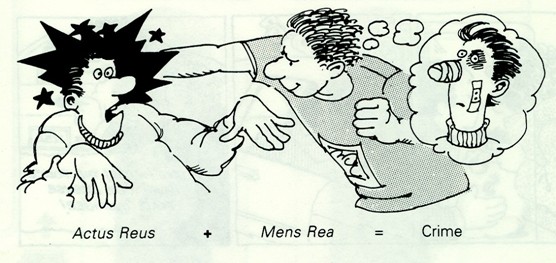
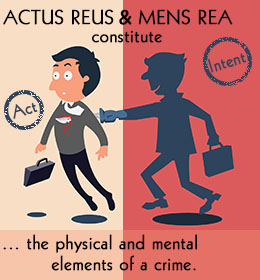
Mens rea and Actus Reus are two essentials of any crime and are the principles used in most common law countries. Mens rea is the ‘guilty mind’ or guilty intention to commit a crime, with the intention of causing hurt to another person, animal, or with the express intention of disturbing the peace. Actus Reus, however, is the “guilty act”, which is a necessity in proving that a criminal act was committed. When dealing with any crime, there are certain principles that need to be followed, and the accused is given the benefit of the doubt. The onus is on the prosecution to prove his/her guilt, beyond a reasonable doubt. The goal of the defense is to provide the judge or jury with a reasonable doubt since the principles of justice dictate that a person cannot be convicted if the charge on which he/she is accused cannot be proven beyond a reasonable doubt.

Mens Rea

iStock_000008183124XSmall

Mens rea is an essential part of deciding whether an act is culpable or not. Mens rea displays specific intent by the accused for the commission of the crime for which he is charged. The accused must be proven to have knowingly committed the crime, and had full knowledge of their actions and must have malafide intent towards the victim. Mens rea is also used in some civil suits, requiring the defendant to have been aware of the repercussions of their actions for a civil liability to arise, but usually, the Actus Reus takes precedence in cases of civil liability.

Further, an Act may be voluntary or involuntary, and the guilt is determined by the facts of the case. If a person drives while he’s drunk and involuntarily causes harm to others, he is still guilty as it was a voluntary choice on his part to consume alcohol before driving, even though the crime itself was unintentional. However, if an otherwise healthy person suffers a heart attack while driving and involuntarily causes harm to others, he are not liable and is not guilty of the crime.

Actus Reus

1303931438_back-stabber

Actus Reus is the physical aspect of a crime. The accused needs to have done something or omitted to do something, resulting in injury to the plaintiff, or the victim in civil cases. Without a guilty act, there can be no crime and no suit for damages can arise. An act alone does not make a crime, however, and both the intention of the person and the act itself, if such act is prohibited, combine to form the crime. In certain cases, circumstances of the case are also taken into consideration, and are often used to either conclusively prove guilt, or can be used to prove reasonable doubt of intention. (Example: – carrying a knife into someone’s house with the express intention of committing the act of murder, or driving a car on a foggy night and accidentally striking someone attempting to unsafely cross the road.)

Actus Reus can also be the omission of an act, by omitting to do something that the accused knows he is bound by duty or law to do (example: – a mother intentionally omits to feed her female child, leading to the child’s death.) The mother can legally be charged with causing death by negligence, and may also be charged with murder, if her intentions of murdering her infant can be proven in court.

https://lawsikho.com/course/certificate-criminal-litigation-trial-advocacy
click above

Minors

In Indian law, children below the age of seven are judged as guiltless, and cannot be held guilty for any offence. Children below the age of eighteen cannot be tried as adults and can only be sentenced to a maximum of three years.

Ignorantia juris non excusat

ignorance-of-law1

In certain cases, an illegal act may have been committed, but by mistake of fact, the accused may be excused. [Example: – If a person drives in the wrong direction in a one way lane without knowing that it is a one way (no sign boards) and causes an accident, he will not be criminally liable, and may or may not be liable in a civil court.] Ignorantia facti excusat is the legal principal used which means ignorance of fact is an excuse. Mistakes of Law are not excused, however. If a person sells an illicit substance, without the knowledge that the possession or sale of that substance is illegal, he is still completely liable for the crime. Ignorantia juris non excusat is the legal principle used in such cases, and it means, ignorance of fact of law is no excuse.

Some crimes do not necessarily require a malafide intention towards one particular person, and cases involving criminal negligence are a prime example of this. If a person leaves behind dangerous items that he is legally responsible for, like a firearm, he may be charged with criminal negligence if a crime is committed. (Example: – If a person leaves his shotgun loaded in his driveway, and a criminal uses it to commit a crime, the owner of the firearm may be guilty of criminal negligence for failing to properly secure the weapon. Such criminal negligence is culpable, and may carry a prison term.

Strict liability

Some cases have a strict liability clause, wherein Mens rea does not matter. Cases involving statutory rape and sale of alcohol or tobacco to minors are prime examples of this. It does not matter if the accused believed that his actions were legal, he will be guilty for the crime. In such cases, Actus Reus alone is sufficient to establish guilt, and to obtain a conviction from a competent court of law.

Some crimes require a deeper level of Mens Rea, like theft. Crimes like theft involve the specific intention to deprive the rightful owner of the full use the stolen good and enjoyment of his personal property with no intention of returning the said goods to their rightful owner. However, in cases of theft, the object does not necessarily have to be removed from the victim’s immovable property (Example: – A person steals a diamond ring belonging to ‘A’ and hides it in a flower vase, in ‘A’’s house with the intention of retrieving the ring later and with no intention of returning it to ‘A’. The moment the ring is taken from the location where ‘A’ left it, theft has been committed, and the thief can be prosecuted.) Cyber crime is simpler since theft of digital data cannot be accidental, and theft of identity, data and confidential information is done with malicious intent to harm the reputation of the victim or to get wrongful gain from the use of someone else’s property or resources.

4 essential elements of a crime

In conclusion, the four essential elements of a crime are:- (1) the crime must be committed by a person, (2) there must be hurt or injury caused to another, (3) there must exist an Actus Reus, (4) there must be a Mens rea to commit the crime, with certain exceptions.


Students of Lawsikho courses regularly produce writing assignments and work on practical exercises as a part of their coursework and develop themselves in real-life practical skills.

LawSikho has created a telegram group for exchanging legal knowledge, referrals, and various opportunities. You can click on this link and join:

https://t.me/lawyerscommunity

Follow us on Instagram and subscribe to our YouTube channel for more amazing legal content.

Download Now

Ritunjay Gupta; Associate at a top Law firm in Delhi, on why he enrolled for an online diploma from NUJS and how it is helping his career

0

IMG_95744 copy

Ritunjay Gupta is an Associate with J. Sagar Associates, Delhi and is currently looking after corporate commercial litigation. Prior to this, he has interned with prestigious law firms like Lakshmikumaran & Sridharan, Khaitan & Co., Saikrishna & Associates, Bharucha & Partners, Tatva Legal, etc. He has completed his LL.B from Campus Law Centre, Faculty of Law, University of Delhi.  Apart from his law career, he is passionate about social causes and makes it a point to volunteer with NGOs whenever he can spare some time from his busy schedule. In the past, he has volunteered with Manav Ashray, a not-for-profit organization for terminally ill patients and Isha Foundation, an international not-for-profit organization.

He completed the NUJS Diploma in Entrepreneurship Administration and Business Laws in 2014. He had a very fulfilling experience with the course and has many good things to share about it.  So we decided to share it with you all as a success story. Over to Ritunjay:

I joined the NUJS diploma in Entrepreneurship Administration and Business Laws while I was in the final year of my law school. I got to know about the course from a few of my friends who had already enrolled for the course. On further research, I found that NUJS diploma in Entrepreneurship Administration and Business Laws has the best course curriculum compared to similar courses available in the market.

The course syllabus covered a wide range of subjects and focussed more on the practical aspects of the law. Webinars by industry experts were the highlight of the course structure; it gave practical insights into complex subjects in an easy-to-comprehend and interactive manner.

The Delhi University law curriculum is broad based and not particularly focussed on Corporate Laws, whereas most of my internships were in Corporate Law. In order to acquire a strong foundation in Corporate Law, I searched for a suitable course to enhance my knowledge. The NUJS diploma course fit the bill.

My expectations from the course were fulfilled and it gave me an edge over others. It provided me additional confidence in dealing with my assignments in my current job.

All the course modules were well designed but I personally found the module on drafting to be very practical and beneficial.

I have mentioned this diploma in my CV and my Linkedin profile. I am certain that it has helped to highlight my suitability for the job I hold.

I am happy to recommend this course to all prospective law students. I have already suggested it to some of them and have received good reviews.

Here’s wishing iPleaders and NUJS all success!


Download Now

Discriminatory Muslim Laws Against Women

1

In this blog post, Charvi Arora, a student of the University of Petroleum and Energy Studies, Dehradun writes about the situation of Muslim women in India and the various rights that are available to them in the legal sphere.

13179429_1296390640375770_8575843077847635900_n

A careful perusal of the Muslim personal laws suggests, unfortunately, that there exist several provisions which discriminate against women to a considerable extent. There exist disparities between the rights guaranteed to women in the Constitution of India and the limited rights that Muslim personal law assigns them. Although in India, the status of women is not that high as that of men, the situation of Muslim women is comparatively worse. However there has been a clear distinction between the rights of men and women in the Quran; Purdah, the provisions for distribution of property, marriage laws legalizing polygamy, etc. prove to be laws that are substantially discriminatory against women.

In India, the legal status of Muslim women in the society is a topic of controversy and debate. It is a complex issue that involves not only gender bias, but also issues of religious freedom, minority rights etc. thus highlighting the difference in personals laws. Personal law, which is based on religious laws, has been altered by the state authorities and precedents set by the judiciary in governing family relations. Personal law is the only law in India that applies to individuals on the basis of their religious identity.

There is an organization which governs the rights of a Muslim woman in India i.e.,  the All India Muslim Woman’s Personal Law Board (AIMWPLB), constituted in 2005 which adopted strategies for the protection and continued applicability of Muslim personal law in India focusing on major issues of women like marriage, divorce and other legal rights.

The Muslim law governs two schools of law and they are the Sunni school of law and the Shia school of law. In every part of Muslim law, there is a distinction among the two schools with their respective concepts. Muslim women face discrimination in many legal areas:


Marriage (Nikah)

quran-30-21-and-among-his-signs1-1

Under Muslim Law, marriage is a form of a contract. In this law, the concept of cruelty is not limited. The cruelty provision in the personal law is to be interpreted in such a way that women are as tender as glasses and husband is the best man who can be kind to his wife. It is also mentioned under Muslim law that cruel nature is a disqualification for eligibility to marry. It is based on an offer and acceptance between the man and the woman.

Divorce

An act in 1939 was put up, the Dissolution of Muslim Marriage Act. It laid down nine grounds on which a Muslim woman could seek divorce in the court. Muslim law then allowed a man to divorce his wife at will but a wife did not have the right either to give divorce or seek one. The only way out for them was to convert to another religion to annul their marriage.

After that, the Muslim Women (Protection of Rights on Divorce) Act, 1986 protects the rights of a divorced Muslim woman and supports her living. This is a landmark legislation brought out by the parliament of India in 1986. In section 3(1) of this Act[1], it is stated that a fair amount of provision and maintenance should be granted to the Muslim women who has been divorced within the Iddat period by her former husband and whereas the court, in the case of Danial Latifi v. Union of India[2] held that this reasonable maintenance is to be provided to her until she remarries and is not limited to only the Iddat period.

Generally both parties to marriage have the option of divorce but the husband’s right is much greater than that of wife. Divorce may take place with mutual consent. But wife cannot divorce herself from her husband without his consent. Husband can immediately marry on divorce but wife cannot unless the Iddat period expires.

In the case Shah Bano v. Imran Khan[3], the Supreme Court held that if a Muslim divorced woman is unable to maintain herself after she gets divorced, so she can claim maintain maintenance from her former husband and the same can be claimed under section 125 of Criminal Code Procedure.


Inheritance

stock-illustration-33872414-unbalanced-scale-with-a-man-and-woman

The general rules in Muslim Law of inheritance are:

Customary Principles of Succession:

  • The nearest male agnate or agnates succeeded to the entire estate of the deceased
  • Females and cognates were excluded
  • Descendants were preferred to ascendants and ascendants to collaterals
  • When the agnates were equally distant to the deceased, the estate was divided per capita.

Islamic Principles of Succession:

  • The husband or wife can also be included.
  • The females as well as cognates are included.
  • Parents and ascendants are given a right to inherit even when there are male descendants
  • As a general rule , the share of female is one half of the corresponding male relation’s share

Even while inheriting the property of the deceased, women are not benefited at all. Earlier females were not included in the principles of inheritance. But the new Islamic Principles of inheritance include females but the share of the females is always the half to that of the male’s share.

A  Muslim woman is entitled to inherit property only as a daughter, widow, grandmother, mother, or son’s daughter. A widow is entitled to one-fourth share of her husband’s property when there are no children and one-eighth of the share when they have issues. A daughter gets half the share of what her brother gets. If she has no brother, she is entitled to a share of half of the property. A mother will get one-third share of her son’s property when there are no children and one-sixth when there are children.The maternal grandmother will get one-sixth the share of the total property, only if there is no mother or grandfather. The paternal grandmother gets a share only if there is no father or grandfather.


Dower (Mahr)

Teen-Daughter-Mom

Mahr or dower is a sum that becomes payable by the husband to the wife on marriage, between the parties or by operation of law in Muslim law. It is not practically possible for a wife to demand her dower ant maintain cordial relations with her husband for a long period of time. Though non- payment of mahr can be a ground of divorce, but in this law, marriage is not placed at a sacred level in comparison to other laws. Yet, most of the wives do not get Mahr due to ignorance.

Some general situations faced by Muslim women:

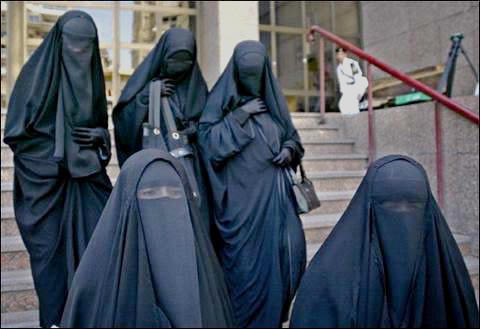
  • There has also been a system of Purdah in Muslim law where the Pardanashin women are not allowed to go outside the house and are supposed to cover their full body including their face.
  • The main prejudice against women in the society is on the issue that a Muslim woman can’t marry a non-Muslim whereas a Muslim man can.
  • Earlier the husband also had the right to dissolve the marriage by uttering the word ‘talaq’ thrice without stating the reasons for the same and even in the absence of his wife.
  • Women only have certain generic rights to divorce their husbands.

Conclusion

The present situation of Muslim women in India has barely improved and reached a better standard that before. However it has now enabled women to seek divorce on the grounds of cruelty, without having the fear of losing a substantial part to the inheritance of her husband’s property. Earlier, during the time when customary laws prevailed, women didn’t have the right to divorce her husband on the ground of cruelty but now she can do so. Dissolution of Muslim Marriage Act has proved to be a boon for all Muslim women. The Muslim women, meanwhile, continue to suffer because of polygamy, oral unilateral divorce, low Mahr amounts, lack of maintenance and other evils which plague Muslim society.  Now, it has become the duty of the State to take more responsibility in protecting the rights of the Muslim women who are to be treated as equal citizens and are also entitled to all the benefits which the women of other faiths inherit by right.

Basically, lack of education has been a major drawback in the personal laws, Muslim women have always been told to stay at home. Almost 80% of the Muslim population is face problems such as Purdah, polygamy, illiteracy etc. The continuing Muslim personal laws have been gender biased and have violated major fundamental rights provided to women under the Constitution of India which promise equality to every individual. Such laws go against secularism and national integration.

[1]Muslim Women (Protection of Rights on Divorce) Act, 1986

[2](2001) 7 SCC 740

[3]2010(1) GLR 223

Download Now

Culpable Homicide Or Murder?

0

In this blog post, Maanas Tumuluri, a student of Amity University, Noida, explains the crime of homicide, and its various aspects.

download

Human beings had killed even before history started being recorded for us to see. Today, killing another person is one of the gravest offenses known, with the exception of sedition and treason. The crime is known as homicide i.e., the killing of another human. Culpable homicide and murder are two terms commonly used to define this crime. The differences between these two terms are small but important to the legal system while dispensing justice to the victims of these grave crimes. Homicides can also be justified homicides. As with any other crime, murder is a crime against a person as well as the society as a whole. It disturbs the peace and might cause panic and hysteria amongst the public, especially when a serial killer is thought to be at loose.

The simplest way to put the differences between culpable homicide and murder is that all crimes of murder are within the scope of culpable homicide, but not all culpable homicides amount to murder. Murder is the more serious of the two offences and carries a lengthier sentence in almost all countries.


Section 299 of the Indian Penal Code

This section defines culpable homicide as ‘whoever causes death by doing an act with the intention of causing death, or with the intention of causing such bodily injury as is likely to cause death, or with the knowledge that he is likely by such act to cause death, commits the offence of culpable homicide.’

homicide-clipart-royalty-free-murder-clipart-illustration-219678

Section 300 of the Indian Penal Code

This section defines murder as ‘culpable homicide is murder, if it satisfies any or all of these following conditions:-

  1. The act by which the death is caused is done with the intention of causing death, or
  2. If it is done with the intention of causing such bodily injury as the offender knows to be likely to cause the death of the person to whom the harm is caused. or-
  3. If it is done with the intention of causing bodily injury to any person and the bodily injury intended to be inflicted is sufficient in the ordinary course of nature to cause death, or-
  4. If the person committing the act knows that it is so imminently dangerous that it must, in all probability, cause death, or such bodily injury as is likely to cause death, and commits such act without any excuse for incurring the risk of causing death or such injury as aforesaid.’

The differences are subtle. In Culpable homicide, there is a definite Mens rea, a malicious intention to kill the victim, and the victim dies, but the person committing the homicide cannot be certain of death, but he/she hopes for it. It is complex to prove this in court, and judgments may run askew depending on the subjectivity of the case.

In Murder, however, there is again, a definite Mens Rea, a malicious intention to kill the victim, and the victim dies, but the person committing the homicide is certain of death, and may even go out of his way to ensure it. (Example: – “A” goes to “B” with the intention of severely scaring & hurting him; In the ensuing scuffle, “A” punches “B” in the abdomen and “B” dies as a result. “A” could not have been certain that “B” would die; this is chargeable under Culpable Homicide, not amounting to murder. However, if “A” had gone to “B’s” house, and forced “B” to consume poison or cyanide, “A” has gone to extreme and thorough measures to ensure “B’s” death, and the crime is chargeable under the crime of Murder.)

Murders usually involve more premeditated action than culpable homicides, and some culpable Homicides may not be completely intentional (Example: – In Salman Khan’s drunk driving case, he had no intention to kill, however, he was undertaking an activity he knew would be dangerous to himself and everyone else around him when he made the decision to drive while under the influence of alcohol. He was charged with causing death by a rash and negligent act – not amounting to murder.) A defendant may argue that he/she took precautions not to kill the victim, but merely injure or hurt, if faced with a charge of murder, to reduce the charge to that of culpable homicide, which carries a lower sentence.

The United States has a good system of classification for murder. Aggravated or highly brutal murders are treated as first-degree murders (With a punishment of life in prison or death), while “normal” murders are charged as second-degree murder (a sentence of up to life in prison). They also refer to culpable homicide as manslaughter, and involuntary manslaughter may be committed when a person has no intent to kill, but his/her actions were a danger to everyone around, and death occurs (Example: – Waving a loaded gun, and accidentally firing a bullet.) (Involuntary manslaughter carries a sentence of up to eight years). Voluntary manslaughter or third-degree murder is a murder done in the heat of the moment; with no premeditation or planning (They carry a punishment of up to fifteen years).

Homicide can also be justified. Most countries allow for self defense, although some countries place higher restrictions on their citizens, to prevent misuse of this privilege. The United States has a “castle doctrine”. The castle doctrine states that a person may use force, up to deadly force, to defend themselves against any intruder, if they are in a place they are legally entitled to be, and are protected from prosecution for such acts. This is most commonly seen when potential housebreakers or thieves are killed by the homeowners. India has a similar law but stipulates that a person may only use force proportional to the force being used against him, and only in situations where there is a fear of grievous injury or death.

50d63da7a1009b5bacde8f1e66924252

Sections 96-106 all deal with the right of private defense awarded to people in India.  It is far more limited than the rights of self defense given to people in the United States, but with good reason. India has a much higher rate of unreported crimes and a lower rate of convictions. As such, it would be easier for a murderer to claim the act was in self defense, and get away with the crime. However, since they now have to prove apprehension of death, it provides a barrier against misuse. Unfortunately, the opposite is also true. Due to the harsh limitations placed, people who genuinely commit acts in self defense often have to face harsher consequences.

In Indian law, culpable homicide involves the killing of a person regardless of intention. The level of intent is the element that differentiates it from murder. The question of fact is whether the accused knew the victim would die, or if death was uncertain. Murder carries a sentence of life in prison or death, depending on the ruthlessness, if the criminal is a repeat offender, or other factors, at the discretion of the judge.

Download Now

Poor Quality Of Food Served In The Indian Railways

3

In this blog post, Charvi Arora, a student of University of Petroleum and Energy Studies, Dehradun gives you an overview about the poor standard of food being served in the Indian Railways and the initiatives that have been taken by the Railway Department to improve the same.

13179429_1296390640375770_8575843077847635900_n


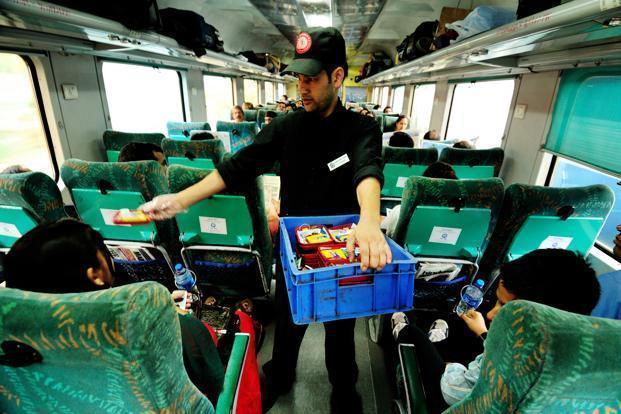
The problem faced by almost all of us while traveling in the Indian Railways is the poor quality of food served. So, if the food served to you in the train is smelly or stale, don’t worry everyone is sailing in the same boat.

irctc-ecatering

The quality of food served while traveling for a long distance is a major issue that is yet to be resolved by the Indian government. In some trains, the packed food items are expired and kept in unhygienic conditions and are considered sub-standard. While in some trains, the food has been pre-cooked 4-5 days ago and this makes it all the more stale and smelly. This problem is faced all over the nation, especially in the sleeper class section of the train where the environment is very unhygienic. The problem has not been looked into even after several complaints have been made to the Railway department. The condition of kitchen is extremely unhygienic and the cooks are not of the expected standard. The kitchen is poorly ventilated and the vegetables brought from the market are rotten.

All the helplines or the toll free numbers either do not work or are already dead. But the railways are still under the misconception that the availability of food is a problem while the actual menace is its quality. They were however unsatisfied about maintenance of bathrooms.


Some examples

catering-food-of-indian-railways

Indian Railways Catering and Tourism Corporation (IRCTC) were fined for Rs. 1 lakh because a cockroach was found in the food in the Kolkata Rajdhani Express. There have been many instances in the past for which the Railways have been fined.

Railways have imposed heavy fines totaling Rs. 11.50 lakh on nine caterers including IRCTC for serving ‘bad quality’ food in trains.[1]

The Tourism Industry has a major drawback in the field of Railways as the tourists remain unsatisfied due to the poor quality food served to them. Railway catering has always been an insignia for poor quality. There is a plethora of poor feedbacks against the standard of food and beverages supplied to the passengers and the tourists traveling in the train. It lowers the reputation of the nation as less people would prefer travelling by the Railways. The actual standard is not maintained as the food inspectors’ visit these trains rarely and therefore no action is taken and nobody takes the responsibility to manage it. The quality of the food offered in the trains and on the platform can’t be guaranteed to be hygienic at all.Even after all the progress in restoring and improving the conditions of food stored in the pantry, there have been many complaints.

Reasons for poor quality of food

  • Catering services are usually outsourced; quality check has not been done regularly.
  • Contracts are usually taken by small time vendors who want to earn more money than serve quality food during contract period.
  • No background checks are done while choosing vendors.
  • There is no sense of responsibility as they focus on earning more profits than serving their duties.
  • Visitor entry is allowed via pantry to different coaches who actually bring in more dirt then revenue.
  • Inadequate facilities to preserve large quantity of food.
  • Majority of the passengers are not fully satisfied about the cleanliness of coaches.

Passengers are unsatisfied about the maintenance of bathrooms. However they are satisfied about the behavior of railway employees. Passengers are also not fully satisfied with pantry car employees’ services. Railway must improve the quality of food served by pantry coach to passengers and instruct pantry staff to be courteous and responsive towards passengers.Some of the food items were adulterated by the chefs before serving the passengers in the train.


Solutions to be implemented by the Railway authorities

Strict quality checks should be done before selecting food vendors and contracts should be given to big and established vendors who would provide good quality and service. High penalty should be imposed on defaulting or non performing contractors. Standard dispensing machines should be installed for items like milk, cornflakes, coffee, tea, pre made snacks, etc. Passengers should be able to pre-order from a fixed menu decided by the Railway department. Menu cards should be displayed in the coaches of each train and they should not be priced too high. Food contractor’s name and contact number along with the concerned IRCTC supervisor’s name and contact number should be displayed in each bogie of the train. The serving boys should necessarily wear a clean uniform with identity cards. Pantry boys should be trained on maintaining hygiene and cleanliness. CCTV cameras should be installed in the pantry cars. The waiters should be provided with trolleys in the same way as done in the airplanes. The unauthorized vendors should not be allowed to enter the platforms. Regular quality checks of the pantry should be done by senior officials. An effective online or mobile based citizen feedback mechanism should be set up so that passenger feedback is sent immediately after the service is provided. Citizens should be able to rate Food and Service via their feedback.  Railway officers must take action on any complaint within specified period of time. Pantry coach should be redesigned with modern facilities and amenities. IRCTC should consider consulting with a Food Technological Research Institute for comprehensive advice on food quality, food safety and nutrition.[2]


The Present Scenario

kfc-re-L

Now the Indian officials’ have given the passengers the assurance that good and hygienic food would be served to the people. As said by the Indian officials, they have tied-up with Foodpanda which has been another big step towards the development of Indian Railways. The solution to this big menace has been strictly implemented by the employees. IRCTC officials have promised to provide the best quality services in little time and the quality of the food would be far better than what was served earlier. The Indian Railways caterers have also tied up with major food joints like KFC, Dominos, etc. Haldiram has also shown great interest in collaborating with the Railway caterers.

According to the ministry, it is also a part of Prime Minister Narendra Modi’s initiative of Swachh Bharat campaign to provide better service to passengers traveling in trains. Railway services have improved its system by managing on-board catering services in the local trains as well.It has also introduced station-based catering on 45 major stations all over the nation for the traveling passengers and their reach has expanded over time. They have also tried to manage the concept of e-catering through various sellers but this will develop in the future at a tremendous rate. Now the passengers can book tickets and manage the food served to them according to their choices online for the delivery of food while traveling. Indian Railway passengers can now feel satisfied with the food served in the train.

Conclusion

“The feedback service is in line with the emphasis given by Rail Minister Suresh Prabhu on the best connects between railway administration and railway users,” the railway ministry said in a statement.

 In my opinion, the food contractors should be instructed to have their place of cooking made pest free & certificates should be obtained for doing periodical pest control measures. Another most important thing sold by the pantry car is water. There is no quality control at all. Focus on this area to avoid water borne disease is a major requirement. IRCTC should be entrusted with the job of collecting the feedback, which should be done through a speedy mechanism. Under this system, passengers must be contacted randomly on their mobile phones to gather their feedback about the facilities provided by the Railways regarding all aspects such as cleanliness of the train and the respective station, quality of catering, punctuality of trains, etc.

On an average 60-70 calls per day, per train are being made and efforts are on to make approximately one lakh successful calls per day to passengers of mail/ express trains, the ministry added. The service is being initially being tested on a few trains. I hope after these initiatives taken by the Railways Authority of India, the condition of the railways improves as a whole.

[1]http://www.ndtv.com/india-news/irctc-among-nine-caterers-fined-by-railways-for-bad-food-606669

[2]http://www.complaintboard.in/complaints-reviews/irctc-catering-services-l188255.html0o

Download Now

Startup Valuation – How Is It Done?

0

In this Blog Post, Charvi Arora, a student of University of Petroleum and Energy Studies, Dehradun, tells us how a the valuation of a startup is done and further enlightens as to how a startup is established.

13179429_1296390640375770_8575843077847635900_n

Valuation of a Startup

To start with, let’s look at the basic definition of a Startup. So, a Startup is a newly established business looking forward to getting itself placed in the market and continuing further in motion.

It is quite easy for an artist as compared to a person belonging to a science background to value the startup because it is believed that valuing a startup is mainly in the domain of an artist. It is necessary that we put a value on our startup investments to generate liquidity. Since valuation of a pre-revenue company is often one of the first points of contention that must be negotiated with investors and entrepreneurs. Entrepreneurs want the value to be as high as possible and investors want a value low enough for them to own a reasonable portion of the company for the amount they invest. Potential investors and entrepreneurs prefer to use several methods to value a startup because no single method is useful every time. Multiple methods also help in the negotiation process because an average can be determined from among them and it rather becomes less time consuming.

The biggest determinant of a startup’s value are the market forces of the industry and the sector it falls in, which include the balance (or imbalance) between demand and supply of money, and size of recent exits, the willingness for an investor to pay a premium to get into a deal, and the level of desperation of the entrepreneur looking for money.

Big startups in India as of today are Myntra, Jabong, Freshdesk, Zomato, Olacabs, Book My Show, Oyo Rooms, Snapdeal, Bigbasket, Paytm, Dropbox, Instagram, etc. which have gained a huge amount of popularity and are still growing at a very fast pace. Startup companies have short operational histories and little historical financial data. Usually in a business, the valuation specialists typically use historical financial data to extrapolate the future value of a business. Recently, the government officially launched the ‘Startup India’ programme which was first mentioned by the Prime Minister on the 15th of August, last year.

According to a report given by The Hindu, the plan comes at a time when the startup ecosystem in the country is witnessing an exponential growth. As per NASSCOM’s “Startup-India: Momentous Rise of Indian Startup Ecosystem” report, India ranks third globally with over 4200 startups.The government has shown their interest to support the startup ecosystem and Startup India is expected to take it ahead with the introduction of key policy reforms. According to Nilotpal Chakravarti, AVP of Internet and Mobile Association of India, “Over the last one year, the government has been steadily building a conducive atmosphere for encouraging start-ups in India. Initiatives like Digital India and Make in India are the biggest enablers providing a boost to startups.”

We should know what our business is actually worth, i.e., if it’s worth being is higher than we are thinking or if it is overvalued by us. To decide this, certain steps are to be taken into consideration and they are:

Depends upon the market

startup_valuation_what_investors_think_debleena_bose

It depends upon the investors; whatever they’re telling is what the startup is worth. If we think that our startup is worth more, and we are unable to raise a certain amount of money, we have to accept the valuation that the investors have given it.

 If we raise money from our relatives and friends rather than professional investors, it’s possible that our company has been overvalued or undervalued (more likely, overvalued). Therefore, if we have persuaded our rich uncle to purchase shares in our business at Rs.20/share, it doesn’t mean that the investors will also pay that amount to buy that share even if our business is growing at a good rate.

When do we tell the market what is our worth?

This case is very rare in a startup as they don’t have a history of financial performance on which the investors can valuate it. Therefore, it’s always up to an entrepreneur to develop a strong procedure for valuing the company at a higher level based on other comparables.

Startups require a more creative methodology that considers, among other factors:

  • Quality of management
  • Value of comparable companies
  • Industry prospects
  • Stage of development
  • Value of company IP
  • Working capital requirements

The basic Stages behind a Startup

Stage 1

startup-inspiration

1. Inspire:

  • This is the stage where the entrepreneurs get inspired from an idea and want to establish a startup. They try to initiate it and follow certain ideas that have inspired them. The startup media typically provides centralized local startup listings and news.
  • It also includes inspirational events which welcome the people into their community and inspire those with ideas to launch a company. Some examples are Startup Weekend, University Events, and Inspirational Meetups.

2. Educate:

  • In this stage, an entrepreneur learns and gets himself more acquainted with the field in which he is going to establish a startup and collects all the necessary information which is required.
  • These events serve to educate rather than inspire. Training and feedback with a certain idea in hand, bootcamps help in aspiring entrepreneurs build more.

3. Validate:

  • When in the last stage, in order to execute the startup, the entrepreneur validates the new business and brings it into comparison with the already set up businesses.
  • Team formation for startups is the key. It should only include resources that specifically facilitate networking.

Stage 2

In this stage, entrepreneurs establish and formalize the company, develop their product, get feedback from customers, and prepare for the next step.

1. Start:

  • It includes resources to help entrepreneurs set up the legal and financial frameworks for their companies, like local law firms and banks that specialize in addressing the unique challenges of startups.
  • Co-working and flexible workspaces can provide a good breeding ground for new companies.

2. Develop:

  • As a company begins to grow, they often need resources to help them set up their infrastructure (accounting, HR, recruitment, production, etc). This section can include accountants, software development houses, and more.
  • PreSeed funding is a big milestone for most startup teams.This includes Startup Weekend Next and workshops.

3. Launch:

  • The next step in the equation for most ecosystems is a local accelerator, like TechStarsSeedcamp.
  • Whether a company goes through an accelerator or not, they often need a way to present their company to a large number of investors in order to gain a large seed investment.

Stage 3

Yourstory_Startup_valutaion

Here, a startup proves their utility, receives recognition and scales up. This usually requires funding and other resources to drive growth.


1. Recognition:

  • Many ecosystems have ways to connect professional investors with founders, like events, groups, and association.
  • The major media can play a role in the startup ecosystem as well, by providing exposure for companies to mainstream audiences.

2. Funding:

  • These investors focus on the seed-stage. These investors typically participate in the funding stage and beyond, such as institutional venture funds.

3. Growth:

  • With capital in hand, a company will often need to invest in infrastructure to grow. This includes expenditures like office space, HR, business insurance, and more.
  • In many cases, capital-rich companies will also look for new areas of growth such as new product lines or international markets. Consultants, corporate accelerators and growth accelerators can typically help provide assistance in local markets.

The value of your startup depends on the investor; if he’s willing to pay more for your company depends on the following factors:

The startup is in a flourishing sector:

 Investors that come late into a sector may also be willing to pay more as one sees in public stock markets of later entrants into a hot stock.

If the management team comprises of professionals from all fields:

A good team gives investors good faith that the team can execute further and grow wisely in the market.

The product to be introduced is a functioning product:

It becomes easy for the market to adapt the new product in a lesser time and certainly for the investors to invest in it.


Negatives that could lead to decline of a Startup

  • It is in a sector that has shown poor performance.
  • It is started in a sector which is highly commoditized, with little margins to be made.
  • It is in a sector with a too many competitors and little differentiation between them.
  • The management team has no record and the professionals are missing from its team.
  • The capital budgeting is really acute.

If we set up a survey to ask people what is the basic drawback, of a startup not being a success is ‘Lack of capital’. However, in our experience working in nearly 100 markets across the globe, ‘lack of capital’ is nowhere near being the biggest hindrance to startup community growth.

Consider the following sequence of events, which are considered to be very helpful:

  1. New capital is required to grow a local startup ecosystem, either by the government or by foreign investors. This money needs to be allocated fairly quickly.
  2.  As a result, these organizations start :
  • Creating exclusive relationships with others in the ecosystem
  • Vertically integrate (ex. co-working spaces that used to partner with accelerators now create their own accelerators).
  1. Almost overnight, a once collaborative ecosystem becomes overly competitive and fragmented.

Startup Ecosystem

tumblr_static_7lgmdkrk8fwgo8c4gw440g0gc

Taking in consideration the ‘The Startup Ecosystem’ (a startup ecosystem is formed by people, startups in their various stages and various types of organizations in a location, interacting as a system to create new startup companies), they are controlled by both external and internal factors. External factors like financial climate, big market disruptions and big companies transitions control the overall structure of an ecosystem. Start-up ecosystems being dynamic entities, they are initially in formation stages and once established are subject to periodic disturbances, passing afterwards to the recovering process from some of those past disturbances and then flourishing like a fully established business in the near future.

Start-up ecosystems in similar environments but located in different parts of the world can end up doing things differently simply because they have a different entrepreneurial culture. The introduction of non-native people knowledge and skills can also cause substantial shifts in the ecosystem functions. In addition, resources like skills, time and money are also essential components of a start-up ecosystem. The resources that flow through ecosystems are obtained primarily from the people and organizations that are an active part of those startup ecosystems. Interactions in the form of events and meetings between organizations and different people play a key role in the movement of resources through the system helping to create new potential startups or strengthening the already existing ones and hence influencing the quantity of startups build. Failures of start-ups release people with improved skills and time for either establishing a new start-up or joining an already existing one.

Startup ecosystems are generally defined by the network of interactions among people, organizations and their environment. They can come in many types but are usually better known as startup ecosystems of specific cities or online communities ( it is often said that due to social networks, the entire globe is just one big network of startup ecosystems).

To conclude, the only strategy to be adopted by the Startup entrepreneurs should be “Go big or go home”.

Raise as much money as possible at the highest possible valuation, spend all the money fast to grow as fast as possible. If it works you get a much higher valuation in the next round, so high in fact that your seed round can pay for itself. If a slower-growing startup will experience 55% dilution, the faster growing startup will only be diluted 30%. So you saved yourself the 25% that you spent in the seed round. Basically, you got free money and free investor advice.

Download Now

Trespass: Meaning, Nature, Types, Defenses and Case Laws

0

This article has been written by Shubham Khunteta, a student of National Law University Odisha, Cuttack, in which he talks about the hybrid nature of ‘trespass,’ its meaning, types and defenses with the help of case laws.

Trespass-RED-LOGO

Introduction

It is often seen that one wants to protect one’s body and property, whether movable or immovable. People usually seem anxious as to their person or property being vulnerable to negative elements, who are willing to misappropriate and exploit their wealth with a Mala Fide intention. This apprehension of large sections is what is required to be dealt with the iron hands of the law.

The law takes care of the acts which are to be recuperated with compensation or punishment. These acts can lie from a mere intentional touch to one’s person with an evil intention of intrusion into one’s property without assigning any reason for the action.

The law is often applied and has evolved to strike a delicate balance between the private rights to the exclusion of others and the socially valuable public and private interests that are sometimes served by permitting unauthorized instances of access. Therefore, it becomes extremely necessary to identify the precise problem and its solution.

Public interest often trumps the private interest and is widely recognized by law to be the distinctive exception to the owner’s “Right to exclude.” Trespass is a varied topic involving both civil and criminal elements. What distinguishes criminal trespass from civil trespass is that in the former, the entry should be with intent to commit an offence or to intimidate, insult or annoy the person in possession of the property[1].

Trespass is both a civil and criminal wrong because it can cause injury, i.e., violation of legal rights as well as damage to one’s person and property substantially if a physical attack takes place.

Trespass law is commonly presented as a relatively straightforward doctrine that protects landowners against intrusions by opportunistic trespassers

Meaning and Interpretation

Trespass can be said to be an action exceeding the limit carved by the law. It is an intentionally directed, unreasonable interference with one’s person and property. The word ‘intention’ here implies committing the wrong voluntarily. Trespass allegation can be leveled if the interference is with one’s and third person’s body and private property. It is to be kept in mind that intention forms the essential component of trespass. Unreasonable behavior is triggered by the mala Fides and ulterior intention to harass another.

Types of Trespass

Trespass Against Person

It is the causing of apprehension of unreasonable interference with one’s person and body as well as a third person and includes usage of force causing damage and impairment in the body. The trespasser, with an ulterior intention, transgresses the right of another and makes an alteration in it with the objective to cause wrongful loss or wrongful gain as the case may be. It is considered as intentional even if the wrongdoer did not know that the property belonged to another.

Assault: It is the causing of unreasonable apprehension of body injury and damage in the mind of another person and usually a prelude to a battery. It can be given effect in a way that would make certain actions and indications as suggestive of assault by another. It can be both direct and indirect. It can be carried out by the person himself or through a third person.

Here, an important factor of foreseeability causing apprehension is required as it is essential that one is able to conceive after seeing something that it is causing unreasonable fear. Section 351 of Indian Penal Code defines assault[2].

Essentials of assault include:7910343494_8b2cd62bc9_b

  •  Intent
  • Apparent ability to carry out the purpose
  • Apprehension
  • Knowledge of threat

An example of foreseeability in trespass: A man directing a gun and about to trigger it, behind a person is not foreseeable to the person. This can’t be said to be an assault as there is no apprehension in the mind of that person that somebody is doing such an act which would instill fear in him.

Battery: The use of force on the person of another without lawful justification. Battery consists of touching another person hostilely or against his will directly or indirectly, however, slightly. Direct force can be like slapping a person whereas indirect force is like setting a dog behind a person or spitting on a person. Battery corresponds to ‘use of criminal force’ according to Section 350 of the Indian Penal Code[3]. What is necessary is that the wrongful act must involve physical contact.

https://lawsikho.com/course/certificate-criminal-litigation-trial-advocacy

Essentials of battery include:

  • Direct or indirect physical contact without lawful justification
  • Use of force
  • It must be voluntary

Accidental touch or push in the market is not wrongful and does not constitute battery.

False Imprisonment: When someone’s way is restricted unlawfully from all possible directions so as to prevent him/her from moving in a direction for some period, however short, it is called false imprisonment. In the Indian Penal Code, it is defined as wrongful confinement.

cases-of-false-imprisonmentArticle 22 of the Indian Constitution provides for protection against unlawful arrest and casts an obligation upon the state to follow due procedure while carrying out arrest related activities[4]. Section 43, CrPC provides for arrest by a private person if the offender is a proclaimed habitual offender and is alleged to be liable for a cognizable and non-bailable offence.

Essentials: Complete restraint of liberty of person and unlawful restriction

Defence against trespass to body[5]

  1. Consent of Plaintiff: When plaintiff consented with the defendant on the specific act then defendant can’t be said to be trespassing if there is a mutual understanding between the parties for the act.
  2. Contributory negligence: When there is a negligence of plaintiff included in the act, then defendant’s liability can be mitigated to the extent and compromise can be arrived at or liability can be divided.
  3. Self-defence: A person, to protect himself from an unruly element or any other such person or incidents, can trespass on the property to preclude the act from consummation. But, proportionality and probability should be kept in mind while using the property of the plaintiff to intrude and so it is to be proved by the defendant that there was no other option with the defendant other than to intrude in the property of plaintiff.
  4. Statutory authority: Authorities compelled by the law to carry out search and seizures and cases where consent is taken to conduct a bodily search would not be construed as a trespass on the body of a person. Entry in public places and private property used for a commercial purpose is not trespass considering the societal and public interest in mind.
  5. Preservation of public peace

Trespass Against Property

Trespass against movable property like goods[6]

It is the taking wrongfully or forcefully interfering with the goods of another. It differs from trespass to land in one important aspect that wrongful intention or negligence is not necessary for trespass to goods. A challenge to ownership of goods amounts to conversion which is different from trespass to goods, which can be elucidated by an example of the damage of goods given by the plaintiff in a cloak room of railways but personnel there instead of giving it, threw it and damaged it.

Trespass against immovable property like land[7]

Legal maxim ‘Quare clausum fregit’ defines land as, “Land includes not only the surface and any buildings on it but also the airspace and subsoil, in so far as these are vested on the plaintiff. The action of trespass to land penalizing direct interference with other people’s land.”

IntroToTrespassingWEBTrespass is mainly a wrong against possession and is available at times against the owner himself. Court in the case[8] opined that “The correct position in law may, in our opinion, be slated thus in order to establish that the entry on the property was with the intent to annoy, intimate or insult, it is necessary for the Court to be satisfied that causing such annoyance, intimidation or insult was the aim of the entry; that it is not sufficient for that purpose to show merely that the natural consequence of the entry was likely to be annoyance, intimidation or insult, and that this likely consequence was known to the persons entering: that in deciding whether the aim of the entry was the causing of such annoyance, intimidation or insult, the Court has to consider all the relevant circumstances including the presence of knowledge that its natural consequences would be such annoyance, intimidation or insult and including also the probability or something else than the causing of such intimidation, insult or annoyance, being the dominant intention which prompted the entry”.

No one has the right to dispossess the trespasser if he is in a settled possession of a property and he can’t be evicted unless due process of law is followed. The possession, which a trespasser is entitled to defend against the rightful owner must be a settled possession extending over a sufficiently long period and acquiesced in by the true owner. A casual act of possession would not have the effect of interrupting the possession of the rightful owner[9].

Under the doctrine of prescriptive easements, for example, a property owner loses the absolute right to exclude (all other persons from taking possession of his land) when a non-owner has used that land openly, peaceably, continuously, and under a claim of right ad- verse to the owner for a period set forth by a particular state (known as the prescription period). It was held by the High Court of Bombay in case[10] that a rightful owner who dispossesses another cannot be treated as a trespasser except as provided by Section 9 of the Specific Relief Act, 187.

Case Laws on Trespass

Sentini Cermica P. Ltd. Vs Kunchi Krishna Mohan and Ors[1]Statutory Authority: Search and seizure on the premises of appellant do not constitute an act of trespass. It can’t be said that any procedure carried out to find the truth on the property will be construed to be an act of trespass if the act is carried out with sufficient legal backing.

Amit Kapoor Vs Ramesh Chander and Anr[1]Merely because there was a civil transaction between the parties, it would not by itself alter the status of the allegations constituting the criminal offence.

Samira Kohli Vs. Dr. Prabha Manchanda and Anr[2]: The performance of hysterectomy and salpingo-oophorectomy on a patient was an unauthorized invasion on her person by the doctor, and it can be deduced to be an assault and consequential battery. Her consent was required as she was an adult and although the doctor acted in the best of patient’s interests and can be considered to be mitigating circumstances to reduce compensation, however, in the interests of justice, the patient is entitled to the compensation.

Rajinder Kumar Malhotra vs. Indian Bank & Ors:[3] Petitioners were licensed to operate kiosks through auction, and their right was taken away by the government corporation after the revocation of license on the expiry of the license period. Here the court made a distinction between license and lease and held that the license does not create possession and it is the discretion of the authority to revoke the license and dispossess the petitioner if any irregularity or discretionary act guides them to do so. A lease creates a possessory, inviolable and a settled right on the person to whom it is granted, whereas a license has a different footing altogether. A leased property can’t be trespassed on without lawful justification and exhortation of public need. On the other hand, a licence neither creates ownership nor possession rights in favour the person to whom it is granted. As a result, it can’t be said that the petitioner’s right has been trampled upon by trespassing on the property.

Section 9 of the Specific Relief Act protects the possession of the tenant from the deprivation by the owner even after the cessation of tenancy. However, there needs to be settled possession in it of the tenant, and this possession is juridical and is protected by statute.

Bavisetti Venkat Surya Rao v. Nandipati Muthayya[4]: Plaintiff owed a certain amount to the defendant which he was unable to pay. The defendant, in order to collect the amount thought to visit plaintiff’s house and sell some movables to recoup the amount. The defendant called a goldsmith to evaluate the value of gold in the house of plaintiff, but the person standing at the time of such evaluation near the house borrowed the amount from another to give it to the defendant, and after the defendant had taken the amount, the plaintiff sued him for assault.bannerimage

It was held that since the defendants, after the arrival of the Goldsmith said nothing and did nothing and the threat of use of force by the goldsmith to the plaintiff was too remote a possibility to have put the plaintiff in fear of immediate or instant violence, there was no assault.

Bird v. Jones[5]: The claimant was trying to go through the enclosure, but the defendant put two police officers to block the claimant’s path and prevent him from entering further into the field. He was told that he could go back but not forward. After half an hour the Claimant tried to push past whereupon he committed an assault on the Defendant and was arrested.

The court said that it is false imprisonment for a person to be forced to stay in a place just as much as locking them in a room. There need not be any touching either. However, it cannot be a false imprisonment to avert a person from going forward but allowing them to return the way they came, even if it is unlawful to stop them. The person no doubt suffers a wrong but not false imprisonment, possibly assault or battery if he is endangered or touched as he tries to get past. So here it was held that there was no wrongful restraint or confinement.

Read v. Coker:[6] D and his men surrounded P, rolling up their sleeves, and threatened to break P’s neck if he did not leave. P was a rent collector who entered D’s workshop and refused to go until the rent was paid.

It was held that this was an assault: the condition attached to the threat was not enough to nullify it.

Conclusion

Trespass can be faced by people innumerable times in a day, but what is important is to truly understand the nature of trespassed act, property, loss and impact of it on the plaintiff. If the nature of the act is itself suggestive of a wrongful incident, voluntarily undertaken to constrain the enjoyment of the right to exclude from the private property, then evaluation of all possible recourses to recoup the damage should be identified. The four tests[18], when deciding trespass disputes, courts should evaluate the following factors: (1) the nature and character of the trespass; (2) the nature of the protected property; (3) the amount and substantiality of the trespass; and (4) the impact of the trespass on the owner’s property interest.

It would help to uncover various facets and understand the dimensions that trespass law is clutching in its circuitous surrounding so as to loosen the screws and solve cases and situations in an efficacious manner. The true meaning of each term needs to be understood to evaluate trespass and resolve the cases by applying the relevant doctrines.

LawSikho has created a telegram group for exchanging legal knowledge, referrals and various opportunities. You can click on this link and join:

https://t.me/joinchat/J_0YrBa4IBSHdpuTfQO_sA

Follow us on Instagram and subscribe to our YouTube channel for more amazing legal content

Footnotes:

[1] Ram Balak alias Gauri Shanker vs Delhi Administration (1980)ILR 2Delhi1219

[2] See, Sec 351 of Indian penal Code 1860

[3] See, Sec 350 of Indian penal code 1860

[4] D. K. Basu v. State of West Bengal (1997) 6 SCC 642

[5] <http://www.legalservicesindia.com/article/article/concept-of-trespass-to-person-1073-1.html>accessed on 6/06/2016

[6] S. C. Thanvi, Law of Torts, p. 660

[7] S. C. Thanvi, Law of Torts, pp. 658-660

[8] See, Supra 1

[9] S.S. Tewari vs Om Prakash Srivastava and Anr., 1979 ACR 419

[10] Bandu v. Naba, (1890) 15 Bom. 238

[11] Sentini Cermica P. Ltd. Vs Kunchi Krishna Mohan and Ors., 2015(2)RCR(Criminal)150

[12] Amit Kapoor Vs Ramesh Chander and Anr.(2012)9SCC460

[13] Samira Kohli Vs. Dr. Prabha Manchanda and Anr, AIR 2008 SC 1385

[14] <https://indiankanoon.org/doc/96343465/>accessed on 5/06/2016

[15] AIR 1964 AP 382

[16] (1845) 7 QB 742

[17] <http://lawrevision.weebly.com/read-v-coker.html>accessed on 6/06/2016

[18] Depoorter, Ben. “Fair trespass” Columbia Law Review 111, no. 5 (2011): 1090-135. http://www.jstor.org/stable/41305148.


Students of Lawsikho courses regularly produce writing assignments and work on practical exercises as a part of their coursework and develop themselves in real-life practical skills.

LawSikho has created a telegram group for exchanging legal knowledge, referrals, and various opportunities. You can click on this link and join:

https://t.me/lawyerscommunity

Follow us on Instagram and subscribe to our YouTube channel for more amazing legal content.

Download Now
logo
FREE & ONLINE 3-Day Bootcamp (LIVE only) on

How Can Experienced Professionals Become Independent Directors

calender
28th, 29th Mar, 2026, 2 - 5pm (IST) &
30th Mar, 2026, 7 - 10pm (IST).

Bootcamp starting in
Days
HRS
MIN
SEC
Abhyuday AgarwalCOO & CO-Founder, LawSikho

Register now

Abhyuday AgarwalCOO & CO-Founder, LawSikho