In this blog post, Abhiraj Thakur, a 1st-year student of NALSAR university of Law writes about the unfair practice of dumping and how does the Indian state deal with it.
If we take out some time from your busy social lives and pick up a toy with which our young ones play, we will find “Made in China” written on it, not a thing of surprise we all are familiar with this but you’ll get surprised to see the price of the toy, it will be damn cheap. This is just one example we every year get numerous products from different countries at very cheap rates, we might think of it as profitable imports for our country but in fact it is ‘dumping’ of its product by another country on our land.
What is Dumping?
WTO defines dumping as “a firm is said to dump if it sells its product in another country at a price less than the normal value. It does not matter whether a foreign firm sells at a higher or lower price than the domestic ones; as long as the price charged in the domestic country is below that in its own country, the firm can be held dumping.”[1] The Ministry of Commerce and Industry responsible for free and fair trade in India considers dumping to occur ‘When the export price of the goods imported in India is less than the normal value of the like articles sold in the domestic market.’[2]
Normal Value of a good is the price comparable at which a good is sold in the domestic market of the exporting country or territory. In the above given example, it would be the price of the toy in the Chinese domestic market. The difference between the two prices is called Margin of Dumping. Today, dumping is universally considered an unfair business practice as goods of the same quality ought to be sold at the same price everywhere, exception to legal practices like import tariff and local taxes that may cause variation in the price of the product.
Existing Legal Framework
The current set of laws in India that deal with curbing the practice of dumping are derived from :
International laws: such as Article 6 of GATT (General Agreement on Tariffs and Trade), It lays down certain principles to be followed by member countries for imposition of reliefs such as anti-dumping duties and certain other safeguards.
Local laws: Such as Section 9A and 9B of Customs and Tariffs Act, 1975 (Amended 1995) and The Anti-dumping rules such as (Identification, Assessment and Collection of Anti-dumping Duty on Dumped Articles and for Determination of Injury) Rules of 1995, Section 9A of customs and tariffs Act 1975 states:
If any article is exported from any country or territory to India at less than its Normal Value, then, upon the importation of such article into India, the Central Government may by notification in the Official Gazette, impose an anti-dumping duty not exceeding the margin of dumping in relation to such article.[3]
Policy Recommendations: Recommendations by Designated Authority, Ministry of Commerce and Industry, Government of India. Investigative recommendations by Ministry of Finance. Both the ministries have in past recommended changes in Anti-dumping laws such as the 1993 recommendation was incorporated in 1975 act by an amendment.
Who can complain of dumping?
Anti-dumping measures are used in most countries by the state to protect its domestic players in the market. So in India as well a dumping investigation can be initiated on a complaint by a “Domestic Industry.”
Ministry of Commerce and Industry defines Domestic Industry as, Producers of Like Articles as a whole or those producers whose cumulative output constitutes a major chunk of total Indian production.[4] The complaint has to be in the form of written Application by or on behalf of Domestic Industry.
Implementation of Law
For a domestic player to get relief under the current Anti-dumping laws, it must show material injury caused by dumping. The material injury cannot be based on future threats or conjectures. Material injury can be established by when the following gets established :
Step 1 Volume Effect: The authorities examine the increase in the import of dumped materials either in absolute terms or in relation to production or consumption in India and its effect on the domestic players. If the volume is high in either terms than the next step is reached.
Step 2 Price Effect: The vast inflow of material goods in the market leads to decrease in the prices of overall goods (By the law of demand and supply) and further thwart the domestic players from making profits. Once this is established the final stage is of establishing a causal link.
Step 3 Casual Link: A causal link must be there between the material injury suffered and the dumped goods. This step also takes into regard other factors such as general productivity of the domestic player, if the general productivity is itself low then the causal link cannot be said to exist.
When all the three conditions are met, it is ascertained that the domestic industry has faced material injury on account of dumping and is accordingly provided relief.
Reliefs Available
Imposition of Anti-dumping Duties: Anti-dumping duties are the most common form of remedy provided against dumping. These duties are imposed in non-cooperative exporters and are usually at very high rates as being a form of penalty.
Lesser Duty under GATT provisions: By GATT, members cannot impose higher duties than the margin of dumping, some most of the nations impose duties proportion to the injury suffered. The rate is determined at which is adequate to mitigate or remove the injury to the domestic industry.
Injury Margin: Injury margin is the difference between the fair selling price due to the domestic industry and landed cost of the product accused of being dumped. Governments can adopt different courses of relief going by the magnitude of injury margin.
De Minimis Margins: These margins are adopted keeping in regard the notions of fair competition and providing adequate opportunities to world players to tap the domestic market keeping aligned with the ethos of globalisation. Under the principle any exporter accused of dumping, if the margin of dumping is less than 2% of the export price of the product in question is immune from Anti-dumping laws even if all the three steps are satisfied.
Further the investigations carried out under the current laws are restricted to those countries whose dumped imports are more than 3% of the total imports of the country. China in most of the cases takes advantage of this principle to defend itself against the accusations of dumping.
Get Undertakings from exporter: If dumping is proved, then government of India among the available measures can ask the exporter concerned to revise the prices to remove dumping. If the exporter agrees to it then under the GATT provisions the investigations against that country need to be suspended.
Why is Anti-dumping Laws Important?
Anti-dumping measures have assumed much more importance today than any time in the past, with the advent of globalisation and Liberalization Foreign trade has been growing exponentially. Every day new players are entering new markets of the world it thus becomes necessary for every nation to protect its domestic players from unfair practices. A majority of the countries today make effective use of Anti-dumping measures. Dumping is a menace to the domestic market and to the economy as a whole for any country. Some of the grave consequences if dumping goes on unchecked are :
Decline in the output of domestic players due to losses faced by the arrival of cheap products in the market. Another consequence being a decline in productivity.
Loss of Market Share for indigenous Products, which in turn hampers the secondary sector of the economy. Our country suffers worse from this sort of dumping.
Increasingly reduced returns on investments due to losses in the market.
Reduced wages for the workers on account of decrease in the overall prices of the goods (Price effect comes into play)
Adverse effects on cash flow are also observed due to dumping. Further due to the losses faced by domestic producers a market’s ability to raise capital gets severely hampered. In toto, we can say the citizens loose the incentive to enter the market which is detrimental to any economy.
No country in the world today is self-sufficient; in fact, each is dependent on other directly or indirectly. At the same time, it is important to have free and fair trade to ensure equal conditions and opportunities for all countries to prosper. Dumping is one such practice that hampers this prospect. India though has laws in this regard but they are far from being perfect, implementation glitches combined with the laxative approach of government often leads to rampant dumping in few areas of the economy, it needs to curbed as soon as possible or else our cliché of emerging superpower will forever remain such.
In this blog post, Abhiraj Thakur, student NALSAR University of Law writes about ambush marketing. While aiming to explain about Ambush Marketing, Abhiraj also describes the different laws that help protect consumers against the same.
Every day we see numerous advertisements on television depicting the speciality and characteristics of the product concerned, claiming it to be the one that you should buy. New goods and services are introduced in the market every day, but a hard fact is that no customer buys the good just by seeing it.[1] This is where marketing assumes the place of prime importance. Put in simple terms, Marketing encompasses a wide range of activities from promotion and pricing to the very conception of the good. It is a cautiously planned and skill based activity to sell ones’ product or service.
All most all companies today have active marketing teams that perform various activities to sell the concerned product or service so as to make profits and achieve organisational objectives. Marketing means having the know-how to sell your product. Today, the corporate world is dominated by aggressive marketing where companies go to every possible limit while promoting their product. Many a time these measures lead to practices that become unfair for the other companies. Ambush Marketing is one such unfair practice in the arena of marketing.[2]
First time used by marking strategist Jerry Welsh in 1984, Ambush Marketing refers to the practice of unfair utilisation of an event’s publicity to garner marketing advantage over competitors.[3]
When a company associates itself with a well-known event without contributing financially to it, it is said to be marketing its product in ambush or just ‘ambushing’. To gain marketing advantage is one of the obvious reasons to ambush marketing, some other reasons are:
Ensuring Maximum returns from Marketing: Aggressive marketing strategies in the corporate world are often accompanied by the huge outflow of money which raises the pressure to perform and achieve profits. Often ambush marketing is practised as a measure to gain maximum benefits in a short span of time.
Raising Brand Equity: Although unscrupulously, associating itself with a world known event often results in the rise of the brand value of the product. The impact of association with such events is direct and effective, it appeals to the minds of the audiences and further help in garnering potential customers.[4]
Types of Ambush Marketing
It is broadly classified into two categories, Direct and Indirect Ambush marketing. There have been numerous instances of both types ambush marketing in the past.
Direct Ambush Marketing
It is considered the most serious form of ambushing as it directly infringes the exclusive rights of usage of the aggrieved party. It is unauthorised use of symbols or other marketing elements by another company. The most well-known incidents of Direct Ambush marketing was the case of American express.[5] The company made unauthorised usage of Olympic logo during the 1984 summer Olympics to promote its credit card. This was done to gain an advantage over rival Visa Inc. Similar incidents happened with sporting events such FIFA world cup and US open in the decade of 1980s popularly referred to as ‘credit card wars‘.[6]
Indirect Ambush Marketing
It can be done by two ways. Being onsite or by use of media. Onsite ambushing is done at the very site of the event concerned to be utilised for publicity. The case of Samsung Electronics v State of Atlanta dealt with onsite ambushing. The company Samsung electronics during the 1996 Atlanta Olympics projected its logo on CN Tower. As a result, the logo of the company loomed over the Olympic stadium. The company was alleged for ambush marketing and held liable for the same.
Ambush marketing by media is the most common form and is widely seen throughout the world. It is characterised by sponsoring the event and exploiting the publicity of it to as much as possible, often to unbound limits so as to reach a greater number of customers. A well-known instance is of McDonald and Wendy.[7] McDonalds became the sponsor for Olympics whereas Wendy was just ABC corporation’s (company responsible for broadcasting games in the US) sponsor of the game. To gain an unfair advantage over McDonalds, Wendy started using Olympic logo on its plates, bags and other items in all its restaurants. This was considered ambush marketing. Some of the well-known consequences of ambush marketing include decline in the commercial value of the event, adverse impact on the funding for the event and the most intriguing is that it creates an unhealthy competitive environment in the market
Legal Recourse to Ambush Marketing
Ambushing is considered unethical and unfair in the world market and so companies often resort to legal means when they feel ambushed. In Indian context, one can get remedies under different laws once proved victim of ambush marketing.
Violation of Intellectual Property Rights
Trademarks and Copyrights
The TRIPS agreement also talked of curbing unfair market practices. The trademark law in India stands in consonance with TRIPS. Section 2(b) of the Trademarks Act, 1999 describes trademark as a mark capable of distinguishing a good or a service from other. The companies can register their logos as a trademark and have an exclusive right of usage of it. So when another party uses it without authorization, they can claim remedy under the infringement of the trademark.
Once an original work gets a copyright, a wide range of rights flow from it. Original works of a company can be copyrighted and so usage for marketing by other entities can be prevented. The greatest limitation of copyright in cases of ambush marketing was iterated by Supreme court of India in the case of Castrol Ltd. v. V.O. Muralidhar Reddy. While ambush marketing, the company alleged of it just associates itself with the aggrieved company while to get the remedy law requires reproduction of the copyrighted work which in most cases is absent.
Remedy in Tort Law
The most effective legal recourse for ambush marketing is considered to be in the arena of tort law. The tort of ‘passing off’ often comes to the rescue of companies being host to ambush marketing. Although not defined under the trademarks act, it is referred to in Section 27(2) of the Act.
This section lays down the right of action against tort of passing off. For a plaintiff to succeed in the action of passing off, following essentials need to be fulfilled:
Firstly, the plaintiff had goodwill.
Secondly, the defendant made such a representation that had the potential to deceive/confuse the public.
Lastly, the misrepresentation has damaged the goodwill of the plaintiff by creating a confusion/deception in the market.
In the case of National Hockey League et al v. Pepsi Cola Ltd, the defendants Pepsi Cola promoted their product in such a way that it created confusion in the minds of common people that their product is endorsed by the plaintiffs and there exists a business relationship between the two which harmed the goodwill of the plaintiffs. The defendants were held liable for ambush marketing and made to pay compensation for the tort of ‘Passing-off’. Another case of same nature was of H.P Bulmer Ltd v J Bollinger.
A majority of cases dealing with ambush marketing are settled in light of tort law however some issues still exist that need to be sorted out:
Proving confusion in Market: The Element of Intent
One of the essentials to get a remedy in tort for ambush marketing is that there must be a confusion prevailing in the market. In many cases over the years, it is observed that it often becomes difficult for the claimant to establish such confusion. The case of ICC Development (International) Ltd. v. Arvee Enterprises and Anr. dealt with the issue of establishing confusion in the market. The court highlighted a significant difference between passing-off and ambush marketing. In former the court considered the element of deceit whereas in latter there is nothing. The court remarked that an ambush marketer does not seek to suggest any connection with the event but just gives his own brand, a larger public exposure, attached to the event, without any authorization of the event organiser. However, in such cases, there is no deception, therefore, the defendants’ conduct cannot be categorised as wrongful or against public interest and so they were not held liable.
In today’s era dominated by consumerism and a free market, it becomes very necessary to ensure free and fair competition. Unethical practices such as ambush marketing are an impediment to the notion of fair competition. These practices by disrupting the market harm the victim company as well the consumers and so need to be curbed at the earliest. Having a specific legislation against ambush marketing must be called for. As Economist N. Gregory Mankiw puts in his book[8], ‘free and fair market is as necessary for a greater public good as water is to human body’.
[divider]
[1] Rise of the pseudo-sponsors: A history of ambush marketing”. SportPro, 3 January 2015, Last accessed 23rd may 2016.
[2]Ambushed!”. The Wall Street Journal. 25 January 2010. Retrieved 7 October 2014.
In this blog post, Abhiraj Thakur, student NALSAR University of Law writes about e-signatures. These digital signatures have become very common nowadays and with ever-increasing connectivity in the country, they are sure to rise. He tries to explain through this blog post how Indian Law has dealt with it.
The use of signs, symbols and words to represent one’s identity has been the part of human history from a long time. Being unknown to words in the stone age, mankind drew pictures on the cave walls and later to express his identity he started writing his name or depicting it through symbols. These signs and symbols were often unique to an individual. Kings all over the world used coins, seals and stamps to assert their authority, this practice of representing one’s identity continues till today and widely known as a signature.
In most simplistic terms, a signature is a representation in form of mark or symbol specific to an individual that represents his identity.
Today, signatures have assumed much importance, we sign numerous times in the course of our daily life. For illiterate people, their thumbprint becomes their signature as it is unique for every individual.
E-Signature In Law
A signature being representative of one’s identity holds a very significant place in the legal arena. Under the law, when a person puts his/her signature on a document it signifies knowledge, approval, acceptance or obligation on his/her part. Signature holds a very important place under the Contract Law in India, as it is considered to be an acceptance of an offer. With the advent of technology, signatures have transformed greatly. With ever increasing online transactions, e-signatures have assumed an important place in cyberspace.
International Law dealing with E-signatures
The United Nations in 1998 made an observation that increasing transactions in cyberspace over the recent years made it very necessary to have a legal framework dealing with e-signatures. Also, there existed much ambiguity regarding the legal effect of such authorizations from concerned individuals and the courts in various countries regularly tussled with the issue. Thus, a uniform legislative approach was adopted to deal with the problem.
As a result, the UNCITRAL Model Law on electronic signatures, 2001 was adopted. This comprehensive document inter alia laid down certain basic guidelines and procedures to be followed by member nations while formulating the law on e-signatures in their respective parliaments.
There are certain requisites of an electronic signature which every nation needs to ensure in their local laws, these are enshrined under Article 6 of the UNCITRAL Model law:
Reliability: The first requisite is that the E-signature has to be reliable, for being reliable as well there are certain criteria. An E-signature can only be considered reliable if it has following:
Retraceable: The technique used in making the technology is such that it can be easily linked to the original source(creator) the message whenever necessary.
Controllable: The technique used must be such that it is under the control of the source.
Further, the technology should be such that any unwarranted alteration of the important data can be easily detected even after the signature has been affixed. Today, The UNCITRAL Model law on electronic signatures is the most comprehensive document dealing with e-signatures at length.
E-Signature in India
Taking cognizance of the UN observation in 1998, the Indian government took up the initiative to deal with e-signatures in the country. The Information Technology Act of 2000 is an act through which the concept of e-signatures was introduced in India for the first time. Prior to 2000, no statute or judicial pronouncement recognised e-signature. The e-signature enshrined in the IT Act is in compliance with the UNCITRAL Model Law of 2001.
Section 2(a) of the IT Act goes on to define what an e-signature is. It defines an electronic record to be electronically signed when it is authenticated by the subscriber by means of an electronic technique that is specified in the second schedule of the act and involves digital signature. The central government of the country by the virtue of the IT Act has the authority to declare a particular technique to be reliable or not, and it must satisfy the UNCITRAL model code.
Techniques to make E-Signatures
There are numerous techniques employed all over the world to make e-signatures, UNCITRAL model prescribes a list of valid techniques. The basic technology at work in designing e-signatures is of cryptography. Cryptography is the widely used phenomena to secure important messages and has been in use for a long time. Under cryptography, the message that needs to be preserved is encrypted or codified into a format which is unreadable for the ordinary people and only the individual having the requisite know-how of decrypting the code can read it.
The Public Key Infrastructure Technique(PKI)
The PKI method is the most prevalent and one of the legal techniques of designing E-signatures today and is widely followed in various countries of the world including USA and Germany. The key technique makes use of two distinct keys in the formation of e-signatures. These are public and the private keys.
Symmetric Cryptography Method
The symmetric cryptography method also makes use of two keys to preserve the messages. The sender and the receiver both have same keys and so only two parties can read the message. This method is widely used in business contracts that take place online, where there are only two parties concerned.
Asymmetric Cryptography Method
This method also makes use of two keys, the public and the private key and both the parties have both the keys. The public key is accessible to the public at large while the private key is accessible only to the concerned user. This technique is used in government welfare programmes and company schemes with customers where a single party deals with many different people. India uses this method as it is prescribed by the IT Act.
Advantages of E-Signatures
Identity: Electronic signatures help an individual to gain identity in the digital world. It signifies an approval from him/her which is unique in nature and can’t be misused.
Secure: Electronic signatures being digital in nature and made by cryptographic technology cannot be validated by ordinary authentication procedures. Thus, the chances of tampering with it are minimal.
Swift: It being digital based, makes the work fast and hassle free. Due to this e-signatures are today widely used in the corporate arena where companies want the work to be fast and secure. In most cases, the complete approval of documents is done in a matter of minutes, unlike days or hours in usual paperwork.
Record-keeping: E-signatures help in better maintenance of personal records of an individual. Many nation-wide entrance exams in our country today make use of e-signatures for upload of individual documents.
Green: Lastly, E-signatures can, in the long run, be very beneficial for our environment. As it is a paper saving method. Today when thousands of trees every year are cut down to make paper, use of e-signatures can prove to be a noble step in the direction of saving the environment.
Offences in case of Electronic Signatures
This is the greatest limitation of the digital world, every day a new technology comes and the very next day comes another technology that can manipulate the former one. As e-signatures are representative of one’s identity, most the crimes associated with it are identity-based. Certain specific offences that can be committed with e-signatures are:
Identity Theft
It involves making false electronic signatures with fraudulent purposes etc. Identity theft is a punishable offence under Section 66C of the IT Act. The section prescribes the punishment of fine or imprisonment up to three years for the offence.
Misrepresentation
In simplistic terms, Misrepresentation refers to suppression of vital facts in order to obtain assent to a contract in this case electronic record. When a person suppresses vital facts from the person giving assent to an electronic deed, it is the misrepresentation. Section 71 of the IT Act makes misrepresentation in case of e-signatures a punishable offence.
Publication of False e-signatures
Section 73 of the IT Act makes it a punishable offence. It can happen in either of the cases when a person publishes e-signatures which are not authorised by the source or when there is publication of e-signature which was revoked prior.
Creation of False e-signatures
There are a lot of unscrupulous programmers nowadays that illegally gain access to personal documents of people and further create false e-signatures. Section 74 of the IT Act makes creation or publication of false e-signatures a punishable offence for which punishment may range from two-year imprisonment or fine up to rupees 1 lakh.
New Updates
Recently, the Government of India launched the E(Sign) Programme which is one of the biggest initiative of its kind in the world. The programme aims to provide e-signing facility to Aadhar card holders in the country. The facility will be helpful in various purposes such as in opening bank accounts and availing other services where documents are required. It is thus clear that the prospect of e-signatures in India is bright. With more spreading of internet facilities in the country, there will be an increase in e-signatures. Though the technology boasts of being trustworthy and reliable but new challenges with the advent of new technologies are inevitable.
In this blog post, Sakshi Jain, student, Amity University, Lucknow Campus, writes about the provisions for elders under Indian laws. It includes the personal as well as secular laws of the country that form the aegis of Law for elders.
Provisions for Elders under Indian Law
All the world’s a stage, and all the men and women merely players[1]. Ageing is a part of life and in a natural process. Ageing makes the body of a person weak and reliable to the person. Elderly is an inevitable process and no one has control over it. The senior citizens of the country are the most precious sector of our country and need to be properly treated. They are very experienced and knowledgeable people and being elderly makes them non-functional, so proper laws are been declared for them so that they can live their last year of life peacefully.
The population of the elderly persons has been increasing over the years. As per the UNESCO estimates, the number of the aged (60+) was likely to be around 599 million in 2005. The figure will double by 2025. By 2025, the world will have more elderly than young people and cross the two billion mark by 2050. In India, the population of elderly persons has increased from nearly 2 crores in 1951 to 7.2 crores in 2001. In other words about 8% of the total population is above 60 years. The figure will cross the 8% mark by 2025. A senior citizen is an Indian citizen of 60 years of age or all parents having children above 18 years of age.[2]
Click Above
Rights of the Elderly in India
There are various rights given to the senior citizens of our country. They include:
Constitutional protection
Provisions are mentioned in the Constitution of India for senior citizens of India. Directive principles of state policy talk about these provisions. Article 41 and article 46 are the constitutional provisions for them. Although directive principles are not enforceable under the law, but it creates a positive obligation towards the state while making any law. Therefore, while making any law, the state should consider the directive principles mentioned for the elderly people.
Article 41
Right to work, to education and to public assistance in certain cases. The State shall, within the limits of its economic capacity and development, make effective provision for securing the right to work, to education and to public assistance in cases of unemployment, old age, sickness and disablement, and in other cases of undeserved want.
Every citizen has the right to work over a certain period of time. They cannot be retired from doing their work whether in the private or the public sphere.
Article 41 provides that it is the right of the citizen of India to right to work, to education and to public assistance within the capacity of the state.
After the Forty-first amendment, the age for retirement of a chairman and its members under public service commission’s were raised from 60 years to 62 years. This was done by amending Article 316(2) of the Constitution which provides for the appointment and term of office of members. But it cannot exceed from the said age because of the fact that due to rising in the age of the existing person will not allow the young ones to showcase their work and talent. Therefore, elders are given the right to work under the dependency of the state to provide them so.
Legal protections
Taking care of elder parents is more or less a legal duty as well as a moral obligation. Personal laws of every religion have made it a legal and moral obligation to the children to take care of their parents.
Hindu Laws
Under the Hindu personal laws, every Hindu has the obligation to take care of their aged parents who are not able to maintain and take care of themselves. Earlier it was the legal obligation of the son to maintain his aged parents but now, it is the right of a daughter to maintain her parents who are not able to maintain out of their own earnings or property. This is the first act related to the personal law which imposes an obligation on children to maintain their parents.
Section 20 of the Hindu Adoption and Maintenance Act, 1956, makes it an obligatory provision to maintain an aged parent.
Maintenance of children and aged parents —
(1) Subject to the provisions of this section a Hindu is bound, during his or her lifetime, to maintain his or her legitimate or illegitimate children and his or her aged or infirm parents.
(2) A legitimate or illegitimate child may claim maintenance from his or her father or mother so long as the child is a minor.
(3) The obligation of a person to maintain his or her aged or infirm parent or a daughter who is unmarried extends in so far as the parent or the unmarried daughter, as the case may be, is unable to maintain himself or herself out of his or her own earnings or other property. Explanation. — In this section “parent” includes a childless step-mother[3]
Hence, every elder parent has a right to be maintained by his or her son or daughter provided that they are unable to maintain themselves out of their own earning or property.
Muslim Law
Muslim law makes it obligatory for a man to provide maintenance for his father, mother, grandfather and grandmother.
According to Tyabji, both the son and daughter are under the obligation to provide maintenance to their aged parent. Maintenance is due to a relationship within a prohibited degree of relationship.
According to Mulla, the children are bound to maintain their parents if the latter is able to earn for themselves.
Under the Shia law, both the parents, i.e., parents, and grandparents are treated equally and are given an equal quantum of maintenance but the parents are given more preference towards the grandparents.
Christian and Parsi Law
There is no personal law for Christian and Parsi for providing maintenance to the aged parents. If the parents want to seek maintenance from their children, they can apply through the Criminal Procedure Code to seek maintenance.
Under Section 125 of Criminal Procedure Code, the elder parents can claim maintenance from their children.
The Criminal Procedure Codeis a secular law which is applicable to the entire region. This is not for a particular sect and is applicable to every citizen of the country. To claim maintenance under this law, it is necessary to prove that the parents are neglected and do not have the sufficient means of income to maintain themselves.
Section 125 of the Criminal Procedure Codemakes it obligatory for sons and daughters, including a married daughter, to maintain their parents.
The Maintenance and Welfare of Parents and Senior Citizens Bill, 2007
The Maintenance and Welfare of Parents and Senior Citizens Bill, 2007, seeks to make it legal for the children or heirs to maintain their parents or senior citizens of the family. The bill defines children as sons, daughters, grandsons and granddaughters. Parents are the biological, adoptive or step-parents.
This bill also permits State Governments to establish old age homes with the minimum capacity of 150 elders for the neglected elderly people in every district. The State Government may establish a maintenance tribunal in every district under which every old age citizen can go and claim their right of maintenance seeking monthly allowance from their children or heirs. The appellate tribunal may also be established in every district.
The bill makes Rs 10,000 which shall not exceed as a monthly allowance to the elder parent from their children or heirs and if they do not pay the allowance shall be liable for punishment of 3 months of imprisonment or Rs 5000 or both.
The bill provides obligation to maintain elder/aged parents upon:
Children
Heirs
Children residing abroad
Conclusion
The goal of all these provisions is to provide safety and security to the elderly citizens of the country. They should be financially assisted so that they live with dignity. Many children neglect their parents when they are turning old and moving towards the very crucial years of their life where they need support, help, care, and love. Many cases have been noticed where the parents are left alone or left in the old age homes by their children. The people who once took care of every single need, whims and fancies of their children have now been left alone in this world by their children.
While seeing to all these cases, the Government of India took a stand on behalf of the elders and made provisions in the personal as well as secular laws. These laws made it mandatory for the children to maintain their parents. Both the son and daughter are under this obligation. Earlier, it was not a legal obligation but a moral one. But due to the various circumstance like increasing old age homes and all, the government made various laws to protect the elder section of the country.
The Parents and Senior Citizens Bill was also drafted by the parliament to ensure the rights of the elder citizens towards their children and heir. Punishments are also mentioned under the same bill that disobeys the provisions of the bill. But the worst part is, there is no solid and strong law for the elders under which their rights cannot be curtailed. Therefore, the government of India should take up a strong initiative to make laws for the elder citizens of the country.
LawSikho has created a telegram group for exchanging legal knowledge, referrals and various opportunities. You can click on this link and join:
In this blog post, Abhiraj Thakur, a student of NALSAR University of Law, Hyderabad writes about implication of arbitration in consumer contracts and goes on to explain about the development of laws and authorities in the field of arbitration in India.
What are Consumer Contracts?
A sub-type of standard form contracts, a consumer contract is a contract with the provider of a good or service with the consumer of that particular good or service. In the capitalist domination prevailing today, distortions in trade in the form of long and exhaustive litigation procedure to settle disputes is undesirable.
Why Arbitration?
We witnessed in our country a paradigm shift in the area of arbitration after the enactment of The Arbitration and Conciliation Act, 1996. Today, due to new liberal policies and sustained efforts by the Government since 1991, India has opened up to FDIs, FIIs, and international trade in varied industries and sectors of its economy. But this has been unwarrantedly accompanied by a significant upheaval in the number of commercial disputes involving both indigenous and foreign participants. The scenario gets complicated further with the use of technology in all aspects of business transactions. These are the major factors that have led to a considerable increase in the number of arbitration cases. Historically, the awareness and reliance on alternate dispute resolution as a solution was very low. However, the recent increase in the number of cases, positive results, and Government support has motivated companies to consider arbitration as an approach to resolve disputes. ADR is fast gaining preference among the companies to resolve disputes between other commercial entities as well as with their Consumers.[1]Being contracts of adhesion, the consumer contracts invariably have clauses resorting to arbitration in case of disputes.
Consumer Contracts in Services Sector
In the standard form of contracts embraced by the administration offices like the Central Public Works Department (CPWD), Military Engineer Services (MES)[2] railroads and open undertakings, in spite of the fact that an arbitration clause might incorporate inside of its domain all the conceivable questions identifying with the exchange, there are ‘exception clauses or avoidance conditions’ that settle on the choice of an authority named in the understanding, last and tying on the gatherings. These clauses are incorporated in light of the fact that in development contracts, circumstances emerge for which prompt choices on a state of distinction or question is required to stay away from excessive deferrals. In these circumstances, the ‘exception clauses’ or ‘avoidance provisos’ settle on the choice of a specific power last and tying on both the gatherings and not subject to Arbitration. This makes the situation of individual contractors very vulnerable as the companies that provide construction materials often exploit such practices. A large number of such companies have been the subject of arbitration proceedings in the recent years.
Judiciary and Arbitration in Consumer Contracts
There has been a progression of legal verdicts which have held that if a specific matter has been rejected from the domain of intervention joining exception clauses, the same should not be re-fomented in Arbitral proceedings. One such is the case of Food Corporation of India v Sreekanth Transport.[3] The Supreme Court held that ‘excepted matters’ don’t require any further mediation, since the understanding itself gives a named adjudicator, and simultaneous acceptance by the gatherings to the choice of the appointed arbitrator is clearly assumed because of unequivocal acknowledgment of the terms of the agreement of the gatherings.
These accompanying clauses can likewise work in an unexpected way. There might be provisions in the agreement which enable either the architect in-control or the advisor to take an on-the-spot choice on purposes of a distinction between the individual developer and the business company. Such conditions additionally give a privilege to a prevalent officer within a specific time and force a risk on the officer to give a choice within that stipulated time. The clause further refers of the matter to Arbitration on the off chance that one of the gatherings is not fulfilled by such choice, or the officer does not render a viable choice. Be that as it may, these provisos explicitly provide that if none of the sides pick the decision to refer the matter to arbitration within the time limit thus prescribed, the decision last rendered shall be treated as final and both the parties shall be bound by it.
Steps Taken to improve the scope of Arbitration
The Dispute Review Boards (DRBs)
The idea of a Dispute Review Board (DRB) is very commonplace in the real estate business. The DRB is a board of three experienced and fair-minded analysts. The DRB is constituted before development starts and occasionally meets at the employment site. The DRB individuals are kept abreast with the advancements in the occupation and made acquainted with the venture techniques and the members, and are furnished with the contract arrangements and determinations undertaken by the parties. The DRB meets with the business company and the temporary workers of the contractor delegates amid customary site visits and supports the determination of debate at the occupational level. The DRB tries to take care of issues before they escalate into real questions.
The proceedings of the DRB can be brought as proof before an arbitral tribunal or other legal discussion. The board individuals could likewise be exhibited as witnesses. The proposal made by the three specialists known for their experience, acknowledged by both the gatherings toward the beginning of the work as impartial persons and having exhaustive information of the venture won’t regularly be changed by any such tribunal. On this thought, due acknowledgment is given to the framework around the world, and no case goes up to mediation. Thus, these clauses further enforce restraint on free and fair arbitration.
The Industry Arbitration Council
The development business felt the need to adopt new measures for the purpose of resolving question in a reasonable, quick and cost-proficient way. Because of such prerequisites, the Construction Industry Development Council, India (CIDC), in participation with the Singapore International Arbitration Centre (SIAC), set up an Arbitration Centre in India called the Construction Industry Arbitration Council (CIAC).[4] This sort of foundation directed procedure clearly generated favourable circumstances over Ad-hoc Arbitration for development organizations, open segment endeavours, and government offices that have development contracts. The pertinent question now is how will the DRB be formed and are they neutral? In most cases, they favour the business company which makes the situation worse for the other party.
Problems in Enforcement of Arbitral Awards
The aforementioned arbitration clauses make enforcement very difficult in the commercial arena, especially real estate. An Arbitral Award under the 1996 Act cannot be enforced as a Decree till the period of challenge under Sec. 34 (3) is over or the objections filed have been dismissed. It is also common practice that whenever an Arbitral Award is made, the party adversely affected by it files a petition u/s 34 of the Act in the Court and the Court issues notice.[5] Then, till the time this objection petition is dismissed, the said award cannot be enforced. Given the delays in our judicial system, it almost takes years for the Objection Petition to be disposed of and until such time, the party having the arbitral award in its favour remains in limbo. Thus, the laudable objective behind doing away of legal proceedings to make the arbitral award a Rule of Court under the 1940 Act by introducing Sec.36 in the 1996 Act has been diluted to a great extent.
The Execution procedure laid down in Order XXI of CPC is lengthy, complex and time-consuming and almost a never ending story, the consequence of which is blocked capital.[6]
In many cases it has been observed that during filing, the party adversarial to the award disposes of its assets in a clever manner. This is done to defeat the execution proceedings. So there exists a huge possibility that by the time a party takes interim orders u/s 9 of the Act against disposal of assets etc., the judgment debtor would have practically spirited away all its assets.[7]
To Conclude, the Parliament has sanctioned the Arbitration and Conciliation Act with the objective of giving expedient remedy by assertion and to accomplish this goal, area 5 is the of the Act serves as the greatest safeguard for Arbitration. It puts a complete bar on the intervention of the courts in matters where there exists an Arbitration clause.[8] Arbitration carries with it the gravity and absolution of the legal process and couples it with the procedural adaptabilities of non-routine problem determination strategies. There is, in any case, a just need to spare the consumers from notorious clauses in India. Yet above all, the need of the hour is to effect an adjustment in discernments. As our country moves towards expanding litigiousness, elective techniques for dispute resolution may very well give way to solving the issues of overburdened case loads, the long pendency of cases and a very negligible instance of equity and justice being postponed.
[1]Venture Global engineering v Satyam Global Computer Services Ltd. on 10th January 2008 CASE No.: Appeal (Civil) 309 of 2008, AIR 2008 SC 1061
[2]Military Engineer Services (MES) is one of the largest government construction agencies in India and provides works cover to army, navy and air force.
[4]CIAC is a Registered Society with its central command in New Delhi. Assertion under the support of the CIAC has the accompanying elements: (i) tight courses of events for arrangement of judges and for rendering of the honor; (ii) prepared referees comprising of experts from the development business and also the lawful organization; (iii) strict codes of morals for authorities
[5]S.K. Dholakia, ‘Analytical Appraisal of the Arbitration and Conciliation (Amendment) Bill, 2003’, ICA’s Arbitration Quarterly, ICA, 2005, vol. XXXIX/No.4 at p 23.
In this blog post. Abhiraj Thakur student NALSAR University of Law writes about the possibilities of application of tort law in sports. He tries to elucidate on the importance of tort law, along with criminal and contractual law, for the regulation of malpractices in sports.
A majority of us often find the front pages of our newspapers dull and dry. The pages filled with scams, killings and other blatant crimes which present the gloomy situation of our country, we’d rather to skip to sports to find something interesting.[1] Sports today has become a truly global phenomena. Owing to advancements in satellite technology, sports has reached every home, both as recreational pastime as well as an activity to participate in and enjoy. It further accounts for nearly 4% of the global Trade.[2] However, Now-a-days even the sports page is constantly becoming uninteresting thanks to large number of unscrupulous activities reported every day. The question that here arises is of how to regulate them. The obvious answer is through laws.
Sports Laws is a relatively new branch of law. Since it is still developing, many jurists consider it to be at an embryonic stage. In Indian perspective, there is no specific definition of sports law in any of the legislations of the country; as a result different sports federations in the country define it differently. For example, the Sport Law and Welfare Association of India defines sports law as “one of the fields of applied law for sports, physical education and other related fields. It is a pure law and not a theoretical one and helps in interaction of law with sports”[3]. Over the course of time many government and quasi-government authorities have raised concerns about the growing harmful activities in sports and the need of special laws for the same.[4] One such government body, The Sports Authority of India, was instrumental behind the drafting of the National Sports Policy in 2001. Apart from this many state governments have made laws to regulate sporting activities.[5]
Why Tort Law?
Vastness of the Industry
For the past five decades, sports as an industry, is one of the few legit ones that has constantly been on the boom as a result the expansion is rapid. Today the sports fraternity encompasses sports broadcasters, equipment manufacturers, sports medicine care providers, corporations that sponsor athletic events or athletes, concessionaires who serve food and drink to fans at games, and others that provide sports-related goods and services. The vast number of stakeholders implies vast interests which need to be looked after. To maintain the efficiency of the market, the backlogs need to be selectively dealt with. Put simply, the grievance of a player can be entirely different from that of a manufacturer.
Yet unexplored
The applicability of tort law in sports has been by and large unexplored by the judiciary. Criminal law and contract law though have gained a firm foothold in sports but the new developments taking place every day along with all the possibilities in such a widespread industry cannot ever be dichotomised simply as a civil or criminal matter. Also, the source of criminal and contractual jurisprudence on sports laws are vast as a result of large number of laws being in existence. This is not the case with law of torts.
Law not being codified works as an advantage
Lastly, Tort law is an area in which development is never stalled. Not being present in black and white, it has historically given jurists a much wider space for interpretation and application.
Assault, Battery and other Intentional Torts
A person can be held liable for Battery if he/she acts with an intention of having a harmful or offensive contact with another person and this directly or indirectly results in the offensive contact with the other person. Further, in case of assault, a person can be held liable for when he/she acts with the intention of causing harmful or offensive contact and as a result creates a reasonable apprehension in the other person. The principle difference between the two being that, physical contact is necessary in battery.[6] We find many instances in sports where such situations arise where without having physical contact as such, e.g., fights can ensue between players.
In USA, there have been instances where baseball bats were thrown in anger which often threatened the opposition players. This is a common practice in baseball referred to as bat flip.[7]Due to lack of jurisprudence for tort application, the player is just let off by payment of meagre fees as penalty. A well known incident occurred in Indian premier League between West Indian cricketer Keiron Pollard and Aussie Mitchell Starc.[8]
Negligence
Simply put, negligence is a conduct that falls below par as compared to that of a reasonable man. Every human being is expected to uphold a reasonable standard of care. If the breach of such care causes a legal injury, the claim for remedy under tort law stands.
Sports have not been immune to negligence. Numerous cases of claims under negligence have baffled the judiciary over the years. For conduct to be negligent, it has to be below the reasonable standard of care. This is a subjective determination and so it often becomes problematic to find conclusive results. The most notable examples are of violent sports like football, hockey, boxing, judo along with many others where the determination of appropriate standard of care has always been a contentious issue. With the application of standard of care, it is often said that the significance of these games would be lost. The aggressive style of play is an inherent quality of such sports and an important factor that binds the audiences together.[9]
Recklessness
An actor’s conduct is deemed reckless under tort law if in regards to safety of another, he does an act or omits to do an act which is his duty, having the reason to believe not only that his conduct creates an unreasonable risk of physical harm to another but also that such risk is substantially greater than which is necessary to make his conduct negligent.[10] This has been the most contested tort in the arena of sports. From game organisers to players, all have been held liable for recklessness many a times.
Defences
Contributory Negligence
While exploring the possibility of application of specific torts, it also becomes necessary to look for defences which are most common in torts. One of such defences is Contributory negligence. An injured actor’s contributory negligence would bar recovery against any person whose negligence resulted in his injury. Contributory negligence has effective application in sports.
Volenti Non fit Injuria
Volenti non fit injuria is the assumption of risk in tort law. It simply implies that the plaintiff had known or reasonably expected to know or has voluntarily given consent to suffer the risk of harm. Cases have been witnessed in boxing, judo and other martial arts. The most pertinent example of this was the case of boxer Mike Tyson. During a heavyweight boxing match in 1997, Tyson bit the left ear of rival Evander Hollifield.[11] The most notable defence taken by Tyson was of volenti non fit injuria that the fellow boxer must have known the risks involved in boxing.
Few relevant considerations before holding sporting co-participants liable in tort are:
The ever changing nature of sports, the growth in commercialization and marketing of sporting events makes it mandatory for the corporate involved to make profits. For this, the aggressive nature of sports is promoted which is considered helpful in attracting audiences.
With the modern computer gaming, field sports have been facing tough competition while garnering participants. A strict application of tort law in this regard may not be helpful in long run.
With the increasing opportunities in sports, it becomes necessary that judicial system becomes quick and efficient. In this regard, exploring new contours of law in sports becomes necessary. Torts has been the part of common law for a long time and along with the presence of criminal and contractual provisions, torts can act as another means to address the grievances of stakeholders in sports. A line needs to be drawn between wider public interest of justice and corporate goals of making profits; how efficient is tort law in this regard is a thing to look for in long run.
[1] Sport law and welfare association of India http://www.sportslawindia.info/sportslaw.htm Last accessed 26th May 2016
In this Blog post, Abhiraj Thakur, a student of NALSAR University delves into the concept of ‘mass torts’ and explains how it is different from ordinary torts. He also deals with some of the issues associated with mass torts.
The types of cases that affect a large number of people were, until recent years, caused by natural reasons, i.e. natural disasters such as earthquakes, hurricanes, tsunamis, etc. These kinds of cases were and are still considered as “Acts of God”, and hence, the victims cannot resort to any legal action. The ambit of such disasters has recently been expanded due to developments through both industrial and technological revolutions in recent years, which consequently has caused a substantive increase in circumstances. These involve dangers that could potentially cause damage, both personally and financially. Even in the late 1800’s, when disasters took place, causing a large number of causalities due to man-made reasons, there was no legal action or legal mechanism to compensate the victims. The issue of compensation for casualties in such kind of tragedies, or “mass disasters” has only recently been addressed. The fact that natural causes were, until recently, the main source for widespread casualties caused difficulty in dealing with issues that were caused by human-induced reasons. Indian courts had been open to the idea of such cases being dealt with, though there is no such concept of mass torts to refer to in such a situation.
Mass torts can be classified into three broad categories, depending on their nature and origin
Single-event occurrences
These affect a large number of individuals at once in the form of some disaster or accident, such as an explosion or train accident. Such cases are the simplest to deal with by using the concepts of torts. Causation and negligence are not usually involved. They have the advantage of consolidation, since many related cases have the same facts. The complexity of cases that arise due to conflicting laws of different places is removed as lex loci delicti is the governing law, which only takes into consideration the law of the place where the incident has taken place. The disadvantage seen would be the fact that tort cases are dealt with individually, irrespective of the number of such cases.
Serial injuries/creeping disasters
These cases affect a large number of individuals over a period of time at different times. They are caused by a single product that slowly affects people, like harmful medicines. Courts find these cases very strenuous as they also involve causation and victim activity, which require individual attention. There is also the problem of possibility of the injury being caused by something other than the alleged cause. Proper trials for such cases would excessively utilize resources of the court system, including human, physical and financial resources and even participants.
Toxic damage
When toxicity causes injury to victims or damage to property within a certain area, it leads to cases of ‘toxic damage’. These types of incidents are related to the area and physical proximity rather than time or the victim’s actions. The last category is the most difficult to deal with in a legal manner, even with the aspects of torts. These require procedural necessities such as proof of causation, which cannot just be supported by probability and epidemiological proof. The fact that “background risk” also comes into the picture while dealing with area-related incidents greatly impacts the procedure of the court. Here, the basis of liability, unlike strict liability in the other cases, is important[1].
Multiple-cause calamities pose even more ambiguous problems, as they require a single cause to be picked out and a large number of injuries linked to the same. Such a requirement is problematic as the cause cannot be identified easily with relation to the injuries resulting from the incident beyond doubt.
How are mass torts different from ordinary torts?
The way in which substantive law in mass torts works is quite different from normal cases, as it has to deal with the concepts of torts on a extensively larger level. Whether dealing with liability, compensation methods or government action, tort cases of this size pose problems pertaining to their magnitude. Compensation methods such as insurance would be beyond the capacity of insurance companies, as they are meant for individual cases. On the other hand, the defendant i.e. industries, if guilty, would bear a heavy economic loss when compensating to such an extent. Hence, it requires government and/or judicial interference to find the most reasonable solution keeping in mind the most suitable and feasible compensation for the victim along with defendant’s capability and minimization of loss so as to not jeopardize the future of the industry. Such means of government interference and implementation include use of public funds to compensate, in addition to industry’s money. Limits are set with regards to the amount of money that can be demanded from the defendant alone. The defendant is in some cases is absolved from liability due to unreasonably high amount of compensation that cannot be borne by them. If defendants still end up with the burden of payment beyond their financial capacity, they may file for bankruptcy and pay with all the money they have. Any money earned afterwards would not be eligible for compensation in the case. Strict liability, in certain situations, does not require any proof or inquiry into the causation. This avoids unnecessary wastage of time, effort and money, while increasing the efficiency of courts. The problem of ambiguity of law which is applicable poses a great difficulty to courts in cases of mass accidents. Different laws can be in favor of different sides of the case, and different courts may have different ways of dealing with such cases.
Causation in Mass Torts: A requisite for Compensation
Causation is as important in mass torts as it is in torts, though there may be procedural differences for identifying a single actor, especially in case of large incidents where it is highly possible that more than one factor plays a role. This factor of multiple causes and uncertainty mainly creates a problem known as indeterminate defendant for ‘creeping disasters’ and indeterminate plaintiff for ‘toxic damage’.[2]
Indeterminate Defendant
This is the problem that arises with the second type of torts, i.e., ‘creeping disasters’ that take place over a period of time. In such cases, it is difficult to identify a specific party that caused injury. There is a possibility of different factors leading to the injury for different victims.[1] It is problematic when it comes down to proof and liability, and whether a defendant was the one and only cause for the injury. If two defendants share equal responsibility, their compensation payment will also be of equal proportion.
Indeterminate Plaintiff
In the third scenario, i.e., ‘Toxic Damage’, the determination of the plaintiff is difficult because such cases involve victims injured by slow processes over a period of time. This makes victim determination problematic determine as there are other factors that have a role in the incident. The main reason for indeterminacy is that identifying all the victims who were affected by the particular incident, with evidence for their claims, is highly impractical in case of widespread injuries due to adverse side effects resulting from toxic pollution resulting from the negligence on the part of industries. This injury covers people of a small geographic area, and is tested based on their proximity to the polluted area, which is generally not adequate to prove the case. In cases of drug-related injuries, which are caused due to the manufacturing defects of the negligent companies, it is difficult to confidently determine the victims based solely on their claims, as there are other factors and risks that need to be individually taken into consideration. Testing for these at an individual level for such a large group of people is also impractical, as in the toxic pollution case. Planning procedural facilities and usage of resources of the judiciary is an issue that is needs to be dispensed with through careful thought and planning, using different suitable methods to expertly work with regard to both sides.
Mass litigation differs from and even poses a challenge towards the working of individual resolution in torts. Such necessities in tort cases, like careful evaluation of facts at individual level, a lawyer handling a single client’s case, and a passive role by judge are not present in mass tort cases. The fact that there are a number of claimants causes many assumptions and necessities in different manners and calls for modifications of ordinary procedure. The Indian judicial system has been, to a large extent, accepting of such cases, and because of its scope for justice in mass torts, it has been challenging and modifying the system for the better.
[1]John G Fleming, Mass Torts, Vol. 42 Am. Soc. Comp. Law 511-13
[2]John G Fleming, Mass Torts, Vol. 42 Am. Soc. Comp. Law 507–509.
In this Blog Post, Abhiraj Thakur, a Student of NALSAR University writes a brief analysis on the Make in India campaign, highlighting aspects as to why Industries are more important today than services, why such a campaign is needed and how can it be made better.
What is ‘Make in India?’
Make in India is a global advertising campaign slogan authored by the Indian Prime Minister, Narendra Modi to draw in organizations from around the globe to manufacture and invest in India. The campaign concentrates on facilitating job creation, enforcement to the tertiary and secondary sector, boosting the national economy, making India a self-reliant nation and ensuring that the Indian economy gets international acknowledgement.
The essential target of the campaign is to draw in ventures from over the globe and reinforce India’s assembling segment. It is being driven by the Department of Industrial Policy and Promotion (DIPP), Ministry of Commerce and Industry, Government of India. The Make in India system is critical for the financial development of India as it uses the current Indian ability base, making extra livelihood opportunities and engaging optional and tertiary area. The system likewise strives to enhance India’s rank on the Ease of Eliminating so as to do Business, record the superfluous laws and regulations, make bureaucratic procedures less demanding, and make the administration more straightforward, responsive and responsible.
Its main objectives are as follows:
Skill improvement projects would be dispatched particularly for individuals from rural backgrounds and poor ones from urban areas.
People between the ages of 15 and 35 would get excellent preparation in the accompanying key regions, e.g., welding, masonries, painting, and nursing to help senior individuals
Expertise accreditations would be given to make the preparing process a standard. At present, assembling in India suffers because of low profitability, unbending laws and poor base bringing about low-quality items getting made.
The opening of over 200 centres for training all over India spanning a period of two years.
For organizations setting up plants, “Invest India” unit is being set-up in the business division which would be accessible every minute of every day. The principle centre of this division make working together in India simple, endorsement forms more straightforward and determine the issues in getting administrative clearances within 48-72 hours. The goal is to make the process of getting clearance quick. To make this conceivable, uncommon group would be available to answer every one of the inquiries which have been identified and offer remote financial specialists for assistance.
Click Above
Why do we need Make in India?
Making India a manufacturing superpower is the central idea of the ‘Make in India’ campaign, by inviting, to set their base in India, as many manufacturers from the rest of the world as possible. Here are the basic advantages of having high foreign investment in our manufacturing sector:
Employment Opportunities
The more industries there are in India, the more opportunities will be available for employment of skilled labourers. At present, the unemployment rate in India is as high as 8%, which means that we will soon require around fifty-five million more jobs.[1]
Increase in GDP contribution
The service and Industrial sectors’ contribution to our economy’s GDP has extensively improved in the past half decade though the Agricultural sector has taken a gigantic hit in terms of its contribution to the Indian GDP. It is alarmingly lopsided considering the fact that the Agriculture division holds half of the nation’s employable citizens, yet makes up for only 14% of the GDP. By 2014, the Agriculture sector held 16% of the GDP commitment with 60% of the employment.
The enormous difference in the GDP contribution between all other developed nations and India demonstrates that the legislature ought to guarantee ventures to decrease inorganic work in the farming area and push them towards fabricating/administrations. It is entirely like Mao Zedong’s incredible jump forward, changing an agrarian economy into a modern economy, yet less in its destructive ramifications. India’s share in worldwide exports was static in 2013[2] and the nation’s contribution to the worldwide fare is an immaterial 1.7%.
Improving the work abilities and utilizing more talented workers in industries will make improve quality of merchandise produced at a much lesser expense than the rest of world. This will subsequently expand India’s worldwide dominance in the division. Furthermore, this will help in substituting import costs on imported products with domestic produce. Making this work will have an immense effect on India’s GDP while changing the whole picture of India’s job sector. India’s GDP commitment in Manufacturing (currently at 15%) will expand significantly.
What are the advantages of the industrial sector over the service sector?
The Manufacturing sector has the following advantages over the service sector:
Low skilled labour employment
As the larger part of the workforce in India is inadequately skilled, Make in India will give substantial livelihood opportunities to this portion of the workforce. Make in India will create a large number of occupations.
FDI
Whether we cherish it or scorn it, the truth is that India is massively dependent on FDI to keep its economy alive. Since, the industrial sector is capital intensive, Make in India will draw in tremendous FDI inflow. FDI inflow will restore the Indian economy.
Medium and Small Scale Enterprises
Any assembling centre needs the supply of parts which is help for SME’s. Make in India will produce roundabout livelihood through SME’s.
Lessen Trade Deficit
Compared to Service sector, the manufacturing sector has an exponential impact on Exports which will help the legislature to wipe off India’s exchange deficit. Decrease in exchange deficit will have an extensively positive effect on the economy of the nation. It will stop depreciation of currency and expand the sovereign rating which will in turn draw in more FDI. FDI inflow is a cyclic chain with gradually expanding positive influences.
India as Consumer Market
India is one of the biggest consumer markets in the world which can’t be overlooked by existing economies. Any organization putting resources into India under the Make in India venture will directly tap into tremendously large consumer market of 125 crore individuals.
How make in India helps?
The industrial licensing process has become far less complicated and for some areas, there has been an extension in the time period for validity of the license. There is a driving force to create smart cities and industrial corridors. The maximum allowed FDI in the defence sector was raised from 26% to 49%, further enhancing FDI standards in the development segment. Labour intensive industries, such as fabric, calfskin and footwear, pearls and adornments, and sustenance creating businesses, capital products for commercial ventures and little and medium endeavours will be bolstered. Further, National Investment and Manufacturing Zones (NIMZ) will be created. Make in India will further encourage the manufacture of gear/machines/gadgets for controlling contamination, lessening vitality utilization and water preservation.
To summarize, the administration will give stimulate the forces into developing green innovations while in the meantime making it convenient for firms to get natural (area) clearances. Setting up modern zones is a smart idea since it lessens transportation expenses. Additionally, they ought to be situated in a geographical section separate from populated regions. Venture by outside organizations is gainful if they these operations involve the innovation through investigative and administrative joint effort.
Without a doubt, India needs to resuscitate its assembling segment. All locally produced items should be focused on. To accomplish these two objectives, the ‘Make in India’ initiative is vital. As usual, we have to keep a watch on how the system operates. This project is mainly for the enhancement of the supply-side of the economy – enhancing the ability to supply items. Making of physical infrastructure is likely to have a positive effect on the service and industrial sectors.
Problems faced by Make in India
Land Acquisition
The current laws make acquisition costly as well as tedious. A simplified Land Acquisition policy which would make acquisition much easier along with an attractive R&R package is essential for investment in infrastructure and manufacturing.
Labour Laws
India’s labour laws are rigid, an issue that needs to be addressed is. Progressive labour laws would create more job opportunities in the market and would contribute towards the growth of the manufacturing sector.
Multiple Taxation
There is a need for simplification of tax laws and earliest implementation of GST to remove multiple taxations and to rationalize the tax system.
How can the campaign be more effective?
Simplification and Rationalization of the taxation system with long term stability is the need of the hour. A well designed GST bill, reducing state border taxes, will have result in the creation of a national market for goods and services, which will be critical for our growth in years to come. The Goods and Services Tax (GST) should be enforced at the earliest.
Revisit the Land Acquisition Act in order to create a efficient land acquisition policy which eases the process of acquisition. This is essential for Investment in Infrastructure and Manufacturing.
Overall re-hauling of transport system by increasing the capacity of railways, highways, and expressways.
Digitization of all the government departments to improve the ease of doing business.
Strengthening the corporate R&D operation in the country to further strengthen the international competitiveness of national enterprises.
MSMEs scale should be increased manifold with regard to financials and manpower so that more companies come under MSMEs.
Increased access to finance for MSMEs to reduce the delays and stalling of business projects due to non-availability of finance.
Developing energy infrastructure with upgradation of technology and strengthening of the high capacity national transmission grid.
Encouraging the development of public institutions such as markets, warehouses, regulators, information aggregators and disseminators, etc.
It thus becomes clear that India’s advancement unquestionably lies in the Manufacturing Sector because of different lucrative opportunities in the nation. In the meantime, a few infrastructural changes in the procedural aspects should be made to start the new segment. Existing assembling units and territories ought to be brought under a rundown and arranged to mind their end use. India has the potential of becoming an assembling hub, this being exemplified by Bengaluru’s fast development into the next “Silicon Valley” which used to be a far off dream. India is currently one of the most influential programming markets. Hence, such progressive changes in the infrastructural prerequisites along with an encouraging procedural change would help in the smooth transition of India into a ‘developed’ nation.
LawSikho has created a telegram group for exchanging legal knowledge, referrals and various opportunities. You can click on this link and join:
Pranusha Kulkarni represented India at the 7th Asia Pacific Conference on Sexual and Reproductive Health and Rights held in Manila, in January 2014. She was the only youth volunteer from Family Planning Association of India (FPAI) who was selected for the Poster Presentation. She won the FPAI Scholarship to go to Manila and present the posters. Post this, she was also elected as the Country Coordinator for India, International Youth Alliance for Family Planning (IYAFP).
She has many national and international publications in her name. She is an avid writer and blogger and has her articles published in many prestigious websites as well as print media, like the WBNUJS Legal Aid Society’s newsletter, Youth24X7, Live Law, TinyBuddha, Spark Magazine, The Law Street Journal, Inolyst, WithStartups, the Commonwealth LII Law research series, LawZ Magazine, Lawctopus, Bar&Bench, Menstrupedia, LiveLaw, The Alternative, FirstPost, KSLU Students’ Law Review, to name a few. She won First Prize in state-level student paper presentation competition organized by JSSATE Bangalore in 2013. She also won the Best research paper at the 1st International Conference on Access to Legal Information and Research in the Digital Age, conducted by NLU Delhi and SAARCLAW in 2012.
She is currently working as a Research Associate at the Centre for Social Justice, Ahmedabad, under the Young Professionals’ Program for Legal Empowerment (YPPLE). This is an on field research job and she is posted at Gulbarga, which is one of the most backward areas of Karnataka. She is working on a project called Rehnuma Project. She manages The Rehnuma Legal Centre at Gulbarga. This project is funded by UN women and European Union and works for benefit of minorities and dalits. Prior to this she has interned with Maharashtra State Commission for Protection of Child Rights, Maharashtra State Commission for Women, Bar and Bench, Centre for Disabilities, NALSAR University of Law, Cleft Children International, Hyderabad, VakilSearch, WithStartups, Inolyst, and the District and Sessions Court, Dharwad.
She did her LL.M. in Access to Justice from the Tata Institute of Social Sciences, Mumbai wherein she won the Institute Gold Medal for the Best Student in Law. She was also the Editor of the annual college magazine – Unmaad while at TISS Mumbai. She did her B.B.A., LL.B from Karnataka State Law University’s Law School, Hubli. While in under-graduation, she was on the founding Editorial Board of the Karnataka State Law University Students’ Law Review, a law research journal. She was elected as the youth representative of FPAI, Dharwad Branch and represented the Dharwad branch in various national & international level workshops. She also assisted the branch in conducting awareness programs for the youth in the area of sexual education especially for adolescents.
She completed the NUJS diploma in Entrepreneurship Administration and Business Laws in 2014. We asked her, what made her enroll for an online diploma course from NUJS. She had very interesting things to share, so we decided to present it to you all in the form of a success story. Over to Pranusha:
At the time of joining the NUJS diploma, I was in the 4th year of law school. I came across the advertisement of the NUJS diploma in Entrepreneurship Administration and Business Laws on a legal website. I liked the course structure, not just the structure but the fact that all subjects are explained in a very practical manner. Webinars were the thing which attracted me the most.
The course helped me think like a professional and not like a student. I even landed my first job at a legal startup in Mumbai because of this course. However, while at this job I realized that corporate Law is not my calling and decided to quit my job and pursue my LLM.
Although I’m not in the corporate law field, I’m still able to utilize the learnings from the course. This course gave me a perspective about managing an organization and this is coming handy in my current role.
The way different legal aspects are taught in this course is commendable. Things like drafting which is not well taught in most of the law schools of our country are explained very nicely in this course. It helped me how to draft and while drafting also how to place all facts logically.
All the modules were very well structured and beneficial but the module that personally benefitted the most is the Business Structuring module. After gaining the knowledge from this module, I started writing about this and started getting queries from friends and even random entrepreneurs asking me about the most feasible structure for their organisation and the knowledge from this module helps me give an informed advice to them.
In future I plan to take up teaching and also start an NGO or a socio-legal organisation of my own. This course would help me in my future vision also as it teaches about various compliances and acts which NGOs fall under.
This would help me in teaching also, as I have realized the importance of practical knowledge after going through this course. The NUJS diploma course is designed in this manner only with lot of emphasis on practical knowledge. Even questions in the examinations were not theoretical. They were practical examples which many students could relate to.
I have mentioned this Diploma in my CV and my LinkedIn profile and I would be happy to recommend this course to anyone. I’ve already recommended this course to few of my friends. Many of my juniors have approached me for my experience with the course and my feedback and I’ve shared my positive feedback with them. Personally, I feel entrepreneurs and people from non-law background who want basic understanding of the law can benefit a lot from this course. Even law students who want an understanding of commercial law can benefit immensely from this course.
In this blog post, Amoolya Narayan, an Associate at Economic Laws Practice (ELP) and a former student of West Bengal National University of Juridical Sciences, helps us understand the different nuances the Civil Procedure Act. Amoolya has included several exercises that help us understand the different segments of the Act and in turn test our understanding.
Why do we need laws on Civil Procedure?
Broadly, there are two kinds of disputes in the courts of law – civil and criminal offences. Any transgression of the law that does not amount to a criminal offence or crime is a civil offence. The Civil Procedure Code is a code that lays out the procedure to be followed by the parties and the machinery they must engage in order to get their rights enforced. Such a law is known as an adjective law.
Point of Interest
The fundamental principle of English law is that of ubi jus ibi remedium, which means, wherever there is a legal right there is a legal remedy or there is no legal wrong without a remedy.
Jurisdiction
Even courts derive their power to interpret the law and impart justice from a higher law. In this case, the Constitution of India gives powers to the Central Government to enact a procedural statute such as the Civil Procedure Code which lays down the limits of the jurisdiction of various courts.
Jurisdiction may be defined as the power or authority of a court to hear and determine a cause and to exercise any judicial power in relation to it.
Thus, if a court passes an order on a case that is outside its jurisdiction, the order is void and need not be heeded by the pa
rty. Similarly, where a court has jurisdiction, the parties do not have any power to take away the same by virtue of an agreement.
The way a civil case precedes is that a matter is first brought to the court by one of the parties and the court examines the claim being made. Upon deciding whether it is a just claim, a notice is served upon the alleged wrong-doer; the court sets the process of adjudication in motion.
What are the special features of Civil Procedure?
(a) Any private party may file a civil suit against another private party. In a criminal court proceeding, the prosecution, which is the State’s counsel, levels the charges.
(b) Also, in a criminal proceeding, the burden of proving that the crime was committed by the defendant lies on the prosecution. The defendant only has to ensure that the evidence brought forward is not enough to find him guilty.
(c) In a civil case, if the plaintiff establishes that it is more likely that the offence was committed than not, a notion is known as ‘preponderance of probability’, the burden of proof will shift to the defendant.
A civil offence may concern issues such as property disputes, matrimonial disputes and most economic offences.
Point to be noted, milord!
There are some offences that may be civil and criminal in nature. This means that the person who has been affected may proceed against the other on civil and criminal charges and institute suits on both grounds. Charges such as negligence, adultery and defamation may have civil and criminal consequences.
Suit and Adjudication
The word suit has been defined by the courts. The word ‘suit’ means a civil proceeding instituted when a person, known as the plaintiff, presents a written statement known as a plaint to the court. It is brought against the defendant, and when there is no civil suit there is no decree.
When the court makes a determination on judicial grounds on the matter that was brought up in the dispute, it is known as adjudication. This means, that when a court considers the issues at hand, using well-developed judicial principles, and makes a decision regarding the dispute, it has done its job.
When a suit is brought to the court, the court takes steps to hear both sides of the dispute, and then after examining the evidence adjudicates upon the dispute. A decree is passed by the court after adjudicating upon the matter or all the matters raised in the suit; this decree directs the losing party to take the necessary action for the winning party.
Decree, Judgement and Order
A Court may pass an adjudication relating to certain matters in a suit or all the matters in the suit.
There are basically three types of decrees:
Preliminary decree
Final decree
Partly preliminary and partly final.
Preliminary decree
When a Court’s adjudication decides the rights of the parties with regard to all or any of the matters in controversy in the suit but does not completely dispose of the suit, it is a preliminary decree.
A preliminary decree is passed in those cases in which the Court has first to adjudicate upon the rights of the parties and has then to remain inactive until it is in a position to pass a final decree. In the case of an appeal against a preliminary decree, the final decree automatically falls for there is no preliminary decree thereafter in support of it.
For example, a wife sues her husband for maintenance. In the course of making a determination, the court must also decide whether she gets maintenance during the time the trial is taking place. This would amount to a preliminary decree.
Final decree
A decree may be said to be final in two ways, when there has been no appeal filed against the decree or when the matter has been decided by the highest Court, or when the Court passing it completely disposes of the suit.
A final decree is one which completely disposes of the suit and finally settles all the questions in controversy between the parties and nothing further remains to be decided thereafter. Ordinarily there will be only one final decree in the suit. However, where two or more causes of action are joined together there can be more than one final decree.
For example, in a suit for the title of a particular property, when the court decides who has the title of the property it is the final decree in the suit.
Partly preliminary and partly final
A decree may be partly preliminary and partly final and this may be explained by way of example.
For example, here, two brothers argue over who inherits the family property from their late father. This property is currently leased out to a family. While the determination of who gets the property is the subject of the final decree, the determination of who gets the profits that accrue from the lease rent being paid during the length of the trial, is a matter of partly preliminary and partly final decree.
For example, Santosh and Mohan were fruit wholesalers who received a large contingent of fruits by delivery. Once there arose a dispute as to who owned the fruit contingent after it had been delivered. A plaint was presented and the court began to look into the matter. However, the fruits were perishables and could not have withstood the duration of the trial. When the plaintiff pointed this out, the court ordered that the defendant must sell off the fruits, but an account of the cost and profits must be kept. Is this a final decree by the court?
No, this is not a final decree as it does not determine the issue of the ownership of the fruits. Since that was the matter which was brought before the courts, and it has not been determined, this is not a final decree.
Ex-parte Decree
An ex parte decree is a decree passed in the absence of the defendant. Such a decree is neither null and void nor inoperative but is merely voidable and until it is annulled, it has all the force of a valid decree.
Remedies in case of ex parte: The procedure prescribed for an ex parte decree goes against the principle of granting everyone a fair hearing. Thus, there are many provisions for the defendant to apply for setting aside the ex parte decree.
He can apply under Order 9, Rule 13 by proving that he could not attend court due to either of the following grounds:
(1) the summons was not served properly, or that
(2) he was prevented by any sufficient cause from appearing when the suit was called for hearing.
For example, in a suit where the decree was passed against both the defendants, but only one had received the summons and was present in Court, the Court set aside the decree of the party who was not present. It was held that the decree was still valid against the attending party.
Judgement
Judgement means the statement given by the Judge on the grounds of a decree or order. The essential element of a judgment is that there should be a statement of the grounds of the decision. Every judgment must contain:
A concise statement of the case
The points for determination – the decision thereon
The reasons for such acquisition.
A judgment can be distinguished from a decree in the sense that a judgment means the statement given by the Judge of the grounds of a decree or order. A judgment contemplates a state prior to the passing of a decree or an order, and after the pronouncement of a judgment, a decree shall follow.
Order
An order means ‘the formal expression of any decision of a civil court which is not a decree’. A judicial order must contain the discussion of the question at issue and the reasons which prevailed with the Court to pass the order. The distinction may be drawn between a decree and order on the following grounds
A decree can only be passed in the suit which commenced by the presentation of a plaint. An order may arise from a petition or application.
A decree conclusively determines the rights of the parties however an order may not finally determine such rights.
There cannot be a preliminary order.
In certain suit is one preliminary decree and the other final decree may be passed, however, a number of orders may be passed in the same suit.
Every decree is appealable but every order is not unless specified.
Sub Judice
There are some suits that are barred from being filed in a Court, for reasons apart from the Court’s lack of jurisdiction.
The Court can proceed with the trial of any suit if the subject matter of the suit is already in issue in a previously instituted suit between the same parties. This is subject to the fact that the Court in which the previous suit is pending is competent to grant the relief claimed.
For example, Kumar instituted a suit against Akshara for divorce on grounds of mental cruelty. Akshara filed a suit against Kumar at the same time for custody of their child. The subsequent suit is not barred by sub judice because it is not the same subject matter being adjudicated upon in the second suit.
For example, Trina instituted a suit against Munni for recovery of some property. While the suit was still pending in court, Trina instituted another suit against Munni for the profits from the property during the pendency of the suit. This subsequent suit is barred by sub judice as it relates to the same property.
Res Judicata
Section 11 bars a suit where the matter has already been adjudicated upon in a previous suit. It bars the trial of a suit or an issue in which the matter directly and substantially in issue has already been adjudicated upon in the previous suit.
The object of Section 10 is to prevent the courts from simultaneously entertaining and adjudicating upon two parallel litigations in respect of the same cause of action, the same subject matter and the same relief.
The policy of the law is to confine the plaintiff to one litigation process, thus negating the possibility of two contradictory verdicts on the same matter. It intends to protect the person from multiplicity of proceedings and avoid a conflict of decisions.
Certain conditions must be fulfilled for the application of this section. These are:
There must be two suits, one previously instituted and the other subsequently instituted
The matter in issue in the subsequent suit must be directly and substantially in issue in the previous suit
Both the suits must be between the same parties or their representatives.
The previously instituted suit must be pending in the same Court where the subsequent suit is brought in or in any other Court in India or any other Court beyond the limits of India established or continued by the Central Government or before the Supreme Court
The Court in which the previous suit is instituted must have jurisdiction to grant the relief claimed in the subsequent suit.
Such parties must be litigating under the same title in both the suits.
For example, Dutta filed a suit against his brother-in-law, Gupta, for his share in the family property after a relative died intestate. At the same time, Gupta wanted to file a suit over the splitting of the family business between them. The second suit is not barred because the matter in the subsequent suit is not directly and substantially in issue in the previous suit.
For example, there was a suit pending before the US Federal Court over the compensation amount for victims of a disaster caused by an American company in India. This does not bar a similar suit from being instituted in any court in India at the same time, as long as the Indian court has jurisdiction.
For example, the victims of a road accident filed a suit against the insurance company to get the insurance money for the damaged vehicle. At the same time, a suit for compensation was instituted against the owners of the vehicle that caused the accident. The second suit is not barred by the first suit as they do not concern the same two parties.
Legal Representative
“Legal Representative” means a person who in law, and for legal purposes represents the estate of a deceased person. This may include any person who intermeddles with the estate of the deceased; any person who acquires the land through the laws of succession due to the death of a party involved in a suit will also be the ‘legal representative’ for the purpose of the law.
For example, Jeevan was fighting a case in the court over the title of a residential property. He died during the time the suit was still pending. In his Will, he had left the property to his wife. She is Jeevan’s Legal Representative.
Constructive Res Judicata
According to this principle, if a person has established a position in a particular suit, then anything that naturally flows from that position may be construed by the courts. Therefore, the same person cannot take a conflicting position in a subsequent suit. He is barred from doing so by constructive Res Judicata.
For example, in a case on revenue matters, Malik had had taken the plea that he was not a tenant on the suit land. Therefore, in any subsequent suit by a mortgagor for selling the property, it is not open for him to take up the plea that he was living on the land as a permanent tenant.
Res Judicata will be applicable if the matter in controversy might and ought to have been raised in the previous suit.
Place of Suing
The Court system operates on the basis of a hierarchy, where the District Court is below the High Court. All other courts such as sessions courts and small causes courts are below the High Court.
This distinction is made on the lines of pecuniary jurisdiction and territorial jurisdiction. Pecuniary jurisdiction means that the Court cannot hear any cases where the relief amount claimed is greater than the court has the power to award. Territorial jurisdiction lays down a physical boundary declaring that if a cause of action arises outside the defined physical boundary, the court does not have jurisdiction over it.
Every suit shall be instituted in the Court of the lowest grade competent to hear the issue. This is with reference to the pecuniary jurisdiction of the Court.
Mesne Profits
Mesne profits of property means the profits made by a person who was in wrongful possession of that property. Whatever he has actually received or might have received, together with interest calculated on it, shall be said to be mesne profits. However, he has the right to retain the profits gained by any improvements he has made to the property.
It is a compensation which is penal in nature because every person is entitled to possess the property and gain profit from it. If a person is wrongfully deprived of such property then he is entitled to the property and the profit which accrued from it. The calculation of mesne profit is done by the Court. And the following principles guide the Court in determining the amount of mesne profit
No profit by a person in wrongful possession
Restoration of status before dispossession of the decree holder
Use to which the decree holder would have put the property if he himself was in possession.
For example, Muthanna and Ramanna have a disagreement about the ownership of a Property X and the issue was taken to Court. Muthanna lives in a house built on this property and had rented out a room on the 1st floor to tenants. He also added floors to the building and now rents out the 2nd and 3rd floor as well. At the end of the trial, the Court decreed that the land belonged to Ramanna. Ramanna gets the mesne profits from the rent for the 1stfloor room, but since Muthanna added the improvements at his own cost, the profits from the 2nd and 3rd floor room rent will not be given to Ramanna.
For example, Vandana had wrongfully usurped Poorna’s land 8 years ago and had since done extensive damage to the land, making it uncultivable. At the legal battle that ensued, the Court held that Poorna was to get mesne profits, which included restoring her to her status before Vandana wrongfully took it from her. This means that Vandana must also pay to make the land cultivable again.
Representative Suits
This kind of suit may be filed by one or more persons on behalf of others having the same interest in the suit. Certain conditions must be fulfilled in cases of representative suits. This includes:
Parties must be numerous
They must have the same interest in the suit
Permission must be granted or direction must be given by the Court
Notice must be given to the parties to be represented in the suit.
This is different from Public Interest Litigation because the requirement of locus standi is more relaxed and it is not necessary for the person to have an interest in the suit if the matter in issue in the suit affects the general public.
Pleadings, Plaint and Written Statement
The pleadings usually contain a short statement providing the material facts on which the party relies for his claim or defence. There are a few rules which the pleadings submitted must follow, and they are :-
The Pleadings must only state the facts and not law
Facts should be material facts and must not give evidence.
The plaint is a document or a set of documents submitted by the plaintiff establishing her cause of action, the maintainability of the suit, and the nature of remedy that she seeks from the court.
Counterclaim
A counterclaim is a claim by the defendant against the plaintiff. The usual notion is that the plaintiff has certain claims which the defendant defends himself against. Sometimes, the defendant may also have some claims against the plaintiff.
A counterclaim has to be a claim that could have been the subject matter of another suit and it is essentially a cross action.
The defendant submits his claims in a document(s). The term ‘plaint’ incorporates this document as well, although the defendant’s plaint need not pertain to the same information as in a plaintiff’s plaint.
For example, Shahid filed a suit for divorce from Karishma in the District Court citing incompatibility, and the summons was served on her. Karishma filed a suit a week later for judicial separation on the grounds of desertion. Can this submission of Karishma’s be taken as a counterclaim to Shahid’s suit? Yes, it is a cross action. A counterclaim does not give rise to a different suit, but may be taken as a reply to a claim by the plaintiff.
Set Off
Where a plaintiff has instituted a suit for the recovery of money from the defendant, and the defendant has certain claims of money from the plaintiff, the defendant can set-off his claim against the plaintiff’s demand.
So, any sum of money legally recoverable by the defendant from the plaintiff, on the conditions that:
it should not exceed the pecuniary limits of the jurisdiction of the Court, and
both parties fill the same character as they fill in the plaintiff’s suit,
at the first hearing of the suit, but not afterwards (unless the Court permits it), he presents a written statement containing the particulars of the debt he seeks to set-off.
For example, the compensation in a suit of wrongful possession between an owner and his tenant may not be set off with the compensation in a suit for the inheritance of property from a common deceased relative.
Written Statement
A written statement is the reply made by the defendant to the plaint filed by the plaintiff. When a plaint is filed, the Court examines the charge and serves a ‘summons’ on the alleged wrongdoer, the defendant. He must respond within a month or 3 months by filing a written statement in his defense.
There are some very important rules concerning the manner in which the statement of defence ought to be presented. This includes:
All the documents supporting the defence or counterclaim must be produced
Any facts that the defendant considers relevant, whether new or old, must be brought up.
The denials and assertions must be specific, clear and explicit and must not be vague.
The statement must deal with every given fact, and any allegation that is not denied is taken to be admitted.
For example, in the case of Bendat v. East India Company, the Court stated that the combined effect of rules 3 & 4 specifically deal with every allegation of fact and deny the same explicitly and to have the point of substance. If the denial is evasive the fact shall be taken to be admitted and no other proof is needed.
It must be noted, however, that even if the defendant does not give a written statement the plaintiff will still have to prove the case. It is the Court that needs to be convinced.
Temporary and Permanent Injunction
An injunction is like a spoke in the wheel. It aims to maintain the status quo and prevent any possible further injury to the plaintiff, sometimes for the duration of the trial and sometimes as a part of a permanent decree given at the conclusion of the trial. A permanent injunction restrains a party from ever doing a particular act and is granted on merits at the conclusion of the trial.
A temporary injunction, on the other hand, is granted only until the disposal of the suit and it cannot be granted against the third party. This applies, for example, when the property in dispute is deteriorating or being damaged; the plaintiff can ask for a temporary injunction on the defendant’s neglect of the goods. And, for instance, if the defendant is likely to sell or transact using the property in dispute, it is necessary to get an injunction on the sale of the property.
BTB71A Judge holding gavel in courtroom. Image shot 2010. Exact date unknown.
For example, suppose A and B have entered into a dispute concerning Property X and A takes the matter to Court. Upon receiving the summons, B contrives to sell the property immediately to C who wants to build a hotel on the said property. A cannot move to get a temporary injunction on C for the length of the trial because temporary injunction cannot be enforced on a third party.
Now, it would thwart the judicial process if the Court simply granted any injunction that the plaintiff prays for, so there are certain requirements that need to be taken care of before the Court will consider granting an injunction. The plaintiff must show that:
(a) On the face of the facts presented, the plaintiff is more likely to win the case. He must establish a prima facie case in his favour.
(b) Between himself and the defendant, the balance of convenience tilts towards him.
(c) Irreparable injury would result from not granting the injunction which would not be recoverable through compensation.
Permanent Injunction may be a mandatory direction or an order to abstain, made at the end of the trial when the Court has decided and decreed upon the rights of the parties and the steps to be taken to grant relief to the winning party.
Stay
A suit is stayed when another suit directly or substantially regarding the same subject matter and involving the same parties, or under the same title has already been instituted in any other Court in the country. This is done in order to prevent conflicting judgements and to save on precious time.
For example, A gives Y, an aspiring builder, a promissory note stating that he will pay him Rs. 1,25,000 at the end of one year to invest in his building business. Y enters into contracts with architects and agents to help his business grow. At the end of the year, Y does not receive the money and falls short of the payment of Rs. 1,25,000 he needs to make to an architect, X, who sues him. Y, in turn, sues A. A asks for a stay on the suit as another suit is already pending in Court regarding the same subject matter.
This is not a valid application because the rights and obligations arise out of two distinct, separate contracts.
The parties in both the cases are not the same. Therefore, an application for stay of this suit would not be valid.
Remand
As discussed before, the hierarchy of the Courts plays a big role in the various mechanisms used to keep a check on the system and preserve the interests of justice.
In this instance, if a subordinate court has disposed the case on a preliminary point or has dismissed the case or if the final decree is reversed by the higher court, the higher court will remand the case back to the subordinate court.
Try being a Judge!
X filed a suit against Y for the recovery of the sum of Rs.1,00,000 in the District Court. Y filed a counterclaim for the recovery of Rs. 2,00,000 in the same Court. This counterclaim was rejected as it was beyond the pecuniary jurisdiction of the Court, and sent to the High Court. Can the High Court remand the application to the District Court for disposal on a preliminary point?
First and Second Appeal
In order to safeguard citizens from the possible loopholes in the judicial process and to give the losing party an opportunity to be heard by a reviewing body, there is a provision for appeal in our judicial system. An appeal is always made to a higher authority, a reviewing body which will look into the matter on certain points and decide whether the adjudication previously made should be reversed or modified or retained. A person may appeal if he is aggrieved by the decision of the court, but there is no guarantee that his appeal will be allowed.
While an appeal may be a vital part of the judicial process, it is difficult to know till when the recursive appeal process may continue. An appeal sometimes causes inevitable delays in the delivery of justice, but at other times, it provides a much-needed intervention in order to reverse or modify a wrong decision.
An appeal is the judicial review of the decision of a lower Court by a higher Court. The higher Court will re-examine the case and the lower Court’s judgement and base its own order on this examination.
The three basic elements of an appeal are:
A decision
An aggrieved person
A reviewing body.
It is not an inherent or natural right. An appeal may do three things:
Reverse the order
Modify the order
Dismiss the order
The characteristics of a first appeal may be listed as follows:
First appeal applies against the decree passed by the Court exercising original jurisdiction.
First appeal may be filed in a superior Court which may or may not be the High Court.
First appeal may be made on a question of fact, law or a mixed question.
Letters patent appeal may lie against the judgment of a single Judge to a division bench.
It may be distinguished from a second appeal in the following ways:
A second appeal lies against the decree of the first appeal
A second appeal may be made only to the High Court
The only grounds for a second appeal is that there is a substantial question of law.
There is no letters patent appeal in second appeal.
For example, Mani and Ratna were in a dispute over a contractual obligation and Mani lost the case at the High Court appeal. He went to the Supreme Court on second appeal and said that he had never signed the contract, introducing an issue about the facts. It will not be an admissible issue.
These restrictions exist on the second appeal because allowing new facts to be introduced, or new arguments to be raised would undermine the previous judicial processes. Therefore, the only grounds for a second appeal is a question where the law is in question.
Reference, Review and Revision
A hierarchy exists between the courts in matters of jurisdiction and position of law. For instance, the higher the court, greater is the ambit of jurisdiction. And the interpretation given to a law by a higher court becomes binding on the lower court.
Therefore, when a lower court has a doubt over a question of law, it may refer the same to the High Court for an opinion.
Reference
A subordinate Court may state a case and refer it to the High Court for an opinion if there is a doubt over a question of law. The conditions for the use of review may be listed as follows
It must be a pending suit or appeal in which the decree is not subject to appeal or a pending proceeding in execution of such decree
A question of law or usage having force of law must arise
The Court must have a doubt as to a question of law.
A question of law is of two types:
When there are doubts about the validity of the Act/ordinance/regulation itself – as to whether it is compatible with the Constitution of India, and does not violate or take away any of the rights guaranteed under the Constitution or any other law. There may also be other questions that amount to those dealing with the law.
Other questions
The other questions may include whether a law is applicable, or it is an ultra vires application of the law, or it may be a question of whether the law is being implemented in the right manner.
Review
If there is a glaring omission or mistake or error by the judiciary, a review can be adopted in the case of such manifest error on the face of judgment. The review is at the discretion of the Court and is not a right of the party.
The judiciary may decide to review a case if
a party has tried to appeal a decree, but has not been allowed to do, or where the appeal has been dismissed because it is barred by time, or the decree was passed by an incompetent court.
an appeal was allowed but not preferred. There is, however, no bar on the right to appeal. But where an appeal is preferred before a review the review is not permitted.
But if the review is taken at the initial stage, then the appeal is allowed. If the review is granted and the order or decree is reversed, the appeal will lapse and vice versa.
For example, the Kukrejas lost a case and decided to appeal it, but the Court told him that he would not be allowed to. They may apply to the Court for review of the matter.
Revision
The High Court may decide to revise any decisions taken by the lower courts under certain circumstances.The Code, under S. 115, empowers the High Court to entertain revision in any case decided in a subordinate Court.
The High Court may call for records of any case decided by a subordinate Court – if there is no provision for appeal:
Exercised jurisdiction not vested by law, to go ultra vires their powers.
Failed to exercise jurisdiction so vested, to go infra vires their powers.
Acted in exercise of its jurisdiction illegally or partook in irregular activity.
However, this provision is only applicable where the order, if made in favour of the revisioner, would have finally disposed of the suit. Therefore, in the following cases, revision is not possible:
In a suit for stay of proceedings.
In a case which has provision for higher appeal.
any order made or deciding an issue in the course of the suit.
For example, in a suit for divorce, the husband is troubled by the court’s order on maintenance and seeks to get the judgement revised to that extent. This is an order made in the course of deciding the suit, and therefore, no such revision will be possible.
Specific Relief Act
The Court’s jurisdiction to decree specific performance is discretionary, and it is not bound to grant such relief, but the discretion of the court should be guided by judicial principles and it should not be arbitrary or unreasonable. It should be capable of correction by a court of appeal.
Specific relief is to be granted only for enforcing individual Civil rights and not for enforcing penal laws.
The specific performance of any contract may, in the discretion of the court, be enforced:
when there exists no standard for ascertaining the actual damage caused by the non-performance of the act contracted for; or
when the act contracted for is such that monetary compensation for its non-performance would not amount to adequate relief.
The Act has provisions for the specific relief of transfer of movable or immovable property to a dispossessed person, as in most cases, it recognises contracts relating to such transfer as those that may be specifically enforced.
For example, Amit had a deal with Raj to buy some rare coins from him as he was an avid numismatist. Raj asked him to pay some money and said that he would give him the coins later. Later, Raj denied having made any such agreement. Is this a case for specific relief?
The above situation seems like one that would fall into the 2nd category of situations where specific performance may be enforced – because monetary compensation would not amount to adequate relief.
The following contracts cannot be specifically enforced, namely:–
(a) where non-performance of the act can be compensated for with money as an adequate relief;
(b) a contract which, from its very nature and content, the court cannot enforce specific performance of its material terms due to extensive detail or dependence on personal volition etc.
(c) a contract which is in its nature determinable;
(d) a contract the performance of which involves the performance of a continuous duty which the court cannot supervise.
[divider]
Questions and Answers
Principle: Res Judicata – no Court shall try any suit or issue in which the matter substantially and directly in issue has been directly or substantially in issue in a former suit between the same parties under the same title in a competent Court where such issue has been heard and finally decided.
Komal and Ranjit brought a dispute to court over a matter of certain property. The status of the same property had been the subject of a related family suit, which was just instituted in a neighbouring district court. Is the suit barred by Res Judicata?
Answer: No, the suit is not barred by Res Judicata as the provision bars any suit, the subject matter of which has already been decided by the Court. The suit, however, will be subject to Sub Judice.
Principle:Sub Judice: No Court shall proceed with the trial of any suit in which the matter in issue is also directly and substantially in issue in the previously instituted suit between the same parties and that the Court in which the previous suit is pending is competent to grant the relief claimed.
Principle: There is a difference between lack of jurisdiction and an irregular exercise of jurisdiction. A lack of jurisdiction results in a nullity of the judgement, whereas an irregular exercise of it can be remedied through appeal or revision.
Charu instituted a suit for possession against her landlord, which was beyond the time limit prescribed by the law since 3 years had already passed since the alleged injury took place. The Court exercised its discretion and adjudicated upon the matter, determining the rights of the parties. What steps can Charu’s landlord take now?
(a) He will have to comply with the judgement since the Court decided to listen to her pleas and pass a judgement.
(b) He can choose not to comply since the suit was barred by limitation and the decree is thus null and void.
(c) He will have to prefer an appeal to a higher court since the court did not lack jurisdiction but was exercising it irregularly.
(d) He will have to move the same court to withdraw the decree and declare the matter as barred by limitation.
Answer: (c). The Court was not lacking in jurisdiction, as it had the power to decide a case of that nature. The fact that the Court adjudicated upon the case although it was barred by time only makes it an irregular judgement because it was a wrong determination with the right jurisdiction, for which the appeal process may be preferred.
Principle: Under the principle of Res Judicata, a fresh suit may be barred only if the issues being raised were directly and substantially in issue in a previously decided case.
A and B were fighting a case and the Court decided in favour of B. A appealed the matter to a higher Court, and added some additional grounds by which it sought to prove B’s wrong. A was not allowed to plead on those grounds in the appeal. In a fresh, subsequent suit, A pleaded on those grounds against B. The Court held that this was barred by Res Judicata. A appealed the matter. Decide.
(a) The suit may be barred by Res Judicata only if the same matter was directly and substantially in issue in the previous suit.
(b) The Court was right in deciding that because A was continuously instituting frivolous suits.
(c) The Court was wrong in deciding that as the issues raised were not pleaded in the previous suit.
(d) The Court was right in deciding that because A had included those grounds in the appeal of the previous suit, and they had been dismissed.
Answer: (a). The grounds had been raised in the previous suit but A had not been allowed to plead on those grounds. Thus, the suit was not barred by Res Judicata as the Court had not made any determination on those issues.
Principle: When the relief to the applicant cannot be given without setting aside the decree against all the defendants, irrespective of who has shown sufficient cause, the decree must be set aside against all of them.
David sued Zeba and Zoyali over a promissory note, where Zeba was the debtor and Zoyali was the guarantor. An ex-parte decree was passed against both of them, but only Zeba showed sufficient cause for setting aside the decree. The Court set aside the decree against Zoyali as well as her liability was based on a common ground, and it had to avoid two conflicting decrees. Did the Court take the right step?
(a) Since Zoyali’s liability was contingent on Zeba’s default, the Court took the right step.
(b) Since Zoyali’s liability was joint and several with Zeba’s liability, the Court took the wrong step.
(c) As the Court had passed the ex-parte decree against both Zeba and Zoyali together, the Court had to set aside the decree against both of them.
(d) As the Court had set aside the ex-parte decree against Zeba, the decree against Zoyali could not stand, as that may have resulted in conflicting decrees.
Answer: (d). If the Court had set aside the ex-parte decree only against Zeba, she would have received a hearing on which the Court would pass a decree. This may have differed from the ex-parte decree against Zoyali, thus leading to two conflicting decrees on the same matter.
Logical Reasoning
Question 1:
A: Determination of Mesne profits is a preliminary decree.
R: There is debate as to whether there can be more than one preliminary decree in a single suit.
(a) Both assertion and reason are right, but the assertion is not an effect of the reason.
(b) The assertion is not valid, but the reason provided is a valid statement.
(c) The assertion and reason are both false and invalid.
(d) the assertion and reason are both right, and the assertion is a natural consequence of the reason.
Answer: (a). Although the statements make sense individually, there is no nexus between the assertion and the reasoning.
Question 2:
Assertion: If I am a resident of Mumbai, having property in Delhi and must file a suit regarding the said property, I will file it in Delhi.
Reasoning: For any suit except property suits, the proper place of suing will be the place of residence of the defendants.
(a) Both assertion and reason are right, but the assertion is not an effect of the reason.
(b) The assertion is not valid, but the reason provided is a valid statement.
(c) The assertion and reason are both false and invalid.
(d) the assertion and reason are both right, and the assertion is a natural consequence of the reason.
Answer: (d). The nexus to the assertion is contained in what the reasoning does not state but implies. Thus, both the statements are right and are connected.Which of the following would constitute a decree?
Question 3:
Which of the following would constitute a decree?
(a) a return of the plaint for lack of jurisdiction
(b) rejection of the plaint for the lack of merits in the case
(c) determination of the mesne profits in a partition suit
Answer: (b) and (c). (a) is not a determination of the rights and obligations as it does not involve any application of mind. The case is examined to find where the jurisdiction is situated, and if the court lacks jurisdiction, the plaint is returned.
Question 4:
Premise: When a case is decided on merits, it is not liable to be reversed purely on technical grounds unless there is a failure of justice. Which of the following situations would amount to an objection on mere technical grounds?
(a) objection as to place of suit not brought up at the first instance.
(b) objection as to joinder of proper parties.
(c) objection when new evidence has come to light with the potential to affect the material facts.
Answer: (a) and (b) would amount to grounds on which the case would not be reversed, as they are merely technical and do not affect the material facts of the case.
Question 5:
In which of the following cases would the suit be dismissed:
(a) misjoinder of necessary parties with unnecessary parties.
(b) non-joinder of proper parties.
(c) non-joinder of necessary and proper parties.
(d) misjoinder of proper parties.
Answer: The suit can only be dismissed on the grounds of non-joinder of necessary parties, option (c).




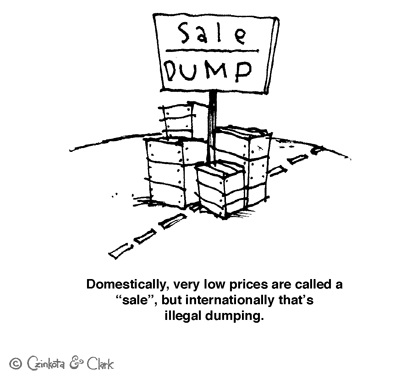 WTO defines dumping as “a firm is said to dump if it sells its product in another country at a price less than the normal value. It does not matter whether a foreign firm sells at a higher or lower price than the domestic ones; as long as the price charged in the domestic country is below that in its own country, the firm can be held dumping.”[1] The Ministry of Commerce and Industry responsible for free and fair trade in India considers dumping to occur ‘When the export price of the goods imported in India is less than the normal value of the like articles sold in the domestic market.’[2]
 International laws: such as Article 6 of GATT (General Agreement on Tariffs and Trade), It lays down certain principles to be followed by member countries for imposition of reliefs such as anti-dumping duties and certain other safeguards.
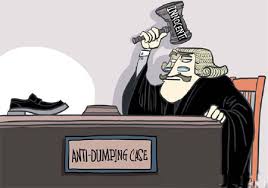 Lesser Duty under GATT provisions: By GATT, members cannot impose higher duties than the margin of dumping, some most of the nations impose duties proportion to the injury suffered. The rate is determined at which is adequate to mitigate or remove the injury to the domestic industry.
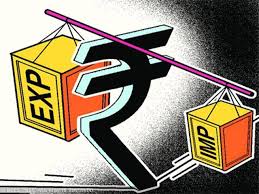 Anti-dumping measures have assumed much more importance today than any time in the past, with the advent of globalisation and Liberalization Foreign trade has been growing exponentially. Every day new players are entering new markets of the world it thus becomes necessary for every nation to protect its domestic players from unfair practices. A majority of the countries today make effective use of Anti-dumping measures. Dumping is a menace to the domestic market and to the economy as a whole for any country. Some of the grave consequences if dumping goes on unchecked are :

















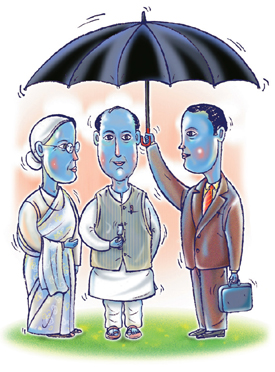



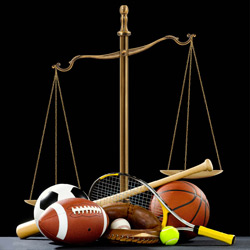

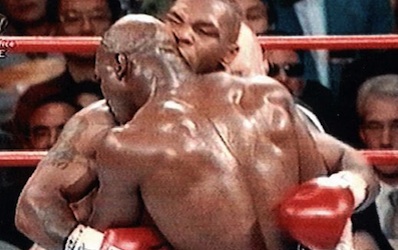



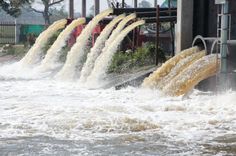

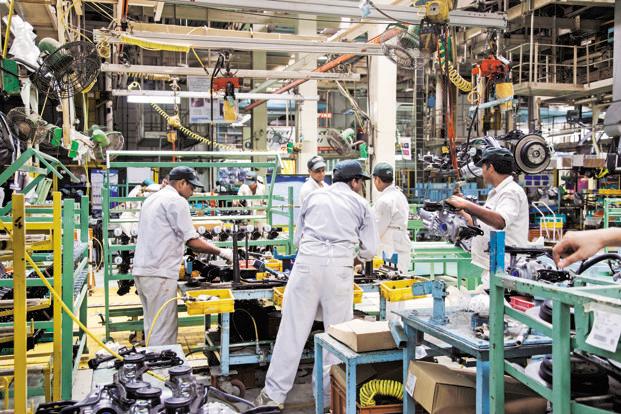
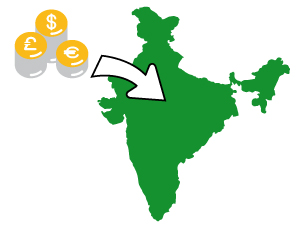








 Allow notifications





