

This article is written by Vaishnavi Shukla, a student of Bangalore Institute of Legal Studies, on the documents required for obtaining a decree of divorce.


This article is written by Vaishnavi Shukla, a student of Bangalore Institute of Legal Studies, on the documents required for obtaining a decree of divorce.

This blog is India’s biggest legal issue based blog with close to 1 lakh visitors a month and growing at a double digit growth rate. Popular blogposts on this blog are read thousands of times, and sometimes tens of thousands of times. Articles are shared hundreds of times on social media by our regular readers. The reason for this blogs massive traffic is simple – we publish high quality, authentic articles on an exclusive basis.
Would you like to be a regular contributor to the blog, and showcase your legal expertise to our massive audience looking for legal information and answers to real questions? We are not bragging, but people who write on our blog often find that their potential clients are reading their posts and reaching out to them. To know more about this, read about how these lawyers used blogging for enhanced professional visibility.
Legal blogging also helps a great deal to get noticed by potential recruiters and industry insiders. When people read articles written by you again and again on relevant topics, you start to build a reputation with those people. Sharing your blogposts published in respected blogs in your own social media feeds make sure that people around you get to know more about your legal expertise, and that really helps.
At iPleaders blog, we have started expert columns and are looking for regular contributors. Please fill up the form below to let us know that you are interested in publishing original articles on an exclusive basis, and we will get in touch with you.
Fill up the form now!
[newsletter_signup_form id=1]

This article is written by Dhruv Dikshit, a student of LC-II, Delhi University.
The growth of consumerism and the dependence of the world economy on it is immense and is increasing at an alarming rate. Consumers, at the end of the day look for value in the form of efficiency of goods and services. Technological advancements have made an enormous impact on the quality, quantity, productivity, availability and safety of goods and services. Despite the developments, the consumers are still victims of corrupt and fraudulent practices. Such exploitation of consumers takes shape in various ways and is often pre-meditated to increase profit margin such as adulteration of food, deleterious drugs, malicious plans, high prices-poor quality, false advertisements, hazardous products and many more. In addition to that, the development in the sphere of internet connectivity has led to the development of e-markets and e-commerce offering consumers products at their doorstep and more consumer exploitation in the form of cyber-crimes and further harassment. “The consumer is paramount” is nothing more than myth in the present scenario more specifically in the developing societies. However, there are safety mechanisms in place via which a consumer can get access to justice. In this context, the state has the primary responsibility to protect the consumers’ interests and rights through appropriate policy measures, legal structure and administrative framework by the virtue of being a welfare state.
The Consumer Protection Act of 1986 was enacted to provide protection of the interests of consumers and for the purpose of establishment of consumer councils and other authorities for the settlement of consumer disputes, and for matter connected therewith. The said Act was amended three times to make the act more effective but even then there were a few lacunas and nuances that were not incorporated. Several shortcomings have been noticed while administering the various provisions of the said Act.
The new Consumer Protection Bill 2015 that has been introduced in the monsoon session of parliament seeks to replace the old act. The primary motivation to replace the older law with a new one is to modernise the law with respect to the development of new markets and to further widen the ambit and a scope of the law to incorporate nuances so that the big companies cannot use them as loop holes to exploit the consumers and to further increase the accountability of the said companies. The new bill seeks to make manufacturers liable for any injury attributed to the consumer or death of a consumer or property damage and get them sentenced for life.
The new law assumes significant focus as there is growing concern over the safety of consumer products especially after the Maggi controversy where in the consumers were duped for a considerable amount of time. The key features of the new bill include establishment of an exclusive agency called the Central Consumer Protection Authority (CCPA) which will protect and enforce the rights of consumers. CCPA has the power to recall products and in extension to that the power to withdraw misleading advertisements.
The authority will intervene wherever necessary to prevent consumer exploitation arising from unfair trade practices. In the older act, the consumers needed to approach the court to file a case and start the proceedings, but the present bill has conferred the power of suo moto on to the agency of starting the proceedings against the manufacturers on its own. Furthermore, the agency can initiate class action suits to compensate the people that were affected. Added to that, the power of review of previous decisions has been bestowed to the consumer courts as well thereby giving the existing redressal authorities civil court powers.
Minister of Consumer Affairs, Ram Vilas Paswan explains the rationale behind the new bill that “misleading advertisements, tele-marketing, multi-level marketing, direct selling and e-tailing pose new challenges to consumer protection Hence, there was a need to modernise the act to address the situation effectively”. The consumers are on the receiving end of faulty and incomplete due diligence done by the entity providing platform for e-market, which eventually leads to harassment of the consumers as they are the ones who have to deal with the excessive loss of time and energy required to get remedy for the damage caused. To rectify this situation the bill provides for stringent penalty, including life imprisonment in certain cases as a deterrent. Furthermore, in case an advertiser is providing a misleading advertisement, the proposed regulatory authority can on its own fine the company 10 lakhs and also ask for the withdrawal of the advertisement.
The bill also has several provisions aimed at simplifying the consumer dispute resolution process in the consumer forum. Mediation is put forth as an alternative dispute resolution mechanism. The mediation will be under the supervision of consumer courts. The National Commission or a State Commission or a District Commission, as the circumstances may be, will appoint a mediator who shall attempt to resolve the dispute between the parties by facilitating discussion between parties directly by guiding the parties in identifying issues, reducing misunderstandings, exploring different ways to compromise all in all generating options in an attempt to solve the dispute.
Furthermore, the bill also includes provisions for the enhancement of the pecuniary jurisdiction of the redressal agencies, power to review their own records by the state and district commissions. The bill also seeks to establish a circuit bench to facilitate quicker and an efficient disposal of complaints. To increase the efficiency further, the bill provides the consumers electronic ways over the internet to file complaints in consumer courts that have jurisdiction over the place of residence of the complainant. The complaints will be deemed as admissible if the question of admissibility is not decided within 21 days. Furthermore, the complaint has to be dealt with within 90 days thereby, increasing the efficiency of the juridical proceedings. The new bill is expected to enhance the quality and safety of products and services adding the proposed law has much-needed provisions ensuring fair equitable and consistent outcomes for consumers.

I recently came across this press release we did back in early 2014, which is not anywhere on our website anymore. This tells the story of Cloudtrain.in and End Sexual Harassment project really well. I thought it will be a great idea to share it with all of you here, since it is such great and relevant content anyway.
Pallavi Pareek had worked for several management consultancies before turning to entrepreneurship. Her profile in the past required her to regularly pitch to top businessmen for acquiring new business, which meant meeting them alone over coffee or dinner. Not all of her prospects were strictly professional in their conduct – every once in a while one of them will express romantic interests hinting towards sexual favours. For instance, a business meeting with the Country HR Head of a big MNC turned into an inappropriate proposition for a long drive to Lonavala to “discuss business”. The deal fell through when Pallavi refused. She was not alone, even her colleagues and peers in the industry often shared such anecdotes in confidence. Naturally, when the new sexual harassment law was finally passed by the Parliament, she hoped that it will go a long way in preventing such incidences.
By 2013, when the law was passed, Pallavi had already co-founded iPleaders, a startup that helps premier Indian Universities to build cloud technology based courses that were being accessed by thousands of students in more than 10 countries. When news of sexual harassment at law universities, news magazines and even the Supreme Court started coming out in the media, she decided to explore if something could be done to tackle sexual harassment using cloud based education technology. Once she started speaking to her former colleagues and associates from the HR and corporate training industry, they started sharing the difficulties corporate India faced in implementing the new law that aims to tackle sexual harassment at workplace.
The revelations were startling to say the least. Most HR professionals said that training the entire workforce about sexual harassment, which is a compliance requirement under the law, was both challenging and costly – as there are very few experts to be found without paying a premium, who have to be flown around the country if there are offices outside big metros. Apart from training the employees, every business needs to set up an internal complaints committee and train the members in handling complaints, effectively conducting hearing and various legal implications. Most organisations are confused about how to properly implement the new law without upsetting gender neutrality of the work place as the law gives protection only to women. Failure in effective implementation means the businesses potentially opened themselves to liability and public humiliation – as observed in a few cases that got media attention last year.
Most HR experts agree that effective and continuous training is the best way to reduce possibility of sexual harassment, and it reduces liability and damage on part of the employer in case sexual harassment actually takes place. A recent study by the Journal of Applied Social Psychology has proven that incidence of sexual harassment goes down dramatically when employees are exposed to regular training programs.
However, the difficulties faced in anti-sexual harassment training are several. Cost involved in conducting live in-person training across several branches and locations all over India can be prohibitive for most businesses, and management is often unwilling to commit too much resources to a training which they see as a mere compliance requirement. Conducting these live trainings more than once or twice a year is impractical, but temporary staff and new employees who join in between remain untrained. Language barriers, the lack of India specific literature and assessment scheme were also a problem. Also, many employees tend to be inattentive during sessions or miss them altogether as they do not see correlation with performance or incentives. When employees actually face a situation where they need this knowledge, they do not have any expert to turn to short of going to a lawyer.
Clearly, there was a void to be filled. However, the solution had to come in the form of a comprehensive training program which reduces costs of continuous training. This is where cloud-based education technology held a lot of promise. The iPleaders team approached several experts like Ranjana Kaul, former member of Delhi Commission for Women, Mrinal Satish, a professor at National Law University Delhi who took part in drafting the law and other practicing lawyer and HR professionals, who helped them to build a cloud-based Anti-Sexual Harassment Toolkit, which included training as well as a compliance module. This was launched in the form of the “End Sexual Harassment” campaign in November 2013, and made accessible for free to anyone who would like to learn.
Another person who was instrumental in building this product for a corporate environment was Alok Kejriwal, the CEO and co-founder of a well-known gaming startup Games2Win. Kejriwal, who has been an informal mentor to many entrepreneurs including a co-founder of iPleaders, was looking for a solution to implement the law in his organization. Not only Kejriwal provided insights that enabled the product to be industry friendly, he also implemented the toolbox at Games2Win as an early adopter of the concept. In his own words, “startups like ours always need ready-to-plug services that are not our core competence. Preserving the dignity, safety and status of women at 2win is a top HR priority and hence we found the product offered by iPleaders just perfect.”
This was followed by series of B2B sales to Samsung, Feedback Infra and various other organizations. The deployment at Feedback Infra was particularly challenging, as the training tool had to be deployed at 40 locations all over India, for thousands of employees from multiple linguistic backgrounds. Collaborations with and endorsement from industry bodies like the Confederation of Indian Industries (CII) and NASSCOM followed soon. CII has implemented the toolkit to ensure that it is internally compliant with the law. “The toolbox is timely and the templates provided in the toolbox are quite simple and easy to comprehend. CII is recommending this unique tool to its member companies. We are also encouraging our employees to gain understanding from the platform,” says Shefali Chaturvedi, Senior Director of CII, who is also the CEO of the CII Foundation and head of their Women Empowerment Division.
In its current form, the iPleaders Anti-Sexual Harassment Cloud-Comply Toolkit is a one-stop solution to problems when it comes to training employees in prevention of sexual harassment and corporate compliance under the new law. It provides a way to conduct high quality continuous training on sexual harassment through pre-developed training modules at a fraction of the cost of live training. Employees get continuous access to the toolkit on smartphones and computer and have to clear an assessment test which establishes if they have learned sufficiently. The Toolkit is available in both English and also vernacular languages on demand, bridging the language gap in most Indian companies.
This initiative by iPleaders has received validation from industry experts. “High quality corporate training accompanied with the appropriate legal expertise is hard to come by. iPleaders has consulted the right legal, HR and management experts while managing a great job with technology, aesthetics, content and assessment. Simplicity, ease of use and effectiveness of the training toolkit is ground-breaking,” says Siboney Sagar, former General Counsel of British Telecom and General Electric.
“I advised them to create vernacular versions of the training – and I must say they have done a great job with the Hindi version,” says Ranjana Kaul, former member of the Delhi Women’s Commission, who is currently a partner at law firm Dua Associates.
This seems to be just the beginning of what promises to be a daunting task of making the working population of India sensitive to women’s issues. As Pallavi says “Working women in India already face big challenges at home and at work. Sexual harassment should not be one of those challenges. I feel that in some way I have contributed to reducing that burden.” “Good training also help men to know what is acceptable at workplace and what is not – so it helps men as well” adds Abhyudaya, Pallavi’s co-founder. iPleaders is now working with several MNCs to build cloud based training on subjects like whistle blower policy and anti-bribery compliance, and opportunities seem to be endless.
Another great initiative by iPleaders is to launch a course aimed at equipping individuals with thorough knowledge of sexual harassment prevention which can, in turn, help various HRs and trainers to train the entire workforce by themselves. The course can be found here. A major hurdle for a lot of companies is that they although are aware of POSH act, they do not know how to implement it. For this purpose, one can also opt for this course to ensure that sexual harassment prevention laws are properly implemented in their company.

It has been quite a few years since I graduated, worked at Trilegal, quit my job and started my own business. It has been about three years since I have been speaking to law students and counseling them. Human beings progress and evolve over time, but the concerns of law school life haven’t changed. Something is preventing this change. It’s time we took a step back to identify what is stopping our evolution.
Looking back, law school can be a really exciting place to have been at for some people. It’s a thrilling experience filled with an overwhelming amount of activity – academics (studies, projects, vivas, mid-term and term-end exams), moots, conferences, article-writing, college fests, MUNs (Model United Nations) and internships. Whoa!
Isn’t it too intense? Is it humanly possible to take a break?
To me, it appears more like a karmic trap in which it is mandatory to participate when you are in law school. One is only able to get out of it when one graduates. I know of friends who have aspired to win the Jessup moot court competition and have continuously spent 3 out of 5 years in law school, others who have published over 20 articles throughout their law school journey. In law school, it almost seems like we must be like them, if we are any good.
Here are some questions – Is this really true? Do we have to do all this, or is it merely a design that is thrown at us by the environment? Did you sign up for this when you decided to take admission in a law school? Does this relate to what you wanted to achieve when you decided to become a lawyer? Is this giving you an opportunity to find out what you really want to do?
For many students, the answer to all of the above questions is yes. This article is not for them, because for them, this model works. But it does not work for everyone.

Many other students are not aware of any other better answer. Without knowing of an alternative, they also decide to accept this career path, without questioning, till they know better. To know this through your own personal experience, it can take quite long, you may realize this after you graduate. It won’t harm if you thought of questioning this.
If the answer to any of the above questions is no, do you have the option to opt out of this karmic cycle? Do you have the option to introduce new elements into the cycle and customize it for yourself?
It seems that success in the above karmic cycle is really valued by our peer group, faculty, environment and probably recruiters. The next question is – if you do succeed in doing all these tasks phenomenally well, what does it result in? Does it give you the certainty of getting a job (or it still keeps you in suspense until you have finally got the job at the end)?
Is getting a job equal to getting your dream job? Is your dream job necessarily the same as the dream job that is perceived by your peer group? Is ‘probably job-ready’ good enough, or is ‘definitely dream job ready’ more worthwhile as a goal to strive for? If you had to choose between these two goals, which is a goal you would work towards?

A system is meant to provide some ground rules. Unless we allow them to, systems can’t control us. We don’t need to break them and become anti-establishment, but we can surely customize how they impact our lives. I am not advocating boycotting or failing exams or not sitting for recruitment, but I am saying that we can decide to be unaffected by the perceived constraints of a system without completely abandoning it. For example, “I won’t get a job unless I am a topper with an excellent track record of mooting and some published articles,” is one such constraint. “An LLM from a good foreign university will help me in getting a great job,” is another. We can decide to give less importance in our lives to perceived social norms and peer pressures in our immediate environment and test them more deeply to identify if they really matter as much as they are expected to. At least, we need not be slaves to untested rules of unproven systems. We can use the system as a tool to navigate and explore our real selves, instead of constraining or burdensome shackles.
How do you want to use the system?

This article is written by Dhruv Dikshit, a student of LC-II, Delhi University
Gratuity is one of the most misunderstood and misconstrued components of a person’s salary. In simple terms, it is a retirement benefit paid as gratitude to the employees who have rendered a continuous service for at least five years to incentivize them so that they continue working efficiently. It is an amount paid to an employee based on the duration of his total service but an employee becomes eligible only after he has completed 5 years of his service. Gratuity is paid to an employee when he either retires or his employment is terminated or he resigns or upon his death. Gratuity is given the force of law by the Payment of Gratuity Act 1972, which is further administered and enforced by the Central Government and the designated establishments under its control.
The Payment of Gratuity Act, 1972 is applicable to every factory, mine, oilfield, plantation, port and railway company; every shop or establishment within the meaning of any law in which ten or more persons are employed, or were employed, on any day of the preceding twelve months; such other establishments or class of establishments, in which ten or more employees are employed, or were employed, on any day of the preceding twelve months, as the Central Government may, by notification, specify in this behalf. Once the Act becomes applicable to an organization i.e. once an establishment hires more than 10 employees, the Act would continue to apply to the same even after the number of employees gets reduced below the minimum requirement. The Act extends to the whole of India excluding the State of Jammu and Kashmir.
An employee who has rendered at least five years of service becomes entitled to the said benefit. The pre-requisite of completion of continuous service of five years shall not be necessary where the termination of the employment of any employee is due to death or disablement to the extent that the person is literally unable to provide the required services. In the case of death of the employee, gratuity payable to him shall be paid to his nominee or, if no nomination has been made, to his heirs, and where any such nominees or heirs is a minor, the share of such minor, shall be deposited with the controlling authority who shall invest the same for the benefit of such minor in such bank or other financial institution, as may be prescribed, until such minor attains majority.
An employer may offer gratuity out of the establishment’s funds or may approach an insurance company in order to purchase a group gratuity plan. In case the employer chooses a life insurer, he has to pay annual contributions as decided by the insurer. The employee is also free to make contributions to his gratuity fund.
Click here for free materials!
According to the Act, gratuity shall be payable to an employee on the termination of his employment after he has provided continuous service for not less than five years. The question that arises is, what is the meaning of “continuous service”? An employee shall be said to be in continuous service for a period if he has, for that period, been in uninterrupted service and includes service which may be interrupted on account of sickness, accident, leave, absence from duty without leave, lay off, strike or a lock-out or cessation of work not due to any fault of the employee, whether such uninterrupted or interrupted service was rendered before or after the commencement of this Act.
GRATUITY = LAST DRAWN SALARY × 15/26 × NO. OF YEARS OF SERVICE
The ratio 15/26 represents 15 days out of the 26 working days in a month
Last drawn salary = Basic Salary + Dearness Allowance
Years of Service are rounded down to the nearest full year.
For example, if the employee has a total service of 20 years, 10 months and 25 days, only 20 years will be factored into the calculation.

The employer shall arrange to pay the amount of gratuity within 30 days from the date it becomes active i.e. from the day the person retires or his employment is terminated, to the person to whom the gratuity is awarded. If the amount of gratuity payable under the section is not paid by the employer within the period specified, he will have to pay simple interest on it from the date on which the gratuity becomes payable at the rate in coherence with the guidelines laid down by the by the Central Government. Gratuity can be paid in cash, demand draft or bank cheque to the employee via his preferred mode of payment.
The employer can withhold or forfeit gratuity wholly or partially even if employee has completed 5 years if the employment of the said employee has been terminated for disorderly conduct or any other misdemeanour or an act tantamount to violence provided that such offense is committed by him in the course of his employment. It may be noted that above act should have been committed by employee during his employment.
Taxability of gratuity depends on the recipient’s job. In case of government employees there is no tax on the gratuity. In case of private sector employees, the gratuity is exempt from tax subject to a maximum of Rs 10 lakhs or 15 days salary for each completed year of service
If a person has received gratuity before and if any exemption was allowed for the same, then the exemption to be allowed during the retirement year gets reduced to the extent of exemption already allowed, subject to the overall limit of Rs 10 lakhs.
Payment of gratuity is a statutory requirement. In case an employer fails to pay gratuity amount to an employee, he shall be liable for punishment. Where the employer fails to make payment of any gratuity payable to the employee, he shall be punishable with imprisonment for a term which shall not be less than six months but which may extend to two years. Any employer who contravenes or makes default in complying with any of the provisions of the Act or any rule or order made there under shall be punishable with imprisonment for a term which shall not be less than three months but which may extend to one year or with fine which shall not be less than ten thousand rupees but which may extend to twenty thousand rupees, or with both. If an employer makes any false statement or false representation in order to avoid any payment to be made by himself under the Act or of enabling any other person to avoid such payment shall be punishable with imprisonment for a term which may extend to six months or with fine which may extend to ten thousand rupees or with both.
The gratuity amount payable shall not be twisted in a serpentine manner in execution of any decree or order of any civil, revenue or criminal court.
If the amount of gratuity is not paid by the employer within the prescribed time to the said person, he/she has the right to file a complaint to the Controlling Authority under the Payment of Gratuity Act within the area where the employer’s establishment is situated or where the employee was working at the time of termination. Moreover, the aggrieved person can also approach Labour Courts to get relief and justice.
Severance is paid when an employee is declared redundant. Gratuity is a lump sum amount that an employer pays an employee if he/she retires or resigns from employment. An employee does not contribute any portion of her salary towards this amount. Gratuity is only paid out at the time of retirement or resignation, and in the event of death or being rendered disabled because of an accident or illness. On the other hand, severance is offered to an employee upon being laid off from a company. The receipt of a severance package is contingent upon signing a severance agreement.
Get comprehensive guidance on employment-related legislation by taking up this course that is created by iPleaders, India’s leading legal online education provider.
LawSikho has created a telegram group for exchanging legal knowledge, referrals and various opportunities. You can click on this link and join:
https://t.me/joinchat/J_

At the time and the environment in which I grew up, I was made to believe that academic performance is the only ticket to upwards social and financial mobility. I was told that test scores and GPA are things that will determine how I live the rest of my life. People who don’t excel academically are doomed for their lives. This was repeated by parents, teachers and peers, who had our best interests in their mind, and we all believed this.
Now I strongly believe that how you will do in your life does not have much correlation with how your academic performance in school or college has been.
I met many of my college batch mates recently, several years after we parted ways and started pursuing our respective professional careers after finishing our law degree, and this belief was further strengthened. Many of my friends who were not very serious about their academic performance in law school are now doing as well as the studious ones, sometimes even better.
And there we were, throughout our teenage and early twenties, made to believe that academic performance is the only way to succeed in life. Many were made to feel worthless and worse because they did not score well in subjects that they were not at all passionate about.
Many of those who maintained impeccable academic records were absorbed into predictable and popular career options – only to realize later that they are not really passionate about what they are doing. Such disconnect from the work one is doing leads to deep dissatisfaction and unhappiness. Many of them have remained stuck in careers they do not really like because they are not sure they can start another career from scratch. In another way good academic performance harms young minds is through creation of hubris, which comes in the way of success. Of course, there are many who were studious students who are doing very well in their chosen area.
A majority of those who did not have exactly glowing academic records, however, seem to have worked hard after graduation, taking more risk and opting for career options which are not yet popular and not as overcrowded. They were rewarded very well.
Do what you really want to do, and you are never left behind or worthless if you are ready to put your mind and work into something valuable. Do not let parents, teachers or anyone else tell you otherwise.

by Srishti Aishwarya
Generally I tend to talk a lot about self-development, shiny bright side of law school, and life. For a change, here is a tad bit of digression. Here is a new series called “Diary of a 20-Something-Confused-Gonna Graduate- Law Student, discussing and dealing with academics, job worries, love life, peers and family, not in an idealistic way, but confused real way and finding the way in the process.
I was crying my eyes out, semi-drunk, sitting somewhere, totally lost. Lamenting over the pathetic life I have, rejected again and again, slammed from all possible directions, I felt like a loser. A big bad loser.
Incidentally, a friend of mine called up that very time, so I started shrieking and sobbing on a phone, the theme being, “I’m such a loser”. After listening to me politely for a while, he finally said, “Even assuming you are a loser, so what?”
I shrieked, “I don’t want to be a loser, I’m not a loser”. He consoled me for a while, coaxed me to go home. Talking more to me didn’t help, I was as sure as hell not going to make any sense that day.
I went back with smudged and sore eyes, totally exhausted- I hit the bed instantly.
The next day when I got up, I tried to recollect the happenings of last night, crying, planning possible exit modes, feeling like a pathetic loser, talking to the friend, and got back into that insanely sad mode again.
My problem was I was not being able to come to terms with myself. How can I possibly get rejected, how can I be the one so hopelessly, helplessly slammed? Why am I without an iota of certainty in my life? Being the person who likes to control every second of her life, it was too hard to digest that personally, professionally, socially, I had pretty much no idea about what’s going on with me.
I just could not handle how things were not the way they were supposed to be – with no fault of mine that I could think of. People are going away when I need them the most. My self-confidence and self-esteem went down the drain. From being a person who totally madly was in love with herself, I gradually went on to become someone who would pray of some car accident or bomb blast that can possibly end her misery. I could not deal with things, it was like everything is slipping away from my hand. I could not, just could not accept the way life was turning out to be.
While thinking over all of this, I remembered my friend’s words: “Even if you are a loser, so what?”
So what even if I’m a hopelessly confused, semi-suicidal, total wreck? So what if nobody cares? Crying over it is as sure as hell not going to change it. If I’m a loser, I am. And I need to come to terms with myself to change that. I was in the middle of nowhere, somewhere I thought I’m a loser, and deep inside I did not want to be one. And both the beliefs kept on reinforcing themselves, leading to a vicious cycle of emptiness and misery.
The first thing I needed to do was to accept things as they are and be comfortable with failure and rejection. Accept the way my life has turned out to be. And even if I’m a loser, so what? It does not give me the license to lose self-confidence. Self-confidence is not something attached to achievements. It is something you need to have inherent in you, and I need to have inherent in me. No rejection can possibly be the measure of my life.
So, I’m a loser, but I’m going to change it.

Chasing grades or increasing our well being? Let me tell you about something about education I learnt from a real life experience.
I have no qualifications in teaching or education – what I do have is experience as a mother and helping friends with their children’s needs, trying to make the right choices. I have a very dear friend whose child had to be moved from three different schools whilst she was in primary school, (a very young and tender age) this was due to the bullying and racism she had to face. We tend to think that being in the 21st-century people would be broader minded. Unfortunately, this is not the case, and it sometimes looks like things have become worse.
As your child grows up one of the major steps in their life is to find a good school, as most of us understand the value of education. My friend is based in the UK. In the UK we look at OFSTED reports on schools before making a decision – this gives you information on the school’s performance academically and personally. Parents usually check the school websites for this information.
My friend chose a school for her daughter that had ‘outstanding’ on the Ofsted report – but she didn’t ponder much as to how diverse the school was. As a person of Indian origin, she did not think that what is good for local children, may not be perfect for her daughter. This was her first BIG mistake. To cut a long story short, the school was not suitable for my friends youngest daughter. She was a child who was bright and vibrant but whilst being at this school she became sad, lacked self-confidence, stopped eating and started to have minor behaviour issues.
She moved from this particular school at the age of 6 and started to go to another school which was smaller. My friend thought that she would have fewer problems here because the kid would stand out more and be recognised. Again not much thought was given to the diversity of the school, and this was another mistake. As parents, we try to do the best for our children – and then the complete opposite happens. It can be a ‘soul destroying’ experience for parents.
My friend was right – her daughter was recognised as an individual but not as being part of a friend circle/group. She was the only child beside her elder sister who had a different colour of skin in the entire school. There were other children who spoke different languages or had other religious beliefs, but they looked the same – hair, skin colour etc while my friend’s daughter stood out in her appearance. The kid was bullied and experienced racism.
Finally, my friend thought enough is enough and decided to move her daughter to another school. She wanted to move to another area where there would be more Asians and diversity. This would have meant moving home, area, finding new jobs. Unfortunately, this was not possible due to her husband’s work commitments.
Eventually, my friend decided to move her daughter again at the age of 9. Thankfully this has proven to be the correct move as the full focus was given on diversity and very little on academic credibility. Most important the thing was that my friend’s daughter’s feelings were taken into consideration and a suitable school was found to suit her needs, not the other way around. ‘She no longer had to fit into the puzzle; she became the missing piece to complete the puzzle’.
My friend’s daughter feels she is not in the minority but in the majority and is happy. Unfortunately the concerns my friend has now is how to build her daughter’s self-confidence and encourage her to believe in herself, which has become difficult due to the verbal abuse she experienced.
We sometimes focus on what school people rave about and forget to look at what our children’s individual needs are, by following the crowd and putting unnecessary pressure on our children sometimes does more harm than good. Communication and understanding, if you are a child or an adult, is the key to helping anyone in life and I believe that’s what makes a good education, not just scoring high grades.
We all have our strengths and weaknesses. Some of us can think of brilliant ideas and some create great things. We need to understand our strengths and work on our weaknesses to achieve our goals in life.
(contributed by Priya Kainth)
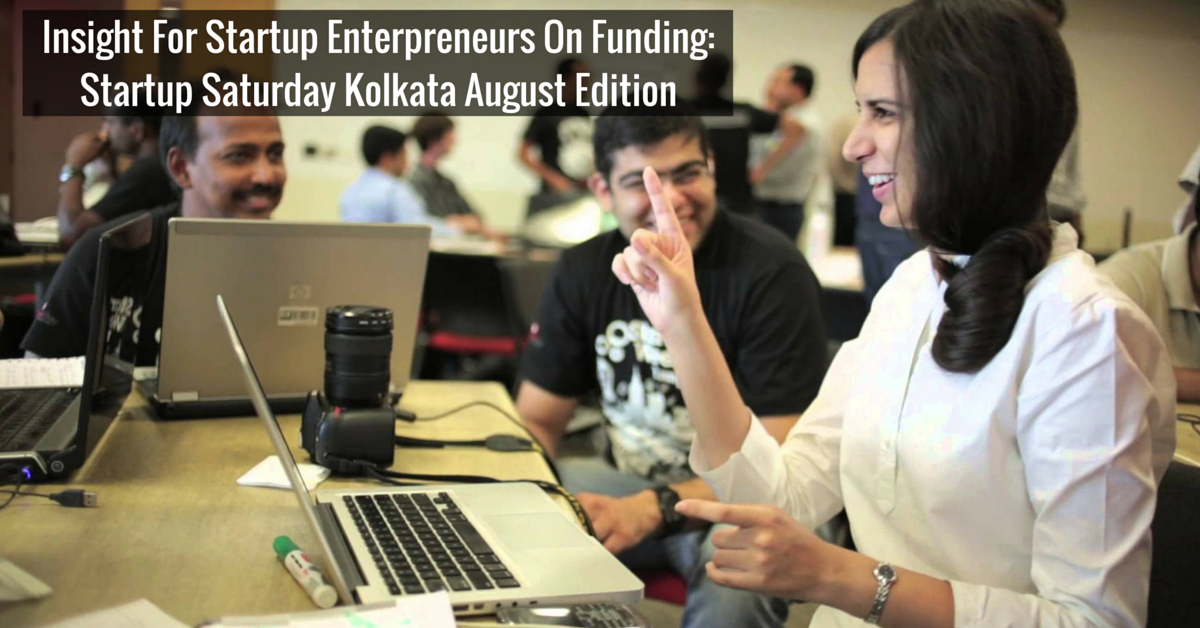
There was a time when I and Abhyudaya were organizers of Startup Saturday Kolkata. Here is a post I wrote about SS Kolkata in August of 2010 which was published originally in A First Taste of Law, which has been shut down ever since.
This question has bothered me many a times. Why don’t more people start up, why is it that we always tend to associate a lot of our startup ideas with complicated business plans, funding and other things that are not easily accessible, and end up creating huge psychological entry barriers? How much money is actually needed to set up a company selling products or services that really fill up some need gap.
This was the broad theme that was addressed by Abhishek Rungta at this month’s Startup Saturday Kolkata. He emphasized on the fact that a service based start-up company can be created best through bootstrapping.
According to him, the time you are going to spend looking for funding, negotiating minute details of the investment and business plan, ensuring legal compliance and so on, is valuable time that could have been spent in more beneficial pursuits.
I can not help but agree with him, and I shall draw support from this very well written article here. Paul Graham argues that there are four factors that are reducing the cost of building startup companies drastically:
Surprisingly, what Abhishek Rungta was telling the motley gathering of aspiring entrepreneurs and software developers from Kolkata about his experience, which I noticed, supports this theory of Paul Graham. Mr. Rungta has been providing insights into how a company can be built from the ground by following general business prudence and timely initiative. He himself used every trick in the book, from hard negotiations to barter to create start-up company Indusnet, a web consulting service which has managed to crack a difficult outsourcing market in the UK. Mr. Rungta is also an emerging seed funder. His experience with his own company as well as those which approach him for funding is that the best companies hardly need big time funding.
Mr. Rungta is not far from the truth, as I am coming across more and more company founders who would zealously guard their equity stake in their company and seem to be unwilling to sell off chunks of shares to investors for capital that the company does not really need right away. Even when they are seeking venture capital or angel investors, it is more for the value they add through their expertise, exploitation of their contacts for referral for sales or contribution in improvement of the product through guidance. While it is becoming obligatory to provide these add-ons for the venture capitalist or the angel investor, the demand for their money is lesser than ever.
This spells into a very simple message for you if you are an early stage startup or if you want to start up. DO NOT POSTPONE YOUR ACTION. YOU DO NOT HAVE TO WAIT FOR CAPITAL.
You can certainly flag off without venture capital, and while funding may be helpful somewhere along the way, start building you product or service first with the many resources available for free or a very cheap price. It is a seller’s market and it is the VC funds who are worried about not finding companies, and if you are able to build some value through your product or service, finding funds will be one of the lesser worries. According to the words of Mr. Rungta, it is not merely money that helps you get services and supplies. A bootstrapper must use other valuables he possesses, namely his services to get what he needs. Two cardinal rules:
1. Bargaining is necessary. Everywhere. Negotiate down the price of everything you can – from hotel accommodation to paid software that you need.
2. Barter whenever you can. Mr. Rungta always managed to find the best B2B services and made a website for them for a good discount.
Although not by design, the next speaker at Startup Saturday, August edition was Bappaditya from Pathshala.in, who along with his wife Debarati kicked off this venture. When they left their comfortable jobs in the US to come back to Kolkata to start off their web-based business catering to the school education sector, they did not have a concrete business model on the mind. In fact, their ideas and models are undergoing a transformation in accordance with their ground experiences in schools of Kolkata. In the last ten months, they have shifted to a service model from product-based model. They have not sought any venture capital so far, nor do they plan to do so in near future. their strategy is of progressing slowly but steadily towards designing a winning array of products and services that they will first sell locally.
The other attraction was a product demonstration by Krishnendu, a regular at Startup Saturday Kolkata, of a software that helps to generate leads by using social media, which he has named tentatively as BusinessLeads. Krishnendu on the other hand, is looking for funding to develop this product further and for marketing the same. He received instant feedback from the gathering, and I must say it was enthusiastic.
Photo credit: Abhinaba Dey, Avow groups






 Allow notifications

