Download Now
Home Blog Page 1831

A Brief Overview of the Legality of Bitcoin in India

1

This article has been written by, Aayushi Swaroop, a student of National University of Study and Research in Law, Ranchi. In this article, she has discussed  the meaning of bitcoins, its working, and the say of laws in the use of virtual currencies in the transactions.

Table of Contents

Introduction

The first form of cryptocurrency-bitcoins, are a digital form of money, which though matches some of the features of the traditional form of currency (namely fiat currency), is verified by using cryptography. The place where bitcoins can be sold or purchased by a person are called ‘bitcoin exchanges’. It was in 2009 when the news spread that someone with an alias or anonymous name, Satoshi Nakamoto, is the developer of bitcoins. It was proposed to be a form of electronic payment based upon mathematical proof. 

The purpose of developing digital currency or bitcoins is that the payment can be made independently, that is, without any involvement of the central authority, in a safer and immutable way which is also subject to verification. 

What is bitcoin

A cryptocurrency is one which involves advanced technological encryption. It is basically the digital form of currency. There are various types of cryptocurrencies which are used in the market for the purpose of exchange of goods and services, like, bitcoins, litecoins, ethereum, dash ripple, monero, etc. Ethereum is the type of cryptocurrency which is used for the purpose of smart contracts. A bitcoin is an example of a cryptocurrency which is referred to as a virtual form of currency which can be used to buy products and services.

Bitcoins have two varied components:

  • Bitcoin in the token form: It carries a set of codes which are basically the digital languages that determines the ownership of that bitcoin.
  • Bitcoin in the form of a protocol: It refers to the distributed network which keeps a record of all the transactions of the money made through the bitcoin in token form.

Meaning

Bitcoin facilitates the use of a digital form of currency, which uses codes to identify the owner of those bitcoins, to make it the most convenient way of money exchange for buying products. Unlike other types of currencies, like coins minted of brass and paper notes which carry the amount and the name of the owner of the money on paper, bitcoins are minted by computers using a particular software.

Why do we need bitcoins?

It is well known that bitcoins are not controlled or regulated by any authority, like banks or the Government, and therefore, many people find it easier to trust it, as it is aimed at avoiding past occurrences of a crash of the financial system. Also, the bitcoins are used anonymously, that is, nobody would get to know one’s account number, unless one has informed them about the same. Also, nobody gets to know the name of the seller or the buyer unless revealed. 

Ways in which one can get bitcoins

There are three ways in which one can obtain bitcoins. They are:

  • One can buy bitcoins using fiat currency, like notes or coins.
  • As a seller of goods or services you could ask your customer to make the payment in bitcoins.
  • One can also mint bitcoins using his/her computer.

Where can one find bitcoins?

One can receive his/her first bitcoin from any of the following four sources:

  • Any centre for cryptocurrency exchange would convert or change your real money for bitcoins. 

Resources: Coinbase and Coinsquare in the US & Canada, and BitBargain UK and Bittylicious in the United Kingdom.

  • Bitcoins could be obtained from the cryptocurrency exchange or any bitcoin ATM (Automated Tellering Machine) where one would be able to change the bitcoins or cash for any other type of cryptocurrency. 

Resources: BTER and CoinCorner.

  • If a person approaches any other person who has the classified service to help you trade your bitcoins for cash . 

Resource: the definitive site in LocalBitcoins.

  • A person, as a seller, could ask for bitcoins in exchange for goods or services provided to the other person. 

Resource: Sites like Purse.

Bitcoin Wallet

Just like a wallet that common people use in day-to-day life, bitcoin wallets are used to save bitcoins. The only difference is that bitcoin wallets are digital wallets and there is no state authority regulating these wallets. It is like a virtual bank account that will assist the customers to save money, or send or receive it and use it while paying for goods or services. These wallets either exist on the person’s computer or on a cloud.

Applications which could be used for creating bitcoins wallets

  • Full client in a network: 

It is a client who would be able to handle all aspects of the process alone. That is, the person would not have to wait for a third-party server. One can carry on the process from beginning till the end. As can be prima facie inferred, this application is not for beginners.

  • Lightweight client in a network:

This client assist connection with the mail server in order to gain access to the mailbox. This client can store a person’s bitcoins, but needs a server which some third-party owns to gain access to the network and make transactions.

  • Web client in a network:

It is the opposite of a full client scenario. A web client is totally dependent on a third-party server. Here, it would be the third-party who, by replacing you, would perform all the transactions on your part.

Risks involved in using digital wallets

  • When wallets are stored on the cloud, there is a high possibility that your network might get hacked. Once hacked, the offenders are likely to run away with your money.
  • When the walletes are stored on the computer, there exists a high possibility that viruses would eat up all your data and destroy your system. 
  • Also, there is a possibility that one might accidentally delete the wallet.

Bitcoins for beginners

It is very easy for new users to gain access to Bitcoins. This does not require knowledge of any technical details. After a person has installed a bitcoin wallet on his computer or his mobile phone, it would automatically generate his/her bitcoin address. A person can create several bitcoin addresses if he/she wants or needs. Once the address has become known to you, you can share it with your family and your acquaintances to make payments to each other. Remember, the bitcoin address can be used only once. 

Veiled buyers and sellers

Transactions that involve bitcoins as a medium of exchange, do not reveal the identity of buyers and sellers. The identification is made by the IDs of their wallets. 

  • The advantage with this system is that: their confidentiality is maintained;
  • There is a big disadvantage attached to it and that is, by not having the names of the buyer or the seller it becomes difficult to track the person  and therefore gives way to the selling of drugs or commission or any illegal activity.

What is block chain?

A block chain refers to a shared public ledger. The entire network of bitcoins relies on the shared public ledger. When the bitcoin transaction has been made successfully it adds to the block chain which allows the bitcoin wallet to calculate how much money remains in the wallets after the transaction. Basically it helps in looking at the balance of bitcoin wallets. And this further helps in maintaining records and to see if new transactions could be carried out with the left amount in the bitcoin wallet. This way, the transaction can be verified that it is being made by the original owner of the bitcoin wallet. The integrity and the chronological order of the block chains are protected by using the system of cryptography. 

What is transaction?

A transaction here refers to the transfer of value between bitcoin wallets which gets included in the block chain. There are two aspects to this transaction:

  • A private key: a private key or a seed is a piece of secret data stored by the bitcoin wallets. This piece of secret data is used to sign transactions as it provides mathematical proof that the transaction had been made by the real owner of the bitcoin wallet. 
  • Signature: Once a signature has been provided, and the bitcoin wallet has been issued, it cannot be altered by anybody. All the transactions conducted thereafter are broadcast on the network. On the network these transactions get confirmed within 10-20 minutes through the process known as bitcoin mining. 

Working of cryptocurrencies

There are two main concepts which are important to understand the functioning of bitcoins:

  • Blocks
  • Mining

Blocks

Every block on the network is a cluster of transactions that takes place using cryptocurrencies. These transactions are contained as permanent records which cannot be modified. Not only the information is permanent and unmodifiable but also the information stored in the previous blocks cannot be modified.

Blocks cannot independently exist, and so, every one block is connected to every other block.

Mining

Bitcoin mining refers to a process of transacting money in the digital currency system. In this system, the records of all the previous transactions are also recorded in the form of blocks. These blocks together form the blockchain. There exists miners on whom the task of mining is bestowed, that is, controlling and regulating the network. They further help in verifying the transactions that are taking place on the network. They ‘mine’ the coins. Therefore, miners assist in securing and controlling the network, which further helps in verifying the transactions which are taking place. 

Functioning

Transactions on the network take place by using the software called cryptocurrency wallets’. All the transactions that are taking place on the network are collected by the miners to form blocks. They do this in order to earn commission once the transaction gets authenticated in the banks. After this, the miners will check whether the transactions made are valid or not by seeing if the party had a sufficient number of bitcoins in the wallets for making such a transaction.

The process of verifying the transactions doesn’t involve inquiring about the same, but everything is done through a mechanism where the miner uses his computer. The job of miners is to keep releasing the hash functions, which are strings of numbers unless a solution is reached. A bunch of transactions, i.e. a block, would require a huge number of hash functions. Once the miner of that block verifies the transactions then the other miners also verify it.

Once the miners reach a solution and it is verified, the transactions become authentic. The miners hereafter receive their commission in the form of a new set of bitcoins. 

Once the block finds a solution, only then a new block would be created. When this process continues a chain of blocks are formed which are called blockchains. 

Properties of Bitcoin Transaction

  • The bitcoin transactions are irreversible:

Once a transaction has been made, nobody can reverse it. No help could be sought in cases where one has accidentally sent the bitcoins to a scammer or one has stolen it from one’s computer. There exists no safety net in case you find yourself in the above mentioned situations.

  • Identity not revealed:

The buyer or the seller’s identity is not revealed in the case of bitcoin transaction, not even the information regarding the account, like the account number, are made public. One receives bitcoins on the address and connecting the identity of the user to this address is not possible on the network. 

  • Swifter way of transacting money

Bitcoin transactions take place within a minute or so. It doesn’t take long to transact money to buy or purchase goods or services over the network from any part of the world, be it your neighbour or any person from another corner of the world.

  • The method is secure

The bitcoins are stored into a system called the cryptography system and therefore, only the owner of the private key can send cryptocurrency. Once it has been stored in the cryptography, no mathematical calculation would be able to break through it.

  • No permission required

Before one starts to use cryptocurrency, one does not have to take permission from any body. One can easily download the app (application) online, and use it for free. After installing the app, selling and purchasing of the bitcoins or other goods and services can be sent and received. No one could prevent you from gaining access to the application.

Lack of definition in Indian laws

  • The Coinage Act, 2011

Section 2(a) of The Coinage Act, 2011 defines the term coin. It states that: a coin is any metal or any other material that holds the stamp of the Government of India or any other authority who has been empowered by the Government to do the same. A coin is also referred to as a legal tender and includes commemorative coin and Government of India one rupee note. 

For something to be called a coin, it needs to have proper stamp by the authorities. Since there is no such authority to sanction virtual currency, therefore, bitcoins do not come under the ambit of coins as defined under the Coinage Act, 2011.

  • Foreign Exchange Management Act, 1999

Upon giving a closer look to Sections 2(h), 2(m) and 2(q), it may be inferred that bitcoins are not covered under the ambit of the Foreign Exchange Management Act (FEMA), 1999. 

  • Section 2(h) talks about the different types of currencies which exist.
  • Section 2(m) gives the definition for foreign currencies.
  • Section 2(q) lays down the definition of Indian currency

It is thus gathered that FEMA is not applicable to the regulation of bitcoins in India. This further means that the apex bank of the country, that is, the Reserve Bank of India, has no role to play in the regulation and operation of bitcoins in India, in the existing legal framework. 

  • KYC norms

KYC stands for Know Your Customer. It is the process through which the banks obtain  personal information, like the address of the account holder. The banks ask their customers to submit the KYC form at the time of opening a bank account. 

It is the RBI who makes the KYC norms in order: 

  • To keep a record of all the transactions made by its customers.   
  • To maintain an updated record of the personal information of the customer. 
  • To hold the person liable in case he/she fails to comply with or break from the usual course of behaviour. 

The widely used app in India to maintain a Bitcoin wallet is ‘Zebpay’. This app follows the KYC norms along with the Anti Money Laundering norms to ensure that the platform is not being put to illegal or wrongful use. 

  • The Sale of Goods Act, 1930

As per Section 2(7) of the Sale of Goods Act, 1930, the bitcoins may come under the ambit of ‘goods’. The point to be kept in mind is that this rule would not apply in cases where consideration is essential as consideration can only apply in the case of price as mentioned under Section 2(10) of the Sale of Goods Act, 1930 which can only be regulated by any existent law and not otherwise. This further means that consideration cannot be in kind under Sale of Goods Act. As a result, the Indian Contract Act, 1872 will also apply in cases where the transactions between the parties are formed by lawful consideration.

  • Imposition of tax on bitcoins

Where bitcoins are represented as an income or as an asset, taxes would be imposed. Under Section 2(14), which deals with the properties and the securities which the assessee holds, of the Income Tax Act, 1961, bitcoins can be considered under capital assets. 

Therefore if the person derives any profit from the buying or purchasing a bitcoin, the assessee would have to be taxed under the Income Tax Act, 1961 as it would come under capital gains. 

  • RBI guidelines

As per the RBI press release 2016-17/2054, dated 1st February, 2017, it was clearly stated by the apex bank of the country that: it does not give any license or authorization to any entity or company to operate virtual currencies, and that, any user, holder, trader or investor, etc. if carrying out the business of virtual currencies will be doing it at his/her own risk. 

Bitcoins v/s Traditional form of currency

The similarity in both the form of currency is that they are used only when parties from both sides have agreed to its use. But, they share certain differences which are as follows:

  • Bitcoins are not controlled by a single authority

The traditional form of money, i.e. notes and currencies, are generally issued and controlled by a single authority. Like in India, the central bank is the Reserve Bank of India (RBI) regulating the issuing of money and controlling its circulation in the market. But this is not the case with bitcoins. There exists no single authority which has the power to control the regulation of bitcoins. There are a group of volunteers who are responsible for its maintenance, and it is run by an open network of dedicated computers which may be spread across the world.  This characteristic of bitcoins helps those people who are not comfortable with any single authority exercising control over the circulation of money in an economy. 

  • Bitcoin forbids double spending 

The case with electronic currencies is that the assets which are mentioned therein can be easily copied and be re-used. But, bitcoins use intelligently and cleverly coded form of cryptography which prevents one from double spending the bitcoins. Also, the group of volunteers making the bitcoins undertake incentives which forbid a person from using the same bitcoin again. 

Where in the electronic form of money, this facet is looked into by the central bank, there is no one controlling the same in the open network of bitcoins. 

  • The supply of bitcoins is limited unlike traditional currencies

The conventional form of currencies which are used by people are issued by the Central Bank of the country. It means that the Central Bank holds the power to issue as much as it wants to. This could be proven to be dangerous for an economy as the Central Bank or the apex bank of a country could manipulate the amount of money being circulated in the market and could raise its value when compared to other countries. This could create a disbalance in the economy and it would be the general public who would be ultimately be getting affected by it. 

The system of bitcoins is based on a very important economic theory which says that if the demand for a commodity rises and its supply remains the same, then the value of that commodity would increase. Therefore, the system of bitcoins is that every hour a certain amount of bitcoins would be released and would continue to get released at a diminishing rate unless the mark of 21 million has been reached. This is one of the reasons why bitcoins are seen as an asset for an economy.

  • Semi-anonymity of the sender 

In the case of traditional currencies, the person sending the money can be identified as the transactions are controlled by the banks who have all the essential information about the sender of money. Whereas, in the case of bitcoins since there exists no validator, therefore, knowing the sender is not important. The transaction is required  by the address of his/her wallet. The protocol form of bitcoins, that is, the distributed network which keeps a record of all the transactions of the money made through the bitcoin in token form, keeps a record of the transactions and let the readers know if they have sufficient bitcoins in their account. The transaction that involves the use of bitcoins is looked into by  law enforcement and so the identity of the customers is known to them before making such transactions. This prevents criminals from using bitcoins for a purpose other than what is legally valid. 

  • Once sent money cannot be returned

In the case of traditional transactions, the sender might ask for the money to be returned to him. But in the case of bitcoins, once the money has been sent, the transaction cannot be reversed, and if an hour has passed after the transaction being made, getting the money back becomes an impossible task. This is so because there is no central authority controlling or regulating the transactions involving the use of bitcoins. This assures that the transactions made using bitcoins cannot be manipulated.

  • Bitcoins facilitate microtransactions 

‘Satoshi’ is the name given to the smallest unit of bitcoin whose value is equal to one-hundredth of a cent. This facilitates microtransactions which are not possible with the traditional form of currencies. 

How to protect one’s bitcoins on the network?

Like in our normal course of life, where we use only a  small amount of money in our purse and wallet and keep the larger store of it in a locker or any other safer environment, same is the case with bitcoins. Herein, a person would store only a little amount of bitcoins in the wallet, or the computer, or mobile or on his server and the rest of it would be kept in a safe environment.

Following steps could be followed to protect the bitcoins:

  • It is important that one backs up his bitcoin wallet on a regular basis. 
  • It is also essential that you keep a strong password on your smartphone to protect the bitcoins from hackers.
  • It would be a smart thing to keep only the required amount or only a few more than that in your online wallet. The rest could be stored in your offline wallet, disconnected from your network. 
  • An updated software where multiple signatures would be required would act as an added security. Using this software would make your give multiple approvals, each approval independent of the other approval. 

Bitcoin mining

Bitcoin mining is a process of creating or discovering the bitcoin currency for unlike the real currencies, that is, paper notes and coins which are printed and minted, the bitcoins have to be created or say have to be mined by using mathematical calculations. There is a public ledger called the block chain, that contains all the transactions and whenever a new bitcoin is mined, it is added as a new transaction to this ledger. The public ledger is also there for verifying all the past transactions as legitimate and to ensure that coins have been spent accordingly. 

Bitcoin mining is basically the process of introducing new coins into the system, as rewards for doing computational work. 

https://lawsikho.com/course/diploma-companies-act-corporate-governance
                    Click Above

Role of mining 

  • To make the bitcoin nodes secure and tamper-resistant.
  • To make sure that the design of the bitcoins are resource-intensive so that too many blocks are not created every day. This is done to avoid rapid inflation.
  • In order to be considered as valid by the public ledger, it is important that every block chain has a proof of work.
  • And, every time a block is received on the network it is important that they are verified by all the other bitcoin nodes. This system is called ‘hashcash proof of work function’.

Every miner, depending upon the contribution of resources, gets a share for discovering a block if he becomes a part of the network farm.

Similarity between bitcoin mining and the mining of other material resources

  • Bitcoin mining also takes great efforts by the miners as it requires complex mathematical calculation which is mentally exhaustive.
  • When all the efforts put in by the miners are collected, a new currency  becomes available at rates comparable to the mining resources like gold and silvers.

Is it safe to use bitcoins?

  • On one hand, since every transaction which is taking place is made public, it becomes very difficult for people to copy, fake or wrongfully use the bitcoins.
  • On the other hand, there are possibilities that one might accidentally deleted the bitcoins save don the cloud or computers. 
  • Also, it is very likely that, websites which temporarily save the bitcoins can be subject to theft.
  • Since the value of bitcoins have not remained constant over the period since its existence from 2009 onwards, people do not find it safe in comparison to the real money.

The following table would give an insight into the trends of the value of the bitcoins:

YEAR

STATUS

2009-10

No value or say zero value in the market due to lack of recognition of bitcoins as a medium of exchange. The only people using the bitcoins were the cryptography fans who were only using is as a hobby. And thus, the bitcoins had little or no value at all.

2011

Little rise in the value, and then a decline.

2012

The value of bitcoins had shown a slow rise.

2013

The value of bitcoins showed a high rise on the chart, and then crashed and then rose again. Finally it became stable.

2014

Initially the price erose , but eventually it moved towards a downfall.

2015

The entire year experienced the downfall in the value of bitcoins.

2016

The value against started rising.

2017 

Prices initially feel by 30% and then rose by breaking the record of November, 2013. But the end of the year the value of the bitcoins had dropped by one–third within 24 hours.

2018

By the end of the year, the value of bitcoins has reached 4,300 dollars.

2019 

Where in the initial part of the year, cryptocurrency had experienced a fall in its value, by the month of June its value had reached worth 13,000 dollars.

The recent increase in the value of the cryptocurrencies or say the bitcoin has been because of the development of cryptocurrency and blockchain industries.

Bitcoin regulation in India

Bitcoins mining- legal or illegal?

Neither the Government of India nor the Reserve Bank of India recognizes bitcoins as legal tender of money or as a currency, therefore, using bitcoins in any transaction is illegal in India. As per the apex bank of the country, the Reserve Bank of India, dealing in virtual currency transaction is prohibited, whereby, no banks or other such regulating organizations could deal in bitcoins.

There exists no law in India which talks about bitcoins. Therefore, in the eyes of law, bitcoin mining should neither be considered as legal nor be considered as illegal. No Act, law or legislation lays down provisions, neither defining what bitcoins are nor the penalties and process of prosecution for dealing in bitcoins or even for mining bitcoins.

Where miners can mine bitcoins in India, they would not be able to use these bitcoins to carry out transactions, or buy or sell services, or carry out any bitcoin business or operation in the country, neither the banks nor from any other financial institutions. It is to be noted that any person carrying out bitcoins related work shall be solely responsible for anything that happens during the course of that work as he/she would not be able to take any protection from the Indian laws.

  1. Securities Contracts (Regulation) Act, 1956 

For bitcoins to be considered under the ambit of ‘securities’, it is necessary that it falls within the meaning of the ‘securities’ as defined under Section 2(h) of the Securities Contracts (Regulation) Act, 1956, or the SCRA Act, which states that ‘securities’ include:

  • Shares, stocks, scrips, bonds, debenture stock or other marketable securities of like nature of any body corporate inclusive of derivative, units or any other instrument issued to investors in mutual fund schemes, units or any other instrument issued to investors in a collective investment scheme and security receipt as defined in SARFAESI Act (The Securitisation and Reconstruction of Financial Assets and Enforcement of Securities Interest Act, 2002);
  • It would include all those Government securities and instruments which the Central government notifies as securities.
  • Rights or interest in securities.

The two important essentials are to be looked into in order to consider an instrument as a security are: 

  • That a corporate body should issue it and;
  • That any underlying asset of the body corporate should back it.

Since bitcoins do not satisfy the two given conditions, therefore, bitcoins cannot be treated as securities as defined in SCRA. 

  1. The Foreign Exchange Management Act, 1999 (The FEMA Act )

The know if bitcoins fall under the ambit of ‘currency’, one has to look into the Foreign Exchange Management Act, 1999 or the FEMA Act, 1999. The Act states that the term ‘currency’ is inclusive of: 

  • Currency notes, postal notes, postal orders, money orders, cheques, drafts, travelers cheques, letters of credit, bills of exchange and promissory notes, credit cards or such other similar instruments, as may be notified by the Reserve Bank;
  • Currency notes” are inclusive of cash in the form of coins and banknotes;
  • Current account transaction” refers to any transaction which is not made from the capital account or is different from the capital account transactions. The transactions herein would also include:
    • The due payments in transactions relating to foreign trade, other current business, services, and also the banking and credit facilities which are available for  a short term in the ordinary course of business.
    • The due payments which are basically the interest that one has to pay on the loans as well as the interest that has to be paid on the net income from the investments. 
    • The remittances which one has to pay as the result of the expense when someone from the family, like the parents, spouse or children are residing abroad.
    • The expenses that one has to bear when someone from the family, like the parents, or the spouse or the children, goes abroad for education or medical care.

Since the Reserve Bank of India has already prohibited the use of virtual currencies like the bitcoins, thus, the bitcoins cannot be considered as an instrument under the definition of currency as laid down under the Foreign Exchange Management Act, 1999.

  1. Payment and Settlement Systems Act, 2007

The Act which is responsible for the regulation of all the payment systems in India is the Payment and Settlement Systems Act, 2007. According to Section 2(i) of the Payment and Settlement Systems Act, 2007, a ‘payment system’ is one where the payments being made between the payer and beneficiary are given effect. The word ‘payment’ in this section is inclusive of clearing, payment or settlement service or all of them. The stock exchange is not a part of the ‘payment system’ under the ambit of this section. 

On further explaining the definition, the following are also included in the payment system- credit card operations, debit card operations, smart card operations, money transfer operations or any other similar operations. 

The ‘payment system’ in India is regulated by the Reserve Bank of India. Since the Reserve Bank of India prohibits the use of bitcoins in any transaction with the banks or any other financial institutions, that is, neither they can deal them nor provide services related to them, therefore, bitcoins cannot be considered under the scope of ‘payment system’ in India. Also since bitcoins cannot act as a gateway between the payer and the beneficiary, therefore it cannot be included under the ‘payment system’ clause laid down under the Payment and Settlement Systems Act, 2007. 

4. Companies Act and the Companies (Acceptance of Deposits) Rules, 2014

Of the various token sales, there are some sales which are inclusive of acceptance of money or other tokens. These sales are regulated by the Companies Act and the Companies (Acceptance of Deposit) Rules, 2014 (Deposit Rules). This act lays down that: in the case where the receipt of money by a company has been produced either in the form of deposit or loan or in any other form, the receipt would be termed as a deposit. This would also provide it with an exemption from its applicability. 

For example, if in the course of business of supplying goods, a certain sum of money has been given as an advance, then this sum would not be considered as an advance in the case where it has been appropriated against the supply of goods or services within a period of 365 days. If a company goes against this rule, then charges would arise under the Companies Act and the Companies (Acceptance of Deposits) Rules, 2014 and also under the Reserve Bank of India’s rules and regulations.

A bill titled ‘the Banning of Unregulated Deposit Schemes Bill, 2018’ was introduced in Parliament, that is, by far, the law has only been proposed in the Parliament, it has still not been passed. In case the bill is passed in the current form, then a person would not be held liable only when the person issuing the virtual currency ensures that no money that has been received should be returned.

Commodities

If virtual currencies like bitcoin are classified within the scope of commodities, then its operation and exchange for trading would be treated and regulated as any other commodities exchange. The implication of carrying out operations or trading of virtual currencies  would have implications under the Foreign Direct Investment (FDI), that is, the Consolidated FDI Policy Circular of 2017 (FDI Policy) and the Foreign Exchange Management (Transfer or issue of security by a person resident outside India) Regulations, 2017 (TISPRO).

There are two essentials with the scope of the  word ‘commodity’:

  • A commodities spot exchange, which deals with ready delivery and,
  • A commodities derivatives exchange, which deals with derivative contracts.

The FDI Policy holds the power that without seeking any approval from the Government, it can restrict the amount to foreign investment into commodity spot exchange to 49% of the share capital. The only rule which has been provided under SCRA (Special Class Railway Apprentice) the exchange which takes place that facilitates the commodity derivatives are required to a recognised stock exchange, that is, it should be a licensed authority.

Pursuant to the introduction of the law stating that the regulation of virtual currencies would not be permitted in India, the Central Government has passed a notification that there are certain goods which are for the purpose of the term commodity derived under the Special Class Railway Apprentice and includes no virtual currency as its part. This was mentioned in the Securities and Exchange Board of India (SEBI) Circular, read with the Central Government’s notification. The Notification has only been made applicable to the commodity derivatives and not to the ready delivery contracts. It provides the closest guidance on the point of what may be considered a commodity exchange at the moment. 

But, it is at the discretion of the Central Government, if it wants, then it can at any time choose to notify virtual currencies (either in general form or any other form) as commodities within the scope of its released notification. This would facilitate the bringing of derivatives contracts within the scope of virtual currencies under the ambit of Special Class Railway Apprentice (and therefore, the Securities and Exchange Board of India’s notification). The spot trading and the foreign direct investment would fall under the ceiling of 49% slab of the capital. India presently has no separate licensing regime in case of commodities spot exchange.

RBI’s Prohibition on dealing cryptocurrencies

On 6th April 2018, Saurav Sinha, the Chief General Manager-In-Charge released a circular called as the RBI circular, reminding the users, holders and traders of the virtual currencies, including bitcoins, of the risk that is involved in dealing with the same. 

The Reserve Bank of India in its circular mentioned that:

Keeping in mind the risk which is associated with the dealings made using virtual currency, it has been decided, with immediate effect, that those banks which are regulated by the Reserve Bank of India shall prohibit dealing in it or provide services for the same or facilitate any person or entity in dealing with the virtual currencies.” 

As defined by the Reserve Bank of India the term ‘services’ as mentioned above would incorporate maintaining accounts, registering, settling, trading, clearing, giving loans by using virtual currencies as a medium of exchange, or accepting them as consideration or as a collateral, opening any account of exchange dealing with them and transfer/ receipt of money in account related to any purchase or sale of the virtual currencies. 

Those people who were involved in any of the above mentioned activities were asked to quit such a relationship within a period of 3 months from the date of the release of this circular. 

The Sections and the Acts based on which this circular was released are:

  • Section 35A (power of the Reserve Bank to give directions), read with Section 36(1)(a) (further power and functions of the Reserve Bank) of the Banking Regulation Act, 1949
  • Section 45JA (power of the bank to determine police and issue direction) and 45L (power of the bank to call for information from financial institutions and to give directions) of the Reserve Bank of India Act, 1934 and,
  • Section 10(2) (power of Reserve Bank to issue guidelines) read with Section 18 (power of the Reserve Bank to give directions generally) of the Payment and Settlement Act, 2007.

Recent Cases

The Supreme Court had asked all the High Court to transfer the cases to it which are related to the virtual currency. And had also asked the petitioners, who wanted to make any representations to the Reserve Bank of India in regard to the 2018 circular, within a time period of two weeks. The purpose of this was to provide the petitioner with an opportunity for exchanges, that is, to present the self-regulatory policies, like Know Your Customer (KYC) and Anti Money Laundering (AML) to the officials of the Central bank. The petitioners in these cases had one common ground for challenging the Reserve Bank of India’s circular and that was, that the circular was not preceded by any stakeholder consultation. 

Case 

The writ petition filed by a crypto dealer, Paras Lehana, was dismissed by the High Court of Punjab and Haryana. He had challenged the order on the ground that it was violative of his fundamental right to carry out any occupation, trade or business throughout the territory of India. The Court said that since the circular was released under the scope of the Banking Regulation Act and therefore, the court does not hold any power to interfere with this or any such policy matters. [1]

Potential Tax Implications

In India, there are two types of taxes which exist, and they are: 

  • Direct tax- They are taxes levied on the income of the person.
  • Indirect tax- These taxes are levied on the expenditure made by a person.

Therefore, the tax which would be imposed on the virtual currencies like bitcoin would be of two types: first, the income tax or the direct tax and second, service tax or GST (Goods and Services Tax) which is an indirect tax.

Direct Tax

Taxes which are imposed on the income of a person or say the direct taxes are governed by the Income Tax Act, 1961. As per the rules laid down in the Income Tax Act, 1961, a person who is a resident of India has to pay the tax on all his income, including the once coming from abroad whereas the non-residents are only subjected to the tax levied on the income which they are earning in India. However, any country with which India has signed a tax treaty and whose citizens are living in India, that is, the non-residents who are residents of another country, have the option of being taxed pursuant to the tax treaty or the Income Tax Act, 1961, whichever is more beneficial.

The conflict which arises in the case of virtual currency under Direct Tax rules, is that whether they are capital gains or profits and gains that the person is gaining out of his profession or occupation or any business. For example, if A is a seller and specifically he is a trader then his occupation would fall under the ambit of business income. However, if an income does not fall under the scope of business income, then the tax imposed would be based on the nature of capital gains. There exist no laws which would determine that in which category will the virtual currencies fall. There also had been no judicial precedents in this regard. 

Indirect Tax

The statutes or say the laws which look into the matter of Goods and Services Tax are:

  • The Central Goods and Services Tax Act, 2017
  • The Integrated Goods and Services Tax Act, 2017 and, 
  • (The respective) State Goods and Service Tax Acts, with each having its own jurisdictional limits.

The goods or commodities on which Goods and Services Tax is levied are:

  • On the sales of goods where the goods are sold within one state in India;
  • On the sales of goods where goods are transported from one state to another state;
  • The provision of services within the state in India; and
  • The provision of services from one state to another state in India.

Although there exists no specific category for virtual currencies within the scope of the Tariff Schedule for Goods, there is a provision for the residuary category of goods. Thus we gather that virtual currencies could be considered under the ambit of residuary category. The Goods and Services Tax is levied in cases where the goods are supplied in the course or furtherance of business, and the person who is required to pay the same has to include it in their sales invoices. 

It has specifically been added that one would have to pay Goods and Services Tax only when virtual currencies are being exchanged for providing services, like services of trading exchange. In those cases where a person has sold virtual currencies only as a part of his hobby, no GST would be applicable. Also, in those cases where the selling of the virtual currencies was made as an investment, in the initial stage, then it would not be a subject under Goods and Services Tax. 

It can be derived that there is a possibility that the case of double taxation may arise. For example, GST can be imposed when a person buys virtual currencies and again the GST tax may arise when he uses it in a transaction, that is, for buying or selling of services. However, the government has not given any such guidance stating the application of Goods and Services Tax on virtual currencies.

Resources providing information regarding the bitcoins

The below mentioned resources will tell one about where can one find wallets or stores that would accept eh bitcoins, exchanges for trading bitcoins, and bitcoins news, prices, charts, guides and analysis among other information.  The bitcoin or say the cryptocurrency system has affected the economy and the financial system in too many ways and is still has miles to go.

  • 99Bitcoins

99Bitcoins provides the users with videos and text tutorial on how can one buy bitcoins using apps like, Paypal, credit card, debit card, etc.

  • Bitcoin.org

With the help of bitcoin.org, one would be able to choose one’s bitcoin wallet from twelve different applications via mobile, desktop and other hardware applications.

  • Coinmap

For those users of bitcoins who likes to spend their bitcoins to retailers, this application is helpful, for it helps in tracking the physical location of the retailers who accept bitcoins at their stores.

  • Blockchain.info

This particular application helps in finding out how much money is stored with your bitcoin wallet. This application is meant for checking transaction on the ledger. One could check how many bitcoins do your wallet contain, or how many bitcoins does any particular bitcoin wallet address holds.

  • Bitnodes

This application is governed by a Bitcoin Foundation. Bitnodes estimates and visualizes the size of the bitcoin network. 

  • Wizbit

Wizbit is fast with recording all the ew blocks are being created over the network in real time. 

  • We Use Coins

If one needs to find the list of credible exchanges for trading bitcoins all over the world, one can access weusecoins.com. It gives you the required information.

  • Buy Bitcoin Worldwide

This application is very useful as it helps in tracking down Bitcoin exchange. If one needs help in finding a bitcoin exchange, one would find this application suitable.

Conclusion

Introduced with the intention of strengthening the digital economy, cryptocurrencies being easy to trade and maintain has recently been in wide circulation. Bitcoins, which happens to be the first type of cryptocurrency, has no authority controlling or regulating it and thus, it stands as a system which is not so secure. The blockchain technology wherein public ledger of bitcoin transactions are maintained has led to many countries adopting it and utilizing it in digital transactions, despite the fact that many countries have banned the use of cryptocurrencies. 

If we look at India, it has not taken much interest in the use of cryptocurrencies and has not got any approval from the Reserve Bank of India, which is the apex bank of the country and also the Government of India. The Reserve Bank of India has, therefore, recently, and also in the past has released circular to warn the citizens of the risk which is involved in the use of cryptocurrencies. Ther banks and any other financial institutions were prohibited from using providing services for bitcoin transactions and to individuals or entities working in the virtual currency segment. 

In India, there is no law which explicitly states that the use of bitcoins are illegal. There also exists no laws which are bound to regulate the bitcoin transactions. As a result, bitcoin mining and other activities involving the use of bitcoins taken place within the country though at a very small scale. 

Download Now

What you need to know about Corporate Social Responsibility (CSR) under Companies Act, 2013

1
Corporate Social Responsibility

CSRNEW

The term ‘Corporate Social Responsibility (CSR)’, in its most rudimentary sense, implies the responsibilities that business houses owe to the society for ensuring public welfare. The term was coined with the primary goal of controlling corporate aggrandizement by ensuring that the fruits of progress are distributed amongst all sections of society- especially historically marginalized and deprived sections.

The Companies Act, 2013

The new Companies Act, 2013, marks a paradigm shift in the legislature’s conception of Corporate Social Responsibility (CSR).
More specifically, it does not view Corporate Social Responsibility merely as a moral obligation that the corporate world owes to the society; instead, it imposes a mandatory obligation on all companies that meet the required criteria to play their part for alleviating the problems that continue to cripple our country.

In a nation like India, where there exists a wide chasm between large business houses and millions of people who continue to live in grinding poverty, it is hoped that the new CSR provisions will pave the way for a more just and equitable social order and will ensure wider acceptance of the principle that the business of business is not merely business.

Eligibility criteria

The new CSR provisions apply to both private limited and public limited companies, including their holding and subsidiary companies and foreign companies that have offices in India, that fulfill the following requirements:

A.  The company must have a net worth of Rs. 500 crore; or
B. It must have a turnover of Rs. 1,000 crore; or
C. It must have a net profit of Rs. 5 crore.

The net profit for this purpose would not include the profit that a company earns from its overseas branches or companies or the dividend that it earns from other companies in India.Interestingly, companies that fail to meet the eligibility criteria for 3 consecutive years would not be required to comply with CSR provisions.The upshot of this provision is that more companies will be required to comply with CSR provisions because the inability to meet the eligibility criteria for one year, or even for two years, will not be enough to grant a company immunity from complying with CSR provisions.

All companies that meet the aforementioned requirements must spend 2% of their average net profit for the immediately preceding three financial years for activities that would come under the ambit of Corporate Social Responsibility.

CSR activities

Schedule VII of the new Act exhaustively enumerates a list of activities that would come under the auspices of  the Corporate Social Responsibility.

They are as follows:

A. Supporting initiatives for the amelioration of poverty, hunger and malnutrition.
B. Promoting access to healthcare to those who need it most and taking initiatives for spreading greater awareness about preventive diseases.
C. Contributing for improving access to education and the quality of education, including special education.
D. Pioneering or supporting initiatives for reducing gender inequality by developing, inter alia, hostels for women and taking measures for improving maternal health.
E. Reducing the widespread inequities that exist in our society by promoting the welfare of backward sections of society and developing homes for senior citizens, orphans, etc.
F. Taking initiatives for ensuring environmental sustainability and ecological balance. Taking measures for preventing the undue exploitation of air, soil, water or other natural resources.
G. Taking measures for promoting animal welfare.
H. Promoting the progress of art and culture. Ensuring the preservation of places of historical importance.
I. Taking measures for improving the quality of life of veterans of the armed forces, widows of military personnel or their dependents.
J. Improving training facilities for locally or nationally recognized sports, especially Paralympic and Olympic sports.
K. Contributing to the Prime Minister’s National Relief Fund and other funds for the empowerment of women and members of SC, ST and OBC.
L. Contributing to technology incubators located within educational institutions.

It is pertinent to note that any contributions made to any political party would not fall under the ambit of CSR. Similarly, any activity which is conducted for the welfare of employees of that company or their families cannot be considered a CSR activity.
Companies should seek to perform their CSR activities in the local area in which their office is located.

Agencies for executing CSR activities

A company can perform its CSR activities with the help of a registered trust or society.Similarly, it can also perform such activities through a company established by its holding, subsidiary or associate company.If it does not opt for the latter, then it must show that the entity through which it is performing its activities has a proven track record and has been undertaking such activities for at least three years.The company can also use up to 5% of its CSR expenditure in a year for training its own personnel for performing CSR activities or for collaborating with reputed institutions to develop the required facilities for undertaking CSR activities directly through its own agencies.
Companies can also work together for conducting CSR activities.

CSR Committee

Section 135 of the Companies Act, 2013, states that a CSR Committee must be constituted to design the company’s CSR policy and to monitor its progress.The CSR Committee must consist of 3 directors, one of whom must be an independent director.However, private companies and foreign companies only need to have 2 directors.In addition, unlisted public companies and private companies that are otherwise not required to appoint an independent director do not need to appoint an independent director in the CSR Committee.

The CSR Committee is tasked with the primary responsibility of formulating the CSR policy of the company and determining how the CSR expenditure is to be distributed.After the CSR policy is framed by the CSR Committee, it is analyzed and approved by the Board of Directors. A company is also required to post the policy on its official website.

The CSR Committee has to determine the modus operandi for implementing the policy to the fullest extent possible.Moreover, it has to regularly evaluate the implementation of the policy and has to take corrective steps, wherever necessary, to ensure successful implementation.

Annual CSR report

A CSR report must be prepared annually by the board of directors in order to explain the company’s CSR policy in detail to various stakeholders .The report must be in the prescribed format and must contain, inter alia, the following details:

A. A brief overview of various facets of the company’s CSR policy;
B. Details about the composition and work of the CSR Committee;
C. Details of the net profit in the preceding 3 financial years and, more importantly, the amount of the net profit that was spent on   CSR activities.
D. If a company fails to spend the required portion of its net profit on CSR activities in a financial year, it must give cogent reason  for not doing so.

Penalty for violation of CSR provisions

Section 134 (3) (o) imposes a duty on the board of directors to disclose all the relevant information about its CSR policy and its implementation on an annual basis. Moreover, Section 134 (8) of the Act states that if the company fails to comply with the aforementioned provision, it shall be liable to pay fine which shall not be less than Rs. 50,000 but may extend to Rs. 25,00,000.Similarly, every defaulting officer shall be imprisoned for a period not exceeding 3 years and may also be asked to pay fine which shall not be less than Rs. 50,000 but may extend to Rs. 5,00,000. This essentially implies that the Act punishes a company for not disclosing information about its CSR policy but does not hold them liable for not undertaking CSR activities.

However, Section 450 of the Act contains a capacious provision for punishing a company or its officers in case no specific punishment is provided for a particular offence. More specifically, it states that if a company fails to comply with any provisions of the Act or any rules thereunder, the company and any defaulting officer can be asked to pay a fine which may extend to Rs. 10,000 and Rs. 1,000 per day if the contravention continues after the first fine.

Download Now

Regulation of foreign companies doing business in India under Companies Act, 2013

2
HSBC office in Kolkata. Photo credits: Drgarga


This article is written by Megha Bhatia, a student of Amity Law School, Noida.

Foreign companies which undertake business activities in India or invest in Indian businesses need to comply with certain Indian laws. For example, at the time of making an investment in India or setting up an Indian office, the foreign company needs to comply with the Foreign Exchange Management Act (FEMA). FEMA also requires foreign companies in India to comply with certain procedural and filing requirements on a periodic basis when they conduct operations in India. Similarly, if the company sells products or services in India and has an office in India, it will have to comply with Indian tax laws. Similarly, it will be required to comply with local regulations if it has an office (such as a Shops and Establishment Registration).

Does the Companies Act apply to such companies, considering they are incorporated outside India?

Understanding the definition of foreign company under Companies Act, 2013

A foreign company is a company which is incorporated outside India but having its place of business (including a share transfer or an office registered with a regulatory authority) in India. Under the Companies Act 2013, a foreign company means any company or body corporate incorporated outside India which has a place of business in India, either of its own or if it conducts business through an agent, physically / electronically or any other manner. However, all foreign companies are not required to comply with the Companies Act, it is only applicable to foreign companies where 50% or more of the paid-up share capital (calculated by including preference shares) is held by Indian entities.

Foreign companies must comply with the provisions of the Companies Act, 2013 in respect to the business as if it were a company incorporated in India.

(For further details, refer to Sections 379-393 of Companies Act, 2013 deals with the provisions relating to the control and regulation of companies incorporated outside India.)

Filing and Compliance Requirements

There are 4 major filing and compliance-related requirements that foreign company needs to comply with:

1)Delivery of documents to Registrar:

Every foreign company has to deliver the following documents to the registrar for registration within 30 days from the establishment of place of business in India-

i)Instruments constituting and defining the constitution of the company. For example, a UK incorporated company will have to file its memorandum and articles (as they exist under UK law) with the RO.

ii) Full address of the principal office of the company;

iii) A list of the directors and secretary of the company.

iv The name and address of the person resident in India who has been authorized to  accept documents on behalf of the company

This is important because a notice or other document shall be deemed to be sufficiently served on the foreign company if it is addressed to a person whose name and address has been delivered to the Registrar.

(Refer to Section 380 for a detailed list of documents).

If the documents are not in English a certified translation in English must be submitted.

A foreign company must comply with section 34 to 36 which states that issue of prospectus by a foreign company will be treated as if the prospectus is issued by an Indian company.

2)      Books of account and records of foreign company

Every foreign company must prepare a balance sheet and profit and loss account and attach necessary documents and file them with the ROC (with suitable translations in case they are not in English). This must be accompanied by a copy of the list of all offices or places of business in India.

It must also keep at its principal place of business in India (e.g. Indian head office) the books of account which reflect receipts and expenditure, details of sales and purchases and assets and liabilities in connection with Indian operations.

https://lawsikho.com/course/diploma-companies-act-corporate-governance
Click Above

3)      Display of name

Name of the company and the country in which it is incorporated shall be exhibit on the outside of every office and place where it carries on business. It shall also be stated in all its official publication. Example: business letters, bill heads, notices etc. It shall be in letters easily legible in English characters, and also in the characters of the language or one of the languages in general use in the locality in which the office or place is situated.

Consequences of non-compliance

Non-compliance has the following consequences:

a)  The company will be punishable with fine ranging between INR 1 lakh to 3 lakhs. If the violation continues an additional fine of up to INR 50,000 per day can be levied.

b)  Specific officers who are in default shall be punishable with imprisonment of up to 6 months or fine ranging between INR 25,000 to INR 5,00,000.

c)  The company will not be able to institute legal proceedings in connection with any contracts entered by it. However, the validity of the contracts will not be affected and the other party can sue on it.

Provisions for raising capital

Typically, foreign companies operating in India do not access Indian capital markets. They can raise capital privately from Indian investors or banks and financial institutions in India.

In case they want to access capital publicly, they need to issue a prospectus. There are certain documents (Refer Rule 11 of Companies (Registration of Foreign Companies) Rules, 2014)that shall be annexed to the prospects such as consent required from any person as an expert, a copy of contracts for appointment of managing director or manager, a copy of any other material contracts, not entered in the ordinary course of business, but entered within preceding two years, a copy of underwriting agreement etc.

Typically, securities issued are Indian Depository Receipts (IDRs) and not shares, because the company is incorporated offshore. Foreign company can make an issue of Indian Depository Receipts (IDRs) only when such company complies with the conditions mentioned under Rule 13 of Companies (Registration of Foreign Companies) Rules, 2014, in addition to the Securities and Exchange Board of India (Issue of Capital and Disclosure Requirements) Regulations, 2009 and any directions issued by the Reserve Bank of India. IDRs have not been popular with only Standard Chartered Bank issuing them since the route has been made available to foreign companies.

For more details, see: Companies (Registration of Foreign Companies) Rules, 2014

Winding up

A foreign company may be wound up as an unregistered company if it ceases to carry on business in India, whether the body corporate has been dissolved or otherwise ceased to exist as per the law under which it was incorporated. (Refer to section 376 of Companies Act, 2013)

Overview of compliance requirements under foreign exchange laws

An offshore business which has a direct Indian operation in India (and is not operating through an agent) will be treated as one of Liaison Office (LO), Branch Office (BO) or Project Office (PO), for which Reserve Bank of India (RBI) under provisions of the Foreign Exchange Management Act (FEMA) 1999.

Compliance requirements under FEMA are mentioned below:

1.After establishment, all new entities setting up LO/BO/PO shall submit a report containing information, as per format provided in Annex 3  within five working days of the LO/BO becoming functional to the Director General of Police (DGP) of the state concerned in which LO/BO has established its office.

2. Branch Offices / Liaison Offices have to file Annual Activity Certificates (AAC) (Annex 4) from Chartered Accountants, at the end of March 31, along with the audited Balance Sheet on or before September 30 of that year.AAC certifies that the company is undertaking only those activities which are permitted by the Reserve bank.

At the time of winding up of Branch/Liaison/ Project Office the company has to approach the designated AD Category – I bank with the documents prescribed.


LawSikho has created a telegram group for exchanging legal knowledge, referrals and various opportunities. You can click on this link and join: 
 
 
Follow us on Instagram and subscribe to our YouTube channel for more amazing legal content


Download Now

Role of Cyber laws in Divorce Proceedings

1

-Advocate Puneet Bhasin, Cyber Law Expert, Cyberjure Legal Consulting

[email protected]

divorce privacy pic

Divorce is definitely a painful process. A relationship that begins with affection at the altar ends with negative emotions in a court room. Divorces are of two kinds- Mutual consent divorce and Contested divorces. Mutual consent divorce is one where the parties agree upon the terms of separation and amicably end the marriage; and Contested divorce is one where one of the parties to the marriage has committed a matrimonial offence. There is a burden of proof on the party who alleges that the other has committed a matrimonial offence. This is in common words called the Fault theory of divorce. Grounds of divorce are adultery, cruelty, etc.

In this digital age, the evidence of a matrimonial offence is mostly contained in a computer, laptop, mobile phone, tablet or any other computer resource.  This brings into the picture The Information Technology Act, 2000. For example, in the case of an alleged adultery by a wife, the husband would present the proof of the same from the emails, whats apps and other social media interaction she has exchanged with her boyfriend. The main issue here is the manner in which the husband would obtain this data. If the husband hacks his wife’s email accounts or unauthorisedly accesses her smses he is liable under the Information Technology Act to compensate his wife for the alleged unauthorised access and is liable to be punished for hacking.

The concept of unauthorised access as elucidated in the Information Technology Act includes the act of viewing data in another person’s computer, computer resource or mobile phone without such person’s authorisation. It also makes the act of even touching another person’s computer or mobile phone without their permission an act of unauthorised access and thereby making them liable to pay compensation for the injury caused.

An extension of this concept was read into the fundamental right to life under Article 21 of the Constitution in the landmark case of Vinod Kaushik v. Madhvika Joshi, whereby the concept of right to privacy was included in the relationship of marriage also. There is a right to privacy which a spouse enjoys even in a matrimonial relation and if the other spouse unauthorisedly accesses smses, whats apps and emails to prove a ground for divorce, then it renders such an erring spouse liable under the Information Technology Act. This party presenting such evidence in a Family Court has not come to the court with clean hands, thereby restricting or negatively affecting the remedies available to him.

The advent of technology and its role in relationships has given cyber laws a major role to play in divorce proceedings.

Download Now

Legal Norms to Combat Drunk Driving in India – Do We Need a New Wine in a New Bottle?

1

Drunken Driving The shocking death of Gopinath Munde, a Union Minister in the Government of India, on account of a road accident, has brought the issue of road safety to the forefront of national public debate. For far too long, road accidents in India have been discarded as one-off incidents that are completely unrelated to each other and have no common underlying causes. To say that India has one of the worst road-safety records in the world would be a huge understatement.Studies have shown that there is a likelihood of a road accident every minute and a fatality every 4 minutes in India. Moreover, as many as 137,000 people died in road accidents in India last year. As the then Minister of State for Road Transport and Highways, Sarvey Sathyanarayana, noted in a written reply to the Lok Sabha last year, the intake of alcohol by drivers is inextricably intertwined with the rapid rise in road accidents in the country.

As a matter of fact, intake of alcohol by drivers resulted in 24,655 road accidents and 10,553 fatalities in 2011.
Alcohol consumption has several deleterious effects on an individual’s driving ability as it leads to increased reaction time by lowering the level of concentration and makes it difficult for a driver to think clearly due to reduced visual and auditory acuity.

Legal provisions to combat drunk driving

Section 185 of the Motor Vehicles Act, 1988 delineates the punishment that is to be handed down to motor vehicle drivers who are found to have consumed more alcohol than the prescribed limit. It is worth noting that the legal threshold below which it is alright to consume alcohol is 0.03% or 30 mg per 100 ml of blood. In other words, no legal action can be taken against a driver whose blood alcohol content (BAC) is lower than this limit. However, if the blood alcohol content is found to be greater than 30 mg, he can be imprisoned for a period which may extend up to 6 months or a fine not exceeding Rs. 2,000 or both for the first offence. If the same offence is repeated within a period of 3 years, the offender can be imprisoned for a term not exceeding 2 years or asked to pay a fine not exceeding Rs. 3,000 or both.

The 3 most widely used methods for detecting blood alcohol content are breath, blood and urine tests. It is dismaying to note that, in India, the blood alcohol content is measured by the police exclusively with the help of a breathalyzer – a device which is designed specially to detect the level of alcohol in the blood by taking a breath sample. This can often be an unreliable method, so it is essential to conduct multiple tests to attain the best possible result. However, as this article in the Times of India notes, police officers in India generally only rely on the breath test which sometimes leads to inconclusive results.

Main challenges

The problem of drunk driving is very rampant in the Indian society due to several interesting reasons that stem from the socio-cultural milieu of our society.

  • First, most commercial vehicle drivers, bound by the mores of a largely impoverished way of life, easily fall prey to the lure of alcohol.
  • Second, a large array of small bars are strategically located on all important highways which attract vehicle drivers in astonishing numbers.
  • Third, police authorities in most cities have miserably failed to set up check points on the busiest roads where the likelihood of such cases arising is the highest.
  • Finally, even though the MV Act makes a provision for the imprisonment of those who are caught driving while under the influence of alcohol, most police officers take such cases very lightly and impose meager fines which cannot act as a sufficient deterrent to prevent repeated contravention of the law.

This argument also finds support in the statistics pertaining to drunk driving which can be found here . The statistics show that in the first 8 months of 2013, only 2,873 i.e. 14% of the 19,468 individuals who were caught for drunk driving in Delhi were actually imprisoned.

Proposed 2012 amendment

In March 2012, the UPA Union Cabinet approved an amendment to the Motor Vehicles Act that provided for a greater penalty on persons held guilty for drunk driving. As per the amendment, an offender could be imprisoned for up to 4 years or asked to pay a fine of up to Rs. 10,000. The amendment stated that the amount of punishment was to be determined in accordance with the level of alcohol in the blood. For example, for 30-60 mg of alcohol, the punishment was to be 6 months of imprisonment or a fine of Rs. 2,000/-. For 60-150 mg of alcohol, the punishment was to be doubled and so on. However, the amount of attention that is accorded to road safety in India can be determined from the fact that the government did not make a concerted effort to obtain parliamentary approval for the amendment which is why this forward-looking measure could never see the light of day.

Possible solutions

In light of the sharp increase in road accidents on account of drunk driving, it is essential for lawmakers to make suitable amendments to the MV Act that would not only tighten the noose around repeat offenders but would also deter the public from consuming alcohol before driving. As this article indicates, the new NDA government is planning to revamp the existing Motor Vehicles Act.

Let’s hope the amendments contain strong provisions for grappling with the problem of drunk driving.
It must be remembered that laws remain dead words if they are not properly implemented. Therefore, law enforcement agencies must start using modern techniques for detecting alcohol levels in the blood and must take it upon themselves to clamp down on repeat offenders in the harshest possible manner. Similarly, car owners and manufacturers must figure out more effective ways of curbing this menace. Car manufacturers can learn a lot from Skoda’s recent “You drink, we drive” campaign wherein the company agreed to deploy chauffeurs for customers who wanted someone to drive them home after consuming alcohol.

Download Now

Real Estate Finance in India

3

640px-Royal_Lagoon_Bhubaneswar_underconstruction

This article is written by Yash Bagra, a student of Institute of Law, Nirma University.

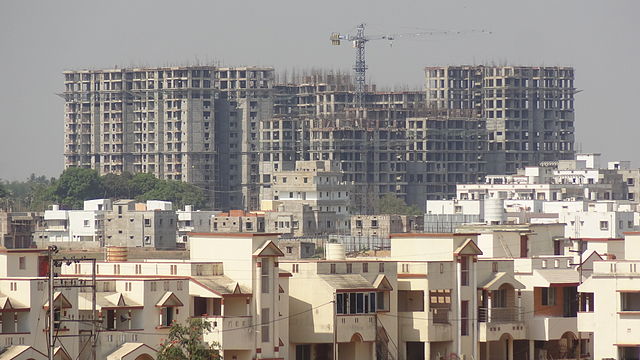
Real estate sector is the second largest employer in India. The contribution of Indian real estate sector to India`s GDP is approx 6.3%. Funding for real estate projects can be done in multiple ways like through banks, Non-banking financial institutions, or via External commercial borrowings (ECBs). Real Estate is India’s rapidly developing business segment and multiple financial institutions including banking and non banking are offering Loans for New Construction.  Loans & Advances are extended to the Promoters/Developers of real estate who are well-known and established in their area of work at least for a period of two to four years.

Eligibility

Finances are given to builders who have a good repute in the market and have an excellent track record of his past projects and are managed in a highly professional manner. It is necessary on their part to have an experience of at least three years in this field and must have completed two to three projects before availing the finance. The last audited balance sheet should show a satisfactory financial position of the builders/promoters. Commercial viability and sufficient cash generation to repay the loan will affect the financing for the project.

Pre-requisites

A Builder/Promoter is required to make a project report before approaching Banks or any other financial institutions for finance purposes. In project report he is supposed to include following information:

    1. Details of the project cost and means of finance.
    2. Profitability statement.
    3. Annual Cash Budget for the duration of the loan showing monthly/quarterly cash inflows of the specific project along with repayment schedule.
    4. Audited financial statements for the last 3 years, the current year’s estimate and projections for next 3 years or till the completion of the project.
    5. Original Title Deed of the land, detailed estimate of the proposed construction from a Chartered Engineer/Architect and permission from the competent authority of the property in case it is falling under Urban Land Ceiling Act.
    6. Documents like non-encumbrance certificate, certified copy of renew/Municipal receipts, Lawyer’s opinion on ownership and marketable title and sanctioned plan.
    7. The Bank should enter in to a legally vetted tripartite agreement with promoter and buyer that should ensure among other covenants adherence to National Building Code (NBC).

Quantum of Loan

The quantum of advance depends on a number of factors like financial status, repaying capacity, tenure of the loan etc.

Security:

(a) Primary: The primary security will be the building which is being constructed and also the land on which it is constructed. The amount of Bank finance should be adequately covered by the value of primary security.

(b) Collateral: Collateral in the form of equitable/registered mortgage of other land and building of adequate value of promoter/ guarantor may be taken. There has to be 25% (minimum) Margin between the amount of loan and collateral property. Constructed site should be fully insured against fire, riots and other damages according to Bank’s clause.

Processing & Up-Front Fees

    1. Processing fees: There will be processing fees depending upon the loan type and amount. This fee differs from banks to banks and other financial institutions.
    2. There will be upfront fee on loan amount sanctioned.

Delivery of Credit

The credit/quasi credit requirement of a Builder by way of cash credit/short term loans/overdraft linked to each specific project for a maximum period covering the period of construction plus 12 months will be considered on merit. Loan amount is not given to the builder/promoter in lump sum manner, the extension of loan will be in phases depending upon the progress of work as certified by Chartered Engineer/Architects.

Repayment

Repayment is to be made in pre decided installments after completion of the project and sale of the flats as decided earlier. It is prohibited to use sales realizations of one Project in another Project. Loan amount has to be paid before and then builder can use the left amount in other projects.


Home loan procedure for general Public

With the increasing competition in the market for offering Home Loans, the otherwise tedious process of availing loans has gone a tremendous change in the recent years. However, there is still some process involved in the procurement of Home loan. It is advisable for you to first look at the different stages required for obtaining a Home Loan. The followings are the step by step procedure of getting home loan:

Step 1: Application form: Initial step involved in applying for housing loan is the procurement of application form from the HFC (Housing Finance Companies) of choice. The Performa of application of every HFC is different from the other but the information to be furnished is same up to 80% of the total information to be provided. Necessary documents like address proof, age proof, proof of income, bank balance etc. are also to be attached with the application form before it is submitted to the HFC. HFCs also ask for processing fee of the home loan that varies 0.25% to 0.50% of the total loan amount with the application.
Step 2: Personal Discussion: When the application form is filled successfully and is submitted to the authority, the next step is a face to face conversation with HFC or Bank where the person has applied for the home loan. The submitted papers are evaluated by the bank first and then it calls the applicant for the personal discussion regarding the loan she/he has applied for. It is advisable to carry all the original documents of whose copy have been submitted along with the application.

Step 3: Field Investigation: Now field investigation is done by the HFC or banks. Representatives are sent by them to the existing residence of the applicants or their offices so that validation of submitted documents can be done. Through this banks establish trust between them and their customers.

Step 4: Credit appraisal by the bank and loan sanction: This is the most important stage of the loan process as it is the make or break stage of the process. The bank or HFC here establishes repayment ability based on applicant`s age, qualifications, employer, experience, income, nature of business etc. to access applicant`s credential. The bank has power to refuse any loan application if it finds discrepancy at any stage. However, if all the procedure and formalities goes according to the required conditions formulated between the parties then the bank or HFC sanctions the loan which might be unconditional or with some conditions imposed.

Step 5: Offer Letter: After the Home Loan is sanctioned, the applicant receives offer letter from the bank or HFC with the following details:

  • General terms and conditions of the loan
  • Loan amount
  • Rate of Interest
  • Tenure of the loan
  • Mode of repayment
  • Special conditions, if any

The applicant has to sign the duplicate copy of the offer letter if the terms and conditions are agreed and then it is to be submitted to the Bank or HEC.

Step 6: Submission of legal documents & legal check: Now bank or the HFC demands for the Legal documents of the land or property for which home loan is applied for. All the legal documents of the land or property concerned have to be properly submitted. The bank makes all the legal checks of the land or property. All the documents need to be with the bank until repayment of the Home loan is done.

Step 7: Technical / Valuation check: Then technical valuation of the property is done by the banks or HFC. The officials of the bank go and inspect the site that has to be purchased by the applicant and they value it as per the existing rules and regulations. The most important aspect that the bank considers before financing any property is the valuation of the property so it is done very carefully and with due care.

Step 8: Property documents Registration: After the legal and technical valuation of the property, now the documents have to be registered and stamped by the lawyer or notary public, and it has to be cleared by them accordingly.

Step 9: Submitting post-dated cheques and signing of agreement: Now, The final agreement of the loan has to be signed. After the signing of the agreement number of Post dated cheques are to be submitted as agreed on the agreement paper.

Step 10: Disbursement: Finally, It`s time for the Disbursement of the Housing Loan. When it is ensured that financing the property is safe and no risk is involved, the final amount is given however, the mode of payment varies from full to part payment. If the property is under construction the mode so followed is part payment and if the property is in a state of ready possession amount given is full and final.

In Loan application several documents are required, list of required documents are as follows:

Supporting Documents required for availing a loan:

Personal documents

  • Application form should be duly filled with the signature of all the applicant`s.
  • Passport size photograph of each of the applicant.
  • Age proof and residence proof. The documents which could be submitted for the same are: Passport, Driving License, Election ID, PAN Card, Ration card, Utility bill.
  • Personal Guarantee of two individuals with comparable income and age along-with proof of residence & identity slip.
  • Photocopies of updated bank statements of all the applicants for the last six months of both the operating account.

Property documents:

  • Agreement to Sale and Purchase for an purchase of Built up house
  • Allotment letter, Receipt of Payment made, Buyer’s Agreement, NOC for an co-operative group or Housing Society
  • Registered Title Deed of the property on which an house is to be constructed, Approved Map from competent authority, detailed construction estimate from Govt. approved agency for Construction purpose.

Financial documents

For Salaried Individuals:

  • Salary slip / Certificate with deductions
  • Form No: 16
  • Bank statement for last six months.

For Self Employed Individuals:

  • Last three years profit and loss accounts and balance sheets for self employed and/or business class.
  • Last three years income tax returns for both self employed and business class.
  • Bank statement for the last six months of the operating business account.
Download Now

Can a wife file a case for unnatural sexual offences against the husband under section 377 of IPC?

4
Section 377 of IPC

Section 377 of IPC reads as follows:

Unnatural offences—Whoever voluntarily has carnal inter­course against the order of nature with any man, woman or animal, shall be punished with imprisonment for life, or with impris­onment of either description for a term which may extend to ten years, and shall also be liable to fine. Explanation.—Penetration is sufficient to constitute the carnal intercourse necessary to the offence described in this section.

The various ingredients of this offence can be understood as follows:

  • “Voluntarily”: This requires that the unnatural offence must be accompanied by intention.
  • “has carnal intercourse”: This requires that the act is committed (actus reus); mere intention is not sufficient.
  • “Against the order of nature”: This part is subject to various interpretations by the court. The Court in Khanu vs Emperor[1] laid down that, “the natural object of sexual intercourse is that there should be the possibility of conception of human beings..’ The court then defined sexual intercourse as “the temporary visitation of one organism by a member of the other organism, for certain clearly defined and limited objects”. Thus any sexual activity the natural object of which is not conception is against the order of nature. This section was read by courts to criminalize bestiality, child sexual abuse and consensual homosexual intercourse. The section as interpreted by the courts from time to time initially punished only anal sex as unnatural. Slowly cases such as Khanu vs Emperor also held oral sex as unnatural. The present interpretations have even covered penile penetration of other artificial orifices like between the thighs or folded palms as unnatural.
https://lawsikho.com/course/certificate-criminal-litigation-trial-advocacy
click above

Legal battle surrounding Section 377 of IPC

As per the data homosexuals have suffered and have been targeted the most during the implementation of this section. This led to a legal battle to decide the fate of this section.

The legal battle surrounding this section started with the petition by Naz Foundation before the High Court of Delhi. The Delhi High court in Naz Foundation v NCT of Delhi[2] read down the section to not to apply to consensual private sexual acts but still be applicable to non-consensual acts. Thus the effect of the decision was that homosexual acts are not illegal.

But this judgment was reversed by the Supreme Court in Suresh Kumar Koushal[3]judgment which upheld the constitutional validity of section 377 and recriminalized consensual private sexual acts against the order of nature.

A wife can file a case against her husband under section 377

In the words of the SC “the Section 377 IPC does not criminalize a particular people or identity or orientation. It merely identifies certain acts which if committed would constitute an offence. Such a prohibition regulates sexual conduct regardless of gender identity and orientation.” Thus section 377 covers homosexuals and heterosexuals alike and the carnal intercourse against the order of nature among heterosexuals would be punished in the same manner.

A wife can file a case against her husband for unnatural sexual offences under section 377 of IPC. As the section punishes sexual intercourse against the order of nature irrespective of the sexual orientation or gender identity of the individuals, thus even if such acts are done by heterosexual couples; they can be punished under section 377. Further even if the victim consented (irrespective of the age) to the act then also the offender can be punished under this section. The consent is immaterial for the application of section 377 and an unlawful act cannot be legitimized by the consent of the victim.

A number of cases have come up where either the wife or the girlfriend has filed a case against her partner for unnatural sexual acts under section 377. A woman in her twenties kept a record of anal and oral sex with her husband and then filed for divorce.[4] Another woman filed a case under section 377 against the person with whom she had been into extra-marital relationship; when her relationship was disclosed to her husband.

The legislation is both useful as well as capable of misuse. It is useful in the sense that since marital rape is not an offence in India, so the Indian women would have a way out to get their husbands punished when they perform unnatural sexual acts on them. This section would act as a tool in the hands of Indian married women suffering under their cruel husbands.

On the other hand section 377 is also capable of huge misuse as consent is an irrelevant criterion to judge the application of this section. Thus the complainant’s consent to the unnatural sexual act would not save the person from going to jail.

Please click on the links below to know more about the related topics:


LawSikho has created a telegram group for exchanging legal knowledge, referrals and various opportunities. You can click on this link and join:  

https://t.me/joinchat/J_0YrBa4IBSHdpuTfQO_sA

Follow us on Instagram and subscribe to our YouTube channel for more amazing legal content 


References

[1] Khanu v. Emperor , AIR 1925 Sind 286

[2] Naz Foundation (India) Trust v. Government of NCT of Delhi and Ors. [Writ Petition (Civil) No. 4755 of 2001]

[3] Suresh Kumar Koushal & Ors. v. Naz Foundation (India ) Trust & Ors.[Special Leave Petition (Civil) No. 15436 of 2009]

[4] Section 377: Men worry about being framed by women, Swati Deshpande, TNN, Dec 17, 2013, 07.04AM IST

Download Now

Crimes against women: Can you register complaint over email and post?

21
Crimes against women

Can you complain online for crime against women in your state? Read on.

Download Now

All You Wanted to Know about the Controversy Surrounding Wendy Doniger’s Book – The Hindus: An Alternative History

0

Doniger_The_HindusBook.jpg

The release of Wendy Doniger’s recent book “The Hindus: An Alternative History”, which has been both revered and reviled by different sections of society, stirred up a huge controversy.
The book makes certain claims which certain segments of Hindus believe portray Hinduism in a bad light.

As a result, Shiksha Bachao Andolan filed a civil suit in the Saket District Court against Penguin India, the publisher of the book, and Doniger who is a professor of History of Religions at the University of Chicago Divinity School.

Finally, the plaintiff and Penguin India decided to enter into a settlement in accordance with which Penguin India agreed to immediately stop the sale and distribution of the book and to pulp all unsold copies.

This settlement raises several interesting, and somewhat troubling, socio-legal questions about the freedom of expression, rising intolerance within certain sections of society, the legal implications of a private settlement, role of publishers and utility of compulsory licenses.

Freedom of expression:

Many people have frowned upon Penguin’s decision to stop the distribution of the book on the ground that their decision is violative of the right of every individual to express their views freely, even if such views are not in conformity with the perception of the general public – a right embodied in Article 19 (1) of our constitution.

The book was withdrawn just to comply with the wishes of a certain faction of the society while the interests of a large number of readers who found the book informative and insightful were completely ignored.

Another noteworthy fact that lends credence to this argument is that the book was in its fourth reprint which indicates that it was doing very well.

It can be argued that this was a private settlement and, therefore, courts cannot be blamed for denying the author the freedom of expression or the readers the right to read the book and to discuss its various facets freely.

While this argument holds good in this case, it must be noted that most courts have not fully encouraged the rights of authors to express themselves freely.

Take, for example, the case of State of Maharashtra v. S. Damodar in which the Supreme Court made a suggestion that allegedly offensive passages be deleted from the concerned book so that the state government would be able to lift the ban on the book.

Similarly, in the case of Sri Baragur Ramachandrappa v. State of Karnataka, the Supreme Court decided to uphold the ban on P.V. Narayana’s Kannada novel named Dharmakaarana.

If we accept that the recent decisions of the Supreme Court are grounded in well-settled legal principles which allow courts to impose reasonable restrictions on the freedom of expression and to ban the distribution of obscene and offensive content, we have to answer an important normative question: Do we need to work towards changing the laws that allow different stakeholders to deny readers the right to read thought-provoking content?
Many thinkers argue that interpreting legal provisions pertaining to obscene and offensive content in such a way as to block the dissemination of books like The Hindus amounts to an abuse of the law.
However, as Apar Gupta eloquently argues in this article , if the law allows for such abuse, isn’t the law by itself abusive?

Rising intolerance:

Another related, but slightly different, concern which this case raises pertains to rising intolerance within certain factions of the society for views that do not conform to their own viewpoint.
It is pertinent to remember that this intolerance is not limited to factions within a particular religion but permeates different religious groups.

A case in point is the notification issued by the Government of India on 5th October, 1988 to prohibit the import of Salman Rushdie’s ‘The Satanic Verses’ under Section 11 of the Customs Act, 1952.

While it is essential to ensure that the sentiments of different communities are respected, it is equally essential to curb this kind of religious intolerance in a vibrant democracy like India.

Legal ramifications of private settlement:

As this was a private settlement, its validity cannot be challenged in the High Court. If the book had been banned by way of a notification of the government under Section 95 of the Code of Criminal Procedure, then its validity could have been challenged under Section 96 of the CRPC.

The negotiations which eventually led to the settlement were also conducted behind closed doors and completely lacked transparency. As a matter of fact, the public came to know about Penguin’s decision to withdraw the book from the market only after the settlement was leaked.

As a result, it would not be unfair to say that the parties involved in the lawsuit sealed the fate of such a popular book in such a way as to leave practically no remedies for readers to challenge their decision or to access the book.

Role of publishers:

This case poses an interesting question about the role of publishers in the book industry.
Specifically, should publishers merely act as conduits for authors in order to enable them to commercially exploit their works, or should they play a larger role by controlling the availability of the book in the market and by shaping the entire marketing policy for the book?

Although persuasive arguments have been made in favor of both these roles, empirical evidence reveals that publishers play the most instrumental role in shaping the future of any book.

For example, in another recent controversy about the publication of a book, the final decision to withdraw Jitender Bhargava’s book ‘The Descent of Air India’ was made by Bloomsbury, the publisher.
Similarly, the decision to withdraw another book by Doniger titled ‘On Hinduism’ was made by the publisher, Aleph Book Company.

Many thinkers argue that publishers often do not realize the inherent value of books and, therefore, are not in the best position to make this decision.

The author, they argue, can make the best decision as she is the creator of the controversial content and can best protect the interests of readers.

Compulsory licensing:

One possible remedy to ensure the widespread dissemination of the book that has been suggested by some thinkers involves the acquisition of a compulsory license from Penguin India by publishers who are interested in making the book available to the public.
However, the legal validity of such a remedy has been hotly debated because there is no express provision in the Copyright Act that can compel Penguin to issue such a compulsory license.

That being said, this option cannot be completely ruled out because courts have often favoured this remedy for protecting the concerns of the general public.

Other alternatives:

The Alternative Law Forum, on behalf of individuals describing themselves as ‘avid bibliophiles’ served a legal notice to Penguin shortly after the settlement asking them to either commence the publication of the book or to relinquish their copyright in the book in the public interest.

The notice further urges Penguin to return to the reading public what they have taken away from them – the right to read and dissent.

The notice states as follows:

Rescind on the contract that you have entered into with miscellaneous busybodies and immediately commence the publication of Wendy Doniger’s “The Hindus:
An Alternative history” and leave the messy act of pulping to those better suited for it -juicers and grinders…

That in the event you choose to betray our sanguinity about your judgment by abandoning your Penguinity then you have effectively acknowledged that you are no longer interested in exercising your rights as the owners of the copyright in the said work and that you shall license the said work under a general
public license which will enable any person to copy, reproduce and circulate whether in print or electronically within the territory of India without the risk of infringing your copyright or hurting your sentiments.
block quote end

Download Now

Important Indian laws that don’t apply in Jammu & Kashmir

1
Many Indian laws don't apply in Jammu and Kashmir
Many Indian laws don’t apply in Jammu and Kashmir

When Jammu and Kashmir merged with India it was granted a special autonomous status. With this status the Central government was left with authority over the state only in matters of defence, external affairs, communications and finance which was specified in the Instrument of Accession. As a result, many laws functional in the rest of India do not extend to the state. Given below are certain legislations that extend to the whole of India except J & K.

BUSINESS LAWS

  • The Indian Contract Act, 1872
  • The Indian Partnership Act, 1932
  • The Sale of Goods Act, 1930
  • The Specific Relief Act, 1963
  • The Consumer Protection Act, 1986

J & K has its own separate acts for a few of the above mentioned acts. These are as follows-

  • The Contract Act of Jammu and Kashmir, 1977
  • The Jammu and Kashmir State Partnership Act, 1996
  • The Jammu and Kashmir Consumer Protection Act, 1987

PERSONAL LAWS

  • The Anand Marriage Act, 1909
  • The Indian Christian Marriage Act, 1872
  • The Guardian and Wards Act, 1890
  • The Dowry Prohibition Act, 1961
  • The Dissolution of Muslim Marriages Act, 1939
  • The Hindu Adoption and Maintenance Act,1956
  • The Hindu Disposition of Property Act, 1916
  • The Hindu Inheritance (Removal of Disabilities) Act, 1928
  • The Hindu Marriage Act, 1955
  • The Muslim Personal Law (shariat) Application Law, 1937

Separate acts are also in place for some of these acts, including-

  • The Jammu and Kashmir Anand Marriage Act, 1954
  • The Jammu and Kashmir Christian Marriage and Divorce Act, 1957
  • The Jammu and Kashmir Guardian and Wards Act, 1977
  • The Dowry Restraint Act, 1960
  • The Jammu and Kashmir Dissolution of Muslim Marriages Act, 1942
  • The Jammu and Kashmir Hindu Adoption and Maintenance Act, 1960
  • The Jammu and Kashmir Hindu Disposition of Property Act, 1940
  • The Jammu and Kashmir Hindu Inheritance (Removal of Disabilities) Act, 1940
  • The Jammu and Kashmir Hindu Marriage Act, 1980
  • The Jammu and Kashmir Muslim Personal Law (shariat) Application Act, 2007
https://lawsikho.com/course/certificate-course-in-advanced-civil-litigation-practice-procedure-and-drafting
Click Above

PROPERTY LAW

  • The Benami Transactions Prohibition Act, 1988
  • The Administration of Evacuee Property Act,1950
  • The Land Acquisition Act, 1894

Separate acts in place include-

  • The Jammu and Kashmir Benami Transactions (Prohibition) Act, 2010
  • The Jammu and Kashmir Administration of Evacuee Property Act,2006
  • The Jammu and Kashmir Land Acquisition Act, 1934

BANKING LAW

  • The Banker’s Book Evidence Act, 1891

The separate act that is applicable in the state is-

  • The Jammu and Kashmir Banker’s Book Evidence Act, 1920

JUVENILE LAW

  • The Juvenile Justice (Care and Protection of Children) Act, 2000

The act that has been separately enacted by the state is the following-

  • The Jammu and Kashmir Juvenile Justice Act, 1997

CRIMINAL LAW

IPC and Criminal Procedure Code extends to the whole of India except J & K. The state has applied a separate code for itself.

  • The Jammu and Kashmir Code of Criminal Procedure, 1989

CIVIL LAW

  • The Code of Civil Procedure, 1908

The state deals with civil law related cases and matters in accordance with the following code that it has enforced-

  • The Jammu and Kashmir Code of Civil Procedure, 1977

Thus, a number of laws which play a crucial role in India aren’t even applied to the state of Jammu and Kashmir.


LawSikho has created a telegram group for exchanging legal knowledge, referrals and various opportunities. You can click on this link and join:  

https://t.me/joinchat/J_0YrBa4IBSHdpuTfQO_sA

Follow us on Instagram and subscribe to our YouTube channel for more amazing legal content 

 
Download Now
logo
FREE & ONLINE 3-Day Bootcamp (LIVE only) on

How Can Experienced Professionals Become Independent Directors

calender
28th, 29th Mar, 2026, 2 - 5pm (IST) &
30th Mar, 2026, 7 - 10pm (IST).
Bootcamp starting in
Days
HRS
MIN
SEC
Abhyuday AgarwalCOO & CO-Founder, LawSikho

Register now

Abhyuday AgarwalCOO & CO-Founder, LawSikho