Download Now
Home Blog Page 1581

How to start a transport or logistics company. Process, compliance, best practices and relevant law

13
logistics

In this article, Atipriya Gautam who is currently pursuing M.A. IN BUSINESS LAWS, from NUJS, Kolkata, discusses How to start a transport or logistics company. Process, compliance, best practices and relevant law.

How to start a transport or logistics company. Process, compliance, best practices and relevant law.

What is a logistics firm

A logistics firm is a company that stores and delivers the products of other businesses. Whether shipping, conducting air transportation or trucking a successful logistics company will need to have some means of freight transportation at its disposal; this makes a start-up logistics firm an expensive investment. A logistics firm is an organization that delivers and stores the products of different organizations. They may have expertise in the import and export of products all through the country, or may focus on ground transportation within the states.

  • The scope in the transport and logistics industry is varied – from a one-man show using a small truck to transport merchandise and offer services, to an armada of transport vehicles which venture to every part of the country. Road transportation includes commuter transport from taxis to bus transportation.
  • It can be an intense industry and there are numerous dangers confronting transport businesses yet in the event that one can take care of business, one can build an effective business.
  • It is a hard industry for new businesses not on account of it being capital intensive, but rather on the grounds that one needs to be reliable. just because it is capital intensive, but because you need to be reliable. Credibility is critical for any transport company as any organisation requiring transport services needs to know that they are not going to be let them down.
  • Dangers confronting the transport business are not just crumbling and congested roads and highways, traffic fatalities and injuries, but financial issues as well. One should not over indebt oneself. Take it gradually and ensure that you have the necessary skills. This not only means having driving skills and licences, but also financial and business skills.
  • It is advisable to have mentorship before embarking into this industry. Some of the areas you need to comprehend include the laws, operating cost estimates, licence fees/permit expenses, toll charges, maintenance, fuel prices and other costs as well as vehicle performance methods.
  • The transport and logistics industry is a simple business to enter, however, the trick comes in sustaining the business. The transport business has a ‘low barrier to entry’ at the base of the market, implying that anybody with a minibus can start offering transport services. This results in a surge of rivalry at the base end of the market.
  • In many instances the entrepreneur starts these businesses with little to no capital, depending rather on revenue derived from the business to cover all overheads from the first day itself. This absence of capital curtails marketing activities that may result in increased income.
  • With fierce competition, administrators slice costs to survive barely making enough to cover their expenses. This naturally leads to a distressed business which is unable to survive. Before starting a transport and logistics company, one must do the homework well. One must work out on how to build a sustainable business and seek out customers and contracts before starting the business because contracts do not appear magically later on. Getting funds is one of the most difficult things for any start-up to achieve. If a business owner walks into a bank and asks for a loan to start a transport business, the chances of a positive response are rare.

Some of the vital points to keep in mind which are beneficial in establishing a flourishing logistics and transport business are as follows:

Experience and Credibility in the Industry

  • Before starting a logistics company, it is wise to gain experience in the industry by working in logistics. Such experience helps in comprehending the intricate details of the business. In addition, working in the industry will helps to establish networks with companies that may represent future clients. Building up credibility in the industry is the basis for any start-up because customers need to trust that your firm will store and deliver their products smoothly and efficiently.

Exploit Your Experience and Connections

  • One should establish a firm in a market where they have business relationships and relevant knowledge. For example, if the bulk of your connections or work experiences are in one industry, it shall be beneficial if you will reach out to clients in that industry. If you have connections to or knowledge of certain regions, open a firm that specializes in export to that region.

Obtain Funding

  • The principle official step of starting a logistics firm is obtaining capital. Keeping in mind the end goal to do as such, one should draw up a business strategy to persuade potential investors that you can make your company turn a profit. Incorporate all associations that you already have in the logistics industry, who are willing to give you their business. Commercial banks are a potential capital source for start-ups.

Get Equipment

  • After obtaining the necessary capital to start the logistics firm, one needs to purchase loading equipment and vehicles capable of moving substantial amount of cargo. Due to the costs related to these kinds of purchases, it is advisable to rent the equipment until the business starts to turn a profit.

Protect your credit record

  • If one does not have a good credit record, none will want to loan money to start a business, especially commercial banks. It is essential to regularly communicate with your bank, and use the accounts responsibly. By having a good credit profile, you are over the first hurdle.

Find out what documents the bank needs

  • Contact the bank and find out about the formalities and paperwork that is needed before applying for a loan. It always makes a good impression when you are organised.

Show the bank you have the expertise

  • Before approaching the bank, one must be able to show that they have the necessary expertise to run a business by producing a well-constructed business plan.

Security is required

  • One will need security (personal surety and or assets) to cover the loan amount that is required. It is beneficial to show the bank realistic cash flow projections and balance sheets for two to three years.

Consider government funding

  • There are a variety of government funds and policies that have been created to empower entrepreneurs to establish new enterprises. However, solutions are customised after assessing the potential return of the venture and level of risk.

A partner could be the solution

  • If one does not have a deposit and cannot get approval for financing, one may consider taking a partner who may be able to provide the necessary capital.

Consider renting

  • If one is unable to get funding, then renting instead of purchasing a vehicle could be a good option to begin the business on a modest scale.

To determine the target-market the first step is to do proper research that will help in defining the customers. It is this collection and the analysis of information about the customers and probable competitors that will help in planning the marketing strategy. Some of the areas to look into are:

Manufacturers

  • They require their raw materials to be delivered to their workshops or factories.

Agriculture

  • Farmers use road freight haulers to transports their animal feed and chemicals such as fertilisers and pesticides, while livestock and agricultural products are transported by road.

Wholesalers

  • They need their stocks to be delivered to their warehouses or wholesale outlets.

Smaller services

  • Refuse or waste removal, furniture and office movers.

Advertise your services

  • Advertising in the local newspaper, or listing in the classified section of community newspapers. Another successful avenue is advertising on social media.
  • Apply your business name, logo and contact details on to vehicles so as to raise awareness when vehicles are out on the road.
  • Join associations or organisations so that you can network with companies operating in the area.

Obtaining contracts

With a specific end goal to be fruitful in getting business contracts you need to show that you have experience in the business and that you can offer your business in view of high standards of business principles and morals. Guarantee that you can offer a superior service that nobody else can. On the off chance if you have a history in the business, it makes it considerably simpler to win contracts.

  1. Speak to proprietors of comparative organizations and make yourself known. The best wellspring of data you can discover around a range of business, is different entrepreneurs.
  2. Make contact with organizations, for example, producers, manufacturers, wholesalers and retailers to check whether you can tender for work to deliver their products.

Transport brokers

Be watchful with whom you work with as most of these brokers do not work morally. When working as a small transport business, one can approach transport brokers and secure contracts through them. Before accepting an agreement through a broker, discuss about the terms of the agreement, so as to have correct and balanced governance set up. A broker can take up to 20% of the agreement value. “Be careful about who you work with in the brokering business as it is not well regulated and it is wise to ensure that they are reliable and upstanding.

How to get onto a suppliers list?

Winning contracts takes diligent work and it takes a lot of networking to create solid connections in the industry. Dependability is another critical viewpoint.

  1. Offer an exceptional service: Keep in mind, there are such a variety of organizations offering a similar service and one needs to provide an incentive to an organization so that they utilize your services. The way around this is to find out about your opposition and offer something they do not, for instance, quicker turn around times, brilliant service or extremely competitive rates.
  2. Piggybacking: Often an established transport organization will be unable to meet their contractual commitments on account of unanticipated conditions. Offer to pick-up any overflow and sub-contract the delivery. It’s often a last minute business however makes a decent chance to substantiate yourself as a reliable supplier.
  3. Sub-contracting: One way for smaller operators to secure contracts is through sub-contracting. Subcontracting happens when a transporter contracts to a third party and not the principal and not to the vital. The subcontractor subcontracts with an established transport organization which has the contract with the principal but maybe does not have the ability carry out the contract.

Starting a logistics and transport business in India

For a start-up a business in India, courier industry is one of the fasted growing markets. Despite the rise of the e-commerce business in India courier industry is growing day by day. The Indian courier industry size in the year 2015-16 was approximately of Rs.14,000 crores. As a premium segment, the courier industry is a small but significant segment of the logistics industry. It is one of the fastest growing segments of the industry and it is expected to grow at 17% per annum to Rs. 20,000 crores in the next three years.

The different kinds of logistics business that one can start are as follows:

  • Courier and freight cargo service
  • Air cargo services
  • Warehousing services
  • Third party logistics (3PL)

The entrepreneurs have two options for starting a Courier Business in India:

  1. Setting one’s own Logistics and courier company, or
  2. Taking a franchise from reputed and well established courier company

Setting one’s own logistic and courier company

Setting up one’s own Courier Company in India requires a lot of money to initially to setup the network. There are many small players in India which are doing good but the reputed foreign companies are well established in the logistic business. For starting a courier company in India one have to raise the funds from the investors. One has the option of setting up a private limited company in India and then raise the funds through investors by allotting the shares of the company.

The top 10 Courier Companies in India which are well-established in the industry are as follows:

  1. Indian Postal Services: established in 1774 and more than 1.5 lakh post offices.
  2. DHL Express India Private Limited: established in 1969 and has a global presence in more than 200 countries.
  3. Blue Dart Express Limited: established in 1994 and is a subsidiary of DHL.
  4. First Flight Courier Limited: established in 1986 & has around 1200 domestic offices.
  5. Fedex India: established in 1973 and has its distribution offices in 220 countries.
  6. DTDC Courier and Cargo Limited: established in 1990 and hold reasonable market share in courier service in India.
  7. TNT Express: established in 1974 and have a presence in more than 190 countries.
  8. Gati Limited: established in 1989 and has a strong market presence in south Asia and Asia pacific region.
  9. Overnight Express Limited: established in 1987 & Serving more than 2800 location in the country.
  10. The Professional Courier Network Limited: established in 1987 and has twenty regional offices and more than 2000 serving locations.

Apart from above mentioned big logistic companies, there are a lot of start-ups, for instance, Delhivery which started from scratch and at present, it is one of the most established e-commerce logistics player in India.

Checklist for starting a courier business in India are as follows:

  • A lot of money from the investors through angel or venture capital or other sources.
  • Setup a legal entity as private limited company in India.
  • Apply for the proper tax registration such as service tax.
  • Build up a team and invest in the service quality and trainings.
  • Build a good network.

Taking a franchise from reputed and well established courier company

Due to the absence of assets everybody cannot open their own courier company and even a large number of the successful logistics start-ups learned about the courier or logistics industry by taking the franchise from different companies and after understanding the market, went ahead with their plans.

At present, we have a considerable number of courier or logistics business franchise opportunity in India where one can begin from a small amount of capital.

One simply need to require the following things to apply for a courier business franchise in India:

  • a legal entity setup with the proper tax registration & license.
  • a small space for opening the franchise with the agreement.
  • a small security deposit which shall vary and depend upon the courier company.
  • financial credentials like bank statements or bank passbook.
  • approval letter from the courier head office.
  • logistics agreement between the franchise and company.

Some of the established courier Company franchise opportunity in India are:

  • Indian Speed Post office Franchise Opportunity
  • DHL Express Franchise
  • DTDC Franchise
  • First Flight

The development in the Indian economy in recent years has brought about an immense market for logistics services. The logistics industry employs over 50 million people in India. A productive logistics partner can help enhance operational efficiencies for any business by cutting expense and delivery time. This ultimately leads to market share and profits for the business. There are various types of logistics business that one can start.

However, any logistics company needs to look into the accompanying viewpoints to be successful,

Funding and Investment

The initial step that any logistics company would need to take is to look for investment. Amount of investment in logistics business will depend upon the services that one wishes to begin. A simple brokering and freight management service will require less capital compared to a third party logistics service. For instance, to setup a freight forwarding service in India, one will require a capital investment of approximately 12 crores. A pure third party logistics service will require investments ranging from 65-100 crores. Starting an Inland Container Depot (ICD) or Container Freight Station (CFS) requires investment of several hundred crores. It is critical to recognize the specialty services that one wish to target and accordingly formulate an investment plan based on it. Finding investment in logistics is moderately less complex in India in light of liberal foreign direct investment (FDI) norms and active interest shown by huge private equity players.

Compliance and Registration

The next step is to obtain necessary registration and compliance certifications. Just as other businesses, logistics services also require certain registrations and Government compliance. In India, registration with International Air Transport Association (IATA), Air Cargo Agent Association of India (ACAAI) are very useful for freight forwarders. It may also be beneficial to be part of industry forums such as CII Institute of Logistics to raise logistics industry related issues. Other important registrations in India include Directorate General of Foreign Trade (DGFT) registration, registration with the Income Tax Department, Registrar of Companies and related Government Departments.

The following registrations are suggested for a logistics business:

  • Private limited company registration
  • Import export code (IEC)
  • VAT (value added tax) registration
  • Employee’s state insurance (ESI) or PF registration
  • Trademark registration, when there is a unique brand name.

Business Risk

The third aspect that one needs to look at is the business risk. In a developing economy like India, risk management plays a significant role, more so for logistics business. Since the logistics business is extremely dynamic with various partners/vendors involved in the whole operation, danger of a claim is very high. It is vital to cover the obligations by taking adequate amount of business insurance. Numerous insurance companies in India offer such insurance plans. Serious liability issues may arise from cargo damage, theft, injury, environment damage etc. While business insurances help to address a part of the liability concerns, they are not generally very effective. For instance, most Cargo and Property insurance in India will not cover inventory shortages as this is viewed as ordinary risk while running a third party logistics business. Consequently, it is imperative to comprehend the risks before executing any contract.

Clientele

Connecting well with the customers is the key to any successful business. An exhaustive study of different industries/products and understanding logistics needs in such studies is fundamental if an entrepreneur wishes to start a third party logistics company. There are numerous sectors booming as of now, for instance, infrastructure, services, auto and manufacturing as India is basically an export economy. Each of these sectors would require logistics services. Identifying weak areas and proving operationally efficient solutions is key the key to forming customer base in third party logistics services. Once a standard customer base is established, infrastructure investment can be focused upon as well as formation of solutions to cater to the outside market.

Competition

Due to the liberalisation of foreign direct investment (FDI) norms it has become easier for multinationals to enter the Indian logistics sector, it is imperative to understand the competition that the business faces as these capital substantial players can invest intensely in marketing and infrastructure. Henceforth, it is critical to do a thorough search on the competition and to focus on the companies positioning in the market.


 

Download Now

Regulations related to domain name and how domain name disputes are resolved

0
domain name

In this article, Ritika Das who is currently pursuing M.A. IN BUSINESS LAWS, from NUJS, Kolkata, discusses Regulations related to the domain name and how domain name disputes are resolved in India.

Regulations related to domain name and how domain name disputes are resolved

The innovation of a Computer is one of the most valued endowments of science. The wide utilization of the computer prompted to the further improvement in many fields of life through the media of Internet[1]. In the early 1990’s Internet was mainly used to send mails and gather information. Now with the rise of e-commerce there is quick development in business activities transpiring through the net. Today, Internet encourages us in all strolls of our life, from online banking, e-wallet, e-governance, online dispute resolution system, information, technology; the internet has been a podium for growth and development in every field.

While the benefits of utilizing Internet are indisputable, it is not free from the negative impacts. The internet has been inclined to various abuses on account of its intrinsic nature of having no limits. It has cleared the path for distinctive sorts of violations and various complexities in the virtual world[2]. In this way, the different parts of Internet have posed challenges not exclusively to the business aspect but in general. One such difficult issue which needs prompt consideration is the domain name-trademarks conflicts[3].

The aim of this article is to break down the aid attainable to domain name holders under the laws and regulations of India.

Introduction

  • Let’s first understand what a domain name is. Domain Name is a unique name provided to the entity using the particular space on the net, much like the telephone numbers provided to different people or organizations. Having a similar number, however, bizarre that maybe, would create a lot of confusion. Much like that having a similar domain name also causes a lot of confusion and causes damage to the original organization[4].
  • Domain name is an alpha-numeric memory aide that can be coined onto an Internet Protocol (“IP”) address to empower clients to “surf the Web” more effectively than if they needed to recall the name and specifications of every IP deliver they needed to visit. Domain name has been defined by Black’s Law Dictionary as “the words and characters that website owners designate for their registered Internet addresses. All domain names have at least two levels. The first level domain name identifies the registrants. The second-level domain name is the unique identifier for the user in particular. A second-level domain name may be protected under trademark law but first-level domain names are not.[5]

Originally a domain names purpose was to act as an address for computers on the web. The Internet has, in any case, created from a mere means to communicate to a method of carrying on business. With the expansion of business on the Internet, a domain name is additionally utilized as an identification of such businesses. In short a domain name is not only for providing an address to an Internet Communication but also is an address for any specific site.

A domain name system is under the rules and regulations of the Internet Corporation for Assigned Names and Numbers (ICANN).

There is a developing weight on trademark owners to get the rights over the domain name for their organization. A large portion of the organizations people still observes the “.com” domain is the most befitting and copacetic for business. Due to over 15 million “.com” “.org” and “.net” names are already catalogued and more often than not the domain name of a company’s choice is already taken, companies don’t mind spending lump sum amount to buy a domain name from a third party. Domain Name is much more than an Internet Address, for it likewise recognizes the Internet website to the individuals who achieve it, much like a man’s name distinguishes a specific individual, or as more pertinent to trademark debate, a Company’s name distinguishes a particular Company[6].

Domain Names in India

  • Choosing a Domain Name is probably the most initial and integral step of a Company or organization towards setting up an individuality in cyberspace. Domain names are like names to a site much like names are to humans, through which the network and computers know who the owner of a particular site is or who has control over the resources.
  • The registration of Domain Names is becoming more and more important for a company to be set up. There are millions of people searching the net and using the search engine to locate companies and their products. To make it easier for customers to find a particular company, the domain name should be similar to the work that is being done by the Company[7].
  • The protection of domain name in India has been in some ways, a great one, on the grounds that the Courts of India have been more patient towards the idea of giving lawful security to domain name as that to trademarks. Domain names are similar to trademark, and are not mere addresses, it is qualified for equivalent safeguard and protection much like the trademark.
  • To make it all the more clear, this piece of the article will investigate couple of imperative cases that are chosen by Indian Courts keeping in mind the end goal to substantiate the above explanation. In the case of Tata Sons Ltd. v. Manukosuri and Others the Hon’ble Court held that domain names ought to be granted protection much like the trademark. Trademark law applies to the exercises or activities that are done on the web, and the simple truth is that the many applicants have not registered their domain names. For the most part in India, the entanglements start when a person gets a domain name enrolled with the Registering Authority, if more often than not happens to be the Trade Name of some other individual. There is no system in the Registry to inquire whether a Domain Name has already been taken or not. It has been observed through a case Minerals Ltd. v. Pramod Borse and Another that the courts law emphasis on the intention of the party to have a particular domain name. A person’s objective is the most important thing to see. If a person had ill intentions while acquiring a name that already has been taken and wanted to be deceptive, then the court will make this a ground for injunction[8].

It has been stated in the aforementioned case that: “unless and until a person has credible explanation as to why did he choose a particular name for registration as a domain name or for that purpose as a trade name which was already in long and prior existence and has established its goodwill and reputation; there is no other inference drawn than that the said person wanted to trade in the name of trade name he has picked up for registration or as a domain name because of its being an established name with widespread reputation and goodwill achieved at huge cost and expenses involved in advertisement.[9]

Using a generic name or a mark as a domain name may be granted protection. Although using two generic terms together in a particular way may be infringement. For example, the word “Aaj” and “tak” may be generic terms and may not be monopolized by any individual or company although both of them together would provide for protection as a trademark. A similar observation had been made by the High Court of Kerala in respect to the words “Pen” and “Books”, although a combination of both the words have been granted protection under the Trademark Law[10].

In the year of 2005, India opened up the “.in” nation code, permitting boundless second-level enlistments under “.in.” and boundless enrolments under organized zones which have been existing, for example, “.co.in” and ‘.org.in’. With India’s total national output developing at a rate of more than 8%, and a development spurt in the nation’s carefully wise youthful populace, there was a race to get space names in the “.in” area. This freedom was additionally abused by cybersquatters[11].

To attend to the protests from rights holders, in 2005 the “.in” Registry planned the “.in” Domain Dispute Resolution Policy (INDRP) along the lines of the Uniform Domain Name Dispute Resolution Policy.

The grounds on which an objection can be recorded are as per the following[12]:

  • The registrant’s space name is indistinguishable or confusingly like a name, trademark in which the complainant has the rights to;
  • The registrant has no rights or honest to goodness interests in regard of the domain name; or
  • The registrant’s domain name has been registered or is being used in bad faith[13].

One of the first complaints under the INDRP was recorded in 2006. From that point forward, more than 300 complaints have been recorded and speedily resolved under the INDRP. It is not just foreign brand proprietors -, for example, Google, Dell and Disney – that have effectively gained domain names from cybersquatters under the INDRP. Indian organizations, for example, Airtel and Pantaloons, have likewise utilized this strategy to prevent third party from utilizing domain names[14].

Trademark v. Domain name

  • There is a contrast between a trademark and a domain name, which is not significant to the right of a proprietor regarding the domain name, however is material to the “scope of the protection” accessible to a party. The difference lies in the way in which the two function. A trademark is ensured by the laws of a nation where such trademark might be enrolled.
  • Thus, a trademark may have different enlistments in numerous countries all through the world. Then again, since the web takes into consideration access with no geographical constraint, a domain name is conceivably available regardless of the geological area of the purchasers. The result of this potential for general network is not just that a domain name would require overall exclusivity but also additionally that national laws may be insufficient to successfully ensure a domain name. The lacuna required universal control of the domain name framework (DNS).
  • This universal regulation was affected through WIPO (World Intellectual Property Organisation) and ICANN (The Internet Corporation for Assigned Names and Numbers.). The result of the discussion amongst ICANN and WIPO has brought about the setting up not just of an arrangement for registration of domain names with authorize Registrars, but also additionally the development of the Uniform Domain Name Disputes Resolution Policy (UDNDR Policy) by ICANN on 24th October 1999.
  • To the extent of enrolment is concerned, it is given on a “first come first serve basis”.  Other than that, UDNDR Policy is enlightening with regards to the sort of rights which a domain name proprietor may have upon enrolment with ICANN Registrars[15].

Factors that are considered to decide the nature of deceptive similarity

  1. “Nature of the word marks, the label, or the composite marks.
  2. Nature of the goods.
  3. Similarity in nature, character and performance of goods.
  4. Class of purchasers likely to buy the goods bearing the marks.
  5. The mode of purchasing the goods.
  6. Other surrounding circumstances.” [16].

Domain name and dispute resolution

To attain clarity lets understand what the types of disputes under a domain name are:

Types of dispute

Any Person who looks at that as an enlisted domain name which clashes with his rights or interests may document a Complaint to the .IN Registry on the accompanying premises[17]:

  1. The Registrant’s domain name is indistinguishable or confusingly identical to a name or a trademark in which the Complainant has rights.
  2. The Registrant has no rights or interests in regard of the domain name;
  3. The Registrant’s domain name has been enrolled or is being utilized in a malafide manner[18].

In cases when such disputes arise and a Complainant files a complaint to the .IN Registry in compliance with the Rules and Regulations, the Registrant is required to go through Arbitration proceeding

Procedure of dispute resolutions

The Registry maintains a list of Arbitrators from which the .IN Registry appoints an Arbitrator resolve the said dispute. This list containing the Arbitrators are published online by the .IN Registry on their website: www.registry.in[19].

The Arbitrator should lead the Arbitration Proceedings as per the Arbitration and Conciliation Act 1996 and in compliance with this Policy and rules there under[20].

Registrant’s rights over the domain name

During the proceeding if the Arbitrator finds out any of the following circumstances depending on the evidence gathered shall display the Registrants right to the domain name:

  1. Prior to any notice to the Registrant of the question, the Registrant’s utilization of, or evident arrangements to utilize, the domain name or a name relating to the domain name regarding providing goods and services.;
  2. the Registrant (as an individual, business, or other association) has been ordinarily known by the domain name, regardless of the possibility that the Registrant has procured no trademark.
  • The Registrant is making a genuine reasonable utilization of the domain name, without any goal for business profit to mislead or redirect buyers or use the trademark with malafide intention[21].

Remedies

The remedy accessible to a Complainant’s compliant with any procedure before an Arbitrator might be restricted to requiring the cancellation of the Registrant’s domain name or the exchange of the Registrant’s domain name registration to the Complainant;s Cost as might be considered fit may likewise be granted by the Arbitrator[22].

Dispute resolution through Court proceedings

The documentation of an issue under the UDRP does not keep either party from presenting an argument before a court for a resolution either earlier or in accordance with the completion of procedures before the Administrative Panel. In the event that an Administrative Panel chooses that the domain name enrollment ought to be annulled or exchanged, there is a period of 10 working days granted wherein the documentation of the lawsuit must be sent to the concerned Service Provider[23].

No further move will be made by the Service Provider until it gets[24]:

  1. Fair proof of a resolution of the debate between the parties;
  2. Adequate demonstration that the claim has been expelled or retracted;
  3. An order copy of the Hon’ble Court dismissing the lawsuit or an order that has been passed for eliminating the Domain Name or transferring the same.

It is pertinent to note that Domain Name dispute doesn’t fall under Trade and Merchandise Marks Act, 1958 or the Information Technology Act, 2000 of India[25].

In the case of N. R. Dongre v. Whirlpool Corporation (1996) 5 SCC 714 it had been held that “a man may not sell his own goods under the pretence that they are the goods of another man.” Basing on this ideology the concept of passing off exists[26].

Passing off is a type of unwarranted business rivalry by which one individual seeks to benefit from the notoriety of another entity in a specific trade or business. A passing off activity falls under the law of torts or common law. The TM Act does not determine what a passing off is, but administers the rules, regulations and remedies for passing off[27].

Requirements for a passing off

  1. “The goods of the plaintiff must have acquired distinctiveness.
  2. The nature of activity of both parties are the same or similar (compliance of this requirement is not always insisted).
  3. The goods of the parties, with which the trade mark is associated, are the same or similar(compliance of this requirement is not always insisted).
  4. The use of the trade mark by the defendant is likely to deceive and cause confusion in the public mind and injury to the business reputation of the plaintiff.
  5. The sphere of activity and the market of consumption of goods of the parties are the same.
  6. The customers of the plaintiff inter alia include uneducated, illiterate and unwary customers who are capable of being deceived, confused or misled.
  7. The plaintiff has been using its trading style and trade mark for a long period and continuously, whereas the defendant has entered into the field only recently.
  8. There has not been much delay in filing of the suit for injunction.[28]

Domain names and Court decisions on it

INDRP had been conceivably set by the courts’ for the unmistakable treatment of domain names as trademarks and that laid a foundation of standards for their security[29].

AcquaMinerals Ltd v Pramod Bose

In the case of “AcquaMinerals Ltd v Pramod Bose”, which was concerning the domain name of ‘bisleri’, the Delhi High Court opined that: “with the progression of web correspondence, the domain name has achieved as much legitimate rational and a legality as the Trademark has. Since the administrations rendered in the web are central for any business, the domain name should be safeguarded in order to ensure and avoid infringement. The court further held that: “A domain name is more than an internet address and is entitled to equal protection as a trademark.[30]

Yahoo Inc v Akash Arora

A party’s “Yahoo” domain name and the defendants ‘Yahoo India’ domain name were the subject of argument. The court was made a request to consider that web clients are modern, and that users know which site they would want to visit. The court held that: ““even if an individual is a sophisticated user of internet, he may be an unsophisticated consumer of information and such person may find is/her way to the defendant internet site as that of the plaintiff.[31]

Casio India co Ltd v Ashita Tele Systems

In the case of Casio India’s domain name, the argument was preliminarily held on the ground that it was a Mumbai based company and the jurisdiction should be of Mumbai and not Delhi although that’s where the suit was filed. The court held that: “the objection with regard to the territorial jurisdiction needs to be considered in the overall context of advances and development in the field of information technology and not in the usual conventional manner. The access to the impugned domain name website could be had from anywhere else; the jurisdiction in such matter cannot be confined to territorial limits of the residence of the defendant.[32]

Banyan Tree Holding Pvt Ltd. Vs Murali Krishna Reddy

The law although has changed with this recent Judgement. In Casio India the Court had decided that the existence of a website was reason enough to conjure the jurisdiction of a court. Although the website could be accessed from New Delhi even if the Company was based in Mumbai. In India TV, the court held that for a jurisdiction to be decided the website of a Company must be interactive, allowing the users not only to access the website but also subscribe to the services that are provided by the said Company who fall under the Jurisdiction of the Court[33].

Words describing Domain Name are substantially simpler to discover when looking through websites for data. Be that may, more often than not, not meet all requirements for much trademark security, as found in these two cases.

Mutualfundsindia.Com V Mutualfundindia.Com And Kabadibazar.Com V Kabaribazar.Com

The court inferred that these words were elucidating of the services provided. The materials placed on record missed the mark regarding showing that the words had procured auxiliary significance, which is a precondition for providing protection to a name that is descriptive[34].

Naukri.Com V Naukari.Co

It was held that this domain name was unconventional, as the party had utilized a Hindi word with English script. There was confirmation on record to demonstrate that the area name had procured secondary meaning by virtue of extensive business activities[35].

Satyam Inforway Ltd. v. Sifynet Solutions Pvt. Ltd.

This is a landmark judgement by the Apex court, wherein the question for thought arose before the Honorable Supreme Court of India was whether Internet domain names are liable to be of a legitimate standard pertinent to other intellectual properties, for example, trademarks. The Supreme Court held that:

“the use of similar or same domain name may lead to a diversion of users which would result from such users’ mistakenly accessing one domain name instead of another. Ordinary users seeking to locate the functions available under one domain name may be confused if they accidentally arrived at a different but similar website which offers no such services. Such users could well conclude that the first domain-name owner has misrepresented its goods or services through its promotional activities and the first domain-owner would thereby lose its custom. It’s apparent, therefore, that a domain name may have all the characteristics of a trademark and could find an action for passing-off[36].”

Conclusion

It is of great importance that India should revise its legislature in order to add cyber squatting and disputes on domain name, in the Information Technology Act 2000 with the addition of utilizing the Cyber Appellate Tribunal. The Arbitration awards passed by WIPO and Mediation Centre should become binding under the Arbitration and Conciliation Act 1996. Amendments should be made in the Information Technology Act 2000, expressing that the judgement passed by WIPO should go to the High Court much like the awards passed in Arbitration matters in accordance to the Arbitration Act and an execution petitions should be filed to authorize them. Due to such amendments the decisions made by ICAAN and WIPO will put exhausted system of the Indian Judiciary at ease. As to the .IN registry the INDRP arrangement is as of now securing the domain names through the arbitration proceedings. This can in a way be expanded to all TLDs through the previously mentioned revisions or amendments achieving a functional working arrangement. India ought to utilize the WIPO and ICANN instruments for dispute resolution and set a point of reference for different nations over the world. Further, ICANN’s Governmental Advisory Committee (GAC) is a valuable device for national governments to comprehend, receive and contribute towards ICANN strategies relating to particular government interests.

To better the system against domain name disputes the Government should play an active role and must take interest in the GAC. India should become more involved in ICANN’s ambition and guide India in becoming a virtually reliable country[37].  These are certain ways a Domain Name Dispute can be resolved effectively.

References

[1] Catherine Colston and Kirsty Middleton, Modern Intellectual Property Law, Second edition, (London: Cavendish Publishing Ltd, 2005) p. 615

[2] Paul Sugden, „Trademarks and Domain Names‟ in Jay Forder and Patrick Quirk (eds.), Electronic Commerce and the Law, (Australia: John Wiley & Sons, 2001) pp. 199 – 225 at p. 199.

[3]http://www.naavi.org/cl_editorial_04/praveen_dalal/pd_domain_name_nov4.htm

[4] ibid

[5]http://www.selvamandselvam.in/blog/trademark-and-internet-domain-name-and-dispute resolution/&gws_rd=cr&ei=JMetWObrKYvGvgTT0a6IDA

[6] ibid

[7] ibid

[8] ibid

[9] ibid

[10] ibid

[11] http://rnaip.com/wp-content/uploads/2014/09/6403544663news.pdf

[12] ibid

[13] ibid

[14] ibid

[15] http://ptlb.in/ipr/?p=102

[16] http://www.majmudarindia.com/pdf/Domain%20name%20dispute%20resolution.pdf

[17] ibid

[18] ibid

[19] ibid

[20] ibid

[21] ibid

[22] ibid

[23] http://www.wipo.int/export/sites/www/amc/en/docs/wipointaudrp.pdf

[24] ibid

[25] ibid

[26] ibid

[27]ibid

[28]  http://www.majmudarindia.com/pdf/Domain%20name%20dispute%20resolution.pdf

[29] ibid

[30] ibid

[31] ibid

[32] https://indiankanoon.org/doc/418389/

[33]http://www.selvamandselvam.in/blog/trademark-and-internet-domain-name-and-dispute-resolution/

[34] ibid

[35] ibid

[36] ibid

[37]http://www.vaishlaw.com/article/information_technology_laws/the_domain_name_chaos.pdf?articleid=100324

Suggested readings.

Domain Name Disputes

What Is The Procedure To Register A Trademark In India

Download Now

Impact of GST on manufacturing sector

1
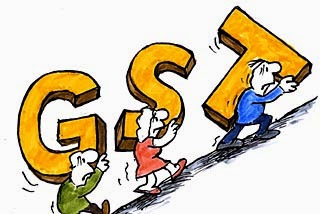
GST

In this article, Arunava Bandyopadhyay who is currently pursuing M.A. IN BUSINESS LAWS, from NUJS, Kolkata, discusses Impact of GST on manufacturing sector.

Introduction

“Death, taxes and childbirth! There’s never any convenient time for any of them.”- Margaret Mitchell, Gone with the Wind

  • The quote quite truly depicts the uncertainty the society bears in its senses for the socio-economic term known as Taxes. We can fear it, we can delay it, we can hate it the most while its paid, but really we cannot avoid it. It’s part of our every transaction whether cash or digital. It’s a sole man made concept of nation building and balancing the economic well-being of the dwellers. Though we all have heard of various ancient forms of tax collection modes followed from the ancient times and even during the barter system, the basic advent of the modern taxation system is guided by the Canons of Taxation from great economist Adam Smith in his book “The Wealth of Nations”.
  • The Canons of Equity, Certainty, Economy and Convenience are always the guiding principle for defining the Taxes being levied by any Nation. Indian, being a diverse and booming economy, took this guidance more than seriously and could gave birth to a number of Taxes sufficient to keep the citizens confused for more than a century. In the 21st Century, Indian Government took initiative in simplifying it from the root level by launching a new taxation system known as Goods and Services Tax (GST), which will replace a lot many confusing and burdensome taxes and will make things look simpler. Let us embark into the journey in analyzing the impact of GST on the great Indian Manufacturing Sector and we will find out ourselves whether it really simplifies or is a new burden.

The Present Taxation System in Indian Manufacturing Sector

The Indian Taxation system can be broadly divided into two major categories- Direct Taxes and Indirect Taxes. The nomenclature is purely based on whether the tax burden is borne the by the payer directly or shifted to others in the value chain. The Manufacturing sector itself is majorly governed by the Indirect Taxes regime. The Indirect Taxes are further notoriously named as Excise Duty, Sales Tax and Service tax.

Excise Duty

As per section 3 of the “Central Excise Act” 1944, Excise Duty is levied on manufacture of goods, if not otherwise exempted like Salt produced or manufactured in India. The rates are defined in the schedule to the Central Excise and Tariff Act, 1985. It is to be noted that the Excise Duty is not on sale but on removal or clearance of goods which may or may not coincide with sale of the goods. Based on Harmonized system of classification Excise Duty rates are different for each product. Also, apart from Basic Excise Duty, there are Special Excise Duty, Additional Duties of Excise (Textiles and Textile articles) and Additional Duties of Excise (Goods of Special Importance). National Calamity Contingent Duty (NCCD) is another such duty charged on specific goods like tobacco products and mobile phones, as section 136 of Finance Act , 2001. Presently the general rate is 12.5% for excisable goods.

As per section 3 of the “Central Excise Act” 1944, Excise Duty is levied on manufacture of goods, if not otherwise exempted like Salt produced or manufactured in India. The rates are defined in the schedule to the Central Excise and Tariff Act, 1985. It is to be noted that the Excise Duty is not on sale but on removal or clearance of goods which may or may not coincide with sale of the goods. Based on Harmonized system of classification Excise Duty rates are different for each product. Also, apart from Basic Excise Duty, there are Special Excise Duty, Additional Duties of Excise (Textiles and Textile articles) and Additional Duties of Excise (Goods of Special Importance). National Calamity Contingent Duty (NCCD) is another such duty charged on specific goods like tobacco products and mobile phones, as section 136 of Finance Act , 2001. Presently the general rate is 12.5% for excisable goods.

Sales Tax

This tax is levied on sale of goods. Sales Tax is charged both by State as well as Central Government. The State government can charge Sales Tax for intra-state sales and is known as Value Added Tax (VAT) and Central government is empowered to collect Central Sales Tax (CST) on inter –state sale of goods. So each state has its own VAT specific rules.

Local Body Taxes

Sometimes for some specific areas or states or local authority applies local tax which is Local Body Tax (LBT) or Octroi.

Service Tax

It is charged by Service Provider to the Service Recipient and finally is payable to the Central Government. It is governed by the Finance Act, 1994 and its relevant notifications.

Custom Duty

As per Customs Act, 1962 read with Customs Tariff Act 1975, Customs Duty is payable to Central Government on Import of Goods to India. Anti-Dumping Duties, Countervailing Duty of Customs (CVD) like excise duty are applied to boost Indian Manufacturing industry by making imported goods costlier than local produced.

Deficiency in the Present System

The biggest problem with Indirect Taxes is prevailing since its inception. It is a well-known issue called Tax on Tax or Cascading Effect of Taxes. Let’s explore this issue:

Suppose a manufacturer of product A procures raw material at Rs. 100 and pays sales tax of 10%, incurs processing cost of Rs. 25 and keeps operating profit of Rs. 50, so total price of the product Rs. 185, now when this product is bought by another company they pay 10% tax on this product so total cost becomes Rs. 203.5 and when this company sells it to a consumer it again charges Sales Tax, so effectively it becomes a Tax on Tax.

  • To overcome this problem VAT concept was evolved through which the buyer gets credit of the Tax paid at earlier stage. But still there is a problem , the VAT is calculated on the value which includes Excise Duty and the credit of VAT is not available against Excise Duty and vice versa.
  • Further VAT rates generally vary across states and the states tend to undercut rates to attract investment which ultimately results in loss of revenue for state as well as central government.
  • In the present tax system a organization that pays all four major indirect taxes such as VAT, CST, Excise Duty and Service Tax has to file four returns to 4 different departments to get benefit of input tax adjustment against output tax , though it is not available for CST.
  • The involvement of so many departments and tax personnel’s makes tax a haunting topic and increases corruption manifold.

Let’s take another example of CST – VAT double taxation. Suppose X from Uttar Pradesh sales goods to Y from West Bengal. Now Y does some value addition and sells it to Z in Uttar Pradesh . The cost scenario will be as follows:

Present System
Input Cost 15000
CST @5% 750
Total Cost 15750
Margin 2000
Sales Price 17750
VAT@14% 2485
Total Sale Price 20235
VAT Payable 2485

The VAT payable is inflated due to double taxation as Input Tax credit is not available.

The multiple taxation system from state to state creates the necessity create barriers  across states , which affects the Logistics Efficiency and requirement of paperwork and road permits ,  which leads to more corruption and high cost of compliance that ultimately gets compensated by the common man in the form of inflationary prices.

Brief History of GST

  • GST was first introduced in France in 1954.
  • In India , in 1974 the L K Jha committee first highlighted the need to move into Value Added Tax regime .
  • In 1991 , Chelliah committee recommended VAT or GST implementation.
  • In 1994, Service Tax implemented in India
  • In the year 2000, the Central Government under the Prime Minister ship of Mr. Atal Bihari Vajpayee set up a committee headed by Mr. Asim Dasgupta to design a model taxation scheme for a universal tax in India.
  • In 2003, Haryana become the first State to implement VAT
  • In 2004 CENVAT introduced to integrate Central Level taxes
  • In 2006, Union Finance minister Mr. Chidambaram proposed roll out of GST by April 2010.
  • In 2007, the report on GST submitted by Joint Working Group got accepted by the Empowered Committee.
  • The committee released its First Discussion Paper (FDP) on GST in November 2009.
  • In 2011 , Mr. Nandan Nilekani released Information Technology Strategy for GST.
  • After several years of political drama, the Lok Sabha in 2015 passed the 122nd Constitutional Amendment Bill for GST.
  • As per present proposal, GST will become effective from 2nd July 2017.

What is GST ? How it works?

The Goods and Service Tax system is a proposed indirect taxation system which is supposed simplify the present tax system and merge it into a single taxation system. It is being implemented vide the 101st Constitution Amendment Act 2016. It is a consumption based tax. The basic principle is to tax the value addition at each transaction. The Tax paid on purchases is allowed as a credit against liability on output / income. It will be levied on all transactions of services and goods.

It is proposed to implement “Dual GST” system in India. All the transactions of services and goods would attract the following two GST:

  1. Central GST- tax collection by Central Government
  2. State GST- tax collection by State Government
  3. IGST – Integrated GST – collection by Central Government

For Sales within the state, earlier VAT and Excise Duty/Service tax will be replaced by SGST and CGST.

For Sales outside the state, earlier CST and Excise Duty/Service tax will be replaced by IGST–which will be paid to the center.

GST will be a destination based tax instead of origin based tax and will be imposed at the point of consumption.

Basically, GST will subsume the following indirect taxes:

At Central level

  • Central Excise Duty (including Additional Duties of Excise)
  • Service Tax
  • CVD (levied on imports in lieu of Excise duty)
  • SACD (levied on imports in lieu of VAT)
  • Central Sales Tax
  • Excise Duty levied on Medicinal and Toiletries preparations,
  • Surcharges and cesses

At State level

  • VAT/Sales tax
  • Entertainment tax (unless it is levied by the local bodies)
  • Luxury Tax
  • Taxes on lottery, betting and gambling
  • Entry tax not in lieu of Octroi
  • Cess and Surcharges

The items those will remain outside GST regime are:

  • Alcohol
  • Petroleum Products
  • Land
  • Properties

There will be one CGST law and 31 SGST law for each of the States including two Union Territories and one IGST law governing inter-State supplies of goods and services

From the press release dated 4 December 2015, the Revenue Neutral Rate (RNR) as proposed by the Chief Economic Advisor Shri. Arvind Subramanian indicated the following GST rate structure:

Now, let’s consider different scenarios,

Sale and resale in the same state
  • For intra state Sales, CGST and SGST will be levied and the collection will go to respective governments. When resold within the same state, CGST and SGST will be levied on increased Sale Price so tax liability will increase, however now the credit of input CGST and SGST will be available and only the remaining taxes will go to the respective governments. As it is between the same government of the state so there is no question of credit transfer.
Intra state Sale and resale in different states
  • For the initial intra state sale CGST and SGST will be applicable. For the inter-state resale IGST will be applicable and it will entirely go to central government. Against IGST both the input CGST and SGST will be taken credit of, but the SGST never went to the central government, which amounts to a loss to the central government and it ultimately is compensated by the State Govt. by transferring the credit.
Inter-state Sale and resale in the same state
  • IGST will be applicable for the inter-state sale and for resale intra-state CGST and SGST will be applicable. Now for the resale 50% of the IGST credit is taken against CGST and SGST. But here IGST never went to State Govt, so the central govt. compensates state government by transferring the credit.

Advantages of GST

  1. Multiple taxations removed
  2. Single market for the country
  3. Goods and Services at same rate
  4. Reduced Tax on manufacturers
  5. Credit process simplified

Impact of GST on Manufacturing Sector

The complex tax system in India has affected the progression of Manufacturing sector of India for a long time now. With the Make in India initiative India is on its way to become a major manufacturing hub for Asia and the world, but unless the Tax system is simplified the dream will not be fulfilled. The implementation of the unified taxation system will be a positive step towards this mission and will help the manufacturing sector to stand up and recover.

The analysis of GST’s possible impact on manufacturing sector can be done through analyzing its impact on production cost, operation cost, logistics cost and time and compliance savings. Let’s analyze:

Impact on Production Cost

  • As already explained above GST removes the cascading effect of taxes. This will sufficiently reduce raw material cost and production cost. Further easier Tax credit system will allow better accounting and cash-flow situation for the organizations.

Reduction of Transportation time and costs

  • GST will ensure removal of multiple checkpoints and permits at state border checkpoints. Almost 60% of logistics effort and time will be saved which ensure more road hours and faster delivery. This will make the manufacturer’s more competitive and will effectively reduce the price of goods at better quality.

Less requirement of Warehouses

  • Earlier the state based indirect tax system required manufacturers to set up local warehouses to save cost. The GST system will ensure lesser Warehouse setup requirement. These savings will help the manufacturers in capacity buildup and produce more economically. This will lead the pathway to Just in Time (JIT) production philosophy and less wastage. This would allow a firm to take advantage of economies of scale and consolidate warehouses at the same time reduce capital deployed in the business. At the same time, IT costs of having ERPs deployed at many small warehouses can be saved. This will pave the way for improved service levels at lower cost in the overall supply chain.

Removal of Area Based Incentives

  • GST will effectively absolve the Area based incentive scheme and this will ensure the attractiveness of business to other locations and widely spread across the nation.

Easy Credit availment

  • Removing the restrictions, now service providers can also avail the credit of VAT/ GST paid on inputs procured, which ultimately will get passed on to the Supply Chain as cost savings.

The advent of geographical business locations

  • The decision of setting up business/ logistics/warehousing location will now be dealt by geographical positioning and not on tax based decisions. Many new locations will come up as attractive warehousing or logistic bases. Ultimately this savings will pass into the supply value chain and help in optimizing end product cost.
  • The integration of tax on Goods and Services through GST would provide the additional benefit of providing credit for service tax paid by manufacturers. With the implementation of GST, cost of any services, including logistics, will be considered a value add, and the manufacturer will get tax credit for the service tax paid.
  • As per the process depicted above Inter State sales will become effectively tax neutral due to the credit mechanism and will be lucrative then intra-state sales, which will help in One India set up.

Larger Warehouses Setup

  • With lesser location constraint, the manufacturers can club there warehouses and consolidate into one large warehouse with state – of –the art handling facilities and equipments. At the same time, with larger warehouses, transportation lot sizes will automatically increase, making way for more efficient bigger trucks.

Savings in Taxes payable:

The example we considered when input tax credit for VAT was not available. Under GST the calculation will come out as follows:

Present GST
Input Cost 15000 15000
CST @5% 750 750
Total Cost 15750 15750
Margin 2000 2000
Sales Price 17750 17000
VAT@14% 2485 2380
Total Sale Price 20235 19380
VAT Payable 2485 1630

The savings in tax cost is clearly visible and this will ensure overall benefit to the economy and the society.

Development of Common National market

  • GST will be levied only at the final destination of consumption based on VAT principle and not at various points (from manufacturing to retail outlets). This will help in removing economic distortions and bring about the development of a common national market.

Export Business

  • GST is not applied to goods/ services exported out of India, hence it would offer some incentive to develop the export business.

Less Corruption

  • Less involvement of reporting and regulating bodies would ensure good governance and less corruption. It will enable reduction of Black money while need for financial compliance will increase, but will be easier with online accessibility.

Conclusion

  • The GST regime will be a game changer for Indian Economy and will provide competitive advantage to the Indian Manufacturing industry which accounts for 16% of the GDP. Thus GDP will also get boost with the proper implementation of these changes. However, the Indian political system needs to be adjustable to and mature to understand the cause of the nation rather than vote bank and petty political gains which has plagued the nation till now.
  • It is shame for a great nation like India that it took more than 15 years to implement such a beneficial system and slowed the progress of the nation. In the upcoming years Indian citizens and the world would like to see Indian manufacturing industry to lead the nation, then only India can become world leader and prosperous nation. It will accelerate Make in India and the Digital India initiatives and ensure optimized use of the nation’s tax revenue.
  • With the new GST, the cost of manufacturing goods is expected to reduce while the consumption goes up. India’s GDP is expected to grow by 1-2% with the proposed GST. Let’s hope for the GST to be implemented as per present plan and a safe progression into the economy with all proposed benefits being availed.

References

  1. http://trak.in/tags/business/2015/03/09/overview-direct-indirect-taxation-tax-structure-india/
  2. http://www.gstindia.com/gst-impact-on-manufacturing/
  3. https://home.kpmg.com/in/en/home/services/tax/indirect-tax/goods-and-services-tax.html
  4. http://www.ey.com/in/en/services/ey-goods-and-services-tax-gst
  5. http://www.gstindia.com/history-of-gst/
  6. http://www.gstindia.com/a-hand-book-for-gst-in-india-e-book/
  7. http://www.gstindia.com/goods-st-gst-concept-impact/
  8. https://en.wikipedia.org/wiki/Goods_and_Services_Tax_(India)
  9. https://www.quora.com/What-is-the-difference-between-the-current-taxation-and-the-new-goods-and-services-tax-GST-in-India-What-is-the-impact
Download Now

Labour Inspectors and Remedies Against Abuse of Power

0
labour law amendments


labour law amendments

Evolution of Labour Legislation in India

The regulation in the case of labour and employment is often referred to as Industrial legislation in India. The historical past of labour legislation in India is interwoven with the history of British colonialism. The commercial/labour legislations enacted by the British hadbeen notably supposed to shield the pursuits of the British employers. Considerations of British political economy were naturally paramount in shaping a few of these early legal guidelines. Thus, came the Factories Act. Its good

Download Now

Service Tax in India on Overseas Online Services being Accessed from India

0
service tax

In this article, Anupam Pillai who is currently pursuing M.A. IN BUSINESS LAWS, from NUJS, Kolkata, discusses service tax in India on Overseas Online Services being Accessed From India.

Introduction

  • Ever imagined how easy it is to get a million results in just one click? This is possible with advent of internet and how beautifully it has been proved to be the best source of information. Then while all the services on internet seem to be free, yet there are few which being premium services come at a premium price.
  • But with services there comes tax into play to have checks and balances for the revenue generated from such services. In simple terms such tax is referred to as Service Tax.

With upcoming online services such as Netflix and other downloadable sites, there has been a paradigm shift in the service tax regime.

  • This paper essentially deals with the change in service tax scenario for overseas online services being accessed in India, in light of recent amendment in the Place of Provision of Services Rules, 2012 (‘PoPS’). Before getting into the detailed overview of the same, it is quite necessary to understand essentials of service tax in India and how these PoPS come into play.

Overview of Service Tax In India

  • Service tax is governed by Finance Act, 1994 along with other subsequent amendments carried by the Finance Acts. Service Tax is applicable on the services provided by a service provider and is usually paid by the Service recipient unless otherwise situation arises. Taxable event for the purposes of Service Tax refers to the ‘Services’ as defined in Section 65B(44) of the Finance Act, 1994, which has been amended timely and now tax is to be levied on any kind of service except the one being exempted under the ‘Negative List’.[1]
  • There has been a paradigm shift in the Service Tax regime as before Finance Act, 2012 was enacted, there were merely few services on which it was applicable, thus having a Positive List approach, but after enactment, there were 119 services, and few services as per Section 66D, there are few services which are exempted from Service Tax.[2]

Taxability of Services in India

There are following pointers to explain taxability of any service in the territory of India:

  1. Taxable Services can be put down as Services as per Section 65B(44) which includes Declared Services as per Section 66E excluding Negative List as per Section 66D and any other notification thereof.[3]
  2. In addition to Services under Negative List, certain services are exempt from ST vide notification no.25/2012 dated 20.06.2012 as “Mega Exemptions”.[4]
  3. In order to determine incidence of tax and the time when any service is deemed to have been provided, The Point of Taxation Rules, 2011 shall be applicable.[5]
  4. To determine whether any service has been provided in the taxable territory or not, Place of Provision of Services Rules, 2012 is applicable, which describes the rules to classify place of providing any service and incidence of ST thereof.[6]
  5. Mostly service provider is liable to pay tax but in certain cases, the Service recipient shall be liable to pay the same. This is known as “Reverse Charge Mechanism”.
  6. Service Tax is not payable upto taxable income of Rs. 10,00,000/- in a Financial Year and if turnover of the said income in previous FY is less than the threshold of Rs. 10 Lakhs.

Rate of Service Tax

  • As per the Finance Act, 1994, Service tax has to be paid by the service provider while for providing any service at the rate mentioned under Section 66B, which shall be collected from service recipient.[7]
  • But the government may notify services as per Section 68(2), in which case it shall be paid directly by the service recipient. The charge of Service tax till 2015 was at rate of 14% but currently, with effect from June 1, 2016, Krishi Kalyan Cess at 0.5 percent has been added along with Swachh Bharat Cess  0.5% as well, making it to 15%.[8]

Service Tax Implications on Online Services in India

As discussed above Service tax shall be applicable vide Finance Act, 1994 and accordingly the determination of the applicability is guided by PoPS. The said rules under PoPS categorically mentions the place of provision. The Service Provider is the one who provides the services and Service Recipient is the one that receives the said service.

  • Central Board of Excise and Customs released four service tax notifications in Circular No. 202/12/2016-Service Tax, dated November 9, 2016 (‘Circular’)[9] which came into effect on 1st December, 2016 which amended the PoPS whereby Online Information and Database Access or Retrieval (‘OIDAR’) provided by the Service Provided located outside India as per Rule 2(l) of PoPS.
  • Pre-amendment these OIDAR were not taxed when Service Provider located abroad used to provide Service Recipient located in India. The definition under Rule 2(l) of PoPS has been amended to include more services like advertising on the internet, which were not considered earlier.

We will go through two different aspects of the Service Tax implications for said services. pre and post amendment in the PoPS and other notifications.

1. Pre-Amendment Scenario

As discussed above we need to determine whether the service falls under the ‘negative list’ provided under Section 66D of the Finance Act, 1994. All services except those under the negative list are taxable.

Further it becomes important to determine whether the service is provided in the ‘taxable territory’, i.e., India except the State of Jammu and Kashmir. The place of provision of a service is determined as per rules set out in the POPS Rules. A service is taxable in India if its place of provision is in India as per the POPS Rules. Generally, the place of provision of a service is the location of the service recipient, subject to specific exceptions under Rules 4 to 12 of POPS Rules.[10]

Earlier, all cross-border B2C (Business to Consumer) services were exempted from service tax. B2C are services provided in India to the Government, local authority, governmental authority or an individual, in relation to any purpose other than commerce, industry or any business or profession. On the other hand, as per Notification No. 30/2012-Service Tax (‘Reverse Charge Notification’), cross-border B2B (business to business) services are taxable under a reverse charge, i.e., the service recipient is liable to pay service tax. In view of Rule 9 of the PoPS Rules, OIDAR services (among others) have been specified as an exception to the General Rule and are deemed to be provided at the location of the service provider. Hence, all cross-border OIDAR services provided to Indian residents, whether they are B2B or B2C services, were exempt from service tax.

Further, OIDAR services are defined in Rule 2(l) of the POPS Rules as “providing data or information, retrievable or otherwise, to any person, in electronic form through a computer network“. This definition did not illustrate the services which are taxable or not. But post amendment it has included the services which are taxable and what services are exempted.[11]

2. Post amendment Scenario

There are following changes which have been carried out by the Circular,

a) Definition of OIDAR service

OIDAR services have been assigned the same meaning as under clause (ccd) of sub-rule 1 of Rule 2 of the ST Rules, which defines OIDAR services as services which are conveyed through the medium of data innovation over web or an electronic system, and by nature they are totally computerized services including negligible human component, to the degree that their conveyance can’t be guaranteed without information technology. This is a takeoff from the present comprehension of OIDAR services. The definition further provides that OIDAR services include –

  1. advertising on the internet;
  2. providing cloud services;
  3. provision of e-books, movie, music, software and other intangibles via telecommunication networks or internet;
  4. providing data or information, retrievable or otherwise, to any person, in electronic form through a computer network;
  5. online supplies of digital content (movies, television shows, music, etc.);
  6. digital data storage; and
  7. online gaming.[12]

The Circular further elaborates the new meaning of OIDAR services and provides an indicative list of OIDAR services which includes website and web-page hosting, distance maintenance of programmes and equipment; supply of music, films and games, images, text and information etc remote systems administration; supply of software and updating thereof.[13]

However, the Circular also states that using the internet or some other electronic means of communication just to communicate or facilitate the service does not always qualify as an OIDAR service. An indicative list of non-OIDAR services includes supply of goods, where the order and processing is done electronically, supply of physical books, newsletters etc., services of lawyers and financial consultants advising over email, booking services for entertainment events, hotel accommodation etc., educational or professional courses, where the content is delivered over internet or electronic network, advertising services in newspapers, posters, and television.

b) Place of Provision of OIDAR services

The place of provision of OIDAR services has been shifted from ‘location of the service provider’ to that of ‘location of service recipient’.  Hence the cross-border OIDAR services provided in India shall no longer fall under Rule 9 of POPS Rules and accordingly, be taxable.

c) Treatment of B2B and B2C services

The exemption which was earlier available to all cross-border B2C services provided in India has been removed for cross-border B2C OIDAR services. In case of B2B OIDAR services are received from outside India, the recipient (who has been registered under Service Tax law in India) then tax shall be paid under reverse charge mechanism. Further the B2C OIDAR services to be taxable by service provider, the services need to be provided to ‘non assessee online recipient’ which includes individuals, government authorities, local bodies etc. located in India and receiving such OIDAR services.

d) Reverse/Forward charge

By amendments in the Service Tax Rules, 1994 (‘ST Rules’) and the Reverse Tax Notification, cross-border OIDAR services provided in India are made taxable under a reverse charge in case of a B2B service, and a forward charge in case of a B2C service.

Furthermore, for any cross-border OIDAR service, the service recipient should be esteemed to be situated in India if any of the two indicated non-contradictory conditions are fulfilled. These conditions identify with proximity of specific considers India including recipient’s address as exhibited by him by means of net,  issuance of his billing card, his billing address, internet protocol address of device used by him, etc. [14]

e) Intermediary service

In the event that an intermediary, for example, an electronic site, broker, agent and so on situated outside India encourages the arrangement of a cross-border B2C OIDAR service without giving the primary administration for him, such go-between might be esteemed to get such services from the service provider outside India and giving such support of the client in India, in this way being subject to pay service tax impose on a turnaround charge premise. In any case, this considering fiction won’t make a difference if the intermediary effectively sets up that he is just a go-between by fulfilling some particular conditions which are –

  1. The intermediary’s invoice to the client unmistakably distinguishes the service being referred to, the fundamental service provider and his registration in India;
  2. Intermediary neither gathers or procedures the service in any way nor is in charge of service between the service provider and the recipient;
  3. The delegate does not approve delivery; and
  4. The general terms and conditions are set by the service provider and not by the intermediary. On satisfaction of all the above conditions, the liability to pay service tax will fall on the main service provider.[15]

Impact of Amendment on Service Tax Regime in India

  • With this amendment in place, there has been a drastic change in the applicability of Service Tax on the overseas online services provided by the intermediaries or providers alike. The most important change has been in the definition of OIDAR services which has opened huge gates for the taxability of the services. This definition has seen a paradigm shift from the earlier definition which has been put forth in an Education Guide published by CBEC as services in relation to online information and database access or retrieval or both, in electronic form through a computer network.[16]
  • As per the Education Guide, the earlier definition covers services such as web-based services providing access or download of digital content, subscription to online books and journals, social networking sites, digital books, online news, flight information and weather reports, etc.
  • However, after the Notification, potentially all automated services involving minimal human element provided over internet would come under the blanket of OIDAR services, which as per the new definition also specifically includes “advertising on the internet”.[17]
  • Further, the old definition of OIDAR only forms one of the 7 items of the inclusive list [item (iv)] provided in the new definition, which includes additional services such as online gaming, cloud services, digital data storage, online supplies of digital content, etc. Moreover, as per the Circular, while purchase and automated delivery of digital content would be an OIDAR service, supply of tangible goods where the order and processing is done electronically will not be covered under OIDAR services.[18]
  • Another change is with respect to the clause (a) of Entry No. 34 of Mega Exemption exempts service tax on service received by Government, a local authority, a governmental authority or an individual in relation to any purpose other than commerce, industry or any other business or profession from a person located in a Non Taxable Territory. It is important to note that the above entry exempts all type of import services for non-business use received by above mentioned persons.

The notification no 47/2016 withdraws the OIDAR service exemption by inserting a new proviso to this entry reads as under,

“Provided that the exemption shall not apply to online information and database access or retrieval services received by persons specified in clause (a).”[19]

  • It means that import of OIDAR service for non-commercial use by abovementioned persons from Non Taxable Territory to Taxable Territory would not be exempted from service tax. It is important to note that, before this amendment, exemption entry was not operative for OIDAR service, as the place of provision of such service was not in the TT.
  • This clause was applicable for other services, but amendment in the PoPS rules results that the place of provision would be the location of service receiver, therefore, this clause become operative for this service after amendment in PoPS rules.[20]
  • The extension of service tax for overseas online services is in line with the recommendations for addressing indirect tax challenges in a digital economy suggested by the OECD in the Action Plan of its flagship project on Base Erosion and Profit Shifting (‘BEPS’).
  • The Action Plan 1 suggests that cross-border online digital services should be taxed in accordance with the destination principle in the country in which the consumer is located. Hence, this confirms to global consensus at taxing online services in the destination jurisdiction.

It is also pertinent to know the impact of the new Equalisation Levy (‘Levy’) on the expanded scope of service tax. The Levy which has been introduced as  6% tax on gross payments made by Indian businesses to non-resident enterprises for online advertisements overlaps with service tax. This overlap may be significantly wider in the future because the Levy may potentially be expanded to cover many more online services such as cloud services, provision of e-books, movies, online gaming etc.[21] Hence, there is a case to be made for repealing the Levy in light of the fact that the services it seeks to cover have already been covered under service tax.

Conclusion

The circular has created a clear picture about the service to be accessed in India and tax payable thereof for any such service provided by overseas service provider. This has further led to understand the determination of place which shall be applicable for tax treatment and that more emphasis shall be on the nature of services provided apart from the location merely.

Further that this amendment has far reaching implication on the online service providers such as Netflix which needs to get service tax registration in India in order to file returns.

This shall further lead to more B2C services being provided to the customers across country and that shall lead to more competition between the online intermediaries to provide better services to the customers.

The essence of this amendment lies in the fact that such changes shall be adaptive to the Indian web surfers which is still missing as they are keen to use free torrent and other unpaid sources, unlike the ones proposed to be used. In that case there comes another question whether the said act of government to charge service tax on online services is a boon or bane? This shall be answered only in due course and that favorable situations of that of demonetization shall fuel the increase in use of digital payment gateways and services alike. Thus this amendment seems to be most promising step taken by government in a while.

References

[1] Service Tax Procedures, available at http://www.cbec.gov.in/htdocs-servicetax/st-proc-home?pageID=4-11

[2] Service Tax at a Glance, available at  http://www.cbec.gov.in/resources//htdocs-servicetax/ovw/ovw1-1_st-ataglance-19may16.pdf

[3] Handbook on Service Tax, available at http://www.cefi.in/wp-content/uploads/2014/09/Deloitte_Service-Tax-in-India.pdf

[4] Notification No. 31 of 2016, available at  http://www.cbec.gov.in/htdocs-servicetax/st-notifications/st-notifications-2012/st25-2012

[5] Point of Taxation Rules, 2011, available at http://www.cbec.gov.in/htdocs-servicetax/pt-of-taxtn2011

[6] Place of Provision of Services, 2012, available at http://www.cbec.gov.in/htdocs-servicetax/st-rules-placeof-provsn-services

[7] Section 68, Finance Act, 1994

[8] Supra Note 4

[9]Circular No. 202/12/2016-Service Tax, dated November 9, 2016 available at http://www.cbec.gov.in/htdocs-servicetax/st-circulars/st-circulars-2016/st-circ-202-2016

[10] Rule 3, PoPS

[11] Rule 2(l), PoPS

[12] CBEC Notification 46/2016 on Place of Provision of Services Rules, 2012

[13] Circular No. 202/12/2016-Service Tax, dated November 9, 2016 available at http://www.cbec.gov.in/htdocs-servicetax/st-circulars/st-circulars-2016/st-circ-202-2016

[14]Change in Service Tax Treatment in India, PWC, available at https://www.pwc.in/assets/pdfs/services/tax/indirect_news_alert/2016/pwc_news_alert_11_november_2016_change_in_service_tax_treatment_b2b_and_b2c.pdf

[15] Service Tax To Be Paid For Foreign Entities In India, RSM India available at

 https://www.rsm.global/india/sites/default/files/media/RSM%20India/Publications/December%202016/nf service_tax_payable_by_foreign_entities_on_cross-border_b2c_oidar_services.pdf

[16] Taxation of Services: An Education Guide, June 20, 2012, CBEC, Department of Revenue, Ministry of Finance, Government of India. available at  http://www.cbec.gov.in/resources//htdocs-servicetax/EducationGuide.pdf

[17] Notification No. 46-2016-ST dated 9.11.2016 available at http://www.cbec.gov.in/resources//htdocs-servicetax/st-notifications/st-notifications-2016/st46-2016.pdf

[18] Circular No. 202/12/2016-Service Tax, dated November 9, 2016 available at http://www.cbec.gov.in/htdocs-servicetax/st-circulars/st-circulars-2016/st-circ-202-2016

[19] Notification No. 47-2016-ST dated 9.11.2016 available at http://www.cbec.gov.in/resources//htdocs-servicetax/st-notifications/st-notifications-2016/st47-2016.pdf;jsessionid=DB0162FE48148F83BE86CCF35C5DCA42

[20] Cross Border Online Services: A Drastic Amendment, available at http://www.caclubindia.com/articles/cross-border-online-services-a-drastic-amendment-28244.asp

[21] Proposal on Equalization Levy Specified Transactions available at http://incometaxindia.gov.in/news/report-of-committee-on-taxation-of-e-commerce-feb-2016.pdf

Download Now

Rectification of registered Trademarks

0
trademark

In this article, Amitabh Ghosh who is currently pursuing M.A. IN BUSINESS LAWS, from NUJS, Kolkata, discusses rectification of registered trademark.

Rectification of registered Trademarks

  • Before going into the discussion of rectification of registered Trademark, some of the highlights of Trademark laws in India and its background are inevitable to understand the topic in totality.
  • The rules and regulations governing the Trademark in India and its background should be aware by the common man to have clarity on the topic and make the topic more fruitful.
  • The first Trade Marks law in India was enacted in 1940, before that it was based on common law system which was followed in England before the enactment of Registration Act, 1875.
  • Earlier cases pertaining to Trademarks were decided on the basis of section 54 of Specific Relief Act, 1877, while the registration for obtaining ownership was secured under Indian Registration Act, 1908.
  • The first Trade Marks Act, 1940 was replaced by The Trade and Merchandise Marks Act, 1958.
  • The later Act consolidates the provisions of Trade Marks Act, 1940. The Indian Merchandise marks act, 1889 (Which was in force since 1899) and the provisions related to Trademarks in the Indian Penal code.
  • The Trade and Merchandise Marks Act, 1958 has been revised and repealed by The Trade Marks Act, 1999 to comply with the provisions of TRIPS (Trade related aspect of Intellectual property rights) Agreement, 1995.The bill received the assent of the president on 30th Dec-1999 and became an act.

New elements, which was introduced in the 1999 Act, which were missing in 1958 Act are,

  1. It enlarged the definition of TRADE MARK to include the shape of goods, packaging and combination of colors which can be adopted as Trademark.
  2. The new Act includes services in addition to goods.
  3. Simplified the procedure of registration.
  4. Provides registration of collective marks owned by AOP.
  5. Established IAPB for speedy disposal of appeal.
  6. Increased the period of registration and renewal from 7 years to 10 years.
  7. It has made some TM offences as cognizable offence.
  8. Transferred the final authority for registration of certification of TM to the Registrar.
  9. Provides for the filing of a single application for goods or services falling in more than one class.
  10. Enhanced the punishment provision at par with Copyright Act, 1957 to prevent the sale of spurious goods.

Trademark

In common man parlance, trademark means and includes a mark capable of being represented graphically and distinguishing the goods or services of one person from those of others and may include the shape of goods, their packaging, and a combination of colors.

  • When a person enters into any venture either in the field of manufacture or providing services and is successful in establishing its own market for its products which enjoys a good reputation as far as quality is concern, he wants his goods or services to be recognised by the consumer though a mark/design/symbols etc from those of its competitors.
  • It may be possible that two products nearly resemble each other in all aspect which can deceive a consumer easily unless they are recognised by a mark, which is known as Trademark of the goods or services.
  • Any person claiming to be the proprietor of the TM used or proposed to be used shall apply in writing, to the Registrar in the manner prescribed by the Act.
  • Every such application shall be filed in the office of the Trademark Registry within whose territorial limits the principal place of business in India is situated.
  • Advertisement of the application once an application for registration of a trade mark has been accepted whether absolutely or subject to conditions or limitations, the Registrar shall, as soon as may be after acceptance, cause the application as accepted together with the conditions or limitations, if any, subject to which it has been accepted, to be advertised in manner prescribed by the act.

Opposition to registration

  • Any person may with 3 months from the date of advertisement, give notice in writing to the Registrar of opposition to registration of the Mark as registered Trademark.
  • The registrar shall within send the notice of opposition to the applicant asking him to send his counter statement and pieces of evidence he relied in support of his claim.
  • On receipt of a counter statement from the applicant, the Registrar shall forward the same to the person who opposed the application to file his statement and grounds of opposition.
  • After considering the presentation of both the parties the registrar may either register the mark or refuse to register the mark or it provide for any amendments or correction to be made in the mark.

Once the Registrar is satisfied that the application is complete in all respect,

  • The application has not been opposed by anyone within the time period mentioned in the act for filing notice of opposition or
  • The application has been opposed but opposition hasbeen decided in favour of the applicants.
  • The Registrar shall register the TM and issue a certificate in the prescribed form of the registration thereof, sealed with the seal of the TM registry.

If the process of registration is not completed within 12 months from the date of application by default of the applicant; the registrar may after giving the notice to the applicant treat the applicant as abandoned unless the same has beenrectified by the applicant within the time prescribed by the registrar.

Duration, renewal, removal and restoration of registration

  • The registered Trademark under the act get protection for an initial period of 10 years from the date of registration but may be renewed in the manner prescribed by the Act.
  • The registered Trademark under the act get protection for a initial period of 10 years from the date of registration but may be renewed in the manner prescribed by the Act.
  • Where a TM has been removed due to non payment of fees, the Registrar shall after 6 months but before 1 year from the expiration of last registration of the trade mark, on receipt of complete application along with the prescribed fees renew the registration with generally or subject to such conditions as it think fit for  a period of 10 years from the expiration of the last registration.

Rectification

It is a legal process to correct or rectify the error or omission in the details of a trade mark as recorded which had happened at the time of registration of trademark. The Indian Trade Mark Act provides for rectification in the register of TM which has been wrongly registered Trademark or may have remained on the register ever after its validity period as provided at the time of registration.

Who can file rectification petition

An aggrieved party who is affected by such entry may file for rectification of register TM on the grounds provided by the Act.

Rectification petition cannot be filed anonymously since the onus to prove the following facts,

  1. that he/she is actually affected,
  2. proper evidence reflecting that the mark hasn’t been used by the trademark owner needs to be submitted in the course of proceedings by the “aggrieved person”.
  • The above two pre conditions were specified to protect the right of innocent owner and to stop a third party to take advantage of the rights given in the act maliciously.
  • The Act of 1999 has narrowed down the grounds as compared to those provided by the earlier act of 1958 Act.

The aggrieved party can filed its application on any of the grounds mentioned below

  1. Mark was registered by misrepresenting the facts or without sufficient cause.
  2. Mark was wrongly entered in the register and remaining there,
  3. Due to the recent amendments mark need a change/alteration/modification.
  4. The registered proprietor has not used the trade mark for a period of more than 5 years.
  5. Not renewed within due time of renewal.
  6. A trademark is liable to be removed from the register in case registration is obtained by fraud. Suppression of material facts or false statement are considered as two ingredients which the registrar or appellate Board must look into before initiate a proceeding for removal of mark from the register.
  7. Including certain goods or services which does not belong to same class or description for which the mark was registered.
  8. Not confirming one of more grounds specified in section 9(Absolute ground for refusal of registration) and Section 11(relative ground for refusal of registration) of the Act.

Rectification of trademark in India on grounds of non-use

Section 47 of the Trade Mark act deals with removal from register and imposition of limitations on ground of non-use.

A registered Trademark can be removed from the register wherein it has been registered in respect of goods or services, if an aggrieved person file an application to the Registrar or appellate Board on the basis of given grounds.

  1. The mark was registered Trademark without bona fide intention on the part of the owner in respect of which the gods and services to be covered with respect to the mark for which registration of the mark was done or in a case to which section 46 apply by the company concerned or the registered user, there was no bona fide intention on the part of the owner for using the mark in relation to those goods or services up to a date of 3 months before the date of filing of such application.
  2. That up to a date three months before the date of the application, a continuous period of five years or longer period has elapsed and there is no evidence substantiating the usage of the mark in relation to the goods or services by the proprietor nor even any intention to use such mark appears.
  3. Provided that in case of honest concurrent use or of any other special circumstances which justifies the usage of the identical mark by more than one proprietor in respect of same or similar goods or services, wherein the registrar allow subject to certain conditions and limitation.

Except where the applicant was permitted registration in the case of honest concurrent use, etc.

A mark identical or closely resembling mark with respect to the goods or services or where the Registrar/appellate Board/Tribunal is of opinion that permission must be granted to register such trade mark,Registrar/appellate Board/Tribunal may refuse an application under clause(a) or clause (b) with respect to any goods or services if it is shown to their satisfaction that, before the relevant date or period, as the case may be, the proprietor has used the mark bonafide with respect to,

  • The goods or services or similar /same description
  • Associated goods or services of that description

Where in relation  to any goods or services with respect to which a trade mark is registered, the non use of trade mark are shown to have existed under the circumstances  mentioned in clause (b) of sub section 1, in relation to goods to be sold or to be traded in a particular place in India permission under honest concurrent use to register a nearly resemble mark or identical mark with respect to the goods to be sold or to be exported or in relation to services , the tribunal permitting to register such mark.

  • On application the tribunal/appellate board may impose such conditions or restriction for securing that registration  shall cease to extend to such use.

An applicant shall not be entitled to rely for the purpose of clause (b) of sub-section (1) or for the purposes of sub-section (2) on any non-use of a trade mark which is shown to have been due to special circumstances in the trade, which includes restrictions on the use of the trade mark in India imposed by any law or regulation and not to any intention to abandon or not to use the trade mark in relation to the goods or services to which the application relates.

  • Only aggrieved person is permitted to file a application  for rectification of the register on the ground of non use of the trade. Exhaustive definition of the aggrieved person has not been given in the act, however the meaning can be interpreted from the judicial decision given by the court.
  • It mean a person who is substantially interested in removing the mark from the register to have a gain to his advantage or who would substantially damaged if the mark remain in the register.Thedefinition includes a person who firmly believes his interest is being damaged by such registration or someone who earlier had applied for registration of the same mark and his registration is pending.

Ground of NON-USE by registered owner for a period of more than 5 years

What actually constitute use

  • Using a mark continuously is a relative term and varies with case to case, the determination criteria of usage should not be rigid, it also needs to be judged on case to case basis.
  • The courts in its several judgement pronounced that use does not mean actual use. Even though the goods in relation to which it require to be used is not inexistence, still promotional advertisement of the goods wherein the mark have been used can very well be fall within the definition of use.
  • The aggrieved party could not argue on the ground of nonexistence of the goods. Courts in their judgement clearly said that use does not constitute actual or physical sale.
  • Intention to use the mark for its existing or prospective good should be the deciding criteria.

What actually constitute non use

  • Generally the burden of proving non use of mark is on the person who files the application for rectification of register.
  • Such an application is filed if the mark has not been use for more than 5 years and 3 months and in such a case the owner may lose its right on the registered Trademark if he could not satisfy the court that the ground of application is baseless and the mark has been continuously used on or after the registration of the same. If the TM owner fails to establish the usage of the mark the Registrar or the IPAB would remove the mark from the register.
  • In a recent case decided by the IPAB wherein the owner of the mark is require to prove its usage. He submitted a document which evidencing registration in various countries in support of its claim of usage. The IPAB rejected his contention and order themark to be removed from the register.
  • A trademark could be expunged from the register if registration is obtained by fraud. Where the registration has been obtained by suppression of material fact or false statement it is known as registration obtained by fraud.

Procedure followed by the TMR for cancellation/rectification of proceedings

  • On receipt of complete applications for rectification of register along with prescribed fees and statement of the fact. The registrarshall send the copy of the application along with statement of facts to the register proprietor of the mark asking him to file his counter statement in support of his statement.
  • On completion of the filing of the counter statement by the registered proprietor, the Registrar, ask both the parties to submit their evidences.On submission of evidences, the matter is set for final hearing by giving both the parties equal opportunity to make oral submission if required on merits and the Registrar passes the final order.

Remedies available to the aggrieved party

  • Under section 91(1) any party aggrieved by the order or decision of the Registrar can go for appeal before the Intellectual property appellate Board(IPAB) within three months from the date of order or decision sought to be appealed against is communication to him.
  • No appeal shall be entertained unless the same has been file with the prescribed period of 3 months from the date of communication of order.
  • The appeal may be admitted after the expiry of the appeal period prescribed by clause 1 of section 91of the Act, if the appellate Board has been satisfied that there was sufficient cause for not filing the appeal on time or there was reasonable ground, which prevented the party for filing the appeal in time the party.
  • An appeal to the Board shall be in prescribed form and shall be verified in prescribed manner and shall be accompanied by the copy of the order or decision appealed against along with prescribed fees.

Procedure and power of the appellate Board

  1. The appellate Board shall not be bound to follow the procedure laid down in Code of Civil procedure-1908 but shall be guided by the principle of natural justice.
  2. Subject to the provisions of the Act and the rules made thereunder, fixing of the place and time of hearing the Appellate board shall have the power to regulate its own discretion
  3. The Board shall have the power of Civil Court under The code of Civil Procedure-1908 while trying a suit in respect of the following matter.
  • Receiving evidence on oath.
  • Issuing commission for examining of witnesses.
  • Examining any public documents.
  • Any other matter which may be prescribed.

Any proceeding before the Board shall bedeemedjudicial proceeding within the meaning of section 193 and 228 and for the purpose of section 196, of the IPC.

Bar of jurisdiction of Courts etc

No court or other authority shall have any authority in respect of matters specified under subsection (1) of section 91.

Remedies available against the order of the Board

  • There is no provision for appeal against the order of the Appellate Board.
  • However, the any person aggrieved by the order of the Board may file a writ petition under article 226 of the constitution the High Court against the order of the Appellate Board.
  • The nature of the Writ is of review and not of appeal.
  • Aggrieved person can file a writ petition under article 136 to the Supreme Court of India to invoke its jurisdiction.

Defence available against non-use which the Courts in India generally take into consideration while dealing a case for non use of trade mark

  1. General slack in the market.
  2. Lack of demand for the goods.
  3. Import Restriction.

Steps required to be taken to prevent rectification or removal applications from the register

  1. Renewal of the mark within due date.
  2. Not doing anything which will destroy the distinctive character of the mark.
  3. Not allowing the mark to remain unused for a period exceeding 5 years.
  4. Restrain others from infringing his mark.

Suggested readings.

Steps for Registration of a Trademark in India

What Cannot Be Trademarked In India

Unconventional Trademarks


Download Now

Indian Anti-Beggary Law

1
anti-begging

Without going into moralities or immoralities involved in begging, let us look at, whether begging is a crime in India or not? What is the position of law on facilitating begging? Is it a crime or not? In this article, Anubhav Pandey discusses the anti-begging laws prevalent in India. Indian Anti-Beggary Law.

Laws governing begging in India

In India, there is no central law which penalises begging. Although, 22 states (including few Union Territories) have their anti-begging laws. The Act which functions as the derivative figure for all the state anti-begging law is Bombay Prevention of Begging Act, 1959. States which have their own anti-begging laws are attached in Annex 1.

Let us go back to 2010 when Commonwealth Games were scheduled to take place. A number of beggars were thrown in jail as per the provisions of anti-begging laws of Delhi. The said law criminalises begging and provides for the incarceration of people found to be begging. We all know the social definition of begging. Let us understand what legally constitutes begging.

Definition of begging as per anti-begging law

  • Soliciting or receiving money, clothes or other things ordinarily given to a beggar, in a public place whether or not by singing, dancing, fortune telling, performing or offering any article for sale, or
  • Entering on any private premises for the purpose of soliciting or receiving money, clothes or other things ordinarily given to a beggar.
  • Exposing or exhibiting, with the object of obtaining or extorting money, clothes or other things ordinarily given to a beggar, any sore, wound injury, deformity of diseases whether of a human being or animal
  • Having no visible means of subsistence and wandering, about or remaining in any public place in such condition or manner, as makes it likely that the person doing so exist soliciting or receiving money, clothes or other things ordinarily given to a beggar.
  • Allowing oneself to be used as an exhibit for the purpose of soliciting or receiving alms.

Soliciting or receiving money or food or given for a purpose authorized by any law is not begging.

Provisions of the anti-begging laws are highly arbitrary, the implementation of the law is even more. Anti-begging squads are to raid public places such as railway stations, temples, mosques, bus terminus, and arrest anybody who looks poor and homeless. There have been situations where, homeless or disabled people were perceived to be beggars, based simply on the fact of their homelessness or disability.

Power of the police to arrest beggars

  • As per the anti-begging laws of various states in India, an authorised Police officer has the power to arrest without a warrant any person who is found begging. If a person is found begging inside a private property, he can only be arrested on a formal complaint by the owner of the property.
  • After arresting, it is the duty of the Police officer to send the arrested beggar to court.
  • A beggar arrested is required to be kept in a certified institution as prescribed by the state government.
  • If the court finds that the person accused was not involved in begging activities he is to be released.
  • If the court is convinced that the person accused was involved in begging, appropriate punishment will be given by the court.

Punishment for begging

  • Punishment can be anywhere between 1 to 3 years. But, if the court is satisfied from the circumstances of the case that the person found to be a beggar is not likely to beg again, the court might release the beggar on his assurance of abstinence from begging and being of good behavior.

Grounds on which punishment is decided are

  1. Age and character of the beggar,
  2. The circumstances and conditions in which the beggar was living,
  3. Findings made by the Probation Officer
  • A child who is under the age of five years if found begging, the court will forward the child to a Juvenile justice tribunal.
  • Where a person is convicted for the second or subsequent time, he is to be detained for a period of ten years in a Certified Institution, or his sentence might even increase for further two more years.
  • Therefore, a total of 12 years in prison might be the punishment when caught begging for the second time.
  • Where a cripple, blind or physically handicapped person is detained for beggary, court might further extend his duration of sentence for the individual good of the physically handicapped beggar.

Begging exists in the form of business too. There are people who employ others for begging purposes. The employer takes a small token from the money begged by the beggar. The law provides for those who employ others for begging shall be punished with imprisonment for a term between 1 to 3 years.

Provision for medical examination of beggars who may suffer from leprosy or is lunatic

  • Where it appears that any beggar detained is of unsound mind or a leper, the beggar might be shifted to a mental hospital or leper asylum or another place of safe custody, to be kept and treated.
  • If on the expiration of the term of punishment it is certified by a medical officer that it is necessary for the safety of the beggar or of others that he should be further detained under medical care or treatment, the advice of such doctor will be followed.

Is the anti-begging law curative in nature? Can begging be decreased by the provisions of the anti-begging law?

  • The anti-begging law provides for the teaching of agricultural and industrial techniques to the beggars in detention. There are situation wherein a person, although skilled, may be forced to beg due to lack of employment.
  • In a survey conducted by the Department of Social Welfare of Delhi University, it was found that about 9 to 10 percent of the beggar were educated till the primary level, 5 percent till the secondary level, and that six graduates and four post-graduates had resorted to beggary due to lack of employment opportunities.

Anti-begging laws have invited relatively little judicial attention. Constitutionality of anti-begging legislations is yet to be decided by the Supreme Court. The only petition filed before the Court challenging the constitutionality (whether the anti-begging act is a valid law or not) of the Bombay (Prevention of Begging) Act, 1959, was withdrawn by the petitioner.

Beggars can be categorised into four categories-those who do not wish to work, those unable to work due to substance addiction, those who may be at the mercy of a begging gang, and lastly, those who may be destitute and starving. Begging is a constitutionally protected right in the United States.

Ram Lakhan v State (Case dealing with anti-Begging law)

The Delhi High Court moved away from the judicial practice of castigating begging and upheld its legitimacy through a comparative discourse on the common law doctrines of necessity and duress, as well as on the principles of equality and liberty embodied in the Constitution. One significant aspect of Ram Lakhan is that it addresses the issue of begging from the touchstone of Article 19(1)(a), read with Article 21 of the Constitution, and asserts that unreasonable prohibitions on begging are unconstitutional in that they invariably deprive beggars of two fundamental rights.

Annexure 1

    Different anti-begging laws in different states of India

Sl.No. States/Union Territories States Legislation in Force
1. Andhra Pradesh The Andhra Pradesh Prevention of Beggary Act, 1977
2. Assam The Assam Prevention of Begging Act, 1964
3. Bihar The Bihar Prevention of Begging Act, 1951
4. Chhattisgarh Adopted the Madhya Pradesh Bikshavirty Nivaran Adhiniyam, 1973
5. Goa The Goa, Daman & Diu Prevention of Begging Act, 1972
6. Gujarat Adopted the Bombay Prevention of Begging Act, 1959
7. Haryana The Haryana Prevention of Begging Act, 1971
8. Himachal Pradesh The Himachal Pradesh Prevention of Begging Act, 1979
9. Jammu & Kashmir The J&K Prevention of Begging Act, 1960
10. Jharkhand Adopted the Bihar Prevention of Begging Act, 1951
11. Karnataka The Karnataka Prevention of Begging Act, 1975
12. Kerala The Madras Prevention of Begging Act, 1945, the Travancore Prevention of Begging Act, 1120 and the Cochin Vagrancy Act, 1120 are in force in different areas of the State.
13. Madhya Pradesh The Madhya Pradesh Bikshavirty Nivaran Adhiniyam, 1973
14. Maharashtra The Bombay Prevention of Begging Act, 1959
15. Punjab The Punjab Prevention of Begging Act, 1971
16. Sikkim The Sikkim Prohibition of Beggary Act, 2004
17. Tamil Nadu The Madras Prevention of Begging Act, 1945
18. Uttar Pradesh The Uttar Pradesh Prohibition of Begging Act, 1972
19. Uttarakhand Adopted the Uttar Pradesh Prohibition of Begging Act, 1972
20. West Bengal The West Bengal Vagrancy Act, 1943
21. Daman & Diu The Goa, Daman & Diu Prevention of Begging Act, 1972
22. Delhi Adopted the Bombay Prevention of Begging Act, 1959

Reference

Ram Lakhan v State, 137 (2007) DLT 173

Bombay Prevention of Begging Act, 1959

Download Now

What are the rules that govern the allocation of Coal Block in India

1
coal blocks

In this article, Akshita Rishi who is currently pursuing M.A. IN BUSINESS LAWS, from NUJS, Kolkata, discusses the rules that govern the allocation of Coal Blocks in India.

Introduction


We often talk about conservation of our natural resources as they are limited in nature. Natural resources include water, gold, iron and fossil fuels like coal and petroleum. These natural resources are of utmost importance for our living. As here we are discussing about coal, so let us understand the uses of coal which are as follows: –

  1. Electricity Generation
  2. Steel Production
  3. Cement manufacturing
  4. Liquid Fuel

We can clearly understand the importance of electricity, steel, cement in our day to day lives. Thus, allocation of coal blocks should be transparent as well as on well defines rules, guidelines, orders, notifications etc. which are set up by the ministry.

Now let us understand this topic in detail. Regulations of Coal, Coal Mines and Coal Blocks in India.

Regulations of Coal, Coal Mines and Coal Blocks in India.[1]

Government of India – Ministry of Coal which is 2008: certified ministry has comprehensively taken the responsibility for determination of various policies and strategies which are used to explore and develop coal. The authority is used to lighten reserves, and most importantly sanction high valued important projects and other such related matters.

Coal India limited and its subsidiaries, Neyrchi Lignite Corporation are such public-sector undertakings which exercise the key administrative control of the ministry. Moreover, ministry of coal also has a joint venture with government of Andhra Pradesh known as Singareni Collieries Company Limited in which government of India holds 49% equity shares and rest 51% is in the hands of Government of Andhra Pradesh.

Meaning of Coal Block [2]

Coal Block means the length of layer of coal beneath the surface of earth.
Denotation:- Generally, it is denoted in square kilometres. Example:- 10 square km of Raniganj (India).

Captive Coal Mining [3]

It means, mining with a condition, that the coal mined can specifically be used in a said industry for which the allocation or auction of the coal block has been done.

Reason: – The reason behind this was to keep coal prices low as, after the enforcement of the Coal Nationalisation Act (1973), coal mining became a monopoly. Thus, to curb it and improve the compliance along with adequate safety norms captive coal mining was introduced. This also reduces government interventions, thus ensuring stable supply chain for prominent industries indulged in power generation etc.

Any surplus coal is compulsorily sold to coal India at a notified price.

Allocation of Coal Blocks [4]

Before and after 1993

  • No specific criteria about allocation of captive coal blocks were enforced till 1993. However certain amendments were introduced in the Coal Mines (Nationalisation) Act, 1973 after which captive coal mining was allowed. A screening committee was also setup by the Ministry of coal so as to give valuable suggestions and recommendations about the allocation of captive coal mining.
  • To private companies, the allocations of coal blocks was by or through the screening committee. In case of government companies, Ministry directly were to make allocations of coal blocks. According to statistics, under COAL MINES(NATIONALISATION) ACT 1973 around 218 coal blocks were allocated, between 1993 and 2011 to both public and private companies.

2014 Supreme Court Judgement

  • Controller and Auditor General of India(C&AG), in August 2012, released a report regarding allocation procedure of coal blocks and major drawbacks in this process till date. He recommended that this process should be more transparent. He also suggested that competitive bidding can make a more objective approach in allocation of coal blocks.
  • A public interest litigation (PIL) was filed in Supreme Court in September 2012. The basis of this PIL was the above-mentioned audit report by C&AG. In September 2014, the petition suggested to cancel the coal blocks saying that they are either arbitrary, illegal or unconstitutional. A judgment was passed by the Supreme Court declaring the cancellation of 204 coal blocks out of 218 coal blocks, thus illegalising allocations made through Government and screening committee in 1993 and onwards.

The following grounds were disclosed for such act,

  1. It was said that the procedure followed by the Screening Committee was irrational and arbitrary.
  2. There are no specific or fixed criteria for selection of companies.
  3. Under the Coal Mines (Nationalisation) Act 1973, the procedure followed by government regarding allocations of all blocks was held impermissible.

Effect of this judgement

Among total 218 blocks

  • 40 coal blocks were under productions out of which 37 coal blocks cancelled.
  • 6 coal blocks were in a process to start production out of which 5 coal blocks were cancelled.

2015 Bill

As a lot of concerns were raised due to a number of cancellations which further resulted in shortage of power. Thus, the bill provided following details related to allocation of coal blocks:

  1. It Primarily focused to allocate all those cancelled coal blocks which were declared illegal in the Supreme Court judgement.
  2. It provided details for the subsequent process of auction.
  3. As prior allottees needs to be compensated, so the amount of compensation was declared.
  4. The due process of transfer of mines.
  5. The specific authorities and their details who will further carry out the process of auctions.

Note

The Coal Mines (special provisions) Rules 2014 were notified in December 2014 specifying the eligibility and compensation of prior allottees.

Allocation of Coal Blocks through 2015 Bill

The bill creates three categories of mines. i.e.

Schedule I – It consists of all 204 mines which were cancelled by the honourable Supreme Court.

According to the bill, the allocation of these mines could be either through public auction or public allocations.

Public auction means bidding by any government, private or joint venture company. They can utilize that coal either for sale or their own consumption or any other purpose which has been particularly specified in their mining lease.

Public allocation on the other hand means allocation of specific coal mines to any government company or any other company who has been awarded a power plant project through competitive bidding. However, in this case also, the coal mined can be used either for sale or personal consumption. However, no specific procedure has been laid down in case of private companies.

General conditions/Rules for allocation of Coal Blocks [5]

  1. There should be legally enforceable supply contract or supply agreement between the ministry and competent party. This contract is for the lifetime i.e. it is made for/till the end of the life of the mine.
  1. Moreover, the coal produced should not replace any coal linkage which is given to the applicant.
  1. The allotted block of coal can only be used for their own specific use i.e. for captive use.
  1. It is said that if the coal is used for betterment of any inferior grade coal then the middling thus generated should only be used for power generation that to only in self owned power plant.

In case of any surplus coal (rejects) middling etc. would be in accordance with the prevalent policies and government instructions at that time.

  1. The coal production for the captive coal blocks shall commence within 36 months(in case of forest land, it is 42 months) for the allocation in OC mine and 48 months from the date of allocation in UG mine (54 months in case of area which fall under forest land) Any modification in the end use project and regarding the development in coal mine shall be submitted to the ministry within 3 months from the date of allocation.
  1. With respect to fully explored blocks, the company shall buy the geological report within 6 weeks from the date of allocation from CMPDIL.
  1. In case of unexplored coal blocks, the company to whom blocks are located should apply for a prospecting license. This license should be applied within 3 months from the completion of date of issue. The geological report shall also be prepared within a period of 2 years from the date of issue of prospecting license.
  1. The company is also under obligations to submit a bank guarantee which will be equal to one year’s royalty amount. This amount will be based on mine capacity as assessed by CMPDIL. However, the Bank Guarantee amount shall be modified and such modified amount will be based on the rated capacities of the mine.
  1. The company is also required to submit a mining plan which will be sent to the competent authority for approval under the Central Government. The submission shall be made within six months from the date of this letter but the duration mentioned can be implemented only in case of explored blocks.
  1. In case of unexplored block, within two years, the approval of mining block shall be made by the competent authority under the Central Government, 6 months from the date of issue of the letter of allocation.
  1. Distribution of bank guarantee will be as follows: –

50% shall be linked to the development of captive coal block and the other 50% will be allocated to the guaranteed production.

The above-mentioned bank guarantee will be enclosed as follows,

  • An annual review of progress shall be conducted by the allocatee company, failing to which, proportionate amount shall be enclosed and subtracted from the above-mentioned bank guarantee.
  • On the commencement of production, if any fall off is seen in the production of coal then a certain percentage of bank guarantee amount shall be subtracted in that specific year. This amount will be equal to a percentage of deficit in productions. It will be with respect to the rated capacity of the mine.
  • It is the duty of the allocattee company to see to it that the validity of bank guarantee exists till the mine compass its rated capacity excluding the case of exhaustion of bank guarantee. Any lapse on this count will give rise to cancellation or de-allocation of lease.
  1. Except for captive mining purpose, coal should not be delivered, sold, transferred or disposed off with prior approval of the specific authority under Central Government.
  1. The whole procedure of captive coal block mining will be conducted with all the applicable statuses/ rules /orders/ which are compulsorily required by the ministry.
  1. If the state government is seeking previous approval to get mining lease then it is required to submit a draft containing above mentioned conditions. The final mining lease shall be rated by the Central Government. Any inconsistency in the draft will lead the mining deed to null and void without effect.
  1. Allocation of coal block will lead to cancellation in the following cases: –
  • If implementation of their end use is unsatisfactory.
  • The progress regarding development in the coal mining project is unsatisfactory
  • The above-mentioned condition i.e. point 1 to point 11 are reached.

However any de-allocations or cancellation of mining lease will not create any liability to the government.

  1. Regarding permission for mining rights and related matters the company needs to approach state government to attain geological report, the company will need to contact CMPDIL.

Companies in Cal block Race [6]

In February 2015, out of 176 companies, 134 Companies were technically sound enough to qualify for making financial bids in 21 coal producing mines. Some of the major and popular companies among the above-mentioned 134 companies are: –

  • Adani Group
  • Jindal Steel and Power Limited
  • Balco
  • Essar power
  • GMR Chhattisgarh Energy Limited
  • GVK Power
  • JSW Energy
  • Reliance Cement Company Limited
  • Ambuja Cement
  • Hindustan Zinc
  • Sesa Sterlite and many more.

Guidelines for allocation of captive blocks in India [7]

  1. Allocation of coal blocks which results in captive mining can be made through an application which shall be made in 5 copies and accompanied with following documents: –
  • 1 copy of the certificate of registrations of the company which is a conclusive proof that the company is a registered company under section -3 of the Companies Act 2013. The certificate should be signed and stamped by the qualified Company Secretary of the Company.
  • 5 copies of the document showing the identity of the person who will be acting on behalf of the company in dealing with and all the matters related to allocation of coal mining. It is necessary that the Company Secretary of the Company has duly signed and stamped the document.
  • 5 copies of the certified copy of memorandum of association and articles of association of the applicant company.
  • 5 copies of the audited annual accounts of the applicant company.
  • 5 copies of the project report of the end use of plant. In case a lender has appraised it, then the applicant company is liable to submit the appraised report.
  • 5 copies of the bar chart who have proposed the coal mining development project. Also, a detailed schedule of implementation of milestones of the prospective end use project.
  • In case of unexplored blocks, a schedule which will be prepared in detail is required i.e. schedule of exploration of milestones. But it is to be noted that overall timeframe should not go beyond the prescribed normative time ceiling.
  • 5 copies of the scheme which relates to expandable containing carbon like middling, tailings, fines, rejects etc. from the washer are required to be put forward before the authority.
  • A demand draft is also required to be submitted in favour of PAO, Ministry of coal amounting ₹ 10,000 payable at New Delhi.
  • All the details as filled in the Application form is to be provided in a soft copy format i.e. specifically in MS Excel format in a CD with the application

Applications without above-mentioned documents will be treated as incomplete and eventually can or will be rejected.

  1. In case of fully explored blocks, the required geological data can be collected from CMPDIL, NLC or any concerned state agency on payment of certain nominal charges. However, the total amount of exploration and also of geological report will be reimbursed within 6 weeks from the date of issue of allotment letter.
  2. Supervision of CMPDIL becomes mandatory if only regionally exported blocks are provided for allocation in case of thorough exploration in those blocks are required to be done.
  3. The screening committee can permit to replace linkage with coal produced from captive coal block but with a condition that it will safeguard the interest of CIL and its subsidiaries.
  4. At a certain amount or price which shall be determined by the government, disposal of production of the captive coal block mine can be done. This permission for disposal is allowed to the local CIL subsidiaries but only during development phase.
  5. No action can be taken to promote scientific mining of larger blocks into smaller blocks. Only natural sub-blocks can be formed.

Coal allocation Scam [8] & [9]

Popularly known as “COLGATE” came to light in 2014 when the Comptroller and Auditor General of India accused Government of India for inefficiently allocating coal blocks in the period of 2004-2009. When this matter was directed to the honourable Supreme Court, it declared all those coal allocations as illegal.

A special three-judge bench comprising
– Chief Justice R.M Lodha
– Madan B Lokur
– Kurain Joseph

termed all the coal allocations of mine as intransparent.

Here are some key highlights of this landmark judgement

  • It mainly comprised of allocating coal blocks through competitive bidding to corporates, companies and private sector under UPA government. However, according to Comptroller and Auditor General of India (C&AG) the due procedure of bidding was not completely followed. Also, there were many discrepancies in reporting.
  • Approximately 194 blocks were allotted to private sector companies through intransparent process of private bidding as mentioned above.
  • According to C&AG, the total approximate losses which the Government would bear were predicted to be around 10 lakh crores. However, ₹1.76 lakh crores losses were shown after C&AG’s report was presented in the parliament.
  • C&AG report clearly stated that 25 biggies of industrial sector including Tata group, Jindal Steel, Laxmi Mittal, Essar Group, Vedanta etc. made a lot of money or in other words we can say that they gained a lot due to improper bidding process between 2004 and 2006.
  • A major highlight by first post stated that during this time i.e. between 2006 and 2009 as the portfolio was held by our former prime minister Manmohan Singh, the estimated loss in the reserves was around ₹40 billion tonnes.
  • In 2012, a complaint was lodged by Bhartiya Janata Party which brought Central Bureau of Investigation (CBI) into probe, on the orders of Central Vigilance Commission (CVC). Also, during the same time Income Tax Department too began its probe.
  • A key role was played by parliamentary standing committee during April 2013 as it nullified the allocation process which took place between 1994-2009. It even asked to setup an investigation process to deeply look into the matter and on those companies involved in this scam.
  • In 2013, CBI took a major step by filling FIRs against top notch industrialists including Naveen Jindal, Desari Narayana Rao, Kumar Manglam and also former coal secretary P.C. Parakh. It was said that if the former secretary will be declared guilty then even former Prime Minister Manmohan Singh could be declared guilty as well.
  • In July 2014, Supreme Court decided to set up a special CBI court which will only conduct trials of all the cases regarding allocation of coal. Also, during this period, cases against former secretary P.C Parakh and former prime minister Manmohan Singh were taken back by CBI.
  • On 25th August 2014, the Supreme Court after a lot of investigations declared all coal allocations between 1993 and 2010 as nullified and thus illegal. Major observations were made by the screening committee from July 14, 1993 in 36 meeting. On their recommendations government dispensed this route of allocations of coal blocks due to arbitrations and legal flaws. Also, according to this judgement, this scam resulted in heavy suffering of public interest as well as common good.

    Reallocation of Coal Blocks in India [10]

    Last year, all the entities owned by state government were re-allotted their coal blocks which they lost during the Supreme Court judgement.
    Following are the states which got permission to resume their captive coal mining,
    a) West Bengal
    b) Uttar Pradesh
    c) Bihar
    d) Karnataka
    e) Telangana
    f) Jharkhand
    g) Chhattisgarh
    h) Odisha
    i) Gujarat
    j) Punjab

  • West Bengal Power Development Corporation received it’s six coal mines back, Bihar and Uttar Pradesh – the two states which need power generation got one coal block each back. Rajasthan had two blocks but received one back. Even Gujarat and Punjab got their one block of coal for power generation.
  • Chhattisgarh has two of the richest coal blocks. One of which is Gare Palma-II, went to Maharashtra State Power Generation Company and the other Gare Phalma-III was allotted to Chhattisgarh State Power Generation Company.
  • Even the re-allotment procedure is done after thorough technical evaluation of both the states and the entities. Also, the usage of the coal blocks is well defined as per the rules laid down under captive coal mining.

    CONCLUSION

    Thus, we can very well conclude that the allocation process of the coal mines is not only tough but also very systematic and transparent. In case of any fallout, strict actions are taken against all those entities who are indulged in wrongful acts like the infamous coal allocation scam or Coalgate.

    REFERENCES

[1] Ministry of coal official website- http://coal.nic.in/content/about-ministry

[2] Wikipedia –
https://www.google.co.in/?gfe_rd=cr&ei=bpy0WL6VDKLT8geO47PgDA&gws_rd=ssl#q=difference+between+coal+block+and+coal+mine+&*

[3] Online blog post-
https://www.quora.com/What-is-the-logic-behind-the-system-of-captive-coal-mining-with-reference-to-the-recent-coal-block-auctions-by-the-Indian-Government

[4] A blog post –
http://www.prsindia.org/theprsblog/?p=3487

[5] Ministry of coal official website- http://coal.nic.in/content/capallocond

[6] The times of india official website –
http://timesofindia.indiatimes.com/india/134-companies-enter-final-coal-block-race/articleshow/46224485.cms

[7] Ministry of coal official website –
http://coal.nic.in/content/cap06capguide1

[8] Wikipedia-

https://en.wikipedia.org/wiki/Indian_coal_allocation_scam

[9] Online news website –
http://www.dnaindia.com/india/report-11-things-you-need-to-know-about-the-coal-block-allocation-scam-2013511

[10] Online news website –
http://www.business-standard.com/article/economy-policy/coal-block-re-allocation-states-psus-get-back-lost-mines-115032500025_1.html


Download Now

Solicitor system in Bombay

0
solicitor

In this article, Aishwarya Kantawala, who is currently pursuing M.A. IN BUSINESS LAWS, from NUJS, Kolkata, discusses Solicitor system in Bombay.

Solicitor system in Bombay

  • In 1894, The Bombay Incorporated Law Society was incorporated. It was an institution consisting of articled clerks, catering to the training of them before they stepped into the real world as attorneys.[1] Commonly, we hear students doing professional exams such as Chartered Accountants, Company Secretaries, Cost Accountants etc. The competitive edge in students today is ever growing. It is important to multiply your career prospects by becoming qualified to achieve a certain standing.
  • The existence of such institutions is for the sole reason that there has to be a committee or authority to regulate the working of such professionals. In the hands of a qualified authority, it would be efficient and well handled. One cannot issue such responsibility to private organizations. In addition, such institutions have been statutorily formed such as for chartered accountants by The Chartered Accountants Act, 1949[2] or The Institute of Company Secretaries of India [3] for company secretaries. Contrastingly, The Bombay Incorporated Law Society is a private organization which possesses the power to grant the title of ‘solicitors’ to individuals. There is no college per say that deals with a Solicitorship Program.

In Mumbai there exists ‘The Bombay Incorporated Law Society’ that deals with the ‘object of supporting and protecting the character, status and interest of the legal profession, generally and particularly, of solicitors and attorneys.’[4]

  • The vogue of Solicitorship is limited in India, as there is no difference in the concept of solicitor practice and advocate practice in India. Both litigating counsels, as well as non-litigation ones, are lawyers, unlike in the United Kingdom where barristers argue in court and solicitors don’t.
  • Following British Traditions like many, there is no consolidated platform to define the importance of becoming a solicitor in India, unless it is for personal growth and résumé enhancement. In this essay, the Rules of Articled Clerks as available has been used to understand the Solicitor System in Bombay, this will help understand the rules, syllabus, conduct, examinations, requirements, qualifications etc.[5]
  • Surprisingly, there is no concrete definition provided in The Advocates Act, 1961 or elsewhere, the most common idea is that an articled clerk is a solicitor.

However, Section 34 specifies Power of High Courts to make rules providing for the holding of the Intermediate and the Final examinations for articled clerks. Section 58AG doesn’t apply as it refers to articled clerks before the 31st December 1980 to be added in the roll of advocates.  

Qualification to become an articled clerk

Rule 2 closely defines persons who can apply to become articled clerks, hence who can be solicitors. The Bombay Incorporated Law Society Rules extent to define who qualifies to apply for becoming an articled clerk, as follows-

  1. A person attending the 3-year LLB Course of a recognized university in India, who has successfully passed the first year of the course, being Semester I and II (In India, any law practitioner has to complete the L.L.B (full form) and then appear and pass in the All India Bar Council Exam. The academic degree to qualify to become a lawyer is LLB, it is only three years if the applicant has already completed an undergraduate degree from a recognized college in any field);
  2. A person attending the 5-year L.L.B Course of a recognized university in India, who has successfully passed the third year of the course, being Semester V and VI. (as mentioned earlier, one has to appear for the LLB to qualify to give the Bar Council Exam. The academic qualification to become a lawyer can be pursued in two ways being a graduate or a non-graduate (12th standard – HSC pass). If you are a graduate you can apply for the three-year course, however if not then the 5-year course. The 5-year course is an integrated course which involves two years of a graduate program, in my case being the BLS (Bachelors in Legal Science) or in other cases Bachelors in Arts. After which from the third year, the actual law degree i.e. the legal subjects commence. The syllabus being the same, one only has to be spend 5 years (saving one year of graduation).
  3. And any person who is a legal practitioner and has been registered on the rolls of any State acquired with the Bar Council of India certificate.[6]

Any individual fitting successfully in any of the above-mentioned criteria can apply to become an articled clerk. It is not possible to become a solicitor without becoming a lawyer. A solicitor with a specified period of already accumulated practice, he/she gets to enroll as an Advocate-on-Record with the Hon’ble Supreme Court of India. Hence, it is conclusive that one has to be an advocated under the Advocates Act, 1961 to become a solicitor.[7]

Often, we see our classmates beginning their articles at an early age being the third year of the 5-year program and the first year of the 3 year LLB program. Before appearing for the Solicitor’s exam, the applicant has to have been in practice for at least 3 years. This means that he/she will do their article ship under a senior professional and will be assessed for the same. Then they have to give an examination which according to the result publication in April 2016, only 11 students passed the examinations.[8]

Qualification of Supervisors/Those who can accept articled clerks

According to the Bombay Incorporated Law Society Rules, only the following individuals can accept ‘Articled Clerks’ being-

  1. The Bombay Incorporated Law Society members who have the least of 5 years standing being an advocate as well as a solicitor, can accept two persons as Articled Clerks. There is no restriction in what environment such individual has to thrive in, being a law firm, partnership, individual practice etc. All these are permissible modes of professional practice.
  2. There is an exception where only Bombay Incorporated Law Society members who have at least 10 years standing being an advocate as well as a solicitor, with express permission from The President of the BILS, can accept three persons as Articled Clerks.
  3. Any members willing to accept Articled Clerks shall have an active practice in India, holding a valid Certificate from the State Bar Council, or should be an Advocate on Record of the Supreme Court of India.
  4. Prohibitions to accept Articled Clerks apply to the following-
  • In private employment
  • Supervisor is under suspension by the Bombay Incorporated Law Society
  • Supervisor is under suspension by the State Bar Council
  • Supervisor is named on the non-practicing list of Advocates of any such relevant Bar Council[9]

Application to appear for examination

The application to appear for the Examination for the first time after completion of the period of Articles shall be presented with a petition in Form 4 to the Society praying that he may be examined as to his fitness and capacity to be member of the Society and he shall annex to the petition the following-

  1. A copy of the Articles;
  2. His affidavit of service as Articled Clerk;
  3. The affidavit of his supervisor certifying that the articled clerk has served the term of his Articles in a diligent and honest conduct, further mentioning that there is no cause to prohibit him from appearing in the examination.
  4. Also, Testimonials as to his character by two members of the Society of at least ten (10) years standing.
  5. All the requirements as mentioned above and along with Form 5. Application with fee of Rs. 1,500 to the society which is non-refundable[10][11]

Articles: Procedure

  • The period of Articles should be 3 years starting from the date of Articles and ends on the 3rd anniversary of that date. Unless this has not been completed i.e. the Articled Clerk has not been working under his supervisor or his supervision which ought to be certified in writing, he would not be eligible to give the examination. The importance of experience is stressed upon in qualifications of solicitors. According to Section 5, on being accepted as an Articled Clerk the following procedure has to be followed duly.
  • The one accepting the Articled Clerk ‘Supervisor’ has to sign Articles with such Articled Clerk in Form 1 which is basically an ‘Articles of Agreement’ made and entered between the supervisor and the articled clerk. This also has a clause confirming that this Articled Clerk has successfully completed First Year LLB at the respective University or in other cases, where the articled clerk is already an LLB graduate from the respective university and accordingly holds a practicing certificate issued by the Bar Council of the respective state. It has to be noted that the Articled Clerk has agreed with the Supervisor of his / her own free will to serve a period of three (3) years as an Articled Clerk.[12]
  • Also, there has to be proof of qualification that has to be presented to the supervisor. This is followed by a binding clause between the articled clerk and supervisor in accordance with the Rules Relating to Acceptance of Articled Clerks, Syllabus and Conduct of Examination (“Rules”) of the Bombay Incorporated Law Society. Then, the clause of being faithful and diligent and professional adherence is added.

FORM 1

  1. In Form 1, there is an important clause that the Articled Clerk will not at any time during such term cancel, obliterate, injure, spoil, waste, destroy, embezzle, spend or make away with any of the books, papers, writings, documents, money, stamps, chattels or any other property of the Supervisor or his clients. This serves the purpose in benefit of both parties, the articled clerk to understand professionalism and in the process, the supervisor shouldn’t end up with losses in any sphere. This agreement also includes maintenance of confidentiality, abiding by rules of ethics and professional conduct.
  2. The agreement also protects the Supervisor where, if the articled clerk causes any damage or loss to him/her, even if not intentional through misbehavior, neglect or misconduct then the Articled Clerk has to restore such damage, loss and reimburse such loss to the Supervisor or to the law firm or the client(s) to whom such damage was caused. This clause leaves no room for excuses or mistakes on part of the Articled Clerk. Diligence is specifically mentioned as to obey and execute all lawful and reasonable directions of the Supervisor, not departing or absenting themselves from service unless if due to an illness or unavoidable cause without the consent of the Supervisor first obtained. Faithfulness has to deal with honesty, conduct and being bound to the truth.
  3. There is also an agreement of consideration or salary which will be decided upon to be paid by the Articled Clerk to the Supervisor on or before the execution of such agreement. The functions of the Supervisor are to accept and take the Articled Clerk as his / her Clerk, followed by teaching, instructing and training. He/she undertakes to do the same while practicing and professing as a Solicitor.
  4. On completing the terms of articles the Supervisor has to make an affidavit certifying the fitness of the Articled Clerk to appear for the examination conducted by the Society under the Rules. In cause the Supervisor discontinues the practice or profession as an Advocate or is suspended from practice by the Society or Bar Council on request of the Articled Clerk, the supervisor will execute an assignment of the present Articles of Clerkship to be accepted and entered into by another member of the Society eligible to accept Articled Clerks. This is Form 3 which has a prescribed format which has to be signed by the ‘future supervisor.’ Form 1 has to be signed in the presence of a witness.

Such articles of assignment have to be filed with the Society within thirty (30) days of the execution. The documents required to be accompanied with The Articles or the Assignment are as follows-

  1. Affidavit of the attesting witness
  2. True copy of the passing certificate of the First-Year Examination (of the three year LLB course) or the passing certificate of the Third-Year Examination (of the five years LLB course) or the Practicing Certificate issued by the Bar Council
  3. Filing fees as stipulated in Rule 6, which is the fees payable to the Society for filing Articles Assignment is Rs. 1,500/-  and depends on the amount prescribed by the Managing Committee.[13]

Syllabus

The syllabus is generally fixed however the recent case laws, legislations and amendments within six months prior to the month in which the Examination is to be held, are excluded. Only case laws from A.I.R. (Bom.) and A.I.R. (SC) / Supreme Court Cases (SCC) of a period of three years immediately but before six months prior to the month in which the Examination can be utilized. This is necessary as the students should have adequate time and preparation focusing on the quality of education rather than quantity.

Examination

The Society conducts periodically, Examinations of Articled Clerks. These are held in the summer session i.e. April/May and winter session being October / November every year. [14]The dates are decided by the Member-in Charge of Examinations. One cannot be an eligible for enrollment as a solicitor, member of the society unless they have passed all the examinations. The procedure is as follows-

  1. The Articled Clerk will be required to first appear for the Examination (taking at least three papers) latest within one year of the completion of the period of his Articles.
  2. If the Articled Clerk fails to attempt an Examination within one year, the Articles stand lapsed. In case an articled clerk has not completed the full period of his service or after the expiry of the said period of one year, he should file a petition to The President of the Society showing good cause.
  3. An Articled Clerk shall be required to pass in all the six papers and secure an overall passing percentage of 60% within six successive Examinations conducted by the Society.
  4. If the Articled Clerk does not pass in all the six papers or does not secure an overall passing percentage of 60% within the said six successive examinations he cannot forward the credit for any paper in which he passed and will be required to for all the six papers again.

Before being admitted to the membership of the Society and being entitled to call himself as an Advocate and Solicitor, the articled clerk is required to pass the Examination. As mentioned earlier a Member-in-Charge of Examinations conducts the examinations in consultation with the members of the Examination Sub-Committee. Wonderfully, this examination is under the invigilation of a sitting Judge of the High Court of Judicature at Bombay whose consent for the purpose shall be obtained by the Member-in-Charge of Examinations. The judge will be provided with a proposal of examiners by the Member-in-Charge for his approval. In addition to which the judge has to approve of the Examination papers proposed to be set. This is important as the experience of the learned judge can be helpful for insights into various subjects and trending issues, furthermore having a member of the judicial body is extremely encouraging. There is lesser room for misdemeanor. If such Judge does not approve of any question proposed or marks awarded by any examiner in relation to the Examination, he is entitled to discuss the matters at issue with the examiner. The decision of the judge is final. The answers given by the Articled Clerks to the questions set in each paper, in the examination is evaluated by the examiner concerned and the marks awarded by the examiners shall also be submitted to such Judge. [15]

The order of papers is as otherwise notified, to be as follows: –

Paper No.1: Practice and Procedure

Paper No.2: Corporate Law

Paper No.3: Conveyancing

Paper No.4: Taxation

Paper No.5: Commercial Laws

Paper No.6: General Acts

  • The candidate is at liberty to select appearing for all the six examinations together but not less than 3 papers at a time.
  • By default, every attempt would involve doing three subjects which will be a one-year period. There are situations where the candidate does not secure 60% which is the aggregate passing percentage mandatory.
  • Then, they can reappear in a maximum of three papers of his choice in which he has passed in order to secure the requisite overall passing percentage of 60%. The passing marks required in each subject is 50 marks and the overall passing percentage is 60% that is 360 marks out of 600 marks for all six papers.[16][17]

An interesting concept is that the Managing Committee can decide an examination to be conducted with the help of an “open book” where Articled Clerks may refer to bare Acts/Rules.

Disability or death of the supervisor

Unfortunate circumstances arise where the supervisor may die or be disabled, for obvious reasons the articled clerk cannot continue his/her term there. Hence, the same procedure is followed where another member of the Society eligible to accept Articled clerks does so. According to Rule 8, a period of 45 days from the date of death or disability of the supervisor shall be deemed to be sufficient to enable the Articled Clerk to sign Articles with another member of the Society eligible to accept Articled Clerks. [18]

Prohibition from holding office/business/employment

According to Rule 10, No person who is articled is to hold any office or engage in any business or employment whatsoever other than as Articled Clerk to his supervisor, unless partners or member of a law firm. [19]

Miscellaneous

The Society recommends payment of a reasonable amount as a stipend to Articled Clerks. [20]

Disqualification

Rule 14 mentions that if any person who has been guilty of fraud, dishonesty, unprofessional conduct or conduct that is disgraceful or is a person of a doubtful reputation is to be disqualified from Articles. Further, unless the President of the Society orders in writing, a person has taken the benefit of the law for the relief of insolvents, shall not be accepted by any member as an Articled Clerk. This amounts to disqualification. [21]

Any Canvassing i.e. in simple terms the obtaining of any information or questions in relation the set examination is forbidden. On attempts for the aforementioned which could be direct or indirect resulting in or attempting to influence, this will be reported to the Member-in-Charge of the Examination. The Member-in-charge on being satisfied and seeking the truth or real in consultation with the President, disqualify the Articled Clerk in question. There is no clarity on the procedure followed i.e. the situations can be of two types i.e canvassing during the examination or Canvassing information was received outside the premises, also whether the student is allowed some leeway to advocate him or herself. He/she should be allowed to file a reply as such arbitrary disqualification can be a product of prejudice or bias, this would entirely affect the candidate, hence due consideration, time should be taken to investigate such allegations. [22]

Results, Mark sheet ad certificate of enrolment

The results are declared on the notice board of the Society. As well as the Society’s website www.bils.co.in Mark sheets are made available at the Society’s office for a period of 30 days after results have been declared. Duplicate mark sheets are charged for Rs. 250. The Society will issue to every successful candidate (i.e. an Articled Clerk who has scored at least 50 marks in each paper and at least 360 marks in the aggregate) and who is admitted as a member of the Society, a certificate of enrolment. The certificate must be collected by the successful candidate within 45 days of the declaration of results. [23]

After this every member of the Society shall be entitled to style himself as an Advocate and Solicitor.

References:

[1] http://www.bils.co.in/index.php

[2] The Chartered Accountants Act, 1949

[3] The Institute of Company Secretaries of India

[4] http://www.bils.co.in/About_Us.php

[5] Rules relating to acceptance of articled clerks, syllabus and conduct of examinations

[6] Rule 3, Rules relating to acceptance of articled clerks, syllabus and conduct of examinations

[7] Order IV, Advocates, Rule 5 (ii) (b), Supreme Court Rules, 2013, The Supreme Court of India.

[8] Articled clerks examination held in 2016, http://www.bils.co.in/Articled_Clerks1.php

[9] Rules 1 & 2, Rules relating to acceptance of articled clerks, syllabus and conduct of examinations

[10] Rule 16, Rules relating to acceptance of articled clerks, syllabus and conduct of examinations

[11] Rule 20, Rules relating to acceptance of articled clerks, syllabus and conduct of examinations

[12] Rule 4, RULES RELATING TO ACCEPTANCE OF ARTICLED CLERKS, SYLLABUS AND CONDUCT OF EXAMINATION

[13] Rule 5(a) (i) Rules relating to acceptance of articled clerks, syllabus and conduct of examinations

[14] Rule 15, Rules relating to acceptance of articled clerks, syllabus and conduct of examinations

[15] Rule 17, Rules relating to acceptance of articled clerks, syllabus and conduct of examinations

[16] Rule 16, Rules relating to acceptance of articled clerks, syllabus and conduct of examinations

[17] Rule 18, Rules relating to acceptance of articled clerks, syllabus and conduct of examinations

[18] Rule 8, Rules relating to acceptance of articled clerks, syllabus and conduct of examinations

[19] Rule 10, Rules relating to acceptance of articled clerks, syllabus and conduct of examinations

[20] Rules relating to acceptance of articled clerks, syllabus and conduct of examinations

[21] Rule 14, Rules relating to acceptance of articled clerks, syllabus and conduct of examinations

[22] Rule 17 (iv), Rules relating to acceptance of articled clerks, syllabus and conduct of examinations

[23] Rule 21, Rules relating to acceptance of articled clerks, syllabus and conduct of examinations

Download Now

Case Status is “Disposed”. What does this mean

4
disposed

This article by Lavanya Verma describes what it means when a judgment reads as ‘case disposed’.

Case Status is Disposed. What does this mean?

  • Case status is -“Disposed/ Disposal/ Disposition” are words used synonymously in the legal terminology when the case proceedings are completed. The measuring of the age of case ends on the day cases are “disposed” by the learned court.
  • A civil or a criminal case is called disposed only after disposition of all the entered issues or charges in the case on the actual date of dismissal on the last issue/charge disposition.
  • A criminal case in district court is said to be disposed on the date the case is bound over to superior court by way of a  superseding indictment, a waiver or finding of probable cause, or when the case is finally disposed in the district court by guilty plea, or dismissal or finding of no probable cause.

The disposition date is not when the data are entered into the automated system but the actual date of dismissal or order.

Nature of Case Disposal

  • Contested – Otherwise

When the case has been opposed due to issues other than those relating to facts and findings like jurisdiction, then the matter was looked into and said to be disposed accordingly.

  • Contested – Judgment

The pleadings in the case were disputed, so it was heard by the court, and the judgment was passed by the judge based on the merits deciding the case.

  • Uncontested – Otherwise

When no one has opposed the facts and findings of the case it means uncontested. Thus, whatever has been filed has been accepted since no one opposed it and the case is disposed after hearing and now no more hearings are due further.

  • Contested – Dismissed

The claim of the petitioner/plaintiff is disputed, as the petitioner/plaintiff may not have submitted required valid evidences. Dismissal on default is when the case is dismissed for not providing the evidence of the petitioner by remaining absent repeatedly, when process is fixed.

  • Contested – Compromise

Suit was compromised after a keen contest and since nothing was left to decide with issues settled the matter was disposed.

  • Dismissed

At many instances, the cases are dismissed even before a plea or trial by the prosecutor or the court. Also, cases are dismissed after the defendant has gone to trial, lost or won the appeal.

Dismissal of criminal cases: Section 203 CrPc

The first task for a defense attorney in a criminal case is to determine whether there are any grounds on which the case could be dismissed before a plea or trial. Common grounds for dismissal include:

https://lawsikho.com/course/certificate-criminal-litigation-trial-advocacy
click above
  • An improper criminal complaint or charging document
  • Lack of probable cause to arrest
  • An illegal stop or search
  • Loss of evidence necessary to prove the defendant committed the crime.
  • Lack of evidence to prove the defendant committed the crime
  • An unavailable witness, necessary to prove the defendant committed the crime

Dismissal of Civil Cases

  • Res Judicata (Section 10 & 11 Civil Procedure Court)

“Res Judicata” refers to an issue that has been already decided by the court in a previous case and hence, it cannot be heard again in a subsequent case.  The principle of Res Judicata is found on the increasing need for rendering finality to the judicial decisions. The court may dismiss the whole case out rightly, before the final hearing.

In the case of Satyadhyan Ghosal v. Smt. Deorajin Debi, where the principle of Res Judicata is invoked in the case of the different stages of proceedings in the same suit, some factors like the nature of the proceedings, the scope of the enquiry which the law provides for reaching a decision and also the specific provision made on matters related to such decisions are to be considered before the principle is held to be applicable.

Limitation

Some suits have to be filed within a specified time limit after which the court may dismiss it at once without considering any merits or details of the case.

Lack of Jurisdiction

A court may outrightly dismiss the case, if, it does not have requisite jurisdiction, be it pecuniary or territorial.

  • Dismiss in default (Order  IX CPC)

  1. If neither party appears on the date of hearing then the court is entitled to dismiss the suit, or
  2. If the Defendant appears and the plaintiff does not appear, then the court is bound to dismiss the suit

An application under Rule 9 of Order IX for setting aside the dismissal for default of a suit was itself dismissed for default, in Doma Choudhary And Ors. vs Ram Naresh Lal And Ors.

Disposed as dismissed in limine

  • If the appeal is dismissed in limine, then no fresh appeal can be filed on the same cause of action as it means that even prima facie, the appeal is devoid of any merit to warrant its admission.
  • There is no dispute to the settled proposition of law that dismissal of the Special Leave Petition in limine simply means that this Court did not consider the case worth examining for the reason, which may be other than merit of the case. Nor such an order of this Court operates as res judicata.
  • An order rejecting the SLP at the threshold without detailed reasons, therefore, does not constitute any declaration of law or a binding precedent.

Disposed is a much wider term than dismissed

When an action is dismissed then the court is closing the matter without taking a decision on the merits, and commonly for a procedural reason. Whereas, a disposition means that the matter has been decided on the merits and judgment or order passed.

Disposal under Civil Procedure Code

Application for Rejection of Plaint under Order VII Rule 11 of the Code of Civil Procedure can be filed at any stage and the Court has to dispose off the same before proceeding with the trial, the Apex Court has reiterated in  R.k. Roja v U.S. Rayudu and anrs.

Final Orders

Once a final order is passed by the court, the case is said to be disposed of in favour of either of the parties. Such a final order consists of more than one order. They are:-

Judgment Order XX CPC

  • A judgement is a final decision about rights and liabilities of the court, on the issues raised before it, pronounced orally on the day of final hearing, or at some other short date.
  • In Ibrahimsab vs. Faridabi; ILR 1986 Karnataka 2251, the Karnataka High Court has held as under :
  • Section 362 Cr.P.C. contemplates judgment and final order disposing of the case. The expressions ‘final order disposing of the case’ mean a considered order on merits.

Decree (Order XX, rule 6 CPC)

  1. A decree contains, more than the judgement and is drawn up within 15 days from the date on which the judgement is pronounced and its copy can also be obtained in the same way, as that of the judgement.
  2. There can be various kinds of Decrees, such as:-
    • Decree for recovery of immovable property
    • Recovery of money
    • Decree for delivery of movable property,
    • Decree for possession
    • Decree for specific Performance of contact for the sale etc.

Disposal of the suit at the first hearing (Order XV CPC)

A Court may also dispose of the suit in its very first hearing, on any one of the following grounds: –

  • Parties not at issue.
  • One of several defendants not at issue.
  • Parties at issue.
  • Failure to produce evidence

Disposal under Criminal Procedure Code

  • According to provisions in Section 256B(4) of CrPc, provide about disposal of case by application for Plea Bargaining. Firstly, after the application for plea bargaining has been filed, the courts examine the accused in the absence of the complainant, to ensure that the application has been filed voluntarily.
  • Upon confirmation of voluntary filing of the application by accused, the complainant or the prosecutor have to draw a mutually agreed disposition with the accused for further hearing of disposition.

Section 265C. CrPc: Guidelines for mutually satisfactory disposition.-

  • The courts must issue notice to the public prosecutor, investigating public officer and the parties of the case instituted on a police report, to meet up and draw a voluntary satisfactory disposition agreed by all.
  • Whereas, when a case is instituted otherwise than on a police report, then the notices are issued to the case parties to discuss and reach on a voluntary satisfactory disposition for the case.

265E. Disposal of the case

Where a satisfactory disposition of the case has been worked out under section 265D, the Court shall dispose of the case in the manner mentioned.

  • In V.Subramanian vs The State in October, 2009, the plea bargaining was not made in accordance with the procedure contemplated under the chapter XXI- A and the plea of guilty was made even before the introduction of the said chapter legalising plea bargaining.
  • Therefore, the plea of guilty made by the respondents was against Article 21 of the Indian Constitution and that hence the respondents are at liberty to withdraw the said plea of guilty and seek trial of the case.

Conclusion

‘Case Status – Disposed’ means the final order/judgment/decree has been passed by the hon’ble court. It does not mean that the case was quashed.

Please apply for the certified copy of the final order/ judgment/ decree to find out the effect of the Order without a  delay, as such matters are highly time-sensitive.


Students of Lawsikho courses regularly produce writing assignments and work on practical exercises as a part of their coursework and develop themselves in real-life practical skills.

LawSikho has created a telegram group for exchanging legal knowledge, referrals, and various opportunities. You can click on this link and join:

https://t.me/lawyerscommunity

Follow us on Instagram and subscribe to our YouTube channel for more amazing legal content.

Download Now
logo
FREE & ONLINE 3-Day Bootcamp (LIVE only) on

How Can Experienced Professionals Become Independent Directors

calender
28th, 29th Mar, 2026, 2 - 5pm (IST) &
30th Mar, 2026, 7 - 10pm (IST).
Bootcamp starting in
Days
HRS
MIN
SEC
Abhyuday AgarwalCOO & CO-Founder, LawSikho

Register now

Abhyuday AgarwalCOO & CO-Founder, LawSikho