Download Now
Home Blog Page 1582

How Co-Founders Agreement could have helped in Housing.com dispute

0
co-founder

In this blog post, Abul Kalaam Azad A.S., who is currently pursuing M.A. IN BUSINESS LAWS, from NUJS, Kolkata, discusses how a co-founders’ agreement could have helped in the Housing.com dispute.

Introduction

Housing.com dispute is a well known issue and is a lesson to be studied by the entrepreneurs before starting a startup venture. The major question behind the housing.com dispute is what will happen to the startup if one or more co-founders leave the business.[1] If there is an agreement without any ambiguity, then the chance for dispute diminishes.

Little Background about Housing.com

  • Housing.com a portal to search houses or residential properties was started by a group of 12 entrepreneurs. They rightly chose to incorporate the startup as a Private Limited Company in the name of “LOCON SOLUTIONS PRIVATE LIMITED”.[2]
  • Since the company was incorporated as a private limited company, it gave them a wide range of opportunities to raise funds through various ways. As we all know, venture capitalists and angel investors always prefer to invest in a Limited Company than any other form of company, since it is easy for them to buy, transfer, sell shares, stakes etc.
  • Within few years (approximately two calendar years), the company tasted success and grown to a level of Rs.300 crores and the investors were ready to fund more, although the company had received four funds within the span of just two years.

Dispute and Issues

  • All of the sudden, there was some article published in Economic Times about the Housing.com. The article said that three of the founders of the startup resigned from the company due to some disputes or differences with other co-founders etc.
  • The company had 12 co-founders, but there were only two directors.[3] The directors are always controlling the company. And if there is no unity in between the co-founders, it is very difficult to arrive at a decision.

In any issue or decision making, If one or two co-founders opine a different view, it will not make any difference or have any value as the majority will oppose such. This will definitely reduce the speed of functions and growth of the company.

The reason for leaving the company

There are various reasons for a co-founder to leave a company, even though the company is exponentially growing. There can be disagreement with the decision taken by majority of co-founders. The leaving co-founder may think that he can do better if he starts a business on his own. He can also think that he can get all the profits, if he starts the business on his own. Some co-founders may think that they do more work than other co-founders, but still are sharing the same amount of revenue.

In some cases, one or two co-founders work hard and bring in projects and thus revenue, but the other co-founders simply in sleeping mode, but still get their share of profits. Such things will lead to disputes and issues.

Co-Founders Agreement:

  • It is also called as Founders Agreement. People hurry to start or open the start-ups and they always miss several important things like entering into a co-founders’ agreement. As the name clearly says, a co-founders agreement is a contract signed and executed by the co-founders of the startup.
  • Such co-founders agreement will clearly convey the decision taken regarding the ownership of the startup, shares, directors, responsibility of directors, working schedules, roles and responsibilities of each of the co-founders to which each and everyone signed will have to abide by.
  • It is a legally binding contract and such agreements will safeguard the interest of every co-founder in case if is there any dispute arises while successful functioning of the startup.  It is always better to decide everything before starting up the business. The co-founders should sit together, clearly discuss the roles and responsibilities of each of the co-founders etc.
  • They should decide who will be the directors and control the company. They should discuss and decide about the share holding, equity etc, and put it in writing with the help of a legal professional so that the agreement will be well drafted without any ambiguity etc.

Clauses: Co-Founders Agreement

About the Project

In this section, the co-founders should clearly describe the business, the concept behind the business and what they are going to do with this business. The vision, mission, and purpose for starting the startup business should also to be written clearly and in lucid terms. The project description, should not be vague and it should specifically convey the concept behind the business and purpose for starting the company.

Investments and Contribution

  • The Co-founders agreement must unambiguously and specifically convey who and all will invest/contribute and such contributions percentage in total capital.[4] The Co-founders agreement should clearly have a word about the ownership in the company and the stake of each of the co-founders in the company. Contribution in any form, including the investment in tangible items must be clearly mentioned in the co-founders agreement.
  • It should be specific and later when it is reviewed, the agreement must clearly say who contributed, what was contributed, when was contributed, during which phase (before inception or after inception of the company) the company received contribution etc.
  • So that there will not be any issue regarding the contribution later on. The Capital Contribution by each of the founders before inception should be described. The co-founders agreement should also describe if the company can receive contribution after inception and how, when and why such contributions will be allowed.

Roles and Responsibilities of Co-Founders

  • It is very important aspect of the co-founders agreement as most of the recent disputes in the start-ups in one way or the other arise from issues or disagreement between the co-founders about their roles and responsibilities in the company. It is always difficult to arrive at an amicable solution when there is a conflict between the co-founders while deciding to divide the roles and responsibilities between the co-founders.
  • Each and every co-founder should sit together, discuss the roles and responsibilities of each and every one of them and divide those responsibilities between them without any conflict and describe the same in agreement in clear, unambiguous and lucid manner.
  • Each of the founders is responsible for being truthful and faithful to the company and to other co-founders. The co-founders should abide by the terms of the agreement and should keep all information about the company confidential and shall not disclose it to any third person.

Liabilities of the Co-Founders

Again this is another important clause in the co-founders agreement. According to this clause, the co-founders are severally liable for any such wrongful acts, like fraud, cheating, negligence or any illegal acts etc. A Co-founder will not be held liable for the wrongful or illegal act of other co-founder or co-founders. If is there any loss to the company intentionally created by a co-founder, the person who intentionally created loss should indemnify the company and make good for the losses caused intentionally.

IP Rights

  • If it is a start-up company planning to invent or innovate something new and apply for patent etc, the question arises as to whether such invention or the patent be owned by the Company or the individual founder who invented such new invention. There can be questions like if one co-founder invents a new thing, will it be considered as an invention or creation by other co-founders of the company too?
  • If is there any invention, creation or innovation by any employee of the company, what will happen to such? Will the company own such thing or the employee will be allowed to own?
  • In such inventions by the employee, will the employee own the Intellectual Property Rights to his invention, or will the company own the Intellectual Property Rights or will the co-founders too have ownership in such Intellectual Property Rights? Such questions must be discussed before the inception of the company and unambiguously specify such things in the co-founders agreement.

Vesting Schedule

  • This clause is a defensive one in the side of the company. This clause provides for the co-founder planning to leave the company in the initial stages will only get a small portion of the shares owned by him and that will be given only after some specified period of working for the company.
  • If a co-founder leaves the company at an initial stage, it is very difficult for the company to survive and burdens other co-founders. Due to this Vesting Schedule class, the co-founder has to stay with the company to get back all the shares owned by him in the company. Hence this clause is a defensive one to help the company to keep the co-founder stay back with the company.

Amendment

  • In this clause, it should clearly say that the co-founders agreement should not be altered/amended without the consent of all the co-founders and such consent must be in writing and signed by each and every one of the co-founders.
  • Moreover, this clause should clearly state that without the consent of the co-founders, that too in writing with the signature of all co-founders, none of the clauses in the agreement shall be waived for whatever reason may be. Hence this clause makes it clear that there shall not be any amendment or waiver without the explicit consent by all the co-founders in writing.

Disputes Resolution Mechanism

  • In this clause, it should specifically state the remedy if is there any dispute arises. The co-founders agreement should clearly state if is there any dispute then the kind of Dispute Resolution Mechanism should be employed to solve the dispute.
  • It should specify the recommended Alternative Dispute Resolution Method if that can be employed to solve the issue. The co-founders agreement should also state further remedies and the court to be approached and the jurisdiction of the same. The co-founders agreement should give provisions for all possible disputes that can arise and the remedy recommended for the same.

Voting

According to this clause, if is there any disagreement between the co-founders regarding any business transaction, such issues shall be decided based on voting and the decision supported by majority voters will prevail over the other opinions. The voting power of a co-founder is based on the ownership of shares by the co-founder in the business.

Non-Compete Clause

It is again an important clause, and in this clause, it specifies that the co-founder leaving the company, should not start a competing business or similar business for a particular number of years. The Non-compete clause protects the interest of the company and other co-founders.

“Chase the vision, not the money; the money will end up following you.” –

Tony Hsieh, Zappos CEO

Issues in Housing.com:

  • In housing.com there were several conflicts between the co-founders and there was a struggle for power between them as there were 12 co-founders and each one had their own priorities.
  • Initially, in 2014 The Economic Times published an article about the three co-founders leaving the company.  In March 2015, the Bennett, Coleman & Co. Ltd, which owns the Times Group, the largest media group in India sent a legal notice to Rahul Yadav, CEO of Housing.com and co-founder of the Locon Solutions Private Limited.[5]
  • Then the CEO Rahul Yadav resigned from the company alleging the difference between the co-founders and his conflict with the board, and later submitted an apology and came back to the board. Then all of the sudden, Rahul Yadav transferred his personal ownership of shares which is approximately Rs.200 Crore and gave this to over 2200 employees of the Housing.com without the consent or approval of the other co-founders or directors.
  • The company then had a dispute between the investors, board, and employees. Rahul Yadav alleged that Times Group is trying to destroy the Housing.com as the Times Group was trying to compete with Housing.com using their own brand, named MagicBricks.com. He alleged against the Times Group and hence the Times Group sent a legal notice to Rahul Yadav to openly apologize and pay a compensation of Rs.100 crores for damages.

As there were 12 Co-founders and 2 Directors, that led to a complex structure of the company which added more ambiguity in every decision and function of the company.

How a Co-Founder agreement could have helped

  • If there was a clear, unambiguous co-founders agreement with specific provisions between the co-founders of the Housing.com, the business could have survived without such several disputes and issues.

If there was a co-founders agreement with clear division of the roles and responsibilities between the co-founders, there should not have been the conflict between the co-founders.

  • If the structure of the company was planned well, it should not have been a complex structure with 12 co-founders and 2 directors.

According to Wikipedia, ” In June 2015, Housing.com then-CEO Rahul Yadav accused Sequoia India MD Shailendra Singh of poaching Housing.com staff. Subsequently, he was asked to leave the company altogether, citing objectionable behavior. Rishabh Gupta was temporarily in charge, before being replaced by Jason Kothari in November 2015.”[6]

If there was a co-founders agreement with specific provisions between the co-founders of the Housing.com, then their conflict between the Rahul Yadav and the board had not arisen, as the agreement would have clearly specified the roles, responsibilities, and liabilities of each and every co-founder.

The Non-Compete Clause is another important thing in the co-founders agreement and this will protect the company from competition by the new entity or business started by the co-founder leaving the company. If a co-founder leaves the company, such co-founder shall not start a similar business, competing with the previous company.

  • In the issue of housing.com, the CEO had to leave the company without his own willingness as there was no co-founders agreement with specific provisions. In case, if there was a co-founders agreement with specific provisions about the dismissal of a co-founder, Rahul Yadav, the CEO had not be sent out from the company by other investors.
  • Confidentiality clause is also important in any co-founders agreement. In the case of housing.com, if there was a confidentiality clause, there could not be leak of emails and communications between the investors, co-founders, and employees, to the media without any legal consequence. Even the CEO Rahul Yadav disclosed publicly the emails and communications between the board, investors, and co-founders. Such scenario could have been avoided if there was a co-founders agreement with specific provisions like Confidentiality clause. [7]

There was no provision for pre-emption while transferring or giving away the shares, and that had led to chaos in the company. CEO Rahul Yadav transferred the shares to employees without the consent or pre-emption to the other co-founders. If was there a co-founders agreement with pre-emption clause and a well written memorandum of association between the co-founders, such issues could have been avoided.

  • Decision making provisions, Dispute Resolution Mechanisms, Shareholding patterns, roles and responsibilities of each of the co-founders, liabilities of the co-founders and indemnity clause for creating loss intentionally by a co-founder, working hours, commitment and salary or profit share between the co-founders should have been clearly described in the co-founders agreement. If there was such co-founders agreement specifically and unambiguously describing decision-making provisions, Dispute Resolution Mechanisms, Shareholding patterns, roles and responsibilities of each of the co-founders, liabilities of the co-founders and indemnity clause for creating loss intentionally by a co-founder, working hours, commitment and salary or profit share between the co-founders, the housing.com could have avoided many disputes and even if such disputes arise, that could have been easily solved.
  • Non-Soliciting Clause was also not there, and hence the housing.com could not avoid solicitation by the competing business, started by the co-founders who left the company. They solicited and invited employees, clients from this business to their new venture. If there was a co-founder agreement with specific provision for non-soliciting, this issue could have been avoided.

The BCCL notice says:

“From a bare perusal of the defamatory email, it is clear that you (Rahul Yadav and Locon Solutions) have made various offensive, false, disparaging and pejorative remarks against us which are per se defamatory, thereby causing serious damage to our reputation. We state that you are jointly and severally responsible and liable for circulation of the defamatory email.”[8]

Mr.Jason Kothari is the current CEO of Housing.com and now it operates with only 9 of the co-founders out of 12 co-founders of the company, as the other three left the company.

There is no specific definition for co-founders agreement. But the co-founders agreement will define the limits, roles, responsibilities, liabilities, shares, equity, ownership etc between the co-founders and thus will help the businesses solve the disputes amicably and survive for a long term.

Conclusion

The growth of any business depends on the peaceful and successful functioning of the business and its operations. Each one of the co-founders will have their own priorities, but still, if there is a co-founders agreement giving specific provisions for every issue, clauses for roles, responsibilities, clauses for Intellectual Property Rights and ownership of Intellectual Property Rights, Non-compete Clause, non-solicit clause, a clear company structure with pre-emption for co-founders if a co-founder is willing to give away the shares, dispute resolution mechanisms, remedies, jurisdiction of court etc, then the issue or dispute can be easily solved based on the terms as decided earlier while signing the co-founders agreement.

Hence the co-founders agreement is very important piece of document for any start-up to survive for a long term and to become a successful venture.

“Your work is going to fill a large part of your life, and the only way to be truly satisfied is to do what you believe is great work. And the only way to do great work is to love what you do.”  – Steve Jobs, Co-Founder, Chairman and CEO, Apple

Works Cited – Bibliography

  1. https://en.wikipedia.org/wiki/Housing.com
  2. https://www.quora.com
  3. http://www.vccircle.com/news/technology/2015/03/17/times-group-sends-legal-notice-housingcom-directors-claims-rs-100cr

  4. www.forbes.com
  5. www.LawRato.com
  6. www.SpicyLaw.com
  7. www.LawZing.com
  8. www.VentureBeat.com
  9. Financial Express
  10. The Economic Times

[1] https://en.wikipedia.org/wiki/Housing.com

[2] http://www.vccircle.com/news/technology/2015/03/17/times-group-sends-legal-notice-housingcom-directors-claims-rs-100cr


[3] http://www.vccircle.com/news/technology/2015/03/17/times-group-sends-legal-notice-housingcom-directors-claims-rs-100cr

[4] www.VentureBeat.com

[5] http://www.vccircle.com/news/technology/2015/03/17/times-group-sends-legal-notice-housingcom-directors-claims-rs-100cr

[6] https://en.wikipedia.org/wiki/Housing.com

[7] https://en.wikipedia.org/wiki/Housing.com

[8] http://www.vccircle.com/news/technology/2015/03/17/times-group-sends-legal-notice-housingcom-directors-claims-rs-100cr

Download Now

Is visiting a torrent site crime in India

0
legality of torrent

In this article, Anubhav Pandey talks of legality of torrent in India.

Legality of torrent in India

Copyright is the exclusive right over one’s own work. Copyrights can be over literary, dramatic or musical work, sound recording, and cinematography film. A copyright violation is based on the principle that, law does not permit another to steal what has been produced by the skill and labour of others. The issue with torrent websites is, they contain many items, mostly covered by copyright law and such items becomes accessible to the public at large. Let us take a look at the legality of torrent in India.

What is a torrent file

A torrent file contains a metadata and trackers information of the file to be shared. In layman’s terms, all the information of a file is available to you that you want to download. A torrent file does not contain the content to be distributed; it only contains information about those files, such as their names, sizes, folder structure. What the statutes say on legality of torrent in India?

Is visiting a torrent site crime or not

A recent controversy arose on the legality of torrent websites in India. Clearing all current ambiguities, a detailed answer to the above query is required. Whether visiting a torrent site in Indian is a crime or not? If no, then can a mere download of a torrent file makes you a criminal? Which law governs these issues?

Not very long time before, a message displayed on the screen while accessing torrent website said,

Infringing or abetting infringement of copyright-protected content including under this URL (Torrent website) is an offence in law. Ss. 63, 63-A, 65 and 65-A of the Copyright Act, 1957, read with Section 51, prescribe penalties of a prison term of up to 3 years and a fine of up to Rs.3 lakhs.”

Visiting a torrent site: Legal position

Merely visiting and browsing a torrent website is not an offence under the Indian law. If one downloads files from a torrent, then also it is not a crime under the laws providing he is viewing it in private. This is what interpretation of relevant statutes say on legality of torrent in India.

If a person starts distribution of these files or public showcase of the downloaded material then only, law can grab hold of him. These observations are derived from the following legal points and statutes.

https://lawsikho.com/course/diploma-cyber-law-fintech-technology-contracts
click above

Here is an exact reason, why mere visiting a torrent website is not a crime in India.

Reason#1 (why visiting a torrent website is not a crime in India)

When a person knowingly infringes or abets the infringement of (making copies, distribution, public performance) of,

  1. Copyright materials.
  2. Song
  3. Movies
  4. Books
  5. Software
  6. And other material over which copyright exists,

It is an offence when done without the permission of the person who has got exclusive rights to grant it. This is an offence punishable with a fine upto 3 lakhs and 2 years jail term.  

In a torrent website, there are plenty of works including songs, movies and other such work over which copyright exists. Files in torrent may also be with the prior permission of users.

An example of this is, many a time various browsing software gives access to torrent user to download their file. Such downloading and even sharing is not illegal with the permission of the person who has got the exclusive right to grant it is obtained in such cases. Cases, where no prior permission is granted by the owner of the work and still these works, are being downloaded by the user might be a crime only when, one uses it for the purpose of public viewing, distribution or making copies.

Only viewing of such work is not an offence under the Section 63 of the Copyright Act. “The offence is not in viewing but in  making a prejudicial distribution, a public distribution or letting for sale or hire without appropriate permission copyright-protected material.” Therefore, on answering the proposition on legality of torrent in India, the answer is, no. Let us look at other reasons, what statutes say on legality of torrent in India.

The following things will not be considered as a copyright infringement:

  1. A fair dealing with a literary, dramatic, musical or artistic work for the purpose of private works only.
  2. The reproduction of a literary, dramatic, musical or artistic work for the purpose of judicial proceeding or for the purpose a report of judicial proceedings,
  3. The making of copies or adaptation of a computer programme by the lawful possessor of a copy of such computer programme to make backup copies purely as a temporary protection against loss, destruction or damage in order only to utilize the computer programme for the purpose for which it was supplied.

Reason#2 (Why visiting a torrent website is not a crime in India)

  • Digital piracy is common nowadays. A movie released yesterday is available on torrent websites within few days only. Under the Copyright Act, a rationale is to prevent the possibility of high rates of digital piracy.       
  • There are tools by the use of which artistic or other files can be copied. These are called plates. Any person who is knowingly using these plates or is in possession of a plate is liable for punishment for 2 years along with fine. Just as there are counterfeiting machines used for the purpose of duplicating currency notes, in the same manner, photocopy machines, computer or laptop can be used for duplicating works containing copyright. 
  • Therefore, duplicating a movie downloaded from torrent is punishable, even transferring it from hard drive to pen drive might drag you in trouble.

Looking from this perspective, let us relate viewing of a torrent website and the act relating to possession of plate. When an individual views a torrent website he does not creates a duplicate copy just by viewing it. If after downloading is complete, the files are being copied and pasted in various devices, this will amount to the violation of copyright infringement laws. Therefore, according to the second reasoning on legality of torrents in India, the answer is, no. Visiting a torrent website will not land you into trouble.

Hence, this provision is not applicable to viewing or downloading of movies or songs from a Torrent site. Copyright Act only talk about possession, infringement, production and distribution of the pirated contents. Merely viewing a pirated content on the torrent website would not amount to a punishable offence.

Reason#3 (Why mere visiting a torrent site will not land you in jail)

Hacking, often observed phenomenon over the internet where someone gains unauthorized access to any software or another’s account. Critics supporting the reasoning that viewing torrent might land you in jail give the provision of section 65A of the Copyright Act in their support. The section says, visiting of websites blocked by the use of cracks and hacking is punishable under law with a jail term of 2 years and fine.

Therefore, using of proxy and other such online software for accessing blocked torrent or other website is an offence under the Copyright Act. Since torrent website (except few) are not as such blocked by the Indian government, therefore, visiting these websites won’t land you in jail. Gaining access to a subscription of Netflix through a crack or other technological measure is an offense. Hence, third reasoning on legality of torrent in India also justifies the stance that, a mere visit or even a download for personal use will not land you into jail.

Reason#4: Specific to computer programs (Why mere visiting a torrent website will not land you in jail)

Any person who knowingly makes use on a computer of an infringing copy of a computer programme shall be punishable with imprisonment for a term which shall not be less than seven days but which may extend to three years and with fine which shall not be less than fifty thousand rupees but which may extend to two lakh rupees provided where the computer programme has not been used for gain or in the course of trade or business.

Therefore, if one downloads a software from torrent and uses it for his business or trade purposes then only he can be held liable for an offense of breach of copyright laws. Just merely visiting a torrent website will not land an individual in jail

What is the status? Will mere Visiting a torrent website will land you in Jail or not? What is the final answer? Yes or no?

No. Merely viewing a pirated content on the torrent website would not amount to a punishable offence.

This was all on the legality of torrent in India. Do let us know your views by commenting below.


LawSikho has created a telegram group for exchanging legal knowledge, referrals and various opportunities. You can click on this link and join:  

https://t.me/joinchat/J_0YrBa4IBSHdpuTfQO_sA

Follow us on Instagram and subscribe to our YouTube channel for more amazing legal content 


Suggested reading.

How to Register Cyber Crime Complaint with Cyber Cell of Police – Online Complaint Procedure


Download Now

Top Ten criminal lawyers in Bengaluru

3

In this article, Anubhav Pandey attempts to draw a list of top ten criminal lawyers in Bengaluru. 

Ashok Harnahalli

criminal lawyers in Bengaluru

The former Advocate General of Karnataka, Ashok Harnahalli is a gem when it comes to criminal law. He is counted among one of the best criminal lawyers in Bengaluru. Although the advocate has been practicing law since 1981, his voice in the courtroom still echoes.

Furthermore, it is the social work associated with the field which attracts Ashok towards the profession. Apart from his court craft, his professional ethics is what makes him among one of the best criminal lawyers in Bengaluru.

Although a busy lawyer, Ashok finds peace in reading English literature. In addition to it, Economics is his passion. Qualities such as experience, court craft, and other legal skills include Ashok Harnahalli among one of the best criminal lawyers in Bengaluru.

BV Acharya: ‘the lawyer who took on Jayalalitha’

Criminal lawyer
Courtesy: The Hindu

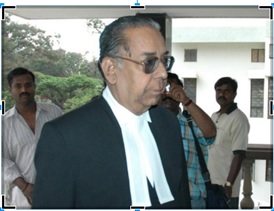
BV Acharya is a veteran. Though 83, BV Acharya can be heard roaring like a lion in Karnataka High Court. A lawyer and an academician, BV Acharya’s name is among one of the most experienced and also among best criminal lawyers in Bengaluru.

BV Acharya served as the Special Public Prosecutor in the infamous disproportionate case against Jayalalitha and Sasikala. A humble man, BV Acharya is a legal eagle in the profession. He is know all across the bar and the bench. Not even in the High Court of Karnataka but his presence is also felt in the High Court Of Tamil Nadu.

Furthermore, Acharya had been the Advocate General Of Karnataka for more than twelve times. Regardless of the party in the power, Acharya held the post with dignity. BV Acharya promotes young talent in the field of law. In conclusion, BV Acharya is among one of the best criminal lawyers in Bengaluru.

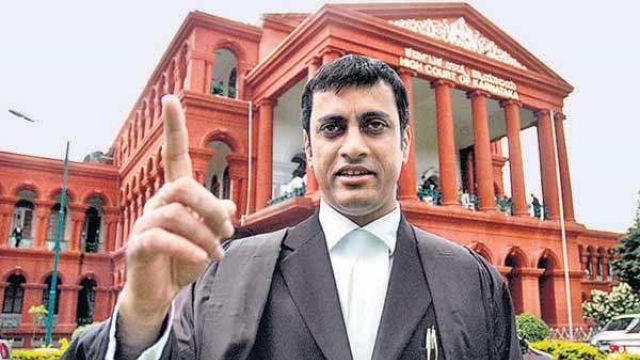
Madhusudan R Naik.

criminal lawyers in Bangalore

Madhusudan R Naik is the current Advocate General of Karnataka. He excels in the field of law with B.A, LLB, PGDEL, degrees. Graduated from Maharaja College, Mysore. Has Law Degree of Mysore University. Studied from Sharada Vilas Law College Mysore and National Law College, Shivamogga. Has Post Graduate Diploma in Environmental Law; from National Law School of India University Bangalore.

After Graduation in Law; he enrolled and started practice in the chamber of Sri N Santosh Hegde. From 1980 he was Partner at Hegde Associates. In 1986 he was Associate in the chamber of Sri Shivashankar Bhat.

From 1986 Madhusudan started Independent practice in the courts. On 10th Nov 2006, he was designated as Senior Advocate by the High Court of Karnataka.

Later, Madhusudan was Nominated to the Karnataka State Wild Life Board and has appeared in a number of PILs, a number of cases pertaining to land Reforms, Service, Local Board, Taxation, Excise and Educational Matters.

He was standing counsel for KSRTC; Konkan Railways Corporation; COMED K. He has appeared for KIADB, BDA, Human Rights Commission, and Karnataka Agriculture Price Commission; and as Special Counsel for State Government in Transport Department Service Matters.

Madhusudan R Naik has appeared in Excise, Forest, service and educational matters before the Hon’ble Supreme Court of India. He was appointed Amicus in cases pertaining to the protection of Elephants.

He was a delegate representing Indian Lawyers/Bar Association of India to China. Has been the office bearer of the Commission of Jurist India chapter.

https://lawsikho.com/course/certificate-criminal-litigation-trial-advocacy
Click Above

Aditya Sondhi

lawyers in Bengaluru

Aditya Sondhi practices in multiple areas and specialises in criminal litigation. Sanjay Sondhi is a senior advocate at the High Court of Karnataka. “In the legal profession, one should always be true and honest to their clients. Aditya believes, work ethics are more important than anything. A lawyer should do more than best for their clients.

Aditya Sondhi knows how to deal with cases and can even argue a criminal case when briefed an hour prior to the arguments. Criminal law is Aditya’s specialisation. Aditya Sondhi is a renowned name when it comes to the best criminal lawyers in Bengaluru. A senior advocate known for his court craft in the legal profession.

Hemanth S

Lawyers in Bengaluru

Hemanth S is one of the most sought for criminal lawyer in Bangalore. With criminal law, Hemanth S also deals with property and matrimonial issues before the High Court of Karnataka. Furthermore, Hemant has provided quality legal support and services to various clients industrial sectors including Outsourcing and offshoring industries.

He has appeared before various Courts and Tribunals for litigation in civil, commercial, criminal issues. Hemanth S advises and provides legal services in matter related to Negotiable Instruments, Offences under Indian Penal Code, Domestic Violence, Dowry Harassment, Defamation, Matters related to fraud, cheating, criminal breach of trust, harassment, torture, offences relating to documents and against property marks, offences affecting public health and safety, financial crimes, corporate crimes, Cyber crime, bail matters, etc.

Rajendra Desai

Rajendra Desai is a well-renowned advocate in Bangalore and practices in High Court as well as trial court too. Alongside dealing with civil matters, Rajendra Desai holds expertise in criminal matters. Furthermore, Rajendra provides best standards of professional ethics and make sure an absolute support and dedication to safeguarding the interests of their clients.

When it comes to criminal litigation, Rajendra holds the reputation of being among one of the best criminal lawyers in Bengaluru. Matters related to Negotiable instruments, Matters related to Dowry Prohibition, Offences under Indian Penal Code, Offences under Domestic violence act, Offences relating to Arms act, Matters relating to bail, Criminal Contempt.

Matters related to Negotiable Instruments Matters related to Dowry prohibition Offences under Indian Penal Code, Offences under Domestic violence act, Offences relating to Arms act, Matters relating to bail Criminal Contempt.

A.S. Ponnanna

lawyers in Bengaluru

Most noteworthy quality in any lawyer are work ethics, satisfaction of client and the maintenance of the principles of Justice according to Law. A.S. Ponnanna is well equipped with all these qualities. A.S. Ponnanna is the current Additional Advocate General of Karnataka. He is well versed with every aspect of the aw.

But when it comes to criminal law, it is hard to find someone like AS Ponnanna. AS Ponnanna is among one of the leading criminal lawyers in Bengaluru.

Kalyan Krishna Bandaru

lawyers in bengaluru

Kalyan Krishna Bandaru is a practicing advocate of High Court of Karnataka. He has wide experience in consultancy and litigation before various courts, tribunals, forums, and other authorities, property matters and particularly expertise in criminal law. Kalyan’s work ethics easily makes him one of the best criminal lawyers in Bengaluru.

Among various matters, Kalyan expertises in matters relating to bail, relating to Anticipatory bail, Criminal Contempt, Defamation – slander – libel Matters related to fraud, cheating, and other criminal cases. Although pre-occupied with his cases, Kalyan never says no to a young lawyer who needs assistance.

Anant Mandgi

Anant Mandgi is a senior advocate in th High Court Of Karnataka. He is among the best known in Bengaluru for his knowledge in criminal law. Anant Mandgi is one of the best criminal lawyers in Bengaluru.

Anant Mandgi deals in almost all types of criminal cases. Offences under Domestic violence Act Offences relating to Arms act, Matters related to Dowry Prohibition, Offences under Indian Penal Code, Matters relating to bail Criminal Contempt, Matters related to Negotiable instruments and more.

KM Nataraj

lawyers in Bengaluru

KM Natraj has been the Aditional Advocate General of India. He is known for his knowledge in criminal law. KM Natraj argues with a charm in his eye and his voice roars like thunder inside the courtroom. KM Natraj is among one of the best criminal lawyers in Bengaluru. He holds an expertise in criminal law.


LawSikho has created a telegram group for exchanging legal knowledge, referrals and various opportunities. You can click on this link and join:  

https://t.me/joinchat/J_0YrBa4IBSHdpuTfQO_sA

Follow us on Instagram and subscribe to our YouTube channel for more amazing legal content 


Reference

http://timesofindia.indiatimes.com/city/bengaluru/Ashok-Harnahalli-Karnatakas-advocate-general/articleshow/6245473.cms

http://www.firstpost.com/politics/sasikala-conviction-meet-bv-acharya-the-giant-slayer-who-took-on-jayalalithaa-and-won-3283740.html

http://www.advgen.kar.nic.in/previous_aags.asp

http://www.daijiworld.com/news/newsDisplay.aspx?newsID=310447

http://advgen.kar.nic.in/about_ag.asp

Suggested Readings.

Top 10 criminal lawyers in Mumbai

Top 10 Criminal lawyers in Delhi

Top 10 Criminal lawyers in India and what makes them stand out


Download Now

Indian Penal Code on fraud and cheating

9
cheating

In this article, Anubhav Pandey deals with Indian Penal Code on fraud and cheating.

Chaar sau bees! In India, this term can be heard in every lane and every corner. The term Chaar Sau Bees represents a legal jargon adapted in its simplest form. What is cheating as per the penal laws of India? What is Fraud as per penal laws of India? Are these bailable or non-bailable offence? What is the difference between fraud and cheating? A well-researched article which finally reveals the mystery between chaar sau bees and Section 420 of Indian Penal Code.

Cheating in India (section 415 of IPC)

Let us try to understand cheating with the help of an example. A sells B a bat. A, intentionally deceives B into believing that the bat belonged to Sachin Tendulkar and thereby induces him to buy it. A committed the crime of cheating.

Ingredients of the offence of cheating

  • The accused must deceive another person
  • The person so deceived should be induced to deliver any property to any person, or
  • The person so deceived should be intentionally induced to do or at times, not to do an activity.

There are two classes of acts which the person deceived may be induced to do. Firstly he may be induced to deliver any property to anyone. Here having a fraudulent intention is a must.  Second is doing of an act which the person would not have done provided he was not cheated. E.g  Buying of the bat.

The essence of cheating is having a fraudulent or dishonest intention.

What is meant by deceiving

  • Deceiving is the backbone of the offence. Deceiving means causing to believe what is false or misleading as to a matter of fact. But all deceptions does not amount to cheating.
  • Deceptions only with fraudulent and dishonest intentions amounts to cheating.

If A sold the bat to B with the honest belief that the bat was of Sachin Tendulkar’s, this will not amount to cheating.

Cheating in a contract

  • A mere breach of contract will not be a cheating. Understanding this through an illustration, A singer promised to perform in a certain concert and asked their organizer to arrange for an orchestra. The organizer made all the required arrangement as per the contract.
  • The singer arrived at the concert place and everything was set to go. At the meantime, singer backed out from singing owing to his personal reasons. The organiser filed a case for cheating against the singer.

The law on this is, a mere breach of contract will not be cheating. For THE OFFENCE, prior dishonest intention is required.

There is a very thin line of difference between cheating and breach of contract. For any sort of cheating, there has to exist a deceiving content right from the beginning of the contract.

Explaining through another illustration, if in a contract, the party failed to pay for an EMI, this will not amount to cheating or fraud at the first instance. For this to be an offence a prior intention to deceive the seller must be present in the mind of the buyer.

Where a person, fraudulently or dishonestly induces a person to deliver any property

  • As it is clear by now, mere dishonest intention or deceit will not be sufficient for cheating. Meeting of these two in order to induce the other person to deliver their property and making them do something which they would not have done otherwise, is cheating.
https://lawsikho.com/course/certificate-criminal-litigation-trial-advocacy
click above
  • Therefore, to constitute fraud at the time of delivery of the property by assuring the seller of the property that he will pay afterward but deceived him by leaving the town amounts to cheating.

When a person deceived the examination authority that he passed in a certain year and obtained his certificates, it was held be cheating.

Breach of promise and cheating

How many times, must a boy have heard this from his girlfriend, You’re a cheater! But does breaking up social promises amounts to cheating? By social promises, we mean social engagement. Like going for a movie or a dinner date. The answer is no. As said earlier, there must be a dishonest intention to deceive the other for some gain. A mere breaking of social promises won’t amount to cheating. So next time before canceling your dinner date do not fear for criminal punishment of cheating.

The person being cheated must suffer damage or harm in body, mind, reputation or property

The damage must be a consequential result of cheating and must not be too remote. The loss suffered because of cheating must not be vague.

Where a person is selling steel coated in gold and it can be reasonably figured out that, the article sold is not gold, will this amount to cheating? Does reasonableness from the side of the buyer is not required? The answer is, this too will amount to cheating. It could be, say, the person might be buying gold for the first time. There was a deceiving act done from the seller’s end to gain wrongfully and he succeeded too. This will amount to cheating.

The answer is, this too will amount to cheating. It could be, say, the person might be buying gold for the first time. There was a deceiving act done from the seller’s end to gain wrongfully and he succeeded too. This will amount to cheating.

Cheating is a criminal act or mere civil wrong

  • The question is worth mooting. A civil wrong is a matter pertaining only between two parties. E.g breach of contract, non-repayment of a loan, etc. Civil wrongs are matters which do not harm the society in any way.
  • Act which has the tendencies to harm the society at large is called a criminal wrong. Cheating is both a civil as well as criminal wrong in the same way as defamation is.
  • When a criminal proceeding is set into motion several disabilities arises, for example, institutions might not accept your admission or difficulty in applying for a passport. Therefore, the court sees to it that cheating is not used as a tool to harass the offender.
  • Court applies its brain and in every case of cheating. If the court thinks that the effect of cheating is more civil in nature it sets civil procedure is set into motion. Although, in few cases such as chit fund cases where large stake of people is involved, a cheating is often dealt criminally.

Puffing: exaggeration by salesmen

  • How many time it is seen that salesmen to increase their sale try to outshine their product. Will it be considered as cheating if the product does not possess these qualities which the salesmen claim of? 
  • Presentation of the glossy respect of the accused cannot in itself be said to be fraudulent or false representation provided it does not appear that there was no semblance of truthfulness in such representation
  • Take an example of a typical Delhi chor bazaar say Sarojini Market. You go to buy a shoe. First the salesperson fixes the price at INR 1500. You start moving to next shop. The Shopkeeper calls you and fixes the price at INR 1200 with no further discount. You insist to buy the product at INR 700. Shopkeeper says the final price is INR 900. Then he remind you of the quality of the product and its reasonable price. Although,  the shopkeeper is inducing or deceiving you to buy the product which might be of worth INR 500 but still court will not consider this trivial matter judicially.

Misrepresentation as to caste

  • Where person belonging to different caste falsely represent himself to be of some other caste to gain something from the deceived person comes under the ambit of cheating.

Where a prostitute convinced a person to establish a sexual relation with her by deceiving a man that she was free from any sort of sexual disease which in reality she was not. This was held to be cheating.

Cheating by personation

  • Where a person deceives his identity for deceiving someone and gaining something out of that deception, this is called cheating by personation.
  • A, introduces himself to be a well-known big banker and thus took a loan from B to invest into his property amounts to cheating by personation.
  • Personating an imaginary person is also cheating. Where a person personates himself to be a physics graduate from Harvard and got him selected into Public service commission board. This was said to be cheating by personation.

False representation at examination

In a case where A sat in the examination in the name of B. Gave the examination also, it was held that this was a case of cheating by personation. In such cases it is the person who is giving the examination who gets into more trouble.

Punishment for cheating

Simple cases: Simple cases are to be punished for a jail term which may extend upto one year which may end with a fine too. Where a person deceived his girlfriend that he will marry her and entered into sexual relationship with her and after she became pregnant left her. This was considered to be covered under this punishment.

Mild cases: The section mostly applies to cases of cheating by guardian, trustee, solicitor, agents, manager of Hindu family etc. The punishment under this section is jail term which may extend for up to three year along with fine.

Punishment for cheating by impersonating: There must be an essence of cheating alongwith personating. The cheating is essential ingredient for the offence. Where a person cheats another by deceiving himself to be someone else, he is guilty under section 416 IPC and punished under section 419 IPC. Punishment under this section is a jail term which may extend to three year jail term along with fine.

Proper section for cheating

This is the real chaar sau bees. Where there is any destruction or alteration in the property because of cheating, this section comes into action. Punishment under this is imprisonment for upto seven year along with fine. Punishment under Section 420 is attracted in case where there is a gross injustice to parties.

Explaining fraud

  • Fraud as a crime is nowhere defined in the Indian Penal Code but we all use this term in general in our day to day life. What is fraud? Is it synonymous to cheating? What are the differences between the two?
  • A fraud is an act of deliberate deception with the design of securing something by taking unfair advantage of another. It is a deception in order to gain by another’s loss.

Whenever the term fraud or defraud appears in the context of criminal law, two things are automatically to be assumed. First is deceit or deceiving someone and second is, injury to someone because of such deceit.

Implications of fraud is found in these following sections of IPC nameley, 421,422,423 and 424.

  • Fraudulent removal or concealment of property to prevent distribution among creditors
  • Fraudulently preventing debt being available for creditors.
  • Fraudulent execution of deed of transfer containing false statement of consideration.
  • Fraudlent removal or concealment of property.

Let is understand fraud in this way.

Fraudulent removal or concealment of property to prevent distribution among creditors. (Section 421 IPC)

This section refers to fraud considered with insolvency. The offence under it consists in a dishonest disposition of property with the intent to cause wrongful loss to the creditor. It will cover benami transactions. Where a shopkeeper keeps goods in his shop bought from a credit taken from another and he does not repay the person from whom he took the loan. This offence will be covered under this section. Punishment under this section is imprisonment up to 2 years with fine. This is a bailable offence.

Fraudulently preventing debt being available for creditors. (Section 422 IPC)

Preventing defrauding of creditors by masking the property. Any proceeding to prevent the attachment and sale of debts due to the accused will fall under this. Therefore, whereby a person has the means of returning his loan but he is not availing such means is fraudulent preventing debt being available for creditors. This is a bailable offence.  Punishment is imprisonment for up to two year with or without fine.

Fraudulent execution of deed of transfer containing false statement of consideration. (Section 423)

This is a variety of fraudulent execution which deals with-

  • False recital as to consideration and
  • False recital as to the name of beneficiary

In legal terminology, “Whoever dishonestly or fraudulently signs,executes or becomes a party to any deed or instrument which purports to transfer or subject to any charge, any property, or any interest therein, and which contains any false statement relating to the consideration for such transfer or charge, or relating to the person or persons for whose use or benefit it is really intended to operate, shall be punished with imprisonment of either description for a term which may extend to two years, or with fine or with both”. Punishment is imprisonment upto 2 years with or without fine and it is a bailable offence.

Fraudulent removal or concealment of property. (Section 424)

For this section there must be a concealment or removal and that too dishonestly or fraudulently. This section provides for cases which do not comes under the ambit of the precious three fraudulent claims. The crucial question for determination under this section is, whether the alleged removal of property is dishonest or fraudulent and therefore, if persons claiming title to property under attachment in executions of a decree on another remove the same, the matter where sch property belonged to the accused or not has to be determined by criminal court before deciding upon conviction. Punishment for this section is imprisonment with or without fine and a bailable offence.

Suggested readings.

List of Bailable & Non-Bailable Offences Under Indian Penal Code

How to Register Cyber Crime Complaint with Cyber Cell of Police – Online Complaint Procedure

LawSikho has created a telegram group for exchanging legal knowledge, referrals and various opportunities. You can click on this link and join:

https://t.me/joinchat/J_0YrBa4IBSHdpuTfQO_sA

Follow us on Instagram and subscribe to our YouTube channel for more amazing legal content. 


Download Now

Regulation of surveillance of Robots, Drones and other surveillance technology in private and government hands

0
surveillance

In this article, Lavanya Verma put forth regulation of Surveillance of Robots, Drones, and other surveillance technology in private and government hands.

Introduction

  • Surveillance refers to the keen observation or the condition of being observed, of a person or groups, especially those under suspicion. With a manifold increase in connectivity and convenience in our daily lives over the past few years, these technologies allow far-reaching potential for surveillance by state and civil actors.
  • India being a developing nation has enforced multiple amends in its IT policies, but still, a lot more changes are awaited. the
  • This article talks about different provisions under different statutes which allow government to conduct surveillance, various governmental bodies conducting surveillance as well as regulating surveillance in civilian sector in India.
  • Contemporarily, National Intelligence Grid, Central Monitoring System, and others are the new government agencies formed for surveillance in email, telephones, cyberspace, personal messages etc. Further, many private sector companies are also inspecting the material on their websites or products, for research or other security purposes.

Indian government departments working for surveillance

Intelligence Agencies

In India, there are at least sixteen different intelligence agencies often organised by executive order. Intelligence agencies are not in the purview of the Right to Information Act or the Parliament and also, despite few agencies being aided from the Consolidated Fund of India, their workings are not subject to audit by the Comptroller and Auditor General. These agencies may be governed by operational manuals or internal guidelines, for example, that of individual agencies but in accordance with the  in the Telegraph Act and the IT Act and the Rules framed under such legislations.

The following are the Indian intelligence agencies:

  1. National Technical Research Organisation
  2. Intelligence Bureau
  3. Electronics and Technical Services (ETS), which is the electronic intelligence (ELINT) arm of R&AW
  4. Research and Analysis Wing (R&AW)
  5. The Aviation Research Centre (ARC) and the Radio Research Centre (RRC), which are a part of the Research and Analysis Wing (R&AW)
  6. Central Economic Intelligence Bureau
  7. Narcotics Control Bureau
  8. Defence Intelligence Agency
  9. Directorate of Revenue Intelligence
  10. Signals Intelligence Directorate
  11. Central Bureau of Health Intelligence  
  12. Joint Cipher Bureau
  13. Directorate of Navy Intelligence
  14. Directorate of Air Intelligence
  15. Directorate of Military Intelligence
  16. Joint Intelligence Committee (JIC)
  17. Directorate of Income Tax (Intelligence and Criminal Investigation)
  18. Directorate General of Income Tax Investigation

National Intelligence Grid (NATGRID)

National Intelligence Grid works for linking information saved on networks and servers of various governmental ministries and departments and ministries for easy accessibility by any department or intelligence agency. This grid only provides a platform for communication between computers and networks of different government departments.

Central Monitoring System

Monitoring of every byte of communication, be it a phone call, text messages, online activities, etc is dealt by the Central Monitoring System. CMS is managed by Intelligence Bureau and was prepared by the Resource Monitoring (TERM), Telecom Enforcement, and by the Center for Development of Telematics (CDoT).  

Twitter and Facebook walls are under government surveillance through the Central Monitoring System.

Crime and Criminal Tracking Network System (CCTNS)

  • Crime and Criminal Tracking Network System is inclined towards collection, storage, analyzing, transferring, sharing of data among several police stations, police organisations and with the State Headquarters.
  • Any police station can get all the information available about any suspect or criminal stored on the servers of other departments or police stations through CCTNS.

NETRA

NETRA (Network Traffic Analysis) is a software network capable of detecting sensitive words like “kill”, “attack”,”blast”,“bomb”, etc. from private and public internet traffic. Designed by India’s Centre for Artificial Intelligence and Robotics (CAIR), a Defence Research and Development Organisation (DRDO) laboratory, it is to be used by the Research and Analysis Wing (RAW), the Intelligence Bureau, India’s domestic and also external intelligence agencies.

Unique Identification Authority of India (UID Scheme)

Every Indian citizen is given a special unique identity along with basic information of the person and his figure print under the Unique identification authority. UID scheme comes under the AADHAAR Scheme of government of India, and issuing process is  still going on.

Indian Computer Emergency Response Team (CERT-In)

CERT has been formed under the norms of Information Technology Amendment Act, 2008. Operational since January 2004, CERT is a nodal government agency in response of any computer security occurrence. It is a government response team which deals with all the cyber security issues across India.

New Media Wing

A New Media Wing (NMW) was established in 2013, under the Ministry of Information and Broadcasting to publicize Government initiatives online and monitor social media to track public opinion.  

National Counterterrorism Center (NCTC)

After the 26/11 Mumbai attacks, NCTC was proposed to combat terrorism and cover-up flaws of other Indian intelligence agencies. NCTC will be a wing of Intelligence Bureau and derive its powers from Unlawful Activities Prevention Act, 1967.

Drone Surveillance

Drones represent a significant development in robotic technology, the private use of which has boosted recently. Drones are aerial vehicles, which can fly without a human operator. Other terminologies referred to describe drones are – Unmanned Aerial Vehicles (“UAVs”), Unmanned Aerial Systems/ Unmanned Aircraft Systems (“UAS”) and Model Aircrafts.

Regulations in India

Initially, till october 2014,  there were no regulations on use of drones, hence their use was banned . This was followed by the Director General of Civil aviation (“DGCA”) issuing a public notice, imposing a blanket ban on the use of civil drones for national security, until further guidelines. Eventually, the DGCA acknowledged drones potential for multiple civil applications. In April, 2016 the DGCA released draft guidelines on possible future drone regulations in India.

The Department of Industry Policy and Promotion (“DIPP”), Ministry of Commerce and Industry in the Press Note No. 3 (2014 series) released a list of electronic aerospace and defence equipment. The Indian Customs Declaration Form has also been revised to add drones in the list of prohibited & dutiable goods requiring travellers entering India to declare and pay duty. Also, while there continues to be restrictions on drone manufacturing/ production and flying, there is no explicit ban on their sale.

Surveillance companies

India provides various security technology expos which include, Convergence Secutech India, Secure Cities, Ground Zero, IFSEC India, International Police Expo, Defexpo, and the India International Security Expo.

These technologies include perimeter protection, Access Control Systems, information security devices, burglar alarm system, debugging and audio-visual surveillance devices, surveillance devices, aviation security, explosive detection and disposal equipment, NBCW protection equipment and disaster management, equipment for forensic science, equipment for bank and hospital security, and more. Many of the world’s largest surveillance companies like Utimaco, Verint systems and ZTE also have their offices in India. FinFishercommand and control servers of intrusion malware is also in India.

The CIS data shows that the intelligence and securities government agencies, law enforcement agencies, internet service providers, military, telecom service providers, corporations and civilians are consumers for the security solution technologies like CCTV cameras and unmanned aerial vehicles (UAV). Legal technological surveillance standards and regulations must be adhered by these companies. Those include rules proposed by

  1. Communications Assistance for Law Enforcement Act (CALEA),
  2. European Telecommunications Standards Institute (ETSI), and
  3. Alliance for Telecommunications Industry Solutions (ATIS).

Also, standards such as

  1. STQC Certification
  2. ISO 9001: 2008
  3. BS 7799
  4. ISO 27001: 2005
  5. INCITS 379

Yet, less than half of the companies in mentioned in study have publically available certification information. Also, less than half of these have privacy policies available on their websites. While the rest of the companies have not clearly defined how they handle their collected data.

Regulations for surveillance technology

IT sector  surveillance in India is governed indirectly by acts and rules passed by the legislature due to lack of specific laws regulating the working of governmental bodies and their powers keeping in mind freedom of speech and protection of individual privacy.

Information Technology Amendment Act, 2008

Section 69 IT Amendment Act, 2008 empowers the government to monitor, intercept, or decrypt any information stored on any computer/network resources for ensuring public order, safety, etc.

Indian Telegraph Act, 1885

The Indian Telegraph Act, 1885 empowers the central or the state government to intercept messages against public safety. Indian legal framework has inefficient provisions about electronic surveillance.

Code of Criminal Procedure, 1973

  • Under Section 91 of the CrPC 1973 intercepts targeted access to stored content by the law enforcement agencies in India. Section 92 of the Code empowers District Magistrates and Courts to issue directions necessitating documents, parcel or “things” from any postal/ telegraph authority to be produced if needed in court proceedings.  
  • There is little judicial clarity on the subject but it has been argued that it is possible to interpret the provisions in a way that even private ISPs can be considered as postal or telegraph authorities and thus become subject to interception under this section.
  • The level of protection granted to postal or telegraph authorities under section 92 is higher than that provided to ordinary citizens under section 91 since even a police officer in charge of a police station can ask for items to be produced whereas under section 92 it has to be either the District Magistrate or a specified Court.

Right to Privacy bill, 2011

Under this bill, an attempt has been made to define “privacy”, circumstances and power to conduct surveillance and the penalties to be levied on misuse of information by way of interception.

The surveillance can only be granted by permission of Home Secretary, Ministry of Home Affairs, Government of India.

Information Technology (Procedure and Safeguard for interception, monitoring and decryption of information) Rules, 2009

The central government on October 27, 2009, has passed Information Technology (Procedure and Safeguard for interception, monitoring and decryption of information) Rules, 2009 in which it laid down that no person shall monitor, intercept, or decrypt any information available on any computer except an order from Home Secretary or Joint Secretary, Ministry of Home Affairs has been obtained. Under Rule 4 the central government has power to delegate such authority to monitor or decrypt any information on any computer resource to any agency.

Information Technology (Procedures and Safeguards for blocking for access of Information by Public) Rules, 2009

Information Technology (Procedures and Safeguards for blocking for access of Information by Public) Rules, 2009 has been passed by parliament in to block access of any information on any computer resource by public. The government has power to block any information whether generated, transmitted, stored or received or hosted by any computer resource for any reasons described in section 69A of IT Act, 2000 i.e. security of the state, sovereignty and integrity of India, friendly relation with foreign state, defense of India,  etc.

Indian Wireless Telegraphy Act, 1933

Under section 3 of the Indian Wireless Telegraphy Act, 1933, the possession of wireless telegraphy apparatus without a license is considered an offense.

Central Motor Vehicles Act 1898 and 2012 Rules  

Rule 138A of the Central Motor Vehicle Rules, 1989 concerning radio frequency identification tags, was proposed. This Rule mandates the installation of radio frequency identification (“RFID”) on all light and heavy motor vehicles to trace their instant identification and monitoring by electronic collection toll booths, the police and any other authority or person that is able to query and read RFID tags.

Conclusion

  • India’s surveillance policies for Robots, Drones and other technologies are not sufficient to tackle future threats and there is an immediate need for amends in the existing legal framework and introduction of strong and effective policies to protect IT industry along with protection of privacy of individuals in the country.
  • Indian legislature must pass acts and rules relating to the functioning of agencies, powers and authorities under whom surveillance is to be done, protection or destruction of such information gathered during surveillance and how far the privacy of individuals is secured.
  • There is a probability of an increase in cyber crimes and cyber terrorism. Although as per the rules, the government all the power to monitor, intercept, block or decrypt any information on any computer resource and also to delegate its powers to agency or any person but the functioning of these agency and persons employed in these agencies have not been made in the rules and also the provisions as to penalties for misuse of such information by any governmental body or person has not been given.

Suggested Reading.

Legality of drones in India


Download Now

Duration of life imprisonment in India

1
life imprisonment
Image Source - http://www.thedailystar.net/law-our-rights/life-imprisonment-verdict-contextual-reading-1405858

In this article, Anubhav Pandey discusses the duration of life imprisonment in India.

Duration of life imprisonment in India

  • What is the duration of life imprisonment in India? For how long is the person put behind bars who is accused of a crime for which life imprisonment is the punishment? There is a misconception that a prisoner serving life sentence has an indefeasible right to be released upon completion of either 14 years or 20 years’ imprisonment.
  • A convict undergoing life imprisonment is expected to remain in custody until the end of his life, subject to any remission granted by the appropriate Government under section 432 of the Code, which in turn is subject to the procedural checks mentioned in the said provision and to further substantive check in section 433-A of the Code.

Life imprisonment in India

  • Life imprisonment means the entirety of the life unless it is curtailed by remissions validly granted under the Code of Criminal Procedure by the Appropriate Government or under Articles 72 and 161 of the Constitution by the Executive Head viz., the President or the Governor of the State, respectively.

But, the executive has the power to commute, remit or pardon the sentence according to the power vested in them by statute namely Code of Criminal Procedure, and the Indian Constitution.

  • Life imprisonment where death has been commuted to life sentence has to be served for the entire life of the convicted but subject to remission; a minimum of 14 years must be spent in imprisonment. Various precedents have been set regarding this substantial point of law. Life imprisonment when death sentence has been commuted to sentence of life, in its literal meaning is equivalent to imprisonment till life ends but under various statutes its literal meaning is defeated.                             
  • Life imprisonment when death sentence has been commuted to sentence of life, in its literal meaning is equivalent to imprisonment till life ends but under various statutes its literal meaning is defeated.                             

Judicial precedent on duration of life imprisonment

  1. In Union of India v Shriharan, the apex court held that, “For instance, when we refer to the punishment provided for the offence under section 376A or 376D while prescribing life imprisonment as the maximum punishment that can be imposed, it is specifically stipulated that such life imprisonment would mean for the remainder of that period “. T
  2. he Hon’ble SC in Gopal Vinayak Godse v. The State of Maharashtra held that “A sentence of transportation for life or imprisonment for life must prima facie be treated as transportation or imprisonment for the whole of the remaining period of the convicted person’s natural life”.
  3. The constitution bench of the apex court in Maru Ram v. Union of India held that “We follow Godse’s case to hold that imprisonment for life lasts until the last breath, and whatever the length of remissions earned, the prisoner can claim release only if the remaining sentence is remitted by Government.”
  • It is quite apparent the affirmed legal positions that the life imprisonment only means the entirety of the life unless it is curtailed by remissions validly granted under the Code of Criminal Procedure by the Appropriate Government or under Articles 72 and 161 of the Constitution by the Executive Head viz., the President or the Governor of the State, respectively.
  • In the IPC, the provisions for our purpose are, sections 17, 45, 46, 53, 54, 55, 55A. When we come to the provisions CrPc, we may refer to sections 2(y), 432, 433, 433A, 434 and 435.
https://lawsikho.com/course/certificate-criminal-litigation-trial-advocacy
click above
  • Imprisonment for life in terms of section 53 read with section 45 of the Penal Code only means imprisonment for rest of the life of the prisoner subject, however, to the right to claim remission, etc. as provided under Articles 72 and 161 of the Constitution to be exercisable by the President and the Governor of the State and also as provided under section 432 of the Code of Criminal Procedure.

4. Murali Manohar Mishra v. State of Karnataka, the apex court dealt with the question of special category of sentence to be considered in substitute of Death Penalty by imposing a life sentence i.e., the entirety of the life or a term of imprisonment which can be less than full life term but more than 14 years and put that category beyond application of remission which has been propounded. 

  • On the plain reading of sections 433(a) with 433A of Code of Criminal Procedure, it is clear that the appropriate government may, without the consent of the person sentenced, commute a sentence of death, for any other punishment provided by the IPC.
  • But where a sentence of death imposed on a person has been commuted under S 433 into one of imprisonment for life, such person shall not be released from prison unless he had served at least fourteen years of imprisonment.

5. Also, as rightly observed by the Hon’ble Court in Sangeet v. State of Haryana, there is a misconception that a prisoner serving life sentence has an indefeasible right to release on completion of either 14 years or 20 years’ imprisonment. A convict undergoing life imprisonment is expected to remain in custody until the end of his life, subject to any remission granted by the appropriate Government under section 432 of the Code, which in turn is subject to the procedural checks mentioned in the said provision and to further substantive check in section 433-A of the Code.”

6. In State of M.P. v. Ratan Singh, Supreme Court held that a sentence of imprisonment for life does not automatically expire at the end of 20 years, including the remissions. “A sentence of imprisonment for life means a sentence for the entire life of the prisoner unless the Appropriate Government chooses to exercise its discretion to remit either the whole or a part of the sentence under section 401 of the Code of Criminal Procedure”.

Power of President to grant pardon or commute the sentence

  • In common parlance, to pardon means to forgive a person for his offense. The term ‘pardon’ has been defined as, an act of grace, proceeding from the power entrusted with the execution of the law, which exempts the individual on whom it is bestowed upon, from the punishment the law inflicts for a crime he has committed.
  • It affects both the punishment prescribed for the offence and the guilt of the offender. In other words, grant of pardon wipes off the guilt of accused and brings him to the original position of innocence as if he had never committed the offence for which he was charged. Under Indian law, the President of India and the Governors of States have been given the power to grant pardons, reprieves, respites or remissions of punishment or to suspend, remit or commute the sentence.

The law governing grant of pardon is contained in Articles 72 and 161 of the Constitution.  

  • Pardon may substantially help in saving an innocent person from being punished due to the miscarriage of justice or in cases of doubtful conviction.
  • The hope of being pardoned itself serves as an incentive for the convict to behave himself in the prison institution and thus, helps considerably in solving the issue of prison discipline.
  • It is always preferable to grant liberty to a guilty offender rather than sentencing an innocent person. The object of pardoning power is to correct possible judicial errors, for no human system of judicial administration can be free from imperfections.

Power of the government to reduce the duration of life imprisonment in India

  • When any person has been sentenced to punishment for an offense, the appropriate Government may, at any time, without conditions or upon any conditions which the person sentenced accepts, suspend the execution of his sentence or remit the whole or any part of the punishment to which he has been sentenced.
  • Whenever an application is made to the appropriate Government for the suspension or remission of a sentence, the appropriate Government may require the presiding Judge of the Court before or by which the conviction was had or confirmed, to state his opinion as to whether the application should be granted or refused, together with his reasons for such opinion and also to forward with the statement of such opinion a certified copy of the record of the trial or of such record thereof as exists.
  • If any condition on which a sentence has been suspended or remitted is, in the opinion of the appropriate Government, not fulfilled, the appropriate Government may cancel the suspension or remission, and thereupon the person in whose favour the sentence has been suspended or remitted, may, if at large, be arrested by any police officer, without warrant and remanded to undergo the unexpired portion of the sentence.
  • The condition on which a sentence is suspended or remitted under Section 432 may be one to be fulfilled by the person in whose favour the sentence is suspended or remitted or one independent of his will.

Suggested readings.

List of Bailable & Non-Bailable Offences Under Indian Penal Code

Capital punishment in India – An Overview

 
LawSikho has created a telegram group for exchanging legal knowledge, referrals and various opportunities. You can click on this link and join:  
 
https://t.me/joinchat/J_0YrBa4IBSHdpuTfQO_sA

 
Follow us on Instagram and subscribe to our YouTube channel for more amazing legal content.

 
Download Now

Important judicial pronouncements on Multi-Level-Marketing

1
Multi-Level-Marketing

In this article, Anubhav Pandey talks about important judicial pronouncement on Multi-Level-Marketing in India.

Manufacturer, then wholesaler, and finally retailer, this is what normally is seen in any traditional business model. Multi-Level-Marketing is somewhat different. In this article, we will take a look at what “Multi-Level-Marketing” is and also top ten important judicial pronouncements on Multi-Level-Marketing by our Hon’ble courts.

Multi-Level-Marketing

  • In MLM (Multi-Level-Marketing), the sale is networked from individual to individual. This system already existed in India and many other companies are doing the same business of individual networking system. E.g. Amway, Oriflame, Modicare, etc.
  • There is no place for intermediates in MLM business model. A consumer purchases the goods directly from the distributors out of his own will. Furthermore, the consumer may become a distributor or remain as a consumer himself.
  • Also, the distributors get a commission for the sale he is undertaking. Such independent distributor has the power not only to sell the products of the company but also appoint other distributors under him. Finally, all of them can sell the company products and earn the value points or commission through the sale.
  • At times in MLM business model, the products are also sold under direct sale marketing including, door to door sales and by exhibiting the products and also by institutional sale.
  • The principle underlying this system is instead of having the wholesale dealer or retailer, the network marketing system enables the consumer himself to be the distributor to venture upon the marketing of the products.
  • Finally, the profit is shared reasonably by the company to the distributors on the sale of every product and the distributors also become consumers of the products.

Let us look at the judgments and the point of laws which coincides with Multi-Level- Marketing business model.

Amway India Enterprises v. Union of India, 2007 SCC OnLine AP 494

The case in hand deals with, whether “Multi-Level-Marketing” comes under the ambit of “money circulation scheme,” under section 2(c) of the Prize Chits and Money Circulation Schemes (Banning) Act 1978 or not.

Section 2(c) of the Act read down the definition of money circulation scheme as, “money circulation scheme” means any scheme, by whatever name called, for the making of quick or easy money, or for the receipt of any money or valuable thing as the consideration for a promise to pay money, on any event or contingency relative or applicable to the enrolment of members into the scheme, whether or not such money or thing is derived from the entrance money of the members of such scheme or periodical subscriptions.

In Swapan Kumar Guha, the Supreme Court made an in-depth analysis of Section 2(c) of the Act. A.N. Sen, J. who rendered the leading judgment interpreted and analyzed the said provision as under:

  1. There must be a scheme;
  2. There must be members of the scheme;
  3. The scheme must be for the making of quick or easy money on any event or contingency relative or applicable to the enrollment of members into the scheme or there must be a scheme for the receipt of any money or valuable thing as the consideration for a promise to pay money on any event or contingency relative or applicable to the enrollment of members into the scheme;
  4. The event of contingency relative or applicable to the enrollment of members into the scheme will however not be in any way affected by the fact whether or not such money or thing is derived from the entrance money of the members of such scheme or periodical subscription.”

Paragraph 30 of the Amway’s judgment clearly lays down the proposition that, “it is proved that the scheme provides for easy/quick money to its distributors.” Furthermore, each member on his enrollment pays INR 4,400. Payment of INR 4,400 by a member on his enrollment and his future earnings through marketing/enrolling other members constitutes event or contingency relative to his enrollment. The distributor gets all this money as a consideration for promise made by the sponsor at the time of his enrollment.

Thus as far as the member joining the scheme is concerned, both the ingredients of Section 2(c) of the Act, i.e., (a) making of quick or easy money, and (b) the chance or opportunity of making quick or easy money depending on an event or contingency relative or applicable to the enrollment of members into the scheme are satisfied.

Concluding on the point of section 2(c) of the Act, the judgment in Paragraph 36 says, “from the whole analysis of the scheme and the way in which it is structured it is quite apparent that once a person gets into this scheme he will find it difficult to come out of the web and it becomes a vicious circle for him.” …”We are, therefore, of the considered view that the scheme run by the petitioners squarely attracts the definition of “Money Circulation Scheme” as provided in Section 2(c) of the Act.”

State of Bengal v. Swapan Kr. Guha, Sanchita Investments

In State of Bengal v. Swapan Kr. Guha, Sanchita Investments, a registered partnership firm with a share capital of INR 7,000/- started its business in finance and investments. On a report given by the Commercial Tax Officer concerned, FIR was registered with the allegations that the firm had been offering 48 per cent interest which was later reduced to 36 per cent and that, therefore, it was involved in money circulation scheme for making of quick or easy money. The firm and its partners filed two writ petitions in the Calcutta High Court under Article 226 of the Constitution of India for quashing the FIR. The High Court allowed the writ petition and quashed the FIR, and the State of West Bengal filed appeal by Special Leave in the Supreme Court.

In this case, the Supreme Court made an in-depth analysis of Section 2(c) of the Act and interpreted that any and every activity for the making of quick or easy money by itself would not fall within Clause (c) of Section 2 of the Act and that making of such quick or easy money must depend upon any event or contingency relative or applicable to the enrolment of members into the scheme.

Having so analysed the definition of “money circulation scheme”, the Supreme Court applied the said definition to the allegations made in the FIR and negatived the contention that the scheme attracted the provisions of Section 2(c) of the Act.

M/S Apple FMCG Marketing Pvt. Ltd. v. Union of India

In M/S Apple FMCG Marketing Pvt. Ltd. v. Union of India, the petitioner prayed for a writ of declaration that selling products through the Network Marketing System is legal and not in contravention of the provisions of the Prize Chits and Money Circulation Schemes (Banning) Act, 1978 or any other law.

M/s Apple FMCG Marketing Private Limited was a company registered under the Companies Act, 1956. It marketed various products including shampoo, tea, coffee powder, after-shave lotion, etc. under the brand-name ‘Joy Eternal’ through “network marketing.” The marketing process was carried out directly by recruiting distributors of the products and services. There was no service fee for registration as distributor. Any person who was interested was given a product for the price fixed. The distributors were encouraged to enroll more distributors. The commissions were given only as per the volume of sales made by the individual distributor and his team.

The Court clarified that the scheme creates chain of customers and only when the chain progresses without any break in any of the links, the ‘principal distributor’ gets more commission. If for any reason, the chain is broken, at any stage, then the principal distributor’s commission would get reduced proportionally to that extent. Therefore, it is not correct to say that there is no chain of customers in the process. The contention that no service charge was collected appeared to be incorrect in view of the fact that every person who purchases a kit has to pay a service charge of INR 50 for each kit. From the very fact that 65 per cent is earmarked for paying as commission to the distributors, it is clear that the value of the product is only 35 per cent of the sale price. That is when the goods are sold at R550/, the actual value of the goods that are sold is only INR 188.

It further opined that the progress of the chain of customers, at some point in time, will get saturated and the distributor, who purchases the goods, will not find any purchaser/sub-distributor to sell or enroll afresh. At that time, due to the progress of the chain, in the manner stated above, such persons will not find new members may be in lakhs or even millions. Therefore, lakhs or even millions of people are bound to lose their entire money The Court concluded that the so-called Multi-Level-Marketing, though called by a very attractive name, squarely falls within the definition of ‘Money Circulation Scheme’ under the Act. Hence, it is prohibited by the Act. It directed the law enforcing authorities to take appropriate action.

Kuriachan Chacko v. State of Kerala, (2008) 8 SCC 708

M/s LIS, Ernakulam, a partnership firm engaged in the business of sale of lotteries and magazines after collecting advance money. They floated a scheme known as “LIS Deepasthambham Scheme.” The Scheme was simple in its conception. A person has to pay Rs 625 and purchase one unit of lotteries from the promoters. The promoters will make use of Rs 350 to purchase 35 lottery tickets of the Kerala State Government, each of Rs 10 for the unit-holder for the next 35 weeks. The unit-holder will be returned (paid) not only Rs 625 which he had initially invested but twice his investment i.e. Rs 1250 (less Rs 100 as service charges for the promoters and legal deduction for tax, etc.) on an early date.

The Supreme Court in paragraph 34 held that “in the instant case, both the essentials of Section 2(c) are present. The Scheme provides for (i) making of quick or easy money, and (ii) it is dependent upon an event or contingency relative or applicable to the enrolment of members into the Scheme.”

Cheating and Multi-Level-Marketing

In paragraph 44 of the judgment, the court held that, So far as the offence punishable under Section 420 read with Section 34 IPC is concerned, it is true that for application of penal provision of Section 420 IPC, there must be “cheating” as defined in Section 415 IPC. The said section reads thus:

“415. Cheating.—Whoever, by deceiving any person, fraudulently or dishonestly induces the person so deceived to deliver any property to any person, or to consent that any person shall retain any property, or intentionally induces the person so deceived to do or omit to do anything which he would not do or omit if he were not so deceived, and which act or omission causes or is likely to cause damage or harm to that person in body, mind, reputation or property, is said to ‘cheat’.”

The court on this proposition held that, an element of cheating inasmuch as a representation was made by the accused that every unit-holder will get double the amount invested by him; the representation was false, the maker of the representation was aware that the representation was not true and by such representation, he deceived the victim to believe the representation to be true and actuated him to act on such representation. The promoters induced common public to part with money on the lure of doubling the amount.

Multi-level-marketing schemes. can police arrest corporate heads without the actual commisiion of an offence of cheating or money circulation scheme?

Gold Quest Private International Limited V. State of Tamil Nadu and Others

The brief facts of the case are that the appellant is an international numismatic company which has operations in over sixty countries. The Multi-Level-Marketing through direct selling of products is being adopted by the Company in the interest of the consumers by eliminating the middleman and rewarding the consumer by reducing the prices. The appellant Company has over sixteen thousand members/consumers in and around the city of Chennai alone. Complaints were made on the basis of which case was registered under Section 420 of the Penal Code, 1860 read with Sections 4, 5 and 6 of the Prize Chits and Money Circulation Schemes (Banning) Act, 1978. The appellant Company (Gold quest Private International Limited) filed a writ petition being WP No. 26784 of 2003 before the High Court of Judicature of Madras praying therein that the FIR registered against it be quashed.

The question that falls for determination in the instant case is about the ambit of the inherent powers of the High Courts under Section 482 of the Code of Criminal Procedure (the Code) read with Articles 226 and 227 of the Constitution of India to quash criminal proceedings.

The court held in Paragraph 8 that, “in the disputes which are substantially matrimonial in nature, or the civil property disputes with criminal facets, if the parties have entered into settlement, and it has become clear that there are no chances of conviction, there is no illegality in quashing the proceedings under Section 482 CrPC read with Article 226 of the Constitution. However, the same would not apply where the nature of offence is very serious like rape, murder, robbery, dacoity, cases under the Prevention of Corruption Act, cases under the Narcotic Drugs and Psychotropic Substances Act and other similar kind of offences in which punishment of life imprisonment or death can be awarded.”

After considering the facts and circumstances of the present case, we are of the view that the learned Single Judge did not commit any error of law in quashing the FIR after not only the complainant and the appellant settled their money dispute but also the other alleged sufferers entered into an agreement with the appellant, and as such, they too settled their claims.

Speak Asia Private Limited V. The State Of A.P

The business of the company is told as an online survey. The joining fee of the company is Rs.11,000/-. One must get enrolled into the scheme to join others in the scheme for commissions. Huge income is promised by the company within a short span of time. The scheme of the company is Binary scheme. Binary scheme means one person has to enroll two persons and again these two persons have to enroll two persons each and again these four persons have to enroll two persons each and this chain continues endlessly. As the network and chain of members get extended, the upline members will get more commissions.

The promoters of the scheme very well knew that it is certain that the scheme was impracticable and unworkable making tall promises and for the benefit of very few who have joined the scheme at the initial stage. If each person keep on enrolling two persons, at the 15th or 18th  level all the Indian population and at the 24th level all the World population will become the members of the company and there would be no member left to join/enroll into the scheme of new members by the already existing members. This will result in heavy loss of money of the enrolled members. The scheme will collapse under its own weight.

Again, an appleal was filed by the Speak Asia Company for quashing the FIR registered by the police on cognizance.

The court in subsequent paragraphs held that, the contention raised by the learned Senior Counsel is that First Information Report can be registered only for commission of an offence. It is true that First Information Report is to be registered on commission of an offence, more particularly, for a cognizable offence. Once a cognizable offence is committed, First Information Report can be registered. But at the same time, some of the provisions in the law enable the Investigating Agency to register First Information Report for mere preparation alone, for example, Sections 120-B, 399 of IPC and 7(1)(a) of the Criminal Law Amendment Act.

Also, In the present case, the offences alleged are under Sections 420 of I.P.C. and 4, 5 and 6  r/w  2(c) and 3 of the Act (Prize Chits and Money Circulation Schemes (Banning) Act 1978). The said provisions of section 2(c) and section 3, on a mere reading, indicate that there is no need of any loss or misappropriation of funds to attract an offence. Mere informing a scheme, which covered under the money circulation scheme and enrolling members as subscribers, itself is an offence. It is not necessary to further elaborate on the same, since the Sections are unambiguous and clearly indicate the acts which attract an offence.

Finally the court held, this Court is not inclined to quash the First Information Report No.30 of 2011 on the file of the Station House Officer, C.B.C.I.D., Hyderabad, and the interim stay granted by this Court on 13.07.2011 is liable to be vacated.

This was all about the important judicial decisions on Multi-Level-Marketing in India. What do you think about Multi-Level-Marketing? Does Multi-Level_marketing sound interesting to you? Feel free to share with us your views on Multi-Level-marketing.

Suggested readings.

All You Need To Know About Direct Selling Laws In India

Multi-level Marketing in India


Download Now

Important clauses in a SaaS agreement

3

Software as a Service (‘SaaS’) is kind of a software and a delivery model which is licensed on a subscription basis. In SaaS, a third party provider hosts application and makes them available for the customers over the internet. Let us understand SaaS agreement as explained by Anubhav Pandey.

SaaS lessens the burden of the organizations and simplifies the task by installing and running application of the organizations in their explicit data centers. Thereby eliminating the expenses on maintenance, licensing, installation, etc.

How to draft the Software as a Service (SaaS) clauses. Few precautions

It is important to define precisely the services which you are providing. How the services are to be accessed, technical requirements which the user must meet, etc. 

Defining the scope of the service

Including a detailed and accurate description of the services is important. As these are the services, you are or will be agreeing to provide to users and will form part of your obligations under the agreement.

Requirement to access the software

The manner in which the customers will be able to access the software must be included in the agreement in detail. The following points should be covered in detail in the SaaS agreement.

  • The nature of the subscription. Will it be free or paid?
  • Do the customers have to apply for using the software?
  • Will it be mandatory for the customers to create an online account or profile?
  • What should be the hardware or the software requirements for running the software?

Now let us take a look at some clauses which every SaaS agreement must have.

Definition clause

Definition clause is the opening clause and is one of the most important section as it defines the scope of the terms used in the agreement. Whenever there is a conflict, the court takes into notice the terms defined in the definition. Therefore, the definition clause must be carefully defined in the SaaS agreement.

Few definitions which every SaaS contract must have are, “Intellectual Property Rights, SaaS, License term, Software.”

Delivery clause

This clause specifies the mode in which the software will be delivered from the licensor to the licensee. Mode of delivery includes any enhancements, upgrades or updates through  Microsite, CRM, and mobile application.

Term and Termination clause

The term from which the SaaS agreement will commence and the time, mode of termination as well. This can be better understood by using examples. Hence, a software company providing sufficient software support to another company might include the following in their, “Term and termination clause.”

  • The Licensor may terminate the Agreement without cause with a written notice of thirty days.
  • The Licensee shall not be entitled to a refund of any payment made to the Licensor if this Agreement is terminated by the Licensee for any reason.

License

The license clause contains provisions of, “grant of a license, scope of license, maintenance and support, updates, obligation of Licensee and more.”

Grant of license, it states that the licensor grants Licensee a non-exclusive, non-transferable, revocable license. It is the licensee who shall be liable for the misuse of the software in any manner whatsoever.  The scope of licensethe manner in which the registration of the software is to be done by the licensee. Also, how will the licensee access the software. Maintenance and support,  Licensor shall provide maintenance and support for the Service from time to time. Update/Upgrades, the customers shall be eligible to get hold of the updates or upgrades from time to time.

Clause on the obligation of the licensee

  • The licensee is responsible for all activities that occur under Licensee’s usernames and passwords. The licensee shall be responsible for ensuring the security and confidentiality of such usernames and passwords if any.
  • Licensee shall report to Licensor immediately and stop immediately any copying or distribution of the Service that is known or suspected by Licensee
  • Licensee undertakes to prevent unauthorized access to, or use of, the Service and shall notify Licensor immediately of any such unauthorized use or other known breaches of security.
  • Licensee shall be solely responsible for providing all relevant data required for the proper operation of the Service. Licensee shall be solely responsibility for the accuracy, quality, integrity, reliability, appropriateness, and intellectual property ownership or right to use such data.

Payment clause

The clause specifically mentions the consideration of the service provided by the licensor. The amount which is to be paid, the mode in which the amount is to be paid, when the payment is to be made, and other terms and conditions as required in the payment mode.

Payment clause also addresses the taxation on the SaaS software and the duty of the licensee regarding payment of the taxes. Also, the clause specifies that non-payment of subscription charges might lead to termination.

Confidentiality clause

  • It shall be the duty of the licensee to keep all the information including, the services provided by the software company, documentation, methods, processes, data, and shall not share any of the above information with third-party.
  • The licensee shall not use the Service for any purpose not expressly permitted by this agreement.
  • Disclosing of the services to any person other than the employees of the licensee whose access to service is necessary shall be avoided.

Intellectual Property Rights

  • Protecting your IPRs in the SaaS agreement is important. A SaaS supplier must make provisions for the protection of IP in the agreement. The agreement should grant the customer the license to use the intellectual property subject to certain terms and conditions.
  • One important thing to take into notice is that the clause should explicitly state that the source code remains owned by the supplier.
  • Any and all rights to the Service, its contents, and any Documentation provided therewith, including title, ownership rights and Intellectual Property Rights therein shall remain the sole and exclusive property of the Licensor and/or its suppliers or its licensors.
  • The Licensee shall not use the Intellectual Property Rights of the Licensor without the prior written consent of the Licensor. Contravention of this provision shall be construed as a material breach of this Agreement.

Indemnity clause

The clause states the situation where the licensee has to indemnify the licensor on happening of certain events. These situations can be,

  • misuse of the Service
  • breach of terms of the Agreement
  • breach of applicable laws
  • breach of Licensor’s Privacy Policy.

Limitation of liability

Licensor shall not, in any manner be held liable to the licensee or any third party for special, punitive, incidental, or consequential damages including loss of data, business or profits, arising out of or in connection with this agreement.

Clause of Independent Contractor

The clause acknowledges that the Saas agreement is in no way an employment agreement, agency, partnership or joint venture between the parties. The licensee shall be an independent contractor under this agreement.

Clause of governing laws and jurisdiction

Specify explicitly the law that applies to the SaaS agreement and any disputes arising from it. In international SaaS agreements, make sure that you specify in which language the dispute will be dealt with, and if the agreement is in more than one language, which language prevails if there is a discrepancy between the two versions. The bare reading of the clause might be, “This Agreement shall be governed by and construed under the laws of India. Any dispute arising out of or in relation to this Agreement shall be submitted to the sole jurisdiction of the courts of law at ____”.

Arbitration clause

The arbitration clause is an attempt to settle the future disputes likely to arise in the case of conflict between the licensor and the licensee. The clause specifically sets the seat of arbitration.

The clause on arbitration states, in the event of disputes arising, the parties to the agreement shall try to find an amicable solution by means of arbitration. Where the dispute is not resolved by the means of amicable solution that is arbitration, the parties will be free to approach the appropriate court. The arbitration proceeding shall be governed by the provision of the Arbitration and Conciliation Act, 1996. The language used in the arbitration shall be (as decided by the parties).

Clause of “Force Majeure”

Without limiting the foregoing, under no circumstances shall Licensor be held liable for any damage or loss due to deficiency in performance of the Service resulting directly or indirectly from acts of nature, forces, or causes beyond its reasonable control, including, without limitation, internet failures, computer equipment failures, telecommunication equipment failures, power failures, internet outage, or any other government regulations, floods, storms, electrical failure, civil disturbances, riots.

“Escrow” clause

Escrow clause has been a life savior clause in the situations where the service provider company, i.e, the SaaS supplier became insolvent or is unable to continue to provide the SaaS services. Escrow clause enables a third party an escrow agent to hold a copy of a SaaS supplier’s software code on behalf of the SaaS customer and SaaS supplier.

Return of Data clause

On the completion of the agreement, the customer’s data should be returned. The clause deals with this issue. The manner in which the data will be returned is decided in this clause.

Service level agreement clause

The clause specifies the hosting, support and maintenance services which the SaaS supplier will provide to the customer. SLA specifies the data center, who is operating it, security of the data center, backup, disaster recovery procedures, support hours, support services for dealing with hosting issues.

This was all about clauses in a SaaS agreement. Hope the article served your purpose. Please comment below your views on SaaS agreement. 


Download Now

Service Tax on Education in India

0

Section 66B of Finance Act 1994 plays a vital role in understanding the term Service Tax levy on “Services” other than services enumerated in the Negative List. Section 93 of the Finance Act also confers power to the Central Government to grant exemption from Service Tax for any service, which may not be on the negative list, may be exempted by prior notification in the Official Gazette or special order as the case may be.

SERVICE :
Service is an “activity carried out by a person for another for consideration”.

In the context of educational courses and services the Central Board of Excise and Customs, under Department of Revenue (Ministry of Finance), has explained the meaning of ‘activity for consideration’ as follows-

“The concept of ‘activity for consideration’ involves an element of contractual relationship wherein the person doing an activity does so at the desire of the person for whom the activity is done in exchange for consideration. An activity is done without such a relationship would not be an ‘activity for consideration’ even though such activity may lead to accrual of gains to the person carrying out the activity”

Taxability of service has been specified in section 66B of the Act to be Taxable a service should be – a. Provided or agreed to be provided by a person to another;
b. In the taxable territory and ;
c. Should not be specified in the negative list.
Provided or agreed to be provided by a person to another ,- 1.Services which have only been agreed to be provided but are yet to be provided are taxable.
2. Receipt of advances for services agreed to be provided become taxable before the actual provision of services.
3. Advances that are retained by the service provider in the event of cancellation of contract of service by the service receiver become taxable as this represent consideration for a service that was agreed to be provided .
Taxation- 1. The time when the invoice for the service provided or agreed to be provided ;
2. If invoice is not issued within prescribed time period of completion of provision of service then the ;
3. Date of completion of service ;
4.The date of receipt of payment where payment is received before issuance of invoice or completion of service .

The taxable territory – To which Act applies is whole of India excluding Jammu & Kashmir .
Service should not be specified in the negative list.- To be taxable a service should not be specified in negative list .The negative list of service has been specified in section 66D of the Act.

INFLUENCE OF TAXATION TO EDUCATIONAL SERVICES:
As per Chapter V Finance Act 1994 on the education sector gets effected –
1. Section 66D( l ) of Finance Act, 1994 .(Negative List)
2. Deleted by Finance Bill 2016 and incorporated in Notification No. 25/2012 ST ( known as mega exemption ) with effect from its enactment . Issued by the Government of India through Department of Revenue

The important point to note in this regard is that the Finance Act, 2016 (No. 28 of 2016), by section 149, has omitted Section 66D(l) of Finance Act, 1994, but the definition provided therein has been retained in amendment Notification NO-10/2017-Service Tax.

Therefore the effect remains intact by entry 9 in the Notification 25/2012-ST, which in its updated version provides-
“9. Services provided,-
1. By an educational institution to its student, faculty, and staff;
2. To an educational institution, by way of,-
1. Transportation of student, faculty, and staff;
2. catering, including any mid-day meals scheme sponsored by the Government;
3. security or cleaning or housekeeping services performed in such educational institution;
4. services relating to admission to, or conduct of examination by, such institution

Provided that nothing contained in clause (b) of this entry shall apply to an educational institution other than an institution providing services by way of pre-school education and education up to higher secondary school or equivalent.

The term “educational institution” is defined by amended notification NO-10/20117-Service Tax issued on 08/03/2017, under its paragraph 1(b)(ii). It provides that-
“(ii) for clause (oa), the following shall be substituted with effect from such date on which the Finance Bill, 2016, receives the assent of the President of India, namely: –
“(oa) “educational institution” means an institution providing services by way of:
• pre-school education and education up to higher secondary school or equivalent;
• education as a part of a curriculum for obtaining a qualification recognized by any law for the time being in force;
• education as a part of an approved vocational education course;”

Therefore it can be concluded that any service related to education other than those covered under Mega Exemption and the Negative list will be subject to service tax. But it is worthwhile to note that under Entry 8 of the Mega exemption (Notification No.25/2012-ST) services by way of training or coaching in recreational activities relating to arts, culture or sports are also exempted from service tax.

EDUCATIONAL INSTITUTION :
An educational institution is a place where people from all aspects of age gain various forms of learning ,including preschools ,childcare, primary – elementary schools ,secondary – high schools ,and universities ,they provide a variety of learning environment and learning spaces.

Further the definition can be understood as follows-
1) Pre- school Education- Pre-school is an early childhood development program in which children learn to combine learning with play in a program run by professionally qualified adults. Children are most commonly enrolled in preschool between the ages of three and five.
2) Higher secondary or equivalent – The Higher secondary pass certificate ,also known as HSC ,is a public examination taken by students of intermediate college. The term equivalent denotes that even if an International school providing international certificate is operating in India, it will be included as subject to service tax.
3) Education as a part of curriculum leading to recognized qualification – means various courses offered after the completion of schooling (Class 12th) or HSC, the services are exempted only if certain requirements are fulfilled, i.e.,
• Education has to be imparted as a part of curriculum
• such education should be in regard to obtaining a qualification (say a degree, diploma, certificate, etc.)
• such qualification has to be recognized by any law (Indian law only) for the time being in force.

As the education service to gain the benefit of being in the negative list the above requirements have to be necessarily fulfilled, only then can they can claim any exemption.

The implication of words “law for the time being in force” implies that aforesaid laws as are applicable in India at that point of time. Education services rendering foreign qualifications shall be liable to the payment of Service Tax. It may be noted that in India recognition to and permission to start a new degree or diploma courses is granted by bodies such as University Grants Commission (UGC), All India Council for Technical Education (AICTE), etc.

• Education as part of an approved vocational education course- As per the Notification No.9/2016-ST, issued by the Central Board for Excise and Customs, Cl. (ba), under paragraph 2 of Notification No.25/2012-ST (Mega Exemption), shall provide the definition for ‘approved vocational education course’, which says-
“(ba) “approved vocational education course” means, –

1. a course run by an industrial training institute or an industrial training center affiliated to the National Council for Vocational Training or State Council for Vocational Training offering courses in designated trades notified under the Apprentices Act, 1961 (52 of 1961); or
2. a Modular Employable Skill Course, approved by the National Council of Vocational Training, run by a person registered with the Directorate General of Training, Ministry of Skill Development and Entrepreneurship

It is, therefore, clear that the term ‘Educational institutions’ includes a wide variety of educational courses and services offered at various levels of academics. It is to be interpreted in an abroad sense.

Not many people realize that the tuition fees of your children are also eligible for deduction under Section 80C .Therefore before investing in Section 80C ,calculate your children’s tuition fess amount and invest accordingly

CONCLUSION:
A country’s pride is uplifted by the economic power of that country and the economic power of that country blooms with the intellectual people it consists ,And education plays a pivotal role in that aspect. There should be more emphasis in spreading the awareness of education in proper and affordable way.

It is very much appreciable that school education and recognized degree/ diploma/ certificate courses are excluded from service tax. However tuitions or coaching classes, other than those provided for under Entry 8 of Notification No.25/2012-ST, are chargeable to service tax.

As we can see that central government has been taking steps to omit the negative list from the Finance Act, 1994, and provide for the same in the exemption notification (No.25/2012-ST). Although no reasons have been given by the Ministry of Finance or the Central Board of Excise and Customs, it is easily understandable that any change to a provision in the Finance Act would require an amendment by the Parliament, which in turn is a long procedure. In regard to the notifications like the present exemption notification is open to modification or withdrawn by the government at any time.

Reference-
1. Section 65B(44) of the Finance Act 1994.
2. Taxation of Services: An Education Guide, CBEC, June 20, 2012, Para. 2.3, pg 8.
3. http://taxindiaupdates.in/mega-exemptions-notification/ dated- January 12/17
4. As available on http://www.cbec.gov.in/resources//htdocs-servicetax/st-notifications/st-notifications-2016/st09-2016.pdf, last accessed on 30/06/2016.
5. blog.ipleaders.in

Download Now

Is it possible to get married in secret while keeping the marriage a secret

1
secret marriage

Ever thought of marrying in secret and keeping it a secret as well? Is it even possible as per the Indian matrimonial laws to get married in secret while keeping the marriage a secret? The following article by Anubhav Pandey will answer all your queries on secret marriage.

What does secret marriage means

A secret marriage is kept hidden from family, friends, and society. One of the fundamental reason for celebrating the marriage, printing out invitation cards is to let the society know of the marriage. Furthermore, the reason behind printing and distribution of the invitation card is, it works as a public notice of the marriage.

How to do a secret marriage in court without letting the parents know about the same

  • Marriages under the Special Marriage Act, 1954 is commonly known as court marriage. An Indian male and female, irrespective of their caste, religion or an Indian and a foreigner can solemnize their marriage under the Special Marriage Act, 1954.
  • Also, in court marriage, there is no need of customary rituals as it is required under customary marriages. The parties have to directly apply to the Marriage Registrar for performance and registration of marriage and grant of the marriage certificate.

Conditions relating to solemnization of special marriages

  • There should not be subsisting valid marriage of either of the parties with any other person.
  • The bridegroom should be of twenty-one years, and the bride should be of eighteen years of age.
  • The parties should not be of unsound mind of such a nature as to be unable to give valid consent for the marriage. Also, the parties to the marriage should not be suffering from mental disorder of such a kind or to such an extent as to be unfit for marriage and procreation of children.
  • The parties should not fall within the degree of prohibited relationship.

Procedure of marriage under the Special Marriage Act, 1954

  • A notice of the intended marriage needs to be filed by the parties to the marriage with the Registrar of the district in which at least one of the parties to the marriage has resided for a period of not less than thirty days immediately preceding the date on which such notice is given.
  • A notice inviting objections to the marriage is published/put up by the Registrar of the court where marriage is to be registered.
  • Objections can be raised for a period of thirty days from the date of which notice has been published.
  • Parties to the marriage along with three witnesses must be present on the date of registration or solemnization of the marriage.

These are the checkpoints at which a problem might arise when any couple is intending to keep their marriage a secret.

Hindrance number 1

Section 5 of the Special Marriage Act, 1954 mentions, “Notice of intended marriage.” The section clearly specifies that the parties to the marriage are obliged to give a notice of their marriage in prescribed format to the Marriage Officer of the district. This hindrance might expose the secret marriage.

Hindrance number 2 (Anyone can access the details of the marriage)

Section 6 of the Special Marriage Act, 1954 mentions, “Publication of the notice of the marriage.” Therefore, a true copy of the notice of the marriage will be kept with the Marriage Officer and furthermore, such book shall be open for inspection at all reasonable times, without fee, by any person desirous of inspecting the same. The second hindrance also has the chances to exposes the secret marriage.

Hindrance number 3 (Publication of the notice of marriage)

A notice is published at the local office where the marriage is registered, or in case where the marriage is registered at a different place which is not within the jurisdiction of permanent address of the parties to the marriage, in such cases, the court shall make certain arrangements so that the notice of the marriage of the parties are put up or published in the place where they permanently resides.

Henceforth, if you are thinking of getting married at a place other than your permanent address, the notice of your marriage will be in some way or the other reach to your place of permanent residence.

Hindrance number 4 (The toughest one)

Apart from putting up of a notice at the court’s premises, a general practice is that a notice is sent to the residential addresses of both parties to the marriage through the Station House Officer (S.H.O.) of the police station of concerned jurisdiction for the purpose of verification of address.

No need to inform the parents about the court marriage

The proposition of Special Marriage Act, 1954 and issuance of the notice to the respective residence has been properly dealt in the Delhi High Court judgment delivered by, Justice S. Ravindra Bhat in Pranav Kumar Mishra and Anrs. V. Govt of NCT of Delhi and Anrs. The High Court in paragraph 8 of the judgment held the following.

“It becomes clear on a textual reading of the relevant provisions of the Act that no requirement of posting of the notice to applicants addresses or service through the SHO or visit by him is prescribed in the Act. Absent any legal compulsion – as is the position -for sending notices to residential addresses in case of solemnization of the marriage, in terms of Sections 4 and 5, their dispatch can well amount to the breach of the right to privacy, which every individual is entitled to.”

Customary marriages. Can it be kept a secret

It is of utmost importance to talk about customary marriages and whether these marriages can be kept a secret or not? Let us look at this perspective of secret marriage.

Answering this query, two major proposition will be dealt within this section.

First, whether it is possible to get married under Hindu customary law while keeping it a secret?

Second, Arya Samaj marriage. Is it possible to keep a marriage solemnized under Arya Samaj ritual a secret?

How to do a marriage under the Hindu customary law while maintaining the marriage a secret

To explain as well as to understand the above proposition, it is pertinent to take a note at this juncture the ceremonial intricacies of marriage under the Hindu rituals.

Any Hindu Marriage must either be performed with the shastric ceremonies and rites or in accordance with the customary rites and ceremonies.

The question is, out of various ceremonies performed in a Hindu marriage, which is the most essential ceremony without which the marriage would be rendered void?

The answer to the above question is not simple. The judicial pronouncements do not clearly lay down which of the ceremonies are essential for the valid performance of a Hindu marriage. However, there need not be any doubt about one ceremony, viz., the saptpadi which is absolutely indispensable for the performance of a Hindu marriage by the shastric rites. [Devani v. Chindavaram, AIR 1954 Mad 65]

Further, sub-section 2 of Section 7, Hindu Marriage Act lays down, “Where such rites and ceremonies include the saptpadi … the marriage becomes complete and binding when the seventh step is taken.”

Can Hindu’s get married in a temple or any other place without any witnesses

This is not a settled proposition and various judicial pronouncement, as well as jurist opinion, differs on this proposition. The sole conclusion which can be drawn from the available opinion is, the validity of the marriage is entirely dependent on the customary rituals undergone through. An essential custom in a Hindu marriage is the saptpadi. The validity of a marriage depends on whether saptpadi took place between the bride and the groom or not. Saptpadi is sufficient proof to call it a marriage. What is required is photographs of the ceremony. All the rituals especially the saptpadi must be undergone through for the marriage to be called a valid marriage under the Hindu Marriage Act.

The most noteworthy point is, the marriage should not be a “Filmy Marriage”, that is, it should not be a mockery of the ritual. This will be further dealt in the later section of the article.

How to get married under the Arya Samaj marriage while keeping the marriage a secret

If any couple is intending to keep their marriage a secret, the easy solution available is a marriage under the Arya Samaj rituals.

The ceremony of Arya Samaj marriage is conducted as per the Vedic ritual of Arya Samaj, and its validity is derived from Arya Samaj Marriage Validation Act, 1937 with provisions of Hindu Marriage Act, 1955. 

Who are eligible for an Arya Samaj marriage?

  1. Age of the groom must be 21 and bride 18.
  2. Any person who is Hindu, Buddhist, Jain, Sikh can perform Arya Samaj Marriage.
  3. Anyone who is not Muslims, Christians, Parsis or Jews can also perform Arya Samaj Marriage.
  4. Inter-Caste Marriages and Inter-Religious Marriages can also be performed in an Arya Samaj Marriage provided none of the marrying persons are Muslims, Christians, Parsis or Jews.
  5. If a non-Hindu couple would like to have an Arya Samaj wedding, the Samaj allows them to get converted through a process called Shuddhi. Muslims, Christians, Parsis or Jews, if, out of their free will and consent are ready to convert and embrace Hindu Religion, the Arya Samaj Mandir perform a ritual called shuddhi meaning purification for such conversion, and thereafter, such a convert can perform Arya Samaj Marriage.

The only hindrance in an Arya Samaj marriage is an availability of a witness. Ask any of your friends out to help for the following. Also, marriage certificate under the Arya Samaj marriage is given by the Mandir authority itself. But after the decision of the Hon’ble Supreme Court in 2006, it is important to get your marriage registered with the Registrar of the court.

Repercussions of getting married in secret

The rationale behind the idea of registration of marriage or issuance of public notice while registration of marriage is to curb the crimes or fraud relating to marriage to as much extent it is possible. Hence, various repercussions are attracted where any couple decides to get married in secret.

A difficulty might arise during the admission of the kids in the school

While taking the admission of the kids in the school, nowadays, parents of the kids are often interviewed along with the children. Along with the interview, various documents are required and marriage certificate might be one of them.

Difficulty in getting passport

Getting hold of a passport in a massive task. Procedural formalities, paperwork, and most importantly, passing the police verification step. It is a procedure generality that, verification will be done by the police authority to cross check the details filled by the applicants. Therefore, if you are keeping your marriage a secret, a problem might arise during the verification process of the passport.

Chances of polygamy

In a majority of the cases relating to secret marriage, either the marriage is a polygamous marriage or the marriage is done just to get the sexual pleasure. Hence, these are the repercussions which might arise while a couple is seeking to keep their marriage a secret.

Desertion of wife after the secret marriage. Is the deserted wife eligible for maintenance

The Hon’ble Apex Court in Bodhisattwa Gautam v. Subhra Chakraborty [1996 1 SCC 490] held that Rape after deceiving a woman in the name of marriage is thus not only a crime against the person of a woman (victim), it is a crime against the entire society. It destroys the entire psychology of a woman and pushes her into deep emotional crisis. It is only by her sheer willpower that she rehabilitates herself in the society which, looks down upon her in derision and contempt.

In the following case, a secret marriage took place between a teacher and a student. Later, when the wife became pregnant, the husband deserted her. The Hon’ble court held that the husband is liable to pay a compensation of INR 1000 to the deserted wife.

Filmy marriage. Can ek chutki sindoor and mangal sutra in front of a god solely make any marriage valid?

It is often found that couples after putting up of Vermillion and mangalsutra consider themselves married. This is wrong and void marriage. This proposition is dealt in a recent judgment of Bombay High Court, Nagpur Bench. FAMILY COURT APPEAL NO.57/2015 Shri Nitin V Smt Rekha

In the following case, the lady contended that she was married to the appellant on 16.4.2012 by putting a Mangalsutra and applying vermillion on the parting of hair, before the idol of Lord Krishna. The court held that such filmy marriages cannot be considered to be a valid marriage. Also, where a marriage is alleged to have been performed in accordance with any modified form of Shastric Hindu Law, it must be pleaded and proven as a custom. In the absence of a plea as to the custom, no amount of evidence can be looked into.

Just as no one is free to innovate ceremonies, similarly no one is free to perform any ceremonies of marriage, even though the intention to be man and wife may be there. Where in a case, the marriage ceremony was performed in a moonlit night in the open where Dr. Mukerji after reciting a few Sanskrit verses embraced Smt. Harbans Kaur and exclaimed, “Moon you are my witness. The Madras High Court held the marriage to be void. [Dr. A.N Mukerji v. State, AIR 1969 All 489]

This was all about secret marriage. Hope the article on secret marriage answered all your query regarding the same. What are your thoughts on secret marriage? Do you think it is right to undergo a secret marriage? Please comment below and let us know.


Download Now
logo
FREE & ONLINE 3-Day Bootcamp (LIVE only) on

How Can Experienced Professionals Become Independent Directors

calender
28th, 29th Mar, 2026, 2 - 5pm (IST) &
30th Mar, 2026, 7 - 10pm (IST).
Bootcamp starting in
Days
HRS
MIN
SEC
Abhyuday AgarwalCOO & CO-Founder, LawSikho

Register now

Abhyuday AgarwalCOO & CO-Founder, LawSikho