Too many lawyers make this mistake too many times, so let’s set this straight. As a lawyer, do you practice, or do you practise?
In case you were confused whether there exists any difference between practice and practise, let me solve your dilemma. There is a difference! They sound exactly the same and even look similar (except that one is spelled with a “c” and the other with a “s”) but their meanings are different. In grammatical sense, in UK English usage, practise is a verb while practice is a noun. Practice refers to ‘the name of the act’, not to describe the action. On the other hand practise means ‘to do something repeatedly to improve one’s skill’. So in short, practise is a verb (doing word) and practice a noun (thing).
Interestingly, in American English, both the noun and the verb are spelled “practice”.
Example:
UK English
Meera runs a thriving medical practice. (Noun)
Meera needs to practise a lot more to become a good dancer. (Verb)
US English
Meera runs a thriving medical practice. (Noun)
Meera needs to practice a lot more to become a good dancer. (Verb)
Written by Venkatesh Singh, Institute of Law, Nirma University
This article is written by Saumya Agarwal, from Amity Law School, Delhi, and Gourvika, from National University of Study and Research in Law.
Introduction
Transgender persons are people whose identities are different from the stereotypical gender norms, which identify genders only as male or female. Society has failed to accept their gender identity due to which they have suffered from discrimination, social oppression and physical violence. There are certain socio-cultural groups of transgender people who are identified as Hijras, jogappas, Sakhi, Aradhis etc. and there are people who do not belong to any of the groups but are referred to as transgender person individually. The article deals with the Transgender rights in India as the transgender have the right to be recognized as a third gender and are entitled to legal protection under the law. The rights are equally guaranteed under the Indian constitution to the transgender person as the constitution guarantees justice and equality to each and every Indian Citizen. The Government has enacted the Transgender Person (Protection of Right) Act, 2019 to provide prohibition against discrimination in the matters of employment, education and health Services to the transgender person and Welfare measures have been adopted to protect the rights of the transgender person.
Transgender person
Transgender person are considered as people whose gender identity is different from the gender they were thought to be at birth. Transgender person means “a person whose gender does not matches with the gender that was assigned to them at their birth but they are the persons with intersex variation and genderqueer”. They are the people who are born with male or female anatomies but they feel different from their body structure as their gender expression, identity or behavior differs from their birth sex. Transgender people try to express their gender identity in many ways as some use their behavior, dress or mannerism to live like the gender they feel is right for them as they reject the traditional understanding of gender that is just divided between male and female so they identify themselves as transgender or genderqueer.
Misconception about the term ‘transgender’
Transgender is not a term limited to persons whose genitals are intermixed but it is a blanket term of people whose gender expression, identity or behavior differs from the norms expected from their birth sex. Various transgender identities fall under this category including transgender male, transgender female, male-to-female (MTF) and female to male(FTM). It also includes cross-dressers (those who wear clothes of the other), gender queer people (they feel they belonged to either both genders or neither gender) and transsexuals.
In India, there are a wide range of transgender related identities which includes the Hijras, Aravanis, Kothis, Jogtas/ Jogappas, Shiv Sakthis. In the past, they were treated with great respect.
‘Hijra’ is a Persian word translated as eunuch which is used in common parlance for transgender community in India.
‘Aravani’ is a term used for male-to-female transgender who undergo genital modification through SRS (Sex Reassignment Surgery) or perform Nirwaan which is a traditional mode of castration.
Kothi is used for those who adopt a feminine role in same sex relationships, but do not live in communes as Aravanis.
Jogtas/ Jogappas found in Maharashtra and Karnataka are male to female transgender who devote themselves to the service of a particular god.
Shiv Shakthis found in Andhra Pradesh are males who are considered married to gods particularly Lord Shiva. They usually work as spiritual healers or astrologers.
Transgender rights in India
Transgender people are individuals who differ from the stereotypes and existence of only two genders that is man and women; they have different appearance, personal characteristics and behavior. Being different from the other gender, transgender people have been subject to social oppression as society does accept their gender identity and they suffer from the physical violence which is inflicted upon them. The main problems from which they suffer are lack of education, unemployment, homelessness, lack of health care facilities, depression, alcohol abuse and discrimination throughout their life. To protect their rights and to solve their problems, The Constitution of Indian has provided them with their own rights and The Supreme Court has given them the right to be recognized as “Third Gender” and provided them with some welfare measures.
Click Above
Recognition as third gender
Transgender are the person who have suffered discrimination for ages as earlier their gender identity was not recognized either in eyes of law or by the society and they were forced to write male or female against their gender. The Supreme Court of India recognized transgender as the third gender to eradicate the discrimination suffered by them and to safeguard their rights. The court asked the center to treat the transgender as socially and economically backward classes and to allow them to get admission in the educational institution and employment on the basis of their third gender category. In the landmark Judgment of National Legal Service Authority v Union of India the third gender gained legal recognition in the eyes of law as the Hon’ble Supreme Court ruled that the fundamental rights should be available to the third gender in the same way as they were provided to the male and females. The court provides the transgender with equal rights and protection under the Article 14, 15, 16 and 21. The court stressed out on the importance of right to dignity and gave due recognition to their gender identity which was based upon reassigned sex after undergoing Sex Reassignment Surgery as the person has a constitutional right to get recognized as a male or female. Thus the transgender where entitled to legal protection of law in all the spheres of state activity including the education and employment.
The rule of law is supreme and everyone is equal in the eyes of law in India. Yet, the transgender community is in a constant battle as they have to fight oppression, abuse and discrimination from every part of the society, whether it’s their own family and friends or society at large. The life of transgender people is a daily battle as there is no acceptance anywhere and they are ostracized from the society and also ridiculed.
However, the Supreme Court of India in its pioneering judgment by the division bench of JusticesK.S. Radhakrishnan and A.K. Sikri in National Legal Services Authority v. Union of India & Ors. [Writ Petition (Civil) No.400 of 2012(NALSA)] recognized the third gender along with the male and female. By recognizing diverse gender identities, the Court has busted the dual gender structure of ‘man’ and ‘woman’ which is recognized by the society.
“Recognition of Transgenders as a third gender is not a social or medical issue but a human rights issue,” Justice K.S. Radhakrishnan told the Supreme Court while handing down the ruling.
The right of equality before law and equal protection of law is guaranteed under Article 14 and 21 of the Constitution. The right to chose one’s gender identity is an essential part to lead a life with dignity which again falls under the ambit of Article 21. Determining the right to personal freedom and self determination, the Court observed that “the gender to which a person belongs is to be determined by the person concerned.” The Court has given the people of India the right to gender identity.
Further, they cannot be discriminated against on the ground of gender as it is violative of Articles 14, 15, 16 and 21.
The Court also protects one’s gender expression invoked by Article 19 (1) (a) and held that “no restriction can be placed on one’s personal appearance or choice of dressing subject to the restrictions contained in article 19(2) of the Constitution”.
The Court recognized the right to as to how a person choose to behave in private, personhood and the free thought process of the human being, which are necessary for the fullest development of the personality of the individual. The Court further noted that a person will not realize his dignity if he is forced to mature in a gender to which he does not belong to or he cannot relate to which will again hinder in his development.
The Supreme Court has given certain directions for the protection of the rights of the transgender persons by including of a third category in documents like the election card, passport, driving license and ration card, and for admission in educational institutions, hospitals, amongst others.
Human rights are basic rights and freedoms which are guaranteed to a human by virtue of him being a human which can neither be created nor can be abrogated by any government. It includes the right to life, liberty, equality, dignity and freedom of thought and expression.
The Supreme court in National Legal Service Authority v the Union of India was concerned with the grievances and suffering of the Transgender Community as they seek a legal declaration of their gender identity rather than the identity of male/ female that was assigned to them at the time of their birth and their prayer was that non- recognition of their gender identity is violation of Article 14 and 21 of the Indian constitution.
The Hon’ble court interpreted the meaning of Article 14 and held that the article provides protection to ‘any person,’ and “person” here includes the transgender person as well and hence, they are all entitled to legal protection of law in all the spheres of state activity like any other citizen of this country. The court also held that Article 15 and 16 is not just limited to biological sex of male or female but it intended to include those people too who consider themselves to be neither male nor female. Further the court referred to Article 19(1)(a) and 19(2) and concluded that transgender personality can be expressed by transgender’ s behavior and presentation and it cannot be restricted or prohibited. Lastly, the court referred to Article 21 and held that “Hijras/ Eunuchs have to be considered as third gender, over and above binary gender under our constitution and the laws”.
The Supreme Court in its final judgment declared that transgender apart from binary gender, should be treated as “third gender” for the purpose of safeguarding their rights under Part III of Constitution of India and the laws made by the parliament and State legislature. The Court further directed the state government to grant legal recognition to their third gender identity. The Hon’ble apex court further ordered the government to remove social stigma and to promote specific heath programs and equal protection to the transgender person.
Rights under Indian Constitution
The preamble to the constitution mandates every citizen Justice: – social, economic, political equality of status.
The Indian state policy that earlier recognized only two sex i.e. only male and female has deprived the third gender from their several rights as being an Indian citizens, which includes right to vote, the right to own property, the right to marry, the right to claim a formal identity through a passport etc. and more importantly their the right to education, employment, health so on. The basic rights which they were deprived from are their fundamental rights under Article 14, 15, 16 and 21. The rights of transgender where for the first time considered under the 2014 NALSA Judgment where the supreme court laid emphasis on protecting and safeguarding the rights of the transgender person under the principles of Indian Constitution laid down in Article 14, 15,16 and 21.
Article 14, 15 and 16 provides right to equality and Article 21 which provides right to freedom for each and every Indian citizen but transgender person where deprived from their basic right to freedom and equality.
Article 14 deals with Equality before the law or equal protection before the law within the territory of India. Article 14 clearly falls within the expression “person” which includes the male, female and third gender within its ambit so the transgender are also entitled to legal protection under Indian constitution in all the spheres of state activity.
Article 15 which deals with the prohibition of discrimination on the ground of religion, race, caste and sex includes the third gender under its ambit as being the citizens they have the right to not to be discriminated on the ground of their religion, caste race and sex. They have the right to protect their gender expression which is majorly reflected through their dresses, action and behavior.
Article 16 deals with equality of opportunity in the matters of public employment as this article is used to broaden the concept of sex which includes “Psychological Sex” and gender identity within its ambit. The transgender being the citizens of India has the right to employment and equal opportunity in the matters of employment and they should not be discriminated on the basis of their sexual orientation.
Article 21 which deals with the protection of life and personal liberty states that no person shall be deprived of his life and personal liberty except according to the procedure of law. For ages transgender have been deprived of their life and personal liberty. The transgender being the citizen of India should have full right to protect their right and personal liberty. The Supreme Court has also recognized the right to dignity by recognizing gender identity within the ambit of Article 21.
The case Navtej Singh Johar v. the Union of India deals with the Decriminalization of Section 377 of the Indian Penal Code as the central issue of the case was the constitutional validity of the of Section 377 as it stated that “voluntarily carnal intercourse against the order of nature with any man, woman or animal shall be with punished with imprisonment for life, or with imprisonment which may extend to ten years with a fine.” The petition was filed stating that Section 377 of the Indian penal code is in violation of right to privacy, equality, freedom of expression and protection against discrimination. The petitioner in the present case filed the writ petition to seek the recognition of right to sexuality, right to sexual autonomy and right to choose a sexual partner to be a part of right to which is guaranteed under Art 21 of the Constitution of India. The petitioner in the present case argued that Section 377 was violative of Article 14 as it was vague in the sense that is did not define “ carnal intercourse against the order of nature” and there was no intelligible differentia between natural and unnatural consensual sex. Section 377 was further violative of Article 15 as it discriminates on the basis of the sex of a person’s sexual partner and it was further violative of Article 19 as it denied the right to express one’s sexual identity.
The Hon’ble Supreme court in the present case held that Section 377 should be decriminalized and affirmed that homosexuality is not an aberration but a variation of sexuality. The Court further held that discrimination on the basis of sexual orientation is violative of right to equality and right to privacy as sexual orientation forms an inherent part of self identity and denying the following rights is violative of right to life and fundamental right cannot be denied.
Prohibition against discrimination
Transgender people have suffered from discrimination for ages in the matters of housing, health, education and employment. The discrimination suffered by them emanates from the social stigma and isolation that they suffer from lack of resource which were provided for Transgender people. To safeguard the rights of transgender people and to protect them from the discrimination, The Transgender Person (Protection of Rights) Act, 2019 includes the prohibition against discrimination which most importantly includes important sectors like employment, education and health care sectors.
Education
The education of transgender person is equally important like other male or female gender but the social stigma that transgender person faces breaks their interest and focus towards their learning and they develop a feeling of being avoided, ignored and disgraced and the transgender students are often denied to be admitted in educational institution as the educational institution does not recognize their gender identities. To protect their right, The Transgender Person (Protection of Rights) Act, 2019 provides that the educational institution that are funded or recognized by government shall provide education, recreational facilities and sports for transgender person without discrimination.
Employment
The transgender persons have suffered workplace discrimination and discrimination in the matters of employment. They suffer discrimination mainly in the form of privacy violation, refusal to hire and harassment which leads to unemployment and poverty. To prevent the discrimination suffered by them the transgender person protection act states that no government or even the private entities can discriminate against transgender person in the matters of employment which includes recruitment and promotions and every establishment should designate a person to be a complaint officer to deal with the complaints in relation to the act.
In the case of Nangai v the Superintendent of Police, the petitioner in the present case had applied for the post of a woman police constable. The Tamil Nadu Uniformed Services Recruitment Board, Chennai conducted the application tests. Petitioner’s application was successful and she received an order of appointment from the Superintendent of Police at Karur district. During the course of her training at the Police Recruit School in Vellore, she underwent a medical examination. The examination declared that she was “transgender” on the basis of chromosomal pattern and genitalia. The result of the medical examination contradicted her birth certificate, medical records, and educational certificates. Later on The Superintendent ordered her termination from the post of woman constable. The Hon’ble High Court upheld that the petitioner has liberty to chose a different gender identity as a third gender in future based on the medical declaration and the impugned order of termination from service issued by the Superintendent of Police, was set aside by the Hon’ble court to protect her right as a transgender person.
Health care
The health care services for the transgender person does only refers to the medical procedure involved in transition but health refers to a overall state of complete physical, mental and social wellbeing. Health care also refers to a range of primary and other health care services which includes employment, housing and public acceptance of the transgender people. As the transgender person have suffered from substantial health disparities and barrier to appropriate health care services for ages had made them to suffer depression, attempted suicide, violence and harassment and even the HIV. To provide them protection and help them to lead a happy life The Transgender Person (Protection of Rights) Act, 2019 states that government should take proper steps to provide health care facilities to transgender person and it should include separate HIV surveillance centers and sex reassignment surgeries and Transgender persons should be provided with a comprehensive medical insurance.
Welfare measures
Transgender persons have been discriminated and neglected by the society for a long time but to bring them back to the mainstream of the society several welfare measures have been taken for the transgender person as in Tamil Nadu there was an instance where land was provided for Aravanis and in Andhra Pradesh, the State government had ordered the Minority Welfare Department to consider “Hijras” as a minority group and to develop welfare schemes for Transgender. The department of social welfare board in Tamil Nadu established ‘Aravanigal/Transgender Women Welfare Board to address the social welfare issues of Transgender person. The transgender person Protection Act, 2019 has provided that relevant government should take measure and ensure full participation of transgender person in society and to formulate certain welfare schemes and measures to protect the right of the transgender person.
Violation of Human Rights
They are deprived of social and cultural participation and hence they have restricted access to education, health care and public places which further deprives them of the Constitutional guarantee of equality before law and equal protection of laws. It has also been noticed that the community also faces discrimination as they are not given the right to contest election, right to vote (Article 326), employment, to get licenses, etc. and in effect, they are treated as outcast and untouchable.
The transgender community faces stigma and discrimination and therefore has fewer opportunities as compared to others. They are hardly educated as they are nor accepted by the society and therefore do not receive proper schooling. Even if they are enrolled in an educational institute, they face harassment and are bullied every day and are asked to leave the school or they drop out on their own. It is because of this that they take up begging and sex work.
Seldom does a skilled individual from this community get into formal employment due to the policy of hiring only from either the male or female gender. Even if they do, they are ridiculed and ostracized and hence forced to leave their jobs.
They are forced into sex work which puts them at the highest risk of contracting HIV as they agree to unprotected sexual intercourse because they fear rejection or they want to affirm their gender through sex. They are viewed as ‘vectors’ of HIV in the society. Other sexually transmitted infections such as rectal gonorrhea, syphilis, rectal Chlamydia, etc., add to the risk of HIV.
Immoral Traffic Prevention Act of 1956 which was amended in 1986 has become a gender neutral legislation. The domain of the Act now applies to both male and female sex workers along with those whose gender identity was indeterminate. With the amendment both the male and hijra sex workers became criminal subjects as this gives the police the legal basis for arrest and intimidation of the transgender sex workers.
Section 377 of IPC criminalizes same sex relations among consenting adults. This is a colonial era law which makes the Transgender community vulnerable to police harassment, extortion and abuse. In Jayalakshmi v. State of Tamil Nadu, Pandian, a transgender, was arrested on charges of theft by the police. He was sexually assaulted in the police station which ultimately led him to immolate himself.
Case studies
Laxmi Narayan Tripathy, a Hijra, explained her trauma as growing up as a child, “I felt different from the boys (as I was born as a boy) of my age and was feminine in my ways. On account of her femininity, from an early age, I faced repeated sexual harassment, molestation and sexual abuse, both within and outside the family. Due to my being different, I was isolated and had no one to talk to or express my feelings while I was coming to terms with my identity. I was constantly abused by everyone as a ‘chakka’ and ‘hijra’.”
Later, she joined the hijra community is Mumbai as she identified with other Hijras and for the first time in her life, she felt at home.
Siddarth Narrain, an eunuch, has similar things to say. He expresses his feelings as when, “I was in the 10th standard I realized that the only way for me to be comfortable was to join the hijra community. It was then that my family found out that I frequently met hijras who lived in the city. One day, when my father was away, my brother, encouraged by my mother, started beating me with a cricket bat. I locked myself in a room to escape from the beatings. My mother and brother then tried to break into the room to beat me up further. Some of my relatives intervened and brought me out of the room.”
22 years old Madhu (name changed), a transgender woman from Madurai explains why she no longer gets tested for the disease. She shares that “I no longer have the courage. What if they say that I have HIV and AIDS? Where will I go? And how will I learn? I hope to die if I ever get detected with HIV.”
Similar life experiences have been experienced by other members of the Transgender Community. Their vulnerabilities force them to compromise on their health and safety.
Directions to the central and state government
The court as issued certain directions to the central and state government which are:
Hijras, eunuchs should be treated as third gender for the purpose of safeguarding their fundamental rights,
Recognize the persons’ need to identify his own gender,
Providing reservations in public education and employment as socially and educationally backward class of citizens,
Making special provisions regarding HIV sero-survelliance for transgender persons and provide appropriate health facilities,
Tackle their problems such as fear, gender dysporia, shame, depression, suicidal tendencies, etc.
Measures should be taken to provide health care to transgender people in hospitals such as making separate wards and also provide them separate public toilets,
Frame social welfare schemes for their all round development,
To create public awareness so that the transgenders feels that they are part of the society and are not to be treated as untouchables.
The judgment has marked a break from otherwise paternalistic and charitable approach of the state towards the transgender community by framing their concerns as a matter of rights.
Right of Transgender Persons Bill, 2014
The Bill was introduced in Rajya Sabha on 12th December, 2014 which is passed on 24th April, 2015 unanimously, with cross-party support. This was a private member’s bill introduced by the MP from Tamil Nadu, Tiruchi Siva. 24th April is celebrated as Transgender day following the passage of the Bill in the Rajya Sabha.
The rights guaranteed under the Bill are mostly substantive rights such as the right to equality and non-discrimination, life and personal liberty, free speech, to live in a community, integrity, along with protection from torture or cruelty and abuse, violence and exploitation. There is a separate clause for transgender children.
Education, employment and social security and health are also covered under the Bill. The chapter on education makes it mandatory for the Government to provide inclusive education for transgender students and provide adult education to them.
With the employment chapter, there are two separate clauses dealing with formulation of schemes for vocational training and self-employment of transgender persons by the Government. There’s a separate clause for non-discrimination against transgender persons in any establishment – public or private.
In the social security and health chapter, the Government is asked to propagate social security and health care facilities which are to be provided in the form of separate HIV clinics and free SRS. They should be given the right to leisure, culture and recreation. Basic rights like access to safe drinking water and sanitation must be provided by the government.
The Bill envisages setting up a number of authorities and forums – National and State Commissions for Transgender Persons. The Commissions work will be mostly in the nature of inquiry or recommendations in the inconsistencies in the application of the law or violations of right of transgender persons. The Commissions can issue summons to witnesses, receive evidence, etc. There is penalty by way of imprisonment for upto a year for hate speech against transgender people.
SOME DEFINITIONS
· Transsexual: A medical term applied to individuals who seek hormonal ( often, but not always) and surgical treatment to modify their bodies so that they can live their life to the fullest members of the sex category opposite to the sex assigned to their at birth( including legal status).
· Transgender: Literally “across gender”, sometimes interpreted as “beyond gender”, a community-based term that describes a wide variety of cross-gender behaviors and identities.
· Binary Gender: A traditional and outdated view of gender, limiting possibilities to ‘man’ and ‘woman’.
· Binary Sex: A traditional and outdated view of sex, limiting possibilities of ‘male’ and ‘female’.
· Gender Identity: A person’s internal, deeply felt sense of being either man or woman, or something other or in between. Because gender identity is internal and personally defined, it is not visible to others.
· Gender Expression: It is externally and socially perceived. It refers to all external characteristics and behaviors that are socially defined as either masculine or feminine, such as dress, mannerisms, speech patterns and social interactions. This is also called gender presentation.
LawSikho has created a telegram group for exchanging legal knowledge, referrals and various opportunities. You can click on this link and join:
“Give me the liberty to know, to utter, and to argue freely according to conscience, above all liberties.” – John Milton . What is the understanding of hate speech in International law and how does that affect rights of individuals? Namratha Keshava, who is a third year law student writes about this esoteric but very relevant issue. Apart from blogging, she loves reading, debating, travelling and maps. She is extremely passionate about Human Rights and hopes to be framing policies with the United Nations someday. She is also interested in religion and philosophy. Over to Namratha.
The freedom of speech and expression is a basic human right endowed on all individuals. It is enshrined in Article 19 of the United Declaration of Human Rights as well as the International Covenant of Civil and Political. This right finds protection in all national and international jurisdictions. Freedom of Speech is the bulwark of democracies. This is an unalienable right .It is the first condition of liberty and is also said to be the mother of all liberties. This right encompasses within its scope the freedom of propagation and exchange of ideas, dissemination of information, which would help formation of one’s opinion and view points and debates on matters of public concern. Free speech is vital to human dignity. It is the cornerstone of every democratic society, because it is an enabling right — a right that allows individuals to argue for their enjoyment of all other rights, from fair trials and free elections to decent living conditions[1].
However, one needs to understand that freedom of speech and expression is not an absolute right, it has exceptions. These exceptions refer to those situations and forms of speech where the right to freedom of speech and expression can be restrained. One of the exceptions to this right is hate speech. Hate speeches are one of the globally recognized restraints on the freedom of speech and expression.
Hate speech generally refers to forms of speech which incite hatred, violence and malice against an individual or a group of people. Hate speech is a term for speech intended to degrade person or group of people based on their race, gender, age, ethnicity, nationality, religion, sexual orientation, gender identity, disability, language ability, ideology, social class, occupation, appearance (height, weight, hair colour, etc), mental capacity, and any other distinction that might be considered by some as a liability[2]. Living in an age where opinions can be expressed in a global forum and information travels at the speed of light, it becomes imminent that we ensure that opinions and views being expressed do not threaten any group or individual.
The first international instrument to deal with hate speech was the International Convention on the Elimination Of all Forms of Racial Discrimination (CERD), adopted by the UN General Assembly in1965[3]. The CERD is the most comprehensive in dealing with hate speech. Under Article 4(a) of CERD different aspects of hate speech obligations were differentiated on the basis of dissemination of ideas based on racial superiority; dissemination of ideas based on racial hatred; incitement to racial discrimination; and incitement to acts of racially motivated violence. All three regional charters on human rights, the African Charter on Human Rights, The American Convention of Human Rights and the European Convention of Human Rights all provide the right to freedom of speech and expression but only the African Charter on Human Rights lays down a provision in Article 13(5) for banning hate speech.
The key elements of hate speech are intent, incitement and proscribed limits, which are explained below
Intent ; Article 20(2) of the ICCPR and Article13 (5) of the ACHR require advocacy of hatred, while Article 4(a) of CERD does not. The advocacy element can be understood as an intent requirement, so that only statements made with the intent of inciting hatred are covered. In the Jersild v. Denmark [4]case it was held by the European Court Of Human Rights that intent is very important while considering a case of hate speech.
Incitement; Article 7 of the UDHR, Article 20(1) of the ICCPR, Article 13(5) of the ACHR all apply only in cases where incitement exists. However there is a lot of debate as to what constitutes incitement, as there is no comprehensive international consensus as to the exact definition.
Generally courts look into causation and context of the speech to decide on whether it is a hate speech or not. These are two decisive factors most courts look into to decide on the issue of incitement.
Causation mainly refers to whether the hate speech can cause violence or incite hatred. Context helps mainly in deciding whether the circumstances in which the offensive hate material was disseminated could incite hatred or violence.
Proscribed results; Different rules call for prohibition of statements inciting different proscribed results. Article 13(5) of ACHR is limited to incitement of violence or similar illegal actions. Article 4(a) of CERD and article 20 of ICCPR cover everything like incitement to discrimination and hatred.
In the Nahimana case[5], the ICTR Defined hate speech as, “stereotyping of ethnicity combined with its denigration”.
In 2011 the Office of the United Nation High Commissioner for Human Rights conducted expert workshops all around the world with respect to hate speeches. They came up with a comprehensive plan of action called the Rabat Plan of Action. This plan of action recognized numerous challenges to this problem of hate speech. It was noted that there is absence of legislation with respect to most of the domestic jurisdiction. It was suggested to have a high threshold for defining limitations on freedom of expression, for defining incitement to hatred, and for the application of article 20 of the ICCPR. To establish severity as the underlying consideration behind the thresholds, the incitement to hatred must refer to the most severe and deeply felt form of opprobrium. To assess the severity of the hatred, possible issues may include the cruelty of what is said or of the harm advocated and the frequency, amount and extent of the communications. In this regard, a six part threshold test was proposed for those expressions which are criminally prohibited:
Context: Context is of great importance when assessing whether particular statements are likely to incite to discrimination, hostility or violence against the target group and it may have a bearing directly on both intent and/or causation. Analysis of the context should place the speech act within the social and political context prevalent at the time the speech was made and disseminated
Speaker: The position or status of the speaker in the society should be considered, specifically the individual’s or organization’s standing in the context of the audience to whom the speech is directed.
Intent: Article 20 of the ICCPR requires intent. Negligence and recklessness are not sufficient for an article 20 situation which requires “advocacy” and “incitement” rather than mere distribution or circulation. In this regard, it requires the activation of a triangular relationship between the object and subject of the speech as well as the audience.
Content or form: The content of the speech constitutes one of the key foci of the court’s deliberations and is a critical element of incitement. Content analysis may include the degree to which the speech was provocative and direct, as well as a focus on the form, style, nature of the arguments deployed in the speech at issue or in the balance struck between arguments deployed, etc
Extent of the speech: This includes elements such as the reach of the speech, its public nature, magnitude and the size of its audience. Further elements are whether the speech is public, what the means of dissemination are, considering whether the speech was disseminated through one single leaflet or through broadcasting in the mainstream media or internet, what was the frequency, the amount and the extent of the communications, whether the audience had the means to act on the incitement, whether the statement (or work of art) was circulated in a restricted environment or widely accessible to the general public.
Likelihood, including imminence: Incitement, by definition, is an inchoate crime. The action advocated through incitement speech does not have to be committed for that speech to amount to a crime. Nevertheless some degree of risk of resulting harm must be identified. It means the courts will have to determine that there was a reasonable probability that the speech would succeed in inciting actual action against the target group, recognizing that such causation should be rather direct [6].
This plan of action also laid emphasis on the role of the states and other international organizations in battling hate crimes.
Hate speeches are a global concern. As much as every individual is entitled to have an opinion and express it freely every individual is also entitled to feel secure and safe. There has been a sharp increase in the amount of material, which can incite hate globally. This is mainly due to the increase in use of online media. In today’s world thanks to social media, circulating hate material has become so much easier. Initially when social media didn’t have this prevalence globally, a speech spewing hate would at least be contained to a limited number of people. Now in today’s day and age one hate tweet can be retweeted another thousand times and has the whole world as a platform to view it .It is imminent that we tackle the problem of hate speeches and material inciting hate immediately. We live in societies, which are brimming with intolerance and hypersensitivity. Xenophobia, Racism, Communalism, Ethnocentrism have become household names. Hate crime shave been increasing at an exponential rate. At such a juncture, it becomes extremely important to promote intercultural dialogue and respect for other cultures, ethnicities and religions. This will be effective only when the problem of hate speech is tackled in an efficient manner.
[3] General Assembly Resolution 2106A(XX), 21 December 1965, entered into force 4 January 1969.
[4] Jersild v. Denmark, 22 August 1994, Application No. 15890/89
[5] Prosecutor v. Nahimana, Barayagwiz and Ngeze, 3rdDecember 2003, ICTR-99-52-T (Trial Chamber)
[6] Rabat Plan of Action on the prohibition of advocacy of national, racial or religious hatred that constitutes incitement to discrimination, hostility or violence, Conclusions and recommendations emanating from the four regional expert workshops organized by OHCHR, in 2011, and adopted by experts in Rabat, Morocco on 5 October 2012.
This article is written by Anirban Ghosh, a graduate of New Law College, Bharati Vidyapeeth University, Pune. Presently working in Calcutta High Court in Civil and Criminal matters. He is pursuing Diploma in Entrepreneurship Administration and Business Laws from NUJS, Kolkata and wrote this article as a part of an activity in the iPleaders Club, a career development and mentorship platform. Over to Anirban.
When we go for a vacation outside India we do a lot of shopping. When we return back home, the articles bought outside India need to be declared to the Customs. But what if we want to bring or import some plants or seeds of a particular type? Is it the same norm or rules as we follow as far as usual goods are concerned or is there some specific procedure or law to be followed for procurement or import/export of plants? Yes, this is a specifically regulated matter.. Activity of importing and exporting any plant or seeds in any way is governed by the Directorate of Plant Protection, Quarantine and Storage under Department of Agriculture and Cooperation.
Directorate of Plant Protection, Quarantine and Storage
The main purpose of this department is to
a) protect our plant life from destructive pests by preventing their entry, establishment and spread and thereby increasing agriculture productivity in order to improve the economy of our country
b) to facilitate export certification of plants and plant products for safe global trade in agricultural commodities and thereby fulfilling our legal obligations under the international agreements
c) to adopt safe quarantine practices to protect our environment.
Laws which govern Quarantine services:
a) The Destructive Insects and Pests Act, 1914 and amendments
b) The Plant Quarantine Order 2003 amendments
c) The International Plant Protection Convention
d) WTO SPS agreement
Procedure for import of plants and seeds in India
a) Import of seeds/plants materials for sowing, planting and propagation
The Importer or his agent shall apply for permit for import seeds / plant materials for sowing, planting and propagation at least seven days in advance to the permit issuing authority (Schedule-X)of the designated port of entry as notified vide clause 3(13) of Plant Quarantine (Regulation of Import into India) Order, 2003 that all consignments of seeds and plants for propagation shall be imported only through Regional Plant Quarantine Stations of Amritsar, Chennai, Kolkara, Mumbai or New Delhi (Schedule-I).
The importer or his agent shall apply for permit in PQ Form-02 in duplicate along with following enclosures:
(i) Demand Draft / Pay Order for Rs.300/- (Rupees Three hundred only) drawn in favour of “Pay and Accounts Officer, Department of Agriculture and Co-operation (Ministry of Agriculture)” of the concerned area of jurisdiction from any Nationalised Bank.
(ii) Catalogue / invoice
(iii) Registration Certificate issued by National Seed Corporation or Director of Horticulture / Agriculture (as the case may be)
(iv) The importer should apply for certification of post-entry quarantine facility to the Inspection Authority in PQ Form-18 well in advance and obtain the Certificate of approval of post-entry quarantine facility in PQForm-19, issued by inspection authority or any officer authorised by Plant Protection Advisor to the Government of India and submit the same along with an undertaking in PQ Form-20 by the importer to grow the imported plants and plant materials under the approved post-entry quarantine facility (applicable in respect of seeds and planting materials that require post-entry quarantine)
The application received shall be registered and permit issued in PQ Form-04 of PQ Order 2003 in five copies for concerned port of entry and an orange and green tag shall be issued in PQ Form-05 to facilitate identification of plant propagative materials upon arrival. The importer is advised to send the exporters copy along with the orange and green tag to the exporter in advance to facilitate the incorporation of the import permit number in the phytosantary certificate issued at the country of origin and to affix the orange and green tag on the consignment for easy identification and the importers copy shall be retained by the importer and duly submitted to the concerned plant quarantine authority at the time of import.
The importer shall note that the permit issued is valid for a period of six months from the date of issue and valid for multiple port access and multiple part shipments provided the exporter, importer and country of origin are the same for the entire consignment.
The importer shall also note that the permit issued is valid for a period for six months from the date of issue and the validity may be extended on request by the importer for further period of six months after payment of Rs.200/- as revalidation fee. The importer should forward the request with valid reason for seeking extension before the expiry of the permit.
The importer shall note that the import permit issued is not transferable and no amendments to the permit shall be issued except for change of point of entry if valid reasons are furnished.
For import of commodities not covered under the Schedule-V, Schedule-VI and Schedule-XII, import permit will not be issued. Pest Risk Analysis is mandatory for import of new commodities into India. Hence, for import of new commodities the importer should apply for Pest Risk Analysis Request Form as reproduced in Appendix-9 to the Plant Protection Adviser to the Govt. of India.
The tissue culture plant species other than listed in Schedule-VI, that are obtained from mother stock tested and certified to be virus free, shall be allowed to be imported subject to testing by appropriate inspection authorities specified in Part-II of Schedule-XI of PQO 2003.
b) Import of seeds/plant material for consumption:
The importer or his agent shall make an application for import of seeds/plant material for consumption in PQ Form-01 of PQ Order 2003 in duplicate at least seven days in advance to the permit issuing authority (Schedule-X) of the concerned port of entry as notified vide Schedule-I, Schedule-II and Schedule-III of Plant Quarantine Order, 2003 along with a demand draft / Pay order forRs.150/- (Rupees one hundred and fifty only) drawn in favour of the “Pay and Accounts Officer, Department of Agriculture and Co-operation, Ministry of Agriculture” of concerned area of jurisdiction from any Nationalised bank.
The import permit shall be issued only for the commodities as listed in Schedule-V, & Schedule-VI.
Import permit not required for the commodities listed inSchedule-VII.
The importer shall note that the permit issued is valid for a period of six months from the date of issue and valid for multiple port access and multiple part shipments provided the exporter, importer and country of origin are the same for the entire consignment.
The import permit is issued in five copies in PQ Form-03 of PQ Order 2003. The permit is valid for six months and can be further extended for another six months if valid reasons are furnished prior to the expiry of the permit after payment of Rs.100 towards revalidation fee.
The importer shall note that the import permit issued is not transferable and no amendments to the permit shall be issued except for change of point of entry if valid reasons are furnished.
For import of commodities not covered under the Schedule-V, Schedule-VI and Schedule-VII, Pest Risk Analysis is mandatory for import of new commodities into India. Hence, for import of new commodities the importer should apply Pest Risk Analysis Request Form as reproduced in Appendix-9 to the Plant Protection Adviser to the Govt. of India.
We do find that in the procedure for issuance of Import Permit for seeds and plant material it is mentioned that permit is issued only for commodities as listed in Schedule-V and Schedule-VI or even Schedule-XII for seed/plants for sowing and propagation category.
Schedule-V states about list of plants and plant materials restricted for import, permitted only by recommendation of authorized institutions with declarations and special conditions. The list mentions about 17 different types of plants. The list have five headings which are as follows: i) plant species and variety ii) category of plants and plant materials iii) additional declarations required to be incorporated in PSC iv) special conditions of import v) responsibility of authorized institution
If we take the example of Tobacco the different details given in the list are: i) Nicotianna spp ii) seeds for sowing iii) Freedom from a) Blue mould b) Broomrape c) Tobacco cyst nematode iv) post entry consignment for a period of one growth season v) subject to the recommendation, supervision ,monitoring and testing by Central Tobacco Research Institute, Rajamundry.
Schedule-VI states about plants and plant materials permitted to import on additional declarations and special conditions. The list mentions about 571 different types of plants. This list also have five headings which are as follows: i) plant species ii) category of plant material iii) country of origin iv) additional declarations to be incorporated in Phytosantary Certificate v) special conditions for import.
As for example the different details given in the list for Tamarind are: i) Tamarindus spp ii) seeds for sowing iii) Indonesia, Malaysia, Mauritius, New Zealand, Philippines, Sri Lanka iv) Nil v) freedom from quarantine weed seeds .
Schedule XII mentions about quantities of seeds permitted for trial purpose/accession to gene bank of National Bureau of Plant Genetic Resources. The list got details about 19 different types of plant seeds.
In the Plant Quarantine Information System we can find the rules and procedure to be followed for import of plants/seeds by mail or shipping. The procedure for export of plants/seeds is given in clear detail. Operational guidelines for regular importers and exporter are also mentioned.
We can easily understand that even the idea of importing or exporting of plant/seeds requires procedural rules to be followed where quarantine system is necessary to verify that plants/seeds are not affected by any pest, disease. We need to be careful about this.
LawSikho has created a telegram group for exchanging legal knowledge, referrals and various opportunities. You can click on this link and join:
Lawyers are heavy consumers of news. Innumerable lawyers complain that they don’t get enough time to read the newspaper, and news channels just tend to show the same news on the loop! How does a smart, educated and concious person consume news that they care about? Shikha Chaudhry, a Cornell grad who is working on this app that students of our course absolutely loved and gave great feedback about, writes on changing patterns of news consumption and the very interesting work that they are doing at NewsByte. Over to Shikha.
This article was originally published in 2011 in A First Taste of Law, and is now being republished here. I present to you a guest post by Bedavyasa Mohanty, student of NUJS. In this post, he discusses the concept of Informal Discussion Group (IDG) and how having such a group is necessary for improving the intellect of young citizens, especially law students.
Informal Discussion Group (IDG)
“A single conversation across the table is worth a month’s study in books”
Life in a Law School should ideally be full of discussions, deliberations and debates and that law students and law schools need to engage in issues beyond the four corners of law this group intends to follow a culture of debates and group discussions involving all issues of contemporary relevance. The Society that has been set up along the lines of the Informal Discussion Groups that have been established at St. Stephens(1959) and Nalsar(2004) aims to change preconceived notions and opinions by asking extremely pertinent questions that would not normally be asked in a public forum. The proposed format of most discussions will involve an opening address by the guest speaker on a subject from his area of expertise and then an open house discussion involving, but not limited to the speakers address. The IDG has invited His Excellency, The Governor of West Bengal, Shri M.K. Narayanan in his capacity of Ex- Director of the I
Intelligence Bureau under five Prime Ministers, Ex- Special Advisor (Internal Security) and as the Ex- National Security Advisor to lead the discussion on the topic of ‘India’s growing security concerns’ in its introductory session on 1st March.
The extremely busy schedule of His Excellency only allows for a discussion lasting an hour and a half; so in order to keep questions short and precise the IDG conducted a mock group discussion which acted as a screening test as well as a simulation for the actual discussion. The format of the mock discussion was similar to actual IDG programmes, where a student volunteer pretended to be a notable guest speaker taking a radical stand, and participants argued and debated with that person. Participants, faculty members and all others associated with IDG were really pleased with the outcome of these results. Many students who generally refrain from discussing contemporary issues, raised really interesting issues in the discussion.
In the future, the IDG plans on inviting guest speakers and experts from all walks of life including politics, sports, art, business and theology. The IDG believes that these discussions apart from helping the students to get to know about current happenings in greater detail, will also help develop their skills of interacting and asking pointed questions. It will give them a platform to voice their opinions, learn from their colleagues through constructive dialogue, and lastly but not insignificantly, have an informal interaction with eminent personalities.
The discussions will ensue in a relaxed and informal manner and will be strictly closed to media presence. This will ensure that the kind of questions that are asked and the kind of answers that they will provoke will be very different from the usual circumnavigation that people in high places generally tend to do. The encouragement and support that IDG as the newest society has received in its very nascent stage from the students and faculty of NUJS is praiseworthy and only goes on to vindicate the point that India’s leading law school is indeed the perfect place for such a forum to thrive.
Not everyone will agree on the answers to this question. Do we need to worry about the future of the law schools in our country? To know which direction the growth of law schools will take, we need to look at the interests and investments that we call a law school. This article is being republished from A First Taste of Law, which has now shut down. This was originally published in 2010.
The old guard and the Bar Council
The Bar Council would assert once in a while that law schools are meant to be breeding ground for the next generation of lawyers to replenish the bar – ‘to raise the bar.’ When it is time to chose a director or a VC to head a law school, potential choices who are likely to ‘inspire’ the students to join the bar are known to be ‘favoured.’ While gracing formal ceremonies in law schools, dignitaries from the bar are often kind enough to remind us that true calling of a lawyer is in the bar and the bench, in the precincts of justice (that which loses little of its glory due to the stink, bribery and stained walls that you come across during your visits).
Well, whatever maybe the reason, all these efforts fall on deaf ears in most cases. No amount of inspiration seems to be enough for most of the greedy law students who would become transactional lawyers (glorified clerks, remember?) anyway (and willfully pass on the opportunity to spend the valuable years of their life in chambers of the stalwarts of the bar and their parents’ hard-earned money at the court canteen).
The law firms and corporate in-house departments
Who benefits the most from various law schools and National Law Universities being established? Undoubtedly, the law firms, the biggest recruiters of the graduates. Some of the top law firms barely recruit anyone apart from top NLUs. At least the bulk of recruitments happen from National Law Universities. The reason for this is simple – the NLU curriculum helps the graduates to become better at legal research, writing and speaking in English – these skills being the most fundamental ones needed by law firms. Imagine if AMSS and Luthra had to exclusively rely on government law colleges for fresher recruitments! It would be a blood bath.
Not only big law firms, but as smaller transactional law firms also benefit greatly from the ever increasing ranks of NLU students. The NLUs have undoubtedly attracted more intelligent and hard working law students that any other traditional colleges over time. The attraction of NLU students is that they are well spoken. polished, used to rigorous work and ambitious. Also, usually their knowledge of law and writing skills are far superior than what traditional law colleges produce.
On the other hand, proliferation of these mostly self funded NLUs would have been impossible if not due to these law firms which dutifully recruit a large number of mostly untrained and unskilled law graduates every year! Why would talented middle class and upper middle class kids work hard on an unpredictable exam like CLAT, compete with tens of thousands of other kids, and then pay close to 10 lakhs in fees unless they get recruited with a great pay package for this in the end? In any case, economics of studying at law schools have greatly worsened over the years, making it less and less attractive. Still, thousands of law students are willing to take the chance and compete for a few hundred law firm jobs every year. If these jobs didn’t exist or went away, National Law Universities would have been doomed!
Clearly, law firms have a great interest in Universities and they often influence the Universities through soft means, like grants for chairs or specific activities. Most moot courts and other student activities at NLUs are funded by law firms, and that should not surprise you.
The bigger picture – globalisation
Arre, wait a minute! The establishment of law schools coincided with the opening up of the Indian economy, isn’t it? So was that just a coincidence? Was this not the idea that the new age law schools will provide the army of legal experts who will handle the legal side of a booming Indian economy, providing it the legal security that would have to be bought abroad otherwise, and also the type that can not be shipped?
Was is not a part of the vision that Indian is going to be the knowledge capital of the world in the new century, and to make sure such knowledge is complete, were not the law schools perceived as the cutting edge research institutions that will train students in legal subjects which are often not the forte of the lawyers currently practicing in most courts (Biotechnology law or International Commercial Arbitration for instance)? Was is also not a purpose to create lawyers who understand business and can ensure that the law goes hand in hand with economics?
Well, maybe these were not exactly the purposes the Bar Council had on its mind, which is quite understandable and excusable. Although it has been saddled with the weight of the entire legal education system in India, its core interests (political and regulatory) are far narrower. The Bar Council may represent the multitudes of lawyers practicing in Indian Courts, but they certainly don’t represent the entirety of legal community and their interests.
The architects of law schools in India did not exactly think law schools to be a tool to create only litigators and judges. Creation of law schools was a much needed boost to the economy, at least for the pioneers (some of them chief ministers and administrators, and others legal luminaries) who took the initiative to establish law schools which was extraordinary at that time on many counts.
And the students
In my last year of school, when I was considering if I should choose law over a career in medicine (and my parents were mad at me for even considering), I was told that law schools are places where one has got to be in order to take advantage of the Globalisation and have a global career in its true sense. Make international deals happen, advise Chinese industrialists on E.U. competition law, work on presentations en route a business meeting in Cypress, at least contribute in resolving some international crisis or maybe, be part of a diplomatic envoy negotiating with some Latin American dictator. That’s what I thought I might get to do someday when I chose to become a lawyer.
Well, it is foreseeable that there are lawyers who do that sort of things for a living, and we were told there is much demand for ‘legal experts’ from India who would be competent enough to do such cool stuff. Apparently, in law schools you get ample opportunities to become one. No doubt the second sort of reasoning was the one that led me to chose law as a career. If I thought the only option for me would be to don black robes to argue in our literally dirty and grimy ‘Halls of Justice,’ where litigators wait for decades to get justice, I dare say that it would not have been a very appealing prospect to me at that point of time (now I hold a different opinion).
Not to forget the public
Students, bar council (and senior lawyers) and the government – anyone else got a stake in the law schools? Oh yeah, what about the public whose money was used (in some cases, it wasn’t) to set up the buildings, to get the acres of land or set up those brilliant libraries? A few, but only very few talks about the public interest in law schools. Those advocating the cause of the public however, will always shout themselves hoarse about the fact that none of these law school students seem to be accessible to the general public for fighting their property disputes or submitting their bail applications. If the country has 2 lakh lawyers out of which only 5 thousand have attended elite law schools, what do you expect, especially when these ‘islands of excellence’ enjoy a very wide gap in quality of education and training with rest of the law colleges in the country?
As long as this is the state of affairs, there’s not point in wasting your tears for the poor. Well, I am sure that the country is benefiting too from the addition of competent lawyers to the workforce. At least we have good lawyers to ensure a smooth sailing of the economy. Yes, that makes a difference in a life of the poor too, though at a macro level that some people tend to miss.
The academicians in search of experimental truth
Another sort of people has deeply embedded interests in the law schools. I am talking about legal academicians.
The ranks of these people have increased substantially since law schools have been introduced. In the 90’s, what could be your option after an uber-hailed LL.M. or Ph.D. degree from Oxford or Harvard? International Law firms, if you are smart enough. Laid back and well-paid life on an academician in an English speaking country, if you were good enough. Coming back to India to fight it out in Indian courts, or joining a law firm. These were pretty much all the options.
But now, law schools like NLS and NUJS are not only paying enough to such academicians if they are ready to return, they are willing to give them enough opportunities to experiment and innovate. Often, this means a great opportunity for further career development to such academicians. They are publishing law reviews, hiring brilliant students as research assistants, organising conferences and networking with academicians around the world on the expense of the law school.
They have their own distinct agenda, sometimes one of introducing their foreign alma mater in practices in Indian law schools, and often such agenda would not match with that of those who run the bar council, or even the law firms scouting for a particular sort of students.
They are everywhere – the politicians
The last but not the least, are the politicians. And unfortunately, law schools have been sometimes the aim of parochial politics. Often the state in which the law school is situated demands a state reservation in return for providing infrastructure. NUJS, at the time when Prof. Chimni was VC, refused to provide for a 50% reservation for students from West Bengal, and in turn was refused enhanced financial assistance from state government. The recent introduction of 20% state quota in NALSAR speaks volumes. So does the recent judgment of Karnataka High Court in a recent case against NLS.
Conclusion
Clearly, law school is a battlefield now. There are several interested parties who will like to see their interests promoted through the law schools. The problem is that many of these parties are completely unaware or are simply refusing to acknowledge that there are other stakeholders with some other sort of interest.
There is a suggestion still alive that keeping in mind the broader interests, law schools should be administered by the Human Resources Development Ministry. That sounds more sensible than the current situation, but whoever takes over will need to think about all these competing interests.
Bonny Singh, now working at Impact Law Ventures, Delhi
Bonny Singh, now working at Impact Law Ventures, Delhi
Bonny Singh, who graduated from GNLU in 2015 with excellent rank in his class, is currently working at Impact Law Ventures as an associate in Delhi. Impact Law Ventures specializes in Venture capital deals and startup related issues. The Economic Times has mentioned ILV several times as a go to law firm for startups, and several alumni of the NUJS Diploma course in Entrepreneurship Administration and Business Laws have been hired by ILV. Bonny pursued this course when he was still in his 2nd year in college, and was a part of the very first batch of the NUJS diploma course. Over to Bonny.
———
I have a great interest in startups and investment. I loved to read Techcrunch and blogs by Paul Graham. I used to read a lot of material which falls in the cross section of law, technology and business. I had an interest in startup and corporate laws, and I had met Pankaj Jain, founder of ILV at GNLU, in the early years. I ended up interning at ILV later. My internship was bang in the middle of my pursuing the NUJS business law diploma course, which was quite fortuitous as I had not done any corporate law course till then except for my exposure to the diploma course. Having access to the NUJS diploma course during the internship was really useful and made a difference. I eventually went on to work with the same law firm after graduation.
I always looked for other avenues than what was being taught in class to learn more law and stand out. The course was taken in that spirit. The fact that I was following the founders on social media and read their blogs regularly really helped to build trust.
In my 2nd year I did an internship with a criminal lawyer at a district court who really helped me to learn about criminal law. When I studied a few commercial law courses, I wished I had someone to do the same for commercial courses also as I realized how valuable such support can be.
I find that if you can somehow learn about a legal subject beforehand you can do really well in classroom. If you are particularly interested in a subject, it is a great idea to find someone or a course like the NUJS Business Law Diploma course that will teach you the subjects even before you do it in class. If you can do this, then when you learn the subject in the classroom, you will have an opportunity to acquire a much deeper and useful legal acumen related to that subject. This has been my personal experience.
One of the promises of the course was that it will bring law and business together. That was really attractive to me, I wanted to learn the practical lessons that help one to become a better lawyer.
I was lucky to win a scholarship at GNLU at the very right time in form of INR 20,000. At that time the course fee was INR 20,000 as well. I signed up for the NUJS business law diploma course with a lot of expectations.
After finishing the course I did try my hand at a startup. I was involved with Centre for Civil Society quite a bit. In my 4th year, at a competition at the Centre, an idea I had conceptualized was given a prize and I received INR 10,000 to start it. I was however unable to make it work commercially and had to abandon the project. However, my tryst of startups continued as I was bitten by the startup bug. After this I joined a startup called Lawforme, which is doing great now though I am not associated with it personally now as I am working full time at the law firm. Founder of Lawforme, Kanan Dhru, also bagged a prize worth USD 40,000 from Hague Institute that helped to fund Lawforme. Now the project has moved out of beta and has been launched.
My expectation from the course was mostly met, but I really wanted more interaction. I have noticed that now you have improved on the interaction aspect, as students have access to lawyers, mentors entrepreneurs and a very active Facebook group. Even the webinars are quite amazing. When you started to call law firm partners and litigators to come and teach online I loved it. Of course as I was the part of the first batch I feel that I missed out on the new features but the fact that you guys have kept engaging with the alumni has been wonderful.
It was great to have access to such a massive corporate law material and learn so much that I would not have learnt otherwise. Especially at that time the new Companies Act was coming into place and having an easy access to the updates made a big difference. I also benefited a lot from some of the mails you have been sending to the course students.
The biggest boost this course gave me was with respect to my knowledge of corporate laws and securities law. The course forces you to learn a lot of new subjects early on before you deal with them at work. If you work as a commercial lawyer, doing due diligences is quite inevitable. This course really helped me with learning about all the issues that are covered in a due diligence exercise.
I was very interested in corporate governance, and what I learned from the corporate governance module really helped me. I went on to do a lot of research on this. I wrote a paper on corporate governance for entrepreneurs and presented at IIT Roorkee. Corporate governance sets the DNA of a company, and that is one particular module that I still remember.
By the time I did the course, I had already studied government contracts. However, I still found the module to be very detailed, systematic and really useful. Even when I was finding it difficult to learn tax laws in college, the taxation modules were a life saver. The modules seriously helped me to sort out my basics of commercial laws which goes a long way. Doing the course in the middle of my life as a law student was really helpful on a lot of fronts.
I remember at one point many entrepreneurs were requesting for information on business licenses and various registrations. A detailed list was provided at this time, which was very useful for me while I was studying labour law in college as well as when I started doing due diligence at work.
As I am working at a law firm that specializes in venture capital investments, I feel the knowledge I acquired about investment laws will also be very useful.
Quite a few clauses, Termsheet, negotiation etc that I learned about gave me a lot of perspective when I started work.
As far as the career services provided as part of the course, all the blogs and advice were quite useful to me. I particularly remember the coverage of latest legal issues as I was in my 4th year and preparing for interviews. Now your internship systems and blogs have become even better. Now when we are looking for interns as a law firm, this course is a great source of suitable interns with an interest in commercial laws. I am also thankful that the course still extend so many facilities to the alumni and continue to engage with them.
In the past I have sometimes been critical of the course because I felt that interaction was not sufficient. I must say that with all the new mechanisms to engage the course has really left no scope to complain about that and now I will not hesitate to recommend it to any law student or anyone who wants to become a serious entrepreneur.
If you are in a National Law University, especially in GNLU in the middle years of the law school, I will strongly recommend this course to you. However, have a clarity that you must invest at least a few hours every month if not every week so that you can really extract the benefits from the course. It is not a magic wand and it cannot change your life unless you put in some work, but beyond that this is truly an exceptional resource that can make a difference in a law student’s career.
We asked Mahima, an Indian lawyer working with Middle East Alliance Legal Consultancy in Abhu Dhavi, UAE to write an article on how Indian workers can counter violation of their rights while working in UAE. She wrote this amazing piece that every Indian working in UAE must read. If you know anyone working in Dubai, Abu Dhabi, Sharjah or any other place in UAE, please forward this article to them for information purposes, so that they will never be victim of bad employers and will be able to help those in need. Over to Mahima.
In the wake of the recent news highlighting exploitation of migrant workers in UAE, this article tries to outline 5 essential legal rights that every migrant worker from India should be aware of when pursuing employment within UAE. A large number of Indian workers migrate to UAE to seek employment in pursuit of attractive salaries, better standards of living and other lucrative considerations. There however seems to be a huge disconnect in understanding what are the legal rights such workers are entitled to and what they should be made aware of to protect their rights and interests in this jurisdiction.
1# Use the E-Migrate system
A large number of workers shift to UAE based on understandings by agencies and individuals who persuade them to seek jobs here in consideration of a better lifestyle and better standards of living. If a worker decides to migrate to UAE, they should mandatorily undertake the e-migrate system whereby it is required that foreign employers who seek to recruit Indian workers have themselves registered in the e-migrate system.
These foreign employers are vetted by the Indian embassy and are required to declare the terms and conditions of employment of each category of job at the time of applying for the demand registration.[1] This implies that the Indian government knows such Foreign Employer and the Indian Government is able to maintain data about the workers migrating to UAE.
If issues relating to labor exploitation or misconduct on part of the Foreign Employer is reported, the Indian embassy in UAE is able to easily identify such issue in consultation with the General Directorate of Residency and Foreigners Affairs with respect to that foreign agency or employer and can ensure that the system is updated of such misconduct to allow every worker to understand which foreign employer or agency is worth pursuing.
In addition, this would also prevent illegal immigration of workers i.e. who’s visas aren’t sponsored by the company hiring them while also adopting a route that prevents the collaborative efforts of the Government of UAE and India to help such workers secure labor rights and entitlements.
2# Learn about the right to abandon your work under Federal Law No. 8 for 1980 on Regulation of Labour Relations (“UAE Labour Law”)
Under the UAE Labour Law, a worker may abandon his work without notice if the employer fails to honor its obligations towards the worker as provided in the contract or if he/she is assaulted by the employer or the employer’s legal representative.
If such an instance occurs, an application should be made to the Labour office in the designated emirate by a written complaint with a summary of the facts and amounts due along with a copy of the Labour contract. It is essential that every worker ensure he maintains a copy of his/her Labour contract so that the competent court can assess the matter and ensure the worker receives compensation along with his right to gratuity which he/she is entitled to.
In addition, the General Directorate of Residency and Foreigners Affairs should be specifically informed of any abuse of domestic workers since they assist in mediation between domestic workers and other parties and are in constant touch with the Indian Embassy as well.
Click Above
3# Lodging a complaint through the toll-free helpline number (800 665)
If a worker wishes to lodge a complaint regarding any labour related issues which includes contracts, work conditions, work permits, labour cards etc., he/she should call the abovementioned toll-free helpline number which shall allow him/her to directly lodge a complaint without having to visit the Ministry of Labour or its Labour Offices. Once such a complaint is lodged, the Ministry of Labour shall send its officials to visit the worksites or labour camps to investigate the matter and follow up on the issue. This would particularly be helpful for those workers who fear their employer or are worried about deportation. In addition, it would also ensure that workers who are victims of violence or abuse are referred to social support centers to support the emergency needs of such workers.
4# Learn about the Medical Insurance Scheme
To tend to medical aid of workers, the Emirate of Abu Dhabi through its Federal Body, the Health Authority of Abu Dhabi, has made it mandatory on an employer or sponsor to procure health insurance coverage and possess such health insurance at all times for their employees and their families (1 spouse and 3 children under 18) and cover all registration costs and fees for the procurement of such scheme.
The employee is not liable to pay any costs for ensuring they receive the health insurance scheme. This mandatory requirement has now also been enforced within the Emirate of Dubai that is implementing it on a rolling basis and shall hold all employers fully liable to procure the health insurance scheme for their employees. This is again important because in case of any medical issue or abuse, the worker may use this health insurance scheme to receive medical aid within its applicable coverage.
Every worker should fully understand the comprehensiveness of this scheme and make sure its employer has procured such a scheme on their behalf, failure of which can hold the employer strictly liable.
5# Learn about the New Labor Law Rules
This year, the UAE Ministry of Labor issued a new set of rules, which shall become effective from January 1, 2016. These new rules have been looked at very positively since they try to tackle the problem of “double contracts” whereby employers would provide preliminary offer letters to an employee and upon their arrival in UAE would change the terms of such offer and formulate a new contract altogether.
For this reason, one of the things being enforced under the new rules is, the use of a Standard Employment Contract whereby no foreign worker shall be brought to UAE for employment unless the employment offer corresponds with the Standard Employment Contract that should be presented to and signed by the worker.
This Standard Employment Contract will have to be retrieved from the Ministry of Labor and upon the signature of the worker shall be registered with the Ministry of Labor. No substitutions or alterations can be made to such a contract once approved by the worker and the Ministry of Labor.
This article has been posted by
Mahima from Associate at Middle East Alliance Legal Consultancy, Abu Dhabi, UAE.
LawSikho has created a telegram group for exchanging legal knowledge, referrals and various opportunities. You can click on this link and join:
There are 42,000,000 blogs in WordPress in The USA alone. In 2008, Technorati said that it was tracking over 112.8 million blogs, a number which obviously does not include all the 72.82 million Chinese blogs as counted byThe China Internet Network Information Center. Imagine what has happened in the years after that – no one seems to be even trying to count the number of blogs anymore.
So why are you writing a blog, adding another page to the multiverse of internet junk?
If you are writing something, it better is worth reading for someone.
It can be personal stories, journals that someone else would want to read. Or something else that adds value somewhere,
Write something that has some informational value, a target readership. Write something that one can trust, or learn from. Maybe just create entertainment or some form of art!
I am tired of the aunty blogger syndrome – some stream of consciousness advice and insights on life without any basis, any research, and little value.
Since it is easy to start a blog, you can see a lot of “least effort blogging”. These bloggers are so lazy, that forget expectation of any original work of art, research or any appreciably well-developed thought – you can not even expect them to do a Google search on the subject they are writing on to see what other bloggers are saying the same thing. Their posts are unedited, full of errors, unsubstantiated fancy claims, and personal opinions without insight.
This is a great loss – of millions of man-days, immeasurable good intention to write and share and of course, context.
The noise is so much in the blogosphere due to least effort bloggers, that voices are becoming more difficult to discover. Least effort bloggers reduce general credibility of bloggers and reduce authority of blogposts on the internet.
If you are the least effort blogger, maybe keep your web journals private, so that those who wants to work hard at blogging and put some effort can be discovered more easily and trusted by common readers without the negative baggage of y0ur spiel.
Or maybe just work a little more – and you’ll stand out. The opportunity cost is too high to go on like this.




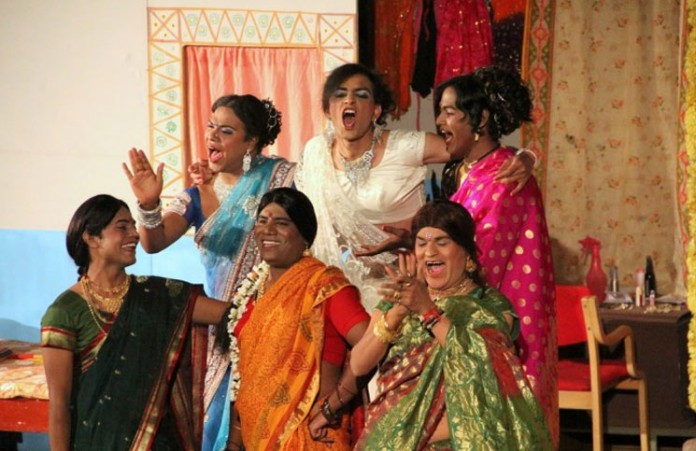






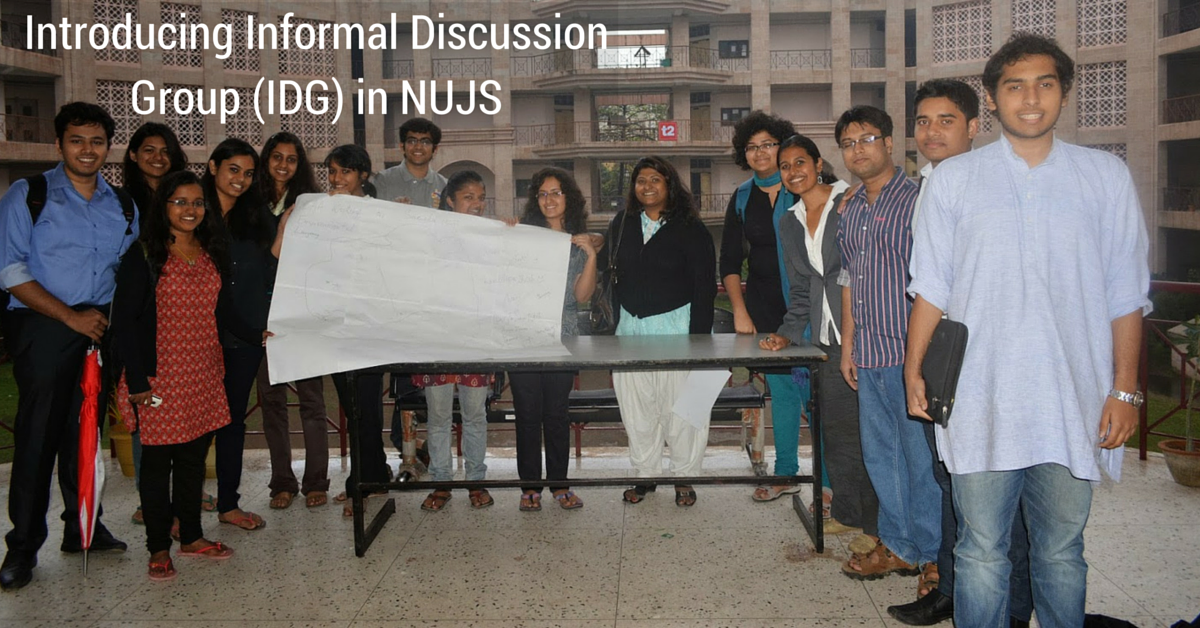







 Allow notifications





