Download Now
Home Blog Page 1842

Anti Superstition Laws in India

1
1880173

The Maharashtra Prevention and Eradication of Human Sacrifice and other Inhuman, Evil and Aghori Practices and Black Magic Act, 2013

Recently, the Maharashtra State Legislature passed the much publicized Anti- Superstition Bill. Maharashtra became the first state in the country to pass a bill to combat practices like black magic. In India, people believe a lot in tantriks and babas and most of these babas are frauds and earn money in millions on the basis of promised miracles and health cures. This amended bill was drafted by the Social Welfare Ministry of the Maharashtra Government. A police officer of any rank has the power to investigate cases of black magic. This bill was originally drafted some 17 years ago by one social activist Narendra Dabholkar who felt the need to bring in a law to combat things like black magic and exorcism. In 1989, Dr. Narendra Dabholkar founded the Maharashtra Andhashraddha Nirmoolan Samiti (MANS) with a few like-minded people and raised his voice against superstition, irrational practices, blind faith and beliefs. Dr Dabholkar was murdered some three months ago in Pune allegedly by people who opposed his ideology and this is when the Government swung into action and brought in the draft of the bill in the Legislative Assembly. This draft was amended and now passed by the State Legislature. The Bill has been titled Maharashtra Prevention and Eradication of Human Sacrifice and other Inhuman, Evil and Aghori Practices and Black Magic Act, 2013, the bill was tabled in the assembly by social justice minister Shivajirao Moghe, and was passed by voice vote after a two-day discussion. The Bill faced severe opposition from the saffron or Hindu Nationalist parties in 2005 when they termed it as an Anti- Hindu Bill. The opposition- mainly the Shiv Sena and Bharatiya Janata Party had opposed the bill since 2004, when it was first passed.

The bill seeks to criminalise practices related to black magic, human sacrifices, use of magic remedies to cure ailments and other such acts which exploit people’s superstitions. The amended bill, which is also supported by the BJP excludes at least seven religious rituals and practices from its purview. Many extremist organisations like the Hindu Jagran Samiti, Abhinav Bharat and Sanatan Sanstha vehemently objected to any such law being passed and were abusive of Dr. Dabholkar in the strongest of language.  The assembly was careful to exempt many common religious or cultural practices, including consulting astrologers or palm readers, preaching from ancient Hindu scriptures or mythology, or fasting or flagellation during the Muslim holiday of Muharram. In the present bill, there is a clause which allows only the victim or his/her family members to file a complaint. No third party person can file a complaint and this is being contested by activists. They claim that this clause has made the bill toothless as most victims of black magic or superstitious practices come from backgrounds where such customs are prevalent and it is unlikely that their relatives will complain against a witch doctor or godman. Despite the protests, the bill was passed by the Assembly in its present form. The Warkari community of Maharashtra protested against this bill and the amended version says that the religious practices of the Warkaris will not come under the proposed law. The bill is specifically aimed at curbing superstitions that cause financial loss and physical injury. If found guilty, the offender would be liable to punishment ranging from six months to seven years and a fine between Rs.5,000 and Rs. 50,000. The Bill, soon to be act has 12 clauses which are punishable offences. All of these offences are non- bailable. Some of the features of the bill are as follows:

  1. Any person who advertises, promotes, propagates or practices human sacrifice and other practices such as evil and aghori practices and black magic will be punished with imprisonment for a term which will be not less than six months and which may extend for a term of seven years and with fine ranging from Rs. 5000- Rs. 50000.
  2. It is the duty of the vigilance officer to prevent such activities from happening in his jurisdiction and if he notices any such activity, then he has to report such cases to the nearest police station. Any person obstructing the police officer from doing his job will get a punishment for a term which may extend to a term of three months or a fine extending to Rs. 5000 or both.
  3. The Police officer has the power to seize any material, instrument or evidence that is being used for the act or that he has reason to believe that the same is being used for committing such an act.
  4. If the accused has been convicted under the act, then the competent court has to instruct the police publish in the local newspaper where such offence had taken place and other such details about the offence.

The 12 clauses that are punished and that are given in the schedule are as follows:

1. Under the pretext of removing a bhoot (ghost) from a person’s body, tying that person with a rope or a chain or a stick, assaulting them or asking them to drink water soaked in footwear, hang the person to the roof, pluck their hair, ask them to touch heated objects or force them to conduct sexual act in the open or force the intake of urine or stool.

2. Make financial profits by displaying so called miracles. Cheat and terrorise people with the aid of such miracles. (This means that miracle per se is not an offence. Also, talking about the miracles from the past, telling stories of Dnyaneshwar and how he made a buffalo recite Vedas is perfectly alright). The stress is on making money.

3. With the objective of attaining supernatural powers, do something or ask others to do something that might cause injuries or risk to life.

4. At the pretext of searching for hidden treasure or water source do something that is inhuman, gruesome and ask or encourage or suggest for human life as prashad. (Some argued that existing laws were strong enough to deal with such murders. But murdering is different from encouraging. And the encouragement is not for killing of a particular person which amounts to culpable homicide but any human life which otherwise cannot be a punishable offence under the law).

5. Create a feeling of fear by giving an impression of having supernatural power or pretending that someone else has such powers or threaten that evil will befall if he/she doesn’t obey the person having such powers.

6. Creating suspicion about a person claiming that he/she performs black magic through which he/she carries evil practices and makes life difficult for that person or declare that a person is a Satan or form of Satan.

7. Beating up a person or have a procession of a naked woman saying she is a witch or restrict her routine.

8. Threatening to invite a ghost and creating fear in the mind and misguiding people by claiming to cure a disease with the help of mantras by preventing medical aid.

9. Preventing medical aid and instead claiming to cure a person bitten by snake, dog or scorpion by chanting mantras or by tying threads or similar things.

10.  Claiming to change the sex of the foetus in the womb by inserting fingers.

11.  Giving an impression that one has supernatural powers or that the devotee was his/ her wife/ husband or paramour in past birth thereby indulging in sexual activity with such person. Having sex with a woman yearning for a child claiming to make her pregnant with supernatural powers.

12.  Claiming that a differently abled person has supernatural power and using him or her for business purpose.

Recent arrests under this Act

  1. The Nanded police on Wednesday registered the first case under the new Maharashtra Anti-Superstition and Black Magic Ordinance, when they arrested two tantriks of Uttar Pradesh origin. The accused, if convicted could face up to 7 years in jail. ( See more at http://www.mumbaimirror.com/mumbai/crime/Tantriks-held-under-anti-superstition-law/articleshow/22298610.cms)

Karnataka Prevention of Superstitious Practices Bill, 2013

Following in the footsteps of Maharashtra is the state of Karnataka. The draft law titled the Karnataka Prevention of Superstitious Practices Bill, 2013 has been drafted by the students of the National Law School, Bangalore. NLS, Bangalore was entrusted with the task of drafting the bill by the Chief Minister of Karnataka. According to the draft bill, thirteen superstitious practices have been classified as evil practices. Of these 13 offences, 11 are cognizable while 2 are non- cognizable. The draft law also proposes the death penalty for human sacrifice in the name of black magic. This bill has also faced a lot of opposition before even being tabled in the Legislative Assembly. It is also unlikely that this bill will be tabled in the winter session. The Government is also said to have received another draft bill from the State Law University, Hubli.  According to the draft, there will be a new office called The Karnataka Anti Superstition Authority at Bangalore and Vigilance Committees on Superstitious Practices in each of the districts. The vigilance committee which will have some powers of a Civil Court will include the District Magistrate, three Govt officials, and five Civil Society members. Expressing fear that the proposed anti-superstition Bill would endanger Hindu traditions, the Vishwa Hindu Parishad (VHP) and Bajrang Dal have already said they would launch a series of protests and a legal struggle against the Bill. The Bharatiya Janata Party (BJP) and the Akhil Bharat Hindu Mahasabha criticised the State government’s proposed Bill. This seems to be similar to the problem the Maharashtra Government faced while trying to pass their bill in 2004-05.

There is an infamous ritual of babies being thrown from the top of a temple in Bagalkot to make them stronger, and there is the ‘made snana’ or rolling over left-over food eaten by Brahmins at the Kukke Subramanya temple near Mangalore. These are some of the 13 bizarre rituals that could land you in jail if the proposed Karnataka Prevention of Superstitious Practices Bill, 2013 comes into force. Another clause that has angered the opposition groups is that this draft bill seeks to ban common practices such as astrology. The Congress Government in the state has strongly defended this bill. Let’s hope that this bill is tabled in the upcoming sessions of the Assembly and is passed after a fruitful debate. If passed, Karnataka will become the second state to bring in a law criminalizing such superstitious practices after Maharashtra. So far, these are the only two states that have taken the initiative to curb such superstitious practices.

Assam

The Assam Government has been mulling an anti-superstition law. Chief Minister Tarun Gogoi recently announced that the state government was contemplating to enact a law to put an end to the practice of witchcraft. “There has been a noticeable rise in cases where people are getting killed after being suspected of practicing witchcraft in Kokrajhar and Jorhat districts of Assam,” he said. The chief minister went on to say that apart from enacting a new law to eradicate the practice, the government would launch an awareness campaign. In the last decade alone, Assam has witnessed nearly 100 killings as a result of various social evils practiced by people inspired by superstition. According to police records, 21 cases of witch-hunting were registered in 2006, followed by 7 cases in 2007, 10 cases in 2008, 4 cases in 2009, 11 cases in 2010, 29 cases in 2011 and 14 cases in 2012 across Assam.

Anti-Superstition laws across the world

All across liberal democracies, anti- witchcraft and anti- divination laws have been repealed.  The USA has TV channels with plenty of psychic lines, tarot readings, crystal balls, palmistry.  They have achieved a great balance by adding a tiny disclaimer “For Entertainment only”. The last remaining local statute against divination in the state of North Carolina was recently repealed.  Britain had its last anti-divination law – the Fraudulent Mediums Act repealed a few years ago. The Witchcraft Act 1542 enacted by King Henry VIII –had similar provisions to the Karnataka Act. The act called for sanctions against invoking spirits for a voluntary participant causing the same kinds of harms mentioned in the Karnataka Act. Papua New Guinea’s Parliament also repealed the country’s 1971 Sorcery Act, which criminalizes sorcery and recognizes the accusation of witchcraft as a defense in murder trials. Thousands of people had protested and signed petitions calling for an end to violence against women and violence related to ‘sorcery’ accusations. Sorcerers, fortune-tellers and other pagans will be able to cast their spells without fear in the Australian state of Victoria after local authorities moved to repeal a 200 year-old anti-witchcraft law. Victorian Attorney General Rob Hulls said he had introduced legislation repealing the Vagrancy Act, which makes it illegal to pretend or profess to tell fortunes or “use any kind of witchcraft sorcery enchantment or conjuration”.  “It is almost 200 years old and is steeped in the language and attitudes of Dickensian England,” Hulls said. Section 365 of the Criminal Code of Canada deals with the practice of witchcraft. It reads as follows:

“365. Everyone who fraudulently:

(a). pretends to exercise or uses any kind of witchcraft, sorcery, enchantment or conjuration

(b). undertakes, for a consideration, to tell fortunes, or

(c). pretends from his skill in or knowledge of an occult or crafty science to discover where or in what manner anything that is supposed to have been stolen or lost may be found is guilty of an offence punishable on summary conviction.”


 

Download Now

Basics of Conflict Resolution through Negotiation

0
negotiation basics
learn to negotiate
negotiation basics
learn to negotiate

INTRODUCTION

Conflicts and disagreements arise when the differing needs, wants, aims and objectives of people are brought together. When two minds think differently on any subject, conflicts take place as everyone think of their own profits first. Negotiation is an effective way of solving any type of conflict. Negotiation occurs in business, non-profit organizations, government branches, among nations and in personal situations such as marriage, divorce and in everyday life. People settle their differences by compromising and reaching an agreement by negotiating.

MEANING OF NEGOTIATION

Negotiation is a strategic discussion that resolves an issue in a way that both parties find acceptable. In a negotiation, each party tries to persuade the other to agree with his or her point of view. Negotiation is a process of discussion between two or more disputants, who seek to find out a common solution for a common problem, one that meets their needs and of interests. During negotiations, parties involved must feel comfortable with what has been agreed so that they can move forward and develop an ongoing relationship. Either parties can take the process of negotiation themselves or they can take help of any professional negotiator.

ELEMENTS OF NEGOTIATION

Negotiation can be successful only when the parties involved are clear about the matter and the manner in which it is to be performed. Negotiation involves three basic elements, which is process, behavior and substance. The process of negotiation is the manner in which parties negotiate which is the context of negotiation, the tactics used by parties, behavior refers to the communication and negotiation styles that parties use, and finally substance refers to the matter for negotiation.

Further negotiation can be successful if the following points are considered before performing it. Firstly, the parties involved must be clear about the subject of negotiation. Secondly, there must be good and effective communication between parties. Good communication involves active listening, understanding and acknowledging each other’s points. Lastly, parties should aim at getting a win-win result from negotiation. The aim of every negotiation must be to provide a result with which both the parties are satisfied.

STAGES IN NEGOTIATION

A structured approach towards negotiation is very important for getting the desired outcome. The process of an effective negotiation includes following stages:

  1. Preparation: The old maxim ‘proper preparation prevents poor performance’ is as crucial in negotiating as it is in other areas like presentations, businesses etc. Parties must be clear with their objectives and must plan their approach towards its attainment. Further, it is also important to anticipate the other party’s approach so that a framework can be prepared for negotiation. Preparation also involves making decisions related to the most important issues and planning one’s tactics.
  2. Discussion: After preparation, the time comes when parties meet each other. During this stage, members from each side put forward their understanding of the situation. Key elements of this stage are questioning, listening and clarifying. Parties involved should try to understand each other’s viewpoint and should take notes during the discussion to record all points put forward related to the case. Discussing each other’s hopes and expectations sets the tone for the negotiation. Discussion also involves asking questions and understanding the key points important for reaching an agreement.
  3. Reassessment of tactics: After initial discussion is over next important thing is re-assessment of tactics by the parties. Here parties consider viewpoints of each other, set their priorities and summarize before starting to make proposals and bargain.
  4. Make Proposals: Now, the parties make the proposals before each other. A proposal is an offer with a condition or conditions. The parties must show flexibility in their offers and must know when to adjourn in a negotiation.
  5. Bargaining: Here parties must bridge the gaps between their proposals.  This stage focuses on what is termed a win-win outcome where both sides feel that their point of view have been taken into consideration and both sides feel they have gained something positive through the process of negotiation.
  6. Agreement: After viewpoints and interests of both sides are considered, agreement is achieved. Agreement must be clear so that both parties know what has been decided.
  7. Implementing a Course of Action: From the agreement, a course of action is developed which is to be followed by the parties. Course of action is the manner in which parties perform their duties.

BASIC PRINCIPLES THAT MAKE A SMART NEGOTIATOR

As a negotiator doesn’t look at those you negotiate with as opponents, approach them as counterparts to cultivate a win-win mindset and create success for both the sides. Some of the important points, for becoming a good negotiator, are as follows:

Get the other side to commit first

Negotiators should get the other side to commit to a position first. Reasons for this are that other party’s offer might be better than you expected and it gives information about their plans and objectives. As a rule, you should always find out what the other side wants to do first then proceed with your views.

Act Dumb, Not smart

While negotiating it is better, acting as if you know less than everybody else does. Try asking questions and use phrases such as ‘Tell me more about…’ and ‘What is your biggest concern with….’ Instead of questions that can be answered with a ‘yes’ or ‘no’. With a few rare exceptions, most people want to compete with people they see as brighter and help people they see as less bright. Good negotiators know that acting dumb diffuses competitive spirit and opens the door to win-win solutions.

Concentrate on the issues

Negotiators should always concentrate on the issues and never get distracted by the actions of the other party. It is important for a negotiator to be relaxed and tension free for better concentration. Good concentration helps negotiators in understanding the points of their counterparts, which further leads to a better result.

Do your Homework

A negotiator should always plan his strategies before meeting for negotiation. Prior preparation is very important because it helps in assessment of one’s goals and helps in anticipating the other party’s approach.

Never Lie

For an effective and good result, a negotiator must be polite, honest and considerate. While exchanging information a negotiator must always attempt to tell the truth as telling lie will destroy his credibility.

Be Assertive

A negotiation can give desired results only if the negotiator is confident and presents his feelings without anxiety or anger. Being assertive means taking care of one’s own interests while maintaining respect for the interests of others.

CULTURAL DIFFERENCES AND NEGOTIATION

Negotiation across cultures tends to lead to worse results as compared with that conducted within the same culture. Primary reason behind this is that different cultures are characterized by different behaviors, communication styles and norms. Thus bringing different cultures to the bargaining table may result in potential misunderstandings, which reduces chances of a good result. There are two main reasons for cultural misunderstandings. Firstly, due to cultural differences people tend to rely on stereotypes, which lead to distorted outcomes. Secondly, people tend to interpret other’s behaviors and values through the lens of their own culture. Culture profoundly influences how people think, communicate, and behave. It also affects the kinds of transactions they make and the way they negotiate them.

Solutions for cultural differences

Instead of relying on stereotypes, one should understand each other’s behavior first and then proceed with negotiation. It has always been advisable to understand the cultural factors in negotiations. While negotiation, one must start with an open-mind and understand counterpart first then take any steps.

Further, negotiations should aim at such results, which satisfy the needs of both the parties. Therefore, no negotiation can succeed if any of the negotiators enters and interpret everything through his lens. A good negotiator must learn about the other party’s culture. Understanding different cultures and customs ends up in giving a more satisfying result for any negotiation.

CONCLUSION

Negotiation involves discussions aimed at reaching an agreement. Intention of any negotiation is to reach an understanding, resolve points of differences and produce an agreement, which satisfies the interests of the parties involved in the negotiation process. Through proper negotiation, any kind of disputes can be solved whether it is personal or professional. Thus, negotiation provides solution to the problems of two or more disputants through proper discussions and agreements.


Download Now

Air India gets a Competitive Edge?

0

It is the primary objective of Competition law and policy of the country to ensure that every enterprise (statutory or non-statutory, public or private) involved in any commercial activity is at a level playing field with other players in the market. Therefore, it remains highly imperative that the policies of the state are also made keeping this objective in mind. The government may create an uneven playing field in the market wherein a State-owned enterprise (SOEs) competes with private firms, as they have a vested interest in ensuring that state-owned firms succeed. Accordingly, despite its role as regulator the government may, in fact, restrict competition through granting SOEs various benefits not offered to private firms. A glaring example of this is the preferential treatment meted out to Air India (national carrier).

Despite Air India’s corporate inefficiency and failure it not only survives today but is also given an edge over its other competitors in the market violating the principles of competitive neutrality (Competitive neutrality requires that government business activities should not enjoy net competitive advantages over their private sector competitors simply by virtue of public sector ownership). Following are the anticompetitive policies and laws in favour of the company-

The Aeronautical Information Circulars No. 08 of 2009 and the Air Corporation Act of 1953 provides for a special treatment to Air India with respect to allocation of traffic rights and access to government funding. According to these regulations Air India is given the discretion to choose the best available routes (which suits their customer expansion strategy). This gives them an unfair competitive advantage over other eligible Indian international carriers by refusing permission to these operators to fly internationally to a place where Air India has a well-established service provider.Therefore, Air India‘s favoured arrangement vis-à-vis other airlines leads to limiting the ability of other market players to compete.

Such preferential treatment not only limits competition among various market players but is also prejudicial to the interest of the consumers. For example, Jet Airways ‘inability to secure traffic rights to operate a flight to Paris, because Air India was exclusively awarded traffic rights to that destination, illustrates how consumer choice is adversely affected by this regulation.

AirIndiaBannerFurther, Section 10 of the Air Corporation Act, 1953 provides that the Government may provide funds for capital expenditures as well as potential bailout funds for Air India. This regulation goes against the principle of competitive neutrality as it creates a framework through which Air India may apply for financial assistance from the government unlike any other airline. It may be concluded from this that the state policies is acting as a shield for the Airline as despite its flawed business decisions it remains unaffected by the market forces unlike its other competitors. Such protection from the state not only puts the other competitors in a disadvantageous position but also reduces the incentive of the company to compete in a healthy fashion and make good business decisions. Therefore, in order to bring such state run enterprises at a level playing field with the other private players, preferential treatment legislation needs to be revised.



Fortunately, these concerns have been acknowledged and lately, the Delhi International Airport Ltd (DIAL) has decided that they may extend the preferential treatment accorded to Air India to other airlines and alliances as well.

This brings out a major loophole in our current competition law framework – despite the knowledge of such anti-competitive policies of the state in favour of one market player the Competition Commission of India (CCI) lacks the jurisdiction to question it.The Commission doesn’t have the power to initiate any inquiry against policies drafted by the government even if they cause an appreciable and adverse effect on competition. It is only if an enterprise abuses its dominant position (conferred by state) that the Commission may take any action against it. Under Section 49 of the Competition Act, 2002, the Central Government may, in formulating a policy on competition (including review of laws related to competition) or any other matter, may make a reference to the Commission for its opinion on possible effect of such policy on competition. But the opinion of the Commission does not remain binding on the government and it is the discretion of the government to take or not to take the advice of the Commission. The objective of competition law and policy will not be met unless the state policies also remain in consonance with it. Therefore, in order to make the competition law more effective, the power of the Commission to interfere in policy matters should be made enforceable.

Download Now

The Criminal I Aided and Abetted

1

It is easy to dismiss the gay rights movement as a headache of very few people, but how does it affect the rest of us who believe in equality and justice? What happens when laws, morality, religion and nature tear apart the sanity of your own friend, brother or classmate who is a homosexual? A lawyer friend writes about what happened when a close friend of his realised that he is gay and how it ruined his life, at least for nowagony.
—-
[Nothing in this piece is fictional. All incidents here are accurate descriptions of actual events. Names, including that of the author, have been omitted to protect the identity of a homosexual person who currently resides in a country with harsh anti-gay laws.]

Thanks to the time difference between India and where I live presently, the first thing I saw this morning as I opened social networking sites this morning (one of the first things I do every morning) was the news that the Naz judgment had been overruled. I was angry. I was sad. I felt betrayed by the institution that I believed was the last beacon of hope in India, when it comes to protection of one against the crowd. Like many others, I poured out my feelings into a Facebook status, I changed my profile picture, I read what others had shared, and finally, I left for office (about half an hour late).

As the day progressed, vivid visuals kept coming back to my mind from my memory. There was a face reflecting emotions too complicated for me to read – it could have been angst, despair, fear, a mix of these, or something else. There was a chant – my surname with the Arabic prefix ‘bin’ (son of) attached to it, being repeated a million times, with the pitch and speed going up each time it was repeated, in the tune of an Arabic folk song. There were English cops, one of whom was yelling while his friends were trying hard to handcuff the man who was chanting. Finally, there was him, struggling with the cops even after his hands were cuffed behind his back, and trying to tell me something in Arabic, a language I do not understand. The visual concludes with him trying, without success, to resist being dragged into a police car by biting on to the jacket I was wearing.

As I gave it some thought, I realised my anger was attributable, in large part, to the events of that night. And many days and nights that followed it. And some that preceded it. Yes, as a lawyer and as a concerned citizen, I was disappointed that the Supreme Court had rendered a wrong judgment. But it was due to him that it ceased to be an intellectual affair, and started being an overwhelmingly emotional affair for me.

I met Ahmad (name changed) first sometime in last October while seated for lunch at one of the dining halls of a super-elite English university. As I sat there, staring at the multiple weapons and tools in front me with which I was supposed to attack my food, a young man took the seat opposite me, pushed all his tools to one side and started eating with his fingers. We exchanged a few words, which made us acquainted enough with each other to say ‘hi’ whenever we crossed each other’s paths. Sometime during the first month, we became friends. It had much to do with the fact that any time I mentioned something about being hungry, he would invite me to his house and cook something delicious.

As I came to know more about Ahmad, I realised he was the most conservative friend I ever had. I remember him pulling down my window-curtain, spreading it on the floor and doing namaz kneeling on it as I, an atheist watched on in amusement. He would never touch a piece of pork or a drop of alcohol. Yet, he was full of curiosity. Having grown up in a conservative Arab country, he was curious to hear the views of others from more open cultures, though he fiercely disagreed with those views. Sometimes we argued, sometimes we joked about it – we playfully entered a pact that if his religious views turned out to be true in afterlife, he would give me thirty-six of the seventy-two virgins he would receive (any virgin men, camels, etc. would be in his share). On several occasions, the question of gay rights came up. While I strongly advocated equality of all humans, his arguments went from “people are just under an illusion of being gay” to “it is sinful”.

Against this background, it was beyond shocking when Ahmad declared to me one day, “I think I am gay”. I had seen him sneak out of the reading room at night and venturing on to the street looking extremely nervous. When I asked him where he was headed, he just told me he was going for a party. I volunteered to go with him. He tried making excuses, none of which sounded convincing. Finally, we started our walk towards the party venue.

As we were close to the party venue, he asked me “Are you sure you want to come?”. When questioned again, he revealed that he was going to a gay party. I was taken aback. His explanation was that he had never met a gay person and that he wanted to find out what gay people were really like. He wanted to enquire into whether being gay was a reality, contrary to what the official position in his country was. Despite considering myself fairly open-minded and despite having de-addicted myself from the Catholic dogma I was fed with baby food, I faced an initial reluctance about walking into a gay party. But I soon realised that this could be an eye opener for Ahmad, and I could not let him down after he had travelled so far on the path of free-thought on my instigation. We entered the party, ordered a drink and I stood in a corner observing the crowd (and trying to avoid the eye of the pretty French woman from my class, lest she think I was gay) while Ahmad moved around talking to everyone in the room.

It was on the way back from the party that Ahmad told me, “I think I am gay”. He went on to tell me how he had previous relations with men, yet had been trying to convince himself that he was straight. Long conversations followed, almost every day for weeks, where he would often go back to telling me about his need to get ‘cured’ of his homosexuality, while I would try to make him accept his sexuality. He swung between citing the Quran to blame himself, to declaring himself to be an atheist – back and forth many times a day. Those long discussions finally culminated in a night when Ahmad started weeping like a baby while seated for dinner in my kitchen. As a friend and I urged to him to open up and talk, he dashed out through my door, singing and shouting like a maniac. We ran after him, following the voice, only to find him being handcuffed by the cops.

After a nerve-wrecking night on the phone, we found out that Ahmad had been detained under the UK’s Mental Health Act and had been confined in a mental hospital for assessment and treatment. The next morning, I visited the hospital and found Ahmad standing in the middle of a crowd of mental patients, delivering what looked like a political speech. The doctors refused to tell me anything about his state till they received consent from him. When they sought his consent, his response was “You can tell him anything. He is my brother”.

Ahmad stayed in the hospital for three weeks, came back to college for a few months, went through a suicidal phase, and finally left for his home country suspending his studies.

When I read the Naz judgment, my outrage is shaped not by the fact that the court got the law wrong. As a lawyer, I disagree with a lot of judgments. But those disagreements are often in the intellectual sphere. But having been closely associated with an extra-ordinarily kind soul (who would invite strangers to his house for meals because his grandfather told him to never eat alone), an extra ordinarily bright student (who was the first person from his country to ever get admitted to my course in its long history), and an extra-ordinarily close friend (who described me as his brother even when mentally ill), being driven into a suicidal state of mind merely because his sexual preferences did not match mine, this disagreement is not merely an intellectual one for me.

For those who appealed the Delhi High Court judgment and those who support today’s verdict, homosexuals are faceless ‘others’ who wait in the dark alleys waiting for an opportunity to spread AIDS amongst ‘us’ and sodomise ‘our’ children. For many, homosexuals are hardened criminals deserving punishments harsher than that many rapists and murderers receive. For many, it is a disease. Yet, I have seen wonderful human being doing namaz on my window curtain and crying out to the god he believed in to ‘cure’ him of his homosexuality – without that prayer being answered. It appears that when burning people at the stake became too expensive, the conservatives devised a way to burn people from within – by inflicting guilt about their own beings.

We can debate forever as to who should end this cruelty that puts our collective humanity to shame. In the meanwhile Your Lordship, I hope you get good sleep tonight and for the nights to come.

Download Now

International Crime: Which country has jurisdiction to try the accused?

0

Radhika Misra and Tanya Sharma, two students of the fourth Year, B.A.LL.B.(Hons.) at Dr. Ram Manohar Lohiya National Law University, Lucknow has written about the principles of international law used to determine which country should have jurisdiction with respect to a criminal incident in which multiple nations have an interest. Over to them.

 international crime

Jurisdiction can be defined as a concept which concerns the power of the state under international law to regulate or otherwise creates an impact upon people, property and circumstances. It further reflects the basic principles of state sovereignty, equality of states and non-interference in domestic affairs.[i]  The most significant aspect of this definition is that it is based on the independence of a state’s sovereignty. This means that a State can construe an incident as per its own Rule of Law or municipal law, which may or may not be consistent with International Law. In the following article, we shall limit our discussion to jurisdictional conflict in international criminal law.


BASIC PRINCIPLES OF JURISDICTION IN INTERNATIONAL CRIMINAL LAW: A CRITIQUE

Criminal offences such as terrorist attacks, humanitarian crimes, hijacking and other such offences wherein two or more nation states are involved, the jurisdiction to prosecute the accused is difficult to determine. For instance, if an Afghani national commits the murder of an American tourist in Pakistan and is caught by the Pakistani police. Pakistan cannot prosecute the Afghan national without seeking the opinions of the other states involved. Herein, the nation of the perpetrator is Afghanistan, the territory where the crime has been committed is Pakistan and the person who has been murdered is an American citizen. As per the existing principles of jurisdiction in International Criminal Law each of these nation states that is United States of America, Pakistan as well as Afghanistan have a jurisdictional basis to prosecute the perpetrator. Due to the absence of well defined principles of jurisdiction as well as a lack of hierarchy between them, conflict abounds.  The objective of International law is to set down rules dealing with the limits of a state’s exercise of governmental functions while conflict of laws (or private international law) attempts to regulate in a case involving a foreign element whether the particular country has jurisdiction to determine the question, and, if it has, then the rules of which country will be applied in resolving the dispute.


As per International Law, criminal jurisdiction can be determined on the basis of five principles. The importance of these jurisdictional principles is that they are accepted by all states and the international community and are said to be consistent with international law. They are the Territorial Principle of Jurisdiction, The Nationality Principle, the Passive Personality Principle, the Protective Principle and the Universality Principle. Though it said that these principles are consistent with international law, they are not consistent with each other. Inconsistency coupled with an overlapping nature is what dilutes these principles.


The Territorial Principle can be defined as a territorial basis for the exercise of jurisdiction. It reflects one aspect of the sovereignty exercisable by a state in its territorial home, and is the indispensable foundation for the application of the series of legal rights that a state possesses.[ii] In other words, a nation state can take action against any offence committed or consummated within its territory. All such crimes committed within the territorial jurisdiction of a state may come before the municipal courts and the accused if convicted may be sentenced as per the rule of law in that nation state. Further, this applies even when the offenders are foreign citizens. However, this principle is not foolproof, as per the European Court of Human Rights in Loizidou v. Turkey, it was observed that although jurisdiction is primarily and predominantly territorial, it is not inevitably and exclusively so and states are free to consent to arrangements whereby jurisdiction is exercised outside the national territory and whereby jurisdiction by other states is exercised within the national territory.[iii] Thus, while jurisdiction is closely linked with territory it is not exclusively so.


The second principle is the Nationality Principle. The concept of nationality can be described as the link connecting the state and the people it includes in its territory. Since the state possesses sovereignty and jurisdictional powers over its territory and its people, it can exercise its jurisdiction over the acts committed by its people in any state or territory in accordance with international law. Common law countries tend to restrict the crimes over which they will exercise jurisdiction over their nationals abroad to very serious ones. In the UK this is generally limited to treason, murder and bigamy committed by British nationals abroad.[iv] Further, the common law countries have never protested against the extensive use of the nationality principle to decide jurisdiction in criminal matters by other states. The Nationality principle though is generally accepted is not infallible. As per this principle, nation states can claim jurisdiction over the offences committed by its nationals but other states wherein the crime has been consummated within their soil may also seek territorial jurisdiction. They may also question the sincerity with which the accused will be penalised. An example of nationality jurisdiction is the US prosecution of Lieutenant William Calley for his role in the My Lai massacre in Vietnam. This case also provides an example of one the criticisms often laid at the door of nationality jurisdiction that prosecution by states of their own nationals for war crimes may tend to be overly lenient.[v]


Next is the most controversial jurisdictional principle in International criminal law, the Passive Personality Principle.  Under this principle, a state may claim jurisdiction to try an individual for offences committed abroad which have affected or will affect nationals of the state. The leading case on this particular principle is the Cutting case in 1886.[vi] The overall opinion has been that the passive personality principle is rather a dubious ground upon which to base claims to jurisdiction under international law and it has been strenuously opposed by the US[vii] and the UK, although a number of states apply it. It has been opposed as the concept of passive personality favours powerful States at the expense of weaker States. There have been concerns that it could lead to people being subjected simultaneously to the laws of many different States, which would include prohibitions of which they are understandably unaware.[viii]


The fourth principle of jurisdiction is the Protective Principle of jurisdiction. This principle provides that states may exercise jurisdiction over aliens who have committed an act abroad which is deemed prejudicial to the security of the particular state concerned. It is a well-established concept, although there are uncertainties as to how far it extends in practice and particularly which acts are included within its net.[ix] The principle is justifiable on the basis of protection of a state’s vital interests, since the alien might not be committing an offence under the law of the country where he is residing and extradition might be refused if it encompassed political offences. However, it is clear that it is a principle that can easily be abused, although usually centred upon immigration and various economic offences, since far from protecting important state functions it could easily be manipulated to subvert foreign governments. Nevertheless, it exists partly in view of the insufficiency of most municipal laws as far as offences against the security and integrity of foreign states are concerned.

Although the principle could be used to justify the assertion of jurisdiction over aggression, and was asserted by Israel as one of the bases of jurisdiction over Adolf Eichmann,[x] practically all its imaginable uses in relation to international criminal law overlap with territorial, nationality or passive personality jurisdiction. The assertion of the protective principle in Eichmann was criticized on the basis that, irrespective of its right to prosecute him, the State of Israel did not exist during the Holocaust.[xi]


The final principle of jurisdiction recognized by International criminal law is the Universality Principle of jurisdiction. Under this principle, each and every state has jurisdiction to try particular offences. The basis for this is that the crimes involved are regarded as particularly offensive to the international community as a whole. There are two categories that clearly belong to the sphere of universal jurisdiction, which has been defined as the competence of the state to prosecute alleged offenders and to punish them if convicted, irrespective of the place of commission of the crime and regardless of any link of active or passive nationality or other grounds of jurisdiction recognised by international law.[xii] Therefore, crimes which can lead the universality principle to be invoked are piracy, war crimes and crimes against humanity. This principle of jurisdiction though is easy to invoke, it is difficult to substantiate. The principle is based on the presumption that offences such as war crimes and crimes against humanity affect the international legal order as a whole[xiii]. Though some states may recognise this threat, not all states will respond fairly and effectively to allegations of international crimes. Furthermore, international law grants all States the right to prosecute international crimes.


Conflict in jurisdiction therefore may only occur where the same rule of law is interpreted or applied in a divergent manner by different international judicial bodies, a situation, which will be rather the exception, since the majority of international judicial bodies have been created within a special, even very special, context to decide disputes arising in this context. Nevertheless such conflicts are possible.[xiv] In international law, sovereignty is a prized virtue, a virtue which becomes a vice in deciding as to which particular jurisdictional principle will precede in a case where conflict exists between two or more jurisdictions. Though it is difficult to decide as to which jurisdiction shall be invoked, certain cases have laid down a possible solution. In the case of In US v. Yunis (No. 2)88 a Lebanese citizen had hijacked a Jordanian airliner and was arrested by US agents in international waters. Further, he was prosecuted in the US for his alleged involvement in the hijacking. USA had based its jurisdictional claim on the basis of the universality principle and the passive personality principle. The International Court of Justice observed that though the passive personality was the most controversial of the jurisdictional principle in international law, ‘the international community recognises its legitimacy’.[xv] Throughout the years, US had opposed this principle but after this incident it was accepted by US and the international community. In the instant case, there was a friction between two jurisdictional principles, which was finally resolved by accepting the passive personality principle by the international community. This principle is now invoked in case of terrorist and internationally condemned crimes.[xvi]


CONCLUSION

In international law, conflict in jurisdiction can do much harm. This conflict should be amicably resolved by the concerned nation states. A possible solution to this has been given by the President of the ICJ, Judge G. Guillaume, as per him the ICJ should serve as a central organ to which questions of interpretation and application of international law may be referred directly by other courts and tribunals or by means of the request for an advisory opinion by the Security Council (SC) or the General Assembly (GA) according to Article 96 para 1 of the Charter. This can easily be done as ICJ is the only international court with universal jurisdiction ratione personae and ratione materiae.[xvii] Therefore, each particular case must be looked at very thoroughly and should be well reasoned. If every case is subjected to such scrutiny it will lead to well defined and infallible principles of jurisdiction in international law.


[i] C. E. AMERASINGHE, JURISDICTION OF INTERNATIONAL TRIBUNALS, The Hague, 2003; UNIVERSAL JURISDICTION:NATIONAL COURTS AND THE PROSECUTION OF SERIOUS CRIMES UNDER INTERNATIONAL LAW (ed. S. Macedo) (2004) ; L. REYDAMS, UNIVERSAL JURISDICTION: INTERNATIONAL

AND MUNICIPAL LEGAL PERSPECTIVES, (Oxford 2002).

[ii] Lord Macmillan, C. Naviera Vascongado v. Cristina SS (1938) 33 AC 485, 496–7; 9 AD, pp. 250, 259, Bankovic v. Belgium, European Court of Human Rights (2001), paras. 63, 67 and 71; 123 ILR, pp. 110, 111 and 113, and Al-Skeini v. Secretary of State for Defence (2007) UKHL 26, para. 109, per Lord Brown; 133 ILR, p. 736.

[iii] Jurisdiction, and its concomitant international responsibility for acts done in the exercise of that jurisdiction, may also exist on the basis of the acts of officials committed abroad and on the basis of actual control of the territory in question in specific contexts. Loizidou v. Turkey (Preliminary Objections), European Court of Human Rights, Series A, No. 310, 1995, p. 20; 103 ILR, p. 621. For the European Convention on Human Rights, see above, chapter 7 and for international responsibility, see below, chapter 14.

[iv] The Official Secrets Acts  (s. 10) (1911), 1970 (s. 8) and 1989 (s. 15); The Offences Against the Person Act (1861 )ss. 9 and 57; The Merchant Shipping Act (1894) s. 686(1) and R v. Kelly (1982) AC 665; 77 ILR, p. 284 and the Suppression of Terrorism Act (1978).

[v] TIMOTHY L.H. MCCORMACK, ‘Their Atrocities and Our Misdemeanours: The Reticence of States to Try Their “Own Nationals” for International Crimes’ in Philippe Sands and Mark Lattimer(eds.). Justice for Crimes Against Humanity(Oxford, 2003)

[vi] J. B. MOORE, Digest of International Law, WASHINGTON, 1906, vol. II, p. 228.

[vii]  US protests to Greece, concerning the service of summonses by Greek Consuls in the US on US nationals involved in accidents with Greek nationals occurring in the United States, DUSPIL, 1973, pp. 197–8 and DUSPIL, 1975, pp. 339–40.

[viii] JAMES  L. BRIERLY, ‘The Lotus Case’ (1928) 44 LAW QUARTERLY REVIEW 154,161

[ix]  In reUrios 1AD, p. 107 and article 694(1) of the French Code of Criminal Procedure.

[x] Attorney –General of Israel v. Eichmann, 36 ILR 18,54-7,304

[xi] DAVID LASOK, ‘The Eichmann Trial’ (1962) 38 BYBIL 181,190-2

[xii] The resolution adopted by the Institut de Droit International on 26 August 2005, para. 1.

[xiii] ROSALYN HIGGINS, PROBLEMS AND PROCESS: INTERNATIONAL LAW AND HOW WE USE IT (Oxford,1994); ANDREAS ZIMMERMANN, ‘VIOLATIONS OF FUNDAMENTAL NORMS OF INTERNATIONAL LAW AND THE EXERCISE OF UNIVERSAL JURISDICTION IN CRIMINAL MATTERS’ in Christian Tomuschat and Jean Marc Thouvenin(eds), The Fundamental Rules of International Legal Order(Leiden,2006).

[xiv] KARIN OELLERS-FRAHM, MULTIPLICATION OF INTERNATIONAL COURTS AND TRIBUNALS AND CONFLICTING JURISDICTION- PROBLEMS AND POSSIBLE SOLUTIONS, Max Plank UNYB 5 (2001).

[xv] 681 F.Supp. 896, 901; 82 ILR, p. 349.

[xvi] 681 F.Supp. 896, 902; 82 ILR, p. 350. Note that a comment to paragraph 402 of the Third

US Restatement of Foreign Relations Law, vol. I, p. 240, states that the passive personality

principle ‘is increasingly accepted as applied to terrorist and other organised attacks on a

state’s nationals by reason of their nationality, or to assassinations of a state’s diplomatic

representatives or other officials’ US v. Benitez 741 F.2d 1312, 1316 (1984), cert. denied, 471 US 1137, 105 S. Ct. 2679 (1985).

[xvii] KARIN OELLERS-FRAHM, MULTIPLICATION OF INTERNATIONAL COURTS AND TRIBUNALS AND CONFLICTING JURISDICTION- PROBLEMS AND POSSIBLE SOLUTIONS, Max Plank UNYB 5 (2001).

Download Now

Legal issues related to Big Data

0

To identify and understand the legal issues associated with Big Data, it is essential to understand the meaning of the term.


What is Big Data?

Big Data“Big data” refers to a collection of data sets whose size is beyond the ability of typical database software tools to capture, store, manage, and analyse. This definition is intentionally subjective and incorporates a moving definition of how big a dataset needs to be in order to be considered big data—i.e., we don’t define big data in terms of being larger than a certain number of terabytes (thousands of gigabytes).

Big Data is a term that describes large volumes of high velocity, complex and variable data that require advanced techniques and technologies to enable the capture, storage, distribution, management, and analysis of the information.

Lawyers are frequently occupied in government and industry initiatives dealing with the legal ramifications and regulatory demands of Big Data, including questions of standardization and data management programmes.


Data Ownership

With that access and use of Big Data is proving to be crucial to future business success in many sectors, one of the central questions is whether and to what extent companies can or will claim proprietary rights in Big Data. “Who owns the data?” is an increasingly relevant, yet largely unresolved question, whereas the answer – “no one can own Big Data” may not solve the issue. Can anyone use data that is publicly available, and/or is it possible to claim ownership rights in structured data?

Does the answer change for a massive accumulation of data entries, even if it remains largely unstructured? Does the law offer sufficient protection where Big Data is exploited in a proprietary manner? Does the protection under the various trade secrets laws help?

Accurate evaluation, protection and ownership identification of data can be crucial in particular in crisis and insolvency situations; evaluating and assessing ownership of data is an essential step for determining the value of a company or of its assets in case of bankruptcy


Open Data & Public Sector

The Open Data association and governments around the world, including the EU, are dedicated to make data publicly available and usable.

The EU’s present review of the Public Sector Information Directive aims at unlocking the potential of Big Data held and accumulated by government authorities both with regard to the public sector itself leveraging the potential and efficiencies that come along with a Big Data strategy, as well as to enable innovators and private enterprise to access Big Data held by public authorities.

Public entities produce and hold enormous amounts of data which in many cases are sensitive or confidential in nature. Government and public institutions have an intrinsic interest in managing cautiously this large amount of data, both to improve their performance and generate savings that allow for much sought-after spending cuts, but also to be able to provide open data to their citizens and business entities.

Big Data management is an important asset for the public sector to better conduct its public mandate as well as distribute knowledge and information to the public, empowering citizens and business with open data and information.

We are at the front position of this data revolution and competent of providing strategic advice, both to private and public institutions for the best integration of their data strategies.


Database Licensing

One of the probable forms of legal protection for Big Data is the sui generis database right. Wherever an investment is made into systematically or methodically arranging data (which could include Big Data), a database right may exist which provides legal protection for those that have made that investment to prevent third parties from commercially exploiting and transacting with the Big Data.


Copyright Infringement

Established copyright laws have struggled to deal with new technologies and digital content distribution methods. The new Big Data search and analysis tools that could result in an infringement of the copyright in this data raise further challenges.


Security Breaches

A number of European jurisdictions have implemented set of laws and policies requiring remedial action in case of security breaches, to an extent following the regulations on security breaches as enacted in the United States.


Data Protection

Although Big Data is not restricted to data protection issues in many instances personal data plays no role at all, privacy concerns are however an important factor in any Big Data strategy. The massive amount of sources feeding into Big Data, related issues of data controllership and the applicable law result in regulatory complexities which are not very easy to resolve, including heterogeneous necessities on data security. The controversial areas of user sentiment and social data analysis, cross referencing and mixing of data obtained from diverse sources trigger high demands for a safe and secure legal framework that can protect both data users and suppliers.


Corporate Transactions

A lot of jurisdictions are only now waking up to the fact that their legal systems do not provide adequate guidance on the proper protection of Big Data. In any corporate transaction the accurate assessment and due diligence analysis of proprietary rights in relation to data owned or used by the entities concerned, will become one of the key areas of review.

The active growth of Big Data software solutions and architectures is motivating start-ups to seek financing and results in more advanced companies becoming targeted and acquired by large multi-national players.

As Big Data is turning into a key asset, it is obvious that data ownership and the right to access databases are required to increasingly be taken into consideration when entering into M&A transactions or selling assets and businesses. The value of an organization could be considerably increased where it’s in reality owns, has access to and is capable of using and analyzing Big Data in observance with the law.

On the other hand mismanagement of data can lead to civil and criminal liability as a result of violations of data protection, copyright or property rights.


Big Data & Open Source

A few of the most stable trusted and technologically highly developed Big Data solutions, including Apache Hadoop, are developed and run on the basis of open source software. The open source licensing provisions and limitations raise particular issues around risk and risk assessment for developers, as well as users of such products and solutions.


Standardisation

An intricate worldwide networked environment demands security and interoperability at all levels.  With a holistic approach to information systems, software development and deployment require to meet industry standards for flexibility, reliability and interoperability.


Antitrust

To the extent companies hold Big Data that are vital for the implementation of certain business models they can be confronted with requests to grant third party access to their data. Refusing third party access to such data or discriminating licensees of such data may constitute an illegal abuse of the Big Data holder’s dominant position and could result in civil litigation and significant fines.


Taxation

The evaluation of the ownership, asset value and transactional value of Big Data is yet to be developed within the frame of local taxation regimes. A wide range of tax matters pertaining to Big Data, Data Centre’s and e-commerce, such as VAT, transfer tax, transfer pricing and tax incentives are there.

Download Now

Onion price rise: Cartel to be blamed? Competition Law and Onions

0

onionsFrom 10 kg to 70-80 per kg and today 100 kg, onions seem to be on an all-time rise. Being harvested all across the country, this vegetable goes through a long twisted journey before reaching us. There are about four intermediaries that it travels through before it finally reaches the vegetable market. These are the middlemen, the wholesalers, traders and the commission agent. It is estimated that by the time these vegetables reach the market, their price gets increased by almost six times. However, these transactions go undocumented. Whenever there is a genuine crisis of rainfall, drought etc, it is these middlemen who create an artificial scarcity which leads to soaring of prices.

Giving a probable rationale behind this monstrous increase the economists invariably point towards the demand and supply change in the onion market. Unfortunately it isn’t so simple. It is alleged that rise in price of onions is not because of any economic factor but because of a well formulated collusion between some traders. This collusion is termed as a “cartel” mentioned under Section 3(3) of the Competition Act, 2002. Simply put, a cartel is an agreement between competitors through which they refrain from competing with each-other and act in collusion. The Competition Act, 2002 makes contravention of Section 3(3) per se anti-competitive. It does not go into the fact whether formation of cartel has any adverse appreciable effect on competition (AAEC) or not. As soon as an express or tacit agreement between the parties is established it is declared to be anti-competitive.

In order to investigate into such anti-competitive agreements the Commission may initiate an enquiry on the receipt of any such information by a person or a customer or even by a reference made to it by the Central government or the state government under Section 19(1)(b) of the Competition Act, 2002. The Commission may also start an enquiry on its own under Section 19 of the Act. On finding the opposite party guilty of forming a cartel the Commission may impose penalty according to Section 27(b). Recently, the CCI imposed a fine of Rs 58.83 crore on nine companies after finding that the companies formed a cartel to bid for supply of explosives to state-owned Coal India. (this has been reduced by 10% by the Competition Appellate Tribunal).

When similar abnormal rise in price was observed in the year 2011, the Competition Commission of India (CCI) had taken suo moto cognizance of the same and had ordered the Director General (DG- CCI’s investigation wing) to investigate and submit a report. It was found in the DG’s report that the soaring prices of onions could not be attributed to the disparity between supply and demand as even when supply was high, the prices also remained high. It was noted that the market remained oligopolistic (a market situation where in there are limited or small number of competitors) and the onion trade was apparently being monopolised by a handful of cartels. However, the DG found no substantive evidence to establish contravention of Section 3(3) of the Act and subsequently CCI closed the matter.

Currently the price of onions has reached a record of rs 100 per kg from rs 90 per kg last week. The alleged cartel formed by the big traders and agents function in such a manner which allows them to make the maximum profit affecting both the consumers and farmers. Presently, the farmers are not involved in the process of price determination beyond supplying the vegetables. Due to the lack of knowledge of grading system of onions on the part of the farmers the brokers and buyers are able to successfully deceive them. At times, good quality onions are categorised by such traders as low-grade onions and accordingly a very low price is fixed. But, finally the same category of onions are sold at a very high price. Surprisingly, the National Agricultural Marketing Federation of India (NAFED) is also procuring onions from these traders instead of the farmers.

A permanent solution to this menace involves a thorough probe into the market and breaking the stranglehold of onion traders involved in the cartel. Currently, the CCI is keeping a close watch and is monitoring the price movements and activities in the onion market. Hopefully, the Commission would come across something substantial and the Director General would be asked to carry out the investigations.  

Download Now

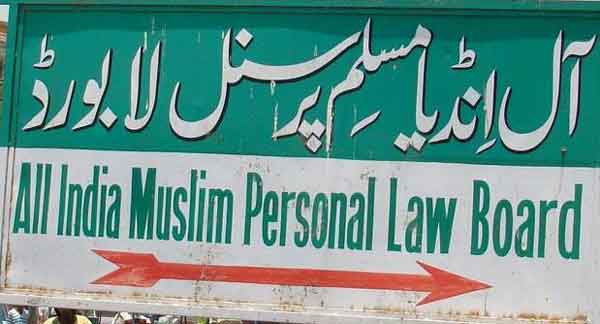
All India Muslim Personal Law Board – An overview

1

Introduction

All India Muslim Personal Law Board is a representative body for the Indian Muslims. The board was established in 1972 in Mumbai, and its Dastoor (constitution) was adopted in 1973 in Hyderabad. After independence,people from Muslim communities belonging to various schools of thought came together on a common platform to defend Muslim Personal Laws. First meeting between the communities was held at Deoband where a convention was made and All India Muslim Personal Law Board was formed. Hazrat Maulana Qari Taiyab Qasmi and Hazrat Maulana Syed Shah Minnatullah Rahmani were elected founder President and General Secretary of the Board.

Founders of the community believed that Islam should guide actions of every Muslim because it lays down rules relating to every sphere of life of Muslims. They believed that Islam provides comprehensive guidance to its followers no other source of law should guide their actions. Thus for effective implementation of the laws under Islam the board was established.The current president of the board is Maulana Syed RaabeHasaniNadvi.

This notably runs counter to the aspiration of a Uniform Civil Code in India to govern all the Indian citizens in the same way in civil matters. Further, many allege poor treatment of women under Muslim personal laws – such as easy divorce at will (talaq) and lack of liability to pay maintenance to separated wives like husbands from all other communities in India are required to under law. However, what is probably cited the most as a violation of the rights of the women is the right of a Muslim man to have 4 wives concurrently – while bigamy or poligamy is a criminal offence for all other Indian men. However, the AIMPLB is the strongest defender to maintaining the status quo on such issues and resistance of an Uniform Civil Code.


Aims and Objectives

The All India Muslim Personal Law Boardtakes effective measures for proper application of the Muslim Personal Law (Shariat) Application Act, 1937.It aims at protecting the interests of Muslims from any act or judgment, which runs parallel to the Muslim Personal Law (Shariat) Application Act, 1937. It promotes good will, fraternity, and the feeling of cooperation among all sects and schools of thought among Muslims, and generates the spirit of unity and co-ordination among them for the common goal of safeguarding the Muslim Personal Law.


Function of the Body

The main function of the board is to promote the usage of Muslim Personal Laws in India,for this,many action committees are set up which organizes campaigns andimpartsinformation related to the decisions of the board and makes people aware about Muslim Personal Laws. Through a committee of Ulama and legists, the board keeps an eye over the State and Central legislations and checks their conformity with the Muslim Personal Law.The board also submits its suggestions and resolutions for the protection of the Muslim Personal Laws.The board also promotes awareness among Muslims related to the rights and duties under the Muslim Personal Laws and encourages people for following the Muslim Personal Laws by conducting several seminars, meetings, conferences, and brings out newspapers, periodicals, newsletters etc.


Defence of the Shariat

Muslims in India are governed by The Muslim Personal Law (Shariat) Application Act, 1937 which directs the application of Muslim Personal Law to Muslims in marriage, mahr (dower), divorce, maintenance, gifts, waqf, wills and inheritance. The objective of the AIMPLB is to defend the Shariat against any interference by the state or civil society. The Central Government has not repealed the Muslim Personal Law (Shariat) Application Act, 1937 but some of its legislatures go against it.The attempts in the country to integrate Indian society under common civil code is strongly resisted and is viewed by Indian Muslims as an attempt to dilute the cultural identity of the minority groups of the country. The board has objected to the Divorce Laws for Muslim women and has published a book Nikah-O-Talaq in this regard. According to the AIMPLB, payment of maintenance by husband to wife after divorce is limited to the iddat period only. This was discussed in the case of Shah Bano Begum wherein it was stated that if at any point if the Muslim Personal Law comes in conflict with the uniform code then the later one would prevail. The board opposes any uniform code that infringes the rules under Muslim Personal Laws.


Validity of the Body

The AIMPLB submits its suggestions and resolutions for the protection of the Muslim Personal Laws and on the basis of those suggestions Parliament enacts laws. After the Shah Bano case the Parliament in the year 1986 enacted The Women (Protection of Rights on Divorce) Act.Later in the case of DanialLatifi[1] the constitutional validity of the women (protection of rights on divorce) act 1986was questioned. The Apex court upheld the constitutionality of the Act but it interpreted the text of the act and stated that the Liability of Muslim husband to his divorced wife arising under Section 3(1)(a) of the Act to pay maintenance is not confined to iddat period. However, the statute now requires that the payment will be made as a one time payment during the iddat period.Thus, even if the resolutions submitted by the board are enacted by Parliament- such enactments have been very susceptible to change.


Interpretation by courts

Courts take the view that where there is a conflict between terms of a uniform code and the rights and obligations of any individual group, the former would prevail.Law of the land should be applied uniformly on all, one set of legislation for Muslims, and a different one for non-Muslims should not dilute concept of equality under law.

Courts in past have laid down some important points related to the application of Muslim Personal Laws in India. The Shah Bano[2] case can be regarded as a turning point since the status of the religious personal laws was minutelydiscussedhere. In this case, there was controversy on the liability of husband to provide for maintenance of his divorced wife as laid down under Section 125 of the Criminal Procedure Code and Muslim Personal Laws. Under Muslim Personal Lawafter iddat period gets over no maintenance is paid to women as it is believed that divorced wife ceases to be wife but under Section 125 of Criminal Procedure Code it is stated that until a woman has remarried she is entitled to receive maintenance form her husband.In this case, Shah Bano was divorced by her husband Muhammad Ahmed Khan and thus sued him for maintenance. The Apex Court very minutely studied the elements of the case and held that rule laid down under Muslim Personal Law cannot be accepted and divorced wife unable to maintain herself must receive maintenance form her husband. It was also stated in the judgment that the Constitution aims at establishing equality among people by proving a uniform code and thus any religious law should not violate it. Thus, it can be inferred that in a situation where there is a conflict between Muslim Personal Laws and Uniform code them the latter one prevails.

Further, the case of Noor Shaba Khatoon[3] should also be studied for proper understanding of the interpretation of courts for Muslim Personal laws. In the above case the appellant filed for maintenance for her children aged 6years, 3years and 2 ½ years. The high court subject to the section 3(b) of the 1986 Act held that the grant of maintenance to the children of divorced Muslim parents, living with their mother, was restricted to the period prescribed under the said section notwithstanding the provisions of Section 125 Cr. However, decision of the High Court was put aside by the Supreme Court. The Apex court held that Section 3(1)(b) of the 1986 Act does not in any way affect the rights of the minor children of divorced Muslim parents to claim maintenance from their father under Section 125 CrPC till they attain majority or are able to maintain themselves, or in the case of females, till they are married. It was further held that so long as the conditions for the grant of maintenance under Section 125 CrPC are satisfied, the rights of the minor children, unable to maintain themselves, are not affected by Section 3(1) (b) of the 1986 Act.

Currently Delhi High court has also rejected a bail plea of a man who raped a 17 year old girl who was his lover. It was held that India is a secular country and Sharia cannot override the same. It was held that “The Muslim Personal Law only applies to cases relating to marriage, divorce and personal relations but has no applicability in case of a criminal liability”. Thus, it is clear from the decision that Muslim personal law cannot override criminal Law.

Thus, any religious personal laws cannot violate the objects and aims of an uniform law applicable to all citizens such as the criminal law.Also, while religious personal laws may have their place in the legal system, they must be reasonable, just and fair substitutes.


Criticism for the board

Many times it appears that the Board has deviated from its basic purpose and objective which was to defend the Shariat against any interference by the state or civil society. The Board has launched social reform movements for propagation of good conduct in the Muslim communities and has persuaded them to abide by the Shariat in their personal and collective lives but has never studied their impact on Muslim Indian Society. Some accuse that there are clear indications of its increasing deviation from the path of the Shariat.

Further the Board claims to be a representative body of Indian Muslims but if its composition is properly studied it will be seen that it has always been dominated by the Ulama of the Hanafi School with marginal presence of all other schools, namely, Shafii, Maliki, Hambali and Jafri. The Board also does not include eminent jurists, social scientists or political personalities, even Members of Parliament whose services it requisitions when it faces the Government.Further questions are raised related to the transparency of their annual accounts because neither the donations nor the details of the establishment expenditure including travel by office-bearers are recorded.

The result of the above criticisms is that the Board is losing influence and parallel personal law boards are emerging on the scene like, the Muslim Women’s Personal Law Board, the Sunni and the Shia Personal Law Boards the All India Muslim Personal Law Board (Jadid). If this process intensifies, it will result in virtual disintegration of the Board, sect-wise & gender-wise. The Board has not made any effort to establish a dialogue with the parallel Boards or to co-opt their active members.


Conclusion

Aim of the Constitution of India is to establish secularism in India and hence religious personal laws sometimes seem to go against it. All India Muslim Personal Law Board is established to encourage the application of Shariat Act in India by making suggestions and resolutions before the Government. Over time, it might be losing its relevance altogether.


[1]Danial Latifi & Anr v. Union Of India, Writ Petition (civil) 868 of 1986

[2]Mohd. Ahmed Khan v. Shah Bano Begum And Ors, 1985 AIR 945, 1985 SCR (3) 844

[3]Noor Saba Khatoon v. Mohd, 1997 AIR 3280

Download Now

Judicial Appointments Commission: A Perfect Panacea for Collegium System?

0
aor

“Even so, the creed of judicial independence is our constitutional ‘religion’ and, if the executive use Article 222 to imperil this basic tenet, the Court must ‘do or die’” — Justice Krishna Iyer 


The Constituent Assembly did not ensure that special efforts were being taken to lay down guidelines for appointing judges as people who would be able to discharge constitutional obligations from a legal perspective. A commitment to bring about transformation in the society in terms of the Constitution by using by using necessary adjudicative and interpretative skills is called for and is desired. This gives rise to a very basic yet a prominent question, which has baffled political critics, constitutional scholars and socio-legal analysts for decades. “Who will appoint this judiciary?” The jury is still not out on whether this power should be vested in the hands of the judiciary itself or the executive should enjoy a complete or a partial say in it.

Recently, the Rajya Sabha passed the Constitution (99th Amendment) Bill, 2013, which scraps the collegium system of appointments to the higher judiciary and replaces it with a Judicial Appointments Commission (JAC). It has now been referred to the Parliamentary Standing Committee on Law, which has sought the opinion of the general public and the various stakeholders on the provisions of the Bill. The JAC will consist of three Supreme Court judges, the Union Law Minister, the Law Secretary as its Convenor and two “eminent persons” appointed by a body comprising the Prime Minister, the Leader of Opposition and the Chief Justice of India. Termed as an improvement from the collegium system, this amendment seeks to ensure a fine balance between the executive and the judiciary.


The Constitutional Position

According to Article 124 (2) of the Indian Constitution, the President has to consult such of the judges of the Supreme Court and the High Courts as he may deem necessary, before appointing any judge to the Supreme Court. It also requires him to always consult the Chief Justice of India (CJI) in the appointment of a judge other than the CJI. According to the Court’s interpretation of these provisions, the process of appointment of a judge is initiated by the CJI through a collegium consisting of him and four of the seniormost judges of the Court, the recommendation of which, is binding on the President. As far as the constitution of High Courts is concerned, the Constitution, in Article 217 (2) lays down that every judge of a High Court shall be appointed by the President after consultation with the CJI, Governor of the State and in case of appointment of a Judge other than the Chief Justice, the Chief Justice of a concerned High Court. After a series of cases which discussed the process of appointment of judges, known as the Judges Cases, now, the norm is to emphasise on “integrated ‘participatory consultative process’ for selecting the best and most suitable persons available for appointment” in which “all the constitutional functionaries must perform this duty collectively with a view primarily to reach an agreed decision, sub-serving the constitutional purpose, so that the occasion of primacy does not arise” in the matter of appointment of judges. In case of disagreement between the President and the CJI, the opinion of the latter will prevail. The opinion of the CJI refers to the opinion of a collegium consisting of himself and the two seniormost Judges of the Supreme Court. The process of appointment must be initiated by the Chief Justice of the concerned High Court who must form his opinion about an appointment after ascertaining the views of at least two seniormost judges of the High Court.


History

In S P Gupta v. Union of India, the First Judges case, the Hon’ble Supreme Court provided a literal meaning to the word ‘consultation’ that appear in the articles 124 and 217 of the Indian Constitution. The Court took the view that the opinion of the CJI is simply consultative and the final decision in the matter of appointment of judges has to be in the hands of the Central Executive. The judgement the this system of executive having a bigger say, came under severe criticism on the ground that such appointments were prone to political influence and hence hampered the independence of the judiciary. A growing demand was made to curb the primacy of the executive in the appointment of the judges. In its 121streport issued in 1987, the Law Commission proposed the setting up of a judicial commission for appointment of judges. The matter was put up for consideration again by a nine judges bench in the Supreme Court Advocates-on-record Association v. Union of India, known as the Second Judges case. This overturned the decision given by the Supreme Court in the First Judges case and gave up literal interpretation of the Articles. A wider meaning of the provisions in both Article 124 and Article 217 was adopted. The word ‘consultation’, now supposed to interpreted broadly, was ascribed the meaning of a “participatory consultative process in which the executive has the power to act as a mere check on the exercise of power by the Chief Justice of India, to achieve the constitutional purpose. Thus, the executive element in the appointment process is reduced to the minimum and any political influence is eliminated.” The Court justified it by holding that “In the choice of a suitable candidate, the CJI should have the greatest weight as he is best suited to know the worth of the appointee.” The opinion of the CJI was decided to be given primacy over the opinion of the President/Executive. In Re Presidential case, known as the Third Judges case, a 9 judges bench was constituted to clarify the Second Judges case. The court held that the opinion of the CJI has to be formed on the basis of consultation with the collegium, comprising of him and the four seniormost Supreme Court judges and the opinion of all members of the collegium in respect of each recommendation should be in writing. The plurality of Judges in the formation of the opinion of the CJI is emphasized as a check against the likelihood of arbitrariness or bias. Thus, by a process of ‘judicial invention’, the ‘collegium system’ of judges came in to existence.


How is the collegium system flawed?

The operation of the collegium has marked the complete breakdown of the inter-institutional system envisaged in Art. 124 and Art. 217. The collegium system enshrines de facto judicial supremacy over appointments. Though the executive must formally confirm the appointment, the role is marginal as its objections can be overridden by the collegium, whose decision is determinative in practice. The constrained role of the executive denudes the possibility of an inter-institutional check and balance on the judiciary and also renders public questioning of the executive in relation to judicial appointments futile as the executive inevitably pleads helplessness.

The collegium system has been criticised on various instances. A prominent one being the case of Delhi High Court Chief Justice AP Shah, who was supposed to be elevated to the Supreme Court. However, the collegium having Chief Justice S H Kapadia on board, rejected his appointment to the Apex Court. Interestingly, a few years back, when both Justice Kapadia and Justice Shah were on the bench of the Bombay High Court, the latter had dissented with the future Chief Justice of India. Another instance of supersession was when Justice Arijit Pasayat, as part of the collegium, had blocked the appointment of Justice A.K.Patnaik, then the Chief Justice of Madhya Pradesh High Court for unknown reason, though Justice Patnaik was a judge of immense repute. In yet another instance, Sikkim High Court Chief Justice Dinakaran was appointed to be elevated to the Supreme Court, only to be later charged guilty of corruption and graft charges. The recent allegations of Gujarat High Court Chief Justice Bhaskar Bhattacharya against former CJI Altamas Kabir have put a huge question mark on the collegium system. Justice Kabir has been alleged of scuttling Justice Bhattacharya’s elevation to the Supreme Court on the ground of malice due to the latter having rejected Justice Kabir’s sister appointment as a Calcutta High Court judge. Lastly, one other major flaw of the collegium system that has been seen over the years is that almost thirty per cent seats in various High Courts of the country remain vacant due to inefficient functioning of the collegium.


Shortcomings of the proposed reforms

Even assuming that the JAC is an answer to all the maladies of the collegium system, there is no certainty that the commission’s membership will always strike a fine balance between the executive and judiciary. The government can subsequently change the JAC’s structure, and decide who gets to appoint Supreme Court or High Court judges. All it needs is a simple majority in Parliament, because the JAC Bill, unlike the Constitution Amendment Bill, would be ordinary law. The new, “improved” system for judicial appointments will be put in place through a constitutional amendment, but the critical components of that system will be fleshed out by normal legislation, subject to the whims and fancies of the executive.

Moreover, sixty three years of constitutional governance has shown that numerous attempts have been made to undermine and subvert the independence of the judiciary and the rule of the law. After the Kesavananda Bharati judgement, the government, departing from earlier conventions, superseded three of the seniormost judges and appointed A.N.Ray as the CJI, who incidentally had decided three important cases in favour of the Central Government. The government stand was to appoint “forward looking” judges who shared its philosophy — a euphemism for compliant judges. After the declaration of Internal Emergency in June 1975, a calibrated, predetermined attack on judicial independence was organised and implemented. Mass transfers of 16 independent High Court judges from their parent High Courts were made. During the Emergency, the Constitution was extensively amended. Judicial review was almost eliminated and a two-third majority of judges was mandated for invalidating legislation. During the Emergency, the Constitution was extensively amended. Judicial review was almost eliminated and a two-third majority of judges was mandated for invalidating legislation. It is a legitimate fear that with the Executive now gaining a considerable say in the appointment process, it might go for a complete overhaul of the judicial system, which will be undesirable in the future scheme of things.


Conclusion

The collegium system has been in force since 1993 and has faced several criticisms and allegations of shortcomings. Reforms are necessary but restoration of a failed system that gives unbridled powers to the executive and poses a threat to the independence of the judiciary and the rule of law is an undesirable method of bringing in reforms. In its Statement of Objects and Reasons, the proposed Bill says, “This would enable equal participation of judiciary and executive, make the system of appointments more accountable, and thereby increase the confidence of the public in these institutions.” While this is very desirable, all attempts to restore the predominant voice of the political class in judicial appointments will amount to subverting the basic structure of the constitution and will be a recipe for disaster. Any such attempt will prove damaging to the long-cherished principle of separation of powers and hence there should be greater debates and discussions in the Parliament and in public forums too in order to ensure a fine checks and balances of powers between the judiciary and the executive, because the non-transparency and eventual failure of the current process of judicial appointments is no excuse to twist it in favour of the executive.

Download Now

DDA comes under the scanner of CCI

1

The Competition Commission of India (CCI) has ordered its Director General under section 26(1) of the Act to initiate a probe in respect of the allegation made against the Delhi Development Authority (DDA) of acting in contravention to the provisions of Competition Act. DDA is a statutory body created under the provisions of Delhi Development Act to promote infrastructural and building development in Delhi with the power to acquire, hold, contract and dispose of property. In the real-estate sector the CCI has already passed orders against real estate giant like the DLF imposing a fine of Rs 600 crores for abuse of its dominant position. This will be the first time when DDA will be under the scrutiny of the CCI for its alleged violation of Section 4 (abuse of dominant position) of the Act.


Every enterprise (statutory or non-statutory, public or private) comes under the purview of the Competition Act, 2002. The rationale behind this is to ensure a level playing field for all market players and to make sure thatan enterprise does not get any competitive advantage because of it being a government run body or a statutory body. The Commission has the jurisdiction over every state run enterprise involved in any commercial activity except for those activities which are related to the sovereign functions of the state.


Dominance in terms of competition law means an acquisition of significant amount of market power, which enables the enterprise to increase or decrease the price or limit the productionindependently of the competitors as well as customers. In order to determine the dominant position of a player the commissionlooks into the factors mentioned in the Act under section 19(4). Dominance is not per se anti-competitive but the abuse of dominant position is prohibited by the Act.Whenever there is a contravention of section 4 of the Act, the Commission assesses the relevant market, dominant position of the opposite party (in this case DDA) and subsequently, the abuse of the dominant position.

The informant has alleged that DDA enjoys a near monopoly status conferred upon it by the statute i.e. Delhi Development Act, 1957 in the development of planned townships, colonies or complexes. It is the biggest real estate developer in Delhi and no other developer can match its size or structure. Hence it was submitted by the informant that DDA remains a dominant player in the relevant market.

Abuse of dominant position has been stated under section 4 which contains an exhaustive list of abuses.If a dominant player is found to be indulging in any behaviour listed as an abuse, such behaviour is considered to be anticompetitive. The list includespredatory pricing which can be established against a dominant player if the selling price is below cost and there is intent to oust competitors, unfair or discriminatory conditions in purchase or sale of goods or services and limiting or restricting production of goods or services.


In view of the same the informant further alleged that most of the provisions of the allotment schemewere drafted to benefit DDA and were highly unfair and discriminatory. For example, clause 14 of the scheme stated that the allottee shall pay 15% interest in case of delay of payment beyond three months whereas similar clause for payment of interest was not provided if there was a delay on behalf of DDA in handing over the possession. The clause 17 of the scheme mentions that DDA will not entertain any complaints on the issue of quality of material used or workmanship or any other defect in the construction of the flats, absolving itself of the responsibility. Further clause 9 of the scheme states that DDA will pay only 5% interest in case of delay beyond four months when registration money to unsuccessful applicants was to be refunded.

After hearing the complaint of the informant and after considering the reply submitted by DDA, the CCI concluded has that there exists a prima facie case against DDA and has ordered the DG to investigate and submit its report within 60 days.Order of the Commission can be accessed from here.

Download Now
logo
FREE & ONLINE 3-Day Bootcamp (LIVE only) on

How Can Experienced Professionals Become Independent Directors

calender
28th, 29th Mar, 2026, 2 - 5pm (IST) &
30th Mar, 2026, 7 - 10pm (IST).
Bootcamp starting in
Days
HRS
MIN
SEC
Abhyuday AgarwalCOO & CO-Founder, LawSikho

Register now

Abhyuday AgarwalCOO & CO-Founder, LawSikho