Download Now
Home Blog Page 1690

Is It Possible To Ratify A Related Party Transaction Made Without Approval?

0

In this blog post, Ananda Boga, a student pursuing a Diploma in Entrepreneurship Administration and Business Laws by NUJS, analyses the possibilities of ratification of a related party transaction made without the approval of the Board. 


An RPT is a related party transaction between companies and their related subsidiaries, associates, joint ventures, directors and their relatives, substantial shareholders, executives or entities owned or managed by its directors, executives or their families. It is a transfer of resources, services or obligations between a Company and its related party, regardless of whether or not a price is levied.


What is Related Party?

These related party transactions are rampant and play a role in many businesses. The Company Act 2013 defines the term “related party” as:

  • A director or his relative
  • KMP or his relative
  • A firm, in which a director, manager or his relative is a partner
  • A private company in which a director or manager is a member or director
  • A public company in which a director or manager is a director and holds along with his relatives, more than 2% of its paid-up share capitaldownload (4)
  • A body corporate whose board, managing director or manager is accustomed to act in accordance with the advice, directions or instructions of a director or manager, except if advice/ directions/ instructions are given in the professional capacity
  • Any person on whose advice, directions or instructions a director or manager is accustomed to act, except if advice/ directions/ instructions are given in the professional capacity
  • Any company which is:
    • A holding, subsidiary or an associate company of such company, or
    • A subsidiary of a holding company to which it is also a subsidiary
  • Such other persons as may be prescribed.


Forms of Related Party Transaction

Related party transactions can be in many forms. Under Section 188 of the Company Act 2013, the sale, purchase or supply of any goods or materials, selling or otherwise disposing of, or buying property of any kind as well as leasing property of any kind can be considered as a related party transaction. Furthermore, availing or rendering of any services, appointing an agent for the purchase of sale of goods, materials, services or property, appointment to any office or place of profit in the company, its subsidiary or associate company is also considered to be an RPT.Here, under the Company Act 2013, ‘office or place of profit’ means any office or place –images (3)

(i) Where such office or place is held by a director, if the director holding it receives from the company anything by way of remuneration over and above the remuneration to which he is entitled as director, by way of salary, fee, commission, perquisites, any rent-free accommodation, or otherwise;

(ii) Where such office or place is held by an individual other than a director or by any firm, private company or other body corporate, if the individual, firm, private company or body corporate holding it receives from the company anything by way of remuneration, salary, fee, commission, perquisites, any rent-free accommodation, or otherwise;

Lastly, an RPT could also extend to underwriting the subscription of any securities or derivatives thereof, of the enterprise.


Approval of RPTs

It has frequently been observed that in several cases companies that have higher RPTs linked to sales and income have reported relatively poorer performances in comparison to those having lower RPTs. Moreover, RPTs have come under the microscope as many firms have misused them, which inadvertently led them to massive corporate scandals. Due to this, some approvals are required to permit a related party transaction.download (2)

As per the Company Act, 2013, an audit committee must approve where transaction value is within the prescribed limit. The Board of Directors too must approve this by an ordinary resolution.  Where transaction value exceeds the prescribed limits, an ordinary resolution must be passed by the audit committee and the board or directors. However, in this case, shareholders too must pass a special resolution as opposed to the ordinary resolution.

Related party transactions that shareholders must approve of include sale, purchase or supply of any goods or materials, directly or through the appointment of an agent having limits on transactions greater than 10% of the annual turnover or 100 crores, whichever is lower. Selling or otherwise disposing of or buying property of any kind directly or through the appointment of an agent must be limited to 10% of the net worth or 100 crores, whichever is less. Transactions relating to the leasing of the property of any kind must be limited to 10% of the net worth or turnover or 100 crores, whichever is less. The availing or rendering of any services, directly or through the appointment of an agent is also limited to 10% of the net worth, or 50 crores in this case, whichever is less. The appointment to any office or place of profit in the company, its subsidiary company or associate company is limited to two and a half lakhs per month, while remuneration for underwriting the subscription of any securities or derivatives thereof of the company has a limit of 1% of the net worth. As mentioned, all these related party transactions must also be approved by the shareholders, along with the board of directors and audit committees.


When a director or another employee enters into any contract or arrangement without the prior permission and approval of the Board or approval through a special resolution in the general meeting, and if it is not ratified at that meeting, regardless of what the case may be, the contract shall be deemed voidable at the option of the Board of Directors after three months from the date on which the related contract was signed or arrangement agreed upon.images (4)

Under the Company Act, 2013, there is an exemption provided that states, “There is an exemption provided under the Companies Act, 2013, wherein the approval of board or shareholders are not required if the Company has related party transactions as per the prevailing market price and on arm’s length basis irrespective of transaction value” This is provided that the Company need to justify and should have the required evidence proving that the transactions were made on arm’s length basis.

There is no exemption from the approval process based on the ‘arm’s length’ criterion, but it is important to understand that a transaction entered into by a firm on an arm’s length basis has a strong likelihood of helping the approval process and setting an example for commendable corporate governance.

It is also important to know that under implications of the revised clause 49 of Listing Agreement, any related party transactions regardless of the value of transaction demands approval of audit committee before hand. Also, Under the Company Act 2013, “Ratification of RPT can be done in Board Meeting or General Meeting by passing a Special Resolution is available under the Proviso of CA, 2013 and which shall be done on or after three months from the date of entering into Related Party Transaction.”Under the Revised Listing Agreement, ratification of related party transaction is not available.Furthermore, it is mandatory to enter an agreement with the related party, and just a letter of engagement will not suffice.  In the case of entering related party transactions with foreign parties and foreign body corporates, no compliance is required, as mentioned under the Company Act, 2013 and The Listing Agreement.images (5)

The Board of Directors plays a crucial role in ratifying any related party transaction. A company must seek certain approvals from their board before going ahead with any such transaction. Regardless of its capital or transactional value, every company must attain the approval of the Board. The approval must be requested at a planned Board meeting and must be obtained without passing of a circulated resolution. Any interested Director is not allowed to be present at the meeting when discussions regarding his interest are going on.

Along with the approval of the Board of Directors, approvals through a special resolution by the firm’s members must be attained beforehand when entering into a related party transaction. A member of the company who is also a related party cannot have the privilege of voting on such special resolution to approve any contract or arrangement that the company may enter into. When it comes to a wholly owned subsidiary, the holding company will pass the special resolution. That alone will be sufficient for the objective of entering into a related party transaction between a holding company and a wholly owned subsidiary.


[divider]

References: 

Download Now

Accounting System To Be Followed By Partnership Firms And LLPs

1

In this blog post, Anand Sancheti, a student pursuing a Diploma in Entrepreneurship Administration and Business Laws by NUJS, describes the accounting system to be followed by Partnership Firms and LLPs.

Applicability of the Act

Limited Liability Partnership is prevailed by ‘The Limited Liability Partnership Act, 2008’ and various Rules made there under. It is a separate legal entity under the Limited Liability Partnership Act 2008.In LLPs purchases movable / immovable property has to do in the name of LLP. Liability of a partner is limited to the extent of his capital contributed or agreed to be contributed as per LLP agreement.

Partnership prevails by the Indian Partnership Act 1932 and various rules made there under. It is not a separate entity. Partnership firm cannot purchase property in its name only purchase is permitted in the name of partners. Liability of partners is unlimited.

Books of Accounts to be maintained

  • Partnership Firms and LLPs are required to maintain books of accounts as per Tax laws. Both can maintain books of accounts on Cash or Mercantile basis.
  • Fundamental Accounting Assumptions -1) Going Concern, 2) consistency, 3)Accrual has to follow.
  • LLPs have to keep books on the basis of double entry system of Accounting at its registered office. The LLPs has to maintain proper books of accounts as follows prescribed (Rule 24 (1)) relating to its affairs for each year of its existence.
    • Statement of Receipt & Expenditure.
    • A record of the assets and liabilities of the limited Liability Partnership.
    • Statement of recognized gains & Losses.
    • Statement of cost of goods purchased, inventories, work –in-progress, finished goods and cost of goods sold; and
    • Any other particulars, which the partners may decide.
  • Both LLPs & Partnership Firms have to follow the complete accounting cycle from Journals, Ledgers, Cash Book, Bank book, Trial balance, Profit & Loss account and finally, a Balance Sheet which gives the financial position of the business at the end of the period. Few more records need to maintained are specifically mentioned below:
    • Partners Capital Account: Fluctuating Capital Method and Fixed Capital Method (Partners Capital Account & Partners Current Account)images (1)
    • Profit & Loss Appropriation Account: The net profit as shown by the profit and loss account of partnership firm needs certain adjustments with regard to interest on capitals, interest on drawings, salary, commission to the partners, if provided, under the agreement. For this purpose, ‘Profit and Loss Appropriation Account’ maybe prepared.
    • Calculation of Interest on Capital: Interest @12 % pa is deductible as per Income Tax Act.
    • Calculation of Interest on Drawings
    • Past Adjustments: Past Adjustments relate to the interest on capital, interest on drawings, salary to partners, etc that have been omitted by mistake or have been wrongly treated. In such a situation, necessary adjustments have to be made in the partners’ capital account through an account called Profit and Loss Adjustment Account.
    • Goodwill (Intangible Assets) Valuations: Following methods can be used for Goodwill Valuation:
      • Average Profits Method:
        • Weighted Average Profit method
        • Super profit Method,
        • Capitalization Method,
        • Present value of Super Profits

Applicability of Accounting Standards

Council of ICAI has classified the non-Corporate assesses in three different level(level I, Level II, or Level III).Applicability of AS 1 to As 32 depends on the fact that, In which level LLP or Partnership Firm has been categorized.

Deductions as Expenses as per Income Tax Act

LLPs and Partnership Firms can claim the following amounts as deduction:

  • Interest paid to partners, provided such interest is authorized by the LLP or Partnership Agreement Interest @12 % pa is deductible as per Income Tax Act.
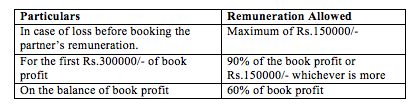
  • Any salary, bonus, commission, or remuneration (by whatever name called) to a partner will be allowed as a deduction if it is paid to a working partner who is an individual.
  • The remuneration paid to such working partner must be authorized by the LLP Agreement and the amount of remuneration must not exceed the given limits as per income Tax Act.

Screen Shot 2016-08-30 at 11.51.10 pm Accounting Implication of Change in Profit sharing ratio

When the partners decide to change their profit-sharing ratio, some partners will gain while others will lose. Hence, the gaining partner has to compensate the partner who makes the sacrifice by paying (or through necessary adjustment in their respective capital accounts) the proportionate amount of goodwill.

https://lawsikho.com/course/diploma-companies-act-corporate-governance
Click Above

Accounting for Inventories for Partnership Firm & LLPs

As per As 2 – Inventories should be valued at the lower of cost and Net Realizable Value.images

  • Techniques for the measurement of the cost of inventories:
    • Standard cost method
    • Retail method
  • Calculation of the cost of Goods
    • FIFO (First in First out) Method
    • LIFO (Last in First Out) Method
    • Weighted Average Method

Depreciation

Different accounting policies for depreciation are adopted by different Enterprises.  Depreciation is charged in each accounting period by reference to the extent of the depreciable amount, irrespective of an increase in the market value of the assets. Methods for calculation of depreciation:

  • Straight Line (Time) method.
  • Straight Line (use) method.
  • Accelerated Depreciation:
  • Sum of digit method
  • Declining balance method.

Annual Statement of Accounts and Solvency

Annual Statement of Accounts and Solvency (Form No 8) needs to be filed by every LLP with the Registrar of Companies every year within 30 days from the end of financial years.download

Annual Compliances

  • The LLP is required to file an Annual Return (Form 11) duly authenticated with the Registrar within 60 days of the closure of its financial year in such manner & shall be accompanied by prescribed fee.
  • Partnership firm will have to file income tax return irrespective its income. There is no requirement of filing Annual Accounts and Annual returns with the Registrar for Partnership Firm.

Preservations of Accounting Records

Limited Liability Partnership Firms has to preserve the accounting records for 8 years from the date on which they are made.

Electronic Filing of Documents and Returns

  • Every form or application or document or declaration required to be filed by the Limited Liability Partnerships in computer readable electronic form, in PDF to the Registrar trough the portal maintained by the Ministry Of Corporate Affairs on its website mca.gov.in
  • No such requirement is there for Partnership Firm.

Income Tax Aspect

For the purpose of Income Tax Act, a limited Liability Partnership Firm is treated like Partnership Firm. All the provisions of Income Tax for a Partnership Firm is applicable as it is to Limited Liability Partnership.

  • TDS: No TDS is required to be deducted by firm from payment of interest (TDS exemption under Section 194A (3)(iv) of the Income Tax Act) and remuneration to partners (As Employer-Employee relationship does not exist)
  • MAT & DDT
    • Since the LLP is treated as same as Partnership firm in the matter of taxation, the provisions of MAT and Dividend Distribution Tax will not be applicable for LLP and Partnership firm.
    • Profit of LLP and Partnership Firms credited to the partners’ account shall be an exemption to tax under Section 10(2A) to avoid double taxation. However, remuneration and interest paid to its partners shall be liable to tax under Section 40(b) of the Income Tax Act.
    • AMT is applicable to LLPs & Partnership Firms Alternate Minimum Tax means the amount of tax @ 18.5 % + 3% Education Cess on the adjusted total income of the Non-Corporate Assesses. The provision of AMT is given under Section 115JC under Chapter XII-BA of the Income Tax Act.
    • The word Adjusted Total Income has been defined under Section 115JC (2) of the Income Tax Act as the total income of the assesse on which he is liable to pay income tax, is increased by-
      • Deduction claimed under Sections 80H to 80RRB, except Section 80P.
      • Deduction claimed under Section 10AA. 
    • Tax Credit of AMT is of an assessment year is allowed U/S 115 JD.
  • Screen Shot 2016-08-30 at 11.50.54 pmPresumptive Taxation under section 44AD of Income Tax: Section 44 AD is applicable to Individuals, firms and HUFs but not applicable to LLPs. Thus LLPs will not be able to avail presumptive taxation schemes under section 44AD.  

Service Tax

For the purpose of Service Tax, a LLP is treated as Partnership Firm.  But Partial reverse charge is not applicable to LLPs, as it does not cover under the definition of “Body Corporate” in Service Tax Act although it has a legal status of a body corporate.

Sales Tax /VAT

Under Sales Tax, LLP is treated as body Corporate and the definition of “Dealer” under the Central Sales tax Act 1956 includes Body Corporate also.

Audit

Every LLP whose Annual turnover exceeds INR 40 lac or total contribution of partner exceeds INR 25 lac, has to mandatorily get the Accounts audited as per the rule 24(8) defined under LLP Rules, 2009. In other cases, where the LLP does not meet the above criteria, the audit of accounts is not compulsory.


LawSikho has created a telegram group for exchanging legal knowledge, referrals and various opportunities. You can click on this link and join:  

https://t.me/joinchat/J_0YrBa4IBSHdpuTfQO_sA

Follow us on Instagram and subscribe to our YouTube channel for more amazing legal content 

 
Download Now

What Is The Cap On Compensation To KMPs In India?

0

In this blog post, Arun Singh, a student pursuing a Diploma in Entrepreneurship Administration and Business Laws by NUJS, describes the monetary cap on compensation to KMPs in India according to the Companies Act, 2013. 

download (1)

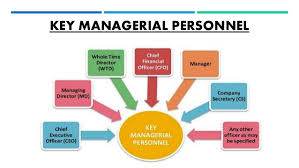
The Companies Act 2013, has introduced many new Concepts and Amendments, and KMP (Key Managerial Personnel) is one of them. Key Management Personnel are employees who have the authority to directly or indirectly manage or control business operations, and they are responsible for the day-to-day business of the company. There are six types of Key Managerial Personnel, namely, Managing Director, Manager, Chief Financial Officer, Company Secretary, Whole Time Director, Chief Executive Officer. The amendment, Appointment, and Remuneration of Managerial Personnel Rules, 2014 were introduced by MCA in Companies Act on 9 June 2014 by introducing rule 8A pertaining to the appointment of whole-time company Secretary.


Appointment and Remuneration of KMPs

Section 203(1) of the Companies Act, 2013 provides for appointment of KMPs in companies as follows:

Every Listed company and every other public Company having a paid-up share capital of ten crores or more shall have whole time Key Management Personnel (i.e. MD or Manager, Company Secretary, Chief Finance Officer)

A Company which is required to appoint a whole time Key Managerial Personnel (whole time CS) and is having paid up share capital of Rs.5 crores or more.

Section 197 and Schedule V to the Companies Act, 2013 prescribes certain caps and compliances only in regards to the remunerations of Directors including MD, WTD, and Manager. So the provisions related to the managerial remunerations are not applicable on all Key Managerial Personnel, but they are applicable only on such Managerial Personnel as mentioned in Section 197 and  Schedule V to the Companies Act, 2013.download (2)

The Company Board appoints the Directors and KMPs after assessing and selecting the candidates for the said post. A Nomination and Remuneration Committee is formed, and the same is responsible for reviewing the structure, size, and composition of the Board, identifying individuals based on their qualification and specialisation and skills to be appointed as Key Managerial Personnel. NRC also recommends on the remuneration payable to directors and KMPs. Further, it also ensures that level and composition of remuneration is also reasonable and sufficient, relationship of remuneration to performance is clear and meets appropriate performance benchmarks.

The guiding principle is that the level and composition of remuneration shall be reasonable and sufficient to attract, retain and motivate Directors, Key Managerial Personnel, and other senior officials. The remuneration of Directors, KMPs, and other senior officials shall be based and determined on the individual person’s responsibilities and performances and in accordance with the limits as prescribed by the Act. The Nomination and Remuneration Committee determines individuals remuneration packages for the Directors and Key Managerial Personnel and other Senior Official taking into account various factors it deems fit and relevant, including but not limited to market, business performance and practices in comparable companies, having due regards to financial and commercial health of the Company as well as prevailing laws and guidelines laid by the Government for this purpose.

The NRC committee consults with the chairman of the Board as it deems appropriate. The Nominations & Remuneration Committee determines individual remuneration packages for Directors, KMPs and Senior Officials of the Company taking into account factors it deems relevant, including but not limited to market, business performance and practices in comparable companies, having due regard to financial and commercial health of the Company as well as prevailing laws and government/other guidelines.

The Committee consults with the Chairman of the Board as it deems appropriate. Remuneration of the Chairman is recommended by the Committee to the Board of the Company.


Remuneration

Base Compensation (fixed salaries) must be competitive and reflective of the individual’s role, responsibility, and experience in relation to the performance of day-to-day activities, usually reviewed on an annual basis; (includes salary, allowances and other statutory/non-statutory benefits which are a normal part of a remuneration package).

Variable salary: The Nominations & Remuneration Committee may in its discretion structure any portion of remuneration to link rewards to corporate and individual performance, fulfilment of specified improvement targets or the attainment of certain financial or other objectives set by the Board. The amount payable is determined by the Committee, based on performance against pre-determined financial and non-financial metrics.


Statutory Requirements under the Act

  1. Section 197(5) provides for remuneration by way of a fee to a director for attending meetings of the Board of Directors and Committee meetings or for any other purpose as may be decided by the Board.
  2. Section 197(1) of the Companies Act, 2013 provides for the total managerial remuneration payable by the Company to its directors, including managing director and whole time director, and its manager in respect of any financial year shall not exceed eleven percent of the net profits of the Company computed in the manner laid down in Section 198 in the manner as prescribed under the Act.download
  3. The Company with the approval of the Shareholders and Central Government may authorise the payment of remuneration exceeding eleven percent of the net profits of the company, subject to the provisions of Schedule V.
  4. The Company may with the approval of the shareholders authorise the payment of remuneration up to five percent of the net profits of the Company to any one of its Managing Director/Whole Time Director/Manager and ten percent in the case of more than one such official.
  5. The Company may pay remuneration to its directors, other than Managing Director and Whole Time Director up to one percent of the net profits of the Company if there is a managing director or whole-time director or manager and three percent of the net profits in any other case.
  6. The net profits for the purpose of the above remuneration shall be computed in the manner referred to in Section 198 of the Companies Act, 2013.

The Independent Directors shall not be entitled to any stock option and may receive remuneration by way of fee for attending meetings of the Board or Committee thereof or for any other purpose as may be decided by the Board and profit related commission as may be approved by the members. The sitting fee to the Independent Directors shall not be less than the sitting fee payable to other directors.

The remuneration payable to the Directors shall be as per the Company’s policy and shall be valued as per the Income Tax Rules. The remuneration payable to the Key Managerial Personnel and the Senior Management shall be as may be decided by the Board having regard to their experience, leadership abilities, initiative taking abilities and knowledge base.


Payable Remuneration

S 197(1) clearly defines the total managerial remuneration payable by a public company to its directors, KMPs, WTDs in respect to any financial year shall not exceed eleven percent of the net profit of that Company for that financial year computed in the manner laid down u/s 198 except that the remuneration of the directors shall not be deducted from the gross profit. However, the excess of payment can be authorised by the Company in the general body meeting by seeking permission of the Central Government.

Provided further that the remuneration payable to anyone managing director shall not exceed five percent of the net profit of the company and if there is more than one such director remuneration shall not exceed ten percent of the net profits to all such directors and manager.

The remuneration payable to directors who are neither managing directors nor whole time directors shall not exceed –

  • One percent of the net profits of the company and
  • Three percent of the net profits in any other case.

The percentage mentioned above shall be fixed and exclusive of any fees payable to directors u/s.s (5)

But subject to schedule V, in any financial year, a company suffers loss or has no profits it shall not pay to any of the KMPS or directors any remuneration or any fees.download (2)

Further the remuneration payable to the directors, KMPs of the company shall be determined in accordance with and subject to the provision the section, either by article of company or resolution or by special resolution passed by the Company in general body meeting and such remuneration shall be payable to a director shall be inclusive of remuneration payable to him for the services rendered by him in any capacity.

The Non-Executive Directors shall be entitled to receive remuneration by way of sitting fees for attending every meeting of the Board/ Committees as approved by the Board of Directors, profit related commission as may be recommended by the Committee to the Board and subsequently approved by the members. The remuneration payable to the Directors shall be as per the Company’s internal policy and shall be governed as per the Income Tax Rules.boa_2232666b

A director or manager may be paid remuneration either by way of monthly salary or at a specified percentage as discussed above.  Subsection 7 states that independent directors shall not be entitled to any stock option and may receive remuneration by way of fees only.

Subsection 9 mentions if any director or KMP draws or receives directly or indirectly any remuneration in excess shall be liable to refund such sums to the company. The company shall not waive off such excess amount which is recoverable by the Company.

Download Now

Directors’ Responsibilities Regarding Accounting And Reporting Of Companies

0
Business concept isolated on white

In this blog post, Priyasa Patnaik, an advocate who is currently pursuing a Diploma in Entrepreneurship Administration and Business Laws from NUJS, Kolkata, writes about the responsibilities of directors in connection with accounting and reporting of companies.

received_893986527303460

The legal position of the director of a company is not defined well under the Companies Act, 2013 (the “Act”). However, Bowen L.J. has held in Imperial Hydropathic Hotel Co, Blackpool v. Hampson[1] that a director acts as the agent, trustee and managing partner of the company to transact its operation. The director is responsible for the proper management of the day to day activities of the company. The director is accountable to the members of the company, i.e. shareholders of the company, which has increased with vide provisions of the Act to a great extent.[2]Therefore, the duties of the director include duty of good faith and care towards the company and the work assigned to him and within these duties, accounting and reporting of the company are the statutory duties of the director under the Act.

Business concept isolated on white

According to Section 134 of the Act, accounting and reporting of the company comprises of  –   a)preparation of consolidated financial statements attached with auditor’s report under Section 143 of the Act and authentication of the said financial statements, and b) preparation of the Board of Director’s Report (the “Board’s Report”) including the Director’s Responsibility Statement. The director of the company is responsible to prepare the financial statement including giving a true and fair view of the state of affairs of the company in compliance with the accounting standards as prescribed under Section 133 of the Act in the relevant year. Further, under Section 134(3) of the Act, the Board’s Report includes, the following in the relevant financial year–

  1. corporate social responsibility initiative policies of the company, and
  2. conservation of energy, technology absorption, foreign exchange earnings and outgo,
  3. statement indicating development and implementation of a risk management policy for the company including identification therein of elements of risk, if any, which in the opinion of the Board may threaten the existence of the company,
  4. any amount recommended as to be paid by way of dividend,
  5. any amount which the Board proposes to carry to any reserves,
  6. Director’s Responsibility Statement,
  7. extract of annual return of the company,
  8. comments on auditor’s and secretarial audit report,
  9. material changes and commitments made by the director on behalf of the company affecting its financial position,
  10. disclose loans, guarantees or investments under Sections 185 and 186 of the Act made by the director on behalf of the company,
  11. contracts or arrangements with related parties referred to in Section 188 (1) of the Act,
  12. in case of a listed company and every other public company having such paid-up share capital as may be prescribed, a statement indicating the manner in which formal annual evaluation has been made by the Board of its own performance and that of its committees and individual directors.

The Board’s Report is attached to the financial statements so as to provide basis for the stipulations made in the financial statement. The information contained in the Board’s Report includes the financial statement of the subsidiaries, joint venture companies and associate companies.[3]

boa_2232666b

In addition to the Board’s Report, Director Responsibility Statement is also furnished with  –  a) applicability of the accounting standards during preparation of the annual accounts, b) use of appropriate accounting policies in a consistent, reasonable and prudent manner, c) maintenance of accounting records and safeguarding assets of the company from fraud or other irregularities, d) preparation of accounts in an ongoing concern basis, e) in case of a listed company, satisfactory and effective appropriate internal financial controls, and f) compliance of applicable laws[4]. The Board’s Report along with the Director Responsibility Statement reinforce the director’s responsibility towards the company introspect of its internal control, maintenance of accounting records and preparation of financial statements at the end of the financial year[5].

Further, according to Rule 8 of the Companies (Accounts) Rules, 2014, the Board’s Report includes financial summary; change of nature of business, if any; details of directors or key managerial personnel who were appointed or resigned during the financial year; names of the companies which have ceased to become subsidiary / joint venture /associate; details of the accepted deposits which has remained unpaid or unclaimed; any significant orders passed by the court of law/ tribunals/ competent authorities affecting company’s operation; and satisfactory internal financial controls[6]. These detailed information furnished in the Board’s Report amounts to extensive accounts and reporting of the company’s state of affairs in one financial year.

The director with personal liability towards the losses of the company, if any, due to misappropriation of funds of the company, holds a responsible position in the company. The director, therefore, is answerable towards the members of the company for the usage and management of the accounts of the company in each and every aspect during the relevant financial year. Thus is the director’s responsibility in respect of accounting and reporting of the company.

 Footnotes:

[1](1883) 23 Ch D 1

[2]Section 166 (2) of the Act – “A director of a company shall act in good faith in order to promote the objects of the company for the benefit of its members as a whole, and in best interests of the company, its employees, the shareholders, the community and for the protection of environment.”

[3]Accounting Standard (AS) 18, Related Party Disclosures. See also, T.P. Ghosh, Taxmann’s Accounting Standards and Corporate Accounting Practices, (2011) 9th Edition, pg. 820 – 821.

[4]Section 134 (5) of the Act.

[5]Dr. G.K. Kapoor & Sanjay Dhamija, Company Law and Practice: A Comprehensive Text Book on the Companies Act 2013 (2015) 20th edition, p. 604 – 605

[6]Supra n. 3 (Taxmann’s Accounting Standards and Corporate Accounting Practices) at pg. 608.

Download Now

The Satyam Scandal and It’s Effect on Corporate Governance Strategies in India

0

In this blog post, Hitender Sharma, a member of the Bar of the District Court Mandi Town, Himachal Pradesh and currently pursuing a  Diploma in Entrepreneurship Administration and Business Laws from NUJS, Kolkata, discusses the effect of the Satyam scandal on Corporate Governance strategies in India and the resulting changes to these strategies. 
2255


About Satyam?

Ramalinga Raju, a management graduate from Ohio University, founded Satyam Computer Services Ltd., a Hyderabad-based software Company in 1987. It catered to the IT needs of various sectors like Healthcare, Bio-Tec., Telecommunication and Media, Automotive Banking & Finance, etc. Prior to the year 2009,  the Company was one of the few fastest growing companies in India, generating $ 2.1 billion revenue and having about 9%  of the market share. It had 53000 employees and perhaps was the first Indian Company to be listed on three International Exchanges, i.e., NYSE, DOW and EURO NEXT. This Company had development centers in about 66 Countries, and its export accounted for about 76% of total sales revenue.


Genesis of the Satyam Scandal

Ramalinga Raju, founder, and CEO of Satyam Computers announced on January 7, 2009, that his company had been falsifying its accounts for years, overstating revenues and inflating profits.

Prior to that Raju made an attempt to have Satyam invest about Rs. 7000 Crore in Maytas Properties and Maytas Infrastructure  — two firms promoted and controlled by his family members.

On December 16, 2008, Satyam’s Board cleared the investment, but investors opposed it. The Board of Satyam, later on, was reconvened the same day and called off the proposed investment.

Thereafter resignations followed from Satyam’s non-executive Directors. Resigning as Satyam’s chairman and CEO, Raju said in a letter addressed to his Board, the stock exchanges and the market regulator, Securities & Exchange Board of India (SEBI) that Satyam’s profits were inflated over several years to “unmanageable proportions” and that it was forced to carry more assets and resources than its real operations justified. He took sole responsibility for those acts. He further stated that “it was like riding a tiger, not knowing how to get off without being eaten,” “The aborted Maytas acquisition was the last attempt to fill the fictitious assets with real ones.”images

Raju acknowledged that Satyam’s Balance Sheet included Rs. 7,136 crore in non-existent cash and bank balances, accrued interest and misstatements. It had also inflated its 2008 second quarter revenues by Rs. 588 crores to Rs. 2,700 crores and actual operating margins were less than a tenth of the stated Rs. 649 crore.

The company’s fixed deposits documents were forged, diverting  Rs 1,250 crore at the rate of Rs 20 crore per month over a period of many years. It held more than 400 Benami land transactions of thousands of acres. The Company claimed that the strength of the company was 53,000 against actual employee strength of only 40,000.


Events that Followed on Disclosure of Scandal

  • On January 8, 2009, Citibank freezes Satyam’s 30 accounts.
  • On January 9, 2009, Ramalinga Raju and his younger brother B. Rama Raju were arrested. The Central Government dissolved  Satyam’s Board and  appointed seventeen directors.images (1)
  • On January 10, 2009, Satyam’s former CFO Srinivas Vadlamani and awarded.
  • On January 11, 2009, the Government appointed Deepak Parekh, Kiran Karnik and C. Achuthan to the Satyam Board.
  • On February 2009, CBI took over the investigation, goes on to file three charge sheets.
  • March 6, 2009, Satyam gets the SEBI nod for bidding process to select investor.
  • On April 22, 2009, Tech Mahindra makes an open offer to Satyam shareholders at Rs. 58/share.
  • On June 22, 2009, Mumbai: Tech Mahindra Ltd merged Satyam Computer Services Ltd with itself, buying the remaining stake in the Hyderabad-based firm in an all-stock transaction worth Rs 5,150 crore and creating a new entity Mahindra Satyam.
  • On October 28, 2013, Enforcement Directorate files a criminal complaint against 47 persons and 166 corporate entities headed by Ramalinga Raju.
  • April 9, 2015, CBI special Court found all the ten accused guilty.
  • CBI special court found B. Ramalinga Raju, founder and CEO of Satyam Computers along with nine others guilty of criminal conspiracy and cheating among other offenses and  awarded 7 years imprisonment. The trial Court also imposed a fine of 5.5 crores on B. Ramalinga Raju and his brother Rama Raju.


What is Corporate Governance?

Corporate governance refers to the set of systems, principles, and processes by which a company is governed. They provide guidelines as to how the company can be directed or controlled such that it can fulfill its goals and objectives in a manner that adds to the value of the company and is also beneficial for all stakeholders in the long-term. downloadStakeholders, in this case, would include everyone ranging from the Board of Directors, management, shareholders to customers, employees, and society. The management of the company assumes the role of a trustee for all the others. Good corporate governance means conducting the business in a transparent manner with integrity and fairness. It involves a commitment to conduct business in an ethical manner by complying with all the laws of the land and be accountable to all the stakeholders. Good corporate governance is one of the important criteria for the Investors including foreign investors for taking an investment decision in the company. Companies with a clean image can source capital at more reasonable costs. Good corporate governance makes sure that all shareholders get a voice at general meetings and are allowed to take an active part. Even non-shareholder stakeholder’s interest needs to be taken care off. A code of conduct regarding ethical decisions is established for all the Board members. Business transparency should be the key to promoting shareholder trust


Satyam Scandal is an Accounting Scandal

Satyam Scandal in effect was an accounting scandal. Various accounting and financial statements were manipulated and forged by intentional omissions, inadequate disclosures and by intentional misapplication of accounting policies. Assets were overstated than actual, fictitious deposits were shown in the Bank and also interest on it. It is not only an example of bad governance but also of dishonest governance to (or “intending to”) siphon off public funds from the Company by manipulating data and accounts in connivance with the external auditors.


Resulting Effect of the Satyam Scandal on Changes in Corporate Governance Strategies in India

  • After the scandal, the Confederation of Indian Industries set up a task force to suggest reforms.
  • National Association of Software and Services Companies established a corporate governance and ethics committee headed by Narayana Murthy.
  • This Committee suggested reforms relating to audit committees, shareholder rights, and whistleblower policy.
  • SEBI’s committee on disclosure and accounting standards issued a discussion paper in 2009 to deliberate on
    • the voluntary adoption of international financial reporting standards;
    • the appointment of chief financial officers by audit committees based on qualifications, experience, and background; and
    • the rotation of auditors every five years so that familiarity does not lead to corporate malpractice and mismanagement.
  • The Ministry of Corporate Affairs in 2009, issued a set of voluntary guidelines for corporate governance on the following  issues:
    • The Independence of Directors
    • The roles and responsibilities of audit committees
    • The roles and responsibilities of the Boards of companies
    • Whistleblower policies
    • The separation of the offices of the chairman and the CEO to ensure independence.
    • A system of checks and balances.
    • Terms and conditions of appointment of Directors such as their tenures, remuneration, evaluation, the issuance of a formal letter of appointment, and placing limits on the number of Companies in which an individual can be a Director.download (1)
    • In 2010, SEBI amended the Listing Agreement to include the provision dealing with the appointment of a chief financial officer
  • In 2013, the Indian Company Law was amended, and it  incorporated the following  provisions:-
    • It clearly defined the responsibility and accountability of independent Directors.
    • It clearly defined the responsibility and accountability of Auditors.
    • It provided for the compulsory rotation of auditors and audit firms. It prescribed a statutory cooling off period of five years following one term as an auditor.
    • An auditor cannot perform non-audit services for the company and its holding and subsidiary companies. This provision is added to ensure that there is no conflict of interest, which may arise if an auditor performs other functions for the same company such as accounting and investment consultancy services.
    • It provides for the duty of Auditors to report fraudulent acts noticed by them during the performance of their duties.
    • It provides for having independent Directors on the Board of the Companies. (Independent Directors means, Directors who do not have a material or pecuniary relationship with a company).
    • Independent Directors have been barred from receiving stock options and are not entitled to receive remuneration for their services, except for reimbursement. At least one-third of the Board of a company has to consist of independent Directors.
    • Audit committee has to accommodate a majority of independent Directors. One independent director is required to be a member of the remuneration committee also.
    • Additional disclosure norms are – providing for the formal evaluation of the performance of the Board of Directors, filing returns with the Registrar of Companies with respect to any change in the shareholding positions of promoters and the top ten shareholders, have also been mandated.
    • Remedy for initiating class action suits against the company and its auditors for damages has been provided in the amended Companies Act.


Thus corporate governance after Satyam scandal has to be in conformity with the amended Companies Act and other guidelines. This scandal has also exposed the role of dishonest external auditors and has forced the Government to provide for checks and balances.


Download Now

Effective Success Tips For Law Students

0

In this blog post, Dr. Praveen Kumar Lohchab, the Officiating Head at NCU Law School, Gurgaon, provides effective success tips for Law Students.  

Screen Shot 2016-08-29 at 6.07.33 pm


Introduction

At the outset, I must acknowledge the efforts of Super Lawyer.in to envisage my ideas to guide law students while pursuing legal education to achieve success in their career. We believe that the journey of getting a dream job at any law firm or pursuing a legal practice and becoming a well-established lawyer begins only after legal education. I disagree a little on this public perception. According to my experience in the Legal Academia and Industry, his journey starts from the very first day, i.e., the day a student from any background decides to pursue law as a career. So my first advice to all students is that they must plan this journey from the first day. To support my view, I would like to quote a few words by Erin Andrews, who has said, “Success doesn’t happen overnight. Keep your eye on the prize and don’t look back”.


Law School Selection

Students must prepare for the CLAT and the LSAT Examination to get enrolled in top National Law Universities. I have noticed most of the students write competitive exams without knowing the outlines of the Syllabi of these competitive exams. Without preparation, students cannot get admission in desired law schools.


Appropriate Course Curriculum

Gone are the days, where we had the traditional dual degree integrated five years BA-LLB degree, and this was the only option available for law students to pursue. Now with the changing paradigms of legal education, we have other specialisations that have merged with Law like BBA-LLB, BBA-LLB (Hons.), B.Tech-LLB, BSc-LLB, etc. These degree programmes have been designed to cater to the needs of the industry. Many leading Universities have excelled in imparting these specialised programmes. For Instance, BBA LLB (Hons.) is the flagship programme of The NORTHCAP University Law School, Gurgaon. Likewise UPES, Dehradun has emerged with the B.Tech-LLB in energy laws. However, I will not suggest enrolling in a Law programme with B.Tech., because the employment prospects in the legal industry with respect to engineering is limited, on the other side BBA-LLB (Hons.) has become the need of the hour.


Constant Guidance and Innovative Comprehensive Teaching Learning

I, myself have witnessed that the teaching-learning methodology in traditional Universities is losing its significance day by day, yet private Universities have excelled in a short time span. This is not because of their infrastructure, but qualified and dedicated faculty present in the university. The way in which the faculty engages the students with its innovative and comprehensive teaching-learning methods, I think this is the first factor responsible for the growth and development of the students. And Students also must participate in every activity inside or outside the class.  If we compare the ratio of students getting placement every year from both, Traditional Universities and Private Universities, I must say that the placement ratio of Private Universities is much higher.

download

Contemporary Course Curriculum

There is a very common perception in society that students opt for Law Schools and Law programmes on certain priorities like the location of the Law School, Programme Fee, Infrastructural Facilities, hearsay references from friends and other criterion. They soon realize that they have landed up in the wrong law school and have enrolled in an integrated law programme in which they are not able to explore the content and as a result, they complete the programme without achieving expertise in the subject. Students must make preliminary enquiries about the course curriculum of all Law programmes and available specializations. They can opt for career counselling and simultaneously, they can consult professionals from the legal industry and legal academia.


Interactive Approach Towards Learning Law Courses

Students must participate in all activities, inclusive of the ones inside and outside of the classroom. Lot of opportunities are floating around and I have witnessed, only few students are vigilant in exploring. imagesOnline legal resources like Manupatra, Lexis-Nexis, and Westlaw, etc., are available to retrieve decided judgements and other legal literature. Several E-books are also offered online on every contemporary subject. Students must develop reading-writing habits. Simultaneously, students must participate in Moot Court Activities, which is a prominent exercise in every law school.


Internships

Internships during every semester break are not only a mandatory exercise to get the degree but a vital activity, without this practical knowledge could not be imparted. I must say that without effective internships, legal education is incomplete. Internship bridges the gap between the classroom and the real world. After every end term exam in every semester, students are offered the opportunity to avail of a four-week internship. Therefore, during the five years of any law programme, students get 40 weeks for practical exposure. Students must utilize this opportunity to learn practical components of the industry, which is not possible in the classroom. Students must perform well in their internships so that they can convert their internship opportunity into an employment opportunity.

download (1)

Extra Curricular Activities

A 360 degree approach is essential to groom law students. Extracurricular activities like Debating, Essay writing, Blog writing, Newspaper column writing, Research Papers writing, presenting research papers in seminar, conferences, workshops and participating in Moot Court Competitions are some of the best extracurricular activities which help develop communication skills of the students.


Lastly to conclude, pursuing a law programme from the best law school in the country may not help students to attain success in their life, but pursuing a law programme with passion, dedication and commitment can do so.


Download Now

Relevance Of The Software Technology Parks Scheme Of India, 2016

1

In this blog post, Sudipta Bhowmick, who is currently pursuing a Diploma in Entrepreneurship Administration and Business Laws from NUJS, Kolkata, writes about the relevance of Software Technology Parks of India, 2016.

STPI-Logo

After the economic reforms of 1991-92, liberalization of external trade, relaxation of controls on both inward and outward investments, elimination of duties on imports of information technology products and the fiscal measures, and foreign exchange taken by the Government of India and the individual State Governments specifically for IT and ITES, have been major responsible factors for the sector to flourish in India and be able to achieve a dominating position in offshore services in the world. Export Oriented Units (EOU), Software Technology Parks (STP), and Special Economic Zones (SEZ) are the major fiscal incentives provided by the Government of India.[1]

For the promotion of Software exports from the country, the Software Technology Parks of India (STPI) was established by the Ministry of Communication and Information Technology, Government of India, as an autonomous statutory body to encourage, promote and boost software exports from India. Statutory services, data communications services, incubation facilities, training and value added services are rendered by the STPI. The Headquarter of STPI is located in New Delhi. STPIs have been setup across the country and have presence in 53 locations.[2] Over 4000 units are registered under STP Scheme.[3]

The STP scheme allows software companies to set up operations with a special focus on SMEs and start up units to foster the growth of software industry, since it is a 100% export oriented scheme. Units undertaking to export their entire production of goods and services may be set up under the Electronic Hardware Technology Park (EHTP) Scheme. Such units may be engaged in manufacture and services. “The unique feature of the STP scheme is the provisioning of single-point contact services for member units, enabling them to conduct exports operations at a pace commensurate with international practices.”[4]

Benefits under STP Scheme

  1. Exemption on Customs Duty in full on imports.
  2. Exemption on Central Excise Duty in full on indigenous procurement.
  3. Central Sales Tax Reimbursement on indigenous purchase.
  4. Free importation of all relevant equipment / goods including second hand equipment (except prohibited items).
  5. Importation of Equipment on loan basis/lease.
  6. Permission of 100% FDI.
  7. Permission of sales in the DTA up to 50% of the FOB value of exports.
  8. Permission to use of computer imported for training (subject to certain conditions).

Nasscom

But there are some issues that need to be addressed. Nasscom, the apex body for IT and ITES industry, expects some of the issues such as clarity on transfer pricing and benefits to STPI to be addressed in the upcoming Union Budget for better growth of the sector.[5] The Budget will address this and a few other essential elements like a correction in the prevailing high interest rates of 20-30 percent for safe harbour margins. Furthermore, the foreign trade policies should include benefits of Services Exports from India Scheme (SEIS) for Software Technology Parks of India (STPI) units.[6] Currently, without such benefits, STPI units are at a disadvantage as compared with their SEZ counterparts for the same services.

Footnotes:

[1] http://www.deity.gov.in/content/export-promotion-schemes-dpl-elec

[2] http://www.mah.stpi.in/

[3] http://www.deity.gov.in/content/export-promotion-schemes-dpl-elec

[4] Id.

[5]http://economictimes.indiatimes.com/articleshow/51027705.cms?utm_source=contentofinterest&utm_medium=text&utm_campaign=cppst

[6]http://economictimes.indiatimes.com/articleshow/51027705.cms?utm_source=contentofinterest&utm_medium=text&utm_campaign=cppst


Download Now

Relevance Of Major And Minor Ports In International Trade

0

In this blog post, Suraj Pattanaik, who is currently pursuing a Diploma in Entrepreneurship Administration and Business Laws from NUJS, Kolkata, discusses the relevance of Major and Minor Ports in International Trade.

Port-pic-1

Economic liberalization has led to investments flowing from across the world. For Investments to flow in from various parts of the globe primarily depends on the ease of doing trade and the infrastructural facility that can be availed. Development of infrastructures is one of the key factors in determining the economic development of a country. Along with standardization and trade liberalization, faster, reliable and cheaper transport services are contributing to the integration of production processes at the international level. Thus, ports can be deemed to be the gateway for foreign trades which facilitates a smooth export and import.

Looking back in time, it can be easily realized that ports have contributed in the making of major cities around the world. Early port activities included both military as well as commercial activities.

Gerhardt Muller defines port as: “a harbor or haven where ships may anchor or a harbor area with marine terminal facilities for transferring cargo/ passengers between ships and land transportation.”[1] In this definition the word ‘marine’ may imply that a port is a territorial unit established on a coastline.

Port facilities are termed as infrastructural facilities and are not directly productive. They assist various productive activities, though not directly used as economic goods. Moreover, infrastructure is the lifeline of any business activity, proper infrastructure increases business activity manifold.

Presently the function of a port is not only limited but has expanded to a logistical platform. The efficiency of a port is important in international trade since a seaport is the nerve of foreign trade of a country.


Types of ports

Ports can be classified in various ways based on its ownership and control, purpose it delivers, volume of trade carried on and types of facilities it provides. But in this paper, we are going to distinguish ports on the basis of its capacity or volume of trade it carries on. Thus, it can be broadly divided into ‘Major Ports/ Main ports’ and ‘Minor Ports’.

 TH20_BU_PORT_1149113f

Major Ports/ Main Ports

Within a region of several ports, it is usually noticed that a particular port is said to be the Main Port. This is so because the term ‘main’ is often used in relation to total cargo throughput volume. In this context, Main Port means usually the largest in volume, busiest and therefore the most important port. However, it is not always the trade of cargo or other goods which puts a port in the class of Main Ports. Sometimes a port is recognized as a Main Port because of its importance to the hinterland rather than the trade volume.

The term Main Port and Major Port are usually used interchangeably but in some countries such as India, the term has an additional attribution. A major port belongs to the Central Government. Here, the Major Ports are a part of the administration of Central Government. The local port authority of a major port does not report to Municipal or State Government, but to the Central Government.

Minor Ports

Minor ports are usually those ports which have a lesser trade volume or work to assist that of the Major Ports. They are administered from lower governmental levels, i.e. from state level, like in India. It provides more flexibility in the administration. But, they cannot be perceived to be of any lesser economic importance.[2]

In India basically the terms Minor and Major reflect the level at which they are governed. In case of a Main Port which is being assisted by several other ports it can be termed as ‘Hub Port’. Hub port is a huge port to which many shipping lines direct their cargo from a remote port. The remote ports which are assisting are usually said to feed the Hub Port and hence, termed as ‘Feeder ports’.

Functions of ports

Trade plays a key role in an interconnected world and makes up a large part of the global economy. In terms of total volume of trade done through the ports, it can undoubtedly be termed as trade amplifiers.

Functions of ports can be divided into three categories: – 1) Core Function 2) Supportive Function 3) Complementary Function

  • Core Functions

The primary functions undertaken by the port are said to be the core functions. These can be said to be the object with which the port has been established. E.g., transportation of passengers and cargo, development and maintenance of port superstructure, towage, mooring, etc.

  • Supportive Functions

Additional tasks support the core function of ports and by nature are relatively close to the core business. E.g., bunkering for vessels, collecting cargo for trades, Ship Repairing Services, Port Traffic Management System, etc.


  • Complimentary functions

They are more distant than that of the supportive functions. These functions do not directly support the core business. E.g. empty container for storage and supply, hinterland operations like forwarding services, etc.

Different ports provide different functions, and especially bigger ports provide a lot more offerings. It is important for that of a terminal operator to create additional offerings in the form of supportive and complimentary functions to boost its economic interest.

Port and international trade

sa_msc_chapter

Port performance and port economics are closely related with macroeconomics, hence, any changes in port traffic or operation has an impact on national economy. As by means of water-carriage, a more extensive market is opened to every sort of industry than what land-carriage alone can afford it, so it is upon the sea-coast, and along the banks of navigable rivers, that industry of every kind naturally begins to subdivide and improve itself.[3]

From the past three decades it has been observed that the port oriented industries are relocating closer to ports for economic viability. The service providers in the port areas also induce the industries to relocate in search of better value for money. Service providers of a port are those that provide services to the users of the port, i.e., to carriers, shippers, and passengers. The primary service provider of a port is the port operator. Other service providers include, for example, stevedores, ship agents, customs brokers, pilot and towage companies, and various government agencies providing maintenance of harbor channels, customs, and vessel traffic service systems.[4]

In face of the global financial crisis and the economic downturn, infrastructure sector plays an important role to counter balance against slowing economic activity and lower consumption. In India, it has been seen that ports and logistics is the third most attractive sector of investment after power, roads and highways.

The economic history of maritime powers such as England, Spain and Portugal clearly documents the significant and critical role which ports have played in the development of the global economy and have exponentially promoted international trade. Port development not only accelerates the rate of international trade but also acts as a catalyst to employment and revenue effects. The beehive of activities in seaports all over the world clearly shows that ports have significant economic impact regionally, nationally as well as internationally.

Conclusion

More than 90% of world merchandise trade is carried by sea and over 50% of that volume is containerized. In today‘s era of globalization, international trade has evolved to the level where almost no nation can be self-sufficient and global trade has fostered an interdependency and inter-connectivity between countries. Shipping has always provided the most cost-effective means of transportation over long distances and containerization has played a crucial role in world maritime transport.[5]

International trade is always interconnected with that of the transportation and port logistics is synonymous to the bulk and cheap transportation facilities. Thus, it can be safely concluded that if port efficiencies are taken care of by that of the nations, then it could lead to a booming economy.

Footnotes:

[1] Muller, Gerhardt, International Freight Transportation, Washington 1999, p.471.

[2]JurgenSorgenfrei, Port Business, 1st edition, Germany 2013, p. 78

[3] http://www.oecd.org/gov/regional-policy/49456330.pdf

[4] http://www.univpgri-palembang.ac.id/perpus-fkip/Perpustakaan/Geography/Geografi%20manusia/Ekonomi%20Pelabuhan.pdf

[5] http://shodhganga.inflibnet.ac.in/bitstream/10603/3984/8/08_chapter%201.pdf

Download Now

Tax Aspects Of ‘Start-Up India, Stand Up India’

1

In this blogpost, Utkarsh Kumar, an advocate and a businessman by profession, who is currently pursuing a Diploma in Entrepreneurship Administration and Business Laws from NUJS, Kolkata, writes about the tax aspects of the recently introduced scheme, ‘Start-up India, Stand Up India.’

IPLEADERS


India is the land of opportunities and as far as the opportunities. No doubt Indians have a specific talent in every specific field but they need a boost in order to efficiently utilize such talents. In order to encourage such individuals, our Prime Minister Shri Narendra Modi initiated for many schemes where the Republic Of India so that unemployment in country can be minimized. Among all schemes that have been introduced by the Modi Government, a scheme called “Start Up India, Stand Up India” is of particular importance. This campaign was first announced by our Prime Minister Shri Narendra Modi on 15th August 2015 at Red Fort. This campaign is based on an action plan aimed at promoting bank finance for starting up ventures in order to boost entrepreneurship and encourage those start-ups with an aim of job creation. The Stand up India initiative is also aimed at boosting entrepreneurship among SC’s / ST’s and among women communities also. It is also focused on restricting the role of States in policy domains and to do away with various licence hindrances like land permission, environmental clearances, foreign investment proposals. This event was launched on 16th January, 2016 by our Finance Minister Shri Arun Jaitley in the presence of top investors, CEO’s, start up founders, etc who actively participated in the campaign. This programme will involve IIT’s, IIM’s, NIT’s and central universities across the nation.

knowstartup-Startup-India-Standup-India-modi

Shri Narendra Modi has exempted tax for 3 years from the capital gains of the start-ups. According to him, profits earned by the start-ups will be exempted from the tax for three years of business. Tax will be exempted only when the investment is above the fair market value. So to boost finance, 20% on the capital gains made by the investments by the entrepreneurs after selling their own assets as well as the government’s recognised venture capitals will also be exempted.

According to a provision in the Income Tax Act, if a start up receives equity funding which exceeds the market value of a firm then those excess considerations will be taxable in the hands of the receipts. Here, the start-ups would be eligible for tax benefits only when it has obtained a certificate from the Inter-Ministerial Board. So the process of seeking these certificates would be made available online and would be time bound.

 Outcomes of tax exemption are:

  1. Tax exemption on capital gains 

An objective of tax exemption on capital gains is to promote investment in the start-ups by mobilizing the capital gains arising from the sale of capital assets. Because of the high risk nature, these start-ups are not able to associate with the investment in the initial stage. It is therefore important that suitable incentives are provided to the investors for investing in the start-up ecosystem. The exemption will be favouring those persons who have capital gains during the year and if they have invested such capital gains in the funds recognised by the Government. This will augment the fund available to various VC’s , AIF’s for the investment in the start-ups. In addition to this, existing capital gains tax exemption for investment in newly formed manufacturing MSME’s by the individuals shall be extended to all the start-ups. Now, those entities need to purchase new assets with the capital gains received to avail such exemption. For instance, investment made on computer or computer software shall be considered as a purchase of new assets in order to promote technology driven start-ups.

taxexempt

  1. Tax exemption to start ups for 3 Years

An objective behind exempting tax for three years is to promote the growth of start-ups and address working capital requirements. As we all know, innovation is the essence of every start-up. Young minds kindle new ideas everyday to think beyond conventional strategies of the running corporate world. In the initial years, a budding entrepreneur struggles to evaluate the feasibility of his/her business idea. Significant capital investment is made in embracing ever changing technology. Also, there are limited alternative sources of finance available to the small and growing entrepreneurs leading to constrained cash funds. With a view to stimulate the development of start-ups in India and provide them with healthy competition, it is imperative that the profits of start up initiatives are exempted from income tax for a period of three years. This fiscal exemption shall facilitate the growth of business and meet the working capital requirements during the initial years of operation; this exemption shall be available subject to non distribution of dividend by the start up.

  1. Tax exemption on investment above fair market value

Its objective is to encourage seed capital investment in start-ups. Under this exemption, there is a provision under Income Tax Act, 1961 which says that where a start up receives any consideration for issuing shares which exceeds a fair market value of such shares, the excess consideration is taxable in the hands of recipient as an income from the other sources. Though in the context of start ups where an idea is conceptualization or in a development stage, it’s often difficult to determine the fair market value of such share. But in general, there are many cases where fair market is value is significantly lower than the value at which the capital investment is done and this results in the tax getting levied under Section 56(2)(vii)(b) of the Income Tax Act, 1961. But currently, the investment by venture capital funds in start-ups are exempted from the operation of this provision and the same shall be extended to investment made by incubators in the start-ups.

Conclusion

I would like to conclude my article here by mentioning that the government is demonstrating its very positive intent through the action plans. However, it is critical that the settled up a team of investors, lawyers, accountants, angels, founders ensure that the final policies of start-ups are flawless as possible and maintain the right balance between accountability, transparency and doing business. Additionally, I am eager to see how the Inter Ministerial Board is being set up to give a necessary certification to the tax benefits.

Download Now

Class Action Suits Under Companies Act, 2013

0

In this blog post, K Yashwanth Rao, a student pursuing a Diploma in Entrepreneurship Administration and Business Laws by NUJS, critically analyses class action suits under Companies Act, 2013. 


The new and revised Companies Act was passed by the legislature in 2013, wherein various old provisions were reviewed and amended wherever found necessary, while at the same time multiple new provisions were also added to the enactment such as the incorporation of a One Person Company. The new enactment also included the provision concerning “Class Action Suits”. This is a new concept which was incorporated into the act. This feature of Class Action Suits has been part of the legal systems in various foreign developed nations. The need for the said provision was felt especially in the instance of Satyam Scam when shareholders could not do much to restrict or obtain any relief, whereas their counterparts in the USA were able to file a Class Action Suit against the Company and its auditing firm claiming damages.images

The said provision concerning Class Action Suits provides protection largely to the minority shareholders and depositors against, Oppression and Mismanagement on the part of the company. The said provision is a part of the set provisions mentioned in Sections 241-246, which provide certain means to restrict the company from carrying out its operations and duties without heading an ear to the minority shareholders and depositors, who also are important stakeholders in the company and who too must be taken into confidence before the any Act is performed by the company.

Section 245, of the new Act which deals with Class Action Suits, enumerates in great detail as to who can sue, what could be the grounds against whom can it be instituted and what remedies can be obtained from an order concerning the said suit? Class Action Suits can be instituted when the applicant/s are of the opinion that the management or conduct of the affairs of the company is being carried out in a manner prejudicial to the interests of the company or its members or depositors. The application in the said regard for a suit is to be filed by before the National Company Law Tribunal as constituted.


Grounds For Applications

The provision provides grounds when such application can be filed before the Tribunal. These grounds are in the form of different orders which are being pleaded for before the Tribunal by the applicants. The said orders/grounds has been enumerated under Sub-section (1) of Sec 245. They are as follows –

  • Restraining the company from performing any Act which is Ultra Vires of the Articles or Memorandum of Association of the company or from committing a breach of any provision therein.
  • Restraining the company from taking actions against any resolutions passed by its members.
  • Restraining from acting against the provisions of law in force.download (2)
  • Declaration of a resolution being void on being adopted by suppression of material facts or misstatement of the events to members or depositors.
  • Claiming damages or compensation or demanding any other such required action from –
    • The company or its director for any fraudulent, unlawful or wrongful Act or omission.
    • The auditor, including the audit firm of the company for any improper or misleading statements made in the audit report or for any other fraud or unlawful act. The liability herein will not only be upon the audit firm, but it shall also lie on the individual partners of the firm, who have deviated from their duties.
    • Any expert or consultant or any other person for any incorrect or misleading statement made or performing any fraudulent or unlawful act.

It is pertinent to note that the said subsection, not only describes enumerates the circumstances wherein the class action is said to be filed, it also enlists the persons or entities against whom the suit can be filed. As mentioned above relief can be claimed against – the company itself, the directors of the company, the auditing firm, consultants, advisors and experts when it is found that they have not performed their duties in a just and correct manner.


Persons Or Class Of Persons Capable Of Filing Such Suit

The persons who are said to be capable of filing such an application before the tribunal for a Class Action Suit have been enumerated under subsection (2) of Sec 245 of the new act. According to the section for a company having share capital, those members /s shall be able to sue, when –

  • The number of members suing is not less than 100, or
  • The number of members suing is not less than 10% of the total, or
  • The member/s not holding more than 10% of the total issued share capital [all calls having been paid].

In the case of a company not having – download (1)

  • The number of members suing is not less than 100, or
  • The number of members suing is not less than 10% of the total, or 3) The member/s not holding more than 10% of the total issued share capital [all calls having been paid]. In the case of a company not having.
  • The member/s not holding more than 10% of the total issued share capital [all calls having been paid]. In the case of a company not having.

In the case of a company not having share capital, such a suit can be instituted by 1/5th of the total number of members. Sec245 not only permits the members, i.e. shareholders to benefit from the provisions herein, it also allows for depositors to file such a suit to ensure that the company does Act and there is no prejudice to their interest. The requisites for depositors to file the suit is that –

  • They should not be less than 100 in number or
  • They should not be less than 10% of the total number of depositors, or
  • Any depositor/s having not less than 10% of total deposits.

Further, Sec 245 also puts down certain aspects which the Tribunal is required to take into consideration under subsection (4). The section of the Act explicitly states the necessity to look out for bona fide intentions on the part of the member/depositor/s who have approached the tribunal and also check if, the person/s approaching the tribunal could have pursued his rights through any other means other than an order under the provision. The Tribunal is also required under the section to take into evidence showing the involvement of individuals other than the directors or officers of the company. And where the cause of action is an Act or omission yet to occur, the tribunal shall take into account whether the said Act or omission would be authorised before it occurs or ratified after it occurs, taking into consideration the circumstances therein.


Proceedings Before The Tribunal

The tribunal shall serve Public Notice on admission of the application, to all those who fall within the same class as those filing it, and all such similar applications present in any jurisdiction shall be consolidated into a single application and the class members, or depositors should be allowed to choose a lead applicant, if no consensus is reached the tribunal shall appoint such a leader. It is worth mentioning that concept of lead applicant seems to be a parallel provision concerning a representative suit, discussed under Order I Rule 8. Also, two class applications for the same cause of action shall not be allowed. Further the costs of the applications shall be defrayed by the company or the person responsible for the oppressive act.images


Binding Nature

Any order passed by the Tribunal shall be binding on the company and all its members and depositors, auditors including the firm and the partners and also on the experts/advisors/consultants. Furthermore, if a company fails to abide by order of the Tribunal, it shall be punished with fine not less than 5 Lakhs, which may go up to 25 Lakhs and also the officers who have defaulted, shall be punished with imprisonment up to 3 years and with fine not being less than 25,000 and going up to 1 Lakh.

In case the application is found to be frivolous, the tribunal shall reject the application with reasons recorded and make the applicant pay costs up to 1 Lakh Rupees.

It is pertinent to take note of the fact that the provisions of the said dealing with Class Action Suits can not be instituted against a Banking Company.


Conclusion

Section 245 of the Act clearly indicates the importance given to the minority shareholders and the depositors who also are very important stakeholders, and whose views and decisions are most often overlooked. It can be said that this provision is a means to ensure there is no tyranny of the majority, whereby in the interests of the minority are adversely affected. The provision provides a means of redressal against oppression and mismanagement. The drawback currently being, the fact, that the said section of the new Act is yet to be notified, and hence, the provision, for now, is merely restricted to the books and cannot be implemented in the real world.

Download Now
logo
FREE & ONLINE 3-Day Bootcamp (LIVE only) on

How Can Experienced Professionals Become Independent Directors

calender
28th, 29th Mar, 2026, 2 - 5pm (IST) &
30th Mar, 2026, 7 - 10pm (IST).
Bootcamp starting in
Days
HRS
MIN
SEC
Abhyuday AgarwalCOO & CO-Founder, LawSikho

Register now

Abhyuday AgarwalCOO & CO-Founder, LawSikho