Download Now
Home Blog Page 1731

iPleaders is looking for Public Relations and Content Marketing Manager

0

iPleadersLogo-Hi-Res_vectorized

We are a startup in the online education domain, working on projects of our own as well as in collaboration with top universities and government bodies for the last 4 years. At iPleaders, we work on transforming what training one can give to budding lawyers, law students, entrepreneurs, government officials and others who want to understand the law and use it to their advantage. We are working on access to justice for the last few years, and have made some real headway. Things that were impossible 4 years back, are very much reality now. That’s how we work – away from the spotlights, cracking on the real problems and taking on things others think are impossible to change. You can read about us more on our website: http://ipleaders.in. Our blogs have the widest reach in India amongst all legal issue-based blogs, enabling access to more than 1 lakh individuals to legal developments that impact their lives.  Our courses like these http://startup.nujs.edu and http://sexualharassment.nujs.edu have been widely acclaimed in media and elsewhere. We are service providers to some of the top brand names like Samsung, Feedback Infrastructure, Agrocorp, JCB and other listed companies for compliance training. We are also in the process of creating breakthrough technologies in the domain of access of justice that will change the face of legal industry in India in the coming years. We need highly capable and ambitious people to make this happen. Now here is a position very essential right now to achieve the success of our dreams.

Designation – Public Relations and Content Marketing Manager

Experience – At least 1-3 years’ experience in public relations, journalism, corporate communications or in building online presence.

(Note: This is not a social media marketing position).  

Essential Skills

  •         Effective writing skills. You should be able to write emails, press releases and other communication in simple and effective English.
  •         Research – You should be able to identify popular websites and content marketing ideas and topics that will be of interest for readers of different websites, in connection with our education products
  •         Excellent communication skills and coordination with other team members.

Roles and Responsibilities

  • Online research and networking skills – You will be required to identify online media and popular websites for different categories of readers. You will need to connect with and build relationships with people who author content there.  You should also be able to get in touch with them through social media (Twitter, LinkedIn, etc.) and share content prepared by us with them.    
  • Push out content related to our courses and products with our own media and friendly blogs pertaining to different kinds of developments in connection with our initiatives (press conference, course launches, webinars, workshops, seminars, etc.)

Opportunities-

  •       Great work life balance with fixed timings.
  •       High growth startup with open, fun friendly environment
  •       Opportunity to continuously make a difference in live of others
  •      Opportunity to conduct research
  •      Opportunity to build great network with legal experts
  •     Opportunity to continuously train and develop yourself in research, networking, counseling and making a difference

Salary range: 3.6 – 4 Lakh per annum depending on qualification and experience. We will provide high quality training and comfortable, homely and no-frills work environment. If you are interested in joining a rapidly growing startup, be part of the legal education and technology revolution in India, and make a difference, then this is the right opportunity.

If you are interested, email with your CV to [email protected] with the subject line Public Relation and Content Marketing Manager.

Download Now

iPleaders is looking for Sales and Marketing Associates

0

iPleadersLogo-Hi-Res_vectorized

Imagine working on upcoming areas in the online education space.

Imagine how it would be to make high-value educational products accessible to the country’s future lawyers and business leaders.  

Imagine how it would be to work at one of India’s most successful online education startups which have made a dent in the online education industry and collaborated successfully with universities and industry bodies.

How it would be for your career?

We are a startup in the online education domain, working on projects of our own as well as in collaboration with top universities and government bodies for the last 4 years. At iPleaders, we work on transforming what training one can give to budding lawyers, law students, entrepreneurs, government officials and others who want to understand the law and use it to their advantage. We are working on access to justice for the last few years, and have made some real headway. Things that were impossible 4 years back, are very much reality now. That’s how we work – away from the spotlights, cracking on the real problems and taking on things others think are impossible to change. You can read about us more on our website: http://ipleaders.in. Our blogs have the widest reach in India amongst all legal issue-based blogs, enabling access to more than 1 lakh individuals to legal developments that impact their lives.  Our courses like these http://startup.nujs.edu and http://sexualharassment.nujs.edu have been widely acclaimed in media and elsewhere. We are service providers to some of the top brand names like Samsung, Feedback Infrastructure, Agrocorp, JCB and other listed companies for compliance training. We are also in the process of creating breakthrough technologies in the domain of access of justice that will change the face of legal industry in India in the coming years. We need highly capable and ambitious people to make this happen. Now here is a position very essential right now to achieve the success of our dreams.

Designation –  Sales associate and Marketing Associate

Experience – At least 2-3 PQE sales in  education industry.

Essential Skills

  •        Comfort and ease with numbers
  •         Ease and interest in working with new technology and tools (you don’t need any coding knowledge for these)  
  •         Must have ability to record, track, interpret and present data in a simple and effective way with action points for leadership
  •         Must be willing to develop ‘listening’ skills

Roles and Responsibilities

  •       Coordinate with marketing team and maintain analytics of leads and conversions
  •        Familiar with CRM (e.g. Zoho, Leadsquared), email-marketing tools (e.g. Mailchimp), Exotel
  •        Landing page optimization for visitors to easily discover value proposition in the site and engage with the marketing and sales funnel  
  •        Email funnel creation, monitoring and optimization  
  •        Calling qualified leads to engage them in the sales funnel and making follow-ups
  •        Collaborate with sales leadership to implement training process
  •        Ability to work in a team as well as individual
  •        Manage and track day to day performance of all sales team members and deliver reviews and reports

(We are willing to train interested candidates in the above responsibilities.)

This position is not for those who are not interested in getting familiar with numbers or resistant to using online technological tools.    

Opportunities

  • Great work life balance with fixed timings.
  • High growth startup with open, fun and friendly environment
  • Opportunity for personal development and in making a contribution in the lives of others
  • Opportunity to work with latest technological tools
  • Opportunity for developing leadership and creating a team  
  • Learn about new opportunities and market functioning in online education industry

Salary range: 3.6 – 4 Lakh per annum depending on qualification and experience. We will provide high quality training and comfortable, homely and no-frills work environment. If you are interested in joining a rapidly growing startup, be part of the legal education and technology revolution in India, and make a difference, then this is the right opportunity.

If you are interested for the position email with your CV to [email protected] with the subject line “Job Application for Sales Associate”

Download Now

Know this Law School: NALSAR

0
Know this Law School: NALSAR

An anonymous NALSAR student writes about NALSAR as an University. How is it to study in this University regarded as one of the best?

NALSAR Academic Block

College Environment and infrastructure

Friendly relations between juniors and seniors are hallmark of almost all the NLUs, but at NALSAR its quite at another level as its a small campus, away from the city almost inside a forest area and people in the campus are your only friends, family and social circle.

People here at NALSAR are not just occupied with books. There is a strong sporting culture that is imbibed since the inception of our journey in NALSAR. Precisely the reason why we have an excellent infrastructure which furthers our interest for sports.

There is proper cricket-cum football stadium in the campus itself. The stadium has a capacity of more than 1000 spectators. Apart from that we have two tennis clay courts, 2 basketball courts, a gym for the girls as well as the boys.

Size dominates everything in NALSAR. The campus is really massive. We have a 55-acre campus, the biggest among all the National Law Schools. The hostel space crunch that plagues other NLUs is never an issue here at NALSAR. We always have surplus rooms (around 10-15), though we get single occupancy only from the third year!

Food is never an issue either. The Mess Food is far too great as per the mess standards, and those who have a fetish for South Indian food will never miss the home food.

There is a widespread misconception that NALSAR lacks good faculty. However, I beg to differ. It goes like this. I think only those persons have the locus stand to speak about the faculty standards, who have studied in both the Universities they are comparing. If I’m from NALSAR, it’s sheer stupidity to demean the faculty of NLS and preach that they lack good faculty, as compared to NALSAR’s, because I’ve NEVER been taught by them.

Prof. Vijender Kumar is the authority in Family Law in this country. He has edited Mayne’s version of Hindu Law, which has been cited in scores of SC’s judgment. He has written dozens of books in the family law. Prof Amita Dhanda is an international authority in disability jurisprudence. She was a part of the UN committee appointed to draft and formulate guidelines for disable people. And both are fantastic teachers. MOST of the teachers in NALSAR are really good, barring a few exceptions, who I must admit are really bad.

NALSAR certainly has demerits as well.

The foremost being its location, which is a bit far from the city. This makes the curfew timing a bit strict for ensuring security and safety. However, most of us believe that it’s a blessing a disguise for us. Being there in the same place, in a way, coerces us to study.

Mooting at NALSAR

Research is what drives people in NALSAR. The fact that we have been winning MPL for the two consecutive years bears testimony of the same as well. Though this year’s dismal performance is accounted for some internal matter, and we are pretty much sure of putting up a great show next year too.

I think this sums up all. Though I wrote in a haphazard manner, I hope it helps. Moreover, I wanted you to write on your own, because as I said earlier, we’re not allowed to vent out anything about our college outside the college.

Download Now

Divye Bahadur; Associate at Trilegal, on how the NUJS online diploma prepared him for this role

0

IMG-20160625-WA0018 (1)

Divye Bahdur would be joining Trilegal; Delhi, as an associate in their corporate team from July 2016. Prior to this he worked with Impact Law Ventures; New Delhi as an associate. Here he worked primarily on matters involving venture capital, early-stage investments and foreign investments in India and general corporate advisory. He has also interned with few of the best law forms in India like Amarchand Mangaldass Suresh A. Shroff, New Delhi, Khaitan & Co., New Delhi etc. He is an LLB from Dr. Ram Manohar Lohiya National Law University, Lucknow.  He has participated in various national and international level moot competitions and has numerous publications to his credit.

He completed the NUJS Diploma in Entrepreneurship Administration and Business Laws in 2013.We spoke to him about his experience with the course and he had some really positive things to share about the course. So we decided to share it with you all in the form of a success story. Over to Divye Bahadur:

I enrolled for the NUJS diploma in Entrepreneurship Administration and Business Laws while I was in the final year of law school. I was introduced to this course through one of the founders of iPleaders; who conduct this course in association with NUJS.  However, the founder’s advice was not the only reason why I joined the course. I looked up the internet and did some research about the NUJS diploma course and came to the conclusion that it is the best online business law course available in the market. The course curriculum was so well planned that it covered all aspects of business law.

I was in the final year and was aware that if I fail to get a campus placement offer or a PPO, I would have to face lot of interviews. I had to be well versed in all aspects of law especially corporate and business law in order to crack the interviews. Even if I manged a PPO or a campus placement, I had to be aware of all basics of corporate law inorder to perform well in my job. I wanted a career in corporate law in a tier 1 law firm.

All this was not possible with the knowledge gained through the law school curriculum only. I had to learn the business law basics in a practical manner and this diploma course was the perfect solution to it. This course provided an excellent curriculum around that.

All the modules were very well planned with lot of emphasis on practical knowledge. The module I personally liked the most was the one related to the Companies Act and SEBI regulations. These were very informative and helpful. The webinars with Industry experts were another plus point of the course. These webinars exposed us to few of the best brains in the industry and their views and thoughts about different aspects of law.

I have, mentioned this diploma in my CV and my linked profile. I would be happy to recommend this diploma to anyone. I have already recommended this course to lot of my college friends and juniors. Lot of them have already enrolled for this diploma.

I believe that anyone wanting to learn about basics of law would benefit from this course.  Apart from law students, entrepreneurs and people into startups can really benefit from this course, it is important for them to understand various legal aspects.


Download Now

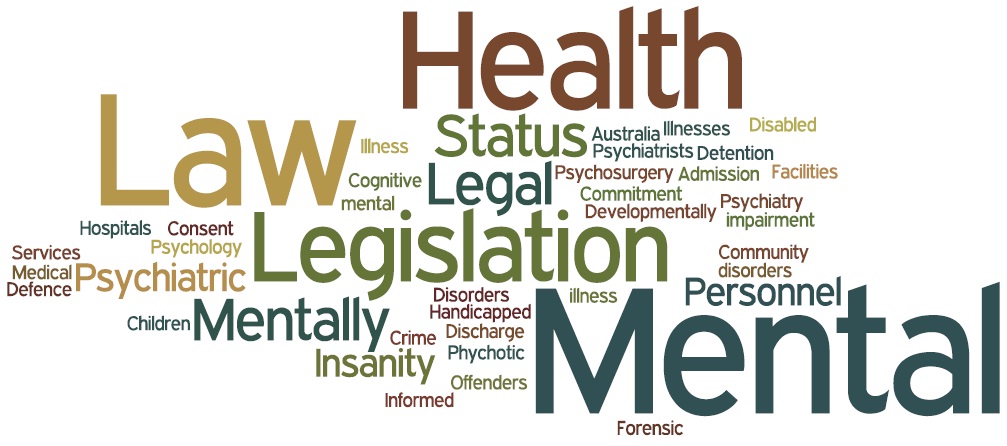
Rights Available To The Mentally Disabled In India

2

In this blog post, Abhiraj Thakur, a student of NALSAR University of Law, Hyderabad writes about the rights available to the mentally challenged people in India under the current framework of laws. The post further elaborates on how these laws are implemented and what are the reforms that need to be brought about.

Abhiraj


Humans have asserted themselves to be the most intelligent species to have ever walked on planet earth. The human brain is such that until today medical science has not been able to explain it in entirety. For instance, we still don’t know how memories are stored. It is because of this brain that humans have made significant discoveries and lived the best life for themselves, but sometimes there occurs a disorder in it which we colloquially refer to as madness or insanity.


What is Mental Illness? Who is mentally ill?

The American Psychiatric Association (APA) defines insanity as a ‘psychological pattern or syndrome marked by distress and disability.[1]‘ Mental illness is considered to be characterized by the inability of a person to carry out the daily chores of his/her life. The Indian Mental Health Act, 1987 defines mentally ill person as ‘a person who needs treatment for mental disorder.[2]

As we see by the definitions ‘mental illness’, the most drastic consequence seems to be that it disables a person to function as a normal human being. These people need treatment which should consist of care and love, but most often they are ill-treated by the larger society. They are considered as unproductive and useless, often thrown out of their houses. Most countries of the world today run Asylums and other healthcare facilities for these people where they are treated but in these facilities as well, they are ill-treated and often not provided with the basic necessities. It thus becomes important for us to know what are the rights available to mentally challenged people in India.


Framework of Laws

mental_health

The Americans with Disabilities Act of 1990 and Mental Capacity Act of 2005 in USA and UK respectively are considered comprehensive legislations recognising rights of mentally challenged in their respective countries. In the case of India, we still lack a comprehensive code. The rights of mentally disabled in India are derived from a vast framework of different laws, these are:


Constitutional Rights

Mentally and physically challenged people can avail all the fundamental rights guaranteed to an ordinary citizen by the Constitution of India. No statute bars them from enjoying these rights. However for mentally challenged the most important constitutional rights are:

Right against discrimination: By Article 15(2) of Constitution of India any citizen, including mentally challenged people, can’t be denied access to public goods. Also, they need to be provided equal opportunities to prosper in life.

Right to Health: Article 21 gives the right to life and personal liberty. Right to health flows directly from right to life and the same has been laid down by the supreme court in many cases.


Disability rights under International Laws

In 1971 the ‘Declaration on Rights of Mentally Retarded Persons’ was adopted by the UN general assembly. The declaration was the first active attempt to grant disability rights to the mentally ill people. The declaration among other things laid down certain guidelines to be adopted by mentally ill people. Some of these were:

  • Recognition of mentally ill people as a separate category of physically challenged individuals and providing them certain safeguards accordingly.
  • The member nations shall ensure the economic security of mentally ill by devising suitable programs so that they can earn their living.
  • Special care shall be taken for these people in any social planning by the state.


The 1996 convention by the WHO on Mental Health Care law

It laid down ten basic principles that every member nation needs to adopt for the betterment of mentally challenged people. It was recommended that a large number of asylums with best healthcare facilities need to be opened in the developing countries. The nations were told to make changes in the internal laws to provide specialized treatment to mentally challenged. There was felt a need to increase awareness among the general people about the plight of mentally challenged. However, the most remarkable recommendation was that all the nations of the world were told to review their laws on mental health and make necessary changes so as to shape them in the best interests of the mentally challenged people. Special categories and reservations were recommended to be made in jobs for these people and that every state shall recognize the disability rights of mentally ill persons. India being a signatory nation to both the schemes needs to act accordingly in the best interests of the mentally challenged people in the country.


Human Rights under international Laws

In 1992, The general assembly adopted the Declaration of Hawaii. For many years it was observed that many patients in mental asylums were subject to gross human rights violations at the hands of authorities. In many countries the asylums were is dismal conditions where in some cases even food and water was not available. Apart from this, the patients lacked privacy, there were no facilities for recreation and leisure activities, the patients were made to do hard labor at times. In fact, there has been no attempt to ‘treat the mentally ill’. The Hawaii declaration laid down that an environment of love and care ought to be maintained in asylums. The seclusion and restraint that is practiced in treating these people need to as minimum as possible. The declaration was the first international treaty that recognized human rights of mentally challenged people.

Rights under Local Laws

 mental-health-acts-india-drsamin-sameed-1-638

The Indian Mental Health Act, 1987

Under this Act, a mentally disabled person has the right to treatment and care in a psychiatric hospital. There are established special asylums for mentally challenged people under the age of 16 by this act. The cost of the treatment in asylums needs to be undertaken by respective state governments unless the relatives of the patient bear it. This Act also provides certain legal safeguards to the mentally challenged. A mentally challenged person has the right to avail legal aid on the order of the court if the court finds that he/she has no means to get aid.


The Persons with Disabilities (Equal opportunities, protection of rights and full participation) Act 1995

The need to provide equal opportunities and enhance participation of mentally challenged in the society was the first time realized through this act. Few landmark steps were taken in this regard were:

  • Establishment of special schools for the education of mentally disabled children.
  • Mentally disabled children were given the right to free education till the age of 18 under this Act.
  • 3% employment reservation for disabled (Including mentally disabled) in government jobs was approved.


Judicial Pronouncements

The Indian judiciary has adopted a sympathetic approach towards mentally disabled people. Time and again judiciary has taken cognizance of infringement of rights of these people and provided them an adequate legal remedy.

In the case of Chandan Kumar v State of West Bengal[3], the judiciary condemned the mismanagement of mental asylums by state governments. In the mental hospital of Mankaundi in hoogly district West Bengal, the patients were kept chained with iron ropes and were physically tortured and denied food and water. This was all done in the name of treatment. The Supreme Court ordered the cessation of this inhuman practice, held the state liable and recommended reforms of mental health asylums all over the country. Now no patient in these asylums can be held chained; it is a punishable offense. In Legal Aid Committee v State of MP[4], the Supreme Court highlighted the need to have stricter enforcement of laws made for the betterment of mentally ill. If any government servant now complies with the behavior necessary for the betterment of mentally ill, he will be to be held liable.


Some current issues faced mentally disabled in India

mentally_disabled_postcard-rb4eb6ee72bd54f648ed153118ddc6449_vgbaq_8byvr_324

Lack of Asylums

India, though being a signatory to various conventions and treaties, still requires an adequate number of mental health care asylums in the country. Ideally, there should be one asylum in every district.

Poor infrastructure

Most of the functioning asylums in the country are below standard. Lack of facilities in addition to staff and doctors exacerbates the situation of mentally challenged.

Lack of awareness

For any right to deliver on substantive goals there needs to be awareness of it. A majority of the country is today unaware of the rights of mentally challenged.

Current laws

Most of the current laws in the country induce incompetency in the mentally challenged people. They can’t enter into a contract, nor can validly marry. These things need to be reformed.


Lack of any comprehensive legislation

Lack of legislation granting rights to mentally disabled is another major issue to be tackled. The legislature should take an initiative in this regard.

Mentally disabled people are as much the part of the society as anyone else. Despite the existence of laws and precedents granting certain rights to them, there is felt a need for reform in this regard. This issue is not a politically charged one and so has not gained the attention it deserved. Moreover just by putting blame on regime won’t work, After all, it is us who have to come forward and help these people to get their rights.

Footnotes:

[1] Stein, Dan J Phillips, K.A Bolton, D Fulford, K.W.M Sadler, J.Z Kendler, K.S (November 2010). “What is a Mental/Psychiatric Disorder? From DSM-IV to DSM-V”. Psychological Medicine (London: Cambridge University Press

[2] Chapter 1 part 2 Definitions, Indian Mental Health Act 1987.

[3] (1995) 4 SCC 505

[4] (1994) 5 SCC 27

 

Download Now

Rights Of An Unborn Child In USA And India – A Comparison

1
Woman waiting baby

In this blog post, Abhiraj Thakur, a student of NALSAR University of Law compares the laws that determine the rights of an unborn child in USA and India. The blog post further points out how, the US though being a common law country like India, has significantly different laws when it comes to rights of an unborn child.

Abhiraj


The debate and the discourse has always been endless when it comes to the question of whether the law should let a mother choose what happens to her baby growing inside her or whether the law should provide protection to the baby recognizing him/her as a person (human being) to begin with. Where Radical Feminists and pro-choice activists argue for the concept that the ability and final decision on the matter of having a baby or not should rely on the mother and whoever she would want to include in the decision; conservatism, pro-life activists, etc. condemn the entire practice of abortion largely following the argument that such power cannot be given into the hands of anybody to decide who gets to live and who doesn’t, especially in the case of unborn children who for obvious reasons cannot advocate for themselves.


Rights of unborn child in the USA

The United States of America has paved quite the path for other countries to follow suit when it comes to ensuring that children, even the unborn ones are protected from harm and injury by law and have a legal recourse to any harm caused. They have made sure that where the fundamental rights given to citizens solely for the matter of their existence and being a citizen of the country protect them and let them live with dignity there are also laws that make sure that a person can be held liable for causing harm to a person who at the time of the injury isn’t born. The Unborn Victims of Violence Act, 2004 seeks to do just that.

uvva-190x142

The Act defines the term ‘unborn child’, which means a child in utero and the term ‘child in utero’ or ‘child, who is in utero’ means a member of the species homo sapiens at any state of development who is carried in the womb.[1] It defines that whoever engages in conduct that violates any of the provisions of law as listed in subsection (b) and hence causes death or bodily injury to a child who is unborn at the time, i.e. is in utero at the time the conduct takes place, is guilty of a separate offense under this section. [2] It also mentions that apart from as provided in the paragraph, punishment for those separate offenses is the same as the punishment provided under Federal Law for that conduct which results in injury or death to the unborn child’s mother. The act specifies that an offense under these sections does not require that the person causing the harm must be aware or have knowledge that the victim of the offense is pregnant or have intentions to cause death or injury to the unborn child.[3]


Rights of an Unborn Child in India

In India, despite there not being any legislation or statute that specifically defines the rights and the position of an unborn child under the law, several statutes[4]  Recognize and mention the unborn and defined it to be a legal person by fiction, but they too mention that an unborn acquires rights only after being born. Thus, the state can and is required to interfere in abortion matters only after the unborn child has attained the stage of viability. To protect the right of a human being falls under the right to life and hence has to be protected.

385801-ab

When it comes to the topic of abortion laws in India, they fall under Section 312 to 316 of the Indian Penal Code, 1860[5] And the Medical Termination of Pregnancy Act, 2002. The Medical Termination of Pregnancy Act lists out the number of provisions guiding the process and the ability of how and when women can get their unborn aborted if need be. The law laid down makes it very clear that despite the woman’s choice, the abortion had to be signed on and agreed to by a Registered Medical Practitioner up till 12 weeks of pregnancy and between 12-20 weeks of pregnancy to Registered Medical Practitioners have to agree to do an abortion. Also, the act specifies the reasons upon which abortions can be carried out and on whom. The inherent flaw in this act is that it refuses to acknowledge the existence of a large section of population who don’t fall under the purview of the provisions mentioned yet might be in need of abortions, also it takes away the right of choice and privacy that should be given to every to be mother as the act says that terminations of pregnancies should be carried solely on medical reasons and nothing else.

Some Major Differences

  1. One of the stark differences between the tort laws regarding rights and protection of unborn children as followed in the United States of America and as under the common law in India is that where the law in the USA has been trying to achieve a balance between providing protection to the unborn against injury and harm and make sure that the right to life, liberty, and privacy of the mother is upheld the law under common law is quite a far distance away from those objectives.
  2. Under the law in United States of America, the acts passed by them make it very clear that any person causing harm to an unborn or causing any injury or death is liable to be punished irrespective of the fact whether he/she knew that his/her act might cause such an injury to an unborn. On the other hand, under common law protection of unborn victims is considered of prime importance and isn’t particularly ignored but there is no statute or legislation that specifically defines the kind of offenses the unborn are protected against and the respites available to them. The law India still heavily lie on precedent and leave it to the court’s discretion to take a decision on the consequences of any harm/injury caused to an unborn or the rights available to them.
  3. The law in India does not recognize an unborn as a legal personality and hence claims and rights too can be associated with the birth and not before. The laws in the USA on the other hand are evolving enough that as was said by Justice Tom Parker, “an unborn child has an inalienable right to life from its earliest stages of development”[6].
  4. Despite having strict laws protecting the unborn from any harm or injury that could happen, the laws in the USA protect the privacy and choice of mothers to just the same extent. The law and the courts keep in account that no person who is authorized by the consent of the mother or by the law will be prosecuted for carrying out an abortion, they also keep in mind that a priority also has to be given to the mother and her decision which the state cannot intervene in. The laws India on the other hand, despite providing the provisions to carry out abortions restrict the act to just medical needs and do not give space to put in the factor of choice of the mothers.

Conclusion

Thus, it becomes evident that the tort law in the USA is quite evolved and citizen-friendly than the tort laws under Common law countries such as India. Though still not perfect, the laws regarding the rights and the protection of unborn children in the USA strive to strike a balance between protecting the unborn and his rights as a human being and upholding the rights and choices of the mother, they recognize the fact that there can be numerous reasons why someone would want an abortion apart from medical reasons and they assent to it, which is not the case in India.

In India, though the laws recognize the existence of an unborn as a legal person, they don’t grant rights until the birth of the child and the state can interfere only after the unborn attains viability but the problem that remains is that the law refrains from being clear on the idea of how the law will protect the unborn and what is the duty owed to him/her.  The UK too follows a suit similar to India where even though they recognize that the state owes a duty to the unborn, what duties are owed and how will they be carried out is far too ambiguous, which is inherently problematic.

The laws under Common law need to be reviewed to recognize the existence of other scenarios where fundamental rights such as Right to Life are not being protected by law per se and other interpretations of it. It cannot be said that the laws in the USA are perfect by far, but it also cannot be denied that they don’t provide better protection by law for the mother as well as the unborn.

Footnotes:

[1] Unborn Victims of Violence Act, 2004; § 1841, (d)

[2] Unborn Victims of Violence Act, 2004; § 1841. (a)(1)

[3] Unborn Victims of Violence Act, 2004; § 1841. (2)(B) (i), (ii)

[4] S.13 of TP Act 1882 deals with the transfer of property for the benefit of unborn which defines Where, on a transfer of property, an interest therein is created for the benefit of a person not in existence at the date of the transfer, subject to a prior interest created by the same transfer, the interest created for the benefit of such person shall not take effect unless it extends to the whole of the remaining interest of the transferor in the property

[5] Indian Penal Code, 1860

[6] Sarah Janie Hicks v. the State of Alabama, CC-09-268, CR-09-0642


Download Now

An Elementary Overview Of License In India

0

In this blog post, Pramit Bhattacharya, a student of Damodaram Sanjivayya National Law University writes about the concept of license. This post discusses the types of license and the modes of obtaining such licenses. The difference between license, lease and easement is also explained in the post.

1451539_599879256736892_1144192258_n


The term license is very common in today’s world. Even a layman knows the term and to him, a license signifies a transaction of some sort between some specific parties. But the legal and jural meanings are rarely considered. Earlier license was considered as the landlord’s consent to the licensee to use his land, where the licensee could use the land without trespass. In modern times, a license can be considered as validation by the licensor to the licensee to carry out activities on his property, which without entering the property of the owner would be considered illegal.[1]


License under Indian Law

licenses7


Under the Indian Law, a license is governed by the Indian Easement Act, 1882.[2] Section 52 of the Act defines license as a permission by one person to the other or a group of people to carry out any activity on the property of the grantor, which without such permission from the grantor would be considered unlawful. Interpreting section 52, it can be said that when a person is given the right to use a particular property for certain use, while the possession and control of the property are with the owner, the person will be considered as the licensee. A license can be granted to only a definite number of people, as a license is a personal right given to the licensee. Section 56 of the Easement Act also states that a license cannot be transferred by a licensee or the right under the license be exercise by his servants or agents. In the judicial pronouncement of Associated Hotels of India Ltd. v RN Kapoor,[3] the Apex Court gave a definition of a license. The Court stated that when a document only gives the right to use a certain property in a certain way, it’ll be considered as a license. The licensee is entitled to use the premises only in a specific manner. Without the permission, his activities would be considered unlawful. The essential features of a license can be thus summarized as-

  • A license does not create an interest in the property. It acts only as permission which created a personal right with regards to the property.
  • A license authorizes certain acts on the property which would be otherwise unlawful.
  • A license cannot be assigned or transferred to some third party.


Types of License

License are generally of two types-

  • Bare license
  • License coupled with a grant.

 Bare License

A bare license can be defined as a personal consent which is granted without any consideration. A bare license can be revoked at any time. A bare license acts as a defense to the act of trespass. If a person is allowed to enter a property for some particular purpose, but on entering the property does something else, it’ll be considered as an act of trespass. When one party grants another party to carry on some activities on the land without changing the nature of the land, it is a bare license.

License coupled with grants

A license coupled with grant or interest means that the permission is given to carry on activities in the property or premises of the other for the purpose of earning some profit and exploit the interest given in the land. For instance, the government gives license to contractors to enter a forested area to collect timber. A license coupled with a grant is assignable, and it also cannot be revoked at any time. The parties must give each other some reasonable time before the permission is revoked.


Granting of license and Implied & Express license

Under the Indian law, the provisions governing the granting of a license are section 53 and section 54 of the Easement Act. Section 53 talks about the question of who may grant a license. Section 54 states that a license may be granted in an express or implied manner.

Section 53 of the Act states that any person can grant a license who in a particular situation can transfer his interest in the property which is affected by the license. In simpler words a person cannot grant license rights if he does not have sufficient legal interest in the property. The power to grant a license co-exists with the power of transferring of interest. Section 53 also states that a person can grant a license to the extent he can transfer his interest in the property. Interpreting this part, it can be said that if a person is not the owner of property, but he has some interest in that property, even he can grant a license to the extent of his interest. Therefore, even a co-tenant or a mortgagee can grant a license to a third party. A tenant can also grant a license, but this right is limited only to the extent of his interest in the property, i.e. the tenancy rights. A tenant cannot transfer the interest which goes beyond the term of the lease.

 Section 54 of the Indian Easement Act states that a grant of license may be express or implied. It depends on the conduct of the grantor. Many times it so happens that the owner of a property creates an agreement for easement, but it may turn out to be an implied license. Thus, the owner of a property should take proper care to differentiate between the permission he is giving, because due to his behavior the opposite party may get a license even though a formal agreement was never created. But in such a case, the co-tenant or mortgagee should be in the sole possession and enjoyment of the property.

Implied License

A license may be an implied license due to the conduct of the owner of property, who may allow some other person to carry on activities on his property. For instance, a shopkeeper allows a customer to enter the shop and enter into a transaction with him. An implied license may also rise due to the reasonable belief of the licensee that the licensor has consented to certain acts on his property.


Express License

In the case of express license, some direct authorization is given to the licensee to carry on activities on the property. Express license are more specific than implied license, as in the case of express license specific terms and conditions are mentioned.


Difference between license and lease

lease-license

The concept of lease is governed by the Transfer of Property Act, 1882.[5] Section 105 of the Act defines what is meant by a lease. According to the provision lease means a transfer of the right to enjoy the property, for a fixed time and in lieu of some consideration or price. The person who transfers the rights is known as the lessor and the person to whom the rights are transferred is known as the lessee. The question which arises here is that what the difference between a lease and a license is? In simple words, it can be said that the difference lies in the intention of the parties, and the fact that whether any exclusive possession has been given or not. In the case of Section 52 of the Easement Act, no exclusive possession is given to the opposite party. Therefore, if exclusive possession is missing, it cannot be a lease and will be considered as a license. The difference between the two can be summarized in the following points-

  • In the case of a lease, the right to enjoyment is transferred, i.e. exclusive possessory rights. In the case of a license, a mere permission is granted without any transfer in interest or rights.
  • A lease can be both heritable and transferable. But on the other hand, a license is neither heritable not transferable.
  • In the case of a lease, the parties are entitled to any accession or improvement made to the property. In the case of a license, no such entitlement is there.
  • In the case of a contract of lease, the lessee has the right to protect the possession in his own name. In the case of a license, the licensee does not have the right to defend the possession in his own name as no proprietary rights are transferred.


Difference between license and easement

An easement is similar to a license, but easement is a bit trickier. In a case of easement also there is a consent or permission of the owner of the property. But here the easement holder gets some interest in the property. For instance, if X grants permission to his neighbor Y to plant flowers on a patch of land on his property during his lifetime it’ll be considered as an easement right.[6] So it can be said that where a license is just a personal right, an easement is a right pertaining to the property. Also, in the case of a license, the licensee gets only right in personam. But easement rights are rights in rem and can be enforced against the whole world.  An easement can be both positive and negative in character, but a license cannot be negative in character.

Footnotes:

[1]http://legal-dictionary.thefreedictionary.com/license

[2]http://admis.hp.nic.in/himpol/Citizen/LawLib/c88.htm#s52

[3]AIR 1959 SC 1262

[4]http://www.legalservicesindia.com/article/article/difference-between-lease-and-licence-1765-1.html

[5]http://ecourts.gov.in/sites/default/files/TRANSFER%20OF%20PROPERTY%20ACT.pdf

[6]https://www.avvo.com/legal-guides/ugc/lease-license-easement-what

Download Now

Why Are Anti-Terrorism Laws Necessary In India?

0

In this blog post, Pramit Bhattacharya, a student of Damodaram Sanjivayya National Law University writes about the anti- terrorist legislations in India and how they try to counter the issue of terrorism. A few major anti-terrorist legislation have been touched upon in a concise manner. The blog post also highlights the need for having such laws and how such laws violate human rights.

1451539_599879256736892_1144192258_n


The legitimate and modern states have been under constant threat due to the activities of terrorist groups. The uniqueness of terrorism lies in the continuous changes that terrorists make in their mode operations and the multitude of methods they use in carrying out their activities. Terrorist activities have become brutal at the turn of the century, with terrorist organizations also having access to the technological advancements.

mumbai-terror-attacks-28-1464414725

India has been particularly vulnerable to such terrorist activities. Before proceeding further, let us go through a list of the major terrorist activities which shocked the country.

  • 2001- Attack on the Parliament
  • March 2003- Bomb goes off in a train in Mulund
  • October 2005- Delhi Bombing
  • 2005- Ram Janmbhoomi attack in Ayodhya
  • 26th-29th November 2008- Terrorist attacks on Bombay.
  • The very recent attack on Pathankot Airbase on January 1, 2016

These are but very few cases of terror attacks in India. This list of attacks is long and list of causalities, longer. The Supreme Court, in the case of Kartar Singh v State of Punjab,[1] opined that the country is slowly falling into the grasp of rising terrorist violence and is caught in the deadly jaws of disruptive activities. Traditionally, terrorism was thought of as a threatening and coercive activity adopted to force a nation into fulfilling the political demands of the terrorist group. But the rise of modern terrorism is a very complex issue which deals not only with the fulfilment of political demands but is also tied to diverse ideological goals. The amount of violence and ambition of the practitioners in modern terrorist activities is alarming. Let us now look at the legislation India had or presently has to tackle terrorism.

Anti-terrorism laws in India


Unlawful Activities Prevention Act, 1967

This Act was instituted to curb those activities that questioned the territorial integrity of the nation. The ambit of the Act was strictly limited to the challenges which threatened the territorial integrity of the country, and when the Bill was debated in the Parliament, it was decided that through narrowing down the ambit of the Act, the right to association would remain unaffected. The Act has been drafted holistically as such and is completely within the purview of the central list in the 7th Schedule of the Constitution.


Terrorist and Disruptive Activities (Prevention) Act, 1987

Commonly known as the TADA, this Act came into force in November 1987. This Act was more punitive and stringent than the UAPA and was designed to prevent terrorist operations in the country. When the TADA was introduced, many questions were raised about its constitutionality, but the Supreme Court held that when such laws are made, it is assumed that those who are entrusted with the statutory powers given by law will act in good faith. The TADA became non-functional in the year 1995.


The Maharashtra Control of Organized Crime Act, 1999 (MCOCA)

Although this is a state Act, this should also be considered as one of the significant anti-terrorist legislation in the legislative history of India. The MCOCA was introduced in April 1999 and it was introduced especially to deal with the underworld gangs and organized crime syndicates in all of Maharashtra.[2] The MCOCA has been very successful in the state of Maharashtra and conviction rate has been as high as 78%. The definition of a terrorist act is far more stretchable in MCOCA than under POTA. MCOCA mentions organized crime and includes `promotion of insurgency’ as a terrorist act.[3]

 POTA-SC

Prevention of Terrorist Activities Act, 2002

The POTA Act can be said to be the Indian Version of the U.S Patriot Act. The POTA was nothing new but only a different version of the TADA with some superfluous changes. When cross-border terrorism intensified, it was felt by the legislature that a special law needs to be created to deal with these acts and POTA was introduced. POTA gives a clear definition of terrorists and terrorist activities. In the case of PUCL v UOI,[4] the constitutional validity of this Act was also challenged. The POTA also faced widespread opposition throughout the country and especially with human rights organizations. It was believed that the Act blatantly violated fundamental rights of people provided for under the Constitution. The supporters of the Act, however, welcomed the legislation on the ground that it had been an effective measure in making sure that speedy trial took place for those who were accused of indulging in or abetting terrorism. The Supreme Court also gave their decision in favor of the Act saying that the Parliament had the ample authority under entry 97 of the list I of 7th Schedule and also under Article 248 to legislate the Act. Moreover, the view of the Apex Court was that having the Act was a policy decision and the Courts shouldn’t interfere in policy decisions.

Even though there was controversy regarding the constitutionality of the Act, it should be noted that there were several safeguards provided in the Act itself which prevented the abuse of power and violation of human rights. Some of the safeguards are-

  1. No Court could take cognizance of any offence under this Act without the prior sanction of the State or the Central Government.
  2. No officer, at a rank lower than that of Deputy Superintendent was allowed to investigate any offence under this Act.
  3. Confessions made by any person not below the rank of Superintendent of Police were admissible as evidence, provided such person was produced before a magistrate within 48 hours along with the confessional statement.
  4. The Act also specified punishment for any officer who exercised powers with a malicious intentions.
  5. The Act also provided for compensation to any person who was maliciously charged under the Act.

The POTA was repealed in the year 2004, and was replaced by a new Act. There were several consequences of repealing the POTA and several questions also cropped up. The first among many was that since a law which especially dealt with terrorist activities had been repealed, what would be the future apparatus to deal with such activities. Special provisions were also dropped which restricted release on bail, and also allowed for longer police custody of the accused. The concept of strict liability of the accused was also dropped off after the repeal of POTA.


Unlawful Activities (Prevention) Amendment Act, 2004

The amended Act although does not define the word terrorist but it defines terrorist activities. The word terrorist is to be interpreted in relation to the activity a person is carrying out. Terrorist Act is defined in Section 15 of the Act. The definition of a terrorist act was not provided in the 1967 Act. In this regard, the law has been widened. The former law only spoke about unlawful activities.

When an association is unlawful, the Central Government has to give a declaration of it citing the reasons for the declaration. The association will then have to provide a show cause that why it shouldn’t be declared unlawful. Under the amended Act also, the court has to take the permission of the Central or the state government to take cognizance for any offense falling under this Act. Confessions in front of a police officer are no longer admissible as evidence. Evidence collected through interception of oral, telephonic and wireless communication is made admissible under Sec 47 of the Act.

Need for Acts like UAPA and POTA

Various question has been raised on this amended Act also by many people under the pretext of the Constitutional rights. All these people must also keep in mind the fact that the constitution also talks about reasonable restrictions which can be placed even upon the liberty of people. In view of increasing terrorist activities, it is necessary that our country needs some strong laws in this area. The other thing the critics must keep in mind that there are safeguards also provided to prevent the misuse of power and violation of human rights, which are very similar to the previous Act. Those who are against these kinds of legislation must remember that these are enacted to safeguard the country as a whole and not a particular section of the society.

The POTA was repealed with a political motive to cash in on the vote banks. The fact should be given due consideration that if investigative forces and security forces are not given any legal powers de facto, then the human rights violations would be much more. There cannot be a contradictory situation in these type of vital matters. If one does not want to confer powers on the authority, out of human rights concerns, one also cannot sustain a situation where no actual powers are given but still wants the system to deliver.

deaths-in-custory

The fault does not lie with the legislature but with the system where implementation is never done efficiently. The matter at hand cannot be restricted to a narrowed down area. Legitimate powers are needed to be given because the situation is extraordinary. If the terrorist activities are allowed to increase in the name of improper legislation, there will be several threats which will reveal themselves with respect to the security of the nation. Learning from the experiences of past terror activities which shook the nation, people who are against such legislation should reconsider their stand and accept the fact that these laws are needed to uphold the unity, sovereignty and integrity of the country. Today, terrorism does not remain only a cross-border or “militant issue. Today terrorism has reached the heart of India with major attacks at cities like Mumbai and Delhi. Preventive detention laws without any safeguard whatsoever against their misuse were required in the Seventies and Eighties when the time was relatively peaceful. Those kinds of laws are not required now. Having such laws, even with safeguards against the misuse, is to give up to a sickening streak of one-sidedness.

Footnotes:

[1] [1994] 3 SCC 569

[2]Surat Singh (2006), Law Relating to Prevention of Terrorism, New Delhi.

[3]http://www.legalservicesindia.com/article/article/anti&-8208-terrorism-laws-in-india-382-1.html

[4] (2004) 9 SCC 580

Download Now

Analysis Of The Commercial Courts Act, 2016

0

In this blog post, Pramit Bhattacharya, a student of Damodaram Sanjivayya National Law University analyses the Commercial Courts Act, 2016. The post highlights some essential features of the Act and also looks into the procedural changes which have been made to make the Act more efficient.

1451539_599879256736892_1144192258_n


The pace at which disputes are resolved in the court indicate the efficiency of the judicial system and such speedy dispute resolution positively impacts the growth and the development of the country. At present, our judicial system is not fully efficient, and the slow pace of our justice delivery system is very evident. If anyone wants to enforce any of his rights, it takes years for the court to reach a decision. Matters get adjourned regularly. All these delays can take a toll on the litigant, not only physically and emotionally but financially as well.

Keeping this in mind, the legislature has enacted The Commercial Courts, Commercial Division and Commercial Appellate Division of the High Court Act, 2016, to remedy the issue of judicial delays. This Act seeks to reduce the amount of delay in cases of commercial dispute at least, if not all kind of disputes. Going by the status of the judiciary, even a small step is welcome.

BL27_snail_jpg_2257904f

A Summary of the Act

  • The Act authorizes setting up of specialized courts or divisions of courts. The role of these specialized courts or divisional courts would be to hear commercial disputes where the stakes are at least Rs 1 crore or more. These courts will comprise of judges who have expertise in the field of commercial law.
  • The scope of applicability of this Act is very wide. This Act will cover all the disputes relating to commercial matters like the sale of goods and services, corporate agreements (such as shareholder, partnership, joint venture agreement), all matters relating to commercial property, and all intellectual property matters, under its purview.
  • This Act also applies to arbitration application and appeals.
  • The Act also introduces some procedural innovations through which it seeks to speed up the hearing of the disputes.

The provisions of the Act are being put into effect step by step. For instance, from 1st June 2016, cases in the Bombay High Court are to be filed in accordance with the new system. The pending matters which falls within the purview of the Act will be transferred to the specialized commercial division of the High Court on 18th June 2016


Key features of the Act


commercial-court

Commercial Disputes

The Act only applies to commercial disputes, but efforts have been made to cover a wide range of disputes within the scope of ‘commercial activities’. The definition widely covers disputes arising from transactions of merchants, bankers, financiers and traders such as those relating to a sale of goods and services, export or import of goods and services, disputes relating to mercantile documents, construction and infrastructure contracts, etc. The definition also includes dispute arising out of agreements of licensing, franchising, management, distribution, joint venture, investment, etc. the Acts also includes under its purview those commercial disputes which are arising with the government or any particular government agency.

Constitution of specialized courts and divisions

The Act states that a Commercial Division in High Courts which have original civil jurisdiction (such as the High Courts of Delhi, Bombay, Madras, Calcutta and Himachal Pradesh) should be set up to dispose of the matters as quickly as possible. The Commercial Divisions will also have ordinary original civil jurisdiction, which means that litigants will be able to file their cases in the specialized division at the first instance.  The Act also states that in all the other districts over which the High Court does not have original civil jurisdiction, establishing the Commercial Courts is the responsibility of the respective State Governments. All the commercial disputes which falls under the purview of the Act, and which are valued at Rs 1 Crore and above will be heard by the newly constitutes specialized courts, or specialized division, as applicable. The Commercial Appellate Division set up in the High Court will hear the appeals. The judges will be those people who have expertise in the field of commercial matters.

  • Pending Matters – If an existing commercial dispute involves the value of Rs 1 crore or more, it’ll be transferred to the new system, unless final judgment is reserved in the matter. If there are any case pending in the High Court, they’ll be transferred to the Commercial Bench of that High Court. Where commercial matters are pending in any other civil court, such matters will be transferred to the commercial courts which have a corresponding jurisdiction.
  • Arbitration application and appeals – The arbitration application and appeals in such disputes will also be taken up by the specialized courts. Moreover, the pending arbitration applications and appeals are also to be transferred to the specialized courts.
  • No Overlap with tribunals – There are a few matters which does not fall under the jurisdiction of the civil court, but falls under the jurisdiction of specialized tribunals such as the Company Law Board or the Debt Recovery Tribunal. The matters which fall under the jurisdiction of some specialized tribunal will not be transferred to the commercial courts even if the value of the dispute is Rs1 crore or more. This will avoid any conflict of jurisdiction between the Commercial Courts and the Tribunals.


Procedural changes

Courts-Money-520x245

The Act has also brought about some new procedural changes regarding the hearing of the matters in the case of a dispute.

  • Strict deadlines – The rules relating to the deadlines have been made more stringent by the Act. The Act provides for strict deadlines for conduct of case, filing of written statements, filing of documents, filing of written statements, etc. if any party fails to comply with the deadlines provided by the Act, they have to face serious consequences as the penalties are harsh such as forfeiture of right to make a filing or the right to rely on a document. A deadline of judges is also imposed through this Act. The Act states that the judgment should be pronounced within 90 days from the conclusion of the final arguments.
  • Innovative procedure – Several new procedures have also been adopted by the Act to make the process of hearing of the disputes faster. The Act states that following the procedure which is practiced in other countries, the Commercial Courts and Commercial Divisions will hold a case management hearing before going into the detailed hearing. Case management can be defined as a preliminary hearing in which the Court hear out the parties and frame the issues on which the hearing will proceed. The Court can also decide the dates on which various steps involved in the matter will be taken up, such as filing of evidence, examination and cross-examination of witnesses and the date of hearing the arguments of the party. The time limits for agreements may also be fixed by the Court during case management. One more procedural change which has been brought about by the Act is that the parties to the case are required to file their written arguments in advance of the oral hearing. This is to be done so that each party gets the time to prepare for the counter-arguments.
  • Costs – The Act has also provided some detailed guidelines with respect to the factors which the Court has to consider when giving the direction about costs, that whether one party should bear all or some of the cost of the other party, such as fees, expenses incurred in hiring lawyers, expenses in relation to witnesses, etc. the Act also states that in the regular course, the unsuccessful party will have to bear the cost of the successful party. The Act has also authorized the Court to impose costs on the parties depending on their conduct during the case. While imposing any such costs on the parties the Court should consider that whether a party has wasted the time of the Court, or refused to settle the matter by giving unreasonable expenses, or failed to comply with any direction which the Court gave during case management. The Court has also been given the authority to impose any amount of exemplary cost. It is very evident that the Act has taken a tougher stand with respect to costs. It is because the Act seeks to dispose of the matters quickly, and does not want the parties to prolong the matters unnecessarily. A party is less likely to seek adjournment if the party has to bear not only its own cost but also those of the other parties.

Limited Appeals

The Act provides a window of 60 days within which the parties can file an appeal against the order of the Court. Appeals would be filed before the Commercial Appellate Division of the appropriate high Court. The Act also states that the Appellate Division shall strive to dispose of the appeal within six months. The Act also states that the parties can appeal only against specified types of interim orders passed by the Commercial Courts and Divisions.


Concluding Remarks

The Act seems to be a piece of legislation which seeks to reduce the amount of delay in high stake commercial matters. However, the Act has been criticized because new resources aren’t used to create the Commercial Divisional Courts (in High Courts, the Commercial Division is merely to be designated out of the sitting judges in the High Court), and this could lead to further delays in matters which do not fall under the ambit of the Act. All things said, it remains to be seen how the Act works. The efficiency of any Act depends on how the related parties conduct themselves. So, only time will tell whether the Act will be able to fulfill the objectives or not, with which it was introduced.

Download Now

How Is Agricultural Income Taxed?

0

In this blog post, Pramit Bhattacharya, a student of Damodaram Sanjivayya National Law University, writes about agricultural income and its tax treatment in India. The blog post highlights what conditions are necessary to be fulfilled while considering an income as an agricultural income and which source of income is considered as agricultural income. The blog post also touches upon the concept of taxation regarding the sale of agricultural land.

 1451539_599879256736892_1144192258_n


Under the Income Tax Act, 1961, income earned through agricultural activities is exempted from taxation. The reason for this exemption is that the Constitution has given the authority to the State Legislature to make laws with respect to taxes on agricultural income. However, while computing tax on non-agricultural income; agricultural income is also taken into consideration. Income from agricultural operations is exempted under Section 10 (1) of the Income Tax Act, 1961. Agricultural Income is defined under Section 2 (1A) of the Act.


What is Agricultural Income?

real9

Under Sec 2(1A) of the Income Tax Act, agricultural income means-

  • Any land which is situated in India and is used for the purpose of agriculture.
  • Any income derived from such land by the way of doing agriculture on that land.
  • Any income which is derived from such land including processing of the agricultural produce raised or received as rent in kind or any process which has been used by the cultivator or received as rent in kind so as to render the produce fit for market or sale.
  • Any land which is owned and occupied by the assessee from which the assessee derives any income receives any rent or derives any revenue when the land is employed in agricultural activities. The building should be on the agricultural land or should be in the vicinity of the land. The building should also be used by the assessee as an out-house, dwelling house or a store-house.

Considering the above conditions, income generated through a farmhouse will be considered as agricultural income. Income derived from seeds and sapling grown in a nursery is also considered as agricultural income.[1]


Conditions for income to be considered as agricultural income

  1. The existence of land, i.e. there should be a land.
  2. The land should be used for Agricultural Purposes – agricultural operations or purposes means effort induced to grow crop out of the land in use. Both rent and revenue derived from such land are exempted from taxation. Though such agricultural land may attract some land revenue taxes or be subjected to local rates. There should be a direct link between the incomes derived from the land used for agricultural purposes. For example, rent received by a landlord for a piece of land used for agricultural activities is exempted from tax.
  3. Cultivation of the Land is a must – some level of cultivation on the land is necessary for it to be considered to be used for agricultural purposes. Agriculture includes in its purview production of fruits, grains, tea plantations, commercial crops, grasslands, and groves. But the usage of land for dairy farming, rearing of livestock, poultry farming wouldn’t make the land count as an agricultural land.
  4. Ownership of Property is not Necessary – It is essential that the assessee who receives any rent or revenue from the land has some vested interest to be eligible for tax-free income, but it is not necessary that the person who is carrying out agricultural activities is the owner of the land. For example, a tenant of the land who uses it for agricultural purposes will enjoy exemption from tax. Also, in some cases, carrying out some further processes on the agricultural produce is necessary to make it fit as a marketable commodity or for sale. The sale proceeds of such products are also considered agricultural income.


Exceptions

  1. If the product is sold without carrying out any agricultural or processing activity, then the income derived from such sale wouldn’t be considered agricultural income.
  2. In a case when extensive processing is done with the product which changes the nature of the product entirely, the whole of the operation wouldn’t be considered as agricultural income. For example, canning of fruits. In such cases the income generated will have to be divided into two parts, one which will be agricultural income and the other part will be some other income, as in canning of fruits, it’ll be considered as business income.
  3. If trees are cut and sold as timber, it’ll not be considered as agricultural income. This is because there was no active agricultural process like soil treatment and cultivation.[2]


Certain Incomes which are treated as Agricultural Income

  1. Rent received from agricultural land.
  2. Income from sale of “replanted” trees.
  3. Income from growing creepers and flowers.
  4. Income from sale of seeds.
  5. When a firm is engaged in agricultural activities and theassessee has a share of profit in it.
  6. If any interest is received on capital from a firm engaged in agricultural activities.

Incomes which are not treated as Agricultural Income

  1. Income from bee hiving.
  2. Income from poultry farming.
  3. Income from sale of trees which are grown spontaneously.
  4. Income generated from dairy farming.
  5. Purchasing standing crop which has not been subjected to any processing.
  6. Dividend paid by a company which is engaged in agricultural activities.
  7. Income from cheese and butter making.
  8. Income from Plantation companies. [Many plantation companies these days come out with schemes which offer tax-free income to the investors. The schemes are of various types. Some investors are given leasehold rights to the land, some are given rent, and some are given rights to the trees on the land. If the scheme gives leasehold rights to the investor, then the income he would receive will be considered as rent or revenue. If there are no leasehold or ownership rights, the income received will be considered either as interest or non-agricultural income which will attract tax.]

Tax on Sale of Agricultural Land

Before the year 1970, if any profit was earned by selling or transfer of agricultural property, it was considered to be generated from agricultural land and hence such proceeds were exempted from taxation. The Courts also supported this proposition. But through a retrospective amendment, this position was changed from April 1970. After the amendment, a land was considered an agricultural land if it was not situated in an area which came under the jurisdiction of a municipality or a cantonment board, and the population of that area was not more than 10,000 or more according to the last census count which has been published before the first day of the previous year in which the sale of land has taken place. Also, the land is not situated less than eight kilometers from the local limits of any municipality or a cantonment board.

Any land which qualifies the above-mentioned test is not to be considered as a part of the capital assets, and there can be no capital gains on the sale of such land. Any agricultural land which does not satisfy the above test will be considered a capital asset and proceeds from the sale of such land will be considered as a capital asset and will be subject to capital gains tax, subject to some conditions provided under Section 54B of the Income Tax Act.

capital-gain-on-sale-of-agricultural-land-income-tax-exemption

Section 54B states that if any capital gain accrues on the sale or transfer of agricultural land, then it is not to chargeas taxable income in certain cases.[5]

  1. The assessee should be a Hindu Undivided Family (HUF) or an individual.
  2. The asset may be a long term asset or short term asset, but it should have been used for agricultural purposes.
  3. The land should have been used by the assessee or his parents for at least two years immediately preceding the date on which the transfer or the sale of the land took place.
  4. The assessee should purchase a new piece of land for agricultural purposes within two years from the sale of the former agricultural land.
  5. The whole amount which he gained by the sale of the former piece of land should be utilized to buy the new property.
  6. The new asset which has been purchased shouldn’t be sold within the period of three years from the date of acquiring it. If the new asset is sold, the cost of the new asset will be reduced by the amount of capital gain which the assessee claimed under Sec 54B for the purposes of computing capital gains.
  7. If the amount of capital gains secured from the sale of the previous asset is not utilized by the assessee for the purchase of new asset before furnishing the tax returns, he may deposit the said amount in Capital Gains Account Scheme with any of the specified banks.


How Agricultural Income is taxed after amendment by Finance (No. 2) Act, 2014?

Agricultural income will be considered while computing the income tax of a person if the following conditions are satisfied-

  1. Net income from agricultural exceeds Rs. 5, 000 for the previous year, and
  2. Total income, including agricultural income, exceeds the basic exemption limit.

This method is used to levy tax on agricultural income in an indirect way. This concept is also known as the partial integration of taxes.

There is a lot of scope for taxing income which accrues from activities which are non-agricultural in nature. In many cases, agriculturalists do not have any taxable income. This is due to the fact that when the money from agricultural income is divided among the family members, it falls within the exemption limit in any case. However, many middlemen like distributors, wholesellers, retailers, etc. earn substantial income and claim exemption in the name of agricultural income. These earnings and profits are technically taxable, but due to the loopholes, they are not taxed. If intensive efforts are made by the Tax Department to recover tax from them the need for widening the tax base, to include these people will be eliminated


Footnotes:

[1]http://taxguru.in/income-tax/income-tax-treatment-taxability-of-agricultural-income.html

[2]T. Padma, Dr., “Principle of Law of Taxation”, ALT Publication, 10th Edition

[3]https://indiantaxguide.wordpress.com/2009/05/08/agricultural-income/

[4] Ibid.

[5]http://www.lawctopus.com/academike/agricultural-income/#_edn8

Download Now
logo
FREE & ONLINE 3-Day Bootcamp (LIVE only) on

How Can Experienced Professionals Become Independent Directors

calender
28th, 29th Mar, 2026, 2 - 5pm (IST) &
30th Mar, 2026, 7 - 10pm (IST).
Bootcamp starting in
Days
HRS
MIN
SEC
Abhyuday AgarwalCOO & CO-Founder, LawSikho

Register now

Abhyuday AgarwalCOO & CO-Founder, LawSikho